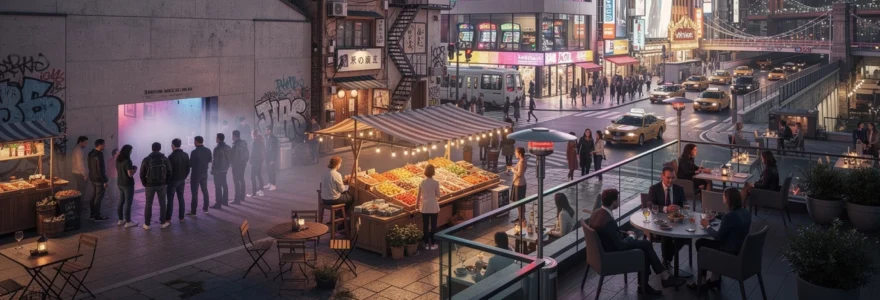
The world transforms when darkness falls, revealing hidden facets of urban destinations that daylight rarely exposes. While traditional tourism focuses on monuments, museums, and daytime attractions, a growing movement of travellers seeks the authentic pulse of cities through their nocturnal experiences. From Berlin’s legendary underground techno scene to Tokyo’s 24-hour convenience culture, the after-dark economy represents a multi-billion pound sector that shapes modern urban tourism. These nighttime ecosystems offer profound insights into local culture, social dynamics, and economic structures that remain invisible during conventional sightseeing hours. The phenomenon extends far beyond simple entertainment, encompassing everything from street food markets and architectural illumination to wildlife watching and astronomical tourism.
Modern cities have evolved sophisticated infrastructure to support round-the-clock activity, creating unique opportunities for travellers to experience destinations from entirely different perspectives. The economic impact of nocturnal tourism reaches into hospitality, transportation, retail, and cultural sectors, generating employment and revenue streams that complement traditional daytime attractions. Understanding these after-dark ecosystems reveals how contemporary urban centres balance commerce, culture, and community needs in ways that previous generations could never have imagined.
Nocturnal tourism markets: economic dynamics of After-Dark destinations
The global nocturnal tourism market has experienced exponential growth, with industry analysts estimating the sector’s value at over £180 billion annually. This figure encompasses everything from late-night dining and entertainment venues to specialised night tour operators and 24-hour transportation services. Cities that successfully develop comprehensive after-dark offerings report average tourism revenue increases of 35-40% compared to destinations focusing solely on daytime attractions. The economic multiplier effect of nocturnal tourism extends beyond immediate spending, creating sustainable employment in security, hospitality, and creative industries that operate during non-traditional hours.
Major metropolitan areas have invested heavily in infrastructure designed to support extended operating hours. Barcelona’s Gothic Quarter generates approximately £2.3 million in additional revenue per month through extended restaurant and bar operations, while Las Vegas demonstrates how 24-hour entertainment districts can become primary economic drivers for entire regions. The success of these models has influenced urban planning strategies worldwide, with cities like Dubai and Singapore incorporating nocturnal tourism considerations into their long-term development frameworks.
Consumer behaviour patterns reveal significant differences between day and night tourism demographics. Evening visitors typically spend 60% more per capita than daytime tourists, with extended dwell times in specific districts generating concentrated economic activity. Night market economies, exemplified by Taiwan’s temple-adjacent food stalls and Bangkok’s floating markets, demonstrate how traditional commerce adapts to modern urban rhythms while preserving cultural authenticity.
The transformation of urban spaces after sunset creates entirely different economic ecosystems, where traditional retail gives way to experiential commerce and cultural exchange becomes the primary currency.
Berlin’s techno underground: mapping europe’s premier nightlife ecosystem
Berlin’s techno scene represents perhaps the most sophisticated example of how underground culture can evolve into a major tourism driver while maintaining its authentic character. The city’s nightlife economy contributes over £1.2 billion annually to the local economy, supporting more than 75,000 jobs across venues, production, and related services. This ecosystem emerged from the unique historical circumstances of reunification, where abandoned industrial spaces provided perfect venues for experimental music and art movements that have since gained global recognition.
Berghain cultural impact and industrial heritage tourism
The legendary Berghain nightclub has transcended its origins as a weekend destination to become a cultural institution that influences global electronic music trends. Located in a former power plant, the venue exemplifies how industrial heritage can be transformed into contemporary cultural spaces without losing historical significance. The club’s strict door policy and photography ban have created an aura of exclusivity that attracts visitors from across the globe, generating an estimated £15 million in annual tourism revenue for the surrounding Friedrichshain district.
The architectural preservation approach used at Berghain has become a model for similar conversions throughout Europe. The retention of original concrete structures and industrial features creates an authentic atmosphere that cannot be replicated in purpose-built venues. This approach demonstrates how adaptive reuse strategies can serve both cultural preservation and economic development objectives simultaneously.
Kreuzberg district gastronomy and Late-Night culinary circuits
Kreuzberg’s late-
Kreuzberg’s late-night culinary circuits illustrate how food culture underpins Berlin’s after-dark tourism economy. From traditional Imbiss stands serving currywurst at 3 a.m. to vegan döner kebab shops and contemporary fusion restaurants, the district offers a dense network of gastronomic options that keep streets active well into the early hours. Many establishments operate on extended schedules specifically to capture club-goers and shift workers, with some reporting that 40–50% of their weekly turnover occurs after 9 p.m. This nocturnal gastronomy ecosystem not only supports independent entrepreneurs but also reinforces Kreuzberg’s reputation as a socially inclusive, culturally diverse neighbourhood that welcomes visitors at any hour.
For travellers, late-night food tours have become a popular way to access this culinary landscape in a structured, safe format. Guided walks linking Görlitzer Park, Oranienstraße, and the Landwehr Canal introduce visitors to Turkish bakeries, Lebanese snack bars, and contemporary craft beer venues that rarely appear in traditional guidebooks. These curated circuits demonstrate how food, music, and public space interact in real time, offering an immersive alternative to conventional restaurant-focused city breaks.
Alternative venue networks in friedrichshain and prenzlauer berg
Beyond headline clubs like Berghain, Berlin’s nightlife ecosystem relies on a decentralised network of smaller venues spread across Friedrichshain and Prenzlauer Berg. Former warehouses, repurposed cinemas, and basement bars host everything from live techno performances to experimental jazz and spoken-word nights, creating a layered cultural offer that appeals to different age groups and budgets. Many of these spaces operate as multi-functional venues, hosting flea markets, community workshops, and art exhibitions during the day before transforming into clubs or performance spaces after dark.
This distributed model has important implications for urban tourism. Instead of concentrating visitors in a single entertainment zone, Berlin’s alternative venue networks encourage movement between districts, extending economic benefits to local cafés, late-night bakeries, and independent retailers. Travellers staying in short-term rentals or boutique hotels in Prenzlauer Berg, for example, can access intimate venues on foot, reducing pressure on public transport and taxi systems. The result is a more balanced nocturnal tourism footprint that supports both established and emerging neighbourhoods.
Electronic music tourism revenue streams and visitor demographics
Electronic music tourism in Berlin generates revenue far beyond ticket sales and bar receipts. Visitors drawn by the city’s clubs typically extend their stays to include record shopping, studio visits, and attendance at music production workshops, creating secondary income streams for local businesses and creative professionals. Industry surveys suggest that techno-focused travellers spend on average 25–30% more per trip than general city-break tourists, particularly on accommodation, dining, and specialised experiences such as vinyl hunting or analogue synth masterclasses.
Demographically, Berlin’s electronic music tourists are predominantly aged between 22 and 40, with a growing segment of older visitors who first experienced the scene in the 1990s and now return in search of nostalgia-infused city breaks. This mix creates a multi-generational audience with diverse expectations regarding comfort, safety, and cultural authenticity. For urban planners and tourism boards, understanding these visitor profiles is critical: how do you maintain the raw, experimental character of the nightlife while ensuring infrastructure, transport, and safety standards meet the needs of international guests? Berlin’s evolving policy debates around club protection, sound regulations, and late-night public transport funding offer a blueprint other cities now closely study.
Tokyo’s 24-hour urban infrastructure: shibuya and shinjuku night districts
Tokyo provides one of the world’s most intricate examples of a city engineered for 24-hour use, with Shibuya and Shinjuku acting as primary hubs of nocturnal activity. These districts combine dense entertainment offerings with highly efficient transport systems, allowing millions of residents and visitors to move safely between late-night venues and accommodation. The seamless integration of rail hubs, bus lines, and pedestrian networks underpins a thriving night economy that spans everything from gaming arcades and karaoke boxes to high-end cocktail bars and all-night ramen counters.
For travellers, this infrastructure translates into remarkable freedom: you can leave a live-music bar in Shibuya after midnight, grab a meal at a 24-hour restaurant, and still find taxis, capsule hotels, or late-running trains to get you home. Tokyo’s after-dark environment is carefully regulated yet vibrantly alive, offering a compelling case study in how urban design, lighting, and public safety measures can support intensive nocturnal tourism without compromising resident quality of life.
Kabukicho entertainment quarter: host bars and pachinko gaming culture
Kabukicho, located in Shinjuku, is often described as Tokyo’s entertainment quarter, where neon signage, host clubs, and pachinko parlours create a dense tapestry of after-dark activities. While its reputation has historically been linked to adult entertainment, ongoing redevelopment and stricter regulations have diversified the area’s offer, adding cinemas, themed cafés, and family-friendly attractions alongside more traditional nightlife. For curious visitors, guided evening walks can help decode the complex visual language of billboards and alleyways, providing cultural context around everything from hostess bars to karaoke chains.
Pachinko gaming culture remains a defining feature of Kabukicho’s nocturnal economy. These brightly lit arcades, open from early morning until late at night, illustrate how leisure, chance, and social interaction blend in contemporary Japanese cities. Visitors who step inside will notice the almost overwhelming soundscape and the ritualistic behaviour of regular players, offering a glimpse into a leisure form that sits somewhere between casino gambling and arcade gaming. As with any specialised nightlife district, understanding local etiquette—such as not photographing staff or patrons in host bars—helps travellers navigate Kabukicho respectfully and safely.
Golden gai architectural preservation in modern nightlife planning
Just a short walk from Kabukicho, Golden Gai presents a stark contrast to Shinjuku’s vertical neon canyons. This compact maze of narrow alleys and two-storey wooden buildings is home to around 200 tiny bars, many with space for fewer than a dozen patrons. The district’s architectural fabric dates back to the post-war period and has survived waves of redevelopment thanks to strong community activism and heritage awareness, making it a living museum of Tokyo’s nightlife history.
From an urban planning perspective, Golden Gai demonstrates how small-scale, human-centred design can coexist within a hyper-modern metropolis. Preservation rules limit demolition and high-rise construction, while licensing frameworks encourage independent bar ownership rather than homogenised chain outlets. For nocturnal tourists, this means you can step from a futuristic train station into an intimate bar where the owner curates their own music, décor, and drink menu—an experience that feels more like visiting someone’s living room than entering a commercial venue. The tension between conservation and commercial pressure here acts as a microcosm of broader debates in global nightlife planning.
Convenience store networks and nocturnal consumer behaviour patterns
One of Tokyo’s most distinctive after-dark features is its ubiquitous network of convenience stores—konbini such as 7-Eleven, Lawson, and FamilyMart. Open 24 hours and found on almost every major street, these outlets serve as the backbone of the city’s nocturnal infrastructure, providing affordable food, drinks, and essential services at all hours. For travellers, konbini make spontaneous night walks far more practical: you can pick up hot snacks after a concert, withdraw cash, print tickets, or even pay utility bills in the middle of the night.
Nocturnal consumer behaviour in Tokyo reflects this accessibility. Studies indicate that late-night sales at convenience stores surge around major transport hubs, with peaks following last-train departures as people stock up before heading home or into capsule hotels. This pattern illustrates a broader trend in 24-hour cities: when basic needs are easy to meet at any hour, visitors feel more comfortable exploring beyond traditional timeframes. Have you ever noticed how the simple knowledge that you can always buy water or a snack nearby makes you more likely to stay out longer?
Capsule hotel integration in late-night transportation hubs
Capsule hotels, once primarily aimed at salarymen who missed the last train, have evolved into a key component of Tokyo’s nocturnal tourism offer. Many are strategically located near major stations like Shinjuku, Shibuya, and Ueno, effectively extending the functional radius of nightlife districts. Travellers can attend late events without worrying about catching the final train home, knowing that affordable, clean accommodation is available within walking distance of the station.
Modern capsule hotels now cater specifically to international visitors, offering multilingual check-in systems, secure luggage storage, and spa-style bathing facilities. Some even incorporate co-working spaces and communal lounges, blurring the line between hotel, hostel, and business centre. This integration of micro-accommodation within transport hubs highlights a crucial insight for cities looking to expand their night economies: if you can solve the “where do I sleep if I stay out late?” question, you remove one of the main psychological barriers to after-dark exploration.
Mediterranean coastal night markets: barcelona’s gothic quarter and las ramblas
Barcelona exemplifies how Mediterranean cities leverage mild climates and vibrant street life to create compelling after-dark tourism experiences. In the Gothic Quarter and along Las Ramblas, late-opening restaurants, tapas bars, and artisanal shops transform narrow medieval streets into bustling social corridors. The interplay of historic architecture and contemporary lighting design produces an atmosphere where visitors can wander safely until well past midnight, sampling local cuisine and street performances in equal measure.
Night markets and evening food tours have become particularly popular ways to engage with Barcelona’s culinary culture. Small-group experiences typically link traditional bodegas, modern pintxo bars, and dessert cafés, showcasing how the city’s gastronomic identity evolves from early evening aperitifs to late-night shared plates. For residents, these spaces function as extended living rooms; for travellers, they offer authentic entry points into local habits and social norms. The key challenge for urban managers lies in balancing this tourism demand with residents’ need for rest, a tension now shaping regulations around terrace hours, noise levels, and short-term rentals.
New york’s broadway theatre district: performance tourism after sunset
New York City demonstrates how performance-based nightlife can anchor an entire destination’s global brand. The Broadway theatre district, centred around Times Square, draws millions of visitors each year who plan their trips specifically around evening performances. These shows, typically starting between 7 p.m. and 8 p.m., generate substantial secondary spending on pre- and post-theatre dining, transport, and accommodation, making them a cornerstone of Manhattan’s nocturnal tourism economy.
Crucially, Broadway’s appeal extends beyond individual productions. For many travellers, simply walking under the marquees, glimpsing stage doors, and seeing crowds gather outside iconic theatres forms part of the experience. This concentration of cultural venues within a compact, well-lit area creates a sense of shared ritual: audiences arrive, performances unfold behind closed doors, and then thousands spill back into the streets to compare reactions and extend the evening in nearby bars and cafés. It is this rhythm—predictable yet always renewed—that distinguishes performance tourism after sunset from daytime sightseeing.
Times square commercial lighting technology and urban illumination design
Times Square serves as a global reference point for urban illumination design, where commercial lighting doubles as both advertising and tourist attraction. The district’s LED billboards and digital displays are regulated to maintain a consistent brightness level, collectively generating an artificial daylight that makes midnight feel like early evening. For visitors, this intense luminosity creates a sense of safety and spectacle; for advertisers, it offers one of the world’s most coveted canvases for brand visibility.
From a technical perspective, the transition from neon to LED technology has significantly reduced energy consumption while enabling more dynamic, programmable visuals. Urban designers now study Times Square to understand how light can shape pedestrian movement, dwell time, and perception of safety in dense night-time environments. Yet this approach is not without controversy: residents and researchers raise concerns about light pollution and its impact on circadian rhythms. The challenge, as other cities consider adopting similar strategies, is to find a balance between creating visually engaging, safe nocturnal spaces and preserving dark skies where appropriate.
Off-broadway venue networks in greenwich village and SoHo
Beyond the bright lights of Broadway, New York’s Off-Broadway and Off-Off-Broadway scenes in Greenwich Village and SoHo illustrate how smaller venues can diversify a city’s night-time cultural offer. These theatres, often housed in repurposed churches, former warehouses, or basement spaces, showcase experimental work, emerging playwrights, and more intimate productions. For culturally motivated travellers, they provide an opportunity to engage with New York’s creative ecosystem at a deeper, more local level than blockbuster shows alone can offer.
Economically, this distributed network of venues supports adjacent hospitality businesses, particularly late-night cafés, wine bars, and independent restaurants that benefit from pre- and post-show traffic. The scale of these theatres encourages direct artist-audience interaction, turning evening performances into community events rather than purely commercial transactions. Have you ever noticed how a conversation with a playwright after a show can stay with you longer than a spectacular stage effect?
Rooftop bar culture in manhattan’s financial district
As traditional office hours evolve and hybrid working patterns spread, Manhattan’s Financial District has reinvented parts of its skyline as an after-dark social destination. Rooftop bars perched atop former banking towers and new residential high-rises offer panoramic views of the Hudson River, Brooklyn Bridge, and Lower Manhattan, attracting both locals and visitors seeking a sophisticated, visually striking night out. Many of these venues emphasise craft cocktails, curated music, and design-led interiors, positioning themselves as experiential complements to Broadway and downtown dining.
From a tourism perspective, rooftop bar culture capitalises on existing vertical infrastructure, effectively monetising airspace that would otherwise remain underused at night. Elevators, building security, and fire-safety systems designed for daytime office workers now support leisure uses after hours, illustrating how cities can repurpose existing assets for nocturnal economies. For travellers, the combination of skyline views and carefully staged ambience turns a simple drink into a memorable event—one that often becomes a highlight of a New York itinerary.
Safety protocols and risk management in nocturnal urban tourism
As cities expand their after-dark tourism offerings, robust safety protocols and risk management strategies become essential to sustainable growth. Night-time environments naturally introduce different risk profiles than daytime tourism, including alcohol-related incidents, transport challenges, and the need for enhanced lighting and surveillance in high-traffic areas. Forward-thinking destinations address these issues through coordinated policies that bring together city authorities, venue operators, transport agencies, and community groups.
Many leading nocturnal destinations now appoint dedicated “night mayors” or night-time economy coordinators to oversee strategic planning. Their responsibilities range from harmonising licensing regulations and noise controls to promoting safe travel options such as night buses and extended metro services. Public information campaigns play a crucial role too, providing visitors with clear guidance on safe neighbourhoods, emergency contacts, and culturally appropriate behaviour. In a well-managed night-time city, you will notice visible yet unobtrusive security, well-lit pedestrian routes, and staff trained in crowd management and conflict de-escalation.
Technology increasingly underpins these safety frameworks. Real-time data from transport networks, mobile phone usage, and even social media check-ins helps authorities anticipate crowd flows and allocate resources proactively. Some cities deploy sensor-based street lighting that brightens in response to increased foot traffic, improving visibility while conserving energy during quieter hours. At the same time, there is growing awareness of the need to balance surveillance with privacy rights, ensuring that visitors feel protected rather than monitored.
For travellers, adopting simple risk-management habits can significantly enhance the nocturnal tourism experience. Planning your route in advance, sharing your itinerary with someone you trust, and using licensed taxis or official ride-hailing apps are basic yet effective measures. Understanding local norms—such as tipping practices, dress codes, and acceptable behaviour in nightlife districts—also reduces the likelihood of misunderstandings. Ultimately, the most successful after-dark destinations are those where you feel comfortable lingering: grabbing a late snack, taking a final look at the skyline, and knowing that the city is designed to support your journey safely back to your accommodation.