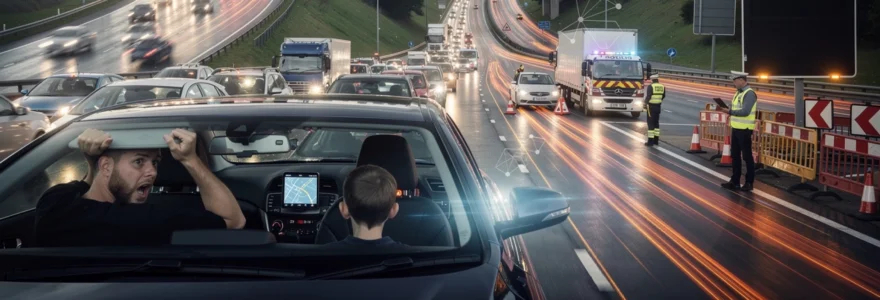
Every journey tells a story, but sometimes the most memorable chapters are written during the unexpected delays and diversions that interrupt our carefully planned routes. Modern transport networks face unprecedented challenges as traffic volumes continue to surge, infrastructure ages, and weather patterns become increasingly unpredictable. These disruptions don’t merely inconvenience drivers; they reshape entire regional economies, influence psychological well-being, and highlight the intricate web of dependencies that keep society moving. From sophisticated traffic management systems struggling to cope with peak demand to the human stories unfolding in stationary vehicles, road delays reveal both our technological achievements and limitations.
The ripple effects of transport disruption extend far beyond individual frustration. When major arterial routes experience significant delays, supply chains falter, businesses lose productivity, and emergency services face critical challenges reaching their destinations. Understanding the complex interplay between infrastructure, technology, human behaviour, and economic factors provides valuable insights into how modern transport systems function—and where improvements are desperately needed.
Traffic management systems and infrastructure failures behind major road delays
Contemporary traffic management represents a delicate balance between cutting-edge technology and decades-old infrastructure struggling to meet 21st-century demands. The backbone of modern traffic control relies on sophisticated algorithms that process thousands of data points every second, yet these systems frequently encounter limitations that cascade into significant delays across entire transport networks.
Infrastructure failures often stem from the fundamental mismatch between current traffic volumes and the capacity these systems were originally designed to handle. Many urban traffic management centres operate with equipment installed during the 1990s and early 2000s, when vehicle ownership rates and population densities were substantially lower. When critical components fail—whether through age, weather damage, or software glitches—the resulting delays can persist for hours or even days whilst engineers implement repairs or temporary solutions.
Network resilience depends heavily on redundant systems and backup protocols, yet many regions operate with minimal spare capacity. A single point of failure in a major junction controller can disrupt traffic flow across dozens of interconnected routes. The domino effect of infrastructure breakdown illustrates why investing in robust, future-proofed traffic management systems remains crucial for maintaining reliable transport networks.
Variable message sign (VMS) technology and Real-Time traffic communication
Variable Message Signs serve as the primary communication channel between traffic authorities and drivers, yet their effectiveness relies on timely, accurate information and strategic placement. Modern VMS systems integrate with traffic monitoring networks to provide real-time updates about incidents, journey times, and alternative routes. However, the quality of information displayed often varies significantly depending on the sophistication of underlying detection systems and the responsiveness of control room operators.
The psychological impact of VMS messaging cannot be understated. Clear, consistent information helps drivers make informed decisions about route choices, whilst vague or outdated messages contribute to uncertainty and potentially dangerous driving behaviour. Research indicates that drivers are more likely to comply with route diversions when provided with specific journey time estimates rather than generic advice to “use alternative routes”.
Junction signal timing optimisation and adaptive control systems
Adaptive traffic control systems represent one of the most significant advances in junction management, automatically adjusting signal timings based on real-time traffic conditions. These systems use sensor data, camera feeds, and historical patterns to optimise green time allocation across all approaches to a junction. However, the effectiveness of adaptive control depends on accurate calibration and regular maintenance—factors that often receive insufficient attention due to budget constraints.
Signal timing optimisation becomes particularly challenging during peak periods when competing traffic flows exceed the junction’s fundamental capacity. Even the most sophisticated adaptive systems cannot create additional road space, leading to inevitable queue formation and delays when demand consistently exceeds supply. Understanding these limitations helps explain why some delays persist despite technological interventions.
Motorway smart traffic management on M25 and M6 corridors
Smart motorway technology, implemented extensively on the M25 and M6 corridors, demonstrates both the potential and limitations of advanced traffic management. Variable speed limits, lane control systems, and dynamic hard shoulder usage aim to maximise existing capacity without requiring costly infrastructure expansion. When functioning correctly, these systems can increase throughput by up to 15% during peak periods whilst maintaining acceptable safety levels.
However, smart motorway effectiveness depends critically on driver compliance and system reliability. Speed limit violations, inappropriate lane usage, and technology failures can quickly
undermine overall performance, leading to inconsistent journey times and heightened collision risk. When overhead gantries display conflicting instructions or cameras fail to detect stationary vehicles, control centres must often revert to manual intervention, slowing response times. Public trust in smart motorway schemes can also erode rapidly following high-profile incidents, creating a feedback loop where sceptical drivers ignore signals, further degrading safety and efficiency. As we rely more on these intelligent systems to manage congestion on routes like the M25 and M6, ensuring rigorous maintenance regimes, clear public communication, and transparent performance reporting becomes essential.
Emergency response coordination between highways england and local authorities
When serious incidents occur on strategic routes, efficient emergency response coordination between National Highways (formerly Highways England), police, fire services, and local authorities becomes the critical factor determining the duration of major road delays. Multi-agency control rooms monitor CCTV, automatic incident detection systems, and emergency call data to assess severity and deploy appropriate resources. Complex incidents such as multi-vehicle collisions or hazardous material spills require structured command hierarchies and predefined protocols to ensure safety whilst minimising network disruption.
Despite sophisticated planning, challenges frequently arise around scene access, information sharing, and diversion route capacity. A closure on a motorway can instantaneously funnel thousands of vehicles onto local roads never designed to handle such volumes, resulting in secondary congestion and gridlock in surrounding communities. Joint training exercises, interoperable communication systems, and clearly signed emergency diversion routes (EDRs) improve resilience, but funding and resource limitations can hinder consistent implementation across regions. For drivers, understanding that prolonged closures often reflect safety investigations, recovery complexity, and road surface repair needs—not just bureaucratic delay—can slightly ease the frustration of being stranded.
Construction zone navigation and temporary traffic regulation orders (TTROs)
Planned roadworks represent another major source of journey disruption, yet they are essential for maintaining and upgrading ageing infrastructure. Temporary Traffic Regulation Orders provide the legal framework that allows authorities and contractors to close lanes, alter speed limits, and introduce diversions during construction projects. Whilst TTROs aim to balance construction efficiency with traffic flow, their real-world impact on drivers can vary dramatically depending on planning quality and on-site management. Poorly coordinated works or overlapping projects on parallel routes can transform predictable commutes into daily detours.
Effective construction zone management resembles conducting an orchestra: every element, from lane closures to signage and workforce access, must be timed and sequenced precisely. Night-time working, off-peak closures, and phased schemes can significantly reduce disruption, but they often come with increased costs or noise implications for nearby residents. For road users, understanding how to read temporary signs, anticipate contraflow systems, and interpret changed priorities becomes vital for safe navigation through these ever-changing environments.
Contraflow systems implementation on a-road major schemes
Contraflow systems—where traffic in both directions shares one side of a dual carriageway—are commonly used on major A-road schemes to maintain capacity while significant works take place on the opposite carriageway. When designed and implemented effectively, contraflow arrangements can keep strategic routes operational and reduce the need for lengthy diversions through local communities. However, they also introduce unusual road layouts, narrowed lanes, and reduced hard shoulder availability, all of which demand heightened driver concentration.
From a traffic management perspective, contraflow planning must account for entry and exit points, emergency access, and recovery operations in confined spaces. Speed limits are typically reduced to improve safety margins, yet some drivers fail to adjust their behaviour, increasing collision risk. Clear, progressive signage and advance communication via variable message signs, local media, and navigation platforms help road users prepare mentally for layout changes. If you have ever felt disoriented entering a long contraflow, you are not alone; our brains are wired to rely on familiar road cues, so sudden reversals in lane alignment can be surprisingly unsettling.
Lane restriction protocols and speed limit enforcement technology
Lane closures and restrictions are unavoidable in most construction zones, but the way they are implemented can make the difference between manageable slowdowns and severe congestion. Traffic engineers use taper lengths, cone patterns, and lane drop sequencing to guide vehicles smoothly into fewer lanes, often supported by advance warning signs and portable VMS units. When drivers adhere to zip-merge principles—using all available lanes and merging alternately at the closure point—traffic flow remains relatively efficient, yet social norms and impatience often lead to early, chaotic merging and unnecessary queuing.
To protect road workers and enforce temporary speed limits, average speed cameras and mobile enforcement units are increasingly deployed along major works. These technologies not only improve safety but also help maintain smoother flow by reducing sudden braking and erratic lane changes. Nevertheless, some drivers perceive enforcement as punitive rather than protective, which can generate resentment and risk-taking behaviour, such as sharp acceleration once clear of camera zones. Educating road users about the high rate of worker injuries and near-misses in work zones can reframe compliance as a shared responsibility rather than a forced constraint.
Pedestrian and cyclist accommodation in urban construction zones
In dense urban environments, construction works on key corridors affect not only motorists but also pedestrians, cyclists, and public transport users. Temporary Traffic Regulation Orders often include provisions for alternative walking routes, pop-up cycle lanes, and adjusted crossing facilities, yet these measures vary widely in quality. Narrow, poorly lit footways squeezed alongside live traffic or abrupt cycle lane terminations can deter active travel and increase perceived risk for vulnerable users. The challenge lies in allocating scarce road space fairly while maintaining safe access for all modes.
Best practice schemes aim to provide clear, step-free pedestrian diversions, protected cycle routes where feasible, and intuitive wayfinding that minimises detours. Where this is not possible, authorities should coordinate with public transport operators to enhance services and offer viable alternatives. For anyone navigating city streets on foot or by bike, paying close attention to temporary signs and anticipating conflicts with construction vehicles and diverted traffic becomes essential. Inclusive design in work zones not only improves safety but also supports long-term goals of promoting sustainable, multimodal transport networks.
HGV route restrictions and alternative freight corridor planning
Heavy goods vehicles face particular challenges during major roadworks and diversions, especially when TTROs impose weight, height, or width restrictions on certain routes. A single low bridge or tight urban junction can render an otherwise logical diversion impassable for large vehicles, with serious consequences if drivers are not informed in time. Freight operators rely heavily on real-time traffic information and pre-planned alternative corridors to keep deliveries moving and avoid stranded vehicles.
Strategic planning of freight diversions often involves designating specific HGV-friendly routes, coordinating with distribution centres, and adjusting delivery windows to avoid peak congestion. Intelligent routing software, integrated with live TTRO data, can help logistics managers reassign loads and drivers dynamically when delays occur. Yet smaller operators and independent drivers may lack access to these tools, leaving them more vulnerable to last-minute changes and costly detours. Ensuring that route restrictions are clearly mapped, digitally accessible, and consistently signed on the ground reduces the risk of HGVs becoming stuck on unsuitable roads or causing additional disruption while attempting complex turnarounds.
Weather-related diversions and emergency route activation procedures
Severe weather remains one of the most unpredictable causes of major road delays and emergency diversions. Heavy rainfall, snow, ice, high winds, and flooding can render sections of the network unsafe or entirely impassable within minutes. Climate change projections suggest that many regions will experience more frequent extreme weather events, placing additional pressure on already stretched maintenance budgets and response teams. For drivers, this translates into sudden closures, unplanned detours, and longer, more stressful journeys—often at times when road conditions are already challenging.
Emergency route activation procedures provide a structured response to such events, specifying pre-identified diversion corridors, priority clearing operations, and communication protocols. For instance, when a major river crossing is closed due to high winds, signed diversions funnel traffic to alternative bridges or tunnels, while authorities coordinate gritting, tree clearance, or pumping operations. Yet these emergency routes can quickly become saturated, especially when freight traffic, commuter flows, and local trips all converge. Like a complex plumbing system, when one pipe is blocked, the pressure builds elsewhere; understanding this helps explain why you might encounter gridlock dozens of kilometres from the actual incident location.
Advances in weather forecasting, road surface condition monitoring, and decision-support tools now allow highway authorities to pre-emptively treat roads, stagger closures, and issue early warnings via VMS and digital platforms. As a driver, proactively checking forecast-based travel advisories, carrying emergency supplies during winter, and allowing additional journey time during adverse weather can substantially reduce risk. Ultimately, resilience to weather-related diversions relies on a blend of robust infrastructure, well-rehearsed operational plans, and informed, adaptable road users.
Vehicle breakdown recovery operations and lane closure protocols
Even a single broken-down vehicle can trigger disproportionate disruption on busy roads, particularly on motorways and dual carriageways operating near capacity. When a vehicle stops in a live lane or narrow hard shoulder, recovery operations must balance speed with the safety of both stranded occupants and recovery personnel. Standard lane closure protocols—implemented through overhead lane signals, police vehicles, or traffic officers—create a protected workspace, but they inevitably reduce available capacity and induce queuing. The longer the recovery takes, the greater the cumulative delay for following traffic.
On smart motorways, where the hard shoulder may function as a running lane, the stakes are even higher. Stationary vehicle detection systems, CCTV, and emergency refuge areas are designed to mitigate risk, yet detection failures or delayed responses have been at the centre of intense public scrutiny. Recovery teams often operate in hostile environments, with high speeds, limited visibility, and frustrated drivers attempting last-minute lane changes to avoid closures. From the driver’s perspective, promptly moving to the nearest safe location, exiting the vehicle where possible, and following breakdown service guidance can significantly improve safety outcomes.
Improved data sharing between breakdown providers, National Highways, and navigation platforms is helping to reduce response times and provide more accurate delay estimates. As connected vehicles become more common, automatic breakdown alerts may allow control centres to react even before drivers can place a call. Until then, patience and vigilance remain key virtues when approaching breakdown scenes: respecting temporary limits, avoiding rubbernecking, and maintaining steady speeds all contribute to smoother, safer recovery operations for everyone involved.
Psychological impact of journey disruption on driver behaviour and decision-making
While infrastructure and technology often dominate discussions about delays and detours, the human mind plays an equally important role in how disruptions unfold. Unexpected congestion, diversions, and extended travel times can trigger strong emotional responses that affect concentration, risk perception, and decision-making behind the wheel. We do not simply sit passively in a queue; we interpret events, compare them to our expectations, and sometimes overreact in ways that compound existing problems. Understanding the psychological impact of journey disruption helps explain why a seemingly minor delay can lead to aggressive manoeuvres, poor route choices, or even road rage incidents.
Researchers in traffic psychology highlight how factors such as time pressure, perceived fairness, and control influence driver behaviour during delays. If you feel late for an important appointment, for example, your tolerance for further hold-ups tends to plummet, increasing the temptation to take risks. Likewise, seeing others “cut in” at the last moment can trigger anger and retaliatory blocking behaviour, even when late merging would actually improve overall flow. By recognising these cognitive and emotional patterns, we can begin to adopt more resilient, reflective responses to the inevitable detours of modern travel.
Stress response mechanisms during extended traffic queue situations
Being trapped in a long, slow-moving queue activates many of the same stress pathways as other forms of perceived threat or loss of control. Heart rate increases, cortisol levels rise, and attention narrows, all of which can impair judgement and fine motor skills. You may notice yourself clenching the steering wheel, checking the clock obsessively, or scanning for any opportunity to gain a few metres. Ironically, these instinctive reactions rarely shorten the journey and can instead lead to tailgating, last-second lane changes, and reduced awareness of vulnerable road users.
From a practical standpoint, adopting simple stress management strategies during delays can improve both safety and well-being. Listening to calming audio, practising controlled breathing, or reframing the delay as an unavoidable part of the journey helps counter the sense of helplessness. Some drivers build “buffer time” into their schedules, treating punctual arrivals as a bonus rather than a rigid expectation, which reduces the psychological impact of unplanned hold-ups. In a sense, managing your inner traffic is just as important as navigating the external congestion.
Route choice adaptation and GPS navigation dependency patterns
Modern navigation apps have transformed how we respond to disruption, offering dynamic rerouting, live traffic data, and estimated arrival times. Yet this growing dependency on GPS can also alter our sense of spatial awareness and autonomy. When a device suggests an alternative route to avoid a delay, many of us follow blindly, even if it involves narrow residential streets or marginal time savings. In some cases, mass rerouting funnels large volumes of traffic onto minor roads, creating localised congestion and safety concerns that authorities struggle to predict.
Behavioural studies show that drivers often prefer a slightly longer but more predictable journey over a route with variable travel times. Navigation systems that provide clear explanations—such as “10 minutes slower but less risk of further delay”—support more informed choices than those simply presenting one “fastest” option. There is also evidence that over-reliance on GPS can erode our mental maps, leaving us less resilient when technology fails or signal coverage drops. Maintaining a basic understanding of regional geography and key arterial routes ensures you are not entirely at the mercy of your device when the unexpected occurs.
Social media influence on real-time travel decision making
Social media platforms now play a significant role in shaping how drivers perceive and respond to transport disruption. Real-time updates, photos, and personal accounts of incidents can spread rapidly, sometimes outpacing official information channels. On the positive side, community groups and local travel feeds often highlight minor incidents, road closures, or hazards that might not appear on mainstream traffic bulletins. However, unverified reports, rumours, or outdated posts can just as easily mislead, prompting unnecessary detours or fuelling frustration.
The emotional tone of social media discussions—often laden with anger, blame, or anxiety—can also influence how we experience our own delays. Seeing streams of complaints about “endless gridlock” may prime you to interpret a moderate slowdown as intolerable. To navigate this digital landscape effectively, it helps to cross-check social updates with official sources such as national traffic information services, local authority feeds, or trusted travel apps. Used judiciously, social media becomes another tool in managing journey disruption; used uncritically, it can amplify stress and confusion at precisely the moment when clear-headed decisions are most needed.
Economic consequences of transport network disruption on regional commerce
Beyond the individual experiences of frustration and delay, transport network disruption carries substantial economic consequences for businesses and regional economies. Lost working hours, missed delivery slots, increased fuel consumption, and reduced reliability all translate into tangible costs. Studies in the UK and EU have estimated that congestion alone can drain billions of pounds annually from national productivity, with a significant portion linked to recurring bottlenecks and unplanned incidents. For sectors such as logistics, just-in-time manufacturing, and retail, even short delays ripple through supply chains, affecting inventory levels and customer satisfaction.
Regional commerce is particularly vulnerable when key corridors or strategic pinch points experience prolonged disruption. A closure on a major ring road or river crossing can dissuade customers from travelling to certain retail centres, delay perishable goods, or force hauliers to take expensive long-distance detours. Small and medium-sized enterprises, with limited capacity to absorb these shocks, may see reduced turnover or increased operating costs that erode already tight margins. Over time, areas with chronically unreliable transport links can struggle to attract new investment, perpetuating cycles of underdevelopment.
On the other hand, recognising the economic impact of delays and detours has driven increased interest in resilience planning and targeted infrastructure investment. Business improvement districts, chambers of commerce, and freight associations now routinely engage with transport authorities to prioritise critical upgrades, improve incident management, and coordinate communication during major works. For individual businesses, diversifying supply routes, adopting flexible delivery windows, and enabling remote work where possible can mitigate some of the risks associated with network disruption.
Ultimately, every minute spent in a traffic queue or on an unexpected diversion represents more than a personal inconvenience; it is a small fragment of a much larger economic picture. By viewing delays, detours, and unexpected moments on the road through this broader lens, we can better appreciate why strategic planning, investment in intelligent transport systems, and thoughtful driver behaviour all matter—not just for our own journeys, but for the health and vitality of the communities and economies we depend on.