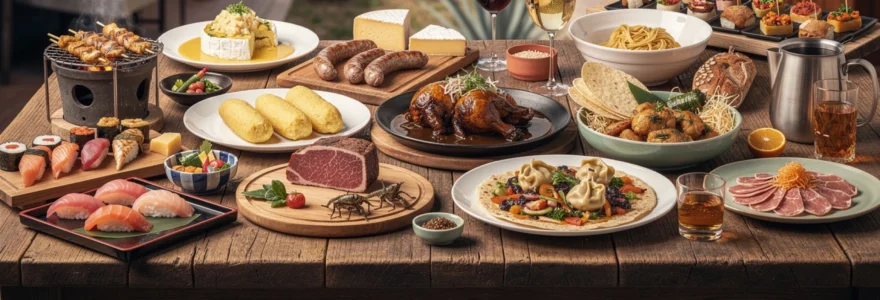
Every seasoned traveller knows that moment when a single bite transforms an entire journey. Perhaps it’s the first taste of perfectly aged Parmigiano-Reggiano in a centuries-old cave, or the unmistakable umami explosion of fresh nigiri at a Tokyo sushi counter. Food has evolved from mere sustenance into one of the most compelling reasons to board a plane, with millions of travellers now planning entire itineraries around culinary experiences rather than landmarks or museums. This shift reflects a deeper understanding that authentic cuisine reveals cultural identity in ways no monument ever could. The world’s greatest food destinations offer more than exceptional meals—they provide immersive journeys into traditions, techniques, and philosophies that have been refined across generations. When you travel specifically for food, you’re not simply eating; you’re participating in living history, supporting artisan communities, and creating memories that will linger on your palate long after your return home.
Tokyo’s tsukiji outer market and kaiseki ryori culinary traditions
Tokyo stands as the undisputed global capital of gastronomic excellence, boasting more Michelin stars than any other city on earth. The Japanese approach to food combines precision, seasonality, and an almost spiritual reverence for ingredients that elevates every meal into an artistic performance. While the famous inner wholesale market relocated to Toyosu in 2018, the Tsukiji Outer Market continues to thrive as a vibrant hub where over 400 shops and restaurants serve everything from freshly grilled scallops to tamagoyaki rolled omelettes that have been perfected over decades. The market opens before dawn, allowing you to witness the energy of vendors arranging their displays with meticulous care, each fish positioned as though part of a gallery installation.
Kaiseki ryori represents the pinnacle of Japanese haute cuisine, a multi-course dining experience rooted in tea ceremony traditions. Each dish arrives as a carefully composed seasonal tableau, with colours, textures, and flavours balanced according to principles that date back centuries. The progression typically includes an appetizer, clear soup, sashimi, a simmered dish, a grilled course, and continues through eight to fourteen meticulously prepared plates. Seasonality dictates not just ingredients but also the ceramics used, with different pottery chosen to complement each season’s offerings. Spring might see cherry blossom motifs, whilst autumn brings russet-glazed vessels that echo falling leaves.
Omakase experiences at sushi dai and daiwa sushi
The concept of omakase—literally “I’ll leave it up to you”—represents the ultimate trust between diner and chef. At legendary establishments like Sushi Dai and Daiwa Sushi, both located in the Tsukiji area, patrons queue for hours (often arriving before 5 AM) for the privilege of watching masters craft each piece with surgical precision. The chef selects the finest available fish that morning, determining the optimal serving order to create a crescendo of flavours. You might begin with lighter, more delicate white fish like hirame (flounder), progress through medium-bodied options such as chutoro (medium fatty tuna), and culminate with the unctuous richness of otoro (fatty tuna belly) or uni (sea urchin).
What distinguishes these experiences isn’t merely the impeccable quality of seafood—though the fish is indeed sublime—but rather the intimate interaction with craftspeople who’ve dedicated their lives to perfecting their art. Watching a sushi chef work is mesmerising: the swift, confident motions as they shape rice with body-temperature warmth, the precise angle of the knife through fish, the perfectly timed application of wasabi and soy. Each piece arrives at your counter space within seconds of preparation, ensuring optimal temperature and texture. This immediacy creates flavour profiles impossible to replicate in any other dining format.
Michelin-starred kappo restaurants in ginza district
Ginza’s gleaming streets harbour some of Tokyo’s most exclusive kappo restaurants, intimate establishments where chefs prepare dishes directly in front of guests at a counter. Unlike kaiseki’s formal procession, kappo dining feels more spontaneous and interactive, with chefs adjusting courses based on conversation and observed preferences. The word kappo combines “
kitchen
and cutting, reflecting the chef’s dual role as both cook and curator. In Michelin-starred kappo counters across Ginza, you’ll sit just centimetres from the action as chefs fry tempura à la minute, shave katsuobushi over steaming bowls, or plate sashimi on hand-thrown ceramics. The experience feels less like dining in a restaurant and more like being invited into a private studio, where each course is discussed, adapted, and often finished in front of you.
Because kappo emphasises dialogue, it’s an ideal format if you want to deepen your understanding of Japanese culinary traditions without the formality of a full kaiseki. Many chefs speak some English and are happy to explain regional ingredients such as yuzu, sansho pepper, or rare seasonal fish. As you progress through grilled, simmered, and raw preparations, you’ll notice how temperature, texture, and seasoning are calibrated to highlight the main ingredient, not overwhelm it. For travellers planning a food trip to Tokyo, securing at least one kappo reservation in Ginza offers a nuanced counterpoint to sushi and ramen-focused itineraries.
Izakaya culture and yakitori alley in yurakucho
If Tokyo’s kaiseki and kappo experiences represent the city at its most refined, izakaya culture shows you how locals actually unwind after work. These casual gastropubs specialise in otsumami—small plates designed to pair with sake, beer, or highballs—and they are where you’ll see salarymen, students, and chefs themselves gathering late into the night. In Yurakucho, an area tucked beneath the Yamanote line tracks, yakitori alleys glow with paper lanterns and the charcoal scent of grilling chicken skewers. Step into one of the cramped, counter-only venues and you’ll find yourself shoulder to shoulder with Tokyoites discussing baseball scores over plates of negima (chicken and leek) and tsukune (minced chicken meatballs).
Ordering at an izakaya is part of the fun of travelling for food in Tokyo. Menus may be handwritten in Japanese, but many spots offer picture menus or chef recommendations if you simply ask for “osusume”. Start with classics such as karaage fried chicken, agedashi tofu, or sashimi plates, then venture into more adventurous territory like chicken hearts or skin-on pork belly skewers. Because dishes are small and relatively inexpensive, you can sample a wide spectrum of flavours in a single evening. Think of an izakaya crawl as the Tokyo equivalent of a tapas night in Spain—sociable, unpretentious, and deeply woven into the city’s culinary DNA.
Wagyu a5 tasting at kobe beef kaiseki establishments
No discussion of Japanese food travel is complete without mentioning wagyu, and for many visitors, tasting certified A5 Kobe beef becomes a pilgrimage in itself. In specialised kaiseki establishments, wagyu isn’t simply a steak course; it’s a multi-sensory exploration of marbling, mouthfeel, and umami. Chefs may present the beef in several preparations within a single menu: briefly seared as tataki with ponzu, slow-simmered in sukiyaki, or grilled over binchotan charcoal to accentuate its buttery richness. The aim is to showcase how varying heat applications transform the same cut into entirely different experiences.
Because authentic Kobe beef is tightly regulated—the Kobe Beef Marketing & Distribution Promotion Association certifies only a few thousand animals per year—prices reflect its scarcity. To make the most of an A5 tasting, consider dining at lunch, when many restaurants offer more accessible set menus. It’s also wise to eat lightly beforehand; wagyu’s high fat content is luxurious but filling. When that first slice melts almost instantly on your tongue, you’ll understand why travellers cross continents for this single, unforgettable bite.
Lyon’s bouchon heritage and rhône valley gastronomy
Lyon often flies under the radar of casual tourists, yet among chefs and serious gourmands it carries a near-mythic status as the gastronomic capital of France. Situated at the crossroads of Burgundy, the Rhône Valley, and the Alps, the city draws on an extraordinary pantry of local produce: river fish from the Saône, game from nearby forests, and cheeses from mountain pastures. Central to its culinary identity are the bouchons, traditional inns once frequented by silk workers, where hearty, offal-forward dishes are served in convivial, unfussy surroundings. Eating in a true bouchon feels like stepping into a living museum of French comfort food.
Traditional quenelles and andouillette at paul bocuse market
At the Halles de Lyon – Paul Bocuse, an indoor market named after the legendary chef who helped put Lyon on the global culinary map, you’ll find a who’s who of regional specialties. Among the most iconic is the pike quenelle, an ethereal dumpling made from finely milled fish and egg, baked in a rich crayfish or Nantua sauce until it puffs like a soufflé. Despite its delicate texture, it’s a deeply comforting dish—imagine a cross between a matzo ball and a seafood mousse, bathed in bisque. Many stalls offer individual portions to enjoy at communal tables, making it easy to sample without committing to a full restaurant meal.
At the other end of the spectrum lies andouillette, a tripe sausage with a robust aroma that divides opinion even among French diners. For adventurous food travellers, trying a grilled andouillette with mustard sauce at the market is almost a rite of passage. Pair it with a glass of crisp local white wine to cut through its richness. As you wander between charcutiers, cheesemongers, and pâtissiers, you’ll understand why Lyon is such a compelling destination for travellers who plan holidays entirely around food markets.
Presqu’île wine bars and beaujolais nouveau culture
Beyond its bouchons, Lyon also serves as a natural base for exploring the wines of the northern Rhône and Beaujolais. In the Presqu’île district, sandwiched between the Rhône and Saône rivers, intimate wine bars showcase everything from peppery Syrah-based Côte-Rôtie to light, chilled Beaujolais crus made from Gamay. Many bars offer small-plate menus—think charcuterie boards, terrines, and seasonal vegetable dishes—designed to complement the glass in your hand. It’s the ideal setting to learn how regional cuisine and wine traditions have evolved together over centuries.
Visit in November and you’ll witness the annual release of Beaujolais Nouveau, a young wine celebrated with festivals, tastings, and late-night parties. While some critics dismiss it as a marketing gimmick, the event speaks to a deeper local joy in marking the agricultural calendar. For food-focused travellers, timing a trip to coincide with harvest season, truffle markets, or these wine celebrations turns a simple city break into a more immersive gastronomic journey. After all, isn’t part of the pleasure of travelling for food being swept up in the same seasonal rhythms as the people who live there?
Fromagerie selection and époisses tasting routes
Cheese lovers will find Lyon an ideal launchpad for exploring some of France’s most characterful fromages. While Époisses technically hails from neighbouring Burgundy, affineurs in Lyon treat it with the same reverence as their own Saint-Marcellin or Bleu de Bresse. Step into a specialist fromagerie and you’ll be guided through an extraordinary range of textures and intensities, from lactic, almost chalky goat cheeses to orange-rinded, washed Époisses that perfume the entire shop. Tasting here is less about ticking off names and more about understanding how microclimates, animal breeds, and ageing techniques shape flavour.
If you’re planning a self-guided cheese route through the Rhône and Burgundy regions, Lyon’s central location and high-speed rail connections make logistics straightforward. Many rural producers now offer visits by appointment, where you can see ageing caves and sample cheeses at different maturation stages. Think of each bite as a snapshot of landscape and time—culinary terroir you can actually taste. Just remember to pack a cool bag if you intend to bring your favourites home.
Oaxaca’s mole negro and mezcal production routes
In southern Mexico, the state of Oaxaca has emerged as a pilgrimage site for travellers who see food as their primary reason to travel. Often called the “land of seven moles”, the region is renowned for complex sauces that can contain upwards of 30 ingredients—dried chillies, spices, nuts, seeds, and even chocolate—slowly coaxed into harmony over many hours. At the same time, small-batch mezcal producers in the surrounding valleys are drawing global attention for their artisanal, agave-based spirits. Together, these culinary traditions offer a powerful lens through which to understand Oaxacan history, from pre-Hispanic rituals to contemporary indigenous resilience.
Seven moles tradition at tlacolula market comedores
On Sundays, the town of Tlacolula hosts one of Oaxaca’s most vibrant markets, where comedores—family-run food stalls—serve the full spectrum of regional moles. You’ll find the inky, bittersweet mole negro, brick-red mole coloradito, and herbaceous mole verde, each ladled generously over chicken, turkey, or tamales. Sitting at plastic tables surrounded by baskets of chiles and piles of fresh herbs, you can taste how each family subtly adjusts the same basic framework: a bit more sesame here, a darker chile blend there. It’s an edible conversation between generations.
For travellers planning a food itinerary in Oaxaca, dedicating at least half a day to Tlacolula allows you to experience this mole tradition in its most authentic setting. Arrive before noon for the freshest selection and be prepared to share tables with locals doing their weekly shop. If you’re unsure where to start, simply ask which stall the tortilla vendors recommend; market workers usually know exactly who is simmering the best pots that day. Sampling multiple moles side by side is one of the most effective—and delicious—ways to understand the region’s culinary diversity.
Artisanal mezcal palenques in santiago matatlán
Roughly an hour’s drive from Oaxaca City lies Santiago Matatlán, often dubbed the “world capital of mezcal”. Here, palenques—small, family-run distilleries—dot the agave-covered hillsides. Visiting a palenque is a far cry from touring a large industrial distillery; you’ll see agave hearts roasted in earthen pits, crushed under stone wheels, and fermented in open-air wooden vats, all under the watchful eye of a maestro mezcalero. Tastings typically include a range of agave species and production styles, from smoky, robust espadín to more floral, limited-production varieties like tobalá or tepeztate.
Because many palenques remain relatively low-tech, arranging visits through a responsible local guide is advisable—for safety, translation, and to ensure your spending directly benefits producer communities. As you sip mezcal in tiny copitas, you’ll likely hear stories about land stewardship, climate challenges, and efforts to preserve wild agave populations. For travellers who want more than just a drink, these conversations turn a tasting into a crash course in sustainable food and drink tourism.
Tlayudas and chapulines street food in mercado 20 de noviembre
Back in Oaxaca City, Mercado 20 de Noviembre offers a different kind of sensory immersion. In the smoky “pasillo de humo”, vendors grill tlayudas—giant, toasted tortillas layered with asiento (pork fat), refried beans, Oaxacan string cheese, lettuce, and your choice of grilled meat—until they become crisp, foldable discs of flavour. Think of them as Oaxaca’s answer to pizza: communal, customisable, and best eaten with your hands. Sharing one with friends over cold beer is a quintessential Oaxacan experience.
For more adventurous palates, chapulines—toasted grasshoppers seasoned with lime, garlic, and chiles—are a must-try snack. Sold by the scoop from towering mounds, they offer a crunchy, tangy counterpoint to richer dishes and embody pre-Hispanic protein traditions that are once again gaining global interest. If the idea feels daunting, start with a small portion sprinkled over guacamole or folded into a tlayuda. You’ll quickly discover why many locals consider them as addictive as salted nuts.
Pre-hispanic cuisine revival at casa oaxaca restaurant
While markets showcase everyday Oaxacan food, restaurants like Casa Oaxaca interpret those same traditions through a contemporary, fine-dining lens. Here, chefs draw on pre-Hispanic ingredients—amaranth, native corn, wild herbs, and insects—presenting them in artfully plated dishes that speak to both past and present. You might encounter a refined mole negro paired with sustainably raised duck, or a dessert built around tejate, a traditional maize and cacao drink, reimagined as a delicate mousse.
This revival of ancestral techniques within a modern context mirrors what’s happening in other global food capitals, from Copenhagen to Lima. Yet in Oaxaca, the connection to indigenous communities and small-scale producers remains particularly tangible. Staff are often eager to explain the origins of each ingredient, making a meal here feel almost like a guided tour of the region’s terroir. For travellers who see dining as a form of cultural education, reserving a table at Casa Oaxaca or a similar restaurant provides a powerful complement to market eating.
Bologna’s tortellini en brodo and emilia-romagna food valley
In Italy, few regions inspire as much culinary devotion as Emilia-Romagna, and Bologna sits at its heart. Known locally as “La Grassa”—the fat one—the city has given the world rich ragù, silky tagliatelle, and deeply savoury cured meats. Perhaps no dish captures Bologna’s soul better than tortellini in brodo, tiny hand-folded pasta parcels traditionally stuffed with pork, prosciutto, and Parmigiano-Reggiano, served in a clear capon broth. The simplicity of its presentation belies the labour involved; generations of sfogline (pasta makers) have trained their fingers to fold hundreds of tortellini an hour with astonishing uniformity.
Using Bologna as your base, you can explore the wider “Food Valley” that stretches from Modena to Parma. In Modena, acetaie (vinegar lofts) age traditional balsamic vinegar for decades in wooden barrels, developing a depth of flavour that has little in common with supermarket imitations. Further west, dairy farms near Parma produce wheels of Parmigiano-Reggiano under strict DOP regulations, and many now offer guided tours that conclude with tastings at different ageing stages. Planning a self-drive route through these production zones turns a classic Italian holiday into a focused food pilgrimage, where each stop adds another layer to your understanding of the region’s extraordinary pantry.
San sebastian’s pintxos culture and nueva cocina vasca movement
On Spain’s northern coast, San Sebastian (Donostia in Basque) condenses an almost implausible amount of culinary talent into a compact, walkable city. With one of the highest densities of Michelin stars per capita in the world, it’s a must-visit destination for travellers who plan trips around where to eat next. Yet its most emblematic food experience isn’t white-tablecloth fine dining; it’s the pintxos bars of the Parte Vieja (Old Town), where counters heave with bite-sized creations skewered on toothpicks. Here, traditional Basque recipes coexist with experimental, nueva cocina vasca influences, making each bar-hopping evening feel like a curated tasting menu spread across multiple venues.
Michelin three-star experiences at arzak and akelarre
For many food lovers, securing a reservation at Arzak or Akelarre is the primary reason to travel to San Sebastian. Both three-Michelin-starred restaurants helped pioneer the nueva cocina vasca movement, which applies avant-garde techniques to deeply rooted Basque flavours. At Arzak, the Arzak family continues to reinterpret local ingredients—cod, peppers, hake—in playful, often surprising ways, using textures and temperatures to reframe familiar tastes. Meanwhile, Akelarre’s cliffside location offers sweeping views of the Cantabrian Sea, with tasting menus that echo the landscape in both presentation and flavour.
Fine-dining in San Sebastian is a masterclass in how a strong regional identity can evolve without losing its core. While dishes may arrive in sculptural forms or under glass cloches, the backbone remains products from nearby farms, forests, and fishing boats. If you’re planning a food-focused trip here, consider balancing one high-end meal with several nights of pintxos exploration; the contrast will deepen your appreciation of how Basque cuisine operates at every level.
La cuchara de san telmo and traditional basque cider houses
Among the maze of pintxos bars in the Old Town, La Cuchara de San Telmo has earned an almost cult-like following. Unlike venues that rely heavily on pre-plated bites on the bar, La Cuchara focuses on made-to-order small plates—think braised veal cheeks, grilled foie gras, and seared scallops—that arrive hot from an open kitchen. The atmosphere is boisterous, the space compact, and the wait often long, but the payoff is some of the most memorable food in San Sebastian at relatively modest prices. It’s the kind of place where you end up chatting with strangers over shared plates, united by mutual delight.
To experience another cornerstone of Basque food culture, head to a traditional sagardotegi (cider house) in the surrounding countryside. During cider season, large country dining halls serve set menus—salt cod omelette, grilled cod, and massive bone-in steaks—paired with unlimited pours of natural cider straight from chest-high barrels. Diners take turns catching the arcing stream in their glasses, a ritual that feels part communal game, part refreshment. For travellers who love food experiences that blend history, landscape, and conviviality, a night at a cider house is hard to beat.
Parte vieja pintxos crawl through ganbara and gandarias
A self-guided pintxos crawl through the Parte Vieja is San Sebastian’s essential food experience. At Ganbara, you’ll find an abundance of immaculate seafood pintxos—grilled mushrooms with egg yolk, crab tartlets, anchovies layered with guindilla peppers—and often a queue of locals that serves as the best possible endorsement. Gandarias, just a few streets away, balances traditional and modern offerings, with standout bites like seared beef filet on toast and slow-cooked pork cheeks. The etiquette is simple: order one or two pintxos and a small drink, eat standing at the bar or nearby barrel, then move on to the next stop.
To avoid feeling overwhelmed, it’s wise to research a few key bars in advance and approach the evening with a loose plan. Many travellers find that three or four venues, each with two or three pintxos, make for a satisfying circuit. Remember that the most enticing bites are often displayed behind the bar, but some of the best hot dishes are listed only on wall-mounted menus. Don’t hesitate to ask the bartender for their pintxo del día; you’ll often be steered toward seasonal specialities you might otherwise miss.
Penang’s hawker centre heritage and peranakan nyonya cuisine
In Southeast Asia, Penang consistently ranks among the top food travel destinations thanks to its vibrant hawker centres and distinctive Peranakan (Nyonya) cuisine. George Town, the island’s UNESCO-listed capital, offers an around-the-clock parade of flavours influenced by Malay, Chinese, Indian, and European traders who once passed through its ports. Here, eating is a democratic affair: some of the region’s most celebrated dishes are served from humble stalls at shared plastic tables, often for just a few dollars. For travellers who judge a destination by the quality of its street food, Penang is a dream.
Char kway teow mastery at lorong selamat and siam road
Few dishes symbolise Penang’s hawker culture better than char kway teow, a smoky stir-fry of flat rice noodles, prawns, Chinese sausage, eggs, and bean sprouts seared over high heat. At celebrated stalls along Lorong Selamat and Siam Road, you’ll see cooks wielding woks like musical instruments, controlling flame and timing with split-second precision. The elusive wok hei—literally “breath of the wok”—is what transforms a simple noodle dish into something travellers will queue for under the tropical sun.
Because each stall has its own fiercely guarded technique, it’s worth trying char kway teow from more than one vendor to appreciate the variations: some favour duck egg for extra richness, others add mantis shrimp or increase the chilli heat. Arrive off-peak if you want to watch the cooking up close without being rushed. For food-focused visitors, treating char kway teow tastings as a mini culinary tour within Penang adds structure (and plenty of satisfaction) to an otherwise freeform eating itinerary.
Asam laksa and rojak variations at gurney drive food court
At Gurney Drive Food Court, an open-air complex facing the sea, you can sample many of Penang’s iconic dishes in one place. Chief among them is asam laksa, a tangy fish-based noodle soup that regularly appears on lists of the world’s best foods. Tamarind, torch ginger flower, and mint give the broth its signature sour, aromatic profile, which is then balanced by a spoonful of sweet shrimp paste and a topping of shredded mackerel. The result is a bowl that manages to be both comforting and electrifying—a flavour combination that lingers in memory long after your trip ends.
Alongside asam laksa, don’t miss rojak, a sweet-savoury fruit and vegetable salad dressed in a thick, dark sauce made from shrimp paste, sugar, and lime. Each stall customises its rojak with different ratios of jicama, cucumber, pineapple, and fried dough fritters, so it’s another dish that rewards repeat tastings. Think of Gurney Drive as an edible map of Penang; by following your nose and curiosity from stall to stall, you’ll gain a rapid-fire introduction to the island’s multicultural palate.
Blue mansion peranakan cooking classes and spice routes
To go beyond tasting and start understanding how Penang’s flavours come together, consider joining a Peranakan cooking class at venues such as the Cheong Fatt Tze “Blue Mansion”. Housed in a restored 19th-century courtyard home, the mansion itself reflects the hybrid Chinese-Malay heritage that defines Nyonya cuisine. Under the guidance of local instructors, you’ll learn to balance spice pastes, coconut milk, and aromatics like pandan and lemongrass in dishes such as ayam pongteh (stewed chicken) or jiu hu char (stir-fried jicama with cuttlefish).
These classes often begin with a market visit, where you can see and smell the building blocks of Penang’s food culture: dried chillies, belacan shrimp paste, candlenuts, and more. Understanding how these ingredients arrived via historic spice routes—from Indonesia, India, and beyond—adds a global dimension to your culinary trip. By the time you sit down to eat the dishes you’ve prepared, you’ll have gained not just recipes, but a richer appreciation of how migration and trade have shaped one of Asia’s most compelling food destinations.