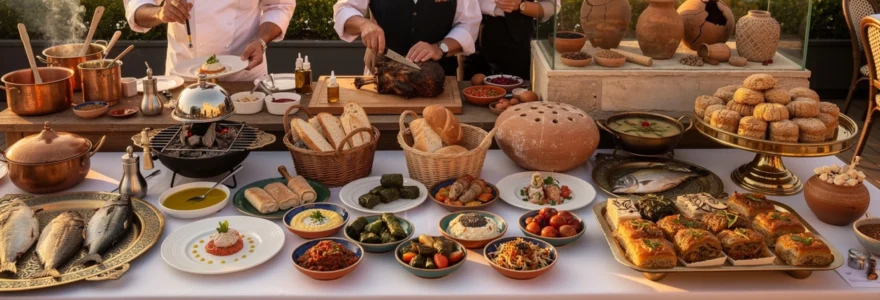
Istanbul stands as the world’s only city spanning two continents, creating a unique gastronomic landscape where European and Asian culinary traditions merge seamlessly. This remarkable positioning has given birth to one of the world’s most diverse and sophisticated food cultures, shaped by centuries of imperial rule, trade routes, and cultural exchange. The city’s restaurants, markets, and street food vendors offer an extraordinary journey through time, presenting dishes that reflect Byzantine monasteries, Ottoman palaces, and modern molecular gastronomy techniques. From the ancient spice markets of Eminönü to the contemporary establishments of Karaköy, Istanbul’s culinary scene represents a living museum of flavours that continues to evolve whilst honouring its rich heritage.
Ottoman imperial culinary legacy in modern istanbul gastronomy
The Ottoman Empire’s culinary sophistication continues to influence Istanbul’s restaurant scene today, with many establishments drawing directly from imperial kitchen traditions that once fed sultans and their courts. These techniques, refined over centuries in the palace kitchens, have been adapted and modernised to meet contemporary dining expectations whilst maintaining their authentic essence.
Topkapi palace kitchen techniques in contemporary turkish restaurants
The massive kitchens of Topkapi Palace, which once employed over 1,000 cooks, developed techniques that remain fundamental to Turkish cuisine today. Modern restaurants have adapted these methods, particularly the art of slow-cooking meats in clay vessels and the precise layering of flavours in rice dishes. Contemporary chefs study historical palace recipes, incorporating traditional spice combinations and cooking methods into their menus. The palace kitchen’s emphasis on seasonal ingredients and regional specialities continues to influence menu development across Istanbul’s fine dining establishments.
Many restaurants now employ traditional copper cookware similar to that used in the imperial kitchens, recognising how these materials affect heat distribution and flavour development. The palace tradition of preparing multiple courses simultaneously has evolved into modern tasting menus that showcase the complexity and variety of Ottoman cuisine.
Janissary corps food culture integration at pandeli and hamdi restaurant
The elite military corps known as the Janissaries developed their own distinct food culture, emphasising hearty, communal meals that could sustain warriors during long campaigns. Restaurants like Pandeli, located near the Spice Bazaar, and Hamdi, famous for its lamb dishes, have incorporated these robust flavours into their menus. The Janissary tradition of communal cooking in large cauldrons influenced the development of many Turkish stews and meat dishes that remain popular today.
These establishments preserve the Janissary emphasis on high-quality meat preparation, particularly lamb and beef dishes that were staples of the military diet. The tradition of serving these meals with specific bread types and accompaniments reflects the organised nature of Janissary dining culture, where every element served a nutritional and cultural purpose.
Meze preparation methods from süleymaniye mosque district
The neighbourhood surrounding Süleymaniye Mosque developed distinctive meze preparation techniques that combined religious dietary requirements with Ottoman culinary sophistication. Local establishments perfected the art of preserving vegetables and creating small plates that could be enjoyed throughout extended social gatherings. These techniques emphasised the use of olive oil, vinegar, and herbs to create flavourful dishes that could be stored safely without refrigeration.
Modern restaurants in this district continue to prepare meze using traditional methods, including the careful selection of vegetables at peak ripeness and the slow development of flavours through marination and fermentation. The mosque district’s influence on vegetarian meze reflects the Islamic emphasis on plant-based foods during certain periods and celebrations.
Traditional tandır cooking at develi ocakbaşı and zübeyir ocakbaşı
The ancient tandır cooking method, utilising underground ovens, represents one of the oldest continuous culinary traditions in Istanbul. Establishments like Develi and Zübeyir Ocakbaşı maintain authentic tandır ovens that reach temperatures exceeding 400 degrees Celsius, creating unique cooking conditions that cannot be replicated by modern equipment. This method produces exceptionally tender meats with distinctive smoky flavours that have become synonymous
with Istanbul’s reputation for celebratory feasts. Develi and Zübeyir Ocakbaşı pair these time-honoured cooking techniques with carefully curated meze and regional wines, creating an experience that allows diners to taste how Central Asian nomadic traditions evolved into today’s urban grill culture. For visitors interested in Istanbul’s culinary crossroads between Europe and Asia, a meal at one of these ocakbaşı restaurants offers a tangible link between ancient methods and contemporary tastes.
Byzantine culinary archaeological evidence in galata and beyoğlu districts
Long before Istanbul became the Ottoman capital, it was the heart of the Byzantine Empire, and traces of this era still shape the city’s gastronomy. Archaeological findings, monastic records, and early cookbooks have inspired modern chefs to revive and reinterpret Byzantine dishes in Galata and Beyoğlu. As you walk these hilly streets today, wine bars, meyhanes, and contemporary restaurants reference Constantinople’s pantry through their use of grains, pulses, herbs, and preserved fish.
Many establishments collaborate with historians and archaeologists to reconstruct recipes based on fragments of evidence, rather than complete instructions. This process is similar to restoring a faded fresco: chefs must fill in the gaps with knowledge of local ingredients, climate, and religious traditions. The result is a modern dining experience that feels both experimental and deeply rooted in the city’s thousand-year culinary archive.
Hagia sophia monastery recipe reconstructions at asitane restaurant
Asitane Restaurant, located near the Chora Church (Kariye Mosque), is renowned for its historical menu inspired by both Ottoman and earlier Byzantine sources. Drawing on monastic texts related to Hagia Sophia and other religious institutions, the kitchen team works with scholars to reconstruct dishes once served to clergy and aristocrats. These recipes often feature barley, lentils, grape molasses, and seasonal greens, reflecting a diet shaped by fasting rules and limited meat consumption.
Rather than presenting these dishes as museum pieces, Asitane adapts them for contemporary palates, adjusting seasoning and presentation while keeping the core techniques intact. You might encounter fish baked with coriander and cinnamon, or stewed lamb with quince and almonds, flavours that feel familiar yet subtly different from modern Turkish cuisine. For travellers interested in culinary history, reserving a table here is one of the most direct ways to taste the city’s transition from Byzantine Constantinople to Ottoman Istanbul.
Constantinople spice route documentation in grand bazaar establishments
The Grand Bazaar and surrounding Eminönü district have long been central nodes in the spice trade that linked Asia, the Middle East, and Europe. Historical ledgers from caravans and merchants document the movement of saffron, black pepper, mastic, and cloves through Constantinople’s markets. Today, many spice shops proudly reference this heritage, displaying old weighing scales, trade maps, and Ottoman or Byzantine-style containers alongside their contemporary stock.
Vendors often explain how particular spices once reserved for imperial kitchens or church feasts are now used in everyday dishes, from salep drinks to spiced meatballs. By comparing price lists and trade documents with current offerings, food historians can trace how the city’s tastes evolved as access to ingredients widened. As a visitor, you can recreate this journey by asking stall owners which spices were historically imported and which have always been local to Anatolia and the Balkans.
Orthodox christian fasting menu adaptations at lokanta maya
The tradition of Orthodox Christian fasting, with its numerous days abstaining from meat and dairy, left a lasting imprint on Istanbul’s plant-based and seafood dishes. Lokanta Maya and similar contemporary restaurants in Karaköy reinterpret these fasting menus for modern diners who seek lighter, vegetable-forward options. Plates built around lentils, chickpeas, wild greens, and olive oil echo monastic cooking while embracing current ideas of healthy eating.
Chefs draw on archival material and oral histories from Greek and Armenian communities to understand how cooks once navigated these dietary restrictions. The result is a creative set of dishes—such as slow-cooked celery root with citrus, or bulgur pilaf with walnuts and pomegranate—that appeal equally to vegetarians and omnivores. In a city famous for grilled meats, this strand of Byzantine and Orthodox influence reminds us that Istanbul’s culinary crossroads includes a rich tradition of modest, yet deeply flavourful, fasting food.
Bosphorus fishing traditions at balıkçı sabahattin and pandeli
The Bosphorus has sustained Istanbul’s inhabitants for millennia, and its fishing traditions bridge both Byzantine and Ottoman eras. Restaurants like Balıkçı Sabahattin in Sultanahmet and Pandeli above the Spice Bazaar maintain techniques that would have been recognisable to earlier generations: simple grilling over charcoal, baking fish in clay, and marinating catch-of-the-day in vinegar and herbs. The emphasis remains on freshness, seasonality, and minimal intervention, allowing the distinct flavours of bluefish, mackerel, and anchovies to shine.
These establishments often source directly from small-scale fishermen who still operate along the Bosphorus and the Marmara Sea. By preserving traditional cooking times and serving styles—such as pairing fish with rocket, onions, and sour lemon—these restaurants offer you a living connection to centuries-old maritime culture. When you sit by the water with a plate of grilled fish and a view of both Europe and Asia, it becomes clear how geography, trade, and ecology converge on the Istanbul table.
Anatolian ingredient sourcing networks across european istanbul
Beyond its imperial kitchens and coastal waters, Istanbul’s culinary strength rests on vast sourcing networks that stretch deep into Anatolia. Markets and restaurants on the European side rely on a steady flow of pistachios from Gaziantep, olive oil from Ayvalık, cheeses from Kars, and spices from Şanlıurfa. This web of suppliers effectively turns the city into a showcase for the wider Turkish terroir, bringing together micro-regional specialities under one urban skyline.
In neighbourhoods like Nişantaşı, Beşiktaş, and Şişli, you will find delicatessens proudly displaying the origin of each product, often with maps or photographs of partner farms. Many contemporary bistros emphasise “from farm to Istanbul” on their menus, mirroring global farm-to-table movements while staying rooted in local geography. For culinary travellers, this means that a single evening of meze and main courses can represent a journey across Anatolia without ever leaving the European side of the city.
Logistics play a crucial role in this ecosystem. Nightly cargo routes, refrigerated trucks, and modern cold-chain technology ensure that delicate herbs, fresh village butter, and artisanal sucuk sausages arrive in peak condition. At the same time, long-established family-run wholesalers in districts like Fatih and Eminönü maintain personal relationships with producers, often spanning several generations. This combination of modern infrastructure and traditional trust networks allows Istanbul’s chefs to access an unparalleled diversity of ingredients every morning.
As consumers become more interested in sustainability and traceability, many restaurants in European Istanbul provide information about their suppliers and production methods. You might see QR codes linking to videos from olive groves, or menu notes explaining how a particular wheat variety was revived from heirloom seeds. These details not only enhance transparency but also help you appreciate Istanbul as a true culinary crossroads between urban sophistication and rural heritage.
Levantine merchant community influence on karaköy food scene
Karaköy’s current reputation as a vibrant food neighbourhood owes much to its history as a Levantine trading hub. For centuries, Italian, French, Jewish, Greek, and Armenian merchants lived and worked here, bringing with them baking methods, spice blends, and café culture. Today’s cafés, meyhanes, and modern bistros occupy former warehouses and trading houses, subtly echoing this cosmopolitan past in their menus and interior design.
This Levantine heritage is most visible in the district’s blend of seafood meze, olive-oil dishes, pastry traditions, and coffee rituals. In many establishments, you will find Turkish classics sitting alongside recipes that hint at Genoese, Provençal, or Syrian influences. By embracing this layered identity, Karaköy has become one of the best areas to experience Istanbul’s culinary crossroads between Europe and Asia in a single afternoon of grazing.
Sephardic jewish pastry techniques at leb-i derya and karaköy lokantası
The arrival of Sephardic Jews from Spain and Portugal in the late 15th century introduced new pastry and dessert techniques to Istanbul. Restaurants and bars such as Leb-i Derya and Karaköy Lokantası pay homage to this heritage through their use of almonds, orange blossom water, cinnamon, and fine filo pastry. While not strictly kosher establishments, they weave Sephardic sensibilities—light, syrup-soaked cakes, nut-filled pastries, and spice-forward biscuits—into modern Turkish menus.
Many of these desserts resemble a dialogue between Iberian and Ottoman traditions, combining techniques like egg-based custards with syrup baths more typical of Middle Eastern sweets. When you taste a slice of revani scented with citrus or a delicate almond cookie alongside strong Turkish coffee, you are in fact sampling the legacy of historical migrations and religious communities. For anyone interested in Istanbul’s multicultural culinary history, asking staff which dishes are inspired by Sephardic or Jewish recipes can lead to fascinating stories.
Greek pontian culinary methods in kumkapı fish restaurants
Kumkapı, long associated with Greek and Armenian communities, preserves traces of Pontian Greek cooking techniques, especially in its fish restaurants. Pontian cuisine, rooted in the Black Sea coast, favours cornmeal, herbs like dill and mint, and preserved fish prepared through salting and smoking. In Kumkapı’s traditional lokantas and meyhanes, you may encounter dishes that nod to this heritage, such as anchovy-based meze or cornmeal-crusted fish fillets.
Chefs who grew up in mixed neighbourhoods often blend Pontian methods with mainstream Turkish approaches, using cornmeal coatings or herb marinades alongside classic charcoal grilling. This fusion creates a flavour profile that feels both familiar and distinct, particularly when paired with regional white wines or anise-flavoured rakı. By exploring Kumkapı’s side streets rather than only the main tourist row, you stand a better chance of finding family-run spots where these Greek Pontian influences are still proudly acknowledged.
Armenian speciality integration at bosphorus university area establishments
Along the Bosphorus near Boğaziçi (Bosphorus) University, neighbourhoods like Arnavutköy and Bebek host cafés and bakeries that quietly incorporate Armenian recipes into their offerings. Armenian cooks historically excelled in charcuterie, pastry, and stuffed vegetable dishes, and many of these skills filtered into Istanbul’s broader culinary repertoire. Today, it is not unusual to see sujuk and pastırma prepared with Armenian spice blends, or to find rich cakes and cookies that trace their origins to Armenian home kitchens.
Some establishments openly highlight this heritage, while others simply continue family traditions without heavy marketing. When you order stuffed mussels, spicy cured meats, or elaborate layered cakes in this area, you are often tasting the result of centuries of Armenian craftsmanship adapted to modern tastes. In a university district that attracts students and academics from around the world, this quiet integration of Armenian specialities underscores how Istanbul’s food culture remains both cosmopolitan and deeply local.
Contemporary molecular gastronomy applications by turkish chefs
In the last two decades, Istanbul has embraced molecular gastronomy as another way to express its position between Europe and Asia. Turkish chefs trained in global culinary capitals have returned home, eager to experiment with foams, gels, sous-vide techniques, and deconstructed classics while staying faithful to local ingredients. Instead of copying European avant-garde cuisine, many focus on reimagining dishes such as mantı, imam bayıldı, or sütlaç using cutting-edge methods.
For example, you might encounter a “Bosphorus fog” cocktail scented with mastic and citrus, or a lamb kebab presented as bite-sized spheres encapsulating smoky jus. These playful presentations invite you to reconsider familiar flavours, much like viewing a historic monument through a contemporary art installation. Importantly, the success of these restaurants depends on retaining clear, recognisable tastes beneath the technical showmanship—diners still want to feel that they are in Istanbul, not a laboratory divorced from place.
From an industry perspective, this wave of molecular experimentation has elevated Istanbul’s standing on the global culinary map. Prestigious awards and international press coverage now highlight the city not only for its traditional meyhanes and street food, but also for its innovation. For travellers, this means you can plan an itinerary that includes both a humble simit from a street vendor and a multi-course tasting menu where the same sesame and grape molasses appear in radically transformed form. The dialogue between old and new, simple and complex, mirrors Istanbul’s broader cultural dynamics.
Cross-continental spice trade impact on eminönü market vendors
No exploration of Istanbul’s culinary crossroads between Europe and Asia is complete without considering the spice trade’s lasting imprint on Eminönü. The area around the Egyptian (Spice) Bazaar has functioned for centuries as a gateway through which cardamom, nutmeg, cumin, sumac, and saffron move between continents. Today’s vendors inherit not only shopfronts but also trade relationships and blending techniques passed down through family lines.
As you wander these crowded aisles, you are effectively walking through a living archive of global commerce. Stall owners can often explain which spices arrived historically by caravan from Central Asia, which came by sea from India or the Levant, and which have always been grown in Anatolia. This knowledge helps you understand why certain Istanbul dishes—like spiced rice pilafs or complex kebab marinades—taste more layered than their counterparts elsewhere in the region.
Modern consumer trends have also reshaped the way Eminönü vendors operate. In addition to selling whole spices and traditional blends, many now offer vacuum-packed mixes for tourists, online ordering, and detailed information about origin and quality. Yet the core experience remains sensory and immediate: mountains of vivid powders, hanging strings of dried peppers, and the sound of merchants calling out offers. If you pay attention to the conversations around you, you will notice that bargaining today still echoes negotiations that once involved Venetian traders, Ottoman officials, and Asian merchants.
For home cooks and food professionals alike, shopping in Eminönü offers practical benefits as well as historical insight. You can ask vendors to grind spices to your preferred coarseness, request custom blends suited to fish, lamb, or vegetables, and receive advice on storage and usage. In doing so, you participate directly in the same cross-continental exchange that has shaped Istanbul’s kitchens for centuries, carrying a small piece of the city’s flavourful history back to your own table.