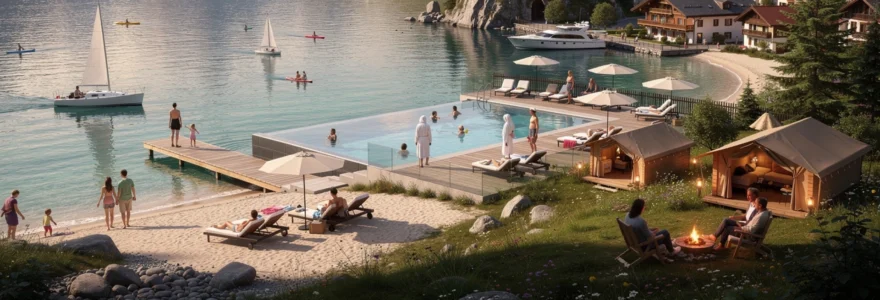
The magnetic appeal of waterfront escapes extends far beyond traditional coastal destinations. Lakeside retreats offer an increasingly compelling alternative to beach holidays, combining the tranquil beauty of pristine waters with the accessibility and varied landscapes of inland settings. From the dramatic fjord lakes of Scandinavia to the crystalline alpine waters of Switzerland, these freshwater destinations provide everything discerning travellers seek: stunning scenery, outdoor adventures, luxury accommodation, and the restorative power of water without the unpredictability of ocean tides and weather.
The growing sophistication of lake tourism infrastructure has transformed these destinations from simple camping spots into world-class resort experiences. Modern lakeside properties rival their coastal counterparts in amenities and service standards, whilst offering unique advantages such as warmer swimming temperatures, calmer waters for water sports, and often more affordable pricing structures. As travellers increasingly seek authentic experiences away from crowded beach resorts, lakeside getaways represent a refreshing evolution in leisure travel.
Alpine lake destinations: switzerland’s lac léman and austria’s hallstättersee
The alpine lakes of Central Europe exemplify the pinnacle of lakeside luxury tourism. These destinations have successfully positioned themselves as premium alternatives to Mediterranean coastal resorts, offering crystalline waters framed by snow-capped peaks and centuries of refined hospitality traditions. The combination of natural grandeur and sophisticated infrastructure creates an irresistible proposition for affluent travellers seeking both adventure and comfort.
Switzerland’s reputation for excellence extends seamlessly to its lake tourism offerings, where precision engineering meets natural beauty. The country’s lakeside resorts demonstrate how traditional hospitality can evolve to meet contemporary expectations whilst preserving authentic alpine character. Similarly, Austria’s lake regions showcase the successful integration of UNESCO World Heritage sites with modern tourism infrastructure, proving that conservation and commercial success can coexist harmoniously.
Lake geneva’s montreux riviera: château de chillon and vineyard terraces
Lake Geneva’s eastern shores represent perhaps the most sophisticated lakeside destination in Europe, where Belle Époque grandeur meets contemporary luxury. The Montreux Riviera stretches along terraced vineyards that cascade dramatically towards the lake’s pristine waters, creating a landscape that rivals any Mediterranean coastline. Historic palaces and grand hotels dot the shoreline, many dating back to the 19th century when European royalty first discovered the region’s therapeutic climate and stunning vistas.
The iconic Château de Chillon, perched on a rocky outcrop extending into the lake, serves as both a cultural anchor and tourist magnet for the region. This perfectly preserved medieval fortress attracts over 400,000 visitors annually, demonstrating how historical assets can enhance rather than compete with natural attractions. The surrounding area offers world-class amenities including Michelin-starred restaurants, luxury spas utilising alpine botanicals, and exclusive yacht clubs providing access to some of Europe’s finest freshwater sailing.
Hallstatt’s UNESCO world heritage lakefront architecture
Austria’s Hallstatt exemplifies how architectural heritage can define a lakeside destination’s character and global appeal. This picturesque village, nestled between the Hallstättersee and the Dachstein Alps, demonstrates the tourism potential of preserved historical settlements. The town’s 16th-century alpine houses, reflected perfectly in the lake’s mirror-like surface, create one of Europe’s most photographed landscapes and have inspired replica developments as far away as China.
The management of Hallstatt’s tourism success offers valuable lessons in sustainable lake destination development. Despite receiving over one million visitors annually, the village maintains strict architectural guidelines and visitor management protocols that preserve its authentic character. Premium accommodations, including converted historic buildings and lakeside boutique hotels, command rates comparable to luxury alpine ski resorts whilst offering unique cultural immersion experiences unavailable at traditional beach destinations.
Interlaken’s thunersee and brienzersee twin lake system
The Interlaken region showcases how multiple lake systems can create diverse tourism offerings within a single destination. Positioned strategically between Lake Thun and Lake Brienz, Interlaken serves as a hub for exploring two distinctly different alpine lake experiences. Lake Thun, with its gentle shores and historic castles, appeals to cultural tourists and families, whilst Lake Brienz, known for its intense
turquoise colour and steep, forested slopes, attracts photographers, hikers and adventure travellers. Between the two lakes, operators offer everything from scenic cruises and stand-up paddleboarding to canyoning and paragliding, allowing visitors to experience the water from above, on, and even briefly within it. This multi-layered offer mirrors the variety of activities you might expect in a coastal resort, but with the added drama of glaciers and high alpine peaks as a constant backdrop.
Infrastructure around Thunersee and Brienzersee has been carefully developed to balance access with environmental protection. Electric boats, integrated rail-boat passes and clearly signposted hiking routes help to disperse visitor flows and reduce car dependency. For travellers, this means it is entirely feasible to enjoy a car-free lakeside holiday that still feels flexible and independent, a clear advantage over some more congested seaside destinations.
Salzkammergut region’s thermal springs and spa facilities
Extending beyond Hallstatt, Austria’s Salzkammergut region demonstrates how lakeside tourism can be successfully paired with wellness travel. Towns such as Bad Ischl and Bad Goisern have built on their 19th-century spa heritage, adding contemporary thermal complexes that draw mineral-rich waters from underground aquifers. Visitors can spend the morning kayaking on Wolfgangsee or Attersee, then retreat to thermal pools, saunas and salt grottos in the afternoon, creating a restorative rhythm that many coastal resorts struggle to match outside peak summer.
The integration of spa culture with lake activities has also extended the Salzkammergut’s season well into autumn and early spring. Whilst beach destinations may see sharp drops in occupancy as temperatures fall, lakeside spa hotels maintain steady demand from wellness-focused travellers, older guests and corporate retreats. This diversified appeal strengthens the resilience of the regional tourism economy and highlights one of the lesser-known advantages of choosing a lakeside getaway over a traditional beach break.
North american great lakes tourism: superior and huron waterfront experiences
The North American Great Lakes showcase freshwater tourism on a grand, almost oceanic scale. With over 11,000 miles of shoreline and a combined surface area larger than the United Kingdom, these lakes blur the line between inland and maritime experiences. Yet despite their size, many Great Lakes destinations retain an intimate, small-town character, offering travellers a compelling mix of expansive horizons and walkable historic centres.
In recent years, investment in waterfront revitalisation, cycling infrastructure and heritage preservation has repositioned the Great Lakes as a credible alternative to the Atlantic and Pacific coasts. You can enjoy sandy beaches, dramatic cliffs and lighthouses, but without the issues of salt spray, strong tides or crowded surf breaks. For travellers who want the feeling of a seaside holiday with the gentler conditions of freshwater, the Great Lakes present a particularly attractive proposition.
Lake superior’s apostle islands national lakeshore sea caves
On Lake Superior, the Apostle Islands National Lakeshore in Wisconsin illustrates the unique appeal of freshwater “sea” caves and island archipelagos. In summer, kayakers weave through sandstone formations carved by centuries of wind and waves, exploring cathedral-like caverns that would not look out of place on a rugged Atlantic coast. The waters here are remarkably clear, and because there are no tides, paddling conditions can be more predictable for intermediate-level visitors.
In winter, when conditions allow, the same caves can transform into spectacular ice formations accessible via marked trails on the frozen lake surface. This seasonal duality effectively doubles the touristic value of the site, attracting warm-weather paddlers as well as cold-season hikers and photographers. For travellers, the key consideration is water temperature: even in high summer, Lake Superior remains cold, so high-quality wetsuits or drysuits are essential if you plan more immersive activities than a short paddle near shore.
Mackinac island’s victorian resort heritage on lake huron
Mackinac Island on Lake Huron demonstrates how lakeside tourism can lean into heritage and slow travel. Famous for its ban on private cars, the island has cultivated a serene, almost cinematic atmosphere where horse-drawn carriages and bicycles dominate the streets. Grand Victorian-era hotels line the waterfront, their wide verandas facing the Straits of Mackinac in a tableau reminiscent of 19th-century seaside resorts in New England or the English Riviera.
For visitors, this car-free environment changes the pace and texture of a lakeside holiday. Distances that would ordinarily be covered in minutes by car become leisurely cycles along the shoreline, with multiple opportunities to stop at lookout points, beaches and historic forts. The island’s focus on period architecture, fudge shops and heritage tourism creates a strong sense of place, while ferry connections from the mainland ensure relatively easy access compared to many offshore coastal islands.
Sleeping bear dunes national lakeshore’s freshwater coastline
Also on Lake Michigan, Sleeping Bear Dunes National Lakeshore in Michigan offers a freshwater coastline that rivals many ocean beaches in both scale and visual impact. Towering dunes rise up to 450 feet above the lake, creating sweeping panoramas over turquoise shallows and deep-blue offshore waters. On warm summer days, families scatter along miles of sandy shoreline, enjoying beach experiences almost indistinguishable from a traditional coastal holiday—minus the salt and strong tides.
The region has invested heavily in visitor infrastructure, including well-maintained trails, interpretive centres and scenic drives that reduce pressure on the most popular viewpoints. Accommodation options range from rustic lakeside cabins to boutique inns in nearby towns such as Glen Arbor and Empire. For travellers, one practical advantage of a Great Lakes beach holiday is the lower risk of dangerous rip currents compared to the ocean, though localised currents and sudden weather changes still demand respect and careful monitoring.
Georgian bay’s thirty thousand islands archipelago
On the Canadian side of Lake Huron, Georgian Bay’s Thirty Thousand Islands region exemplifies wilderness-style lakeside tourism. Granite outcrops, windswept pines and countless small islands combine to create a landscape often compared to the fjords of Scandinavia or the archipelagos of coastal Sweden. Here, the emphasis is on canoeing, kayaking, sailing and cabin stays that place you directly in contact with the water and surrounding nature.
The archipelago is particularly appealing for travellers seeking a “marine” experience without the complexity of tides and swells. Marinas, water taxis and cottage resorts provide access to otherwise remote islands, while national and provincial parks apply strict building guidelines to protect the shoreline’s character. If you are used to booking a coastal villa or a yacht charter, a week in a Georgian Bay island cabin offers a similar sense of escape and exclusivity, but with calmer waters and often lower overall holiday costs.
Scandinavian fjord lakes: norway’s geirangerfjord and sweden’s vänern
Scandinavia’s fjord and lake systems combine dramatic topography with a strong outdoor culture, making them natural contenders to rival seaside holidays. In Norway, deep fjords cut far inland from the coast, creating elongated “lakes” that share characteristics of both marine and freshwater environments. In neighbouring Sweden, vast inland lakes such as Vänern offer expansive horizons and island-dotted waters that feel strikingly coastal in character.
Geirangerfjord, often described as one of the most beautiful fjords in the world, is a UNESCO World Heritage site where waterfalls plunge down near-vertical cliffs into sapphire waters. Although technically connected to the sea, its sheltered conditions and limited tidal range make it functionally comparable to a lake for tourism planning. Visitors can combine fjord cruises with hiking, cycling and stays in clifftop cabins, enjoying the same sense of “water at your doorstep” that defines the best lakeside retreats.
By contrast, Sweden’s Lake Vänern is a true freshwater giant, covering nearly 5,600 square kilometres and hosting more than 20,000 islands and skerries. Towns such as Karlstad and Mariestad have developed attractive waterfronts with marinas, beaches and cycle paths, creating a relaxed, family-friendly environment. For travellers who appreciate the Scandinavian emphasis on public access to nature—enshrined in Sweden’s Allemansrätten, or right of public access—Lake Vänern’s extensive shoreline offers countless opportunities for swimming, picnicking and wild camping that would be much harder to find along more developed ocean coasts.
Glacial lake recreation infrastructure: marinas, water sports, and accommodation standards
The success of lakeside getaways that rival seaside holidays depends heavily on robust, well-planned recreation infrastructure. Over the past two decades, many glacial and alpine lake destinations have undergone significant investment in marinas, water sports centres and high-spec accommodation. The result is a level of service and comfort that matches or exceeds coastal resorts, but with calmer waters and often quicker access from major cities.
From a traveller’s perspective, this means you can expect modern marinas with reliable boat rental services, certified instructors for water sports, and safety protocols that reflect the specific conditions of cold, deep freshwater. At the same time, accommodation providers have raised their standards, blending rustic charm with contemporary amenities such as underfloor heating, spa facilities and smart-room technology. The collective effect is to remove many of the compromises that once characterised lake holidays, turning them into polished alternatives to the seaside rather than second-choice options.
Purpose-built lake resorts: center parcs longleat forest model
Purpose-built lake resorts provide perhaps the clearest example of how freshwater destinations have been engineered to compete with coastal holiday parks. Center Parcs Longleat Forest in the UK, for instance, is built around a central lake that anchors the entire guest experience. While the property sits far from the coast, it delivers many of the same water-focused activities you might expect at a seaside resort: paddleboarding, kayaking, pedal boating and lakeside relaxation.
The Longleat Forest model highlights several best practices for lakeside tourism. Accommodation is clustered in woodland settings with direct or indirect views of the water, encouraging guests to spend time outdoors. The Subtropical Swimming Paradise, a large indoor water complex, mitigates weather risk—a factor that can make or break a beach holiday in northern Europe. By combining predictable indoor water fun with a safe, lifeguarded lake, the resort effectively decouples the success of a water-based holiday from day-to-day meteorological conditions.
Freshwater yacht chartering: lake windermere and lake annecy operations
Yacht chartering is no longer exclusive to saltwater destinations such as the Mediterranean or Caribbean. On England’s Lake Windermere and France’s Lake Annecy, freshwater yacht and motorboat operations have grown steadily, offering a scaled-down but highly accessible version of coastal cruising. Visitors can rent self-drive electric boats by the hour, book skippered sailing excursions, or even charter small yachts for multi-day itineraries with overnight moorings in marinas or private jetties.
For many travellers, the appeal lies in lower barriers to entry. Freshwater chartering typically involves shorter distances, calmer waters and fewer licensing requirements than sea sailing, making it ideal for families and first-time boaters. Operational costs—from fuel to mooring fees—also tend to be lower than on the coast, and the risk of seasickness is significantly reduced. If you have ever wondered whether a boating holiday is for you, a freshwater charter on Windermere or Annecy can be an excellent way to “test the waters” in a controlled, comfortable environment.
Lakeside glamping sites: canvas and wood structures integration
Glamping—luxury camping in canvas lodges, pods or wooden cabins—has found a natural home beside lakes and reservoirs. From the Scottish Highlands to rural France, operators are integrating safari tents, yurts and timber lodges into shorelines in ways that maximise views while minimising environmental impact. Thoughtful site planning places structures back from the immediate waterline, using reeds and native vegetation as natural buffers against erosion and visual clutter.
For guests, lakeside glamping combines much of the romance of wild camping with hotel-style comforts such as proper beds, en-suite bathrooms and wood-burning stoves. You can fall asleep to the sound of lapping water, wake to mist rising off the lake, and still enjoy hot showers and high-speed Wi-Fi. The key is to check how well a site has integrated its infrastructure: look for eco-certifications, information on wastewater treatment, and clear guidelines on campfires and water use. When done well, lakeside glamping offers an immersive alternative to both traditional camping and standard hotel stays by the sea.
Wild swimming facilities: temperature monitoring and safety protocols
Wild swimming has become a defining trend in lakeside tourism, but it also demands careful management. Unlike many coastal beaches with lifeguard stations and well-understood currents, lakes vary widely in depth, temperature and water quality. Leading destinations now provide temperature displays at key access points, guidance signage on safe entry and exit routes, and in some cases, supervised swim zones during peak periods. These measures make spontaneous dips more accessible to casual swimmers who might otherwise be wary of cold, opaque water.
As a visitor, it is worth approaching lakeside wild swimming with the same respect you would give to the ocean. Even in summer, deep glacial lakes can remain below 15°C at the surface, increasing the risk of cold water shock. Wearing a wetsuit, entering gradually, and swimming parallel to the shore are prudent strategies, particularly if you are more familiar with warm coastal waters. The best-managed lakeside resorts actively communicate these safety protocols, integrating them into welcome materials, guided activities and on-site briefings.
Comparative analysis: lakeside vs maritime tourism economics
Beyond scenery and activities, the choice between a lakeside getaway and a seaside holiday often comes down to economics. For destinations and travellers alike, factors such as season length, pricing, and transport costs can significantly influence overall value. Over the past decade, many inland lake regions have narrowed—or even reversed—the price premium traditionally enjoyed by coastal resorts, especially during shoulder seasons.
From an operator’s perspective, lakeside destinations frequently benefit from lower land and operating costs compared to prime oceanfront locations. For you as a guest, this can translate into more spacious accommodation, better value dining and a higher staff-to-guest ratio for the same nightly rate. However, as certain iconic lake regions—think Italy’s Lake Como or Switzerland’s Lac Léman—have entered the global luxury circuit, price differences at the very top end have diminished, making careful comparison essential.
Seasonal tourism patterns: peak summer vs year-round coastal destinations
One of the most significant differences between lakeside and maritime tourism lies in seasonality. Many beach destinations, particularly in the Mediterranean and along the Atlantic, can sustain a long high season from late spring to early autumn, thanks to warmer sea temperatures and stable weather. Lakes, especially at higher altitudes or latitudes, often have a shorter window for warm-water activities, concentrating peak demand into July and August.
However, this apparent disadvantage can work in favour of both destinations and visitors. Off-peak, lakeside resorts often pivot to alternative draws such as hiking, wellness, gastronomy or winter sports, creating a more diverse annual tourism portfolio. If you are flexible on dates, you can secure premium lakeside accommodation in May, June or September at significantly lower rates than equivalent coastal properties, while still enjoying comfortable air temperatures and fewer crowds. For many travellers, this trade-off—slightly cooler water but a quieter, more reasonably priced holiday—represents a winning formula.
Accommodation pricing structures: lake district vs cornwall comparison
A useful benchmark is the comparison between two of England’s most popular holiday regions: the Lake District and Cornwall. Both attract millions of visitors annually and offer a spectrum of accommodation from basic campsites to five-star hotels. Yet pricing patterns differ in subtle but important ways. Coastal Cornwall commands strong premiums for sea-view rooms and properties within walking distance of beaches, particularly in hotspots such as St Ives and Padstow.
In the Lake District, lake-view rooms in Bowness-on-Windermere or Keswick can be similarly priced at the luxury end, but there is often a broader choice of high-quality options a short drive or walk back from the shore. This slightly more distributed geography can keep average nightly costs lower for travellers willing to trade direct waterfront access for a hillside position with panoramic views. Self-catering lakeside cabins and lodges also tend to offer better per-person value for families and groups than equivalent coastal cottages, particularly outside school holidays when minimum stay rules are more flexible.
Transport accessibility: inland lake regions vs coastal resort connectivity
Transport accessibility is another factor where lakeside getaways can rival, and sometimes outperform, seaside holidays. Many major lake destinations are situated closer to national transport hubs than their coastal counterparts. Lake Geneva is less than an hour by train from Geneva Airport; Lake Annecy is around 45 minutes from Geneva or one hour from Chambéry; and Germany’s Lake Constance is within easy reach of Zurich and Munich. By contrast, reaching remote coastal resorts can involve longer, more complex road transfers after your flight or train journey.
For domestic travellers, inland lakes often sit at the crossroads of motorway and rail networks, making long-weekend escapes more viable. The UK’s Lake District, for instance, is directly served by mainline rail to Oxenholme and Windermere, while many Scottish lochs are within a few hours’ drive of Glasgow and Edinburgh. This connectivity not only reduces travel time and cost but also lowers the carbon footprint of your holiday—a growing consideration for environmentally conscious travellers. When you can trade six hours of driving to a far-flung beach for a two-hour train journey to a picturesque lake, the decision to choose a lakeside getaway becomes much easier to justify.