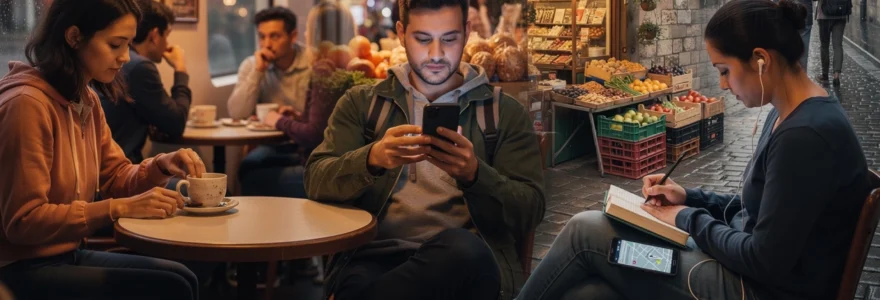
Travel memories often emerge not from grand monuments or luxury experiences, but from the quiet, unscripted moments that unfold between planned activities. These micro-experiences—a brief conversation with a shopkeeper, the taste of morning coffee in an unfamiliar café, or the rhythm of footsteps on cobblestone streets—form the emotional foundation of lasting travel recollections. Recent neuroscience research reveals that our brains process these ordinary encounters with remarkable intensity, encoding them into long-term memory through mechanisms that prioritise authenticity and emotional resonance over spectacle. Understanding how these fleeting moments shape our travel narratives provides valuable insights into the psychology of memory formation and the deeper meaning we derive from exploring new places.
Psychological impact of Micro-Moments in travel memory formation
The human brain demonstrates a fascinating preference for storing travel memories that contain emotional significance rather than those based purely on visual grandeur. This phenomenon explains why travellers often recall spontaneous interactions more vividly than carefully orchestrated tourist activities. Psychological studies indicate that micro-moments activate the brain’s reward pathways through unexpected positive experiences, creating stronger neural connections than anticipated events.
Neuroplasticity and memory consolidation during brief travel encounters
When you experience something novel during travel, your brain undergoes rapid neuroplastic changes that enhance memory formation. These brief encounters trigger the release of dopamine and norepinephrine, neurotransmitters that facilitate the consolidation of short-term experiences into long-term memory. Research demonstrates that travel-related neuroplasticity occurs within minutes of exposure to new stimuli, suggesting that even the briefest cultural exchanges can create lasting cognitive impressions.
The hippocampus, responsible for memory formation, shows increased activity during unstructured travel moments compared to guided tour experiences. This heightened neural activity stems from the brain’s need to process unexpected information without predetermined frameworks, forcing deeper engagement with environmental stimuli and social cues that might otherwise pass unnoticed.
Emotional anchoring through Sensory-Rich ordinary experiences
Ordinary travel moments often engage multiple sensory channels simultaneously, creating what psychologists term emotional anchors. The smell of fresh bread from a neighbourhood bakery, combined with the sound of unfamiliar language and the texture of weathered stone walls, forms a multisensory memory complex that resists fading over time. These anchored memories become reference points for entire travel experiences, often triggering detailed recollections of surrounding events and emotions.
Sensory integration during mundane activities proves particularly powerful because it occurs without conscious effort or performance pressure. Unlike photographing famous landmarks, which requires deliberate attention and often creates psychological distance, ordinary sensory experiences embed themselves naturally into memory through unconscious processing mechanisms.
Duration neglect theory applied to travel memory retention
Duration neglect theory suggests that people remember the peak emotional intensity and final impression of an experience rather than its length. This principle applies directly to travel micro-moments, where a five-minute conversation with a local resident can overshadow hours spent in museums or on tours. The theory explains why brief, emotionally resonant encounters often dominate travel narratives despite occupying minimal time within the overall journey.
Travel memories follow this pattern because ordinary moments often contain unexpected peaks of connection or understanding. A shared laugh with a street vendor, a moment of quiet contemplation in an empty square, or the satisfaction of successfully navigating public transport can create emotional peaks that define entire travel experiences, regardless of their brief duration.
Cognitive load reduction in unplanned travel moments
Unplanned travel experiences require less cognitive load than structured activities, allowing for deeper memory encoding and emotional processing. When you’re not following an itinerary or trying to capture the perfect photograph, your brain can focus entirely on experiential absorption. This reduced cognitive load creates optimal conditions for memory formation, as attention isn’t divided between performance and experience.
The absence of external expectations during ordinary moments allows for authentic emotional responses, which strengthen memory consolidation. Without the pressure to document or evaluate experiences, travellers can engage more fully with their surroundings, leading to richer and more detailed memory formation that persists long after the journey ends.
Phenomenological analysis of everyday travel encounters
The
phenomenological approach invites us to look closely at how these everyday encounters actually feel as we live them, rather than reducing them to generic “highlights.” Instead of asking whether a café, a train ride, or a rainy street is objectively special, we examine the textures of experience—the shifting interplay of body, place, time, and mood. When we travel, these textures often sharpen, because we’re slightly off-balance: familiar routines are gone, and our attention widens. In this way, ordinary travel moments become rich case studies in how consciousness reacts to new environments, and why they linger as travel memories long after we return home.
Café culture immersion in prague’s lesser town district
Sitting in a small café in Prague’s Lesser Town, you’re not just consuming coffee; you’re participating in a local rhythm of life. The clink of porcelain, the slow pace of service, and the murmur of Czech conversations create a lived atmosphere that is very different from a hurried takeaway back home. Phenomenologically, this scene is a layered experience: the weight of the cup in your hand, the view of baroque facades through slightly fogged windows, and the feeling of being an observer and outsider, yet momentarily at rest.
These subtle, embodied details often become core travel memories because they combine stillness with heightened awareness. You may not remember the exact name of the café, but you recall the way the late-afternoon light fell across your table, or how the server wrote your order by hand rather than tapping on a screen. For many travellers, such café culture immersion creates a powerful sense of “I was really there,” grounding the abstract idea of Prague in a concrete, sensory memory. Over time, that five-minute pause becomes a mental shorthand for the entire city.
Street market interactions along bangkok’s chatuchak weekend market
In contrast, walking through Bangkok’s Chatuchak Weekend Market offers an intense, kinetic form of everyday immersion. Here, the phenomenological field is crowded: aromas of grilled meat and incense mingle with humidity, colourful textiles, and overlapping vendor calls. Your body weaves through narrow aisles, constantly adjusting to people stopping, negotiating prices, or inspecting goods. Instead of stillness, your travel memory is built from rapid micro-adjustments—tiny decisions about where to look, move, or pause.
What makes these ordinary market encounters so memorable is not just the exoticism of the products, but the small, human exchanges that occur mid-chaos. A vendor laughs as you mispronounce a Thai word; another quickly demonstrates how to eat a snack you’ve never seen before. These moments function like anchors in a sensory storm, giving shape and emotional meaning to an otherwise overwhelming environment. Long after specific stalls blur together, you may vividly remember the shared joke over a bargaining attempt or the surprise kindness of a seller adding an extra piece “for luck.”
Public transport observations on tokyo’s yamanote line
On Tokyo’s Yamanote Line, everyday travel memory is formed less through conversation and more through observation. You step onto a spotless train, hear the melodic chime signaling station departures, and notice how fellow passengers negotiate space with quiet precision. The scene is mundane for Tokyo residents, yet for a visitor it can feel like entering a carefully choreographed social performance. Every small action—from lining up before the doors to the absence of loud phone calls—communicates unspoken norms.
From a phenomenological perspective, this public transport moment acts as a lens through which you interpret the wider culture. You may ask yourself: How do people belong here? How do they care for shared spaces? Travel memories from the Yamanote Line often condense into brief, vivid snapshots: a child bowing slightly to an older passenger, a commuter sleeping upright without leaning on anyone, or the view of the city flashing by between station announcements. Each scene offers an ordinary, repeated ritual that quietly shapes your understanding of Tokyo far more than a single landmark might.
Local grocery shopping experiences in tuscany’s hill towns
Shopping in a small grocery or alimentari in a Tuscan hill town illustrates how routine errands can become profound travel experiences. You enter expecting a practical transaction, but you find yourself pulled into a slow dance of greetings, recommendations, and local gossip exchanged over the cheese counter. The shop’s narrow aisles, faint smell of cured meats, and hand-written price tags contrast with the standardised supermarkets you may be used to, making the simple act of buying bread feel strangely significant.
These local grocery encounters create travel memories because they involve role reversal: instead of being treated as a tourist, you briefly inhabit the role of resident doing everyday tasks. Asking which tomatoes are best for a sauce or waiting patiently while someone counts exact change brings you into the practical rhythms of community life. Years later, it might not be the famous Tuscan vineyard that first comes to mind, but the memory of carrying a paper bag of groceries up a stone street, feeling the weight in your arms and the uneven cobbles under your feet.
Weather-induced shelter seeking in edinburgh’s royal mile
On Edinburgh’s Royal Mile, an unexpected downpour can quickly turn a sightseeing plan into an improvised search for shelter. You duck into a doorway, small shop, or historic pub, your jacket damp and glasses fogged. Phenomenologically, weather interrupts the linear flow of your day and replaces it with a moment of suspended time—a pause where you are simply waiting, watching raindrops, and sharing space with strangers doing the same. This unscripted pause often heightens your sense of vulnerability and belonging at once.
Such weather-induced detours frequently become some of the strongest travel memories precisely because they are unplanned. Perhaps a shopkeeper offers you a towel, or another traveller recommends a nearby café while you both watch the rain. The sound of water on old stone, the smell of wool drying, and the warm contrast of interior lamplight against grey skies all combine into a vivid atmospheric memory. What started as an inconvenience transforms into a story you tell later—proof that even disrupted plans can produce some of the most meaningful, ordinary moments of travel.
Anthropological significance of mundane tourist behaviours
From an anthropological perspective, mundane tourist behaviours—ordering coffee, queuing for transport, or taking photos of street corners—reveal how visitors negotiate identity, status, and belonging in unfamiliar environments. These behaviours operate as small cultural experiments: you copy local habits, test social boundaries, and sometimes unintentionally break unspoken rules. By examining these micro-actions, researchers can better understand how tourism reshapes both host communities and visitors’ self-perceptions. For you as a traveller, becoming more aware of these behaviours can turn routine moments into opportunities for deeper cultural insight rather than mere consumption.
Consider the common act of photographing food in a restaurant. In some cities, this signals appreciation and a desire to share experiences; in others, it may be seen as intrusive or performative. Similarly, the way tourists handle rubbish, speak in public spaces, or interact with service staff can either reinforce or challenge local norms. Anthropologists studying travel memories increasingly focus on these “ordinary” actions because they accumulate into patterns that affect neighbourhood dynamics, labour practices, and even urban planning. By recognising your own mundane behaviours as part of a larger cultural system, you can make more conscious choices that support respectful, sustainable travel.
Digital documentation strategies for ephemeral travel moments
In an era where travel memories are often mediated through screens, how we document small, ordinary moments has a significant impact on what we actually remember. Used thoughtfully, digital tools can enhance memory formation rather than distract from it, especially when they help you capture context and emotion instead of only polished images. The key is to document micro-moments in ways that preserve their spontaneity and meaning without overwhelming yourself with data. By combining light-touch digital strategies with reflective practices, you create a personal archive that supports both immediate sharing and long-term recollection.
Instagram story archive techniques for Micro-Experiences
Instagram Stories can function as a low-pressure method to record fleeting travel experiences that might not “deserve” a permanent post but still matter deeply. Because Stories expire after 24 hours unless saved, they encourage quick, informal captures—a ten-second clip of tram bells, a rainy window view, or a brief walk through a morning market. Used intentionally, these snippets build a chronological, atmospheric record of your day that mirrors how you actually live it, not just its highlight reel. Later, when you revisit your Story archive, you trigger layered memories that static images alone may not evoke.
To make Stories more useful for preserving travel memories, you can create themed Highlights such as “Everyday Moments,” “Trains & Streets,” or “Cafés & Corners.” Adding short captions focused on feelings rather than descriptions—“Tired but happy,” “Smelled like oranges and diesel,” “First time not getting lost on the metro”—helps anchor emotional context. Ask yourself as you post: If I rewatch this in three years, what will I wish I had written about this ordinary moment? This simple question nudges you to record not just what you saw, but how you experienced it.
Voice note recording methods using smartphone applications
Voice notes offer a powerful, often underused way to capture ephemeral travel memories, especially those involving soundscapes or complex emotions. Unlike typed notes, spoken reflections preserve tone, hesitation, and background noise—the hum of a café, distant church bells, or station announcements—which later function as immersive triggers. After a brief encounter or a quiet walk, you can record a one-minute reflection describing what you noticed, how you felt, and what surprised you. This practice turns your phone into a kind of mobile field recorder, blending personal diary with ethnographic observation.
To avoid cognitive overload, it helps to establish light structure for your voice notes. You might always answer the same three questions: Where am I? What is the smallest detail I want to remember? What did today’s moment teach me about this place or about myself? Many note-taking apps now allow automatic transcription, making it easier to search later for specific memories or themes. Over time, this collection of short audio reflections can become one of the richest components of your travel memory archive, preserving nuances that photos alone cannot carry.
Geolocation tagging for ordinary moment preservation
Geolocation tagging—whether through map apps, photo metadata, or dedicated journaling tools—helps anchor travel memories to specific coordinates, turning abstract recollections into revisitable points on a map. Each tag can mark not only major attractions but also the bench where you ate a simple sandwich, the quiet side street where you got lost, or the small park where you stopped to rest. When you later scan your digital map, these pins act as gateways to micro-stories, reminding you that a journey was made of dozens of minor pauses, not just headline destinations.
To keep geolocation tagging manageable, you can adopt a minimal, consistent system. For example, drop a pin whenever you experience an ordinary moment that feels emotionally charged—an unexpectedly kind interaction, a powerful smell, or a view that made you stop walking. Add a short note like “first time understanding the bus system” or “shared umbrella with stranger.” Months or years later, revisiting these pins can recreate not only your route but also your evolving relationship with each place, offering a cartographic view of how small experiences built your overall travel narrative.
Analogue journaling integration with digital memory systems
Despite abundant digital tools, analogue journaling remains one of the most effective ways to consolidate travel memories, particularly those built from small, ordinary moments. The act of handwriting slows your thinking just enough to notice patterns and emotions that might slip past in a quick caption or photo upload. A simple notebook can capture sketches of café layouts, overheard phrases, or lists of tiny details (“blue tiles, smell of soap, squeaky tram doors”) that later unlock vivid recollections. For many travellers, this daily practice becomes an evening ritual that gently closes each day of a trip.
Integrating analogue notes with digital systems requires only a few extra steps. You might photograph key journal pages and store them in a cloud folder labelled by destination, or tag scanned pages with keywords such as “markets,” “trains,” or “weather.” Some travellers like to cross-reference: writing a journal entry number in the notes section of their map pins, or adding a small symbol in the journal next to experiences that also appear in photos or Stories. This light linking between paper and pixels creates a layered archive where each medium reinforces the others, strengthening long-term travel memory retention.
Slow tourism movement and contemplative travel practices
The principles of slow tourism align closely with the idea that small, ordinary travel moments form the backbone of our most enduring memories. Instead of maximising the number of sights visited, slow travel emphasises depth over breadth: staying longer in fewer places, walking rather than rushing, and allowing time for unscripted encounters. This shift in pace naturally increases your exposure to everyday local life—school runs, market deliveries, evening rituals in public squares—which become the raw material of meaningful travel memories. In a way, slow tourism treats travel not as a checklist but as an unfolding relationship with place.
Contemplative travel practices further enhance this relationship by encouraging intentional awareness of micro-moments. Simple techniques such as mindful walking, short periods of silent observation, or focused attention on one sense at a time (sound, smell, touch) can significantly strengthen memory encoding. For example, spending ten minutes in a park doing nothing but listening—to birds, traffic, children, fountains—often yields a richer, more grounded sense of a city than an hour of hurried sightseeing. You might ask yourself: If I remember only one ordinary scene from today, which would I choose, and why?
Adopting a slow, contemplative approach also helps manage the cognitive load that can come with constant movement and digital documentation. By deliberately scheduling “unscheduled time” into your itinerary, you give your brain space to process and consolidate experiences instead of stacking them back-to-back. This could mean returning to the same café each morning, walking the same street at different times of day, or revisiting a small park to notice seasonal or weather changes. Over days, these repeated, ordinary actions weave into a coherent narrative of familiarity and belonging—a powerful foundation for long-lasting travel memories.