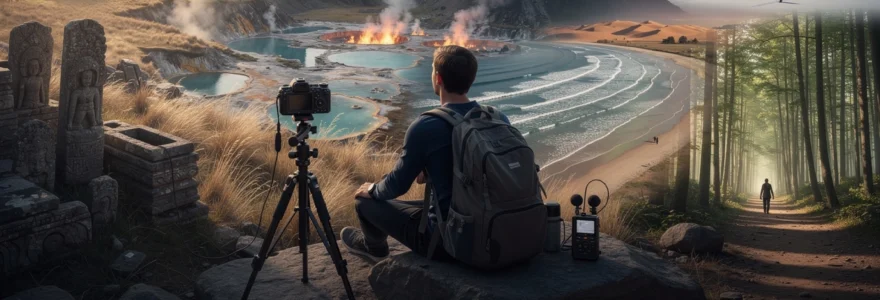
Travel’s most transformative moments often emerge not from bustling markets or crowded attractions, but from quiet interludes where time seems suspended. These pockets of profound silence—whether witnessed during a misty dawn at Machu Picchu or experienced in the vast expanse of Iceland’s glacial landscapes—create memories that resonate long after returning home. The growing pursuit of contemplative travel experiences reflects a deeper understanding that meaningful journeys require space for reflection and genuine connection with both place and self.
In our increasingly connected world, the art of seeking silence during travel has become both more challenging and more essential. Modern travellers are discovering that the most profound experiences often occur when they step away from the noise of daily life and embrace the transformative power of quiet observation. These moments of stillness allow for deeper cultural immersion, enhanced sensory awareness, and the kind of personal insights that define truly memorable journeys.
Dawn photography techniques at angkor wat and machu picchu sacred sites
Sacred archaeological sites offer unparalleled opportunities for capturing the interplay between ancient architecture and natural light. The pre-dawn hours at these locations provide not only optimal lighting conditions but also moments of profound solitude that enhance both photographic composition and personal contemplation. Understanding the technical aspects of dawn photography at these revered sites requires careful consideration of environmental factors, equipment preparation, and respect for cultural significance.
The challenge of photographing sacred sites extends beyond technical proficiency to encompass cultural sensitivity and environmental awareness. Early morning sessions typically begin 90 minutes before sunrise, allowing sufficient time for equipment setup and composition planning whilst minimising disturbance to both the site and fellow visitors. Professional photographers often recommend arriving with multiple camera bodies and a range of focal lengths to capture both intimate details and sweeping panoramic views without frequent lens changes in challenging lighting conditions.
Golden hour light manipulation for temple silhouettes
The golden hour at sacred sites creates dramatic silhouettes that emphasise the architectural magnificence whilst maintaining the mystical atmosphere these locations possess. Effective silhouette photography requires precise timing and strategic positioning to capture the interplay between emerging sunlight and ancient stone structures. The key lies in understanding how different materials—limestone at Angkor Wat or granite at Machu Picchu—interact with warm morning light.
Exposure metering for silhouette work demands a departure from conventional photography approaches. Spot metering on the brightest portion of the sky, typically 2-3 stops above the desired exposure, ensures proper shadow definition whilst maintaining detail in the illuminated areas. This technique preserves the temple’s iconic outline against the gradually lightening sky, creating images that convey both the monumental scale and spiritual significance of these ancient sites.
Atmospheric haze utilisation in ancient architecture photography
Morning mist and atmospheric haze serve as natural diffusion elements that soften harsh architectural lines whilst adding depth and mystery to compositions. These ephemeral conditions require quick adaptation and technical flexibility, as humidity levels and air movement can change rapidly during the dawn period. Understanding local weather patterns becomes crucial for predicting optimal atmospheric conditions.
The presence of atmospheric haze necessitates adjustments to both exposure settings and post-processing workflow. Graduated neutral density filters prove invaluable for balancing the dynamic range between bright sky and shadowed architecture, whilst careful attention to white balance ensures accurate colour representation of both stone surfaces and atmospheric elements. Successful haze photography often requires bracketing exposures to capture the full tonal range present in these challenging lighting conditions.
Compositional framing through archaeological foreground elements
Archaeological sites offer abundant opportunities for sophisticated compositional framing using structural elements as natural frames for distant subjects. Doorways, windows, and collapsed walls create compelling foreground elements that add depth whilst directing viewer attention toward key architectural features. This technique requires careful positioning and often involves exploring alternative vantage points that casual visitors might overlook.
Effective foreground utilisation demands understanding the relationship between aperture settings and depth of field. Focus stacking techniques often prove necessary when capturing sharp detail from immediate foreground elements through to distant architectural features. This approach ensures that both framing elements and primary subjects maintain crisp definition, creating images that invite extended viewing and discovery of intricate details.
Long exposure
techniques for capturing morning mist movement
Extending exposure times during blue hour allows photographers to translate fleeting mist into soft, fluid streaks that suggest motion and depth. At Angkor Wat, this can transform reflective pools and low-lying fog into silky surfaces that contrast beautifully with the dark temple silhouette. At Machu Picchu, long exposures smooth shifting clouds as they wrap around the citadel, emphasising the site’s precarious perch among the Andes. The key lies in balancing shutter speed, tripod stability, and the inevitable movement of early visitors entering the frame.
For most dawn conditions, shutter speeds between 5 and 30 seconds provide sufficient motion blur in mist without losing structural definition in architectural lines. A sturdy tripod, remote release, and low ISO settings (100–200) help maintain image clarity whilst preserving dynamic range in subtle pre-sunrise tones. Neutral density filters can be applied to lengthen exposure times as the light intensifies, enabling you to continue capturing atmospheric motion long after sunrise. This deliberate slowing of time through long exposure not only refines your visual narrative but also encourages a meditative engagement with the scene unfolding before you.
Acoustic landscapes and natural sound recording in remote wilderness areas
Silence in remote landscapes is rarely absolute; instead, it is composed of delicate layers of natural sound that many travellers overlook. Recording these acoustic landscapes preserves a dimension of place that photographs alone cannot convey. Whether you are standing in a Patagonian wind corridor or beside a geothermal pool in Yellowstone, field recording techniques allow you to document subtle sonic signatures that define the world’s quietest destinations.
Advances in portable audio technology mean that even non-specialists can capture high-quality soundscapes with minimal equipment. Compact recorders, lightweight microphones, and simple wind protection solutions now fit easily into a daypack, making sound recording a practical addition to contemplative travel. By treating natural sound as a primary subject—rather than background noise—you create a fuller, more immersive record of your journeys into remote wilderness areas.
Binaural audio capture techniques in patagonian wind corridors
Patagonia’s vast plateaus and glacier-carved valleys create complex wind patterns that shift in tone and intensity over short distances. Binaural recording—capturing audio with two microphones placed roughly ear-distance apart—replicates the way we naturally hear these spatial variations. When played back through headphones, binaural audio transports listeners back into the corridor of sound, recreating the sense of standing alone amid endless steppe and distant peaks.
To record binaural audio in strong wind environments, travellers typically use in-ear binaural mics paired with a compact recorder tucked into a jacket or backpack. Effective wind management is crucial: furry “dead cat” covers or custom foam shields reduce low-frequency rumble without dulling high-frequency detail such as grass rustle or distant bird calls. Position yourself perpendicular to dominant wind direction, using natural windbreaks—boulders, low ridges, or shrubs—to temper gusts whilst maintaining exposure to the broader sound field.
Nocturnal soundscape documentation in yellowstone thermal zones
Few places demonstrate the living geology of our planet as vividly as Yellowstone’s thermal areas, where geysers, fumaroles, and hot springs produce a continuous, low-frequency chorus. At night, when human noise diminishes, these geothermal soundscapes become especially pronounced. Recording after dark reveals textures often masked by daytime crowds: the soft hiss of steam vents, bubbling mud pots, and distant eruptions layered beneath a canopy of insect calls and occasional wildlife movement.
Ethical nocturnal recording begins with strict adherence to park regulations and wildlife safety guidelines. Use low-output headlamps with red filters to maintain night vision and minimise disturbance, and keep a respectful distance from thermal features to avoid both environmental damage and personal risk. Set your recorder to a moderate gain level to preserve dynamic range, allowing you to capture both subtle simmering sounds and sudden geyser bursts without clipping. Leaving the recorder stationary for 20–30 minutes at a time encourages the environment to “settle” around your presence, revealing a truer portrait of Yellowstone’s nocturnal acoustic ecology.
Ocean wave pattern analysis through field recording equipment
Coastal environments may seem acoustically simple at first listen, yet close attention reveals a complex interplay of wave cycles, shoreline geology, and meteorological conditions. Field recording along remote beaches enables travellers to analyse these ocean wave patterns, capturing how sound changes with tide, wind direction, and beach profile. Listening back later, subtle variations—like the higher-pitched shingle rattle of pebble shores versus the low, rolling thud of sandy beaches—become more apparent.
Positioning your microphone at different distances from the waterline dramatically alters the recorded character of the sea. Close placements accentuate individual wave breaks and foam fizz, whilst elevated, mid-distance setups highlight the rhythmic “breathing” of the ocean as a whole. Using a stereo microphone array helps maintain spatial information, allowing listeners to perceive the lateral sweep of waves and the direction of incoming swells. For structured analysis, keep a simple field log noting time, tide height, wind speed, and weather conditions so you can correlate perceived changes in the soundscape with environmental variables.
Alpine echo mapping and reverberation time measurement
High mountain environments offer unique opportunities to experience and measure natural reverberation without the interference of urban structures. Cliffs, cirques, and glaciated valleys act like enormous open-air concert halls, shaping echoes that can last several seconds. Mapping these alpine echoes provides a tangible way to understand how topography influences sound, whether you are in the Swiss Alps, the Canadian Rockies, or remote Himalayan basins.
Simple techniques such as hand claps, short vocal calls, or percussive strikes on trekking poles can be used to estimate reverberation time, the interval required for sound to decay by 60 decibels. By recording these impulses at different positions and orientations, you create a spatial map of how sound behaves across the landscape. More advanced travellers may employ portable measurement apps and calibrated microphones, but even basic observations—counting seconds between initial sound and final echo—deepen your sensory engagement with high-altitude silence and its subtle acoustic layering.
Mindfulness-based travel psychology and cognitive processing during peak experiences
Moments of deep quiet on the road often coincide with what psychologists describe as “peak experiences”—episodes of intense presence, awe, and connection. Mindfulness-based travel practices help us recognise and extend these moments, turning fleeting impressions into lasting transformation. When you pause to breathe in front of a glacier lagoon in Iceland or beneath an aurora-filled sky, you are not merely observing; you are actively reshaping attention, memory, and emotional regulation.
Recent research in environmental psychology and contemplative neuroscience suggests that mindful immersion in nature supports reduced stress, improved mood, and enhanced creativity. By combining evidence-based techniques—focused breathing, sensory scanning, and reflective journalling—with intentional travel planning, we can design journeys that support mental wellbeing as much as they satisfy curiosity. In doing so, silence becomes not the absence of experience but the medium through which experience is processed and integrated.
Neurological response patterns to sublime landscapes in iceland
Iceland’s stark contrasts—black sand beaches, luminous glaciers, steaming vents, and vast skies—make it an ideal setting for studying the brain’s response to sublime landscapes. Functional imaging studies have shown that experiences of awe activate networks associated with self-transcendence and reduced self-focus, including decreased activity in regions linked to rumination. Standing before a roaring waterfall like Skógafoss or a quiet glacial lagoon at Jökulsárlón, many travellers report a temporary dissolution of everyday concerns, as if the scale of the scene gently re-sizes their problems.
To harness these neurological response patterns during travel, you can deliberately slow your visual consumption of iconic sites. Rather than cycling rapidly through camera angles, try a “one-minute gaze”: fix your eyes on a single element—the leading edge of an ice floe, the meeting point of river and lava field—and maintain soft focus while tracking your breath. This simple practice supports down-regulation of the stress response, enabling your nervous system to encode the scene not just as a photograph, but as a fully embodied memory grounded in stillness.
Attention restoration theory applications in japanese forest bathing
Japan’s tradition of shinrin-yoku, or forest bathing, aligns closely with attention restoration theory (ART), which posits that natural environments help replenish depleted cognitive resources. Unlike focused, task-driven attention, the “soft fascination” evoked by rustling leaves, dappled light, and birdsong allows the brain’s executive networks to rest and recover. For travellers navigating dense itineraries or information-heavy work lives, a slow walk through cedar forests in Nikko or moss gardens in Kyoto can function as a psychological reset.
Applying ART during travel involves intentionally designing unstructured time in restorative environments. Leave headphones behind, silence notifications, and dedicate 20–40 minutes to leisurely walking without a fixed destination, periodically checking in with your senses: What do you smell? Where does the light fall? Which sounds sit in the foreground, and which linger at the edge of awareness? This mindful engagement with forest environments has been linked with reduced cortisol levels, lower blood pressure, and improved mood—benefits that continue long after you leave the path.
Flow state induction through repetitive movement in desert trekking
Desert trekking offers a powerful setting for entering flow states, where time perception shifts and repetitive movement becomes almost meditative. The steady rhythm of footsteps across dunes, the consistent sound of sand sliding under boots, and the absence of visual clutter all contribute to a simplified sensory field. In environments like Wadi Rum or the Makgadikgadi Pans, this stripped-back landscape can help your mind let go of peripheral concerns and sink into the immediate experience of motion and breath.
To foster flow during desert journeys, align your walking pace with your natural breathing tempo, aiming for a sustainable rhythm rather than speed. Avoid constant conversation and instead focus on synchronising steps with inhales and exhales, occasionally performing a brief body scan to release accumulated tension in shoulders, jaw, or hips. When distractions arise—checking mileage, reviewing messages, planning dinner—gently return attention to the sound of your footsteps and the feel of the ground. Over time, the desert’s quiet amplifies inner clarity, transforming a simple hike into a moving meditation.
Emotional regulation techniques during aurora borealis observation
Witnessing the aurora borealis ranks high among peak travel experiences, yet its unpredictability can trigger both excitement and anxiety. Extended periods of cold, darkness, and anticipatory waiting create fertile ground for restless thought. Paradoxically, cultivating calm during these moments of uncertainty often leads to a richer, more memorable encounter with the northern lights once they appear.
Practical emotional regulation techniques include paced breathing—such as inhaling for four counts, exhaling for six—and grounding exercises that anchor attention in the body: feeling the weight of insulated boots on snow, noticing the contact of gloves against a tripod, or tracking the sensation of cold air on exposed skin. When the aurora finally arcs across the sky, resist the urge to experience it solely through a viewfinder. Alternate between photography and unmediated observation, periodically lowering your camera and simply watching for 30–60 seconds at a time. This intentional toggling between documentation and presence helps encode the event not just as an image, but as a layered emotional memory.
Cultural immersion protocols for silent observation in sacred spaces
Silent observation in sacred spaces—temples, mosques, churches, shrines, and ancestral sites—requires more than simply lowering your voice. It calls for a conscious shift from consuming culture to witnessing it respectfully. Many of the world’s most meaningful quiet travel moments arise when we adopt a listening posture, allowing local rituals, rhythms, and symbols to unfold without our interference.
Before entering any sacred site, research basic etiquette: appropriate dress, photography rules, gender-specific areas, and expectations around participation. When in doubt, follow the lead of local worshippers rather than other visitors. Choose a discreet place to sit or stand, minimise movement, and allow at least 10–15 minutes of stillness before taking out a camera or notebook. This temporal buffer not only demonstrates respect but also gives your mind time to attune to the space’s unique soundscape—the murmur of prayers, rustle of robes, or subtle creak of wooden floors—as part of its living essence.
Solo travel risk management and safety protocols for contemplative journeys
Travelling alone in search of silence and solitude offers profound rewards, but it also introduces specific safety considerations. Long hikes, remote hot springs, or late-night city walks undertaken for the sake of quiet reflection require more preparation than standard sightseeing. Effective solo travel risk management balances spontaneity with clear boundaries, allowing you to relax into contemplative moments without compromising personal security.
Begin by conducting realistic risk assessments for each quiet experience you plan to pursue. Are you venturing into an area with limited cell coverage? Will weather conditions shift rapidly, as in alpine or desert environments? Simple mitigations—sharing your route with a trusted contact, carrying a basic first-aid kit, downloading offline maps, or renting a satellite communicator for remote treks—significantly reduce vulnerability. In urban contexts, choose accommodations in well-lit areas, avoid broadcasting your exact location in real time on social media, and establish personal curfews that prioritise your sense of safety over fear of missing out.
Digital detox strategies and technology minimisation for enhanced travel awareness
In an era where travel often feels intertwined with constant connectivity, deliberately reducing digital input can restore the spaciousness that makes journeys restorative. A digital detox need not be absolute; even partial disconnection—such as device-free mornings, camera-only hikes, or offline evenings—can dramatically heighten awareness of subtle sounds, textures, and emotions that define your time away. The goal is not to reject technology outright, but to ensure that it serves your experience rather than dominating it.
Effective technology minimisation begins with setting clear parameters before departure. Decide when and how often you will come online, then communicate those boundaries to colleagues, friends, or family to reduce pressure for instant replies. Consider practical tactics: switching your phone to airplane mode during key experiences, using a dedicated camera instead of a smartphone for photography, or designating a single daily window for navigation and messaging. Many hotels and retreats now support these intentions with quiet zones, wellness apps like Calm available in-room, and spaces designed specifically for reading, journalling, or simply sitting in stillness.
Ultimately, moments of silence that define the best trips rarely happen by accident. They emerge when we align technical skill with cultural sensitivity, psychological insight, and thoughtful boundaries around our attention. By intentionally seeking out quiet dawns, listening to remote soundscapes, and carving out device-free intervals, we create the conditions in which travel can do its deepest work: revealing not only the world’s beauty, but our own capacity to be present within it.