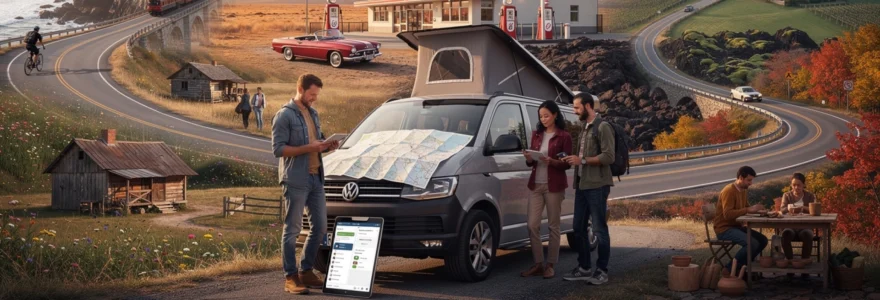
Modern travel culture has witnessed a profound shift towards experiential journeying, where the act of travelling becomes as significant as reaching the destination itself. This transformation reflects a growing desire to disconnect from the rapid pace of contemporary life and reconnect with landscapes, communities, and personal discovery through deliberate, unhurried exploration. Road trips designed around this philosophy challenge the conventional notion of efficient point-to-point transportation, instead celebrating the transformative power of the journey itself.
The concept extends far beyond simply taking scenic routes or making occasional stops. Journey-centric road trips represent a fundamental reimagining of travel, where every mile becomes an opportunity for connection, reflection, and discovery. This approach transforms highways into corridors of cultural exchange, natural wonder, and personal growth, creating memories that extend far beyond traditional destination-based experiences.
Slow travel philosophy and Journey-Centric route planning methodologies
The slow travel movement has fundamentally altered how adventurous travellers approach route planning, emphasising depth over breadth and quality experiences over quantity of destinations. This methodology requires a complete departure from traditional itinerary structures, instead focusing on creating space for spontaneous discoveries and meaningful encounters with local environments and communities.
Successful journey-centric planning begins with identifying regions rather than specific destinations, allowing for organic exploration patterns that can adapt to weather conditions, local events, and personal interests. Professional travel planners recommend allocating at least twice the standard time for any given route, creating buffer zones that accommodate unexpected discoveries without compromising the overall journey structure.
Multi-modal transportation integration along the pacific coast highway
The Pacific Coast Highway exemplifies how multi-modal transportation can enhance journey experiences, offering opportunities to integrate coastal ferry services, scenic railways, and hiking trails into extended road trip itineraries. This approach allows travellers to experience the coastline from multiple perspectives, creating a more comprehensive understanding of the region’s geographic and cultural diversity.
Strategic integration points along the route include the Monterey Bay ferry connections, which provide access to marine sanctuaries unreachable by road, and the California Coastal Trail segments that offer intimate coastal encounters impossible from vehicle viewpoints. These integration opportunities require advance planning but reward travellers with experiences that transcend traditional road trip limitations.
Scenic byway classification systems and national scenic route designations
Understanding official scenic byway classifications provides travellers with valuable frameworks for selecting routes that prioritise journey quality over efficiency. The National Scenic Byway program in the United States, for example, designates routes based on archaeological, cultural, historic, natural, recreational, and scenic qualities, ensuring that classified routes offer genuine experiential value.
Similar designation systems exist globally, including Australia’s Tourist Drive classifications and the United Kingdom’s National Route network. These systems provide standardised quality assurance for journey-focused travellers, though the most rewarding routes often combine officially designated scenic byways with locally recommended alternative routes that offer more intimate regional experiences.
Temporal journey pacing strategies for immersive regional exploration
Effective temporal pacing requires abandoning traditional daily mileage targets in favour of experience-based progression markers. This approach involves structuring travel days around specific experiential goals, such as attending local farmers’ markets, participating in regional festivals, or engaging with traditional craft communities, rather than covering predetermined distances.
Professional journey planners recommend implementing variable pacing structures that accommodate both high-engagement days filled with cultural activities and restorative days focused on natural environment appreciation. This rhythm prevents the experiential overwhelm that can diminish journey quality whilst maintaining forward momentum towards overall route completion.
Geographic waypoint clustering techniques for extended route experiences
Advanced route planning utilises geographic clustering to identify regions that reward extended exploration, moving beyond individual attractions to understand how landscape, culture, and community interact within specific geographic zones. This technique involves mapping overlapping interest areas to identify regions where multiple experience types converge, maximising the value of extended stays.
Effective clustering considers seasonal variations, local event calendars, and weather patterns to optimise timing for each geographic zone. The technique proves particularly valuable in regions like Scotland’s Highlands or New Zealand’s South Island, where geographic features create natural exploration clusters that reward multi-day investigation.
Iconic Journey-First road trip routes across continental networks
Route 66 historic corridor and Mid-Century americana landmarks
Among journey-first road trips, Route 66 stands as a living museum of mid-century Americana, where the roadside landscape becomes the primary attraction. Stretching from Chicago to Santa Monica, the historic corridor offers a continuous tapestry of neon signs, retro motels, vintage gas stations, and classic diners that turn every stop into an encounter with twentieth-century travel culture. Rather than treating Route 66 as a single uninterrupted drive, journey-centric planning breaks the road into thematic segments that highlight regional stories and architectural eras.
For travellers focused on the journey as the main experience, preserving the authentic feel of Route 66 means favouring original alignments over modern interstate shortcuts. You might choose slower frontage roads that parallel the highway, deliberately passing through towns like Pontiac, Tucumcari, and Seligman, where community-led preservation efforts keep the Mother Road’s heritage alive. This approach transforms the route into a narrative, where each stretch of asphalt connects chapters in America’s evolving relationship with mobility, leisure, and roadside commerce.
Planning a Route 66 road trip around mid-century Americana landmarks also encourages deeper engagement with small businesses and historical societies. Many motels and diners along the corridor are family-run enterprises that have survived highway bypasses and shifting tourism patterns. Staying and eating in these establishments becomes a form of cultural conservation, where your journey helps sustain the very heritage you came to experience. In this way, the road trip becomes both an act of exploration and a contribution to living history.
Great ocean road coastal engineering and victorian limestone formations
The Great Ocean Road in Victoria, Australia, is often marketed as a series of photographic viewpoints, but journey-focused travellers see it as an evolving dialogue between human engineering and raw coastal geology. Conceived as a memorial to World War I veterans and constructed by returned soldiers, the road itself is part of the story, clinging to cliffs and threading through rainforests that reveal the technical skill required to carve a route along such a rugged coastline. Driving here is less about “getting somewhere” and more about observing how infrastructure adapts to topography and ocean forces.
At the heart of the Great Ocean Road experience lie the Victorian limestone formations, including the Twelve Apostles, Loch Ard Gorge, and London Bridge. These sites demonstrate coastal erosion in real time, reminding us that the journey you take today will look different for future travellers. Just as you would study a complex piece of architecture from multiple angles, a journey-first road trip encourages you to revisit key formations at different times of day, comparing sunrise silhouettes, midday colour, and sunset shadows to appreciate the coastline’s constant transformation.
To optimise the Great Ocean Road as a journey-centric route, we can slow the pace and integrate short walks, lighthouse climbs, and rainforest boardwalks into the driving rhythm. Linking engineering viewpoints—such as historic bridges and cuttings—with natural points of interest creates a layered experience where you analyse both human design and natural processes. Instead of racing from Torquay to Warrnambool in a single day, allocating two or three days allows the road, the sea, and the cliffs to become equal protagonists in your travel narrative.
Ring road iceland volcanic terrain and geothermal waypoint systems
Iceland’s Ring Road, or Route 1, circumnavigates an island defined by volcanic activity, glacial dynamics, and geothermal energy, making it a model journey for travellers fascinated by Earth’s active systems. Rather than treating waterfalls, black-sand beaches, and lava fields as isolated attractions, a journey-centric perspective connects them as visible outcomes of the same tectonic and climatic forces. Each kilometre becomes a field lesson in geology, where the road is your linear path through a living laboratory.
Geothermal waypoint systems along the Ring Road offer structured opportunities to deepen this understanding. From the steaming vents near Lake Mývatn to the hot springs around Hveragerði, these sites invite you to step out of the car and into landscapes shaped by subterranean heat. Designing your itinerary around a sequence of geothermal stops—public hot pools, geothermal bakeries, and power plant visitor centres—creates a thematic arc that ties comfort, cuisine, and energy production back to the same geologic engine.
Because weather and daylight hours in Iceland can change rapidly with the seasons, journey pacing is especially critical here. In summer, long days encourage extended exploration, while in winter, limited daylight pushes you to make deliberate choices about each day’s focus. Embracing this constraint can actually enhance the journey: by narrowing your daily radius and selecting a cluster of nearby volcanic and geothermal sites, you’re more likely to notice subtle variations in lava textures, moss growth, and steam patterns that casual visitors might miss.
Romantic road bavaria medieval architecture and franconian wine regions
Germany’s Romantic Road demonstrates how a road trip can weave together cultural heritage and rural landscapes into a coherent, story-driven journey. Stretching from Würzburg to Füssen, this historic route links medieval town centres, fortified walls, and hilltop castles with gently rolling countryside and vineyards. Travelling here with a journey-first mindset means slowing down to observe how architectural styles, town planning, and agricultural patterns evolve as you move through Franconia and into the Alpine foothills.
Medieval architecture forms the visual backbone of the Romantic Road, turning each town into a chapter in a broader narrative about Central European history. Instead of treating Rothenburg ob der Tauber or Dinkelsbühl as simple photo stops, immersive road trippers might schedule overnight stays to experience the streets after day-trippers leave. Walking the city ramparts at dusk or early morning shifts the emphasis from sightseeing to inhabiting the built environment, where cobblestones, timber frames, and market squares reveal their character in quieter moments.
Overlaying this architectural journey with exploration of the Franconian wine regions adds another experiential layer. Vineyards near Würzburg and along the Main River invite you to move beyond tasting notes and consider how soil composition, river orientation, and microclimates influence both wine and landscape aesthetics. Planning the road trip around local wine festivals, seasonal harvests, or cellar tours transforms the Romantic Road into a sensory itinerary, where you not only see history but also taste the terroir that has sustained these communities for centuries.
Blue ridge parkway appalachian ridge navigation and fall foliage corridors
The Blue Ridge Parkway in the eastern United States is designed explicitly as a journey-first road, prioritising scenic continuity over direct connectivity. Meandering along the Appalachian ridgeline between Shenandoah National Park and Great Smoky Mountains National Park, the parkway offers controlled access points, low speed limits, and carefully placed overlooks that turn the act of driving into a meditative experience. Here, curves and gradients are not obstacles but features, orchestrated to reveal layered mountain vistas and valley floors at a deliberate pace.
Fall foliage transforms the Blue Ridge Parkway into one of the world’s most immersive seasonal corridors, where colour progression becomes a key aspect of route planning. Because elevation dramatically affects leaf timing, journey-centric travellers can “ride the wave” of autumn by adjusting direction and daily distance to stay within peak colour bands. This is similar to following a moving weather front: by tracking foliage reports and altitude changes, you can align your journey with the most vibrant displays rather than rushing through them in a single day.
To deepen the experience, many road trippers pair ridge navigation with short hikes to balds, waterfalls, and historic homesteads maintained by the National Park Service. These detours function like footnotes to the main text of the parkway, providing context on traditional Appalachian life, mountain ecology, and conservation history. The result is a road trip where the line between driving and exploring blurs, and where each mile of asphalt is an invitation to step out, listen to forest sounds, and engage with the landscape beyond the guardrail.
Immersive accommodation strategies along extended journey routes
When the journey itself is the main experience, accommodation becomes more than a logistical necessity; it evolves into a critical design element of the road trip. Choosing where you sleep—and how often you change locations—can either fragment your narrative or stitch it together into a cohesive whole. Rather than defaulting to the nearest chain hotel, journey-centric travellers often curate a blend of lodging types that mirror the landscapes, histories, and communities they’re traversing.
An effective strategy is to align accommodation styles with key thematic segments of your route. You might stay in restored motels on Route 66 to reinforce the mid-century road-trip aesthetic, then switch to coastal cabins or eco-lodges along the Great Ocean Road to emphasise proximity to nature. This intentional variation acts like chapter formatting in a book: each change of setting signals a shift in tone, helping you mentally mark transitions between regions while keeping the overall story coherent.
Longer road trips also benefit from incorporating multi-night “anchor stays” at strategic waypoints. Instead of packing and unpacking every day, designating periodic three-night stops in hub towns or rural bases gives you time to explore surrounding areas without the pressure of constant movement. These anchors can significantly reduce travel fatigue, improve budget control, and provide opportunities to build real connections with local hosts, who often become informal guides to lesser-known experiences in the region.
Experiential vehicle selection and Journey-Optimised transportation methods
Vehicle choice is often treated as a practical detail, yet for a journey-first road trip it shapes comfort, access, and even the emotional tone of the experience. The right vehicle is less a neutral tool and more a travelling companion, influencing how you interact with landscapes and how willing you are to follow spontaneous detours. Selecting a car, campervan, motorcycle, or even an electric vehicle should therefore start with a simple question: what kind of journey do you want this to be?
For routes featuring frequent gravel roads, remote access tracks, or variable weather—such as Iceland’s Ring Road or rural sections off the Blue Ridge Parkway—a higher-clearance vehicle with reliable traction systems can dramatically expand your options. Conversely, dense urban segments along the Romantic Road or coastal towns on the Pacific Coast Highway may reward more compact, fuel-efficient vehicles that are easier to park and manoeuvre. In each case, you are optimising not just for safety but for experiential flexibility, ensuring the vehicle does not become a limiting factor.
Comfort and interior layout also matter for journey-optimised transportation, especially on trips where you’ll spend several hours a day on the road. Features like supportive seating, panoramic windows, and modular storage may seem secondary, but over hundreds of kilometres they directly influence how alert, patient, and curious you feel. A well-chosen vehicle enables you to treat the cabin as a mobile observation deck rather than a cramped transit space, much like choosing the right backpack can turn a long hike from a burden into a pleasure.
Cultural immersion techniques and local community engagement protocols
Journey-first road trips naturally lend themselves to cultural immersion because they slow you down and direct you through smaller communities that mass tourism often bypasses. Yet genuine engagement doesn’t happen by accident; it requires intention, respect, and a willingness to move beyond transactional interactions. By adopting simple community engagement protocols, you can transform ordinary stops for fuel or food into meaningful encounters that enrich both your understanding and the local economy.
One effective mindset shift is to treat each town as a micro-culture rather than a generic waypoint. Instead of asking, “Where can I get the fastest meal?” you might ask, “Where do people here gather, and what do they care about?” Visiting local markets, community centres, or independent cafés opens doors to conversations about regional challenges, traditions, and aspirations. Over the course of a long road trip, these small dialogues form a mosaic of perspectives that no guidebook or online review can replicate.
Respectful engagement also involves recognising your own impact as a visitor. Simple practices—such as learning basic greetings in the local language, following posted guidelines at sacred or historically sensitive sites, and prioritising locally owned services—signal that you see yourself as a temporary participant in community life rather than an entitled observer. This attitude often leads to invitations, stories, and recommendations that you would never receive through purely commercial interactions.
Agritourism integration along rural scenic corridors
Agritourism provides one of the most direct ways to connect road trips with local livelihoods, especially along rural scenic corridors where agriculture shapes both economy and landscape. By integrating farm visits, orchard stops, and vineyard tours into your itinerary, you transform fields and barns from background scenery into active learning environments. This shift is similar to moving from watching a documentary to stepping onto the set—you stop observing food production from a distance and start experiencing the people, tools, and decisions behind it.
Many regions along iconic routes now promote formal agritourism networks, listing farms that welcome visitors for tastings, pick-your-own experiences, or overnight stays. On the Blue Ridge Parkway, for example, you can combine scenic overlooks with apple orchards and mountain farms that sell cheeses and preserves made on-site. In Bavaria, the Romantic Road passes near guesthouses attached to working farms, where you can wake up to the sounds of morning chores and breakfast on produce grown metres from your table.
For journey-centric planners, agritourism stops also serve practical roles as pacing tools. Scheduling farm visits at mid-morning or mid-afternoon naturally breaks up driving time, preventing fatigue while anchoring each day’s memories in tangible encounters. These visits often inspire conversations about soil health, climate adaptation, and traditional practices, offering nuanced insight into how rural communities navigate global pressures while maintaining local identity.
Artisan workshop discovery networks and traditional craft communities
Artisan workshops and craft communities act as living repositories of regional knowledge, and weaving them into your route can dramatically enrich a road trip focused on cultural immersion. Whether it’s pottery studios in the American South, woodworking shops in the Alps, or textile ateliers in small Welsh or Bavarian towns, these spaces reveal how creativity, heritage, and economy intersect. Entering a workshop is like opening a time capsule that has been gently updated for the present, where you can trace centuries-old techniques alongside modern tools and designs.
Many destinations now promote artisan discovery networks—maps or digital platforms that highlight clusters of studios and cooperatives along established driving routes. When you follow these networks, each stop becomes a chance to witness processes usually hidden from tourists: glazing, carving, weaving, or metalworking in various stages of completion. Instead of purchasing anonymous souvenirs, you gain context about who made an item, how long it took, and what local stories or symbols are embedded in its design.
Engaging respectfully in these spaces means recognising the boundary between observation and disruption. Asking permission before taking photos, purchasing even small items where possible, and showing genuine curiosity about techniques are simple ways to support artisans’ livelihoods. Over time, you may find that the objects you bring home from such workshops function less as decorations and more as narrative anchors, each piece recalling the road, the studio, and the conversations that shaped your journey.
Regional culinary trail navigation and Farm-to-Table route planning
Culinary trails provide a structured yet flexible way to connect road travel with local flavours, turning meals from routine tasks into core journey experiences. Whether you’re following a barbecue trail in the American South, a cheese route in the Alps, or seafood circuits along coastal highways, these networks help you navigate toward small, independent producers and family-run restaurants. In practice, a culinary trail works like a tasting menu stretched across hundreds of kilometres, where each stop contributes a new course to the overall experience.
Planning a farm-to-table route requires paying attention to seasonality, opening hours, and reservation policies, especially in high-demand regions. Many restaurants that pride themselves on local sourcing operate with limited seating and specific service times, which can initially feel like constraints. Yet these “limits” often improve the journey: knowing you have a dinner reservation at a particular village at 19:00 encourages you to slow down nearby, explore on foot, and arrive with enough time to appreciate the setting rather than rushing in from a long drive.
For travellers concerned about budget or dietary preferences, integrating markets and self-catering options into the culinary plan provides additional flexibility. Stocking up on regional ingredients—such as smoked fish in Iceland, fresh produce in South African farm stalls, or speciality breads along Route 66—allows you to prepare simple meals in picnic areas or self-catering lodgings. In this way, food remains central to the journey without requiring every meal to be a formal restaurant experience.
Heritage site interpretation and living history engagement methods
Heritage sites—castles, battlefields, historic town centres, and industrial relics—often appear as dots on a map, but journey-first travel invites you to connect them as parts of a continuous narrative. Rather than ticking off “must-see” monuments, you can approach each site as a chapter in an unfolding story about migration, conflict, innovation, or everyday life. This narrative approach makes interpretation strategies crucial: how you choose to learn about a place can significantly shape what you remember.
Living history methods, such as costumed interpreters, interactive exhibits, and reconstructed environments, help bridge the gap between past and present. At sites along routes like the Romantic Road or the Trail of King Arthur in Wales, such techniques can turn static ruins into immersive environments where you see, hear, and sometimes even taste aspects of historical life. For road trippers, timing visits to coincide with re-enactments, festivals, or guided tours adds a performative dimension that pure driving cannot provide.
At the same time, digital tools—from audio guides and augmented reality apps to curated reading lists—allow you to tailor interpretation to your interests and learning style. Combining on-site experiences with pre-trip or en-route research can transform the car into a mobile classroom, where you and your companions discuss what you’ve learned between stops. In doing so, the road itself becomes a reflective space, linking individual heritage sites into a broader understanding of regional and national histories.
Digital documentation and journey storytelling methodologies
In an era where almost every traveller carries a camera and a publishing platform in their pocket, documenting a road trip is no longer optional; it is a central part of how many of us process and share our experiences. Yet the difference between a journey that feels fragmented by constant posting and one that is thoughtfully narrated often lies in the methodology you adopt. By approaching documentation as a deliberate storytelling practice rather than a real-time highlight reel, you can preserve memories without sacrificing presence.
One effective approach is to define a narrative focus before you depart. Are you most interested in roadside architecture, changing light, intimate portraits, or small details like signage and textures? Selecting a theme helps you decide what to photograph, record, or write about, much like a documentary filmmaker chooses a subject rather than filming everything. This intentionality leads to more cohesive travel journals, photo essays, or blog posts that communicate a clear sense of what made your journey unique.
Balancing digital capture with offline reflection is also key. Many journey-first travellers adopt simple rules—such as limiting posting to the evening, or designating one “no-camera” hour each day—to ensure that screen time does not overshadow direct engagement. Keeping a handwritten notebook or voice memos in parallel with digital photos adds emotional texture and context that images alone cannot provide. Later, when you assemble your material into a narrative, these notes function like metadata for your memories, clarifying why a particular moment mattered.
Finally, considering your audience—whether it’s future you, close friends, or a wider online community—can guide how you structure and share your story. Long-form blog posts, curated photo albums, short travel films, or even printed books each encourage different pacing and levels of detail. Whichever format you choose, framing your road trip as a continuous journey rather than a series of isolated snapshots helps convey what this style of travel is really about: a sustained engagement with places, people, and landscapes where the road itself becomes the main experience.