The first few hours in a new destination can transform an entire guest experience, yet many hosts and property managers overlook the crucial details that separate memorable arrivals from stressful ordeals. Whether you’re managing student accommodation, holiday rentals, or corporate housing, those seemingly minor preparations often determine whether guests feel welcomed or overwhelmed during their critical first impressions.
Research from the hospitality sector consistently demonstrates that positive arrival experiences correlate directly with higher guest satisfaction scores and repeat bookings. The difference between a five-star review and a disappointing one-star rating frequently hinges on whether the Wi-Fi password worked immediately, the keys were accessible, or the local transport information proved accurate and helpful.
Modern guests arrive with heightened expectations shaped by seamless digital experiences across other service industries. They expect instant connectivity, intuitive access systems, and comprehensive local intelligence delivered through their preferred communication channels. Meeting these expectations requires systematic preparation that extends far beyond simply ensuring clean bedding and functional plumbing.
Pre-arrival communication protocols for seamless guest reception
Effective guest communication begins weeks before arrival day, establishing clear expectations and building confidence in your service quality. The most successful hosts implement multi-channel communication strategies that accommodate diverse guest preferences whilst ensuring critical information reaches its destination reliably. This approach significantly reduces last-minute panic calls and creates smoother operational workflows.
Whatsapp and SMS automation systems for Real-Time updates
WhatsApp Business and automated SMS platforms have revolutionised guest communication by enabling instant, personalised updates without overwhelming staff resources. These systems can automatically trigger messages based on booking milestones: confirmation upon reservation, pre-arrival instructions five days prior, check-in details 24 hours beforehand, and arrival day logistics on the morning of check-in.
The key advantage lies in real-time adaptability. Flight delays, transport disruptions, or weather changes can trigger immediate updates to affected guests, preventing frustration and demonstrating proactive service. However, message frequency requires careful balance – too many communications feel intrusive, whilst insufficient updates leave guests uncertain about expectations.
Digital Check-In platforms: airbnb, booking.com integration strategies
Platform integration streamlines the guest journey by consolidating information within familiar interfaces. Airbnb’s messaging system and Booking.com’s guest communication tools allow hosts to deliver check-in instructions, local recommendations, and emergency contacts through channels guests already monitor regularly.
Successful integration requires platform-specific messaging strategies. Airbnb guests expect conversational, personal communication that reflects the platform’s community ethos. Booking.com users often prefer concise, business-like instructions that efficiently convey practical information. Understanding these cultural differences ensures your communication style matches guest expectations.
Personalised welcome messages with local weather and transport information
Generic welcome messages feel impersonal in an era where guests expect customised experiences. Incorporating real-time local data – current weather conditions, transport delays, nearby events – demonstrates attention to guest circumstances and provides immediate practical value upon arrival.
Weather integration proves particularly valuable for international guests who may have packed inappropriately for local conditions. A message warning of unexpected rain or suggesting lighter clothing for warmer-than-expected temperatures shows thoughtfulness that guests remember and mention in reviews. Transport updates prevent unnecessary waiting at delayed bus stops or closed Underground stations.
Emergency contact distribution and 24-hour support line setup
Emergency contact protocols require careful consideration of time zones, language barriers, and escalation procedures. A 24-hour support line doesn’t necessarily require round-the-clock staffing – voicemail systems with clear instructions for genuine emergencies, coupled with rapid response guarantees, often suffice for most situations.
Consider implementing tiered emergency responses: immediate automated acknowledgment, urgent issue escalation within 15 minutes, and non-urgent queries addressed within two hours. This system manages guest expectations whilst ensuring genuine emergencies receive appropriate priority without overwhelming support resources.
Property access management and keyless entry solutions
Property access represents the most critical moment in any guest arrival experience. Traditional key handovers create scheduling constraints and single points of failure, whilst modern keyless systems offer flexibility
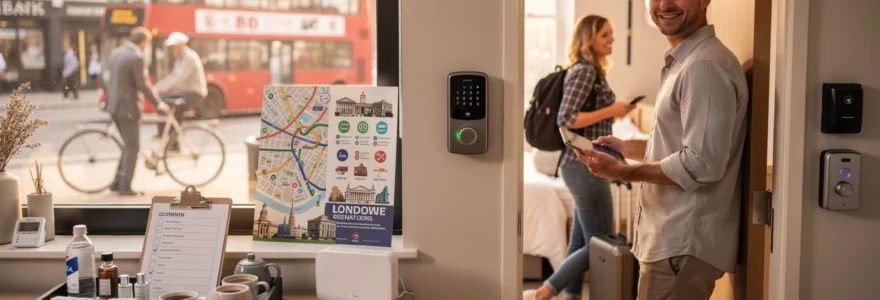
Property access represents the most critical moment in any guest arrival experience. Traditional key handovers create scheduling constraints and single points of failure, whilst modern keyless systems offer flexibility, auditability, and reduced operational risk. Getting this right means guests can move from pavement to pillow without friction – even if their flight is late, their train is diverted, or you are dealing with three other check-ins at once.
Smart lock configuration: august, yale, and schlage installation protocols
Smart locks such as August, Yale, and Schlage can transform your arrival day operations, but only if they are configured methodically. Treat installation as a mini-project rather than a quick DIY upgrade. Start with a hardware survey: confirm door thickness, existing deadbolt compatibility, Wi-Fi strength at the door, and whether you need a hub or bridge device to connect the lock to your property management system.
Once the physical installation is complete, focus on digital configuration. Create a dedicated host account rather than using a personal email, and enable two-factor authentication to protect access control. For each booking, generate time-limited digital keys that activate shortly before check-in and expire automatically at check-out. This “set and forget” approach reduces the risk of old codes remaining live and eliminates manual rekeying between guests.
Integration with your property management system can further streamline arrival day. Many smart locks now connect to channel managers and tools like Guesty or Hostaway, allowing codes or digital keys to be created automatically when a reservation is confirmed. Before going live, run at least three full test “stays” with colleagues or friends: receive the code, arrive at night, use only the instructions you send to guests, and refine any confusing steps.
Key safe positioning and security code distribution methods
For properties where smart locks are not feasible, a well-installed key safe (lockbox) remains a reliable option. The positioning of the key safe matters more than many hosts realise. It should be discreet from the street but obvious once you are inside the building’s front boundary, ideally mounted at eye level, under some form of shelter so guests are not entering codes in heavy rain or late-night darkness.
Security best practice means treating key safe codes as sensitive data. Avoid using flat numbers, phone numbers, or repeating patterns such as “0000” or “1212”. Rotate codes after every stay, and keep a log of which code was allocated to which booking. When sending the code, split the information across messages where appropriate: directions and photos in one message, the actual code only in a follow-up closer to arrival. This reduces the chance of codes being forwarded or discovered weeks in advance.
Clear, visual instructions are essential for tired travellers. Consider sending a short photo sequence showing the building entrance, the path to the key safe, and the exact position on the wall or gate. Many hosts also include a one-line fail-safe such as “If you cannot locate the key safe within two minutes, call or WhatsApp this number for live support.” That simple sentence reassures guests that they are not on their own if confusion sets in at midnight.
Lockbox alternatives: KeyNest and local collection point partnerships
In some urban areas or managed buildings, installing a key safe outside your unit is not allowed. In these cases, third-party key exchange services such as KeyNest, or partnerships with local businesses, provide strong alternatives. These solutions can be particularly effective in busy city centres where guests arrive at all hours and public transport is the primary mode of travel.
With KeyNest-style services, guests collect keys from staffed locations using a secure code or QR reference. The advantage is obvious: extended opening hours, CCTV-monitored premises, and no visible hardware attached to your property. However, you must communicate the collection process with absolute clarity. Include the collection point address, opening times, a map link, and walking directions from the nearest station or bus stop, as well as what ID or code guests must present.
Local collection point partnerships – for example, with a nearby café, late-night convenience store, or hotel reception – operate on similar principles but require stronger relationship management. Agree written protocols: who can hand over the keys, what guests say on arrival, and what happens if a staff member is new or unaware of the arrangement. Test the process in person at different times of day. A beautifully worded arrival message is useless if the weekend staff at the corner shop have never heard of you.
Backup access contingency planning for system failures
Even the best-configured access system will occasionally fail. Smart locks lose power, Wi‑Fi routers crash, key safes jam, or guests stand at the wrong entrance. A robust contingency plan ensures these incidents become minor anecdotes rather than full-blown crises that dominate your reviews. Start by mapping all potential failure points: batteries, connectivity, physical damage, guest error, and third-party closures.
For smart locks, maintain a clearly labelled box on-site with spare batteries, a physical backup key, and printed emergency instructions in simple language. Where possible, keep a secondary access method independent of the primary system – for example, a mechanical key safe round the back of the property that is only used in emergencies. Document step-by-step recovery procedures for each scenario and ensure all team members can access them on their phones.
Think in terms of response time: how quickly can someone reach the property if remote solutions fail? If you manage multiple units, appoint “on-call” coverage so there is always a person within a realistic travel radius during peak check-in windows. Consider using a simple internal SLA such as “we will have a human at the door within 30–45 minutes” and design your operations around meeting that promise. Guests are surprisingly forgiving when they see rapid, competent problem-solving.
Essential amenity preparation and quality control checklists
Once guests have gained access, the next critical impression comes from the essentials: cleanliness, basic supplies, and equipment that works first time. A missing towel or broken kettle may seem trivial, but after 14 hours of travel these details can feel like major failures. To avoid this, many professional hosts use standardised checklists for pre-arrival preparation and final quality control.
At minimum, your amenity checklist should cover bedding, towels, toiletries, kitchen basics, and climate control. For example, every bed should have a full set of linens plus a spare blanket, and each guest should find at least one large towel and one hand towel. In the kitchen, ensure there is enough crockery, cutlery, and cookware for the maximum occupancy, plus essentials like washing-up liquid, a clean sponge, bin liners, tea, coffee, sugar, and basic condiments. Think of it as preparing a “first 24 hours survival kit” so guests do not have to rush to a supermarket immediately.
Quality control goes beyond counting items. Test the hot water, heating or air conditioning, Wi‑Fi connection, television, and any key appliances on the day of arrival. A quick “arrival simulation” where you enter with only your phone and suitcase can be revealing: is there somewhere obvious to place luggage, is lighting intuitive, do you know the Wi‑Fi password within 10 seconds? This simple exercise often highlights small friction points that would otherwise only be discovered in reviews.
For multi-unit portfolios, consider implementing a digital checklist system (for instance, via Google Forms or specialist housekeeping apps) that cleaners or inspectors must complete before marking a property as “ready”. Timestamped photo evidence of key areas – bathrooms, kitchen surfaces, beds – adds an extra layer of accountability and can be invaluable if guests later report issues. Over time, these checklists also help you analyse recurring problems and refine your amenity standards.
Local area intelligence and guest orientation materials
Modern travellers expect more than a clean room; they want to feel oriented and confident in their new surroundings almost immediately. High-quality local area intelligence can turn an anonymous flat into a “home base” and reduce the number of basic questions you receive. Well-designed digital and printed materials that cover transport, food, shopping, and culture help guests settle in quickly and plan their first outings.
Neighbourhood maps with tube stations, bus routes, and cycling paths
Generic city maps are widely available, but what guests really need on arrival day is a neighbourhood-level map that answers the question: “How do I get from here to everywhere else?” A customised map highlighting the closest Tube stations, key bus routes, and safe cycling paths can dramatically reduce confusion, especially for international visitors unfamiliar with local transport systems.
For London properties, show clearly where the nearest Underground and Overground stations are, which lines they serve, and approximate travel times to major landmarks such as Westminster, King’s Cross, and the West End. Indicate at least one late-night bus route that runs near the property, as well as any 24-hour services. For guests considering cycling, highlight official cycle lanes and docking stations for hire schemes, plus any steep hills or complex junctions to avoid.
Present this information visually wherever possible. A simple annotated map in your welcome folder, mirrored in a digital version you can send by WhatsApp, allows guests to orient themselves before they step outside. Ask yourself: if my phone died, could I still find my way back from the Tube using this map alone? If the answer is yes, you have probably created something robust enough for jetlagged travellers.
Restaurant recommendations: OpenTable reservations and dietary requirements
Food is often the first thing on a guest’s mind after arrival, but decision fatigue and unfamiliar streets can lead to underwhelming choices. Curated restaurant recommendations, tailored to different budgets and diets, help guests enjoy their first meal without hours of research. Instead of listing every nearby option, choose a concise selection of reliable venues you would personally visit.
Include at least one solid choice in each category: quick casual, family-friendly, mid-range, and special occasion dining. Where possible, confirm whether they accept walk-ins, take reservations via OpenTable or similar platforms, and can accommodate common dietary requirements such as vegetarian, vegan, halal, and gluten-free. Guests with specific needs often feel anxious about finding safe options – a simple note like “this restaurant has a separate gluten-free menu” can make a big difference.
You can streamline the process further by creating a short, pre-written message guests can copy and paste into reservation platforms to communicate their needs (for example, “Two guests, arriving at 19:30, one vegetarian and one coeliac – can you accommodate this?”). This is a small but powerful way to show that you have thought through the full guest journey, not just the four walls of your property.
Supermarket locations: tesco, sainsbury’s, and waitrose opening hours
Knowing where to buy groceries, snacks, and basic supplies is a fundamental part of feeling settled in a new area. Yet many arrival guides still omit precise information about supermarkets. Listing the nearest Tesco, Sainsbury’s, and Waitrose – along with convenience formats like Tesco Express or Sainsbury’s Local – gives guests immediate, practical options within walking distance.
For each store, note the address, approximate walking time, and typical opening hours, including Sunday trading schedules which can surprise visitors from countries without such restrictions. If there is a 24-hour or late-opening supermarket reachable by night bus, highlight this too, as it can be invaluable for guests arriving after 22:00. International travellers will also appreciate notes on where to find familiar brands or speciality items, such as lactose-free milk or specific baby products.
Consider adding one short section on local markets and independent shops, especially if you are near a farmers’ market or speciality food street. This not only enhances the arrival day experience but also supports local businesses and strengthens your relationship with the neighbourhood. In many reviews, guests mention the joy of discovering a great bakery or greengrocer within minutes of their door – information you can easily curate in advance.
Cultural attractions: national gallery, british museum, and borough market guides
While major cultural landmarks are well publicised, guests often appreciate curated guidance on how to experience them efficiently, especially if they are working with limited time. Brief, practical notes on attractions like the National Gallery, British Museum, and Borough Market can help guests decide what to prioritise during their first days in the city.
For the National Gallery and British Museum, mention opening hours, recommended visit durations, and whether advance booking is required for popular exhibitions. Suggest one or two themed routes (“Highlights in 90 minutes” or “Family-friendly trail”) that suit guests arriving with different energy levels. For Borough Market, indicate peak times, quieter windows, and any must-try stalls you genuinely recommend, along with guidance on payment methods (many markets now prefer contactless).
To keep your information up to date, schedule a quarterly review of attraction details, checking for changes in opening times, admission policies, or renovation closures. A concise, current cultural guide does more than fill space in a welcome folder; it positions you as a knowledgeable local ally, which in turn encourages guests to ask better questions and leave more detailed positive reviews.
Technical infrastructure and connectivity optimisation
For most guests, especially business travellers and remote workers, reliable connectivity is as essential as hot water. A surprising number of negative reviews stem from weak Wi‑Fi, confusing TV setups, or inaccessible charging points. By treating technical infrastructure as a core part of your arrival day preparation, you can eliminate these pain points before they surface.
Start with your internet connection. Choose a plan with sufficient bandwidth for the maximum occupancy of your property, factoring in multiple devices streaming at once. Position the router centrally rather than hiding it in a cupboard, and avoid placing it behind large metal appliances or dense walls that can block signal. In larger or multi-level units, invest in mesh Wi‑Fi systems rather than cheap extenders; the initial cost is offset by fewer connectivity complaints.
Make the network name and password impossible to miss. Place them on a clearly labelled card near the entrance, on the fridge, and in your digital welcome guide. Avoid long, complex passwords that guests will mistype in their tired state – a secure but readable passphrase works best. Consider adding a short troubleshooting section: “If the Wi‑Fi stops working, try this sequence first…” with simple steps such as checking status lights or power cycling the router.
Power access is another underrated detail. Ensure there are enough accessible sockets near beds, sofas, and desks so guests can charge devices without moving furniture or unplugging lamps. In older properties, adding a few high-quality extension leads with built-in surge protection and integrated USB or USB‑C ports can modernise the space without rewiring. If you host many international guests, keep at least one universal adapter in a clearly marked location as a backup.
Finally, review your entertainment and smart home systems from the perspective of someone who has never used them. Are remotes clearly labelled? Is there a one-page quick-start guide for the TV, streaming services, or sound system? If you provide smart speakers or voice assistants, specify what they can and cannot control to avoid confusion. The goal is not to impress guests with complexity, but to ensure that, within five minutes of arrival, they can get online, watch something familiar, and charge their phone without a single support message.
Arrival day logistics and timeline coordination
All of these small planning details only deliver their full value when orchestrated within a coherent arrival day timeline. Without clear coordination, it is easy for cleaning to overrun, keys to be misplaced, or guests to arrive while maintenance is still on site. Designing a simple, repeatable schedule for the 24 hours around check-in dramatically reduces stress for both you and your guests.
Begin by mapping your ideal sequence: checkout, cleaning, inspection, access setup, final checks, and guest arrival. Assign realistic time blocks to each stage based on experience, then add buffer periods rather than assuming best-case scenarios. For example, if cleaning usually takes two hours, schedule three; if inspections take 20 minutes, block out 30. This conservative planning gives you room to handle unexpected issues without delaying check-in.
Communication timing is just as important as operational timing. Many successful hosts send a brief “we’re on track” message on the morning of arrival, followed by final access details two to three hours before check-in. This reassures guests who may already be en route and reduces pre-arrival anxiety. If you ever anticipate a delay – even 30 minutes – inform guests as early as possible, explain what you are doing to resolve it, and offer a small gesture where appropriate (for example, luggage storage or a nearby café recommendation).
For multi-property operations or community sponsorship groups receiving families, use shared calendars or lightweight project management tools to keep everyone aligned. Colour-code tasks (cleaning, maintenance, guest communication, access setup) and ensure at least two people can see and update the plan in real time. Think of arrival day as a small theatre production: the guest sees a smooth performance only because you have rehearsed the backstage choreography.
Finally, close the loop with a short internal debrief after particularly complex arrivals or at the end of busy periods. What went well? Where did guests seem confused? Which messages generated follow-up questions? Treat each arrival day as data. Over time, these observations will help you refine your checklists, improve your automations, and identify which small planning details truly make the biggest difference to guest satisfaction and long-term loyalty.