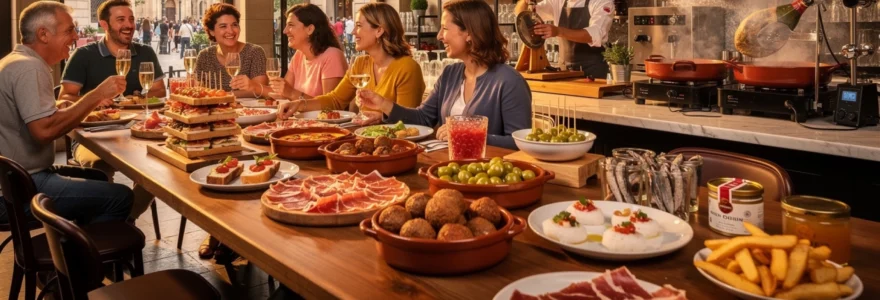
Barcelona’s tapas scene represents far more than simply small portions of food arranged on ceramic plates. The city’s approach to communal dining embodies centuries of Catalonian hospitality, where sharing becomes an art form that transforms strangers into friends and meals into memorable experiences. In Barcelona’s bustling neighbourhoods, from the medieval streets of the Gothic Quarter to the bohemian corners of Gràcia, tapas culture serves as the social glue that binds communities together, creating spaces where conversation flows as freely as the local cava.
The Catalonian interpretation of tapas differs significantly from other Spanish regions, incorporating local ingredients like pa amb tomàquet (bread with tomato) and emphasising fresh Mediterranean produce. This distinctive approach reflects Barcelona’s unique position as both a Spanish city and the capital of Catalonia, where culinary traditions blend seamlessly with innovative gastronomy. Modern Barcelona has elevated traditional tapas into sophisticated culinary experiences whilst maintaining the essential spirit of sharing that defines authentic Spanish dining culture.
Historical evolution of catalonian tapas tradition from medieval taverns to modern barcelona
The roots of Barcelona’s tapas tradition stretch back to medieval taverns along the ancient Roman roads that crisscrossed Catalonia. These early establishments served small portions of food alongside wine to travellers and merchants, creating the foundation for what would eventually become Barcelona’s distinctive approach to communal dining. Archaeological evidence from the Gothic Quarter reveals remnants of 13th-century taverns where bread, cheese, and preserved meats were served on wooden boards, establishing patterns of sharing that continue today.
During the 14th century, Barcelona’s expanding maritime trade brought new ingredients and culinary techniques from across the Mediterranean. Anchovy preservation methods arrived from Italy, whilst spice trading with North Africa introduced saffron and other seasonings that became integral to Catalonian cuisine. These international influences shaped Barcelona’s tapas culture into something distinctly different from the rest of Spain, incorporating global flavours whilst maintaining local traditions.
The industrial revolution of the 19th century transformed Barcelona’s social dining landscape dramatically. Factory workers needed quick, affordable meals that could be consumed standing at counters, leading to the development of the modern tapas bar format. Establishments like Cal Pep, which opened in 1909, pioneered the counter-service model that encouraged interaction between diners and chefs, creating the theatrical atmosphere that characterises Barcelona’s best tapas venues today.
Post-Franco Barcelona experienced a culinary renaissance that elevated tapas from working-class sustenance to sophisticated gastronomy. The 1992 Olympics brought international attention to Catalonian cuisine, whilst renowned chefs like Ferran Adrià began experimenting with molecular gastronomy techniques applied to traditional tapas preparations. This period established Barcelona as a global gastronomic destination where traditional and innovative approaches to tapas coexist harmoniously.
Essential tapas classifications and preparation techniques in barcelona’s culinary landscape
Barcelona’s tapas classification system reflects the city’s commitment to culinary precision and regional authenticity. Understanding these categories enables diners to navigate menus confidently whilst appreciating the technical expertise required for proper execution. Each classification demands specific preparation techniques, ingredient sourcing, and presentation methods that distinguish professional establishments from amateur attempts.
Pinchos and montaditos: Bread-Based tapas architecture in gràcia district establishments
Pinchos and montaditos represent the architectural approach to tapas construction, where quality bread serves as the foundation for carefully composed flavour combinations. Gràcia district establishments have perfected these techniques, using locally sourced pa de pagès (country bread) as the base for intricate assemblies of seasonal ingredients. The bread selection process involves evaluating crumb density, crust integrity, and absorption capacity to ensure optimal structural support.
Professional montadito assembly follows strict protocols regarding ingredient layering and moisture balance. Establishments like Bar Bodega Quimet employ specialised cutting techniques that create precise bread dimensions, typically 3-4 centimetres in diameter, ensuring consistent portion sizes and visual presentation. Temperature control during assembly prevents ingredient deterioration, particularly crucial when working with delicate items like fresh anchovies or seasonal vegetables.
Cazuelas and raciones: traditional clay pot cooking methods at cal pep
At Cal Pep and other classic Barcelona tapas bars, cazuelas (small clay dishes) and raciones (larger shared portions) showcase the city’s deep respect for slow, traditional cooking. Clay pots retain and distribute heat differently from metal pans, allowing stews, braises, and seafood dishes to develop layered flavours while remaining warm for longer on the counter. This method is particularly evident in preparations like calamares en su tinta or garbanzos con butifarra, where gentle, even heat prevents tough textures and preserves aromatic sauces.
Professional kitchens in Barcelona season their clay vessels over time, much like cast-iron pans, creating a micro-patina that enhances both flavour and heat retention. At Cal Pep, cooks control temperature in narrow bands, adjusting the distance between cazuelas and the heat source rather than constantly stirring, which can break delicate ingredients. Raciones are portioned using visual markers on the rim of the clay pots rather than scales, ensuring consistent serving sizes that still feel abundant when shared across the table.
Conservas and anchoas: preserved fish curation techniques from mediterrani restaurant
Barcelona’s love affair with preserved seafood, known as conservas, reflects centuries of maritime trade and practical preservation methods adapted into gourmet tapas. Mediterrani Restaurant exemplifies this tradition by curating high-quality tins of mussels, razor clams, and especially Cantabrian anchovies that are treated with the same respect as fresh seafood. Rather than hiding these products in complex preparations, chefs present them simply with pa amb tomàquet or crisp crackers to highlight texture and salinity.
Professional handling of anchovies and conservas in Barcelona involves precise temperature and oxidation control. At Mediterrani, anchovies are stored between 4°C and 6°C to preserve their delicate fat structure, then brought to room temperature just before service to maximise aroma. Conservas are opened at the last possible moment, and the preserving liquid is often used as an integral part of the dish, either drizzled over bread or gently emulsified with olive oil and lemon to create a natural sauce. This approach turns what was once a necessity of preservation into a premium element of modern tapas culture.
Jamón ibérico cortado: professional ham slicing protocols at enrique tomás outlets
Few elements of tapas culture in Barcelona command as much ritual as jamón ibérico, and Enrique Tomás outlets have professionalised the art of slicing into a precise culinary discipline. Expert cortadores de jamón undergo months of training to master knife angles, pressure control, and hand positioning, ensuring each slice is translucent, evenly marbled, and cut against the grain. The goal is to maximise surface area without tearing the meat, releasing the full aromatic potential of the cured fat.
Enrique Tomás stores follow strict protocols regarding ham storage, temperature, and rotation. Whole legs are kept at controlled humidity levels to prevent dryness, and only a limited surface area is exposed at any given time to avoid oxidation. Slices are usually cut to a thickness of 1–2 millimetres and arranged in overlapping spirals on ceramic plates, allowing diners to appreciate both visual marbling and mouthfeel. For visitors exploring tapas culture in Barcelona, watching a professional cortador at work becomes a form of culinary theatre that connects technique, tradition, and taste in a single plate.
Iconic barcelona tapas establishments and their signature culinary methodologies
Certain tapas bars in Barcelona have achieved near-legendary status not only for what they serve, but for how they operate. Their service models, kitchen layouts, and preparation techniques have influenced countless other venues across the city. Understanding these establishments helps you recognise why some tapas nights feel electric and memorable, while others feel flat or purely touristic. Each bar has developed a distinctive methodology that shapes everything from menu design to the pace of your evening.
Cal pep’s counter-service model and interactive culinary theatre experience
Cal Pep’s counter-service model is designed to immerse diners directly in the action of a working kitchen, blurring the line between guest and spectator. Rather than ordering from a static menu, many locals simply tell the staff their preferences—seafood-forward, meat-focused, or vegetarian—and allow the team to curate a sequence of dishes. This interactive approach turns a typical dinner into a real-time dialogue where chefs adjust recommendations based on your reactions and appetite.
The physical layout of Cal Pep amplifies this sense of culinary theatre. A long, tightly packed counter faces the open kitchen, allowing guests to watch as cazuelas bubble, fish fillets hit the plancha, and plates are assembled at high speed. Timing is critical: dishes leave the pass within seconds of finishing to preserve ideal temperature and texture. For travellers learning how to eat tapas in Barcelona like a local, this model demonstrates why trust in the kitchen often results in a more dynamic, memorable experience than over-analysing the menu.
Bar mut’s wine pairing algorithms with contemporary tapas innovation
Bar Mut has built its reputation on a sophisticated, almost algorithmic approach to pairing wine with modern tapas creations. Instead of rigid pairing rules, the bar uses a flexible framework that considers fat content, acidity, umami, and texture as variables to match with specific varietals. For example, rich dishes like foie gras montaditos might be contrasted with a crisp, mineral white from Penedès, while slow-cooked beef cheeks find harmony with structured, older reds from Priorat.
The team at Bar Mut continually updates their pairing matrix based on seasonal availability and evolving wine lists. Staff are trained to ask a few targeted questions—do you prefer fresher or fuller wines, lighter or more intense flavours?—and then select by-the-glass options that guide you through Catalonia’s wine landscape. This method turns the tapas bar into an informal tasting room, where you can explore regional wines without the stiffness of a formal pairing dinner. It also underscores how contemporary tapas culture in Barcelona blends creativity, technical knowledge, and relaxed hospitality.
Quimet & quimet’s vertical storage system and montadito assembly techniques
Quimet & Quimet, a tiny standing-room-only bar in Poble Sec, is famous for its towering walls lined with bottles and conservas. This vertical storage system is not just decorative; it is a functional response to limited floor space and high product variety. By organising tins and bottles by category and producer up the walls, staff can access dozens of ingredients within seconds, reducing wait times even at peak hours.
The bar’s montadito assembly techniques reflect an almost mathematical precision. Each bread slice is calibrated in size and toasted lightly to create a stable base for multiple layers of toppings, from smoked salmon and yoghurt to artichoke hearts and caviar. Sauces are applied in thin, controlled stripes rather than heavy dollops, ensuring balance of flavour and clean bites. Watching the team build montaditos at speed offers a clear lesson: in Barcelona tapas bars, efficiency and artistry must coexist in every movement behind the counter.
El xampanyet’s traditional anchovy preservation and cava service protocols
El Xampanyet, located near the Picasso Museum in El Born, is renowned for two things: perfectly handled anchovies and house cava served in small, traditional glasses. The bar follows time-tested anchovy preservation methods, soaking salt-cured fillets in milk or water to soften their intensity before marinating them in olive oil, garlic, and parsley. This process requires careful timing—too short and the anchovies remain harsh; too long and they lose their structure and umami punch.
Cava service at El Xampanyet follows a protocol that keeps the bar buzzing at a steady, convivial pace. Bottles are chilled to around 6–8°C and opened continuously during peak hours, ensuring that glasses are always topped with fresh, lively bubbles. Instead of large wine glasses, cava is poured into small, sturdy tumblers that invite quick toasts and frequent refills, reinforcing the informal spirit of tapas culture in Barcelona. Together, the anchovy and cava rituals demonstrate how simple products, handled with precision, can anchor a bar’s identity for generations.
Neighbourhood tapas microclimates: from born gothic quarter to poble sec
Barcelona’s tapas scene changes character dramatically from one neighbourhood to the next, creating what we might call “tapas microclimates.” Just as a vineyard can produce different wines from adjacent slopes, streets only minutes apart can offer radically different dining atmospheres. Understanding these microclimates helps you choose the right area for the kind of evening you want—lively and touristy, quietly local, or creatively experimental.
The Gothic Quarter and El Born form the historic heart of tapas culture in Barcelona, with narrow medieval streets packed with bars ranging from century-old taverns to contemporary wine-focused venues. Here, you will often find a blend of classic dishes for first-time visitors and inventive small plates aimed at repeat guests. By contrast, Poble Sec and Gràcia lean more local, with smaller, family-run establishments and a stronger emphasis on neighbourhood regulars. Poble Sec’s Carrer de Blai, for instance, has become a hub for pinchos bars where you can sample a wide variety of bites at accessible prices while standing shoulder-to-shoulder with Barcelonans after work.
For travellers planning a tapas route in Barcelona, thinking in terms of microclimates can be more useful than chasing a single “best tapas bar.” Do you want the dramatic, cinematic ambiance of El Born at night, with its stone facades and candlelit interiors? Or do you prefer the relaxed, village-like feel of Gràcia’s plazas, where children play nearby as adults share raciones on terraces? By aligning your expectations with the neighbourhood’s natural rhythm, you transform a simple bar crawl into a curated exploration of Barcelona’s social landscapes.
Contemporary tapas innovation and molecular gastronomy integration at michelin-starred venues
While traditional bodega-style bars remain central to tapas culture in Barcelona, Michelin-starred restaurants have pushed the format into the realm of avant-garde gastronomy. Chefs draw on molecular techniques to reimagine familiar flavours in surprising forms, often serving tasting menus composed almost entirely of small, shareable plates. This high-end evolution does not replace classic tapas; instead, it offers a parallel track for diners who want to see how far the concept can stretch without losing its roots.
Venues such as Disfrutar, Tickets’ spiritual successor projects, and other experimental kitchens use tools like liquid nitrogen, vacuum circulators, and spherification kits in the same way traditional bars use planchas and cazuelas. The focus, however, remains recognisably Mediterranean: tomatoes, olive oil, seafood, and ibérico pork still dominate the flavour palette. What changes is the presentation and texture, inviting you to question what tapas can be while staying anchored in the ingredients that define Catalan and Spanish cooking.
Spherification techniques applied to traditional pa amb tomàquet at disfrutar
Disfrutar has become emblematic of how molecular gastronomy can reinterpret the most humble elements of tapas culture in Barcelona. One of their signature ideas involves deconstructing pa amb tomàquet—the everyday bread with tomato that appears on virtually every local table—and rebuilding it using spherification techniques. Instead of rubbing ripe tomato onto toasted bread, chefs create delicate “tomato pearls” or larger, liquid-filled spheres that burst in the mouth with concentrated flavour.
The process uses sodium alginate and calcium chloride baths to form thin membranes around tomato juice, sometimes enriched with high-quality olive oil and a touch of salt. These spheres are then combined with crisp bread shards to recreate the familiar contrast of crunchy and juicy, but in a radically different visual form. For diners, the experience is both playful and nostalgic: the taste is recognisably pa amb tomàquet, yet the texture and presentation feel futuristic. This approach demonstrates how innovation can pay homage to tradition rather than erase it.
Sous vide temperature control for modern patatas bravas preparation
Patatas bravas, one of the most iconic dishes in tapas culture, has also undergone technical refinement in many modern Barcelona kitchens. Chefs seeking the perfect combination of creamy interior and shatteringly crisp exterior increasingly rely on sous vide temperature control. Potatoes are first cooked in vacuum-sealed bags at a precise temperature—often around 85°C—for a set duration, ensuring uniform doneness without breaking apart.
After this controlled pre-cook, the potatoes are cooled, portioned, and fried at high heat to create a consistent, golden crust. This two-stage method reduces the risk of soggy or undercooked centres, which can be a challenge in high-volume tapas bars. Sauces have evolved as well: beyond the classic spicy tomato and aioli, some chefs add smoked paprika oils, fermented chilli pastes, or foamed garlic emulsions to update the flavour profile. Yet, at its core, the dish remains a simple pleasure—proof that even the humblest plates can benefit from thoughtful technique.
Nitrogen infusion methods in contemporary gin tonic presentations
Gin and tonic has become an unofficial companion to tapas culture in Barcelona, especially in late-evening bars that bridge the gap between dinner and nightlife. Contemporary venues experiment with nitrogen infusion to elevate this familiar drink into a sensory experience. By chilling glassware and sometimes the tonic itself with liquid nitrogen, bartenders can serve cocktails at ultra-low temperatures without excessive dilution, resulting in a cleaner, more aromatic profile.
Some bars go further, using nitrogen-charged siphons to infuse botanicals directly into the tonic water, creating custom flavour combinations on demand. Juniper, citrus peels, rosemary, and even local herbs are briefly steeped under pressure, extracting bright aromatics in a fraction of the usual time. For guests exploring tapas and drinks in Barcelona, these nitrogen-enhanced gin tonics act as a modern counterpoint to traditional vermouth on tap, demonstrating how beverage innovation mirrors the creative evolution of the food itself.
Social anthropology of tapas consumption patterns and communal dining etiquette
Beneath the flavours and cooking techniques, tapas culture in Barcelona functions as a social system with its own unwritten rules. Anthropologists often describe tapas bars as “third places”—spaces that are neither home nor work, where community bonds are formed and maintained. Observing how locals order, stand, share, and pay offers deep insight into Catalan attitudes toward time, hierarchy, and hospitality. For travellers, understanding these patterns can transform you from a passive customer into an active participant in the city’s social fabric.
One key aspect of communal dining etiquette is the expectation of sharing and rotation. Plates are placed centrally, and everyone is encouraged to taste a little of everything, reinforcing a sense of equality at the table. Unlike plated main courses in more formal restaurants, tapas invite fluid participation: people join late, leave early, or drift to another bar without disrupting the group. Splitting the bill a escote (equally) remains common practice, even if some people ate or drank slightly more, reflecting a cultural preference for harmony over strict accounting. As you adapt to this rhythm, you may find that the real joy of tapas in Barcelona lies not only in what you eat, but in how you share the experience with others.