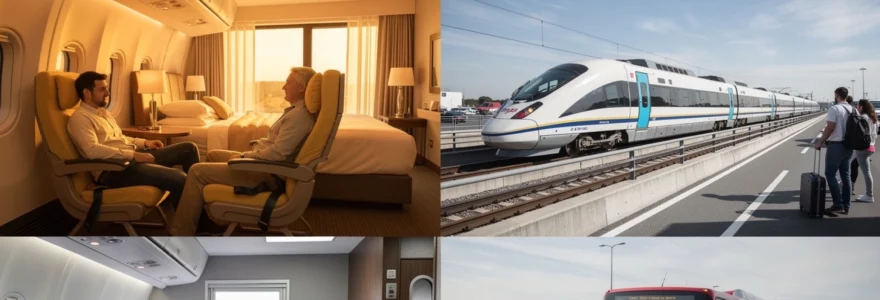
Modern travel marketing presents glossy images of spacious airline seats, luxurious hotel rooms, and seamless transfers that rarely match the on-ground reality. As travel demand surges post-pandemic, this disconnect between promotional materials and actual experiences has widened significantly. Industry data shows that 67% of travellers feel they haven’t maximized their trip potential, often due to comfort-related disappointments that weren’t apparent during the booking process. This gap stems from systematic practices across airlines, hotels, cruise lines, and tour operators—practices designed to maximize revenue whilst managing consumer expectations through carefully curated imagery and strategic information disclosure.
The comfort deficit in modern travel isn’t merely about subjective preferences; it represents quantifiable differences in physical space, amenity quality, and service delivery that impact everything from passenger health to holiday satisfaction. Understanding these discrepancies empowers you to make more informed booking decisions and set realistic expectations for your journeys.
Airline seat pitch reduction and ergonomic design failures in economy class
The evolution of economy class seating over the past two decades reveals a concerning trend: airlines have systematically reduced the space allocated to each passenger in pursuit of higher aircraft capacity. Seat pitch—the distance between one point on a seat to the same point on the seat in front—has decreased from industry standards of 34 inches in the early 2000s to as little as 28 inches on some carriers today. This reduction of six inches might seem modest on paper, but it fundamentally alters your comfort, particularly on flights exceeding three hours.
Legacy carrier seat pitch standards: british airways vs emirates configuration analysis
British Airways currently operates a seat pitch of 31 inches on most short-haul European routes, whilst Emirates maintains 32-34 inches on comparable aircraft. This seemingly marginal difference becomes significant when you consider the cumulative impact on posture and circulation during a flight. The ergonomic implications extend beyond mere legroom: tighter configurations force passengers into unnatural seating positions that compress the lumbar spine and restrict blood flow to the lower extremities. British Airways has faced criticism for introducing a tenth row in some Boeing 777 configurations, effectively reducing personal space by approximately 15% compared to previous layouts.
Emirates, by contrast, has maintained relatively consistent spacing standards, though even this carrier has explored densification strategies on certain routes. The competitive pressure to offer lower fares whilst maintaining profitability creates an industry-wide incentive to maximize seats per aircraft, placing passenger comfort secondary to operational economics.
Ultra-low-cost carrier density models: ryanair and EasyJet spatial constraints
Ultra-low-cost carriers have pushed density optimization to its practical limits. Ryanair configures its Boeing 737-800 aircraft with 189 seats, achieving a seat pitch of just 30 inches and seat width of 17 inches—among the tightest in European aviation. EasyJet operates similar configurations with 186 seats, offering marginally more space but still significantly below legacy carrier standards. These configurations prioritize throughput and fare competitiveness over passenger comfort, creating what industry analysts term “acceptable discomfort”—a level of spatial restriction that passengers will tolerate in exchange for substantially lower ticket prices.
The physiological impact of these configurations becomes pronounced on flights exceeding two hours. Passengers report increased incidence of muscle stiffness, joint discomfort, and restricted circulation. Medical research indicates that seat pitch below 31 inches significantly increases the risk of deep vein thrombosis on flights longer than four hours, yet regulatory bodies have been slow to establish minimum spatial standards for passenger wellbeing.
Recline mechanism conflicts and passenger space infringement issues
The recline function represents one of aviation’s most contentious design features. When you recline your seat by the typical 4-6 inches available in economy class, you encroach upon the already limited space of the passenger behind you. In configurations with 28-30 inch pitch, full recline can reduce the space available to the rear passenger by up to 25%, creating laptop use difficulties, meal service complications, and interpersonal tension. Some carriers, including several Asian low-cost operators, have eliminated recline functionality entirely to prevent these conflicts, whilst others have introduced “pre-reclined
seats” that are fixed at a slight angle. While this removes the sudden jolt of a seatback dropping into your space, it also locks everyone into a compromise posture that may not suit their body type. From a comfort perspective, the recline debate reflects a deeper issue: cabin layouts assume a uniform passenger size and behaviour pattern that simply does not exist in reality. The result is a zero-sum game in which one traveller’s marginal gain in comfort directly translates into another’s loss of functional space.
To manage these recline conflicts, you can take several practical steps. On flights where seat selection is possible, choosing exit-row or bulkhead seats can provide additional personal space and reduce the impact of seatback intrusion. Using a compact device or tablet rather than a large laptop mitigates the risk of crushed screens or unusable tray tables when the person in front reclines. Ultimately, the tension around recline mechanisms underlines the broader comfort gap in modern travel: aircraft cabins are being optimised for maximum capacity, not for collaborative comfort between strangers who must share a very small space for many hours.
Inadequate lumbar support and deep vein thrombosis risk factors
Most economy class seats provide minimal lumbar support, relying on thin foam padding and a generic backrest curve that rarely matches the natural S-shape of the human spine. Over the course of a long-haul flight, this mismatch forces you into a slouched posture that increases pressure on the lower back and hips. For taller passengers, the problem is compounded by low seat backs that encourage neck craning, while shorter travellers often find that their feet do not sit flat on the floor, placing extra strain on the thighs and lower back. These ergonomic shortcomings are not incidental; they arise from design compromises intended to minimise seat weight and maximise the number of rows.
Beyond discomfort, cramped seating and poor support heighten the risk of deep vein thrombosis (DVT), particularly on flights over four hours. Studies published in aviation medicine journals have linked restricted legroom, limited mobility, and prolonged seated posture with a greater incidence of venous thromboembolism events. When your knees are pressed against the seat in front and you lack space to flex your ankles or stand regularly, blood flow in the lower limbs slows markedly. While airlines sometimes include generic advice about in-seat exercises, the underlying cabin design still prioritises density over circulation-friendly space.
What can you do to reduce your risk in this environment? Simple interventions such as wearing compression socks, choosing aisle seats to facilitate movement, and setting a timer to stand or walk every 60–90 minutes can make a meaningful difference. Bringing a small inflatable lumbar pillow or even a rolled-up jumper to place in the curve of your lower back helps maintain a healthier posture when the seat itself offers little support. Ultimately, however, the persistent gap between ergonomic best practice and actual seat design is a structural issue that no individual workaround can fully resolve.
Hotel room photography manipulation and spatial misrepresentation techniques
If airline cabins compress reality horizontally, hotel photography often stretches it. The images you see on Booking.com, Expedia, Marriott and Hilton websites are carefully constructed to present rooms as larger, brighter, and more luxurious than they often feel when you open the door. This isn’t always outright deception; rather, it is a set of visual techniques that subtly shift your perception of scale and comfort. The result is a familiar moment for many travellers: stepping into a room that feels noticeably smaller, darker, or more worn than the photos suggested, and realising that the comfort gap started long before you checked in.
Wide-angle lens distortion on booking.com and expedia listings
One of the most common tools in hotel marketing is the wide-angle lens, often in the 14–24mm range. Used correctly, it helps capture more of a room in a single frame, which is useful for small spaces. Used aggressively, it exaggerates depth and width, making compact rooms seem surprisingly spacious online. On platforms like Booking.com and Expedia, where thousands of listings compete for attention in a vertical scroll, this spatial inflation can create a powerful first impression that is hard for your rational mind to adjust.
The visual distortion is particularly striking in budget city hotels and older properties with small footprints. A nine-square-metre single room can appear almost double in perceived size thanks to corner shots, low camera placement, and distant vanishing points. When you arrive, the bed may occupy the majority of the floor space, leaving little room for luggage or movement. The comfort issue is not simply about aesthetics; cramped layouts affect sleep quality, privacy when sharing, and your ability to work or relax in the room without feeling boxed in.
How can you spot potential misrepresentation? Look for multiple guest photos in the review section, which tend to be taken on standard phone lenses and offer a more realistic sense of scale. Pay attention to listed room dimensions where available and compare them with your own living spaces at home to build a mental model of what, say, 15 square metres actually looks like with a double bed and desk installed. If you rely solely on editorial images, your expectations of spaciousness are likely to overshoot reality.
Strategic lighting and colour grading in marriott and hilton marketing materials
Beyond lens choice, major hotel brands like Marriott and Hilton invest heavily in lighting design and post-production colour grading to create a specific emotional response. Warm, even lighting minimises shadows and visual clutter, while cool highlights on surfaces like marble and chrome suggest cleanliness and modernity. In post-processing, saturation is often increased to make fabrics and furnishings appear richer, and highlights are carefully controlled to avoid the harsh contrasts you might find in a room with a single ceiling light or small window.
In practice, this means that a standard room can look like a boutique design suite online, even when the physical finishes are fairly ordinary. Colour grading can make dated wood tones appear more contemporary and neutral walls more inviting, masking wear and tear that would be obvious under less flattering conditions. When you arrive late at night after a flight, turn on a single low-wattage lamp, and draw blackout curtains, the discrepancy between the aspirational imagery and the lived experience becomes clear.
To bridge this comfort gap, consider searching for photos that show the room in natural daylight and with curtains open, ideally from multiple angles. These shots are harder to manipulate convincingly and reveal how much natural light the space actually receives, which has a direct impact on your sense of wellbeing during your stay. Asking yourself a simple question—“How will this room feel at 10pm when I’m tired, with standard lighting?”—can help recalibrate expectations built on carefully staged marketing visuals.
Omitted amenity photography and selective feature disclosure practices
Another common tactic in hotel marketing is not what is shown, but what is strategically left out. Listings on major online travel agencies may showcase the bed, a flattering angle of the bathroom sink, and a curated corner with a chair and side table, yet omit key elements such as the actual shower area, wardrobe, or workspace. This selective photography can mask cramped bathrooms with awkward layouts, lack of storage, or outdated fixtures that undermine your comfort over a multi-night stay.
Selective disclosure extends to amenities. A hotel may promote “spa access” without specifying that the spa is in a neighbouring building, or show a single high-end piece of gym equipment while omitting older machines and limited space. Likewise, “city view” photos might be taken from the best-positioned suite rather than the standard category you are actually booking. These partial truths create a halo effect around the property that may not translate to the room type and dates you select.
To protect yourself, look for textual qualifiers and cross-check them against reviews. Phrases like “bathroom facilities vary by room” or “images are representative of room types” are signals that not all rooms match the best-looking photos. Guest comments about small showers, weak water pressure, or noisy air-conditioning often reveal the comfort compromises concealed by curated imagery. When comfort matters more than aesthetics, prioritising detailed descriptions and user-generated content over glossy hero shots is a practical strategy.
Room category ambiguity: standard vs superior nomenclature inconsistencies
Even when photos are accurate, terminology can create confusion. Many hotels use labels such as “Standard”, “Superior”, “Deluxe”, or “Executive” without clear, consistent criteria across properties or brands. A “Superior” room in one mid-range city hotel may simply be a standard room on a higher floor, while in another it indicates extra square metres, upgraded bedding, or a balcony. On booking platforms, these labels are often translated or shortened, further muddying the distinction between categories.
This ambiguity directly feeds into the comfort gap. You may pay a premium for what you expect to be a materially more comfortable room, only to discover that the main difference is a marginally better view or a coffee machine instead of a kettle. Conversely, cost-conscious travellers might choose the cheapest category only to encounter inward-facing windows with minimal daylight, or rooms adjacent to service areas with higher noise levels. Without clear metrics—such as guaranteed minimum size, bed type, or amenity set—names become marketing tools rather than reliable indicators of comfort.
When evaluating room types, focus on quantifiable details. Check for specific mentions of room size, bed dimensions, view type, and included services like late checkout or lounge access. If a “Superior” or “Deluxe” label is not backed up by hard data, assume the upgrade is incremental rather than transformational. Asking simple, targeted questions via email—“What is the difference in square metres between Standard and Superior?”—can clarify whether the price differential is likely to translate into a noticeable comfort improvement for you.
Airport transfer duration discrepancies and ground transportation variables
Comfort expectations do not end at the aircraft door or hotel lobby; they extend to the journey in between. Airport transfers are frequently marketed with optimistic journey times and simplified descriptions that downplay real-world variables like traffic congestion, shared stops, and seasonal demand. The result is another recurring travel scenario: an advertised 30-minute transfer that stretches to an hour or more, eating into your holiday time and adding fatigue at the point when you most want to relax.
Traffic congestion patterns: heathrow express vs M4 motorway reality
London Heathrow offers a textbook example of how ground transport options can diverge from advertised comfort and speed. Marketing for the Heathrow Express emphasises a 15-minute journey time to Paddington, positioning it as the premium, stress-free choice. In practice, you must factor in walking distances within the terminal, potential waits for the next departure, and any onward connections from Paddington itself, which can easily push the door-to-door journey towards 40–60 minutes. The train is fast and comfortable once you are on board, but the holistic experience is more complex than the headline figure suggests.
By contrast, road transfers via the M4 motorway are often sold with estimated times that assume moderate traffic. At peak hours or during incidents, journey times can more than double, especially when taxis or shared shuttles must navigate central London congestion. Sitting in a static queue after a long-haul flight can be far more taxing than a slightly longer, but predictable, rail journey. For travellers with mobility challenges or heavy luggage, the trade-off between comfort, cost, and reliability becomes even more nuanced.
To manage expectations, consider mapping your entire route in advance, including transfer times between modes, typical congestion patterns at your arrival time, and any planned engineering works. Tools like live traffic apps and railway disruption alerts provide a more accurate picture than static marketing claims. Asking yourself, “What does this transfer look like on a busy Friday evening in bad weather?” is a useful way to stress-test the comfort assumptions built into glossy airport transport brochures.
Shuttle service frequency overestimation in resort transfer schedules
Many resorts advertise complimentary shuttle services to nearby beaches, town centres, or transport hubs, often highlighting frequencies such as “every 30 minutes” or “regularly throughout the day.” In reality, actual service patterns may be more sporadic, with reduced frequency outside peak seasons, breaks during the middle of the day, or capacity limits that force guests to wait for the next departure. Standing in a hot lobby or at a roadside stop while buses fill up ahead of you rapidly erodes the perceived convenience of the offering.
These discrepancies arise because marketing materials typically show idealised schedules, not the operational adjustments that management makes in response to occupancy, staffing levels, or local regulations. During shoulder seasons, a resort may quietly cut frequencies, while at high occupancy, a “free shuttle every hour” may prove inadequate for demand. The result is longer-than-expected waits, crowded vehicles, and a sense that on-the-ground logistics have not kept pace with promotional promises.
Before relying on a shuttle for key activities—such as returning from town in the evening or catching a train—verify the latest timetable directly with the property and ask about advance reservations or capacity constraints. If a resort cannot guarantee a seat at specific times, you may be better served budgeting for occasional taxis or ride-hailing services. In terms of comfort, having a reliable backup plan can be more valuable than a nominally “free” but unpredictable shuttle.
Multi-stop shared transfer delays in mediterranean coastal destinations
On Mediterranean coasts—from the Costa del Sol to various Greek islands—package holidays and online travel agencies often bundle shared transfers into hotel deals. These are frequently described as “approx. 45 minutes” or “around one hour” from the airport. What the small print sometimes obscures is that these coaches may serve multiple resorts and hotels along the route, resulting in a series of stops that extend total travel time well beyond initial estimates, especially if your accommodation is near the end of the drop-off list.
The comfort implications are significant. After an early-morning flight, you may find yourself on a crowded coach with limited air conditioning, waiting through a dozen stop-start manoeuvres as luggage is loaded and unloaded. Families with young children, older travellers, or anyone sensitive to motion sickness can find this phase of the journey more draining than the flight itself. The discrepancy between “quick transfer” marketing and multi-stop reality contributes to the sense that the holiday has not properly begun until hours after landing.
To minimise frustration, consider whether paying extra for a private or semi-private transfer is worthwhile, particularly if you arrive during peak changeover days when coach loads are heaviest. Checking traveller reviews for mentions of “long transfers” or “many stops” can provide a more realistic picture of what to expect. When evaluating package deals, remember that a lower upfront price may conceal higher “comfort costs” in the form of extended, fatiguing ground journeys.
Cruise ship cabin categories and obstructed view classifications
Cruise marketing has its own vocabulary for framing comfort, particularly around cabin categories and views. Brochures and websites showcase sunlit balconies overlooking endless ocean, yet a substantial portion of cabins fall into more constrained categories: interior rooms without windows, or “obstructed view” cabins where lifeboats, structural supports, or decking intrude on the vista. The way these cabins are described can significantly shape your expectations—and your satisfaction once on board.
Royal caribbean and carnival balcony obstruction disclosure gaps
Major cruise lines such as Royal Caribbean and Carnival use terms like “partially obstructed” or “obstructed” balcony, but the extent of that obstruction can vary dramatically between ships and even between cabins on the same deck. In some cases, the obstruction is limited to a support beam or a portion of the railing, leaving most of the sea view intact. In others, lifeboats or tenders may dominate the visual field, reducing the balcony experience to little more than an outdoor alcove. Promotional deck plans and category descriptions often gloss over these nuances.
The comfort gap arises when travellers pay a premium for what they perceive as a balcony experience—fresh air, privacy, and direct views—only to discover that the reality feels more akin to a window seat in a busy corridor. Official photos may show the best-case example of an obstructed balcony, while your actual allocation could be significantly more compromised. Because cabin assignment is frequently “guaranteed” within a category rather than tied to a specific number, it can be difficult to know what you are truly buying.
To reduce uncertainty, consult independent cruise forums and crowd-sourced cabin review sites where past passengers upload photos from specific cabin numbers. These resources provide a granular view of how much of your outlook is blocked and how intrusive adjacent lifeboats or crew walkways may be. Asking, “Would this balcony meaningfully change how I use my cabin compared to an ocean-view window?” can help determine whether the price uplift is justified.
Interior cabin ventilation systems and claustrophobia triggers
Interior cabins represent the entry-level category on most mainstream cruise ships, and they are heavily promoted as cost-effective ways to experience the itinerary. However, the absence of natural light and external windows can create a markedly different comfort profile than ocean-view or balcony options. Ventilation is entirely mechanical, and although modern HVAC systems maintain acceptable air quality, some guests report a persistent sense of stuffiness or disorientation, especially on longer voyages.
For travellers prone to claustrophobia or seasonal affective sensitivity, waking up in a completely dark room with no reference to time of day can be unsettling. The lack of a visual connection to the outside world also makes cabins feel smaller, even when square footage is similar to that of balcony rooms. Cruise lines sometimes attempt to bridge this gap with “virtual” portholes—screens displaying live or looped ocean views—but these do not fully compensate for the psychological benefits of actual daylight and fresh air.
If you are unsure how you might respond to an interior cabin, ask yourself how you feel in windowless offices or interior hotel rooms. Practical mitigations include leaving the bathroom light on with the door slightly ajar to create a nightlight effect, using wake-up lamps that simulate sunrise, and spending more waking hours in public areas with windows. Nevertheless, there remains a genuine comfort divide between interior and exterior accommodation that marketing language like “cosy retreat” may understate.
Deck location noise pollution: proximity to theatre and pool areas
Beyond cabin type, deck location strongly influences your onboard comfort. Cabins directly above or below theatres, nightclubs, or pool decks may experience significant noise pollution late into the night or early in the morning. While deck plans list these venues, marketing materials seldom emphasise the practical implications of, for example, a live show running until midnight beneath your stateroom, or early-morning sunbed setup and cleaning crews operating directly overhead.
Noise does not just affect sleep; it can also limit your ability to relax in your cabin during the day, especially on sea days when public areas are busier. Vibrations from engines or bow thrusters, more noticeable in forward or aft cabins on certain decks, add another layer of sensory load. These factors create a mismatch between the serene imagery of private balconies overlooking calm seas and the lived reality of occasional thuds, scraping furniture, or bass notes seeping through floors and bulkheads.
When booking, aim for cabins sandwiched between two decks of other cabins rather than directly adjacent to entertainment, dining, or mechanical spaces. Independent reviews and ship-specific guides often highlight “quiet” and “noisy” zones, enabling you to make more informed choices than the generic “midship is best” advice common in brochures. In terms of closing the comfort gap, understanding the acoustic map of your chosen ship is as important as selecting the right cabin category.
All-inclusive package limitations and hidden restriction clauses
The phrase “all-inclusive” suggests a frictionless holiday where you can forget about your wallet and simply enjoy food, drink, and activities. In practice, many packages include a complex web of exclusions, time limits, and tiered offerings that can catch travellers off guard. The comfort expectation—no budgeting stress, no awkward bill-signing—is frequently diluted by fine print that restricts what, when, and how you can actually consume during your stay.
Premium brand exclusions in TUI and thomas cook beverage packages
Large tour operators such as TUI and Thomas Cook often bundle “all-inclusive” drinks into their resort products, but not all beverages are created equal. House wines, local spirits, and draft beers are typically included, while premium international brands, bottled cocktails, and specialty coffees may incur surcharges. Menus sometimes highlight these surcharges with small symbols or separate columns, which are easy to overlook when you first settle into holiday mode.
The result is a subtle shift from the promised feeling of unlimited choice to a more constrained reality: you find yourself checking labels, asking whether a drink is included, or being presented with surprise bills at checkout for “extras” you assumed were part of the package. For travellers who choose all-inclusive to simplify costs and reduce decision fatigue, this ongoing negotiation over beverage tiers can undermine both comfort and perceived value.
Before you book, review sample bar menus if available and pay attention to terms like “locally branded spirits” or “selected drinks.” If you know that certain brands or coffee types are non-negotiable for your enjoyment, calculate the likely daily cost of purchasing them à la carte. In some cases, upgrading to a premium drinks package—or choosing a different resort with a more generous policy—may be more cost-effective than absorbing repeated surcharges.
À la carte restaurant reservation systems and availability constraints
Many all-inclusive resorts now include a mix of buffet and à la carte dining options, promoting these speciality restaurants as part of the overall gastronomic experience. However, access is often governed by reservation systems with limited nightly capacity. Guests may be told on arrival that they can only book a certain number of à la carte dinners per week, or find that prime dining slots are fully booked days in advance. The practical outcome is that you may spend more evenings than expected in the main buffet, despite marketing materials showcasing intimate, chef-driven venues.
From a comfort perspective, this can be frustrating, especially for travellers who selected a resort primarily for its advertised culinary variety. Queues at guest services desks to secure or adjust reservations, early-morning phone calls to booking lines, and rigid time slots can reintroduce the very planning stress that all-inclusive holidays are meant to remove. For families, aligning children’s routines with late or early seatings adds another challenge.
To maximise your chances of enjoying these venues, contact the resort in advance to ask how à la carte bookings are managed: Are reservations possible before arrival? Is there a set number of guaranteed visits per stay? On check-in, prioritise securing preferred dates and times, and remain flexible about which specific restaurant you visit if your first choice is full. Choosing properties that clearly state “no reservation required” for certain speciality restaurants can also improve the alignment between expectation and reality.
Activity and excursion surcharges beyond inclusive service scope
Activity programmes are a major selling point for all-inclusive resorts, with brochures listing everything from water sports and yoga classes to guided hikes and kids’ clubs. Yet the boundary between what is truly included and what carries additional fees is often porous. Non-motorised water sports might be free for a limited time per day, while motorised activities, premium equipment, or off-site excursions come with significant surcharges. “Introductory” sessions may be included, but full courses or certifications are billed separately.
These layered pricing structures can lead to awkward on-the-spot decisions. Do you pay extra for the more interesting excursion, or settle for the limited free option? Do you allow children to join activities that incur fees, or set boundaries that may cause disappointment? The emotional calculus around these choices detracts from the mental ease that “everything is taken care of” marketing promises, and can create tension if one partner has different spending expectations than the other.
To stay in control, request or download a full price list of on-site activities and excursions before travel, and agree a rough budget amongst your travel party. Look out for wording such as “some activities may incur additional charges” and treat this as a cue to dig deeper. When comparing resorts, ask yourself which property offers the highest proportion of genuinely included experiences that align with your interests, rather than simply counting the number of line items on a generic activity list.
Climate reality vs promotional seasonal marketing in popular destinations
Destination marketing organisations and tour operators often rely on long-term climate averages and aspirational imagery when promoting specific seasons. Sun-drenched beaches in “April–October,” tranquil Asian temples during “green season,” and Caribbean palm trees under clear skies create a powerful narrative of dependable weather. On the ground, however, climate variability, extreme events, and shifting seasonal patterns can significantly affect your comfort, from humidity and rainfall to storm risk.
Mediterranean shoulder season weather variability: greek islands and costa del sol
Shoulder seasons in the Mediterranean—typically April–May and late September–October—are often marketed as ideal times to visit, with “pleasant temperatures, fewer crowds, and great value.” While this can be true, the reality is more volatile than brochures imply. On Greek islands, for example, early spring can bring cool winds, occasional storms, and sea temperatures that remain too cold for comfortable swimming. On the Costa del Sol, late autumn may feature a mix of sunny days and extended cloudy or rainy spells, especially as climate patterns shift.
The comfort gap emerges when travellers expecting near-summer conditions instead encounter closed beach clubs, unheated pools, and evenings that require jackets rather than T-shirts. For those drawn by imagery of al fresco dining and sunbathing, spending more time indoors or navigating unpredictable showers can feel like a significant downgrade. Local infrastructure may also operate on reduced schedules outside peak months, affecting ferry services, opening hours, and event calendars.
Before committing to a shoulder-season trip, explore historical weather data for your exact travel weeks, not just monthly averages, and pay attention to recent trends in climate reports. Ask yourself, “Would I still enjoy this destination if two or three days were cooler or wet?” Building a margin of flexibility into your expectations—and planning activities that are enjoyable in mixed weather—can help ensure that a run of less-than-perfect days does not feel like a failure of the holiday itself.
Monsoon season downplaying in southeast asian tourist board campaigns
In Southeast Asia, many destinations experience distinct wet and dry seasons, yet marketing materials increasingly refer to the monsoon as “green season” or “liquid sunshine” to soften its perceived impact. While this reframing highlights legitimate benefits—lush landscapes, fewer crowds, and lower prices—it can understate the intensity and frequency of rainfall, as well as the associated humidity, flooding, and transport disruptions. Travellers may arrive expecting brief, refreshing showers and instead encounter multi-day downpours or severe thunderstorms.
Comfort is affected in several ways: outdoor excursions are cancelled or curtailed, beaches may be affected by rough seas and debris, and humidity levels make even short walks sticky and tiring. Road conditions can deteriorate quickly in heavy rain, lengthening transfer times and increasing the risk of delays. For those not accustomed to tropical climates, the combination of heat and moisture can be far more draining than anticipated, even when temperatures on paper look manageable.
To assess whether travelling in monsoon season suits you, go beyond tourist board slogans and search for firsthand accounts from recent years, noting any mentions of prolonged rain, flooding, or frequent lightning storms. Consider choosing destinations where key attractions—such as cultural sites, food experiences, or spa facilities—can be enjoyed under cover. If your ideal trip is heavily beach- or boat-focused, the “bargain” of low-season pricing may not offset the comfort trade-offs of persistent wet weather.
Caribbean hurricane belt risks and travel insurance claim patterns
Caribbean brochures commonly market the region as a year-round paradise, with only passing references to “storm season” or “occasional tropical weather” between June and November. In reality, islands within the main hurricane belt face a non-trivial risk of severe storms, particularly from August to October. Even when a destination is not directly hit, nearby systems can bring high winds, heavy rain, and rough seas that disrupt flights, cruises, and activities. Travel insurance providers routinely report spikes in claims related to weather events during these months.
The comfort gap manifests not only in the possibility of trip cancellation or evacuation, but also in the lived experience of staying at a resort under tropical storm conditions: closed pools, boarded-up beach bars, mandatory indoor confinement, and the low-level anxiety that accompanies extreme weather alerts. For cruise passengers, itineraries may be altered at short notice to avoid storm paths, resulting in missed ports or extended days at sea that differ significantly from the original brochure.
When planning Caribbean travel during the hurricane season, carefully review cancellation and rebooking policies, both from your tour operator and your travel insurance provider. Look for “cancel for any reason” options or explicit coverage for named storms, and consider the flexibility of your work and personal commitments should you need to extend or cut short your stay. If you accept a degree of weather risk in exchange for lower prices and quieter resorts, aligning your expectations accordingly will help ensure that the inevitable uncertainties of modern travel do not translate into disproportionate disappointment.