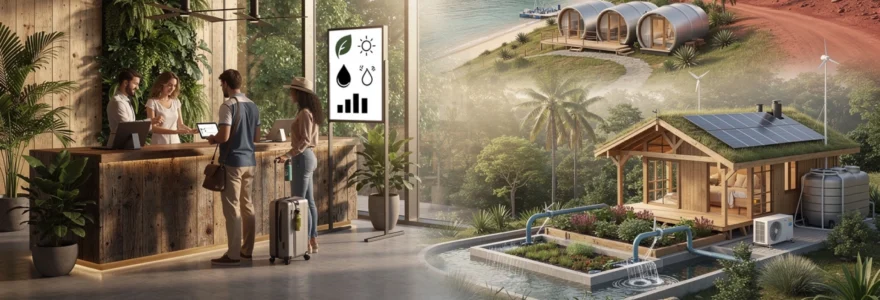
Over the past decade, a transformation has been quietly reshaping the hospitality landscape. From boutique guesthouses to five-star resorts, accommodation providers worldwide are rethinking their environmental footprint—and travellers are noticing. What was once a niche concern has evolved into a mainstream expectation, with sustainability certifications and eco-labels now influencing booking decisions for millions. According to Booking.com’s 2023 Sustainable Travel Report, 74% of global respondents believe urgent action is needed to make more sustainable choices for future generations, marking an 11% increase from the previous year. This shift isn’t driven by fleeting trends but by a deepening awareness that tourism’s environmental toll—from carbon emissions to water scarcity—demands a collective rethink. Today’s conscious travellers seek accommodations that align with their values, yet many remain uncertain about how to identify genuinely green properties. Meanwhile, forward-thinking hoteliers are discovering that eco-friendly operations aren’t just ethical—they’re economically sound, attracting premium guests willing to pay more for authenticity and environmental stewardship.
Carbon footprint reduction through green certification programmes in hospitality
Green certification programmes have emerged as the gold standard for verifying sustainable practices in hospitality. These third-party verification systems provide travellers with reliable indicators that an accommodation genuinely prioritises environmental responsibility. With 65% of respondents in Booking.com’s research confirming they would feel better about staying in a property with a sustainable certification or label, the commercial value of accreditation has become undeniable. Yet the landscape of eco-labels can be bewildering: from international schemes to regional programmes, understanding which certifications carry real weight requires careful examination.
LEED and BREEAM standards transforming hotel construction and retrofitting
Leadership in Energy and Environmental Design (LEED) and Building Research Establishment Environmental Assessment Method (BREEAM) represent the most rigorous building-focused certifications in the hospitality sector. LEED, developed by the U.S. Green Building Council, assesses energy efficiency, water usage, material selection, and indoor environmental quality across new construction and major renovations. Hotels pursuing LEED certification typically achieve 25-30% reductions in energy consumption compared to conventional buildings. BREEAM, the world’s longest-established sustainability assessment method, originated in the UK and evaluates similar criteria with particular emphasis on lifecycle impacts and ecological site selection. Both systems use tiered recognition—from Certified to Platinum in LEED’s case, and Pass to Outstanding for BREEAM—allowing properties to demonstrate varying levels of commitment. The Proximity Hotel in Greensboro, North Carolina, became the first LEED Platinum hotel in the United States, incorporating 100 geothermal wells, rooftop solar panels, and regenerative elevators that feed electricity back into the building grid.
Green key and EarthCheck Eco-Label verification processes
While LEED and BREEAM focus primarily on construction, operational certifications like Green Key and EarthCheck assess day-to-day environmental management. Green Key, administered by the Foundation for Environmental Education, has certified over 3,200 establishments across 65 countries, making it one of the world’s most recognised eco-labels for tourism. Properties must meet at least five of ten sustainability criteria, including renewable energy use, organic food sourcing, water conservation, waste recycling, and car-free accessibility. The certification process involves detailed documentation, on-site inspections, and annual renewals to maintain standards. EarthCheck, an Australian-based programme accredited by the Global Sustainable Tourism Council (GSTC), takes a more scientific approach, requiring properties to benchmark their environmental performance against industry standards and demonstrate continuous improvement. Research from the University of Lisbon found that travellers particularly value transparency in sustainability reporting, with eco-labels serving as trust signals that reduce perceived risk when booking unfamiliar accommodations.
Carbon neutral accommodation models: the proximity hotel case study
Achieving carbon neutrality represents the pinnacle of environmental commitment in hospitality. The Proximity Hotel’s approach illustrates how integrated design can create truly net-zero properties. Beyond its LEED Platinum certification, the hotel generates 60% of its hot water from solar thermal panels, uses geother
sourced heat pumps for heating and cooling, and recovers waste heat from refrigeration and kitchen equipment. Regenerative drive elevators capture energy on the way down and channel it back into the building’s power system, much like a hybrid car recovers energy when braking. The result is a hotel that uses around 39% less energy and 34% less water than comparable properties, significantly lowering its carbon footprint per guest night. Where residual emissions remain, carbon offsets are used strategically—supporting verified projects rather than serving as a substitute for on-site efficiency. For travellers, this kind of carbon neutral accommodation model offers a clear, verifiable way to align their stay with low-impact travel choices.
Energy performance certificate requirements and guest transparency initiatives
Alongside voluntary eco-labels, regulatory tools such as Energy Performance Certificates (EPCs) are becoming central to carbon footprint reduction in accommodation. In many European countries, hotels and serviced apartments must disclose their EPC rating, which scores building energy efficiency on a simple scale—often from A (most efficient) to G (least efficient). For guests trying to book eco-friendly accommodation without sifting through technical reports, this rating functions like a nutritional label for buildings. Forward-thinking operators are going beyond minimum disclosure by publishing annual energy use and emissions per occupied room, sometimes in real time via lobby dashboards or in-room tablets.
These guest transparency initiatives do more than build trust; they actively encourage behaviour change. When visitors can see how adjusting the thermostat or reusing towels affects overall resource use, they are more likely to participate in conservation efforts. Some sustainable hotels now include brief sustainability summaries in pre-arrival emails, explaining their EPC ratings, renewable energy mix, and water-saving measures in plain language. Others integrate sustainability indicators into booking confirmations, helping travellers compare the environmental impact of different room types or rate options. In this way, data that once sat in technical files is becoming a practical decision-making tool, narrowing the gap between eco-conscious intentions and actual booking choices.
Regenerative tourism practices reshaping accommodation design and operations
While early eco-hotels focused on “doing less harm,” a growing number of properties now aim to leave destinations better than they found them. This shift from sustainability to regenerative tourism is reshaping how accommodations are designed, built, and run. Instead of simply minimising carbon footprint, regenerative stays look to restore ecosystems, strengthen local economies, and revive cultural heritage. In practice, this means architecture that works with the landscape, circular water and energy systems, and guest experiences that contribute to conservation rather than depletion.
Regenerative accommodation design often starts with a simple question: how can a building behave more like a living organism within its environment? The answer increasingly involves passive house architecture, on-site renewables, closed-loop water cycles, and biophilic spaces that reconnect guests with nature. As we explore these elements, it becomes clear that the most future-ready hotels are not just “less bad”—they are actively healing the places they call home.
Passive house architecture integration in alpine and coastal resorts
Passive House (or Passivhaus) standards, originally developed in Germany, are quietly transforming high-performance accommodation design in both alpine and coastal settings. By prioritising ultra-high insulation, airtight building envelopes, and heat recovery ventilation, Passive House resorts can reduce heating and cooling energy demand by up to 75–90% compared with conventional hotels. In mountain destinations where winter heating loads are traditionally enormous, this can mean the difference between a carbon-intensive ski lodge and a near-zero energy retreat. Coastal eco-resorts, meanwhile, use Passive House principles—such as shading, orientation, and natural cross-ventilation—to keep interiors cool without relying on energy-hungry air conditioning.
Several European mountain lodges and Scandinavian cabins now combine Passive House design with locally sourced materials like timber, stone, and cellulose insulation, blending modern performance with vernacular aesthetics. Guests may not immediately notice the technical details, but they feel the difference: stable indoor temperatures, fresh air without drafts, and an almost complete absence of mechanical noise. For eco-conscious travellers, booking a Passive House resort offers a tangible way to reduce their holiday energy footprint, especially in cold or hot climates where traditional buildings can be extremely resource-intensive.
On-site renewable energy systems: solar PV and geothermal heat pump installations
On-site renewable energy systems are another pillar of regenerative accommodation design, turning hotels from passive energy consumers into active producers. Solar photovoltaic (PV) arrays have become a familiar sight on eco-lodge rooftops, parking canopies, and even integrated into façades. In sunny regions, well-designed PV systems can meet a significant share of a property’s electricity demand, from lighting and HVAC to vehicle charging points. Some pioneering eco-resorts combine PV with battery storage, allowing them to operate semi off-grid and provide resilient power during wider grid disruptions.
Geothermal heat pumps, like those used at the Proximity Hotel, tap into stable underground temperatures to provide highly efficient heating and cooling. In alpine and Nordic resorts, vertical boreholes or horizontal ground loops feed heat-exchange systems that drastically cut energy consumption for space conditioning and hot water. Coastal properties sometimes pair geothermal systems with seawater heat exchange, using nearby bodies of water as thermal reservoirs. For guests, the technology is largely invisible, but the outcomes—consistent comfort, quieter mechanical systems, and a lower carbon footprint per stay—are very real. As more travellers ask how their chosen eco-friendly accommodation is powered, solar and geothermal installations are becoming compelling selling points rather than purely back-of-house engineering choices.
Greywater recycling and rainwater harvesting infrastructure in eco-lodges
Water scarcity is an increasingly pressing issue for tourism destinations, especially islands and arid regions that host large numbers of visitors. In response, many eco-lodges are embracing greywater recycling and rainwater harvesting to drastically reduce their freshwater footprint. Greywater systems capture lightly used water from showers, basins, and laundry, then filter and treat it for reuse in toilet flushing or irrigation. This closed-loop approach can cut potable water use by 30–50%, while also reducing pressure on municipal infrastructure or fragile local aquifers.
Rainwater harvesting takes advantage of roof and surface runoff, channelling it into storage tanks for later use in gardens, cleaning, or even, with adequate treatment, for guest consumption. In some regenerative projects, wetlands and bio-swales are integrated into the landscape design, acting like natural kidneys that filter water while providing habitat for birds and insects. These visible water features serve a dual purpose: they support biodiversity and act as educational tools, showing guests how thoughtful design can turn “waste” water into a valuable resource. When travellers see their eco-friendly accommodation collecting rain in cisterns or reusing shower water to nourish native plants, the abstract idea of sustainable water management becomes concrete and memorable.
Biophilic design principles and natural ventilation systems
Biophilic design—the practice of connecting people more deeply with nature through architecture—is increasingly central to eco-friendly stays. Instead of sealed, air-conditioned boxes, regenerative accommodations favour operable windows, shaded verandas, and atriums that bring daylight and fresh air into the heart of the building. Natural ventilation systems use stack effect, cross-breezes, and carefully placed vents to maintain comfort with minimal mechanical assistance. In tropical eco-lodges, elevated structures catch breezes while deep overhangs and vegetation provide solar shading, reducing the need for artificial cooling.
Inside, guests encounter natural materials, views of greenery, and indoor plants that subtly improve air quality and wellbeing. Studies have linked biophilic environments to lower stress, better sleep, and improved cognitive function—benefits that align strongly with wellness-focused eco escapes. By designing rooms that open onto forests, dunes, or mountain vistas, hotels create emotional connections that a conventional city high-rise simply cannot match. For travellers choosing between accommodation options online, images of sunlit timber interiors, leafy courtyards, and open-air lounges can be a powerful nudge towards more sustainable, nature-centric stays.
Consumer behaviour shifts driving sustainable accommodation demand
The quiet rise of eco-friendly stays is not only a story of technology and design; it is also a story of changing traveller values. Surveys from Booking.com, YouGov, and other research bodies consistently show that a majority of global travellers now consider sustainability important when planning trips. Yet behaviour is complex: while many guests aspire to travel lightly, they also face constraints around cost, convenience, and information. The most successful sustainable accommodations recognise this tension and work to make greener choices the simplest and most attractive options.
Understanding who is driving demand—and why—helps hosts and investors tailor their offerings. Younger generations in particular are pushing the industry forward, but they are far from alone. From “flight shame” debates to the growing use of sustainability filters on major booking platforms, a new consciousness is reshaping how we book, where we stay, and what we expect from hospitality brands.
Millennial and gen Z travel demographics prioritising environmental impact
Millennial and Gen Z travellers are widely recognised as the vanguard of sustainable tourism demand. Raised amid climate change headlines and social media activism, these cohorts are more likely to factor environmental impact into their booking decisions. Surveys suggest that around 70–80% of younger travellers say sustainable travel is important, and many are willing to pay a premium—sometimes up to 10–20% extra—for verified eco-friendly accommodation. For this demographic, staying at a hotel that ignores sustainability can feel as out of step as using single-use plastic for every drink.
Yet environmental concern is only part of the story. Younger guests also crave authenticity, community connection, and “holidays with a purpose.” They actively seek hosts who support local suppliers, reduce plastic use, and offer experiences such as volunteering, nature restoration, or cultural workshops. For accommodation providers, this means that messaging about solar panels or low-flow showers works best when framed within a broader narrative: how the property benefits the local community, protects ecosystems, and reflects guests’ own values. In essence, sustainability becomes not just a technical feature but a core part of the brand identity that appeals to conscious travellers.
Booking platform sustainability filters on booking.com and airbnb
For many travellers, large booking platforms are the first—and sometimes only—interface with the accommodation market. Recognising the surge in demand for eco-friendly stays, platforms like Booking.com and Airbnb have introduced sustainability filters and badges that help guests identify greener options. Booking.com’s “Travel Sustainable” programme, for example, highlights properties with verified practices such as renewable energy use, waste reduction, water-saving measures, and support for local communities. Users can filter search results to prioritise these stays, reducing the time and research effort needed to book sustainably.
Airbnb, meanwhile, has promoted categories like “Off the Grid” and “Eco-friendly,” alongside guidance for hosts on energy efficiency and responsible tourism. However, the risk of greenwashing remains, especially when criteria are self-reported or loosely defined. This is where independent certifications like Green Key, EarthCheck, or GSTC-accredited schemes play a crucial role, acting as robust verification mechanisms behind platform badges. From the traveller’s perspective, combining platform filters with trusted eco-labels provides a practical, low-effort way to ensure their chosen accommodation aligns with their sustainable travel goals.
Conscious travel movement and flight shame influencing accommodation choices
The rise of the “conscious travel” movement—where people actively seek to minimise the negative impacts of their trips—is also reshaping accommodation behaviour. Concepts like flygskam or “flight shame,” which began in Scandinavia, have spread into mainstream debates, prompting some travellers to reduce flying or favour rail and local holidays instead. When people choose to travel less often but stay longer, they tend to be more selective about the places they book, placing stronger emphasis on eco-friendly accommodation that reflects their ethics. A once-a-year, slow travel trip is more likely to involve a thoughtfully chosen eco-lodge than a quick, impulse weekend at the cheapest resort.
At the same time, conscious travellers are questioning overtourism and seeking out less-crowded destinations—so-called “hidden gems”—where their spending can have a more positive local impact. Stays that support rewilding, community-led tourism, or regenerative agriculture are especially attractive to this segment. For hosts, this presents both a challenge and an opportunity: simply hanging a towel-reuse sign is no longer enough. To win over conscious travellers, accommodations need credible sustainability actions, transparent communication, and experiences that make guests feel part of a wider movement towards more responsible tourism.
Premium eco-resorts setting industry benchmarks across global destinations
At the top end of the market, a new generation of premium eco-resorts is proving that luxury and sustainability can reinforce rather than contradict each other. These properties function as living laboratories, demonstrating what is possible when design innovation, community partnership, and environmental stewardship are pursued without compromise. While few travellers will stay at these flagship destinations, their influence extends far beyond their guest lists. They set benchmarks, inspire competitors, and shape guest expectations about what truly sustainable hospitality can look like.
From zero-waste management on remote islands to community-owned lodges in harsh northern climates, these resorts show that eco-friendly accommodation can deliver both exceptional experiences and measurable positive impact. Four widely cited examples—Soneva Fushi in the Maldives, Whitepod in Switzerland, Longitude 131° in Australia, and Fogo Island Inn in Canada—illustrate how different regions are reinventing luxury through a sustainability lens.
Soneva fushi maldives zero-waste management and desalination systems
Soneva Fushi, located in the Baa Atoll UNESCO Biosphere Reserve, is often held up as a benchmark for regenerative island hospitality. Operating on a “no news, no shoes” philosophy, the resort pairs barefoot luxury with rigorous environmental management. Its on-site Eco Centro waste facility recycles or upcycles around 90% of solid waste, transforming glass bottles into art and tableware, composting food scraps, and minimising landfill use. Single-use plastics have been largely eliminated, replaced by glass bottles and reusable alternatives.
Freshwater, a notorious challenge for small islands, is produced through an advanced desalination system that treats seawater and then remineralises it for safe, pleasant drinking. By bottling water on site in reusable glass, Soneva Fushi has eliminated hundreds of thousands of imported plastic bottles. Guests are invited behind the scenes to tour the Eco Centro and water facilities, turning invisible infrastructure into a compelling educational experience. For eco-conscious travellers, this transparency reinforces confidence that their luxury stay is aligned with strong environmental principles rather than marketing spin.
Whitepod switzerland low-impact geodesic pod architecture
High in the Swiss Alps, Whitepod offers a very different expression of sustainable luxury. Guests stay in geodesic pods anchored lightly to the mountain, minimising permanent impact on the landscape. The pod structures require fewer materials than traditional chalets while providing excellent thermal performance, reducing heating energy during long alpine winters. Wood-burning stoves, efficient insulation, and controlled occupancy all help to keep the resort’s carbon footprint significantly lower than comparable mountain hotels.
Access is deliberately limited—materials and luggage are transported via small vehicles or on foot—to reduce traffic and preserve the tranquillity of the site. In winter, ski slopes are not artificially lit or heavily mechanised, while in summer, hiking routes are carefully managed to avoid erosion and protect local flora. This low-impact approach shows that eco-friendly stays do not have to sacrifice comfort: guests still enjoy hot tubs, gourmet local cuisine, and sweeping mountain views. For travellers seeking a “digital detox” and a closer relationship with nature, the simplicity and intentionality of Whitepod’s design are a major part of the appeal.
Longitude 131° australia indigenous land stewardship integration
Longitude 131°, overlooking Australia’s Uluru-Kata Tjuta National Park, demonstrates how cultural sustainability can be woven into luxury hospitality. The lodge operates on land with profound significance to the Anangu people, the area’s Traditional Owners. Rather than treating this heritage as a backdrop, Longitude 131° integrates Indigenous knowledge and land stewardship into every aspect of the guest experience. Local guides share Tjukurpa (creation stories), bush food knowledge, and perspectives on caring for Country, helping visitors understand that the landscape is a living cultural entity, not just a scenic view.
The resort’s semi-permanent tented structures minimise ground disturbance, and operations adhere to strict environmental guidelines shaped by the National Park and Traditional Owners. Revenue-sharing, local employment, and procurement from Indigenous-owned businesses further support community wellbeing. For travellers, staying at Longitude 131° offers a rare combination: high-end comfort, remarkable natural beauty, and a chance to support Indigenous-led conservation and storytelling. This model of partnership points to a future where eco-friendly accommodation routinely includes cultural equity and local governance, not just technical green features.
Fogo island inn canada community-centric economic model
On a remote island off the coast of Newfoundland, Fogo Island Inn has become a global symbol of community-centred regenerative tourism. Designed by architect Todd Saunders, the striking inn perches on stilts above the rocky shore, echoing traditional fishing stages while treading lightly on the land. The project was initiated by Shorefast, a social enterprise founded by a returning islander, with the explicit aim of reversing economic decline and outmigration. All operating surpluses from the inn are reinvested into community programmes, from microloans for local entrepreneurs to cultural and heritage initiatives.
The inn’s interiors feature locally crafted furniture, quilts, and textiles, ensuring that tourism spending flows into the hands of island artisans rather than distant suppliers. Guests are encouraged to explore beyond the inn itself, joining local hosts for boat trips, berry picking, or storytelling evenings that reveal the island’s character. Environmentally, the building incorporates energy-efficient systems suited to the harsh North Atlantic climate, while sourcing food from nearby fisheries and farms reduces food miles. For travellers interested in how eco-friendly accommodation can actively regenerate a place, Fogo Island Inn offers a powerful, people-first blueprint.
Economic viability and investment returns in sustainable hospitality properties
One lingering myth about eco-friendly accommodation is that it is inherently more expensive and less profitable than conventional hospitality. In practice, many sustainable properties find that the opposite is true over the long term. While green building features and certifications can increase upfront capital costs, they often deliver significant operational savings and stronger market positioning. As more travellers indicate they are willing to pay more for sustainably run hotels and lodges, certified properties are capturing a growing slice of premium demand.
From an investor’s perspective, sustainable hospitality assets can also present lower regulatory and reputational risks. With governments tightening building codes and climate disclosure rules, properties that already meet or exceed high environmental standards are better insulated against future compliance costs. Add to this the potential for tax credits, grants, and green financing, and the business case for eco-friendly accommodation becomes hard to ignore.
Operational cost savings through energy-efficient HVAC and LED lighting systems
Energy-efficient HVAC (heating, ventilation, and air conditioning) and LED lighting systems are often the lowest-hanging fruit in sustainable hotel retrofits. Traditional HVAC units and halogen or incandescent bulbs consume large amounts of energy, especially in properties with 24/7 operations. By upgrading to high-efficiency chillers, variable-speed drives, heat recovery units, and smart thermostats, hotels can reduce energy use by 20–40% without compromising guest comfort. LED lighting, meanwhile, typically uses up to 75% less energy than older technologies and lasts many times longer, reducing both utility bills and maintenance costs.
For a mid-size hotel, these efficiency gains can translate into tens or even hundreds of thousands of euros in annual savings, directly boosting net operating income. When multiplied over the lifetime of the equipment, the return on investment is often compelling, with payback periods as short as three to five years. These cost savings help offset the initial investments required for broader sustainability upgrades such as solar panels, water recycling, or certification processes, creating a virtuous economic circle. In other words, energy-efficient systems are not just “nice to have” green features; they are core profitability drivers for eco-friendly accommodation.
Green building incentives and tax credits for accommodation providers
Many governments now recognise that decarbonising the built environment is essential to meeting climate targets, and they are offering financial incentives for green building. Accommodation providers can often tap into grants, low-interest loans, accelerated depreciation schemes, or tax credits when they invest in energy efficiency, renewable energy, or low-carbon construction. In the EU, for example, various national and regional programmes support building renovations that improve EPC ratings, while some countries offer subsidies specifically for solar PV or heat pump installations.
In North America and parts of Asia-Pacific, local authorities may provide property tax rebates or density bonuses for developments that achieve certifications such as LEED, BREEAM, or equivalent national schemes. Accessing these incentives does require careful planning and documentation, which is why many hotel owners work with specialised sustainability consultants. However, when combined with lower operating costs and stronger guest demand, these public supports can significantly improve the investment case for eco-friendly accommodation, shortening payback periods and increasing asset value.
Premium pricing strategies and occupancy rate advantages for certified properties
Beyond cost savings and incentives, sustainable hotels often benefit from revenue-side advantages. Multiple industry surveys have found that a substantial share of travellers—often around 40–60% depending on the market—are willing to pay more for eco-friendly and socially responsible stays. Certified properties can therefore justify modest price premiums, especially when they clearly communicate the added value: improved air quality, healthier materials, meaningful local experiences, and the knowledge that a portion of revenue supports conservation or community projects.
Eco-labels and certifications also influence occupancy. Properties highlighted on booking platforms as “sustainable” or “eco-certified” tend to enjoy better visibility and higher conversion among conscious travellers. Over time, this can translate into higher average occupancy, particularly in shoulder seasons when guests may be more flexible and value-driven. For investors, this combination of premium pricing and occupancy resilience can result in superior revenue per available room (RevPAR) compared with non-certified competitors, reinforcing the long-term financial viability of eco-friendly accommodation models.
Technology integration enabling measurable sustainability metrics in lodging
Modern technology is playing a pivotal role in making sustainability in hospitality both measurable and manageable. Where hoteliers once relied on monthly utility bills and rough estimates, they can now track resource use in real time, segment it by area or guest, and identify inefficiencies quickly. This level of insight allows eco-friendly accommodation providers to move from one-off initiatives to continuous improvement, refining operations much like a pilot fine-tunes a flight path based on live data.
Crucially, digital tools are also making it easier to communicate sustainability performance to guests and stakeholders. Smart room controls, blockchain-based carbon tracking, and AI-powered kitchen systems may sound abstract, but their impact is very tangible: lower emissions, less waste, and a clearer understanding of what it means to run a truly sustainable hotel.
Iot smart room controls optimising energy consumption per guest night
Internet of Things (IoT) smart room controls are increasingly common in contemporary eco hotels, enabling precise management of energy use at the room level. Sensors detect when guests enter or leave, automatically adjusting lighting, heating, and cooling to avoid wasting power in unoccupied spaces. Smart thermostats learn typical usage patterns and can pre-condition rooms shortly before check-in, rather than running systems at full power all day. In some cases, guests can control settings via mobile apps, with gentle prompts encouraging eco-friendly choices such as slightly higher cooling setpoints or reduced towel changes.
For operators, the data generated by these systems is invaluable. They can calculate energy consumption per guest night, compare performance across floors or room types, and target upgrades where they will have the greatest impact. Over time, this creates a feedback loop: as energy-saving strategies are tested and refined, the hotel’s carbon footprint steadily declines. For travellers, smart controls offer both convenience and reassurance that their comfort is not coming at an unnecessary environmental cost.
Blockchain-based carbon credit tracking for hotel stays
As more accommodations aim for carbon neutrality or net-positive operations, accurate tracking of emissions and offsets becomes critical. Blockchain technology is emerging as a tool to bring transparency and trust to this process. By recording carbon credit purchases and retirements on a public, tamper-resistant ledger, hotels can prove that offsets linked to guest stays are real, unique, and not double-counted. Some early adopters are experimenting with offering guests the option to view—or even directly purchase—the carbon credits associated with their booking via a secure digital interface.
While still in its infancy, blockchain-based carbon tracking could help standardise how eco-friendly stays account for unavoidable emissions, such as those from construction materials or certain supply chains. For sustainability-minded travellers who are wary of vague carbon-neutral claims, the ability to trace offsets back to specific projects and serial numbers offers a new level of confidence. In time, we may see integrated platforms where a guest can book a room, view the property’s certified emissions profile, and choose from a menu of verified offset or insetting projects—all recorded and auditable on-chain.
Ai-powered predictive analytics reducing food waste in hospitality operations
Food waste is a significant environmental and economic issue in hospitality, with buffets and banqueting operations often discarding large quantities of edible food. AI-powered predictive analytics tools are helping eco-friendly hotels tackle this problem head-on. By analysing historical data, booking patterns, seasonality, and even local events, these systems can forecast demand more accurately, allowing chefs to plan menus and purchasing with minimal surplus. Cameras and smart scales in kitchens and dishwashing areas can track exactly what is being thrown away, feeding back into the algorithm to refine predictions.
Some hotels that have adopted AI-based food waste platforms report reductions in waste of 30–50% within the first year, alongside lower purchasing costs and improved menu planning. Guests benefit from fresher, higher-quality dishes tailored more closely to actual preferences, while the property’s overall carbon and water footprint declines. In an era when many travellers say they want to cut food waste and support responsible dining, this kind of behind-the-scenes technology is becoming a key component of truly sustainable accommodation operations.