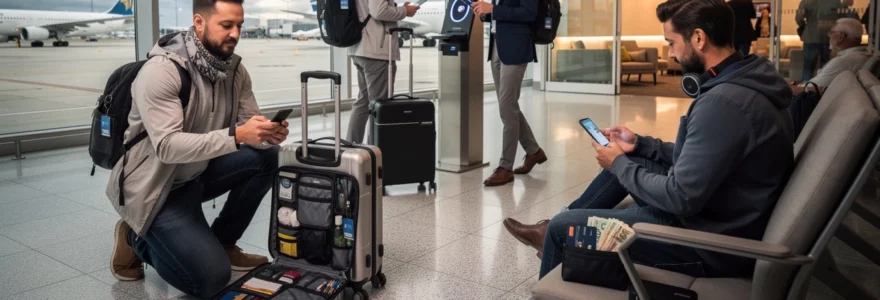
In the bustling corridors of international airports and the winding streets of foreign cities, experienced travelers navigate with an unmistakable confidence that sets them apart. Their movements are deliberate, their preparations methodical, and their responses to unexpected situations remarkably composed. This distinctive behaviour isn’t born from arrogance or showmanship, but from countless hours spent perfecting the art of efficient travel through trial, error, and accumulated wisdom.
The difference between a seasoned traveler and an occasional vacationer extends far beyond passport stamps or destination counts. It manifests in countless subtle behaviours and strategic choices that, when observed collectively, create an unmistakable profile of travel expertise. These habits represent years of refined decision-making processes, optimised systems, and carefully developed intuition about what works across diverse cultural and geographical contexts.
Understanding these distinguishing characteristics offers valuable insights into the mindset and methodologies that transform travel from a stressful endeavour into a seamless experience. Professional nomads and frequent business travelers have developed these patterns through necessity, whilst leisure travelers who’ve embraced these principles discover that travel becomes infinitely more enjoyable when approached with proper preparation and cultural awareness.
Distinctive packing methodologies and luggage selection patterns
The way seasoned travelers approach packing reveals perhaps the most immediate indicator of their experience level. Rather than cramming belongings haphazardly into oversized suitcases, veteran travelers employ systematic approaches that maximise space whilst maintaining organisation. Their luggage selection reflects careful consideration of airline restrictions, destination requirements, and personal mobility needs.
Compression packing cube systems and space optimisation techniques
Expert travelers understand that efficient packing isn’t about fitting more items into available space, but about creating organised systems that allow for easy access and retrieval. Compression packing cubes serve as the foundation of this methodology, with different sizes designated for specific item categories. Underwear and socks occupy the smallest cubes, whilst bulkier items like jumpers utilise medium-sized options with compression zippers.
The strategic placement of these cubes within luggage follows a deliberate hierarchy. Heavy items remain close to the wheels in wheeled luggage, whilst frequently accessed items stay near the top or in external pockets. This systematic approach eliminates the frantic rummaging that characterises inexperienced packers and reduces the likelihood of forgetting essential items.
Strategic Carry-On maximisation using TSA-Compliant configurations
Experienced travelers have mastered the art of carry-on travel, understanding that checked baggage represents potential complications rather than convenience. Their carry-on selections prioritise durability and functionality over aesthetics, with hard-shell cases chosen for electronics and soft-sided options for clothing flexibility. The internal organisation follows strict protocols, with liquids compartmentalised in easily accessible pockets for security checkpoint efficiency.
The strategic packing of carry-ons extends beyond mere compliance with size restrictions. Veterans understand weight distribution principles, ensuring that their bags can be easily maneuvered through crowded terminals whilst maintaining balance. They’ve calculated the exact capacity needed for their typical trip duration and resist the temptation to pack “just in case” items that compromise mobility.
Weather-adaptive layering systems for Multi-Climate itineraries
Sophisticated travelers recognise that versatile clothing systems outperform destination-specific wardrobes, particularly for multi-city journeys spanning different climates. Their layering strategies employ base layers, insulating mid-layers, and protective outer shells that can be combined in various configurations. This modular approach reduces overall luggage volume whilst maintaining comfort across temperature ranges.
Fabric selection demonstrates another level of expertise, with moisture-wicking synthetics and merino wool featuring prominently for their quick-drying properties and odour resistance. These material choices reflect understanding that laundry opportunities may be limited and that versatile pieces reduce the overall wardrobe requirements for extended journeys.
Emergency kit curation and documentation backup protocols
Professional travelers maintain meticulously curated emergency kits that address common travel complications without overwhelming their luggage capacity. These kits include basic medical supplies, universal adapters, portable chargers, and essential tools
such as a compact multitool or duct tape wrapped around a pen. Equally important is their approach to documentation: scanned copies of passports, visas, insurance policies, and key reservations are stored in encrypted cloud folders and on a password-protected device. Many also carry a secondary, laminated card listing emergency contacts, local embassy details, and essential medical information. This layered system means that even in the event of loss or theft, they can re-establish their travel identity and continue their journey with minimal disruption.
Advanced airport navigation and transit efficiency strategies
If packing habits are the first clue that you’re dealing with a seasoned traveler, the way someone moves through an airport removes all doubt. Experienced travelers treat airports less like chaotic obstacles and more like well-mapped ecosystems. Their efficiency is not just about walking quickly; it’s about anticipating bottlenecks, exploiting available tools, and making dozens of micro-decisions that preserve time and energy over the course of long-haul itineraries.
Biometric fast-track systems and global entry programme utilisation
Regular international travelers rarely rely solely on standard passport queues if they can avoid it. Instead, they leverage biometric fast-track systems such as Global Entry, TSA PreCheck, NEXUS, or eGate-style automated border control where available. These programmes require upfront registration and background checks, but the payoff is substantial: reduced waiting times, shorter security lines, and, in some cases, the ability to keep laptops and liquids inside bags.
Beyond simply enrolling, seasoned travelers also understand where and when these systems apply. They know which airports reliably support facial recognition boarding, which carriers participate in known-traveler schemes, and which terminals offer dedicated security lanes at peak times. Rather than hoping for a smooth experience, they engineer it in advance by aligning their flight choices, departure times, and airline loyalty numbers with the biometric infrastructure that will save them the most time.
Terminal architecture reading and gate positioning intelligence
One of the most subtle habits of experienced travelers is their ability to “read” an unfamiliar terminal almost instantly. Upon arrival, they scan signage, note the location of key junctions such as immigration, security re-checks, and transfer desks, and quickly internalise the terminal’s basic layout. This situational awareness allows them to bypass congested escalators, avoid dead-end corridors, and choose walking routes that minimise backtracking.
Gate positioning intelligence plays a similar role. Savvy travelers know that certain gates are chronically affected by bus boarding, remote stands, or long walks with limited moving walkways. When possible, they choose seats closer to exits, sit near likely boarding zones, and monitor live gate changes via apps instead of relying on overhead announcements. This holistic reading of airport architecture means fewer frantic sprints and a much lower risk of missed connections, even when delays compress transfer times.
Lounge access optimisation through credit card and alliance networks
Another hallmark of seasoned travelers is their strategic use of airport lounges—not as a luxury, but as a productivity and recovery tool. Rather than relying solely on airline status, they assemble a patchwork of access options: premium credit cards that grant entry to independent lounge networks, day passes when necessary, and alliance status that opens doors across multiple carriers. This multi-channel approach ensures that, in most major hubs, there is always a quiet space available for work, rest, or a quick shower.
Optimisation goes beyond access itself. Experienced travelers understand which lounges are typically overcrowded and which lesser-known options offer better Wi-Fi, quieter corners, or more reliable food. They time their arrivals to avoid peak congestion and use lounge time purposefully: recharging devices, downloading offline maps, reorganising documents, or simply resetting their body clock with a proper meal instead of rushed terminal snacks. In long-haul travel, these micro-comforts accumulate into a substantial reduction in fatigue.
Connection buffer calculations and minimum connecting time analysis
Most infrequent travelers either book connections that are far too tight or layovers that are unnecessarily long. Seasoned travelers approach this differently: they mentally run a “minimum connecting time” analysis before confirming any itinerary. They factor in airport size, likely immigration queues, the reliability of specific airlines, and seasonal weather disruptions. A 45-minute connection might be comfortable in a small, efficient European hub, but the same window could be reckless in a sprawling, congestion-prone airport during winter.
Over time, experienced travelers build a personal database of safe buffer times by region and route. They also treat self-transfer itineraries with greater caution, allowing additional margin when tickets are issued on separate PNRs and baggage may need to be rechecked. Rather than fearing missed flights, they mitigate the risk proactively and, when a tight connection is unavoidable, position themselves strategically on the aircraft and at disembarkation to move through the terminal as efficiently as possible.
Cultural immersion protocols and local integration techniques
Beyond logistics, seasoned travelers distinguish themselves by how they interact with local cultures. Their goal is not to consume destinations as checklists of attractions, but to integrate—however briefly—into the social and cultural fabric of the place they are visiting. This isn’t performative “authenticity”; it’s a quiet respect that shows up in language use, body language, and daily routines.
At a minimum, they learn essential phrases in the local language: greetings, polite forms of address, basic directions, and how to express gratitude. You might have noticed how a seasoned traveler will instinctively lower their voice in a quiet metro carriage, mirror local queueing norms, or switch from shoes to slippers when entering a home or certain indoor spaces. These seemingly small actions communicate, “I’m paying attention,” and they transform how locals respond to you.
Veteran travelers also curate their itineraries to include ordinary life: supermarkets, neighbourhood cafés, and public parks sit alongside museums and landmarks. They might return to the same coffee shop each morning, not because it’s the “best café in Paris” according to a list, but because they value the slow familiarity that builds with staff and regulars. Rather than broadcasting their own culture, they observe first, then participate, allowing local rhythms to guide how they spend their non-touristy days.
Technology stack management for seamless connectivity
In an era where connectivity can make or break a trip, seasoned travelers treat their technology stack with the same intentionality they apply to luggage and itineraries. They don’t simply rely on their home carrier’s roaming package and hope for the best. Instead, they design a layered system of connectivity tools—physical and digital—that keeps them online securely and affordably across borders.
This system often includes a combination of unlocked devices, eSIM-capable phones, offline-first apps, and cloud-based backups. The goal is clear: maintain access to critical information, maps, tickets, and communication channels even when networks are unreliable or restricted. Like a well-tuned toolkit, this technology stack is refined after each trip, with underperforming apps replaced and new solutions tested in real-world conditions.
Multi-sim configuration and eSIM provider selection strategies
One of the most visible indicators of travel experience is how someone handles mobile connectivity upon arrival. Instead of scrambling for airport Wi-Fi, experienced travelers often switch to a preloaded eSIM or pop in a local SIM card before leaving the terminal. Dual-SIM phones allow them to maintain their home number for two-factor authentication and essential calls while routing data through cost-effective local or regional plans.
Choosing the right eSIM provider or local carrier is not random. Seasoned travelers compare coverage maps, fair-use policies, tethering allowances, and top-up options well before departure. For complex trips spanning multiple countries, they may select a regional eSIM that covers an entire area (for example, Europe or Southeast Asia) to avoid repeated SIM swaps. This multi-SIM strategy ensures that, whether they are coordinating airport pickups or navigating late-night arrivals, connectivity is a given rather than a pleasant surprise.
VPN protocol selection for geographic content access
Another quiet habit of experienced travelers is their routine use of VPNs, not just to access streaming platforms, but to protect sensitive data on public networks. They understand that airport Wi-Fi, hotel hotspots, and café networks are inherently insecure. Rather than relying on luck, they route traffic through reputable VPN providers and select appropriate protocols—such as WireGuard or OpenVPN—for the best balance of speed and security.
This attention to VPN protocol selection also supports more advanced needs: accessing region-specific banking portals, booking platforms that geo-restrict fares, or work-related systems locked behind corporate firewalls. For frequent travelers who manage businesses or remote roles on the road, a robust VPN is as essential as a passport. It ensures that crossing a border doesn’t mean losing access to critical digital infrastructure.
Offline navigation systems and emergency communication apps
While constant connectivity is ideal, seasoned travelers operate under the assumption that networks will occasionally fail. As a result, they always maintain redundant offline systems. Before arriving in a new city, they download offline maps with saved pins for accommodation, transit hubs, and key landmarks. They may export important reservations and boarding passes as PDFs, storing them locally to avoid issues when airline apps fail to refresh.
Emergency communication apps add another layer of resilience. Many travelers configure location-sharing with trusted contacts, store local emergency numbers within note-taking apps, and use translation apps with offline language packs to bridge communication gaps when things go wrong. Think of it as a digital first-aid kit: you hope not to need it, but when Wi-Fi drops during a late-night arrival or a phone network crashes, those offline systems can feel like a lifeline.
Risk mitigation frameworks and contingency planning
Perhaps the most underappreciated trait of seasoned travelers is their structured approach to risk. On the surface, they may appear relaxed and spontaneous, but beneath that calm exterior is a mental framework for assessing and mitigating potential problems. This doesn’t mean they travel in fear; rather, they treat risk management the way pilots treat pre-flight checks—quietly, consistently, and without drama.
Before departure, they review government advisories, insurance policies, and local healthcare options, noting hospitals or clinics near their accommodation. They maintain a hierarchy of backups: secondary credit cards stored separately, a small reserve of emergency cash in a different currency, and alternative accommodation options bookmarked in case of sudden disruptions. When plans change—flights cancelled, borders closed, strikes announced—they already have a decision tree in mind instead of starting from zero.
On the ground, this risk mitigation framework shows up in subtle behaviours. They keep photocopies of key documents separate from originals, avoid broadcasting location details in real time on social media, and trust their instincts when a situation feels off. When you see a traveler step out of a chaotic taxi queue to use a metered app-based service, or decline an overly insistent offer of help at an ATM, you’re watching that internal risk filter in action. It’s less about paranoia and more about stacking the odds in favour of a safe, uninterrupted journey.
Financial optimisation through currency exchange and payment systems
Money management is another domain where seasoned travelers quietly separate themselves from the crowd. Rather than accepting whatever fees and exchange rates appear at payment terminals or withdrawal screens, they apply a set of financial optimisation habits that preserve value over months or years of frequent travel. For someone who travels once a year, a few percentage points in hidden fees might go unnoticed; for a frequent flyer, those small leaks add up to the cost of an entire trip.
These travelers tend to rely on a mix of fee-free or low-fee debit cards, rewards-focused credit cards, and multi-currency digital wallets. They understand when to pay in local currency, when to use cash, and when a card with strong purchase protection offers better security. By treating foreign transactions as a system to be optimised rather than a necessary inconvenience, they maintain more control over their travel budget without sacrificing convenience or safety.
Dynamic currency conversion avoidance strategies
One of the most consistent habits among experienced travelers is their refusal to accept dynamic currency conversion (DCC) at ATMs and point-of-sale terminals. DCC is the “service” that offers to charge you in your home currency instead of the local one, often at a significantly worse exchange rate plus hidden margins. Seasoned travelers know that this convenience can cost an extra 3–7% per transaction, so their response is automatic: always choose to be charged in the local currency.
They also recognise the subtle tricks used to push DCC, from confusing interface designs to staff verbally suggesting the home currency option. By slowing down and reading each screen carefully, they avoid unnecessary fees and maintain control over how their bank handles the conversion. Over the course of a long trip—or a year of frequent flying—this simple habit can equate to hundreds of dollars saved, all without changing the substance of their travel experience.
Multi-currency account management and fee structure analysis
Beyond avoiding bad conversions, seasoned travelers often maintain multi-currency accounts or digital wallets that allow them to hold, exchange, and spend in various currencies at competitive rates. Platforms that offer borderless accounts or low-cost currency exchanges are popular because they make it easy to top up balances when exchange rates are favourable and then spend locally without punitive foreign transaction fees.
Crucially, experienced travelers also take time to understand fee structures. They know which of their cards charges ATM fees, which offers free withdrawals up to a certain limit, and which provides the best interbank exchange rate. This analysis may seem tedious at first, but once set up, it becomes largely automatic: specific cards for cash withdrawals, others for large purchases, and a clear mental hierarchy of which payment method to use in a given scenario.
Travel rewards programme stacking and points maximisation
Finally, one of the most distinctive financial habits of seasoned travelers is their sophisticated use of travel rewards programmes. Rather than scattering loyalty across dozens of schemes, they focus on a primary airline alliance and a small selection of hotel chains or booking platforms. This concentrated strategy allows them to achieve meaningful status levels, unlocking benefits such as priority boarding, complimentary upgrades, and bonus points on flights they would have taken anyway.
Programme stacking is where their expertise really shows. They might book a flight through a rewards portal using a points-earning credit card, on an alliance carrier that also credits miles to their preferred frequent-flyer account. Hotel stays can earn loyalty points, credit card rewards, and occasionally cashback via a separate app—all on the same transaction. To a casual observer, it looks like an ordinary check-in or online booking. In reality, it’s the result of a carefully considered system that turns everyday travel into a steady stream of future flights, upgrades, and discounted stays.