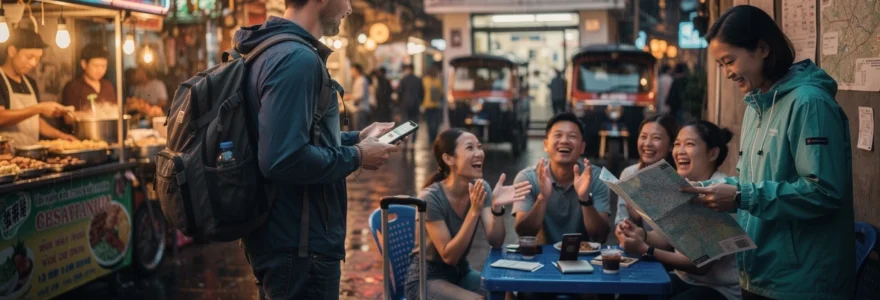
Solo travel represents one of the most transformative experiences available in modern life, yet its true value extends far beyond the glossy Instagram photographs and passport stamps. When you venture into the world without companions, you’re not merely exploring new destinations—you’re entering a crucible of personal development that fundamentally reshapes your understanding of yourself and the world around you. The lessons absorbed during these solitary journeys often prove more valuable than any formal education, teaching resilience, adaptability, and self-reliance in ways that no classroom environment could replicate. From navigating chaotic Asian markets to managing financial resources across fluctuating currencies, solo travel demands a level of engagement with life that reveals capabilities you never knew existed within yourself.
The transformation that occurs during extended solo travel isn’t always immediately visible. Sometimes it manifests in subtle shifts—a newfound confidence when approaching strangers, an enhanced ability to solve problems creatively, or a deeper appreciation for cultural nuance. These unexpected lessons accumulate gradually, building upon one another until you suddenly realise you’ve become a fundamentally different person from the one who first boarded that plane.
Navigating cultural dissonance: adapting to unfamiliar social frameworks abroad
Cultural dissonance hits hardest when you’re alone, without the buffer of familiar companions to validate your perceptions or share your confusion. The social frameworks that govern daily life vary dramatically across borders, and solo travellers must develop sophisticated adaptation mechanisms to function effectively in these unfamiliar environments. What constitutes polite behaviour in one culture might be considered offensive in another, and navigating these invisible boundaries requires heightened awareness and constant recalibration of your social instincts.
The process of adaptation begins with observation. When you’re travelling solo through countries with vastly different social norms, you quickly learn to watch before acting, to notice patterns in how locals interact, and to modulate your behaviour accordingly. This ethnographic approach to travel transforms you into an amateur anthropologist, constantly analysing and interpreting the cultural codes that structure daily interactions. The cognitive flexibility developed through this process proves invaluable long after you’ve returned home, enhancing your ability to navigate diverse social situations in professional and personal contexts.
Decoding Non-Verbal communication patterns in southeast asian markets
Southeast Asian markets present a particularly rich environment for learning non-verbal communication. The bustling atmosphere of a Thai or Vietnamese market operates on an intricate system of gestures, facial expressions, and spatial negotiations that bear little resemblance to Western commercial interactions. Solo travellers must quickly decipher these unspoken languages to avoid overpaying for goods or inadvertently insulting vendors through inappropriate behaviour.
Eye contact norms vary significantly across the region. In some contexts, sustained eye contact signals respect and serious intent to purchase, whilst in others it might be perceived as aggressive or inappropriate. Hand gestures carry equally nuanced meanings—the way you point at merchandise, handle goods, or indicate quantities can communicate volumes about your cultural literacy. Successful navigation of these markets requires you to develop an almost sixth sense for reading situations, observing how locals conduct transactions and adapting your approach accordingly.
The bargaining process itself becomes a masterclass in non-verbal negotiation. Beyond the spoken numbers, vendors assess your body language, your facial reactions to prices, and your willingness to walk away. Learning to maintain a neutral expression whilst internally calculating fair prices, or knowing when a slight smile might encourage a better offer, represents the kind of sophisticated social intelligence that only develops through direct, repeated exposure to these environments.
Managing loneliness through structured daily rituals in extended solo travel
Extended solo travel inevitably involves confronting loneliness, a reality that many travellers underestimate when planning their adventures. The romantic notion of wandering alone through exotic locations often collides with the harsh reality of eating dinner in silence for the fifth consecutive evening, watching groups of friends laugh together whilst you occupy a table for one. Managing this emotional dimension requires developing structured daily rituals that provide comfort and continuity amidst constant change.
Establishing morning routines becomes particularly important. Whether it’s finding a local café for coffee and journaling, practising yoga at sunrise, or taking a consistent morning walk, these rituals create anchors of familiarity in otherwise unpredictable days. They also provide natural opportunities for repeated interactions with locals—the same café owner who begins to recognise you, the fellow early risers you encounter on your regular walking
route, or the vendor who begins to prepare your usual breakfast order as soon as you walk in. These small recognitions accumulate into a sense of belonging, even when you are thousands of miles away from home. Over time, the rituals you build while traveling alone become a portable form of stability—a psychological toolkit you can unpack in any city, in any time zone.
Evening rituals are equally powerful in managing loneliness during long-term solo travel. Reading before bed, reflecting in a journal on the day’s high and low points, or taking a nightly walk through a familiar neighborhood can help you process experiences that might otherwise feel overwhelming. Some solo travelers schedule a daily check-in with a trusted friend or family member back home, not to cling to their old life but to maintain a healthy emotional bridge between worlds. Through trial and error, you discover which small, repeatable habits help you feel grounded, and you begin to understand that structure and spontaneity are not enemies but complementary forces in your journey.
Overcoming language barriers using visual communication strategies
Language barriers are one of the most intimidating aspects of traveling alone, yet they often become a catalyst for creative problem-solving. When you cannot rely on fluent conversation, you quickly discover the power of visual communication strategies: maps, photos, gestures, and even simple sketches scribbled on a napkin. Instead of viewing the lack of a common language as a wall, you start to see it as a puzzle—one that can usually be solved with patience, humility, and a bit of ingenuity.
Visual aids become your unofficial travel companions. Many solo travelers keep key information saved as screenshots on their phones: the name of their accommodation in the local script, a picture of the dish they want to order, or a map with important landmarks circled. When technology fails—or when you are trying to communicate with someone who has limited digital access—pen and paper suddenly feel like advanced tools. Drawing a bus, a clock, and a number to indicate the time you need to depart may feel childish, but it is remarkably effective in many real-world situations.
You also learn to pay closer attention to universal symbols and pictograms, which are often more informative than we realise. Train systems, airports, and even small local bus stations rely heavily on icons to guide international visitors, and solo travel trains your brain to decode these quickly. Over time, you become adept at combining minimal local vocabulary with strategic gestures and visual references, turning what initially felt like a crippling limitation into a distinct advantage: the ability to communicate across barriers without needing perfect words.
Understanding collectivist vs individualist cultural paradigms through immersion
Perhaps one of the most unexpected lessons you learn from traveling alone is how differently societies can be organised around the concepts of “I” and “we.” In individualist cultures, common in much of North America and Western Europe, personal choice and autonomy are often prioritised. In collectivist cultures, more prevalent across Asia, the Middle East, and parts of Africa and Latin America, group harmony and obligation to family or community frequently take precedence. Experiencing these paradigms through immersion—not just reading about them—reshapes how you interpret social interactions abroad and at home.
As a solo traveler, you might initially feel out of sync in collectivist environments where group decision-making is the norm. You may be invited to share meals with large families, asked more personal questions than you are accustomed to, or gently pressured to follow the group’s plans. What can feel intrusive at first often reveals itself as a form of care: a collective safety net that assumes everyone is partially responsible for everyone else. Conversely, in strongly individualist settings, the freedom to make your own choices may come with a noticeable expectation that you also handle your own problems without much unsolicited help.
These contrasting frameworks teach you to interpret behavior with greater nuance. A brusque “no” in an individualist culture may not be rudeness but efficiency; a vague or non-committal answer in a collectivist context may reflect an attempt to avoid open conflict or embarrassment. Like learning two different operating systems, understanding both paradigms allows you to “switch modes” depending on where you are. This cultural literacy becomes one of the most valuable, long-lasting skills you carry home—informing how you collaborate at work, resolve conflicts, and build relationships across diverse backgrounds.
Financial self-sufficiency: budget management skills acquired through independent travel
Beyond the emotional and cultural dimensions, solo travel is an intensive crash course in financial self-sufficiency. Without a companion to split costs or bail you out when your card fails, you are forced to confront the full reality of your spending habits. Each decision—from choosing between a hostel dorm and a private room to debating whether that scenic train ride is worth the extra cost—becomes a live budgeting exercise. Over weeks and months, these micro-decisions crystallise into a sophisticated understanding of value, trade-offs, and opportunity cost that formal financial education often struggles to impart.
Unlike package tours or short, pre-planned holidays, extended solo travel requires you to think in terms of daily burn rates, fluctuating exchange rates, and long-term sustainability. You begin to distinguish between expenses that genuinely enhance your experience and those that simply appease momentary impulses. This doesn’t mean eliminating all indulgences—far from it—but rather learning how to prioritise them. The result is a powerful sense of financial agency: proof that you can design a meaningful life experience within real-world constraints, not just theoretical budgets.
Dynamic currency exchange rate optimisation across multiple destinations
One of the more technical skills you acquire when traveling alone is the ability to navigate dynamic currency exchange rates across multiple destinations. Moving from the Eurozone to Southeast Asia and then to the Middle East, for instance, forces you to constantly convert values in your head and assess whether a price is reasonable in real terms. At first, this can feel exhausting. Over time, however, you develop an intuitive sense of what things “should” cost relative to your home currency and local purchasing power, which protects you from both overspending and unnecessary paranoia about prices.
You also learn that not all exchange methods are created equal. Airport kiosks often offer the least favorable rates, while withdrawing cash from local ATMs tied to reputable banks can provide much better value, even after modest fees. Monitoring mid-market rates through currency apps and timing larger withdrawals when rates are more favorable becomes second nature. Although no traveler can fully “beat” the foreign exchange system, solo travelers quickly realise that small percentage differences, multiplied across months, can equate to entire extra days or weeks on the road.
This sensitivity to exchange rates carries long-term benefits beyond the trip itself. Understanding how fluctuating currencies affect real-world purchasing power makes you more attuned to global economic shifts and international news. The abstract notion that “the dollar is strong” or “the euro is weakening” transforms into lived experience—affecting your hostel prices, transportation costs, and even what you order for dinner. In this way, solo travel becomes a living laboratory for applied personal finance and global economics.
Emergency fund allocation strategies for unpredictable situations
While spreadsheets and forecasts are useful, solo travel teaches you that unpredictability is the only true constant. Flights get cancelled, borders close unexpectedly, and sometimes you simply misjudge a situation and need an immediate way out. An emergency fund, once a theoretical recommendation from financial advisors, becomes a very real lifeline. You learn not just to have one, but to structure it intelligently: part accessible in cash, part stored in an account you can access with a backup card, and perhaps part held in a separate digital wallet.
Many seasoned solo travelers adopt a tiered approach to emergency funds. A small amount of local currency remains hidden in a secure place in their luggage for situations where ATMs are down or cards are declined. A secondary debit or credit card, stored separately from the primary wallet, ensures that a lost or stolen item doesn’t immediately strand them. Some also maintain a small reserve in a major global currency such as USD or EUR, which can often be exchanged quickly in crisis situations. These layered strategies reflect a mindset shift from hoping nothing goes wrong to assuming that something eventually will—and being ready for it.
Interestingly, this preparedness doesn’t make you more anxious; it often has the opposite effect. Knowing that you have a clear financial fallback plan allows you to take calculated risks, such as venturing off the typical tourist trail or accepting a last-minute opportunity in a lesser-known region. The same logic that protects you on the road—keeping a buffer, diversifying access, planning for contingencies—translates seamlessly into how you handle savings, investments, and career decisions once you return.
Leveraging local economic systems: street food markets vs tourist traps
One of the most practical budgeting lessons solo travelers learn is how to navigate local economic systems without falling prey to tourist traps. Nowhere is this clearer than in the contrast between street food markets and heavily marketed restaurants in tourist districts. A single meal in a high-traffic area can sometimes equal an entire day’s food budget if you know where and how locals actually eat. Learning to distinguish between genuine local establishments and polished facades designed for short-term visitors becomes an essential survival skill.
Exploring street food culture is often the turning point. Not only does eating where locals eat tend to be far cheaper, but it also offers a more authentic window into regional cuisine and social life. You start to recognise signs of quality: long lines of locals during typical meal times, high turnover of ingredients, visible cooking processes, and menus written primarily in the local language. In contrast, laminated menus in multiple languages, aggressive touting, and prices listed only in major foreign currencies often signal tourist-focused operations with inflated prices.
Over time, you become fluent in the economic “accent” of a place—understanding, for example, that a bustling hawker center in Singapore or a mercado in Mexico City is both a cultural institution and a budget traveler’s best friend. This fluency encourages you to look beyond obvious options in other domains as well: choosing local transport over private shuttles when safe, visiting public museums on free days, or joining community events instead of high-priced tours. The skill is not merely frugality; it is learning to align your spending with genuine value rather than glossy marketing.
Digital banking tools and international transaction fee minimisation techniques
In the past decade, digital banking tools have fundamentally changed how independent travelers manage money abroad. As a solo traveler, you quickly become adept at comparing and combining services to minimise international transaction fees, avoid punitive ATM charges, and maintain visibility over your spending in multiple currencies. Neobanks and fintech platforms that offer low-fee or fee-free international withdrawals, real-time exchange rates, and multi-currency accounts become more than conveniences—they are strategic assets.
Practical techniques emerge through experience. You learn to decline dynamic currency conversion when paying by card, opting instead to be charged in the local currency to avoid hidden mark-ups. You schedule larger, less frequent ATM withdrawals from banks that have partnerships with your home institution, thereby reducing fixed per-withdrawal fees. Budget tracking apps that categorise expenses by country help you see patterns in your spending and adjust before problems arise. In a sense, your smartphone becomes both your wallet and your financial control center.
These digital habits tend to persist well after your trip. Once you have experienced the efficiency of instant spending notifications, granular budget categories, and automated savings tools designed for travelers, it is difficult to return to a purely traditional banking mindset. Solo travel doesn’t just improve your ability to cope with foreign financial systems; it often upgrades your entire relationship with money—pushing you towards tools and practices that offer more transparency, control, and flexibility in everyday life.
Crisis management competencies developed in high-stress solo travel scenarios
No matter how meticulously you plan a solo trip, crises eventually find their way into your itinerary. A missed flight, a sudden illness, a political protest that blocks a major road—these are no longer distant news stories but immediate realities you must navigate alone. Initially, such situations can feel overwhelming. Yet each time you manage to resolve a crisis, you quietly build a reservoir of crisis management competencies that are transferable to almost every arena of life, from workplace emergencies to unexpected family challenges.
Traveling alone removes the option of deferring responsibility to someone else. When you are the only one holding the documents, the credit cards, and the phone with essential information, you become the default leader by necessity rather than choice. This forced leadership pushes you to develop a structured approach to problems: stabilise the situation, gather information, prioritise actions, seek appropriate help, and only then move. Over time, what once provoked panic begins to trigger a calmer, more methodical response—a sign that resilience has moved from concept to practice.
Medical emergency protocol execution in remote locations without support networks
Few experiences crystallise the realities of solo travel more sharply than facing a medical emergency in a remote location. Whether it is a severe allergic reaction, a broken bone from a scooter accident, or a high fever far from a major city, you suddenly find yourself having to execute medical emergency protocols without the immediate support of family or close friends. In such moments, preparation and presence of mind make all the difference.
Experienced solo travelers often carry a concise but well-thought-out medical kit and a written record of essential information: blood type, allergies, existing conditions, and emergency contacts. They also make a habit of identifying the nearest hospital or clinic when arriving at a new destination, much as you would locate fire exits in a building. Travel insurance, frequently treated as an optional add-on by first-time travelers, reveals itself as non-negotiable when you see the cost of private medical care in some regions. Knowing how to contact your insurer, understanding what is covered, and keeping digital copies of your policy documents become key components of your safety net.
The process of navigating care—explaining symptoms with limited language overlap, advocating for yourself in unfamiliar systems, arranging follow-up treatment—teaches a form of self-advocacy that is hard to develop in more comfortable circumstances. You learn to remain calm enough to ask the right questions, to insist on clarity regarding medication, and to enlist translators or digital tools to bridge communication gaps. Once you have managed a medical emergency alone in an unfamiliar country, routine health appointments at home tend to feel far less intimidating.
Theft recovery strategies: navigating embassy procedures and local police systems
Theft is another common crisis that solo travelers must be prepared to confront. A stolen phone, missing passport, or vanished wallet can derail carefully laid plans in an instant. Yet these situations also become powerful lessons in system navigation—teaching you how to interact with local police, embassies, and consulates, and how to reconstruct your essential identity documents from scratch. While no one seeks out these experiences, those who have survived them often emerge with a deeper sense of competence and resourcefulness.
Effective theft recovery begins long before anything is actually stolen. Photocopies and digital scans of your passport, visas, and key cards, stored securely in the cloud, drastically speed up replacement processes. Maintaining a list of embassy or consulate contact details for countries on your route ensures that you are not scrambling for information when you are already stressed. In the immediate aftermath of a theft, filing a police report—however symbolic it may sometimes feel—often becomes a necessary prerequisite for insurance claims or emergency travel documents.
Working with embassy staff teaches you to communicate succinctly and to follow procedural steps even when you are emotionally shaken. You may need to provide proof of identity using secondary documents, arrange emergency funds through your bank or family, and coordinate new travel arrangements around document processing times. Each step reinforces your ability to operate under pressure, to remain courteous yet firm, and to see bureaucracy not as a personal attack but as a system that can be navigated with patience and clear information.
Weather-related contingency planning: monsoon season adaptation in thailand
Weather can turn even the most carefully structured itinerary into a series of last-minute improvisations, particularly in regions with dramatic seasonal patterns. Traveling alone through Thailand during monsoon season, for example, quickly teaches you the difference between reading about “heavy rainfall” and living through days of sudden downpours, flooded streets, and disrupted ferry routes. Instead of treating weather as an afterthought, you begin to regard it as a primary design constraint for your travel plans.
Adaptation involves both mindset and logistics. On a practical level, you learn to build buffer days into your schedule, especially when your route includes island transfers or mountain regions prone to landslides. You invest in proper gear—a lightweight waterproof jacket, a dry bag for electronics, quick-drying clothing—and you learn to always carry a small umbrella or poncho. You also adjust your expectations of daily activities, planning more indoor or flexible options during peak storm hours and remaining ready to pivot when forecasts change with little notice.
Perhaps the deeper lesson, however, lies in learning to collaborate with nature rather than insisting on your original plan. Instead of viewing a cancelled boat as a catastrophe, you start to treat it as an unplanned opportunity: an extra day to connect with locals, explore a different neighborhood, or rest from travel fatigue. This shift from rigid control to adaptive responsiveness mirrors the broader psychological resilience that solo travel fosters—teaching you to surf the metaphorical waves rather than attempting to stop the tide.
Transport disruption problem-solving: missed connections and alternative route planning
Transport disruptions are almost a rite of passage for solo travelers. A missed train due to a delayed bus, a flight cancellation from an unexpected strike, or a sudden schedule change on a rural route forces you to confront the fragility of even the best-laid plans. Without a travel partner to share the mental load, you become the de facto operations manager of your own journey, responsible for rapidly designing and executing alternative route plans.
The skills you develop in these moments mirror professional project management practices. You learn to quickly gather information from multiple sources—station boards, local staff, travel apps, and other passengers—then synthesise it into a realistic set of options. Do you reroute through a different city, pay for a last-minute night in a nearby town, or abandon the original destination in favor of a new one? Each choice involves weighing cost, time, safety, and the emotional impact of further uncertainty. The more often you practice this, the faster and more calmly you can respond when disruptions occur.
Interestingly, some of your most memorable travel stories may emerge directly from these forced detours: the unexpected city where you spent an unplanned night, the strangers who shared a taxi when the last bus was full, the overnight train you never intended to take but ended up loving. Over time, you stop asking, “How do I avoid every disruption?” and start asking, “How will I manage the next one when it inevitably comes?” That shift from avoidance to preparedness is a hallmark of mature crisis management.
Psychological resilience building through extended solitary experiences
Extended periods of solo travel operate like a psychological endurance test, gradually expanding your capacity to tolerate uncertainty, discomfort, and emotional fluctuation. In everyday life, many of us avoid prolonged solitude by surrounding ourselves with constant digital noise and social interaction. On the road, especially in places with limited connectivity or few fellow travelers, you are often left with just your thoughts for company. This can be confronting at first, but it also creates a rare environment for building deep psychological resilience.
You begin to notice how your mood shifts in relation to external events—a delayed bus, a rude comment, a stunning sunrise—and you slowly decouple your sense of self-worth from these transient triggers. Instead of spiraling when something goes wrong, you learn to name your feelings, give them space, and then take constructive action. Journaling, meditation, and simple breathwork exercises become practical tools rather than abstract wellness recommendations. You discover, through direct experience, that emotions are like weather systems: intense but temporary, and rarely a definitive statement about who you are.
Resilience also forms through repetition. The first time you arrive in a new city at night, unsure of the neighborhood and struggling to find your accommodation, the anxiety can feel overwhelming. By the tenth time, you instinctively move through a checklist—find a well-lit place, confirm the address, verify the route, stay aware of your surroundings—while remaining internally calm. This accumulated evidence that you can handle difficult situations alone becomes a quiet but unshakeable confidence that extends far beyond travel. When later faced with career setbacks or personal upheavals, you can draw on a vivid internal archive of times you felt equally challenged and still found a way through.
Practical navigation mastery: from map reading to spatial awareness enhancement
Before the era of smartphones, navigation was often a literal test of one’s ability to read paper maps and decipher street signs. Even with modern GPS tools, solo travel still requires a high degree of practical navigation mastery. You cannot simply follow someone else through the streets or switch off while a companion handles directions. Instead, you are constantly orienting yourself in new environments, learning to marry digital guidance with on-the-ground cues such as landmarks, sunlight direction, and public signage.
Relying exclusively on navigation apps quickly proves limiting. Battery life runs out, signals drop in dense cities or rural regions, and not all routes suggested by algorithms are safe or efficient for pedestrians. As a result, you start to develop an internal compass: consciously noting the position of key landmarks, identifying major thoroughfares, and building a mental map that allows you to improvise when plans change. Over time, this heightened spatial awareness becomes almost instinctive—you can often retrace your steps in a new city after a single walk, simply because you have trained yourself to pay attention.
This navigational fluency has subtle but meaningful side effects. You may notice that you feel less anxious in unfamiliar places at home, from new neighborhoods to large office complexes, because you trust your ability to orient yourself and find exits or key facilities. Your brain, exercised by constant wayfinding, becomes better at perceiving patterns and relationships in physical space. In a digital age where many of us outsource basic orientation to devices, solo travel gives you back a fundamental human skill: the confidence that, with a bit of time and observation, you can figure out where you are and how to get where you need to go.
Authentic connection formation: building meaningful relationships with fellow travellers and locals
One of the greatest myths about traveling alone is that it is inherently isolating. In practice, many solo travelers find that being unaccompanied actually makes it easier to build authentic connections—with fellow travelers and locals alike. Without the social “bubble” of a friend group or partner, you are more approachable and more inclined to initiate conversations. Hostels, co-working spaces, local cafés, and small group tours become fertile ground for spontaneous interactions that can evolve into deep, if sometimes brief, relationships.
The art you develop is not just making friends quickly, but discerning which connections are truly meaningful. You learn to listen carefully to the stories of others, to share your own without oversharing, and to recognise when values align enough to justify traveling together for a few days or exchanging contact details for future visits. In many cases, you experience an unusual level of honesty from people you have just met—perhaps because the temporary nature of travel dismantles some of the social masks we wear at home. These candid exchanges can challenge your assumptions, broaden your worldview, and provide emotional support in moments when loneliness or decision fatigue sets in.
Equally transformative are the relationships you build with locals. Returning to the same street vendor, café, or neighborhood park over several days or weeks often leads to gentle, organic familiarity: shared smiles, simple greetings, occasional conversations that deepen as your language skills and cultural understanding grow. Rather than viewing locals solely as service providers or background scenery, you begin to see them as individuals with rich inner lives and perspectives. These connections, however modest, remind you that solo travel does not mean traveling disconnected—it means having the freedom to choose when and how you connect, and the opportunity to form bonds that reflect curiosity, respect, and shared humanity rather than mere convenience.