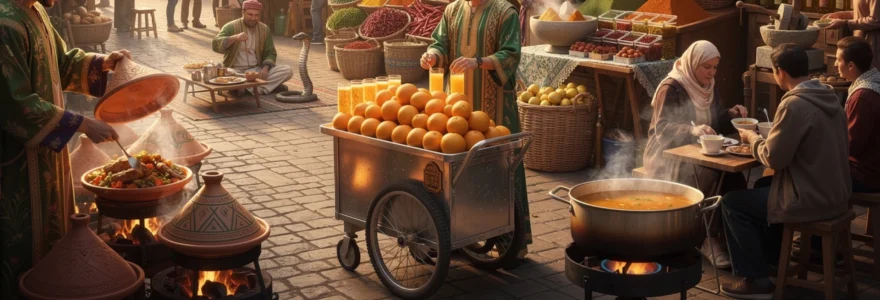
Marrakech’s food markets present an extraordinary sensory experience that overwhelms visitors from the moment they step into the bustling medina. The ancient imperial city’s culinary landscape represents a convergence of Berber, Arab, and Andalusian influences, creating a gastronomic symphony that assaults the senses with intense aromas, vibrant colours, and cacophonous sounds. These markets serve as living museums where centuries-old trading traditions continue to thrive alongside modern commercial practices, offering you an authentic glimpse into Moroccan culture through its most fundamental expression: food.
The labyrinthine souks and squares of Marrakech transform throughout the day, creating distinct sensory experiences that shift with the rhythms of local life. Morning markets echo with the calls of vendors preparing their stalls, whilst evening transforms these spaces into theatrical stages where food becomes performance art. This dynamic environment challenges your senses whilst providing an immersive cultural education that extends far beyond mere consumption.
Jemaa el-fnaa square: the epicentre of marrakech’s culinary theatre
Jemaa el-Fnaa Square stands as Morocco’s most iconic gathering place, where the sensory overload reaches its peak intensity during the evening hours. This UNESCO World Heritage site transforms from a daytime marketplace into a nocturnal food festival that engages all five senses simultaneously. The square’s unique acoustic properties amplify the sounds of sizzling grills, vendor calls, and customer negotiations, creating a symphony that defines the Marrakech experience.
The spatial organisation of food stalls follows traditional patterns established over centuries, with each vendor type occupying designated areas that facilitate both commerce and cultural performance. You’ll discover that the arrangement isn’t random but reflects deep-rooted social hierarchies and culinary traditions that govern the square’s daily operations.
Traditional tagine vendors and clay pot cooking techniques
Traditional tagine vendors occupy prime positions within Jemaa el-Fnaa, their distinctive conical clay pots creating visual landmarks amidst the evening chaos. These artisans employ cooking techniques unchanged for generations, using wood-fired braziers that produce aromatic smoke clouds visible from considerable distances. The slow-cooking process generates complex layered scents that permeate the surrounding area, drawing customers through olfactory attraction rather than visual displays.
The clay pot construction influences flavour development through mineral interactions and moisture retention properties unique to Moroccan ceramics. You can observe the precise temperature control techniques vendors employ, adjusting airflow and fuel placement to maintain optimal cooking conditions throughout extended preparation periods. The resulting dishes demonstrate how traditional technology produces superior flavour profiles compared to modern alternatives.
Freshly squeezed orange juice stalls and citrus aromatherapy
Orange juice vendors create distinct olfactory zones throughout the square, their mechanical presses releasing citrus oils that provide natural aromatherapy effects. The fruit selection process involves complex quality assessment procedures, with vendors examining colour variations, firmness levels, and aromatic intensity to ensure optimal juice production. These stalls operate as sensory oases, offering relief from the more intense aromas generated by meat grills and spice vendors.
The pressing technique produces juice with significantly higher essential oil content than industrial methods, creating more intense flavour and aromatic experiences. You’ll notice how experienced vendors adjust pressing pressure based on fruit ripeness and customer preferences, demonstrating encyclopaedic knowledge of citrus varieties and their optimal extraction methods.
Harira soup distribution points and evening food rituals
Harira soup vendors establish their operations as evening approaches, their large copper cauldrons becoming focal points for traditional Moroccan dining rituals. The preparation process begins hours before service, with vendors combining tomatoes, lentils, chickpeas, and fresh herbs in precise proportions that vary according to family recipes passed down through generations. The cooking aromas intensify as evening progresses, creating anticipation among regular customers who recognise subtle variations in scent profiles.
The serving ritual involves specific ladle techniques and bowl presentations that reflect cultural protocols surrounding communal dining. You can observe how vendors adjust seasoning throughout the evening, tasting frequently and modifying flavours based on changing atmospheric conditions that affect aromatic perception. This dynamic approach ensures consistent flavour delivery despite
temperature fluctuations and serving volumes. For visitors, these harira soup distribution points offer more than just a nourishing bowl; they provide insight into the evening food rituals that structure social life in Marrakech, especially during Ramadan when the soup becomes central to breaking the fast and the square reaches its most intense sensory overload.
Snake charmer food vendors and tourist gastronomy integration
In the same zones where snake charmers and street performers cluster, a ring of smaller food vendors has emerged to capitalise on the steady flow of curious onlookers. These stalls specialise in highly photogenic items: skewers that flare dramatically over open flames, piles of colourful sweets, and ornate teapots pouring streams of mint tea from improbable heights. The visual spectacle is deliberately calibrated for tourists, integrating gastronomy into the performance ecosystem of Jemaa el-Fnaa.
While some of these vendors offer authentic Moroccan snacks, others adapt recipes to suit international palates, reducing spice levels or emphasising familiar flavours. This tourist gastronomy integration creates a layered marketplace where you can observe the negotiation between tradition and global expectations in real time. It also underscores the importance of discernment: watching where local families choose to eat remains one of the most reliable indicators of quality and authenticity in this dense culinary theatre.
Souk semmarine: spice trade networks and olfactory sensory mapping
Leaving the open expanse of Jemaa el-Fnaa and stepping into Souk Semmarine, you move from horizontal chaos into vertical concentration. Here, the sensory overload of Marrakech’s food markets shifts from sound and movement to an almost architectural layering of scent. Spices are stacked in conical pyramids, hung in burlap sacks, and ground on demand, creating what can be described as an olfactory map of North African and Mediterranean trade routes.
Historically, Souk Semmarine functioned as a node in vast spice trade networks that connected sub-Saharan Africa, the Middle East, and Europe. Today, many families still operate from the same stalls their grandparents used, maintaining supplier relationships that stretch from the Atlas foothills to the Sahara’s caravan towns. As you walk through this corridor, each stall radiates its own aromatic signature: one heavy with cumin and paprika, another dominated by dried rose petals, yet another perfumed with nigella seeds and anise.
Ras el hanout spice blend composition and grinding demonstrations
The flagship product of many spice stalls is ras el hanout, often translated as “head of the shop,” signifying the vendor’s most prized blend. Rather than a fixed recipe, ras el hanout is a concept: a custom blend that can contain anywhere from 10 to more than 30 different spices. Common components include cumin, coriander, ginger, turmeric, cardamom, nutmeg, cloves, cinnamon, and dried flowers, but proportions and additions remain closely guarded family secrets.
To appreciate the complexity of this iconic Moroccan spice blend, observe the grinding demonstrations that many vendors offer. Whole spices are first roasted lightly to unlock their essential oils, then passed through hand-cranked or electric mills that roar and hum like small engines. The sound of grinding becomes part of the sensory story, while the warm, rising aroma envelops you in a cloud of scent that feels almost physical. Asking to smell the individual components before they are combined offers a practical way to understand how layered flavour profiles are constructed in traditional Moroccan cooking.
Saffron quality assessment techniques and pricing hierarchies
Saffron, often described as “red gold,” occupies a special place in Souk Semmarine’s spice economy. Genuine Moroccan saffron, largely cultivated near Taliouine in the Atlas region, commands some of the highest prices per gram of any spice in the world. As with precious stones, quality assessment relies on a series of coded techniques that experienced buyers execute almost instinctively, but which you can learn to recognise.
Vendors may demonstrate how a few strands of high-grade saffron will slowly bleed a rich golden colour into warm water while maintaining their structure, rather than dissolving quickly or producing a bright orange hue—both signs of adulteration. They will also invite you to rub a thread between your fingers to release its distinct, slightly metallic, honeyed aroma. Pricing hierarchies reflect these variables: length and thickness of the threads, intensity of colour, origin certification, and harvest year all factor into the negotiation. Asking about these details, rather than simply the price per gram, helps you engage with the market as an informed participant rather than as a passive tourist.
Preserved lemon production methods and fermentation displays
Amid the dry goods and powdered spices, glistening jars of preserved lemons introduce a different sensory dimension to the Marrakech food market experience. These lemons, central to many Moroccan tagines and salads, are transformed through a simple yet carefully managed fermentation process using salt and their own juice. In Souk Semmarine, some vendors display open barrels or transparent containers that reveal the intermediate stages of preservation, turning their stalls into informal fermentation laboratories.
From a technical perspective, the process relies on lactic fermentation, similar to that used in sauerkraut or kimchi, but with citrus as the primary substrate. You may notice subtle differences in colour and texture: younger batches appear bright yellow and firm, while older, more matured lemons take on a deeper hue and softer rind. Asking vendors about how long they ferment their lemons (often four to six weeks) and how they recommend using the resulting product in home cooking provides both culinary inspiration and a deeper understanding of how preservation techniques evolved in response to Morocco’s climate and historical trade patterns.
Argan oil extraction processes and cooperative vendor networks
Further along the alleys, stalls selling argan oil introduce another strand of Morocco’s food heritage. Although widely marketed today as a cosmetic product, argan oil has long been used in cooking, especially in the Souss and southwestern regions. Many vendors in Marrakech source their oil from women’s cooperatives, a model that has grown significantly since the early 2000s and now supports thousands of rural households.
At some stalls you can witness small-scale demonstrations of argan extraction, even if the bulk of production happens far from the city. The process begins with cracking the hard argan nut by hand, a rhythmic, percussive task that can take hours. The kernels are then lightly roasted (for culinary oil) before being ground into a paste and slowly pressed to release the oil. This labour-intensive chain explains why authentic argan oil commands a premium price compared to more industrial oils. When purchasing, you can ask whether the product is culinary or cosmetic grade, whether it comes from a certified cooperative, and whether it has been cold-pressed—questions that help you navigate a market where quality and authenticity vary widely.
Mellah quarter jewish market: heritage food preservation and cultural gastronomy
Moving south towards the historic Mellah, Marrakech’s former Jewish quarter, the character of the food market shifts again. Here, narrow lanes open onto modest squares where butchers, fishmongers, and spice vendors cater primarily to local residents. While the Jewish population of Marrakech has declined dramatically over the past decades—from tens of thousands in the mid-20th century to only a few hundred today—the Mellah still bears the imprint of its Jewish culinary heritage.
Traditional kosher butchery practices once shaped the rhythm of this market, and echoes of those customs remain in the way meat is displayed, cut, and sold. You may encounter stalls specialising in offal, salted meats, or particular cuts associated with slow-cooked Shabbat dishes. Vendors are often happy to explain how certain preparations differ from mainstream Moroccan practice, illustrating how religious dietary laws intersected with shared local ingredients. In this sense, the Mellah offers a living lesson in how food markets embody overlapping cultural identities within a single city.
Pickles and preserved foods play a particularly visible role in the Mellah’s gastronomic landscape. Jars of pickled carrots, turnips, cucumbers, and olives line shelves, representing preservation strategies that served both Jewish and Muslim households before the advent of refrigeration. The briny, acidic aromas cut through the heavier scents of raw meat and fish, creating a distinctive smellscape that contrasts with the sweet and spicy notes of Souk Semmarine. For visitors interested in culinary history, engaging with these vendors—asking about recipes handed down from parents or grandparents—reveals how much intangible heritage is still transmitted orally rather than stored in written cookbooks.
Gueliz new town market halls: modern moroccan food distribution systems
Beyond the medina walls, the district of Gueliz showcases a very different side of Marrakech’s food culture. Developed during the French Protectorate and expanded rapidly in recent decades, this “new town” features covered market halls and modern supermarkets that operate alongside traditional street vendors. For anyone studying the evolution of Moroccan food distribution systems, Gueliz offers a case study in hybridisation, where global retail models intersect with deeply rooted shopping habits.
Inside the market halls, stalls are typically organised by product category: fish in one section, meat in another, fruit and vegetables in neat rows further along. Refrigeration units hum steadily, and tiled surfaces are easier to clean than the stone floors of the medina. Yet, despite these modern facilities, many of the same producers who sell in the old town also maintain a presence here, using Gueliz to reach a different clientele—urban professionals, expatriates, and families who prioritise convenience and predictability. The sensory overload is somewhat reduced, but the core elements remain: bargaining, seasonal variation, and the ever-present interplay of scent, colour, and sound.
Gueliz is also where you can most clearly observe the impact of global supply chains on Marrakech’s food landscape. Imported cheeses, packaged snacks from Europe, and year-round availability of out-of-season fruits highlight the shift from purely seasonal to perpetual abundance. For travellers, visiting both Gueliz and the medina markets in a single day provides a powerful contrast: like comparing the analogue warmth of a vinyl record to the crisp clarity of a digital stream. Each has its advantages, but together they illustrate how Morocco navigates the tension between tradition and modernity in its everyday food practices.
Acoustic landscape analysis: sound frequencies and market phonetics
While the visual and olfactory aspects of Marrakech’s food markets often receive the most attention, the acoustic landscape is just as central to the experience. The markets function as complex soundscapes where overlapping frequencies—from the low rumble of motorbikes to the high-pitched calls of orange juice sellers—create a constantly shifting auditory environment. If you pause for a moment, close your eyes, and simply listen, you can almost “map” your location within the city based on sound alone.
Researchers studying urban acoustics have noted that traditional markets like Jemaa el-Fnaa and Souk Semmarine display a rich spectrum of sound signatures that differ markedly from those of modern shopping malls. Where the latter strive for controlled background noise and uniform music, Marrakech’s food markets embrace unpredictability. Each stallholder contributes a distinct voice, rhythm, and volume, resulting in what might be described as an improvised daily symphony. Learning to interpret this soundscape—identifying the clatter of tea glasses, the squeal of metal grills, or the murmur of bargaining—adds an extra layer to your understanding of the city.
Vendor call patterns and traditional arabic food terminology
One of the most distinctive elements of this acoustic environment is the patterned call of vendors advertising their products. These calls are not random shouts but carefully honed phrases that blend marketing with melody, often delivered in a mix of Moroccan Arabic (Darija), Berber languages, and French. You might hear repeated references to bsara (split-pea soup), batbout (pan-fried bread), or khobz (the ubiquitous round loaf), each word carrying centuries of culinary meaning.
Like street poetry, these calls use rhythm, rhyme, and humour to capture attention in a crowded soundscape. Some vendors stretch vowels for dramatic effect, while others punctuate their speech with claps or the clang of metal on metal. For language learners, markets become open-air classrooms: you can pick up food-related vocabulary far more quickly here than from any textbook. Paying attention to how different terms are used—formal versus colloquial, Arabic versus French—also reveals subtle social cues about status, generational change, and the influence of tourism on everyday speech.
Mechanical food preparation sounds and kitchen equipment acoustics
Beyond human voices, the mechanical sounds of food preparation form another crucial layer of the Marrakech market soundscape. The hiss and crackle of oil as dough hits the surface for freshly fried sfenj (Moroccan doughnuts) signal breakfast time in many neighbourhoods. Later in the day, the repeated clank of metal skewers being turned over charcoal grills marks the lunchtime rush, while the sharp tap of knives against wooden boards tells you that a butcher is at work even before you see the stall.
Each piece of equipment has its own acoustic signature: the heavy thud of a pestle in a stone mortar, the whir of a spice grinder, the delicate clinking of tea glasses stacked on a tray. Together, these create an aural rhythm that helps regulars navigate the markets almost subconsciously. Have you ever noticed how you can tell when bread is about to come out of the oven just by the sudden spike in activity and oven-door slams nearby? In Marrakech’s food markets, those small mechanical cues guide both vendors and customers, synchronising movement and expectation like the backstage noises of a theatre production.
Customer negotiation dialogues and multilingual market communications
Bargaining is as integral to the Marrakech food market experience as the food itself, and the negotiations that unfold at each stall add another layer to the city’s acoustic complexity. Conversations flow in an ever-shifting blend of Darija, French, English, Spanish, and sometimes German or Italian, depending on who is doing the buying and selling. This multilingual chatter reveals Marrakech’s long history as a crossroads of trade and travel, as well as its contemporary role as a global tourism hub.
Listening carefully, you can detect different negotiation strategies: playful exaggeration of prices, feigned outrage, or mock surrender followed by shared laughter. These dialogues are less about conflict and more about performance, a social ritual that both parties understand. From a practical standpoint, learning a handful of key phrases—numbers, greetings, polite refusals—can dramatically change your interactions, turning a simple purchase into an opportunity for cultural exchange. In many ways, each successful negotiation is like a brief duet improvised between stranger and local, set to the background score of the wider market.
Visual sensory overload: colour psychology and market display strategies
If sound and scent create the invisible architecture of Marrakech’s food markets, colour provides the most immediate visual impact. Vendors across the city employ sophisticated display strategies, whether consciously or intuitively, that draw on basic principles of colour psychology. Bright oranges and reds—found in paprika, chilli, and fresh citrus—dominate many spice and fruit stalls because they naturally attract the human eye and signal ripeness or warmth. In contrast, baskets of green mint and herbs offer a cooling counterpoint, giving your gaze a place to “rest” amid the chromatic intensity.
Market layouts also play with height and depth to maximise visual effect. Conical spice mounds rise like miniature mountains, while hanging strings of dried chillies or garlic create vertical curtains of texture and hue. In fish and meat sections, vendors arrange products in symmetrical patterns, using fresh herbs and lemon slices as colour accents that also hint at cooking possibilities. This is not mere decoration; it is a visual language that communicates freshness, abundance, and craftsmanship at a glance.
From a psychological perspective, the constant exposure to saturated colours contributes significantly to the sense of sensory overload in Marrakech’s food markets—but it also helps you navigate them. Your eye learns to associate certain palettes with particular products or neighbourhoods, allowing you to orient yourself even in the most labyrinthine alleys. It is similar to the way we learn to read metro maps by colour: once you know that deep reds and browns signal spice merchants, while bright greens and yellows suggest fresh produce, you can “read” the market more efficiently.
For travellers, paying deliberate attention to these visual strategies can transform a casual stroll into a richer learning experience. You might compare how displays differ between Jemaa el-Fnaa and Gueliz, or between a tourist-facing stall and one catering to local cooks. Why does one vendor stack oranges in perfect pyramids while another heaps them loosely in crates? Why are some counters dominated by cool blues and whites, and others by fiery reds? In asking such questions, you begin to decode the visual grammar that underpins Marrakech’s vibrant food markets and deepens your appreciation of their carefully orchestrated sensory overload.