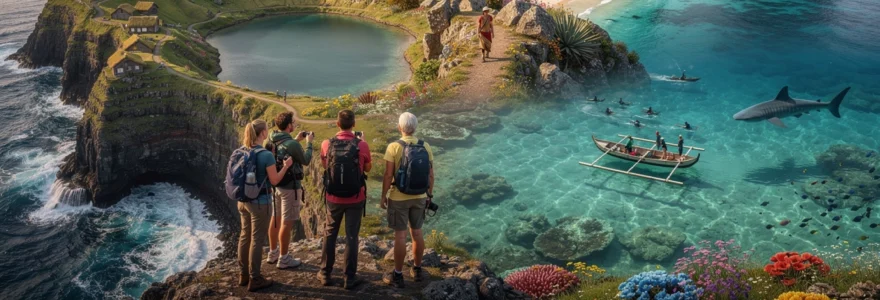
The travel landscape has dramatically shifted as discerning explorers increasingly seek authentic experiences beyond overcrowded tourist hotspots. While traditional tropical paradises continue to attract millions of visitors annually, a growing movement towards off-the-beaten-path destinations is reshaping how we approach tropical travel. These hidden gems offer pristine environments, rich cultural encounters, and biodiversity that mainstream tourism circuits have yet to fully discover.
Modern travellers are no longer satisfied with cookie-cutter resort experiences or Instagram-perfect but culturally hollow destinations. Instead, they crave meaningful connections with local communities, untouched natural wonders, and the kind of transformative experiences that come from venturing beyond conventional travel routes. This paradigm shift has opened doors to extraordinary tropical destinations that remain largely untouched by mass tourism.
The appeal of these alternative tropical havens lies not just in their pristine beauty, but in their ability to offer authentic cultural immersion and unparalleled natural experiences. From remote archipelagos with endemic species found nowhere else on Earth to high-altitude cloud forests teeming with biodiversity, these destinations represent the future of sustainable tropical tourism.
Hidden archipelagos and remote island chains beyond mainstream tourism circuits
Remote island chains scattered across the world’s oceans harbour some of the most extraordinary ecosystems and cultural traditions on Earth. These isolated landmasses have evolved unique characteristics due to their separation from continental influences, creating microcosms of biodiversity and human adaptation that fascinate researchers and travellers alike.
Faroe islands’ dramatic cliff formations and Grass-Roof architecture
The Faroe Islands, positioned strategically between Iceland and Norway, present a landscape so dramatically beautiful it appears almost otherworldly. These eighteen volcanic islands boast some of the most spectacular cliff formations in the North Atlantic, with vertical drops exceeding 400 metres creating nesting grounds for thousands of seabirds. The islands’ unique grass-roof architecture, known locally as torftak, represents centuries of sustainable building practices perfectly adapted to the harsh maritime climate.
Traditional Faroese villages showcase remarkable harmony between human habitation and natural environment. The iconic grass roofs not only provide excellent insulation but also help buildings blend seamlessly into the verdant landscape. Local communities have maintained these architectural traditions while embracing modern sustainability practices, creating a fascinating blend of ancient wisdom and contemporary environmental consciousness.
Socotra island’s endemic dragon blood trees and biodiversity hotspots
Socotra Island, often referred to as the “Galápagos of the Indian Ocean,” hosts one of the most unique ecosystems on our planet. This UNESCO World Heritage site harbours over 700 endemic species, with approximately one-third of its plant life found nowhere else on Earth. The iconic Dragon Blood Trees, with their umbrella-shaped canopies and crimson resin, create an almost alien landscape that has captivated botanists and adventurous travellers for generations.
The island’s isolation for millions of years has resulted in extraordinary evolutionary adaptations that make it a living laboratory for understanding biodiversity. Beyond its botanical wonders, Socotra’s pristine beaches, coral reefs, and mountainous interior offer diverse ecosystems supporting rare birds, reptiles, and marine life that have evolved in splendid isolation from mainland influences.
Raja ampat’s marine biodiversity and coral triangle ecosystems
Raja Ampat, meaning “Four Kings” in Indonesian, represents the epicentre of marine biodiversity within the renowned Coral Triangle. This remote archipelago off the coast of West Papua hosts the richest marine life on Earth, with over 1,500 fish species and 600 coral species creating underwater landscapes of unparalleled beauty and complexity.
The region’s unique geological position at the convergence of the Pacific and Indian Oceans has created ideal conditions for marine life proliferation. Local conservation efforts, supported by traditional sasi practices, have maintained the pristine condition of these reefs while providing sustainable livelihoods for indigenous communities. The archipelago’s remote location and challenging accessibility have naturally limited tourism, preserving its extraordinary marine ecosystems.
Azores’ volcanic crater lakes and
volcanic crater lakes, geothermal vents, and lush hydrangea-lined pastures create a distinctive Atlantic islandscape that feels both wild and welcoming. The archipelago’s most emblematic sights, such as Sete Cidades, Lagoa do Fogo, and Furnas, reveal how volcanic forces and abundant rainfall have sculpted dramatic calderas now filled with cobalt and emerald lakes. Thermal springs and fumaroles dot the islands, providing natural hot pools where you can soak after a day of hiking along misty ridgelines or coastal cliffs.
Unlike many famous tropical islands, the Azores remain largely untouched by mass tourism, with strict environmental regulations limiting large-scale resort development. Sustainable tourism initiatives encourage low-impact activities such as whale watching, birding, and crater-lake hiking, rather than cruise-ship day trips. For travellers seeking tropical destinations beyond the usual postcard clichés, the Azores offer a compelling blend of temperate climate, geothermal wonder, and authentic rural culture, all within a few hours’ flight of mainland Europe.
Unexplored continental coastal regions with pristine marine environments
Beyond island chains and archipelagos, some of the world’s most remarkable tropical experiences are found along continental coastlines that rarely appear in mainstream travel brochures. These often-overlooked shores combine terrestrial biodiversity with rich marine ecosystems, creating highly dynamic environments shaped by ocean currents, trade winds, and shifting sands. Because they sit away from typical resort belts, many of these regions have avoided the intensive development that can strain fragile coastal habitats.
Exploring these unexplored coastal regions demands a slightly more adventurous mindset, along with a willingness to embrace basic infrastructure and longer travel times. The reward is access to pristine beaches, unusual geological formations, and wildlife encounters that would be all but impossible in more commercialised areas. As we look for tropical destinations where conservation still has a fighting chance, these coastal frontiers represent some of the best opportunities for low-impact, meaningful travel.
Madagascar’s tsingy de bemaraha limestone formations
On Madagascar’s western flank, well away from the island’s beach resorts, lies Tsingy de Bemaraha National Park, a UNESCO World Heritage site famous for its jagged limestone karst formations. These “tsingy” pinnacles, some rising over 70 metres high, create a labyrinthine stone forest that looks almost like a coral reef lifted from the sea and fossilised in mid-motion. The razor-sharp ridges and deep canyons have protected pockets of untouched dry forest, home to endemic lemurs, chameleons, and rare birds that have evolved in near isolation.
Visiting this remote region is less about lounging on sand and more about vertical exploration: suspension bridges, fixed ladders, and narrow rock passages lead you through a natural fortress sculpted by millions of years of erosion. Because access is restricted and visitor numbers are capped, the park remains an excellent example of how adventure tourism can help fund conservation without overwhelming delicate ecosystems. If you are looking to combine tropical travel with genuine exploration, navigating the Tsingy de Bemaraha feels more like an expedition than a holiday.
Western australia’s ningaloo reef whale migration corridors
On the opposite side of the Indian Ocean, Western Australia’s Ningaloo Reef offers a striking counterpoint to its famous cousin, the Great Barrier Reef. Stretching for around 260 kilometres along a largely undeveloped coast, Ningaloo is one of the world’s longest fringing reefs, meaning you can often walk straight from the beach into dense coral gardens. Between March and July, this coastline becomes one of the planet’s premier whale shark aggregation sites, as these gentle giants follow plankton blooms along well-established migration corridors.
In recent years, Ningaloo has also gained attention for ethical humpback whale interactions, with tightly regulated tours designed to minimise disturbance to these marine mammals. Unlike many tropical resort areas, the Ningaloo coast remains sparsely populated, with small eco-lodges and campgrounds taking the place of high-rise hotels. For travellers who prefer slipping into the water from a quiet beach rather than a crowded marina, Ningaloo offers an accessible yet unspoiled marine environment where sustainable tourism and marine research go hand in hand.
Namibia’s skeleton coast diamond mining heritage
Few coastal regions capture the imagination quite like Namibia’s Skeleton Coast, a place where the Atlantic collides with some of the world’s highest desert dunes. While not “tropical” in the lush, palm-fringed sense, this coastline sits within the subtropics and offers a compelling reminder that tropical travel is as much about latitude and climate as it is about postcard-perfect beaches. Shipwrecks, swirling mists, and roaring dune-backed surf give the impression of a land at the edge of the world.
Beneath this haunting beauty lies a complex human history shaped by diamond mining and maritime trade. Restricted diamond areas once completely closed to tourists have slowly begun to open under controlled permits, revealing abandoned mining towns being reclaimed by sand. Guided expeditions along the Skeleton Coast offer a rare chance to learn how resource extraction, conservation and indigenous livelihoods intersect in one of Africa’s most fragile coastal ecosystems. As you stand on a wind-swept shore watching seals and jackals share the beach, it becomes clear that not all spectacular coasts are defined by coconut palms.
Chile’s atacama desert coastal fog oasis phenomena
Along Chile’s northern coastline, the Atacama Desert meets the Pacific in a narrow band where life survives on little more than fog and ingenuity. This hyper-arid region receives as little as 1 millimetre of rain per year in some areas, yet coastal hills bloom with life thanks to camanchaca, a dense sea fog that rolls in from the cold Humboldt Current. Specialized “fog oases” or lomas capture moisture from the air, feeding unique plant communities that carpet the otherwise barren slopes in green during certain seasons.
For travellers interested in climate science and unusual ecosystems, visiting these fog-dependent landscapes is like walking through a live experiment in adaptation. Researchers and local innovators have installed fog-catching nets that harvest water droplets, offering a glimpse into sustainable water solutions for arid coastal communities worldwide. Combining a stay in the Atacama with time on the Chilean coast allows you to experience how desert, ocean, and atmosphere interact in ways that feel almost otherworldly, yet hold very real lessons for a warming planet.
High-altitude tropical mountain ecosystems and cloud forest habitats
When we imagine tropical destinations, our minds often jump straight to sea level—palm-lined beaches, coral reefs, and mangrove-fringed lagoons. Yet some of the most fascinating tropical landscapes lie high above the coast, where moist air condenses on mountain slopes to form dense cloud forests. These high-altitude ecosystems, typically found between 1,500 and 3,500 metres, are biodiversity hotspots that function much like natural water towers, capturing and slowly releasing moisture to the lowlands below.
Hiking through a tropical cloud forest can feel like stepping into a living terrarium: moss-draped branches, epiphytic orchids clinging to trunks, and the constant drip of condensed mist create an atmosphere that is both intimate and intense. Countries such as Costa Rica, Ecuador, Colombia, and Papua New Guinea have all invested in protecting these elevated habitats, recognising their value for both water security and climate resilience. For travellers, that means well-managed trail systems, small eco-lodges, and opportunities to spot rare species—from resplendent quetzals to spectacled bears—that you will never encounter on a beach.
Because these regions sit within the tropics yet at altitude, they offer a welcome climatic contrast to coastal heat. You might spend the morning birdwatching in cool, swirling clouds and the afternoon soaking in hot springs fed by volcanic activity, all within a single valley system. If you are seeking tropical destinations that go beyond familiar clichés, including at least one cloud forest stay in your itinerary adds both ecological depth and literal layers of experience to your trip.
Authentic cultural immersion through indigenous community-based tourism
While dramatic landscapes often steal the spotlight, the most transformative tropical travel experiences frequently come from time spent with local and indigenous communities. Community-based tourism initiatives, when genuinely led by residents, can provide sustainable livelihoods while preserving languages, rituals, and ecological knowledge that might otherwise be lost. Rather than treating culture as a performance staged for visitors, these projects invite you into daily life—meals, craftwork, ceremonies, and land stewardship practices that unfold at their own rhythm.
As travellers, we have to ask hard questions: Who controls the narrative? Where does the money go? Are visits enhancing community resilience or placing additional pressure on fragile social systems? Responsible indigenous tourism acknowledges these complexities and builds transparency into every step of the experience. When done well, it creates a virtuous circle where cultural pride, environmental protection, and meaningful cross-cultural exchange reinforce one another.
Papua new guinea’s sepik river crocodile totemic communities
Along Papua New Guinea’s Sepik River, an intricate cultural landscape revolves around totemic relationships with crocodiles, which are viewed as powerful ancestral beings rather than mere animals. Villages along the river have long carved elaborate crocodile motifs into spirit houses, masks, and canoes, expressing cosmologies where humans and the river’s creatures are closely intertwined. Initiation rituals, including the famous scarification patterns that mimic crocodile skin, underscore the deep spiritual ties between people and their environment.
Community-based tourism projects on the Sepik allow small groups of visitors to travel by dugout canoe, stay in village guesthouses, and commission carvings directly from artisans. Because infrastructure is limited, journeys here require flexibility and a willingness to trade comfort for immersion. The payoff is a rare chance to witness how traditional riverine societies adapt to modern pressures, from climate change-driven flooding to shifting market demands for their artwork. For those interested in cultural immersion beyond surface-level encounters, the Sepik represents one of the most compelling river journeys in the tropics.
Ethiopia’s danakil depression salt mining traditions
In northeastern Ethiopia, the Danakil Depression is often described as one of the hottest inhabited places on Earth, a searing landscape of salt flats, sulfuric springs, and active volcanoes. Yet for Afar communities, this extreme environment has long been a source of livelihood through traditional salt mining and caravan trade. Camel caravans still traverse the shimmering salt pans, transporting hand-cut slabs along routes that have been used for centuries, if not millennia.
Well-regulated expeditions into the Danakil now offer travellers the chance to observe these salt-mining traditions firsthand, provided they are prepared for basic conditions and intense heat. Watching miners cut and shape salt blocks in temperatures that regularly exceed 40°C is a stark reminder of the human resilience underpinning many “exotic” landscapes we photograph and share online. By choosing operators who prioritise Afar leadership and fair compensation, travellers can help ensure that tourism supports, rather than undermines, the communities whose cultural and ecological knowledge has made survival here possible.
Bhutan’s gross national happiness philosophy and monastery stays
Nestled in the eastern Himalayas, Bhutan stands out among tropical and subtropical destinations for embedding its entire development model within the framework of Gross National Happiness (GNH). Rather than measuring progress purely through GDP, Bhutan’s GNH approach balances economic growth with cultural preservation, environmental protection, and good governance. For visitors, this philosophy is more than a slogan; it shapes visa policies, trekking regulations, and even the design of guesthouses and temples you encounter.
Monastery stays and village homestays offer windows into how GNH plays out in daily life, from shared communal meals to participation in local festivals and meditation sessions. Because Bhutan has deliberately limited visitor numbers through a daily Sustainable Development Fee, mass tourism has been kept at bay, allowing traditional architecture and rituals to remain central rather than performative. If you are curious about alternative models of development and how they intersect with tourism, spending time in Bhutan’s monasteries and rural valleys can be as thought-provoking as any policy report.
Colombia’s ciudad perdida archaeological trek routes
Deep in Colombia’s Sierra Nevada de Santa Marta, far from the country’s Caribbean party towns, the multi-day trek to Ciudad Perdida (“Lost City”) follows ancestral paths used long before Europeans arrived. The site itself—a series of stone terraces and stairways enveloped by forest—once formed part of a vast network of settlements inhabited by the Tairona civilization. Today, indigenous Kogui, Wiwa, and Arhuaco communities maintain spiritual and territorial connections to this landscape, seeing themselves as guardians of the “heart of the world.”
Treks to Ciudad Perdida now operate under co-management with these communities, who serve as guides, porters, and cultural interpreters. Along the way, you learn not just about archaeology, but about contemporary indigenous perspectives on land, water, and balance, often conveyed through stories around communal fires. The physical challenge of steep ascents and river crossings becomes a kind of moving classroom, where each step offers a reminder that tropical destinations are layered with histories and cosmologies that go far beyond their visual appeal.
Sustainable ecotourism infrastructure in emerging tropical destinations
As interest in off-the-beaten-path tropical destinations grows, the question shifts from “where to go” to “how to build tourism that actually benefits people and planet.” Emerging destinations face a delicate balancing act: they need income from visitors to fund conservation and community projects, but rapid, unplanned development can quickly erode the very qualities that made these places special. In many ways, sustainable ecotourism infrastructure functions like a scaffold, supporting careful growth while preventing collapse under the weight of demand.
What does this infrastructure look like on the ground? It can be as tangible as solar-powered lodges, composting toilets, and boardwalks that protect sensitive dunes or mangroves, or as intangible as community-owned cooperatives and transparent benefit-sharing agreements. Increasingly, we also see digital tools—reservation platforms that cap visitor numbers, satellite monitoring of reef health, carbon calculators for flights—woven into the fabric of responsible tropical travel. For you as a traveller, paying attention to these details is a powerful way to vote with your wallet.
Some destinations have become case studies in this slow, deliberate approach. In places like Costa Rica’s Osa Peninsula, Belize’s barrier reef islands, or Indonesia’s Misool region in Raja Ampat, local operators and NGOs have partnered to create no-take marine zones, reforestation programs, and strict building codes. The result is a tourism model more akin to a long-term investment portfolio than a quick-profit scheme: returns may be slower, but they are also more stable and resilient. When you choose ecolodges that publish their impact reports, or tour operators that employ and train local guides, you become part of that longer story.
Of course, sustainable infrastructure also has its limits. Flights still generate emissions, and even well-managed lodges consume resources. Yet, compared with high-density resort developments that privatise coastlines and import most of their labour, genuinely eco-focused projects offer a meaningful step in the right direction. The key is not perfection, but progress: asking better questions, seeking out certifications that actually mean something, and favouring destinations that place environmental and cultural integrity at the centre rather than the margins of their tourism strategies.
Seasonality and climate patterns for off-peak tropical travel optimisation
One of the most effective yet underrated ways to travel more sustainably in the tropics is to rethink when you go, not just where. Most postcard-perfect images are shot during peak dry seasons, when blue skies and calm seas attract the highest number of visitors. Yet the shoulder seasons—those transitional periods between wet and dry—often offer more nuanced light, fewer crowds, and richer cultural encounters, as local rhythms are less disrupted by mass tourism. Travelling during these windows also spreads economic benefits more evenly across the year, helping communities avoid boom-and-bust cycles.
Understanding seasonality in the tropics means looking beyond simple “rainy” versus “dry” labels. Many regions experience short, intense showers that clear quickly rather than days of uninterrupted downpour, making them perfectly enjoyable at times most tourists avoid. In some coastal areas, what is marketed as “low season” coincides with spectacular natural events—whale migrations, turtle nesting, or desert blooms triggered by rare rains. By aligning your travel dates with these phenomena, you can turn supposed disadvantages into defining highlights of your trip.
Of course, there are trade-offs. Off-peak travel may bring slightly rougher seas, muddier trails, or a reduced ferry schedule, which can complicate logistics if you are on a tight itinerary. Yet these minor inconveniences are often outweighed by quieter temples, more attentive guides, and the chance to see how a destination breathes outside of its Instagram moments. Think of it as the difference between visiting a city only on its festival day versus getting to know its weekday cadence as well.
As climate change accelerates, traditional seasonality patterns in many tropical regions are becoming less predictable, with shifting monsoons, stronger storms, and longer heatwaves. This makes flexibility and up-to-date research more important than ever when planning off-peak tropical travel. Checking regional climate data, consulting local operators, and building a margin of error into your schedule can help you navigate these uncertainties with minimal stress. In return, you gain access to a side of the tropics that feels more real, more reciprocal, and far less constrained by the clichés that have long dominated our vision of what a “tropical holiday” should be.