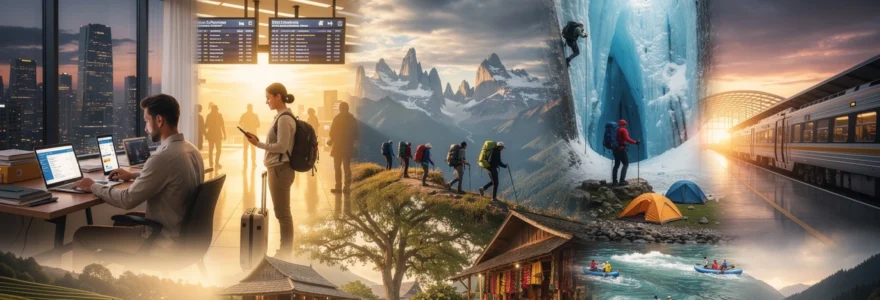
The modern world has trapped millions in repetitive cycles that drain creativity and stifle personal growth. Travel serves as the ultimate antidote to routine monotony, offering transformative experiences that reset perspectives and rejuvenate the human spirit. Research from the Global Association of Travel Agents indicates that 78% of travellers report significant improvements in mental wellbeing after breaking away from familiar patterns through purposeful journeys.
Breaking free from daily routines through travel isn’t merely about changing locations—it’s about fundamentally altering how you interact with the world around you. The science behind routine disruption shows that novel experiences stimulate neuroplasticity, creating new neural pathways that enhance cognitive flexibility and emotional resilience. Whether you’re seeking spontaneous adventures, cultural immersion, or adrenaline-fueled challenges, strategic travel planning can transform mundane existence into extraordinary discovery.
Spontaneous travel methodologies for breaking monotonous patterns
Spontaneous travel represents the purest form of routine disruption, forcing you to abandon predictable schedules and embrace uncertainty. The psychological impact of unplanned journeys creates heightened awareness and adaptability that carries long-term benefits for personal development. Studies demonstrate that spontaneous travellers report 43% higher satisfaction rates compared to those following rigid itineraries.
The key to successful spontaneous travel lies in developing flexible planning frameworks that accommodate last-minute decisions whilst maintaining safety and budget considerations. Modern technology platforms have revolutionised spontaneous travel accessibility, enabling travellers to secure accommodation and transportation within hours of departure. This approach challenges conventional planning wisdom whilst delivering authentic experiences that scheduled tourism often fails to provide.
Last-minute booking strategies using skyscanner and HotelTonight
Digital platforms like Skyscanner and HotelTonight have transformed last-minute travel from stressful scrambling into strategic opportunity hunting. These platforms utilise dynamic pricing algorithms that often favour spontaneous bookers, particularly during off-peak periods when hotels and airlines need to fill remaining capacity. Professional travellers report savings averaging 35-50% compared to advance bookings when timing aligns with inventory management cycles.
Skyscanner’s “Everywhere” search function exemplifies perfect spontaneous travel planning, allowing you to input departure dates whilst leaving destinations open to algorithmic suggestions. This methodology removes decision paralysis whilst presenting cost-effective options you might never have considered. HotelTonight specialises in same-day bookings, partnering with premium properties to offer discounted rates that benefit both travellers and hotels with unsold inventory.
Random destination selection through travel roulette platforms
Travel roulette platforms introduce genuine randomness into destination selection, eliminating the overwhelming choice paradox that paralyses many potential travellers. These digital tools consider your budget parameters, preferred travel dates, and basic preferences before algorithmically selecting destinations that match your criteria. The psychological impact of relinquishing destination control often produces more satisfying experiences than meticulously planned trips.
Popular roulette platforms include Wherefor, Trippy, and Kayak’s Explore feature, each offering unique approaches to random destination generation. These services have gained particular traction among millennials and Gen Z travellers, with usage increasing by 127% over the past two years. The approach works particularly well for solo travellers seeking to challenge personal boundaries and discover hidden preferences about travel styles and cultural interests.
Flash sale exploitation via secret flying and scott’s cheap flights
Flash sale platforms capitalise on airline revenue management inefficiencies, offering dramatically reduced fares for limited periods to specific destinations. Secret Flying and Scott’s Cheap Flights (now Going) represent industry leaders in curating and distributing these opportunities to subscribers who can act quickly on exceptional deals. Professional deal hunters report securing flights at 60-80% below standard pricing through consistent monitoring and rapid decision-making.
The psychology behind flash sale success involves accepting that you’re choosing travel dates and destinations based on value rather than preference. This mindset shift often leads to discovering unexpected destinations and experiences that wouldn’t have occurred through traditional planning methods. Successful flash sale exploitation requires maintaining flexible schedules, valid passports, and financial readiness to commit within hours of receiving notifications.
Overnight trip planning within
Overnight trip planning within 100-mile radius parameters
Short overnight trips within a 100-mile radius are one of the most accessible ways to escape your daily routine through travel without heavy planning or costs. By limiting the distance, you reduce decision fatigue and logistical complexity whilst maximising the feeling of novelty. Think of this as a “micro escape”: far enough to feel away, close enough to remain low-stress and budget-friendly.
Begin by drawing a 100-mile circle around your home and identifying smaller towns, nature reserves, coastal areas, or spa hotels you’ve never explored. Weeknight stays often come with discounted rates, and you can frequently secure same-week deals if your dates are flexible. Pack a minimalist overnight bag that’s always ready—containing essentials like toiletries, a change of clothes, and a lightweight jacket—so you can depart within an hour when the urge to break routine strikes.
To keep these local escapes from feeling like just another errand run, set a clear intention: do you want quiet reflection, outdoor adventure, or culinary exploration? Plan one anchor activity—a hike, a museum, a thermal bath, or a special dinner—and leave the rest of your schedule open. This balance between light structure and spontaneity maintains the psychological benefits of travel without the overwhelm of a long-haul trip.
Immersive cultural displacement techniques in southeast asia
Immersive cultural displacement goes beyond sightseeing; it deliberately places you in environments where your assumptions, habits, and expectations are gently challenged. Southeast Asia is particularly powerful for this kind of transformative travel. The region combines deep spiritual traditions, strong community structures, and rich artistic practices with relatively low costs, making long stays and slow travel more feasible.
Escaping your daily routine through travel here means trading commutes for temple bells, supermarket aisles for morning markets, and email inboxes for jungle paths or rice paddies. Instead of hopping between tourist hotspots, you embed yourself in local rhythms—sharing meals, learning crafts, and observing rituals. This slow, immersive approach creates a mental “reboot”, similar to reinstalling an operating system rather than just changing the wallpaper.
Village homestay integration in sapa valley and luang prabang
Village homestays in destinations like Sapa Valley (Vietnam) and the outskirts of Luang Prabang (Laos) are among the most effective ways to dismantle urban routine and reconnect with simpler patterns of living. You swap alarm clocks for roosters, traffic noise for river sounds, and office lights for wood fires and starry skies. Research on experiential tourism shows that travellers who stay in homestays report higher levels of cultural understanding and long-term life satisfaction than those who only use hotels.
In Sapa, ethnic minority communities such as the Hmong and Dao welcome guests into their homes, often including guided walks through terraced rice fields and shared meals cooked over open flames. Around Luang Prabang, riverside or rural village homestays allow you to participate in daily tasks—like gathering vegetables, learning to steam sticky rice, or joining in evening storytelling. Prepare by learning a few basic phrases in the local language and understanding respectful dress codes and customs.
To make the most of these stays, approach them less like “accommodation” and more like a short-term adoption of a different lifestyle. Ask questions, offer to help with simple chores, and be present without over-documenting everything on your phone. You’ll find that your usual markers of productivity—emails, metrics, deadlines—are replaced by relational time: conversations, shared work, and communal meals. This recalibration of what “matters” can have lasting effects long after you return home.
Traditional craft workshop participation in ubud and chiang mai
Participating in traditional craft workshops is a potent way to escape mental routines, especially if your daily life centres around screens and knowledge work. Destinations like Ubud (Bali) and Chiang Mai (Thailand) have become hubs for travellers wanting to engage with batik, wood carving, silverwork, weaving, pottery, or natural dyeing. Instead of consuming culture passively, you become a temporary apprentice within it.
In Ubud, you might spend a day learning batik techniques from artisans whose families have practised the craft for generations, or join a mask-carving workshop that explains the symbolic meaning behind each character. In Chiang Mai, silver jewellery classes, umbrella-painting studios, or Lanna-style weaving workshops provide a similar hands-on immersion. These activities engage your senses and fine motor skills, pulling your attention into the present moment much like meditation.
Think of craft workshops as “manual mindfulness”: each brush stroke, knot, or chisel mark invites you to slow down, observe, and adjust. For professionals used to instant digital feedback, the slower pace of tangible creation can feel both challenging and deeply soothing. When choosing workshops, prioritise small groups, local teachers, and studios that explain cultural contexts rather than only teaching techniques. You’re not just making an object—you’re briefly stepping into a different way of seeing and valuing time.
Local market navigation systems in chatuchak and ben thanh
Local markets such as Bangkok’s Chatuchak Weekend Market and Ho Chi Minh City’s Ben Thanh Market are sensory laboratories for escaping routine. Your daily grocery run is replaced with a riot of colours, scents, dialects, and bargaining rituals. Navigating these spaces forces your brain to process new information quickly, disrupting habitual patterns of attention and decision-making.
At Chatuchak, you’ll find thousands of stalls organised into rough zones—fashion, homeware, plants, antiques, street food—yet the layout feels more like a maze than a mall. In Ben Thanh, narrow aisles are packed with textiles, spices, souvenirs, and produce, each section pulsing with its own micro-economy. Instead of rushing through with a checklist, treat your market visit as a structured exploration exercise: choose one or two goals, such as tasting three unfamiliar dishes or asking vendors about ingredients you don’t recognise.
To avoid overwhelm, create a simple “navigation system” for yourself. For example, decide you will always turn right at intersections until you hit an outer boundary, then loop back. Or mentally divide your visit into phases: first a reconnaissance lap without buying, then a second round focused on a few targeted purchases. This playful structure keeps you engaged and curious, turning what could be chaotic into a dynamic environment for learning and discovery.
Temple meditation retreats in wat pho and borobudur complex
Temple-based meditation retreats offer another powerful route out of your daily routine, especially if you typically live in a state of constant notification and low-level stress. Iconic sites such as Wat Pho in Bangkok and the Borobudur complex in Central Java provide more than just architectural beauty; they anchor centuries of contemplative practice that you can tap into, even in short stays.
At Wat Pho, you can combine visits to the reclining Buddha and massage school with guided meditation sessions or silent time in the temple grounds. Around Borobudur, sunrise meditation experiences or short retreats with nearby monasteries allow you to sit in stillness as the first light hits the stupas and surrounding volcanoes. The contrast with typical mornings—commutes, screens, rushed coffee—can be profound.
Meditation retreats, even micro-retreats of one or two days, function like a “hard reset” for your cognitive and emotional systems. By following simple schedules of sitting, walking, and mindful eating, you temporarily step outside the performance-based logic of your everyday life. If you’re new to meditation, choose programs that blend instruction with practice and keep your expectations realistic; the goal is not instant enlightenment, but experiencing a fundamentally different rhythm of being.
Adventure-based routine disruption across patagonian landscapes
For travellers who escape their daily routine through travel by seeking physical challenge, Patagonia offers one of the most dramatic natural backdrops on earth. Stretching across Chile and Argentina, this region combines jagged peaks, massive glaciers, and roaring rivers in a way that makes office concerns feel very small. Studies on adventure tourism show that physically demanding trips can significantly boost self-efficacy and resilience, with effects lasting months after returning home.
Adventure in Patagonia isn’t just about adrenaline; it’s about placing yourself in landscapes that demand respect and presence. Weather can shift within minutes, distances are vast, and infrastructure is limited compared to urban centres. This forces you to plan, adapt, and collaborate—skills that directly counteract the passivity often created by predictable routines. Whether you’re trekking, climbing, camping, or rafting, you’re constantly negotiating with real-world variables rather than abstract deadlines.
Multi-day trekking circuits through torres del paine national park
Torres del Paine National Park in Chile is a cornerstone of adventure-based travel for routine disruption. The famous W and O circuits, ranging from 4–10 days, immerse you in a continuous loop of physical exertion, awe-inspiring scenery, and simple daily goals: hike, eat, rest, repeat. When your primary concern becomes reaching the next camp before dark, the noise of email, social media, and minor work conflicts fades into the background.
These trekking circuits expose you to glacial lakes, hanging valleys, and the iconic granite towers that give the park its name. You carry what you need on your back or use refugios for lighter packs, developing a direct relationship with your gear and energy levels. Each day’s progress, measured in kilometres rather than tasks completed, rewires your sense of achievement.
Preparation is crucial: invest in broken-in boots, layered clothing, and basic navigation skills, and consider training with weighted walks several weeks before departure. The structured challenge of multi-day trekking acts like a “boot camp” for resilience. You learn to manage discomfort, respond to shifting conditions, and find joy in small victories—a warm meal, dry socks, a clear sunrise—all of which translate powerfully back into everyday life.
Ice climbing expeditions on perito moreno glacier
Ice climbing on Argentina’s Perito Moreno Glacier takes you even further from the familiar. Strapping on crampons, wielding ice axes, and stepping onto a living river of ice is about as far removed from desk work as you can imagine. The blue crevasses, ice caves, and deep silence of the glacier create a surreal environment that demands focus and humility.
Guided expeditions range from short introductory walks to full-day technical climbs. Under expert supervision, you learn how to move efficiently on ice, anchor yourself safely, and trust both your gear and your body. This process mirrors overcoming psychological barriers in everyday life: you approach something that looks impossible, break it down into manageable moves, and gradually build confidence.
Because Perito Moreno is one of the few glaciers in the world that remains relatively stable, it provides a rare opportunity to witness climate-related phenomena up close. This perspective shift—literally standing on centuries-old ice—can reframe how you think about time, impact, and your own priorities. For many, the memory of swinging their axes into the ice becomes a lasting metaphor for tackling intimidating goals back home.
Backcountry camping protocols in fitz roy mountain range
Backcountry camping in the Fitz Roy range near El Chaltén invites a deeper level of disconnection and self-reliance. Unlike front-country campgrounds with facilities and nearby shops, backcountry sites require you to carry in everything you need and pack out everything you brought. Your daily routine simplifies to the essentials: setting camp, preparing food, staying warm, and respecting the elements.
Establishing solid backcountry protocols is key to both safety and the quality of your experience. This includes understanding Leave No Trace principles, weather patterns, water purification methods, and basic first aid. When you’re filtering water from a glacial stream at dawn or cooking dinner under a sky dense with stars, your habitual screen-based concerns feel abstract and distant.
The Fitz Roy area, with its towering granite spires and unpredictable winds, amplifies the sense of wilderness immersion. You may wake to the sound of avalanches echoing from distant peaks or end your day watching alpenglow paint the mountains pink. Psychologically, this environment replaces your usual inputs—notifications, traffic, meetings—with elemental ones: wind, cold, hunger, fatigue, beauty. It’s a full-system reboot grounded in nature’s pace rather than the clock on your wall.
Whitewater rafting classifications on futaleufú river system
The Futaleufú River in Chile is considered one of the premier whitewater destinations in the world, drawing paddlers for its turquoise waters and powerful rapids. Whitewater rafting here introduces a different kind of routine disruption: instead of controlling every detail, you learn to cooperate with forces much larger than yourself. Reading the river, responding to guide commands, and synchronising paddle strokes demand absolute presence.
Rapids on the Futaleufú are typically classified from Class III to Class V, increasing in technical difficulty and required experience. This classification system helps you choose the right section for your comfort and skill level. Starting with moderate rapids allows you to build trust in the team and equipment, gradually pushing your comfort zone as confidence grows.
Rafting is a powerful analogy for life beyond travel: you can’t control the current, but you can control your preparation, teamwork, and reactions. Between rapids, calmer stretches give you time to absorb the scenery—steep canyon walls, dense forests, and distant peaks—reinforcing the sense of having truly stepped out of your everyday world. This oscillation between intense focus and relaxed drifting is particularly effective at disrupting mental ruts and stimulating new perspectives.
Digital detox travel frameworks for maximum disconnection
Escaping your daily routine through travel is increasingly difficult if your digital habits follow you everywhere. A true break requires more than a change of scenery; it demands intentional boundaries around technology. Digital detox travel frameworks provide those boundaries, turning connectivity from an automatic default into a conscious choice. According to a 2023 Deloitte survey, 47% of travellers now express interest in at least partial disconnection during vacations, yet only about 18% implement clear rules before departure.
A practical digital detox framework starts with defining your “non-negotiables”: for example, keeping your phone on airplane mode except for a 30-minute check-in window each evening, or using a basic feature phone for calls while travelling. You might choose accommodations with limited Wi-Fi, or rural locations where coverage is naturally patchy. Far from being an inconvenience, these constraints act like a supportive structure, similar to a retreat schedule that protects your focus and rest.
One helpful analogy is to think of your attention as a carry-on bag: there’s limited space, so every notification, email, or social scroll you “pack” reduces room for sunsets, conversations, and unplanned encounters. Before your trip, inform key contacts of your availability, set clear out-of-office messages, and remove high-distraction apps from your phone. During the journey, replace habitual screen checks with simple grounding rituals—journaling, sketching, walking, or simply sitting with a view. Over a few days, you’ll likely notice lower anxiety levels, deeper sleep, and a renewed ability to be fully present where you are.
Transformative solo journey methodologies through european railway networks
European railway networks offer one of the most flexible and rewarding infrastructures for solo travellers seeking to escape daily routines. Trains connect major capitals with small villages, beaches with mountains, and historic centres with emerging creative hubs—all without the stress of driving or airport security. For many, solo train travel functions as a moving retreat: hours of uninterrupted time to read, think, or simply watch landscapes change through the window.
A transformative approach to European rail travel starts with embracing open-ended itineraries rather than rigid schedules. Rail passes, such as those offered through pan-European providers, allow you to adjust routes on the fly while maintaining cost control. You might decide in Berlin to head towards Copenhagen instead of Prague, or extend your stay in a town that unexpectedly resonates with you. This flexibility contrasts sharply with the fixed, repetitive nature of most working weeks.
Solo journeys by train also create natural opportunities for low-stakes social interactions. Sharing a compartment, dining car, or platform bench makes it easy to exchange stories with fellow travellers and locals. If you’re used to seeing the same faces in your office or neighbourhood, this rotating cast of characters can feel both refreshing and inspiring. To amplify the transformative potential, consider thematic routes: following great European rivers, visiting UNESCO World Heritage cities, or tracing the path of a favourite novel or historical period.
Micro-adventure implementation strategies within urban environments
What if you could escape your daily routine through travel without even leaving your city? Micro-adventures—short, low-cost, and often overnight experiences close to home—make this possible. Popularised by adventurers looking to democratise the spirit of exploration, micro-adventures treat your urban environment as a playground rather than a backdrop. You might not cross a border, but you cross an important psychological threshold: from routine to curiosity.
Effective micro-adventure strategies begin with reframing your city as a destination rather than a default. You can plan a sunrise rooftop picnic, a night hike in a nearby park, or a self-guided “world tour” by visiting different ethnic neighbourhoods for each meal in a day. Even changing your commute once a week—walking a new route, cycling along a river, or adding a 20-minute detour through a botanical garden—can create mini-breaks from autopilot living.
One powerful technique is the “one-night expedition”: pack a small bag, take public transport to a part of town you rarely visit, stay in a local guesthouse or budget hotel, and spend 24 hours exploring with a traveller’s mindset. Turn off push notifications, carry a physical map or offline app, and let your feet guide you. By intentionally stepping outside your usual patterns in familiar surroundings, you train your brain to see novelty everywhere. Over time, this mindset means you don’t have to wait for a long vacation to feel the freedom, perspective, and renewal that travel can bring.