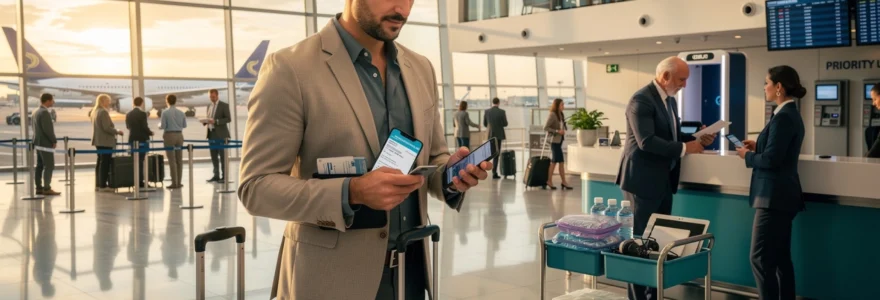
Navigating airports can be one of the most stressful aspects of travel, but seasoned globetrotters have mastered the art of moving through these complex hubs with remarkable efficiency. The difference between a frustrated passenger and a confident traveler often lies in understanding the intricate systems that govern modern airports. Experienced travelers don’t just arrive and hope for the best; they implement strategic approaches that transform potential chaos into smooth, predictable journeys. These seasoned professionals have learned through countless flights that preparation, knowledge, and timing can dramatically reduce travel stress whilst maximizing comfort and convenience.
The distinction becomes apparent the moment you observe how veteran travelers approach every aspect of their airport experience. From their pre-departure preparations to their post-security movements, these individuals operate with a level of sophistication that comes only from extensive experience and careful observation of airport operations.
Strategic airport check-in protocols and documentation management
Mobile boarding pass optimisation and offline backup systems
Experienced travelers understand that relying solely on digital boarding passes can lead to unnecessary complications. They consistently download their boarding passes to their phone’s digital wallet, ensuring accessibility even without internet connectivity. This approach eliminates the anxiety of searching through email chains or dealing with app failures whilst rushing through security checkpoints. Additionally, these savvy passengers maintain PDF copies of their boarding passes in multiple locations, including cloud storage and screenshot galleries.
The strategic backup approach extends beyond simple redundancy. Seasoned travelers configure their devices to display boarding pass information on lock screens, reducing the time spent unlocking phones during security checks. They also ensure their phone batteries remain above 50% before arriving at the airport, understanding that dead devices can create significant delays at crucial checkpoints.
Priority check-in counter selection at heathrow and gatwick
Veteran travelers at major UK airports like Heathrow and Gatwick have mastered the art of identifying the most efficient check-in counters. They observe passenger flow patterns and avoid obvious bottlenecks, such as counters near escalators or main thoroughfares where inexperienced travelers naturally gravitate. Instead, they seek out counters positioned at terminal extremities, which often process passengers more quickly due to reduced foot traffic.
These experienced passengers also understand the optimal timing for different check-in options. Business travelers typically utilize online check-in combined with bag drop services, arriving precisely two hours before international flights to avoid both early morning crowds and last-minute rushes. They recognize that timing flexibility can be more valuable than premium services when it comes to reducing wait times.
Passport control fast track eligibility assessment
Seasoned international travelers maintain detailed awareness of their fast-track eligibility across different countries and airport systems. They understand which credit cards, airline statuses, and membership programmes provide expedited processing benefits. Before departure, they research specific fast-track options available at their destination airports, ensuring they can take advantage of services like automated passport gates or dedicated lanes for EU citizens.
Smart travelers also prepare their documentation for optimal processing speed. They ensure passport photos remain clearly visible and pages lie flat, understanding that even minor physical impediments can slow down automated systems. Additionally, they research recent changes to immigration requirements, as pandemic-related protocols and policy updates can significantly impact processing times and required documentation.
Baggage tag photography and tracking reference documentation
Professional travelers implement comprehensive baggage tracking protocols that extend far beyond basic airline systems. They photograph their baggage tags immediately after check-in, capturing both the bar code and destination information in high-resolution images. This documentation proves invaluable during baggage claim disputes or when tracking delayed luggage through customer service channels.
The documentation strategy includes creating detailed inventories of checked baggage contents, complete with photographs and estimated values. Experienced travelers understand that comprehensive records dramatically improve compensation outcomes when dealing with lost or damaged luggage claims. They also maintain digital copies of these records across multiple platforms, ensuring accessibility regardless of device failures or connectivity issues.
Advanced security screening navigation techniques
TSA PreCheck and global entry enrollment strategies
Veteran travelers invest significant time in obtaining and maintaining expedited security clearances that provide long-term benefits across multiple travel scenarios.
Rather than viewing TSA PreCheck or Global Entry as optional conveniences, they treat these programmes as core components of their airport strategy. They calculate the time savings over dozens of trips per year and quickly see that the reduced security wait times, fewer document checks and less intrusive screening more than justify the application fees. Many frequent flyers submit their applications during off-peak periods, such as late evenings or midweek, to secure earlier interview appointments at enrolment centres that are less busy. They also track renewal windows carefully so that benefits never lapse, often setting calendar reminders 12 months before expiry.
Another sophisticated tactic involves selecting the most versatile trusted traveller programme for their specific travel patterns. For example, US-based travellers who frequently fly internationally often prioritise Global Entry over standalone TSA PreCheck because it includes both re-entry benefits and expedited domestic screening. Those travelling regularly between the US and Europe may layer these with airline-specific fast-track lanes and credit card benefits to create a multi-layered security advantage. Think of it as building an “express lane portfolio” that works in your favour at nearly every major airport you pass through.
Liquid container compliance and 3-1-1 rule optimisation
Experienced travellers treat the liquids rule not as a frustrating obstacle but as an optimisation problem to solve in advance. They standardise on TSA-compliant travel bottles, decanting their preferred toiletries into clearly labelled 100 ml containers well before departure day. By placing all liquids, gels and aerosols into a single transparent, resealable bag at home, they avoid last-minute reshuffling at the security belt. This disciplined approach turns a common delay point into a quick, almost automatic step in their airport routine.
To further streamline security screening, these travellers design a minimalist in-flight kit that covers the essentials without exceeding the 3-1-1 limitations. They often choose solid alternatives—such as bar shampoo, solid perfume sticks and toothpaste tablets—to reduce the number of liquid items they carry. This not only decreases the risk of bag inspection but also minimises spillage and clutter inside carry-on luggage. If you’ve ever watched someone glide through security while others frantically dispose of oversized bottles, you’ve seen the benefits of this strategic liquid management in real time.
Electronic device separation protocols for efficient screening
Veteran flyers don’t wait for security officers to bark instructions about laptops and electronics; they pre-empt those requests by organising their bags for rapid access. Before entering the queue, they place laptops, tablets and e-readers in a dedicated, easily reachable compartment so they can be removed in one smooth motion. Cables, chargers and accessories are kept in separate pouches to prevent the “electronics tangle” that can trigger additional screening. This deliberate packing means you spend seconds, not minutes, setting up your trays on the belt.
Those who frequently depart from airports with CT scanners or advanced security equipment also stay updated on which locations allow electronics to remain in bags. They adjust their packing style accordingly, sometimes investing in TSA-compliant laptop sleeves or “butterfly” style bags that unfold flat on the conveyor belt. This is similar to an experienced chef arranging their workstation before service: everything has a place and purpose, which reduces both friction and error when the pressure increases. The result is a smoother, faster passage through security and a lower chance of your bag being diverted for manual inspection.
Body scanner positioning and metal detector bypass methods
Seasoned travellers know that body scanners and metal detectors are not all configured the same way, and they adjust their behaviour accordingly. They remove metallic items—belts, coins, watches and even certain jewellery—well before reaching the front of the line, often stowing them in their carry-on rather than loose trays. This pre-emptive decluttering reduces false alarms and re-scans, which can easily add several minutes to your security experience. They also pay attention to which lanes appear to be managed by the most efficient staff, subtly choosing queues where passengers are moving through steadily.
Where metal detectors are still in use, experienced passengers who know they have metal implants or prosthetics proactively inform security officers before stepping through. They often carry medical cards or documentation to support secondary screening, preventing confusion and delays. Understanding that posture can affect scanner readings, they stand still with feet apart and arms raised exactly as instructed, avoiding fidgeting that may trigger additional checks. By treating the body scanner like a choreography to be learned rather than a mystery machine, they consistently minimise delays and awkward encounters.
Terminal navigation and gate transfer optimisation
Once past security, the habits of experienced travellers diverge again from those who treat the terminal as a shopping mall rather than an operational space. They begin by studying airport maps—either on signage, printed materials or mobile apps—to understand gate clusters, walking times and potential choke points. Knowing whether your gate is a five-minute stroll or a 20-minute trek with multiple moving walkways can transform how you allocate your time. This strategic awareness becomes even more critical at sprawling hubs like Heathrow Terminal 5 or Amsterdam Schiphol, where gate changes are frequent.
To optimise airport navigation, these travellers anchor themselves near key junctions rather than sitting directly at the gate for long layovers. They choose locations with clear visibility of departure boards and quick access to restrooms, food options and power outlets. When connecting between flights, they immediately check whether their incoming and outgoing gates are in the same concourse, planning the fastest route before even exiting the jet bridge. Think of it as plotting a mini “flight path” through the terminal: the more precisely you plan it, the less likely you are to experience last-minute sprints or missed announcements.
Airline lounge access maximisation and elite status leveraging
Priority pass network utilisation at international terminals
For frequent flyers, airport lounges are not a luxury; they are a productivity and comfort tool to be strategically deployed. Many experienced travellers carry membership in networks like Priority Pass, which grant access to hundreds of independent lounges worldwide. Before travelling, they check which lounges participate at their departure and transit airports, noting locations, opening hours and any time restrictions. This pre-trip research prevents the common scenario of wandering aimlessly in search of a quiet space or discovering too late that a lounge is at the opposite end of the terminal.
These travellers also understand the nuances of guest policies, time limits and peak crowding periods across Priority Pass lounges. For example, at busy international hubs where lounge access may be restricted during peak hours, they plan to arrive earlier or choose less popular lounges in secondary terminals when possible. Some even use lounge access to manage jet lag, scheduling showers, light meals and quiet work time in line with their circadian rhythm. By viewing the Priority Pass network as an integrated part of their airport strategy, they turn otherwise unproductive layovers into efficient, restorative stopovers.
Star alliance and SkyTeam lounge access protocols
Elite flyers aligned with major airline alliances approach lounge access with a deep understanding of the rules that govern each network. For Star Alliance and SkyTeam, they know that access often depends on a combination of cabin class, elite tier and the operating carrier on a given segment. Rather than assuming they must follow the airline printed on their boarding pass, they verify which alliance partner operates the flight and which lounges honour that status. This is especially important at shared hubs where multiple alliance carriers run their own branded lounges with differing entry conditions.
Experienced travellers also use subtle tactics to maximise comfort and service within these alliance lounges. They may choose a less crowded partner lounge over a flagship facility if it offers better seating, quieter zones or superior food options at a given time of day. Understanding that lounge crowding tends to spike 60–90 minutes before banked departures, they time their arrival accordingly, sometimes visiting a secondary lounge first and moving closer to the gate later. This nuanced approach turns alliance privileges into a practical advantage rather than a vague status perk you only use occasionally.
Day pass purchase timing and cost-benefit analysis
What about travellers who do not yet hold elite status or lounge memberships? Experienced flyers in that situation evaluate day passes through a clear cost-benefit lens rather than an impulsive desire for comfort. They compare the price of a lounge day pass against their expected time in the terminal, the cost of buying separate meals, drinks and Wi‑Fi access in public areas, and the value of having a quiet workspace. On longer layovers, particularly when travelling for business or with family, the calculation often tilts in favour of purchasing access.
Timing plays a crucial role in extracting maximum value from a lounge day pass. Seasoned travellers avoid buying passes for very short waits or late-night departures where food and services may be limited. Instead, they target layovers of three hours or more, particularly at airports where public seating is scarce or noisy. By approaching lounge access like a mini “airport office rental” decision, they ensure that every pound, euro or dollar spent yields tangible improvements in productivity, rest and overall travel experience.
Business class upgrade strategies through loyalty programmes
Frequent travellers rarely rely on luck for business class upgrades; they treat them as the result of long-term loyalty strategies. They consolidate most of their flights with one or two airline alliances to build status faster, even if that sometimes means paying slightly more than the cheapest available fare. Over time, this concentration of miles and segments unlocks higher tiers that come with complimentary upgrades, priority waitlists and better access to award seats. The outcome is more comfortable flights, especially on long-haul routes where lie-flat beds can dramatically improve arrival readiness.
At the tactical level, seasoned flyers monitor upgrade space using airline tools and third-party services, often choosing flights and dates with historically lighter loads in premium cabins. They may select flexible economy fares that are more upgrade-friendly or use miles strategically on routes with strong redemption value. Checking in early, maintaining complete profiles and politely engaging with gate agents when flights are oversold can also improve upgrade chances. In essence, they treat upgrades not as random windfalls but as predictable benefits that reward disciplined loyalty and smart booking choices.
Flight disruption management and rebooking protocols
EU261 compensation claims and documentation requirements
When flights are delayed or cancelled, experienced travellers shift immediately from frustration to documentation and rights assessment. For journeys touching the EU or operated by EU carriers, they are familiar with the fundamentals of EU261/2004, the regulation that governs passenger compensation. Rather than relying on vague verbal assurances, they save boarding passes, booking confirmations and any written communication from the airline as formal evidence. They also keep a simple log of times—when the delay was announced, when boarding actually began and when the aircraft pushed back or landed.
These travellers understand that compensation eligibility often hinges on factors such as delay length, flight distance and whether the disruption was within the airline’s control. They use reputable online calculators or civil aviation authority guidelines to estimate potential payouts before submitting formal claims. If the airline resists or delays, they escalate methodically, referencing the exact articles of EU261 and, where necessary, involving national enforcement bodies or alternative dispute resolution schemes. By treating compensation claims like a structured process rather than an emotional complaint, they significantly increase their chances of a successful outcome.
Alternative routing through partner airlines and codeshare agreements
During disruptions, one of the key differences between novice and seasoned travellers is how quickly they explore alternative routing options. While most passengers queue at the gate desk, experienced flyers open airline apps, alliance tools and flight-tracking services to see which partner airlines have seats to the same destination. They identify viable reroutes—often via different hubs or on codeshare flights—before they even reach an agent. When their turn comes, they can propose specific alternatives instead of passively accepting whatever is offered.
Understanding that airlines are more willing to reroute passengers within their own alliance or codeshare network, these travellers focus on solutions that minimise extra cost to the carrier. They may suggest flying into a nearby airport and taking ground transportation if that will get them to their final destination sooner. By approaching the conversation as a collaborative problem-solving exercise—armed with flight numbers, departure times and alliance links—they make it easier for agents to say yes. This proactive rerouting strategy often turns what could have been an overnight delay into a minor schedule adjustment.
Hotel voucher negotiation during extended delays
When delays stretch into the night or involve missed last connections, experienced travellers know that overnight accommodation becomes a key point of negotiation. They first clarify whether the cause of disruption is within the airline’s control, as this heavily influences voucher eligibility and generosity. Armed with knowledge of the carrier’s published policies and, where relevant, local regulations, they approach customer service desks with specific, reasonable requests. This might include not just a hotel room, but also meal vouchers, transport to and from the property and, in some cases, late check-out for morning rebookings.
Rather than expressing anger, which often shuts down dialogue, they remain calm, assertive and solution-oriented. They might say, “Given that this is a mechanical issue and the next available flight is tomorrow afternoon, could you please assist with a hotel and meal vouchers as per your policy?” This framing signals that they understand both their rights and the airline’s constraints. By being among the first to request support and presenting a clear, polite ask, they improve their chances of securing better-quality accommodation and more comprehensive assistance.
Travel insurance activation for missed connections
Finally, seasoned travellers treat travel insurance as an active tool rather than a passive checkbox at booking. They choose policies that explicitly cover missed connections, trip interruption and additional accommodation or transport costs, reading the fine print long before departure day. When a disruption occurs, they start collecting receipts, taking photos of departure boards and saving any written proof of delay from the airline. This contemporaneous documentation becomes vital when justifying claims for reimbursed expenses later.
They also understand that timing matters when activating travel insurance benefits. Many policies require you to notify the insurer within a specified window once a disruption becomes apparent, so experienced travellers make that call or submit that app notification as soon as it is clear a connection will be missed. By treating insurance claims as a structured, evidence-driven process—much like EU261—they avoid common pitfalls that lead to rejections. In the end, their airport expertise extends beyond the terminal itself, encompassing the full ecosystem of protections and strategies that keep trips on track, even when circumstances try to derail them.