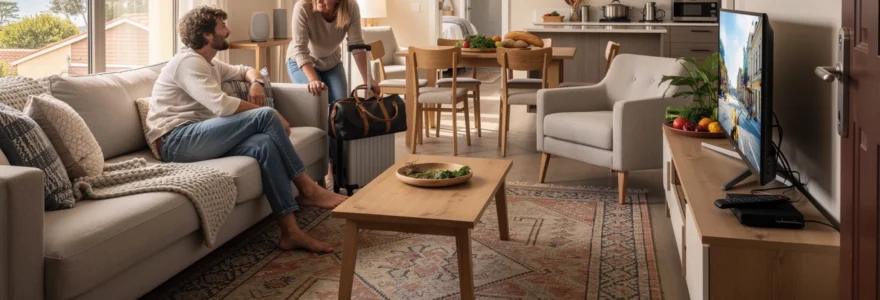
The vacation rental market has evolved dramatically, transforming from a budget alternative to hotels into a sophisticated accommodation sector worth over £70 billion globally. Yet despite polished photographs and competitive pricing, many properties still fail to deliver that elusive feeling of being truly at home. Research from hospitality analytics firm AirDNA reveals that properties described by guests as feeling “homely” command 23% higher occupancy rates and secure premium pricing compared to their sterile counterparts. The distinction between a functional rental space and one that genuinely replicates residential comfort involves deliberate design decisions, sensory considerations, and technological integration that together create an environment where guests feel immediately settled rather than perpetually transient.
Spatial design principles that replicate residential comfort in Short-Term lettings
The foundation of residential comfort begins with how space itself is conceived, divided, and experienced. Leading vacation rental management companies have invested considerably in understanding the spatial psychology that differentiates a house from a home, applying architectural principles that influence how guests perceive and interact with their temporary accommodation.
Open-plan layouts versus compartmentalised zoning in airbnb properties
The debate between open-plan and compartmentalised layouts represents more than aesthetic preference—it fundamentally shapes how you experience a rental property. Open-plan configurations, particularly those integrating kitchen, dining, and living areas, have become increasingly prevalent in premium vacation rentals. This design approach mirrors contemporary residential architecture and facilitates the social dynamics that characterise genuine home life. When Sonder analysed guest feedback across 5,000+ properties, they discovered that open-plan layouts received 18% higher ratings for “feeling like home” compared to traditionally divided spaces. The visual continuity and spatial flow allow families and groups to maintain connection whilst engaging in different activities, replicating the natural rhythms of domestic life rather than the segmented experience typical of hotel suites.
However, compartmentalisation retains distinct advantages for certain guest demographics and rental durations. Longer-term guests, particularly remote workers and digital nomads, consistently express preference for properties offering dedicated, closable work zones separate from relaxation areas. This spatial division enables the psychological transitions between professional and personal time that home environments naturally provide. The most successful rental properties now incorporate hybrid approaches—predominantly open-plan communal areas complemented by strategic acoustic and visual separation for bedrooms and dedicated work zones. This balanced approach acknowledges that home means different things at different moments throughout the day.
Furniture scale and arrangement techniques used by sonder and domio
Furniture selection and placement profoundly influences whether a space feels like genuine accommodation or temporary lodging. Professional property management companies like Domio have developed sophisticated furniture protocols based on residential ergonomics rather than commercial hospitality standards. The critical distinction lies in scale and proportion—residential furniture typically features deeper seating, lower profiles, and more varied heights compared to the uniform, compact pieces found in traditional hotels. A standard hotel sofa measures approximately 75cm deep, whilst residential sofas average 90-100cm, a seemingly modest difference that dramatically affects comfort and the subconscious perception of permanence versus transience.
Arrangement techniques equally matter. Rather than positioning furniture exclusively against walls in the commercial hospitality tradition, residential-inspired vacation rentals employ “floating” arrangements that create conversation zones and natural traffic flow. Sonder’s design team positions sofas perpendicular to focal points like fireplaces or windows rather than facing televisions exclusively, acknowledging that home life involves varied activities beyond passive entertainment. Side tables placed within arm’s reach of every seat, reading lamps at appropriate heights, and sufficient surface area for personal items scattered naturally throughout a space—these seemingly minor details collectively signal to your subconscious that you’re in a space designed for living, not merely staying.
Natural light optimisation through window treatments and orientation
Natural light profoundly impacts both mood and the perception of space as homelike. Properties maximising natural illumination consistently outperform their darker counterparts across virtually all guest satisfaction metrics. A 2024 study from Cornell University’s hospitality research division found that vacation rental guests rated identical properties 31% higher when photographed and experienced during optimal natural light conditions. This isn’t merely about aesthetics—circadian rhythm research demonstrates that exposure to natural daylight patterns significantly influences sleep quality,
with knock-on effects for mood, productivity, and overall wellbeing during a stay. Hosts can harness this by treating window treatments as part of their core design strategy rather than an afterthought. In practice, that means replacing heavy, light-blocking drapes with layered solutions: sheer curtains that diffuse daylight paired with blackout curtains or blinds for sleep. Simple changes such as raising curtain rods closer to the ceiling and extending them beyond the window frame can also make windows appear larger and draw more light into the room, helping even compact vacation rentals feel more expansive and uplifting.
Orientation and function should guide how you maximise natural light across the property. East-facing bedrooms benefit from lighter fabrics that welcome gentle morning light and support healthy wake-up cycles, whereas west-facing living rooms may need solar shades to temper harsh afternoon glare without plunging the space into darkness. Strategic placement of mirrors opposite windows can amplify available daylight, especially in narrow city apartments or historic cottages with smaller openings. For hosts, investing in these details is one of the most cost-effective ways to make a vacation rental feel like home, because most guests associate bright, naturally lit rooms with comfort, cleanliness, and emotional ease.
Acoustic insulation standards that distinguish premium holiday rentals
While light shapes how we see a space, sound profoundly influences how we feel in it. Acoustic comfort is one of the most underestimated factors differentiating budget listings from premium vacation rentals that feel genuinely residential. A 2023 Booking.com survey reported that noise complaints featured in nearly 14% of negative reviews for urban short-term rentals, often referencing thin walls, street noise, or footsteps from neighbouring units. In a true home environment, we expect a degree of sonic privacy—conversations should not feel broadcast to the outside world, nor should external disturbances intrude constantly on rest or work.
Premium hosts now treat acoustic insulation as a core design criterion rather than a luxury upgrade. Simple interventions such as adding dense area rugs, lined curtains, and upholstered headboards help absorb sound and reduce reverberation in rooms that might otherwise feel echoey and impersonal. For multi-unit buildings, installing door sweeps, weatherstripping, and solid-core internal doors can dramatically decrease corridor and stairwell noise. Where regulations and budgets allow, upgrading to higher-rated acoustic underlays or double-glazed windows pays dividends both in guest satisfaction and reviews, particularly in destinations with nightlife, traffic, or seasonal tourism peaks.
Crucially, acoustic design in vacation rentals is not only about blocking unwanted sound; it is also about crafting a gentle, recognisably domestic soundscape. Providing white-noise machines or simple bedside fans in bedrooms gives guests control over their auditory environment, mirroring the coping strategies many already use at home. Soft-close hardware on kitchen cabinetry and bathroom doors, along with felt pads under chair legs, reduce the jarring clatter often associated with cheaper rentals. When guests can read, rest, or work without constant auditory interruption, the property begins to emulate the quiet assurance of a well-built home rather than the transience of a thin-walled hotel.
Personalisation strategies beyond generic hotel aesthetics
Once spatial and acoustic fundamentals are in place, the next layer of making a vacation rental feel like home involves personalisation. Unlike hotels, which rely on brand uniformity, successful short-term rentals lean into individuality and a sense of place. The most memorable properties strike a balance between curated design and lived-in warmth, avoiding both clutter and sterility. This is where thoughtful decor, local storytelling, and guest-focused details come together to create an emotional connection that extends beyond a simple overnight stay.
Curated local art and photography from regional artists
Walls are powerful storytelling surfaces, yet many vacation rentals default to generic prints bought in bulk. Curating local art and photography is one of the most effective ways to differentiate your property and help guests feel grounded in their destination. Research from Expedia Group in 2024 highlighted that 38% of travellers actively seek accommodations that “reflect local character,” and visual art is often their first tangible encounter with that character. A framed photograph of a nearby coastline, a street scene from the local market, or a minimalist map of the neighbourhood can all subtly orient guests and spark conversation.
Working with regional artists also fosters community connections and supports the local creative economy, which modern travellers increasingly value. Many hosts collaborate on a consignment basis, displaying works for sale with discrete labels or QR codes linking to the artist’s website. This transforms the rental into a small gallery and gives guests the option to take a piece of their stay home. The key is cohesion: select a consistent palette, subject matter, or framing style so that diverse works still feel curated rather than random. When art feels intentional rather than decorative filler, guests perceive the space as more thoughtful and, by extension, more homelike.
Bespoke welcome amenities: customised pantry staples and regional delicacies
Food is one of the fastest routes to psychological comfort, and a personalised welcome selection can instantly bridge the gap between “strange kitchen” and “our temporary home.” Instead of the ubiquitous mini shampoo and a single tea bag, premium hosts now curate small welcome hampers with both practical staples and regional treats. This might include high-quality olive oil, basic spices, artisan bread, or local honey—items that make it easy for guests to prepare a simple first meal without an immediate dash to the supermarket. According to Airbnb’s 2023 data insights, listings that mention “welcome basket” or “complimentary snacks” in their description achieve up to 15% higher booking conversion in competitive markets.
The most effective welcome amenities respond to likely guest profiles and trip purpose. Are your guests families arriving late with children? Shelf-stable snacks, cereal, and juice can make the first morning much smoother. Hosting digital nomads or longer-stay guests? Consider pantry basics like pasta, rice, and quality coffee, along with a short guide to the best local grocery options. Including a handwritten note that references specific items—for example, “These biscuits are from the bakery on High Street we mentioned in the guidebook”—adds a human warmth that algorithms cannot replicate. It signals that you have anticipated their needs in the same way a considerate host would for visiting friends.
Layered textiles and soft furnishings that evoke domesticity
Hotels often rely on a thin duvet, a single pillow type, and a visually crisp but texturally bland aesthetic. In contrast, homes are defined by layers: throws, cushions, rugs, and varied textures that invite touch. Introducing this kind of layering into a vacation rental is both a design strategy and a psychological cue. A 2022 study on environmental psychology from the University of Surrey found that participants associated layered textiles with “warmth,” “safety,” and “relaxation” far more strongly than minimalist, hard-surfaced environments. Think of the difference between sitting on a bare sofa in a show flat and curling up on a couch with a soft throw and a supportive cushion; only one of those feels like somewhere you could happily spend an entire evening.
For hosts, the goal is to layer intelligently rather than cluttering. Choose a base of durable, easy-to-clean textiles—washable slipcovers, performance fabrics, and machine-washable rugs—and then add softer, more tactile elements that can be laundered or rotated between stays. In bedrooms, offer at least two pillow densities per person, a medium-weight duvet, and an extra blanket at the foot of the bed to accommodate different temperature preferences. In living areas, a couple of throws and a considered mix of cushion sizes create that “sink-in” quality guests associate with home. These layers also absorb sound and visually soften edges, reinforcing both acoustic comfort and a sense of domestic calm.
Personalised guest communication protocols used by vacasa and TurnKey
Physical design alone cannot make a vacation rental feel like home if communication feels robotic or disjointed. Large operators such as Vacasa and TurnKey have demonstrated that structured yet personalised communication is integral to the guest experience. Their protocols typically begin with a pre-arrival message that combines clear, practical information (access codes, parking, Wi-Fi) with a friendly, human tone. This is followed by a brief check-in on the first evening to ensure everything meets expectations, and a pre-departure reminder that simplifies checkout tasks. The cadence is predictable without being intrusive, mimicking the way a considerate host might check in without hovering.
For independent hosts, adopting a similar framework can dramatically increase perceived professionalism and warmth. Using templated messages as a base—customised with the guest’s name, trip purpose if known, and relevant local tips—keeps communication efficient while still feeling tailored. Including small details like weather updates, seasonal recommendations, or transit advice shows you understand the lived reality of their stay, not just its transactional aspects. At the same time, offering clear channels for support, whether via messaging apps or a dedicated phone line, reassures guests that help is available if needed. When guests feel both guided and autonomous, communication begins to resemble the supportive background presence of home rather than the scripted formality of a hotel.
Technology integration that enhances autonomy without compromising warmth
Technology can either make a vacation rental feel frictionless and familiar or cold and overengineered. The difference lies in how seamlessly tools support everyday routines guests already have at home. Rather than overwhelming visitors with complex systems, the most successful rentals prioritise intuitive, well-documented solutions that enhance autonomy: easy check-in, straightforward climate control, and familiar entertainment setups. When guests can operate everything without guesswork or lengthy manuals, technology fades into the background and the property simply feels comfortable and modern.
Smart lock systems: yale, august, and schlage self-check-in solutions
Keyless entry has rapidly become a baseline expectation in many markets, especially for urban vacation rentals. Smart lock systems from brands like Yale, August, and Schlage allow hosts to generate time-bound codes for each booking, eliminating the risk of lost keys and awkward key handovers. For guests arriving on delayed flights or after long drives, the ability to self-check-in at any hour without coordinating schedules is a significant stress reducer. In a 2023 survey by HomeAway (now Vrbo), 67% of respondents cited flexible, contactless check-in as a “major convenience” that positively influenced their perception of a property.
From a homelike perspective, smart locks also support a smoother rhythm of coming and going, similar to using a personal front door code. However, the technology must be implemented with clarity and redundancy. Hosts should provide step-by-step instructions with images, both in pre-arrival messages and in a printed or digital house manual. It is also wise to maintain a discreet mechanical backup—such as a lockbox or nearby keyholder—in case of battery failure or technical glitches. When entry feels secure, simple, and under the guest’s control, the rental begins to feel less like a monitored space and more like a private residence they can occupy confidently.
Intuitive climate control: nest and ecobee thermostat configurations
Thermal comfort is a core component of feeling at home, yet many vacation rentals either lock thermostats or leave confusing, outdated controls in place. Smart thermostats such as Nest and Ecobee provide a middle path: guests gain intuitive, responsive control, while hosts retain the ability to set reasonable limits and monitor energy use. Well-configured systems present a simple interface with clear temperature readouts and minimal options, avoiding the need for guests to decode complex programming modes after a long day of travel. Nest reported in 2024 that properties using their thermostats in hospitality settings reduced energy costs by up to 15% without noticeable declines in guest comfort when scheduling and eco modes were configured thoughtfully.
To keep the experience homelike, settings should prioritise responsiveness and transparency. For instance, pre-conditioning the property shortly before check-in ensures guests arrive to a comfortable temperature, reinforcing a sense that the home has been prepared specifically for them. Clear guidance in the house manual—explaining how to switch modes, adjust fan speeds, or use zoning if applicable—prevents frustration. What you want to avoid is the feeling of battling with the heating or air conditioning, which many travellers associate with older hotels. When guests can dial in their preferred temperature effortlessly, they quickly settle into the kind of embodied ease they expect in their own living spaces.
Entertainment systems mirroring home setups: streaming device selection
Even on the most activity-packed trips, guests often wind down in the evening with familiar entertainment. Providing systems that mirror typical home setups—rather than proprietary hotel interfaces—helps bridge the psychological distance between “away” and “at home.” Smart TVs or streaming devices such as Roku, Apple TV, Amazon Fire TV, or built-in Chromecast allow guests to log into their own Netflix, Disney+, or Spotify accounts. A 2023 Nielsen report showed that over 80% of households in North America and Western Europe regularly use at least one streaming service, meaning these platforms are part of everyday domestic life for many travellers.
From a host’s perspective, the priority is simplicity and privacy. Pre-installing a handful of mainstream streaming apps, labelling HDMI inputs, and providing a concise one-page guide make it easy for guests to connect their devices. Equally important is implementing a system for clearing logins between stays, whether manually or via built-in guest modes, to protect data and build trust. Consider supplementing streaming with a small selection of physical entertainment—board games, books, or local guides—to appeal to guests who prefer screen-free evenings. When visitors can slip into their usual routines, watching a favourite series or listening to a familiar playlist, the space feels less like a neutral shell and more like an adaptable extension of their own home.
Kitchen and dining provisions that enable authentic home cooking
One of the primary reasons guests choose a vacation rental over a hotel is access to a real kitchen. Yet many arrive to find mismatched cookware, dull knives, and missing basics that make proper cooking frustrating. A genuinely homelike vacation rental kitchen is not about professional-grade appliances; it is about completeness, coherence, and usability. A 2024 Statista survey found that 63% of travellers who booked self-catering accommodation did so specifically to prepare some of their own meals, with families and longer-stay guests showing the highest preference for “fully equipped kitchens” as a decision factor.
At a minimum, an effective vacation rental kitchen should include a set of sharp knives, cutting boards, saucepans and frying pans in multiple sizes, baking trays, and heat-resistant utensils. Think in terms of typical home-cooked meals: could guests easily prepare pasta, roast vegetables, make a stir-fry, or bake a simple cake? If the answer is no, your inventory likely needs attention. Providing essentials such as oil, salt, pepper, sugar, and a small range of herbs and spices not only enhances convenience but also reduces waste, as guests are less likely to buy large quantities they will partially discard. Clear labelling of pantry items and storage containers further strengthens the sense of order and familiarity.
The dining area deserves equal consideration. A table with sufficient, comfortable seating for the maximum occupancy allows guests to share meals in a way that mirrors home life rather than perching on beds or sofas. Good lighting above the table, placemats, and a simple centrepiece—such as a small plant or candle—signal that mealtimes are meant to be enjoyed, not rushed. For larger or more upscale properties, extras like a coffee grinder, French press, or basic baking equipment can create moments of ritual that feel distinctly homely. When guests can cook and dine without compromise, they are more likely to stay longer, return frequently, and describe the property as a true home away from home.
Sensory elements that trigger psychological comfort and familiarity
Beyond layout, furniture, and technology, what really makes a vacation rental feel like home often comes down to the five senses. Our brains form strong associations between sensory cues and emotional states, so familiar smells, textures, and sounds can rapidly create a sense of belonging, even in an unfamiliar environment. Environmental psychologists sometimes compare this to hearing a favourite song: within seconds, you are transported into a particular mood or memory. Thoughtful hosts harness the same principle to design rentals that feel reassuringly lived-in rather than clinically neutral.
Scent is particularly powerful. Providing a subtle, consistent fragrance—such as a lightly scented diffuser or unscented cleaners paired with fresh linen—helps differentiate the property from more institutional environments. Overly strong artificial fragrances, however, can have the opposite effect, reminding guests of commercial air fresheners rather than domestic comfort. Soft, varied lighting in the evenings supports visual relaxation, while tactile surfaces like natural wood, cotton, and wool offer a grounding counterpoint to screens and hard finishes. Consider how you feel when you wrap yourself in a familiar throw or touch a solid wooden table; these are micro-signals of stability and care that guests unconsciously register.
Even small auditory details contribute to the overall impression. Providing a compact Bluetooth speaker or smart display allows guests to play their own music, masking unfamiliar background noises and replacing them with a personal soundtrack. In bathrooms, plush towels and quality toiletries at a residential rather than hotel scale—larger pump bottles instead of tiny sachets—reinforce the sense of ongoing habitation instead of one-off occupancy. You might ask yourself: if you turned off the lights and simply felt, smelled, and listened to the space, would it feel more like a home or an institution? Designing with that question in mind leads to sensory environments that are not only pleasant but deeply comforting.
Maintenance protocols and cleanliness standards that build trust
No amount of design or technology can compensate for inadequate cleanliness. In every survey of guest priorities, from Airbnb to TripAdvisor, cleanliness ranks either first or in the top three factors influencing satisfaction and repeat bookings. But in the context of a vacation rental that feels like home, cleanliness is not about creating a sterile, hospital-like environment. Instead, it is about signalling care, reliability, and respect for the guest’s wellbeing—qualities we instinctively expect from our own homes. A spotless but obviously worn property will often feel more welcoming than a visually perfect one with corners of neglect, because consistency is what builds trust.
Robust maintenance protocols begin with detailed, standardised checklists for cleaners and inspectors. These should go beyond visible surfaces to include high-touch points such as light switches, remote controls, appliance handles, and thermostat dials. Many professional operators now use photo-verified checklists, where cleaners upload images after each turnover, ensuring accountability and enabling remote quality control. Regular deep cleans—addressing grout, upholstery, vents, and under-furniture areas—prevent the slow accumulation of grime that subtly erodes the sense of homeliness over time. Just as in a well-kept household, guests should never encounter the previous occupant’s hair, food residues, or clutter.
Proactive maintenance is equally important. Scheduling routine inspections for HVAC filters, smoke detectors, plumbing, and appliances reduces the likelihood of disruptive failures during a stay. Keeping a small, visible stock of replacement items—lightbulbs, bin bags, basic cleaning supplies—empowers guests to handle minor issues themselves, reinforcing autonomy rather than dependence. Transparent communication also matters: a brief note in the house manual outlining your cleaning and inspection standards reassures visitors that the environment is cared for systematically, not sporadically. When guests perceive that the property is looked after with the same diligence they would apply to their own home, they relax, unpack—literally and psychologically—and begin to inhabit the space as if it were theirs.