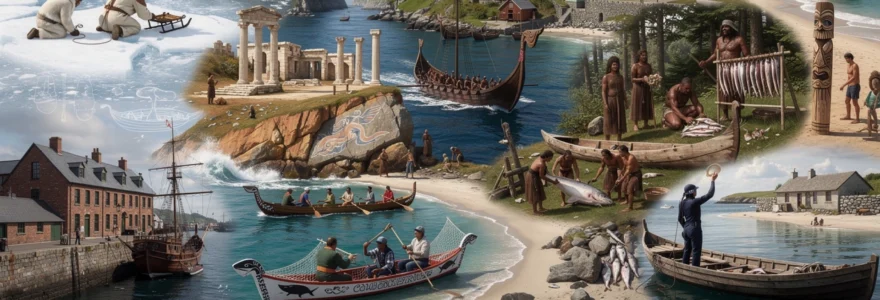
The rhythmic crash of waves against ancient harbour walls tells stories that span millennia. Coastal destinations around the world serve as living museums where maritime heritage, indigenous traditions, and cultural evolution converge in spectacular fashion. These waterfront locations offer travellers far more than pristine beaches and scenic vistas – they present windows into humanity’s enduring relationship with the sea.
From UNESCO World Heritage ports that once commanded global trade routes to remote fishing villages where traditional practices remain unchanged, coastal cultures represent some of our planet’s most fascinating narratives. The intersection of land and sea has always been a catalyst for cultural exchange, innovation, and artistic inspiration. Whether you’re drawn to the medieval fishing villages of Italy’s Cinque Terre or the sacred whale hunting grounds of the Basque coast, these destinations demonstrate how geography shapes identity and how communities adapt to their maritime environment.
Maritime heritage sites: UNESCO world heritage coastal destinations
UNESCO World Heritage coastal destinations represent the pinnacle of maritime cultural significance, where exceptional universal value meets outstanding preservation efforts. These sites demonstrate humanity’s relationship with the sea through architecture, archaeology, and living traditions that have shaped civilisations for centuries.
Historic port of liverpool: mercantile maritime legacy
Liverpool’s waterfront stands as a testament to the city’s role as a gateway between Britain and the world during the height of the British Empire. The Three Graces – the Royal Liver Building, Cunard Building, and Port of Liverpool Building – create one of the world’s most recognisable maritime skylines. These architectural masterpieces reflect the prosperity that flowed through Liverpool’s docks during the 18th and 19th centuries.
The Albert Dock complex, now transformed into museums and cultural venues, once housed the world’s first enclosed dock system built entirely of cast iron, brick, and stone. This innovative design revolutionised maritime commerce by providing secure storage for valuable cargoes including cotton, tobacco, and sugar from the Americas. Today, visitors can explore the Merseyside Maritime Museum and International Slavery Museum, which provide sobering insights into Liverpool’s complex colonial past.
Paphos archaeological park: ancient mediterranean trading routes
The coastal city of Paphos in Cyprus offers extraordinary insights into Mediterranean maritime culture spanning over two millennia. The archaeological park encompasses ruins from the Neolithic period through the Middle Ages, with particular emphasis on the Roman and Byzantine eras when Paphos served as the island’s capital and primary port.
The House of Dionysus contains some of the finest floor mosaics in the Eastern Mediterranean, depicting mythological scenes that reflect the cosmopolitan nature of this ancient trading hub. These artistic treasures demonstrate how maritime trade brought together diverse cultural influences from across the Roman Empire. The nearby Tombs of the Kings, carved directly into solid rock, reveal the wealth accumulated by merchants who controlled lucrative sea routes between Europe, Asia, and Africa.
Geirangerfjord and nærøyfjord: norse coastal settlements
Norway’s dramatic fjords preserve evidence of Norse maritime culture that shaped Scandinavian identity for over a thousand years. These narrow inlets, carved by glacial action over millions of years, provided natural harbours where Viking communities developed sophisticated boat-building techniques and navigation skills that enabled them to reach distant shores from Greenland to Constantinople.
Archaeological evidence throughout the fjord region reveals how Norse settlers adapted to challenging coastal environments through innovative farming techniques and seasonal migration patterns. Traditional stave churches perched on fjord shores demonstrate the blend of maritime practicality and spiritual devotion that characterised medieval Norwegian culture. The landscape itself tells stories of human resilience, with abandoned farms clinging to impossibly steep mountainsides where families once lived entirely from the sea’s bounty.
Cinque terre national park: medieval fishing village architecture
The five villages of Cinque Terre represent perhaps the world’s most dramatic example of humans shaping a coastal landscape to support maritime communities. Monterosso al Mare, Vernazza, Corniglia, Manarola, and Riomaggiore cling to rocky cliffs above the Ligurian Sea, connected by ancient footpaths that once served as the only means of communication between settlements.
Each village developed unique architectural solutions to coastal
solutions, from terraced vineyards to multi-storey stone houses that maximise limited cliffside space. Narrow caruggi (alleys) funnel sea breezes through tightly packed dwellings, while small harbours remain the beating heart of each community. Walking the coastal trails today, you move between villages that still retain their medieval street patterns, with drying fishing nets and brightly painted boats offering a glimpse into centuries of coastal life.
Despite the pressures of mass tourism, Cinque Terre continues to balance heritage conservation with everyday living. The designation as a national park and UNESCO site has helped protect the fragile landscape from overdevelopment, while sustainable mobility initiatives encourage visitors to arrive by train or on foot rather than by car. For travellers, this means you can experience a coastal destination where traditional fishing culture, vernacular architecture, and dramatic seascapes remain closely intertwined.
Stone town zanzibar: swahili coastal trading culture
Stone Town, the historic centre of Zanzibar City, encapsulates the cosmopolitan character of the Swahili coast. For centuries, these shores linked Africa, the Arabian Peninsula, India, and beyond, creating a maritime trading culture expressed in carved wooden doors, coral-stone houses, and bustling harbourfront markets. Wandering its labyrinthine alleys, you encounter a blend of African, Arab, Persian, Indian, and European influences that speak to its role as a key node in Indian Ocean trade networks.
The seafront Forodhani Gardens overlook a harbour once crowded with dhows loading spices, ivory, and slaves. Today, traditional lateen-sailed vessels still dot the horizon at sunset, while local fishermen sell their catch at the nearby market, maintaining practices that have sustained Swahili communities for generations. Visitors interested in coastal heritage can explore former merchant houses, the Old Fort, and the House of Wonders, each revealing different chapters in Zanzibar’s complex maritime past and its ongoing relationship with the sea.
Indigenous coastal cultures and traditional maritime practices
Beyond grand ports and UNESCO-listed harbours, coastal destinations are also home to indigenous cultures whose knowledge of the sea has been refined over thousands of years. Their relationship with the ocean is not just economic, but spiritual and ecological, rooted in practices that prioritise balance and respect. As climate change reshapes shorelines and marine ecosystems, these traditional maritime cultures offer vital insights into sustainable coastal living.
Inuit sea ice navigation techniques in nunavut
In Nunavut, Canada, Inuit communities have long depended on the Arctic Ocean for food, transport, and cultural continuity. Before GPS and satellite imagery, hunters navigated vast expanses of seemingly uniform sea ice using subtle cues that outsiders often overlook. The colour and texture of snow, the shape of pressure ridges, the sound of ice underfoot, and the behaviour of wind and currents all form part of a complex navigational language passed down through generations.
This intimate knowledge functions much like an unwritten nautical chart superimposed on a constantly changing frozen seascape. As sea ice seasons shorten and conditions become less predictable, Inuit hunters are adapting, combining traditional wayfinding with modern tools, yet they emphasise that ancestral knowledge remains crucial for safety. Travellers who join community-led cultural experiences in coastal communities like Pond Inlet or Arctic Bay can learn how sea ice, marine mammals, and human life are interwoven in ways that challenge conventional notions of where “land” ends and “sea” begins.
Aboriginal dreamtime stories along great ocean road
Australia’s Great Ocean Road is famous for its dramatic limestone stacks and surf beaches, but for the Aboriginal peoples of this coastline, every cliff and cove carries stories that stretch back to the Dreamtime. Traditional Owners such as the Gadubanud, Eastern Maar, and Wadawurrung trace their connection to the Southern Ocean through songlines that map ancestral journeys along the shore. These stories explain the creation of coastal landforms, guide seasonal movements, and encode rules for interacting with marine environments.
Guided cultural tours near sites like Tower Hill, Budj Bim, or along selected sections of the coastline help visitors understand that what may appear as simple scenic viewpoints are in fact chapters in a living narrative. Rather than viewing the ocean as a boundary, Aboriginal cosmology often frames it as a pathway connecting people, spirits, and distant lands. For travellers seeking more than just photogenic viewpoints, listening to Dreamtime stories on Country can transform a classic road trip into a deeper engagement with indigenous coastal heritage.
Maori waka traditions in bay of islands
In New Zealand’s Bay of Islands, the sea is central to Māori history and identity. According to many iwi (tribes), this region was among the first landfalls of the ancestral waka (canoes) that brought Polynesian navigators to Aotearoa around 800 years ago. Waka are far more than vessels; they are embodiments of genealogy, linking present-day communities to their seafaring ancestors and to specific coastal landscapes.
Traditional double-hulled voyaging canoes and intricately carved waka taua (war canoes) demonstrate sophisticated boatbuilding and navigation techniques that enabled long-distance voyages across the Pacific. Contemporary revival movements, including ocean crossings guided by stars, swells, and bird patterns, reaffirm this deep maritime heritage. Visitors can participate in cultural experiences that include pōwhiri (welcoming ceremonies) on the beach, learning basic paddle techniques, and hearing stories of the great navigators, gaining an appreciation for how the Bay of Islands is both a holiday destination and a pivotal site in Māori oceanic history.
First nations salmon fishing ceremonies in pacific northwest
Along the Pacific Northwest coast of Canada and the United States, First Nations and Native American communities maintain spiritual and economic relationships with the ocean through salmon. For peoples such as the Haida, Coast Salish, and Tlingit, salmon are not simply resources but relatives, honoured through complex systems of ceremony, stewardship, and law. Coastal villages historically oriented their yearly cycles around salmon runs, with specific fishing sites, gear, and rituals reflecting local ecosystems.
Traditional technologies like intertidal stone fish traps, reef nets, and cedar canoes reveal a sophisticated understanding of tides, currents, and fish behaviour. Many communities are now revitalising ceremonial first-salmon feasts and co-management practices in response to declining stocks and habitat degradation. When you visit coastal centres such as Alert Bay, Bella Bella, or communities around Puget Sound and Vancouver Island, museum exhibits, cultural centres, and guided tours help you understand how salmon connect ocean, river, forest, and village into a single living system.
Colonial maritime architecture and fortifications
Wherever empires sought to control sea lanes, they built fortifications, lighthouses, and administrative centres that still dominate many coastal skylines today. These structures reflect a period when maritime power equated to geopolitical influence, and their strategic placements reveal how colonial authorities viewed the ocean as both opportunity and threat. Exploring them now provides context for understanding trade, conflict, and cultural exchange along historic coasts.
Across the Atlantic and Indian Oceans, fortified coastal cities such as Cartagena in Colombia, Galle in Sri Lanka, and Elmina in Ghana bear witness to centuries of naval warfare and commerce. Massive sea walls, bastions oriented toward harbours, and cannon-lined ramparts illustrate how European powers projected military strength across vast maritime empires. Yet within these walls you also encounter layered urban cultures where local building traditions merged with imported architectural styles, producing distinctive creole coastal identities.
For modern travellers, visiting these coastal forts is not just about scenic views over the water. Many have been reinterpreted as museums, memorials, or cultural venues that address difficult histories of enslavement, forced migration, and resistance. Walking through dungeons, powder magazines, and lookout towers, you confront the human cost behind the maritime wealth that once passed through these harbours. Responsible tourism here means engaging with guided tours, exhibitions, and community initiatives that centre local voices and contemporary perspectives on colonial coastal heritage.
Traditional fishing communities and artisanal techniques
Long before industrial trawlers and container ships, coastal communities relied on small-scale, artisanal fishing to sustain themselves. In many regions, these traditional techniques persist, offering visitors a chance to witness sustainable maritime practices shaped by local ecosystems. The rhythms of these communities—early-morning departures, afternoon net mending, harbourfront fish markets—reveal a slower, more intimate relationship with the sea than that found in modern ports.
Basque whale hunting heritage in lekeitio
The Basque town of Lekeitio on Spain’s northern coast was once at the forefront of European whaling. From the Middle Ages onward, Basque sailors ventured deep into the North Atlantic in robust wooden ships, pursuing right and bowhead whales for oil and baleen. This maritime enterprise left an enduring imprint on the town’s culture, from guild structures to specialised boatbuilding skills and navigational knowledge passed from generation to generation.
While commercial whaling has ceased, Lekeitio’s waterfront and local museums preserve the memory of this coastal heritage. Interpretive displays, historic chapels where sailors once prayed before departure, and festivals honouring seafarers highlight how closely community life was tied to risky ocean voyages. Visitors can walk along the harbour, see traditional fishing boats, and reflect on how shifting ethical perspectives and environmental concerns have transformed our relationship with large marine mammals that once underpinned coastal economies.
Portuguese bacalhau fishing culture in nazaré
Nazaré, now famous for record-breaking surf waves, was historically one of Portugal’s principal fishing communities. For centuries, its fishermen braved the Atlantic to supply the country’s enduring appetite for bacalhau (salted cod), a staple of Portuguese cuisine despite cod being caught far from Iberian shores. Long voyages to the Grand Banks of Newfoundland and Greenland forged a tough maritime culture, with knowledge of currents, storms, and celestial navigation essential for survival.
The town’s distinctive wooden fishing boats, with their high bows designed to tackle powerful Atlantic swells, remain symbols of Nazare’s seagoing identity. On the beach, traditional fish-drying racks—rows of wooden frames where fish were once salted and laid out in the sun—recall pre-refrigeration preservation methods. Today, travellers can explore the local fish market, try regional dishes like bacalhau à brás or grilled sardines, and visit the Sitio clifftop lookout to see how the famed underwater Nazaré Canyon shapes both monster waves and the town’s maritime story.
Japanese ama pearl diving in mikimoto pearl island
Off the coast of Toba in Japan’s Mie Prefecture, the tradition of ama diving showcases a unique form of coastal livelihood centred on the harvest of pearls and shellfish. Historically, ama were predominantly women who free-dived without modern scuba gear, relying on breath-hold techniques, woollen suits, and intimate knowledge of tides and underwater terrain. Their work supplied coastal communities with abalone, seaweed, and later, pearls integral to Japan’s maritime trade.
Mikimoto Pearl Island, named after Kokichi Mikimoto who pioneered cultured pearl techniques in the late 19th century, preserves and interprets this heritage. Demonstrations by contemporary ama divers offer insight into physical endurance, specialised breathing methods, and communal support systems that have sustained the practice. By learning how these divers read the sea’s moods and manage resources, visitors gain a deeper appreciation for artisanal fishing cultures that balance economic needs with marine conservation.
Scottish highland crofting communities in hebrides
In Scotland’s Hebridean islands, crofting communities developed a distinctive form of coastal subsistence that combines small-scale agriculture with inshore fishing. On islands such as Lewis, Harris, and Uist, narrow strips of croft land run from rocky shorelines up onto moorland, reflecting a landscape where seaweed, grazing, and fishing all play vital roles. Families historically divided their year between tending hardy crops, caring for livestock, and working the coastal waters for herring, shellfish, and whitefish.
Remnants of blackhouses, stone fish traps, and kelp-drying sites reveal how islanders maximised every resource at the ocean’s edge. Today, many crofters diversify into seaweed harvesting, shellfish farming, or small-scale tourism while maintaining traditional rights and community-based management of common grazing and fishing grounds. Travellers who stay in community-run accommodation or visit local heritage centres can see how crofting encapsulates a sustainable approach to coastal living where land and sea are inseparable.
Archaeological underwater sites and shipwreck heritage
Beneath the surface of our oceans lies an extraordinary archive of human history. Shipwrecks, submerged cities, and drowned harbours preserve moments when maritime journeys ended abruptly, leaving behind time capsules of material culture. Advances in underwater archaeology and remote-sensing technology now allow researchers—and in some cases, recreational divers—to explore these sites with unprecedented detail.
From Bronze Age cargoes off the coast of Turkey to World War II wrecks scattered across the Pacific, underwater sites document trade routes, naval conflicts, and everyday life at sea. Regions such as the Mediterranean, Baltic Sea, and Caribbean host marine parks where protected wrecks serve both as research laboratories and dive attractions. Much like open-air museums on land, these underwater heritage sites require careful management to balance public access with conservation.
If you’re a diver or snorkeller, visiting designated underwater archaeological parks with licensed guides is one way to experience this hidden side of coastal culture. Interpretive centres on shore often complement dives with 3D models, recovered artefacts, and virtual reality experiences for non-divers. These initiatives ensure that even those who never don a wetsuit can appreciate how the ocean floor preserves stories of exploration, migration, and disaster that continue to shape coastal identities.
Literary and artistic coastal landscapes
For centuries, coastal landscapes have captured the imagination of writers and artists who sought to translate the sea’s shifting moods into words and images. The interplay of light on water, the drama of storms, and the solitude of remote shores have all inspired creative works that, in turn, shape how we perceive these destinations. Visiting such places allows you to step inside familiar novels, poems, and paintings, seeing the coast through the eyes of its most devoted interpreters.
Thomas hardy’s wessex coast in dorset
The Jurassic Coast of Dorset, with its fossil-rich cliffs and secluded coves, forms a key backdrop to Thomas Hardy’s fictional Wessex. Novels such as The Mayor of Casterbridge and The Trumpet-Major draw on real coastal towns and harbours, thinly disguised yet instantly recognisable to those who know the shoreline. Hardy’s writing captures the tension between age-old rural communities and the waves of change brought by industrialisation and maritime commerce.
Walking the South West Coast Path near places like West Bay, Weymouth, or Lulworth Cove, you encounter vistas that echo Hardy’s descriptions of storm-lashed harbours and lonely headlands. Literary trails and local museums provide context on how the author’s own observations of seafaring life, shipwrecks, and coastal trades informed his fiction. For readers, experiencing Hardy’s coast in person can feel like moving through a palimpsest, where present-day seaside tourism overlays deeper layers of maritime history and narrative.
Virginia woolf’s lighthouse inspirations in cornwall
Cornwall’s rugged coastline has long attracted writers, but few have woven it into their work as profoundly as Virginia Woolf. As a child, she spent summers near St Ives, where the view towards Godrevy Lighthouse across St Ives Bay helped inspire the setting for her novel To the Lighthouse. The interplay of sea, sky, and shifting weather in this part of Cornwall parallels the novel’s shifting perspectives and meditation on time.
Travellers can follow in Woolf’s footsteps by exploring the beaches and headlands around St Ives and Gwithian. Art galleries in town reflect the area’s continued pull on creative communities, while coastal walks reveal the same granite cliffs and Atlantic swells that shaped Woolf’s early sensory world. Standing on a windswept promontory and watching waves crash against the rocks, you may find it easier to understand why the lighthouse, both real and fictional, became such a powerful symbol of distance, memory, and aspiration.
Monet’s impressionist seascapes at étretat
On France’s Normandy coast, the chalk cliffs and natural arches of Étretat have become synonymous with Impressionist seascapes. Claude Monet painted this stretch of shoreline repeatedly in the 1880s, fascinated by how changing light transformed the same cliffs from hour to hour and season to season. His canvases capture not just the physical forms of the Porte d’Aval arch or the Aiguille (needle) rock, but the atmosphere of sea mist, breaking waves, and fleeting colour that define coastal experience.
Visiting Étretat today, you can stand on the pebble beach or atop the cliffs and compare the real view with Monet’s interpretations. The town has embraced its artistic heritage with galleries, walking routes, and interpretive panels that highlight painting locations and techniques. Like many coastal artists’ colonies, Étretat reveals how the ocean serves as both subject and collaborator, constantly altering the scenes that artists attempt to fix on canvas.
Dylan thomas’s laugharne coastal poetry
In Wales, the small estuarine town of Laugharne provided poet Dylan Thomas with a landscape that infused much of his later work. Overlooking the tidal Taf Estuary, Thomas wrote in a boathouse perched above the water, drawing inspiration from the rhythms of the tide, the cries of seabirds, and the everyday life of a close-knit coastal community. His radio play Under Milk Wood evokes a fictional fishing village that many see as closely related to Laugharne, with its intimate knowledge of harbour gossip, maritime trades, and shoreline routines.
Today, visitors can tour Thomas’s boathouse, stroll the castle-topped waterfront, and follow a coastal path that takes in mudflats, salt marsh, and wide estuary views. As you listen to recordings of the poet’s voice or read his lines on commemorative plaques, the surrounding seascape becomes more than just a pretty backdrop; it is an active participant in the creative process he described. For those drawn to both literature and the sea, Laugharne exemplifies how a modest coastal town can hold an outsized place in cultural memory.