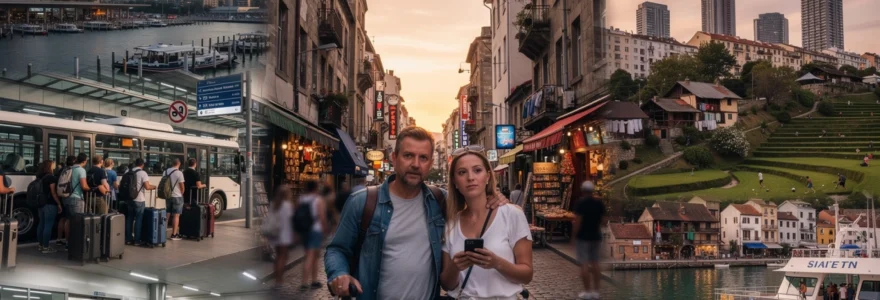
Travel decisions are increasingly influenced by split-second judgements formed within moments of arrival at a new destination. Research from Princeton University reveals that humans form impressions in as little as 30 to 40 milliseconds, yet these rapid assessments often prove fundamentally inaccurate when it comes to understanding the true character of a place. The phenomenon extends far beyond personal encounters, significantly impacting how travellers perceive entire cities, cultures, and tourism experiences based on limited initial exposure.
Modern tourism operates within a framework where first impressions carry disproportionate weight in shaping visitor satisfaction and destination reputation. However, the complexity of urban environments, cultural nuances, and seasonal variations means that initial perceptions frequently misrepresent the authentic essence of a location. Understanding these cognitive distortions becomes crucial for both travellers seeking meaningful experiences and destination managers working to present their locations effectively.
Cognitive biases shaping arrival perceptions at international destinations
The human brain’s tendency to make rapid judgements creates a complex web of cognitive biases that significantly influence how travellers perceive destinations during their initial encounters. These psychological mechanisms, while evolutionary useful for quick decision-making, often lead to systematically distorted impressions that persist throughout entire visits. Understanding these biases provides insight into why destination assessments can be so misleading and inconsistent among different visitors.
Cognitive research demonstrates that our brains actively seek patterns and shortcuts when processing new environmental information. This mental efficiency comes at the cost of accuracy, particularly in complex urban settings where multiple stimuli compete for attention. The challenge intensifies when cultural unfamiliarity compounds these natural processing limitations, creating layers of misinterpretation that can fundamentally alter destination experiences.
Primacy effect impact on venice airport to city centre journey assessments
The journey from Marco Polo Airport to Venice’s historic centre exemplifies how primacy effect influences destination perceptions. Travellers experiencing the modern, efficient water bus system often form overly positive impressions about Venice’s overall infrastructure capabilities. Conversely, those encountering crowded vaporettos during peak tourist seasons may develop lasting negative perceptions about the city’s transportation efficiency, despite the system’s general reliability and extensive coverage throughout the year.
These initial transport experiences create cognitive anchors that influence subsequent evaluations of Venice’s services, accommodation quality, and overall visitor management. Research indicates that positive first transport experiences correlate with higher overall destination satisfaction ratings, even when later experiences prove more challenging. The psychological weight given to these early encounters often overshadows more representative samples of the destination’s actual capabilities and character.
Confirmation bias influence during dubai marina First-Day hotel experiences
Dubai Marina’s hotel district demonstrates how confirmation bias shapes ongoing destination assessment after initial accommodation experiences. Visitors checking into luxury properties often unconsciously seek evidence supporting their initial impression of Dubai as an opulent, service-oriented destination. This selective attention reinforces positive perceptions while minimising contradictory evidence, such as construction noise, overcrowded beaches, or service inconsistencies in other areas of the city.
The psychological mechanism works equally powerfully in reverse, where disappointing initial hotel experiences trigger heightened sensitivity to negative aspects throughout the visit. Travellers may unconsciously focus on traffic congestion, commercial overtones, or cultural superficiality while overlooking genuine hospitality, cultural authenticity, or impressive architectural achievements. This bias persistence explains why identical destinations receive dramatically different reviews from visitors with contrasting first-day experiences.
Anchoring bias formation through santorini ferry terminal initial encounters
Santorini’s ferry terminals provide striking examples of anchoring bias in destination perception formation. The industrial appearance and functional design of these arrival points create initial reference points that significantly influence how visitors interpret subsequent experiences on the island. Travellers arriving via the main port often anchor their expectations around efficiency and practicality, potentially undervaluing the island’s aesthetic and cultural offerings when they exceed these modest initial impressions.
This anchoring effect proves particularly pronounced when comparing different arrival methods to the same destination. Visitors arriving by cruise ship or private yacht develop entirely different expectation frameworks, often anchored around luxury and exclusivity. These contrasting reference points lead to divergent destination assessments despite identical post-arrival experiences, highlighting how arrival context fundamentally shapes interpretive frameworks
When these anchors are formed within the first hour of arrival, they can colour everything from perceived value for money to judgments about local hospitality. Two travellers may sit in the same clifftop café at sunset, yet one is comparing the moment to the chaos of the port while the other compares it to the luxury of a cruise deck. The physical reality is identical, but the anchored expectations differ so sharply that their final reviews of Santorini as a destination can appear to describe two entirely different islands.
Availability heuristic distortion at bangkok suvarnabhumi immigration queues
Bangkok’s Suvarnabhumi Airport highlights how the availability heuristic can distort first impressions of a destination. Travellers who encounter an unusually long immigration queue or delayed baggage reclaim tend to recall these salient frustrations more vividly than the rest of their arrival experience. When later evaluating Thailand as a destination, these easily accessible memories can disproportionately influence perceptions of national efficiency, security procedures, or even broader views about public administration.
The problem is that such experiences are often statistical outliers rather than typical patterns. Average queue times may be reasonable across the year, yet a single peak-season bottleneck remains the mental reference point visitors recall when recounting their trip. Because our brains overweight what is most memorable rather than what is most representative, a few stressful hours at Suvarnabhumi can overshadow days of smooth transport connections, friendly service, and well-organised tourist infrastructure across Bangkok and beyond.
Infrastructure quality misconceptions through limited exposure windows
Initial contact with a city’s infrastructure usually occurs within a narrow geographic and temporal window: the first taxi ride, the first metro journey, the first walk from hotel to restaurant. Drawing broad conclusions about overall infrastructure quality from this tiny sample is like reviewing a book after reading only the first page. Yet this is precisely what many travellers do when labelling an entire destination as “chaotic”, “modern”, or “poorly connected” based on one or two early encounters.
These snap judgements are further reinforced by online reviews and social media posts created during or immediately after arrival, when impressions are still forming and information is incomplete. As a result, destination reputations can become anchored around gateway experiences that are not only unrepresentative but also highly sensitive to time of day, seasonality, and specific neighbourhood dynamics. Recognising this limitation helps us approach infrastructure assessments with greater caution and curiosity.
Transport network efficiency misjudgements in rome’s historic centre
Rome’s historic centre is a textbook example of how travellers misjudge transport network efficiency based on limited, context-specific experiences. Visitors who arrive, stay, and mostly move within the tight maze of cobbled streets around Piazza Navona or the Pantheon often conclude that “Rome has terrible public transport”. Their impressions are shaped by slow traffic, scarce taxi availability, and the understandable absence of metro lines in an archaeological zone dense with heritage assets.
However, this narrow sampling window overlooks the broader metropolitan network, where multiple metro lines, regional trains, and bus corridors serve millions of residents daily. The city’s decision to restrict heavy infrastructure in the historic core is less a sign of inefficiency and more a deliberate trade-off between preservation and mobility. Without venturing beyond the postcard districts—Trastevere, the Colosseum area, or the Vatican—visitors rarely see bus-priority lanes, commuter rail nodes, or newer interchanges such as Tiburtina that reveal a more complex and capable transport ecosystem.
Accommodation standards misrepresentation via edinburgh old town properties
Edinburgh’s Old Town illustrates how accommodation standards can be misrepresented by geography and building typology. Many visitors book into centuries-old tenement buildings or boutique guesthouses along the Royal Mile, where room sizes, elevator access, and soundproofing inevitably reflect historic fabric more than contemporary hotel design. A guest expecting sleek, international-standard layouts may conclude that “Edinburgh hotels are cramped and outdated” based solely on one atmospheric but space-constrained property.
Yet this assessment disregards modern hotels in the New Town, Leith waterfront, or outlying business districts, where room dimensions, amenities, and accessibility features align with global benchmarks. The charm of staying inside a UNESCO-listed medieval street grid comes with structural constraints that cannot easily be engineered away without compromising authenticity. Understanding this trade-off helps travellers interpret their first impression of local accommodation standards as a design choice rather than a city-wide quality issue.
Digital connectivity assumptions based on tokyo shibuya district sampling
Tokyo’s Shibuya district offers another instructive case: a hyper-connected urban landscape where free Wi‑Fi, digital signboards, and ubiquitous 5G coverage create an impression of flawless digital connectivity across the entire metropolis. A traveller who spends most of their time between Shibuya Crossing, Harajuku, and Omotesandō may reasonably assume that “Tokyo has perfect internet access everywhere”. This assumption can then clash with reality when they venture into older residential neighbourhoods or suburban rail towns where public Wi‑Fi is sparse and mobile coverage inside certain buildings fluctuates.
Conversely, a visitor whose first night is spent in a traditional ryokan with limited sockets and weak Wi‑Fi might label Japan’s connectivity as “surprisingly basic”, overlooking the fact that their accommodation deliberately prioritises analogue calm over digital saturation. In both scenarios, the sample is too narrow to support robust conclusions, yet these early experiences often inform destination rankings on “best cities for digital nomads” or “most connected capitals”. The lesson is clear: one district, no matter how iconic, rarely represents an entire city’s digital landscape.
Public facilities assessment errors in barcelona’s las ramblas vicinity
Barcelona’s Las Ramblas corridor vividly demonstrates how public facilities can be misjudged when visitors confine their movements to a single, heavily touristed artery. Toilets, seating, green space, and waste management infrastructure in this zone operate under exceptional pressure, often serving far more people per square metre than other parts of the city. During peak periods, overflowing bins or queues for public restrooms can prompt sweeping declarations that “Barcelona’s public facilities are inadequate”.
Step a few hundred metres into the Eixample grid, however, and the picture changes dramatically: broader pavements, better-distributed green spaces, and more evenly utilised amenities tell a different story about urban management. Because Las Ramblas functions as both a symbolic gateway and a tourist magnet, its atypical conditions become the reference point for many first-time visitors. Recognising this tourist density effect helps explain why first impressions of public realm quality may diverge so sharply from residents’ lived realities.
Seasonal variation impact on destination character perception
Seasonality adds another layer of distortion to first impressions of a destination. A city experienced during a foggy November drizzle can feel fundamentally different from the same streets under July sunshine, even though nothing structural has changed. Yet travellers often universalise these time-bound conditions, describing a place as “grey”, “chaotic”, “empty”, or “overrun” based on a single seasonal snapshot.
In many European destinations, for instance, shoulder and off-season months bring reduced opening hours, renovation works, and quieter streets that can be misinterpreted as economic decline or lack of vibrancy. Conversely, peak summer crowds may create an impression of perpetual congestion and overtourism that residents do not recognise outside a narrow high-season window. Climate change is intensifying this effect, with heatwaves, storm events, and wildfire smoke further skewing how “normal” conditions are perceived by short-stay visitors. For travellers seeking more accurate destination understanding, deliberately comparing information across seasons—through local blogs, webcams, or resident testimonials—can counterbalance the bias of a single visit.
Cultural authenticity masking through tourist-centric geographic zones
Many global destinations now contain clearly defined tourist-centric zones where experiences are curated, prices are adjusted, and cultural expressions are selectively amplified or toned down. These areas function as comfortable entry points but can also act as filters, masking the broader cultural reality of the destination. When visitors rarely step beyond these bubbles, their impression of “what the place is like” often reflects the logic of tourism economics more than the rhythms of local life.
This dynamic creates a subtle authenticity paradox. On one hand, travellers say they seek “real” cultural experiences; on the other, time constraints and convenience keep them within the very districts most optimised for visitors. Recognising the difference between tourist staging and everyday life is essential if we want to move from consumption of culture to genuine engagement with it. The following examples show how this masking plays out in specific neighbourhoods worldwide.
Commercialised heritage sites distorting prague castle district experiences
The Prague Castle district offers one of Central Europe’s most dramatic urban panoramas, yet it also illustrates how commercialisation can distort perceptions of cultural authenticity. Souvenir shops, currency exchange kiosks, and themed restaurants cluster along key visitor routes, sometimes overshadowing quieter residential courtyards, monastic gardens, and local community spaces only a short detour away. For travellers who follow the standard linear route from Charles Bridge to the Castle and back, Prague can appear as a continuous sequence of staged vistas and transactional encounters.
This impression is misleading not because the heritage is inauthentic—the castle complex and surrounding streets are genuinely historic—but because the use of space has been reoriented toward tourist needs. Prices, menus, and even street performances adapt to visitor expectations, creating a version of Prague that is visually accurate yet culturally filtered. Stepping into less-trafficked side streets, visiting during early morning hours, or exploring non-castle neighbourhoods such as Žižkov and Holešovice can quickly reveal a parallel city with different rhythms, demographics, and cultural conversations.
Gentrified neighbourhoods concealing istanbul’s beyoğlu authentic character
Istanbul’s Beyoğlu district encapsulates the complexities of gentrification and its impact on cultural perception. Once known for its diverse, bohemian character and layered communities, parts of the area have seen rapid transformation into design hotels, rooftop cocktail bars, and branded boutiques. First-time visitors who confine their exploration to a few famous streets around İstiklal Avenue may come away with the impression that Beyoğlu is primarily a nightlife and retail hub catering to international tastes.
Yet just a few blocks away, traditional meyhanes, family-run groceries, and long-established cultural institutions continue to serve long-term residents. Rising rents and redevelopment pressures have undoubtedly changed the social fabric, but they have not erased it. The misleading aspect of first impressions here lies in how redevelopment clusters along the most visible axes, causing travellers to overestimate the extent of transformation. Seeking out side-street tea houses, local music venues, or neighbourhood markets provides a more balanced sense of Beyoğlu’s ongoing negotiation between old and new.
Tourist bubble phenomenon in marrakech’s medina quarter perceptions
Marrakech’s medina is often marketed as a plunge into unfiltered Moroccan culture, yet for many visitors the experience unfolds within a well-defined tourist bubble. Riads restored for international guests, English-language menus, and guided shopping routes through select souks can create an impression of organic immersion while keeping interactions safely within a pre-curated circuit. The sensory intensity—colours, sounds, scents—further convinces travellers that they are seeing “the real Morocco”, even if most exchanges are commercial and transactional.
This does not mean the medina is inauthentic; rather, the version that most visitors encounter is heavily shaped by tourism intermediaries. Daily routines of residents, from school runs to mosque attendance and neighbourhood errands, often unfold just outside view or in time slots when tourists are elsewhere. For a fuller understanding of Marrakech, spending time in less touristed districts such as Gueliz or neighbourhood markets beyond the main squares can reveal social realities that the medina bubble tends to obscure.
Cultural performance staging effects at ubud’s rice terrace viewpoints
Ubud’s rice terrace viewpoints in Bali offer another layer of complexity in assessing cultural authenticity. Swing installations, photo platforms, and ticketed viewpoints have proliferated in recent years, transforming formerly agricultural landscapes into hybrid spaces where farming, performance, and social media content creation coexist. Visitors arriving at Tegallalang or similar terraces may thus conclude that Balinese rural life primarily revolves around catering to Instagram-driven tourism.
In reality, these staged elements represent just one facet of a broader agrarian and spiritual landscape. Many rice fields nearby remain primarily productive, governed by traditional subak irrigation systems and temple rituals that predate tourism by centuries. The challenge for travellers is distinguishing between cultural practices adapted for spectators and those that continue independent of visitor presence. Joining a community-led walk, visiting less commercialised terraces, or engaging with local guides who explain the agricultural calendar can help recalibrate first impressions from “rural theme park” to “living cultural system under pressure”.
Economic reality distortion through strategic marketing exposure
Destination marketing campaigns play a powerful role in shaping the expectations that frame first impressions. By design, they emphasise aspirational imagery—rooftop pools, designer boutiques, curated street-food scenes—while downplaying everyday economic realities such as commute times, housing costs, or income disparities. When visitors arrive, they often interpret what they see through this pre-loaded lens, leading to skewed perceptions of local prosperity or hardship.
For example, a city promoted primarily through luxury hotel and fine-dining content may be perceived as uniformly affluent, even if many residents struggle with rising living costs and precarious employment in the tourism sector. Conversely, destinations known mainly through “budget travel” narratives can be incorrectly labelled as universally inexpensive, igniting frustration when local businesses charge sustainable prices aligned with their own cost structures. This economic mirage affects not only how travellers spend but also how they morally judge destinations—praising some as “good value” and criticising others as “greedy” or “exploited” without understanding underlying wage levels, seasonality challenges, or infrastructure maintenance costs.
To counter these distortions, you can diversify your pre-trip information sources beyond glossy marketing materials and influencer posts. Local news outlets, municipal planning documents, or interviews with residents and small business owners offer a more grounded view of a destination’s economic landscape. For destination managers, transparent storytelling about seasonality, living wages, and community benefit schemes can help align visitor expectations with reality, reducing the shock that often fuels negative first impressions and unfair online reviews.
Long-term resident perspectives versus short-stay tourist observations
The contrast between long-term resident perspectives and short-stay tourist observations may be the most revealing lens through which to understand misleading first impressions of a destination. Residents experience cities across seasons, political cycles, and economic shifts; tourists typically compress their engagement into a handful of days or weeks, often concentrated in the most photogenic or entertainment-oriented districts. It is akin to judging a person’s character based on a single evening at a party versus years of daily interaction.
Residents often describe their home cities with nuances that rarely appear in travel reviews: the quiet charm of weekday mornings, the relief of cooler months after peak heatwaves, the significance of local festivals that never make it into international marketing campaigns. They may also highlight systemic issues—air quality, housing inequality, public service strain—that short-term visitors barely register. While this does not invalidate tourist experiences, it does remind us that they are partial and position-dependent. By actively seeking resident voices—through local podcasts, community social media groups, or guided tours run by citizen organisations—you can triangulate your initial impressions against a richer, more longitudinal understanding of place.
Ultimately, recognising how and why first impressions of a destination can be misleading is less about dismissing our gut reactions and more about holding them lightly. When we acknowledge the influence of cognitive biases, limited exposure windows, seasonal variability, tourist bubbles, and marketing narratives, we give ourselves permission to revise our views as new information emerges. In doing so, we move from being passive consumers of places to more reflective, responsible participants in the shared spaces we briefly call our own.