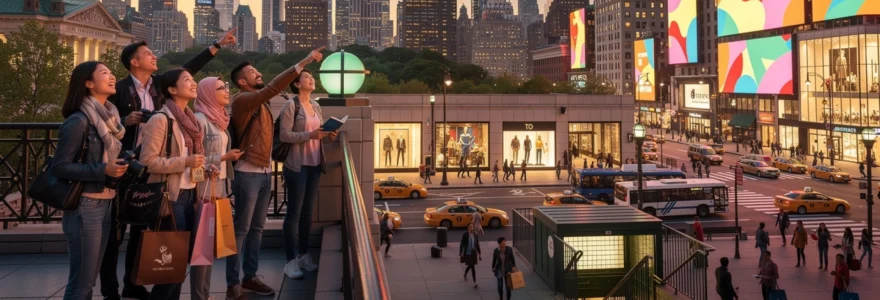
Manhattan stands as one of the world’s most magnetic destinations, drawing millions of international visitors annually despite its relatively compact 22.8 square miles. This narrow island borough of New York City has consistently maintained its position as a premier global tourism hub, captivating travellers with an unprecedented concentration of cultural institutions, architectural marvels, and urban experiences. The enduring appeal lies not merely in individual attractions but in the extraordinary density of world-class offerings packed into a highly walkable urban landscape. From the moment international visitors step onto Manhattan’s streets, they encounter a sensory experience unmatched by virtually any other destination—a relentless energy powered by cultural diversity, architectural ambition, and economic vitality that has shaped global urban culture for over a century.
Manhattan’s concentration of UNESCO-Recognised cultural institutions and World-Class museums
The island’s museum landscape represents arguably the finest concentration of cultural institutions anywhere on Earth. Within a few square miles along Fifth Avenue and the surrounding areas, you’ll find collections that span human civilisation’s entire artistic and scientific achievements. This museum density creates what many call “cultural overload”—the pleasant challenge of choosing among too many exceptional options. International tourists consistently cite Manhattan’s museums as primary motivations for their visits, with many planning multi-day itineraries exclusively around these institutions.
The metropolitan museum of art’s 5,000-year art collection spanning global civilisations
The Metropolitan Museum of Art, universally known as “The Met,” houses over two million works spanning 5,000 years of human creativity. As one of the world’s largest and most prestigious art museums, The Met presents collections from ancient Egyptian artefacts to contemporary installations, offering international visitors an unparalleled journey through global artistic heritage. The museum’s encyclopaedic approach means you can explore Greek and Roman sculpture, Islamic calligraphy, Renaissance paintings, and African ceremonial masks all within a single visit. The sheer scope becomes overwhelming—even dedicated art enthusiasts struggle to absorb more than a fraction during typical visits. The Met’s three locations (the main building on Fifth Avenue, The Met Cloisters in northern Manhattan, and The Met Breuer) collectively attract approximately 6.5 million visitors annually, making it consistently one of the world’s most visited museums.
Moma’s revolutionary modern and contemporary art curation drawing international art enthusiasts
The Museum of Modern Art revolutionised how institutions present twentieth and twenty-first century art. MoMA’s collection includes seminal works that fundamentally altered art history—Van Gogh’s “The Starry Night,” Picasso’s “Les Demoiselles d’Avignon,” and Warhol’s “Campbell’s Soup Cans” among countless others. International visitors frequently describe experiencing these iconic works in person as transformative moments, quite different from encountering reproductions in books or online. MoMA’s curatorial philosophy emphasises accessibility without sacrificing intellectual rigour, making challenging contemporary art approachable for diverse audiences. The museum’s 2019 expansion added 40,000 square feet of gallery space, allowing more ambitious exhibitions and better presentation of its 200,000-work collection. For many international art tourists, MoMA represents an essential pilgrimage site where modern art’s evolution becomes tangible.
American museum of natural history’s 34-Million-Specimen research collection
Few museums blend entertainment and scientific education as effectively as the American Museum of Natural History. Its 34 million specimens and artefacts span astronomy, earth sciences, anthropology, and biology, creating an institution that appeals equally to families and serious researchers. The museum’s dinosaur halls contain some of the world’s most complete fossil specimens, while the Hayden Planetarium offers cutting-edge astronomical visualisations. International visitors particularly appreciate the museum’s narrative approach, which contextualises scientific discoveries within broader human stories. The Blue Whale suspended in the Hall of Ocean Life and the Star of India sapphire in the gem collection have become iconic symbols recognisable globally. Annual attendance exceeds five million visitors, testament to the museum’s ability to make natural history compelling across cultural boundaries.
The guggenheim’s frank lloyd wright architecture and rotating exhibition programme
The Solomon R. Guggenheim Museum offers a dual attraction: exceptional modern art within one of the twentieth century’s architectural masterpieces. Frank Lloyd Wright’s spiralling design,
with its continuous ramp gallery, transforms the simple act of viewing art into a spatial experience. Visitors ascend the spiral while observing works by Kandinsky, Mondrian, and other modern masters, allowing for an uninterrupted narrative of twentieth-century art. For many international travellers, the Guggenheim itself is a destination as significant as the collections it houses, often appearing on architecture and design itineraries as a must-see site. Its rotating exhibition programme ensures that even repeat visitors encounter new curatorial perspectives, from avant-garde retrospectives to global contemporary surveys. In this way, the Guggenheim enhances Manhattan tourism by merging cultural depth with photogenic design that feels instantly recognisable on social media feeds.
Iconic architectural landmarks creating manhattan’s distinctive skyline photography appeal
Beyond museums, Manhattan tourism thrives on the island’s instantly recognisable skyline. For many international visitors, their first impression of New York City comes from films, TV series, and social media images dominated by Manhattan’s vertical architecture. When travellers finally arrive, there is a powerful sense of déjà vu—streets and skyscrapers feel familiar even if it is their first physical visit. This visual recognition fuels a strong desire to capture personal photographs and videos from different vantage points, turning the skyline itself into a central attraction. The density of iconic buildings within a compact radius makes it possible to experience multiple observation decks and landmark facades in a single day, reinforcing Manhattan’s reputation as a photographer’s paradise.
Empire state building’s art deco design and 86th-floor observatory experience
The Empire State Building remains one of the most enduring symbols of Manhattan tourism. Completed in 1931, its Art Deco design and tapered silhouette have graced countless postcards and film scenes, from “King Kong” to contemporary blockbusters. International visitors are drawn not only to the building’s history but also to the immersive observatory experience on the 86th and 102nd floors. The open-air 86th-floor deck offers 360-degree views of Manhattan’s grid, Central Park, and surrounding boroughs, making it a prime spot for skyline photography. For many travellers, reaching the top of the Empire State Building is a bucket-list achievement—an urban equivalent of summiting a famous mountain.
The building’s interior exhibits and multimedia displays deepen this experience by tracing the skyscraper’s construction, sustainability upgrades, and cultural impact. Visitors can see historic photographs, architectural blueprints, and interactive models that bring the engineering story to life. This combination of panoramic views and interpretive content turns the visit into more than just a photo opportunity; it becomes a curated journey through twentieth-century urban development. Timed entry systems and extended opening hours also make it easier for tourists to plan sunrise or nighttime visits, tailoring their experience to the lighting and atmosphere they most want for their photos.
One world trade center’s symbolic reconstruction and sky pod observation deck
Standing on the site of the former World Trade Center, One World Trade Center holds profound symbolic weight for visitors from around the world. Completed in 2014, it represents both memorial and renewal, integrating advanced safety and sustainability features while honouring the legacy of 9/11. International tourists often describe their visit as emotionally complex, blending curiosity, respect, and reflection. The tower’s design, with its prismatic glass façade, catches and refracts light throughout the day, creating ever-changing photographic compositions. Its position at the southern end of Manhattan provides sweeping views of New York Harbor, the Statue of Liberty, and the Brooklyn and Manhattan Bridges.
The One World Observatory, reached via high-speed Sky Pod elevators, has become a major highlight of Manhattan tourism. These elevators feature immersive time-lapse visuals that show the development of New York’s skyline from the 1500s to the present in just 47 seconds, effectively compressing centuries of urban history into a single ride. Once at the top, interactive displays help visitors identify landmarks and understand the city’s geography—particularly useful for first-time international travellers orienting themselves. For many, this vantage point offers a powerful analogy for New York itself: a city constantly rebuilding, reinventing, and looking outward. It is not just about the height; it is about what that view represents in terms of resilience and global interconnectedness.
Chrysler building’s stainless steel crown and 1930s architectural heritage
Although it no longer offers a public observation deck, the Chrysler Building remains one of Manhattan’s most photographed structures. Its stainless steel crown, with radiating arches and triangular windows, epitomises the glamour of 1930s Art Deco architecture. International visitors frequently seek out vantage points where they can capture the building’s spire against the sky, often from nearby rooftops, midtown streets, or the viewing platforms of neighbouring towers. The building’s decorative gargoyles—stylised after Chrysler car hood ornaments—provide a compelling example of how corporate identity and architectural design intertwined during the skyscraper boom. For architectural enthusiasts, the Chrysler Building is like a sculptural object on a monumental scale, demonstrating how design details can transform a functional office tower into a cultural icon.
Even without interior access, travellers appreciate the way the Chrysler Building anchors the skyline, particularly at dusk when its crown illuminates. Walking tours and architectural guides frequently highlight it as a high point in any midtown itinerary, explaining its brief tenure as the world’s tallest building before being surpassed by the Empire State Building. International students of architecture often compare it to European cathedrals, noting that both structures reach upward to make symbolic statements about their era’s ambitions. In this sense, the Chrysler Building continues to shape Manhattan tourism through its exterior presence alone, reminding us that not every landmark experience requires going inside.
Rockefeller center’s Multi-Building complex and top of the rock viewing platform
Rockefeller Center offers a different kind of architectural experience: a carefully planned complex of Art Deco towers, plazas, and public art that functions as a city within a city. For international visitors, it is a place where business, media, and entertainment visibly intersect, from the studios of NBC to the seasonal ice rink and famous Christmas tree. The complex’s integrated design encourages exploration at ground level, with relief sculptures, murals, and sculpture gardens offering plenty of visual interest. As you walk through, you can feel how the space was conceived to manage crowds efficiently while still creating intimate corners and open vistas. This makes Rockefeller Center particularly attractive during peak travel seasons, when tourists seek both iconic sights and manageable navigation.
The Top of the Rock observation deck, located at 30 Rockefeller Plaza, is one of Manhattan’s most strategic viewing points. Unlike other observatories, it offers a direct, unobstructed view of the Empire State Building and a broad sweep of Central Park, making it ideal for visitors focused on photography. Glass barriers and multi-level platforms help reduce congestion and allow photographers to capture different angles and compositions. Many travel experts recommend timing a visit for late afternoon, so you can witness the transition from daylight to the city’s illuminated nighttime skyline in a single session. For international travellers balancing tight schedules, this dual-view opportunity adds significant value to their Manhattan tourism experience.
Central manhattan’s High-Density retail corridor and luxury shopping district magnetism
Manhattan tourism is not driven solely by culture and skyline views; shopping plays a major role in attracting international visitors. The central borough functions as a global retail laboratory where brands launch flagship stores, test new concepts, and create immersive environments. For travellers from Europe, Asia, and Latin America, Manhattan often feels like a compressed version of multiple global high streets layered on top of one another. Luxury boutiques sit next to mass-market chains, while heritage department stores coexist with direct-to-consumer pop-ups. This dense retail ecosystem allows visitors to compare styles, prices, and experiences within a walkable radius, turning shopping into a form of urban exploration rather than a separate, isolated activity.
Exchange rates and tax policies also influence how international travellers experience Manhattan shopping. Visitors from regions where luxury goods carry higher import duties may find designer items comparatively more affordable in New York, especially during seasonal sales. At the same time, the sheer variety of brands—many unavailable in their home countries—creates a sense of discovery. Shopping becomes a way to bring a tangible piece of Manhattan back home, whether in the form of a limited-edition sneaker, a department-store exclusive, or a customised product. As a result, retail corridors are not just commercial zones; they function as tourism infrastructure that supports longer stays and repeat visits.
Fifth avenue’s flagship store concentration from bergdorf goodman to saks fifth avenue
Fifth Avenue between 49th and 60th Streets is arguably one of the most famous shopping streets in the world. This stretch concentrates luxury flagships, heritage department stores, and high-end jewellery boutiques in a tight corridor that international visitors can easily traverse on foot. Flagship stores for brands like Louis Vuitton, Gucci, and Tiffany & Co. invest heavily in visual merchandising and experiential design, turning window displays into seasonal attractions. Around the holidays, these displays become tourist destinations in their own right, drawing visitors who may not even intend to purchase anything. The avenue’s proximity to Central Park, St. Patrick’s Cathedral, and Rockefeller Center further enhances its appeal, allowing travellers to combine sightseeing with retail exploration.
Department stores such as Bergdorf Goodman and Saks Fifth Avenue add another layer to the Fifth Avenue experience. These multi-level spaces function almost like curated fashion museums, showcasing designer collections, beauty halls, and luxury home goods under one roof. International visitors often appreciate the personal shopping services, multilingual staff, and tax refund guidance available in these locations. For some, a visit to Fifth Avenue is as much about aspirational viewing as it is about actual purchasing, similar to touring a gallery of contemporary design. This blend of commerce and spectacle reinforces Manhattan’s image as a city where fashion, architecture, and tourism intersect seamlessly.
Times square’s commercial advertising ecosystem and retail theatre experience
Times Square is frequently described as the “crossroads of the world,” and for international tourists, it often serves as their first nocturnal encounter with Manhattan. The district’s towering LED billboards, animated advertisements, and constantly shifting visuals create an environment that feels closer to a live performance than a traditional shopping street. Brands pay premium rates to display their messaging here, not just to reach local audiences but to appear in the background of millions of travel photos and videos. This dynamic advertising ecosystem turns every visitor into a potential content creator, amplifying Manhattan’s visibility across global social networks. Even if you never step into a store, the district’s sensory intensity leaves a strong impression.
Retail in Times Square capitalises on this theatrical atmosphere. Flagship stores for global brands often incorporate interactive installations, themed zones, and limited-edition merchandise designed specifically for the location. Visiting these stores can feel more like entering an amusement park than a conventional shop, particularly for younger travellers. Street performers, costumed characters, and pop-up activations further blur the line between commerce and entertainment. For many international visitors, Times Square answers an implicit question: what does it feel like to stand inside a global media hub? The experience may be overwhelming, but that intensity is precisely what many travellers come to Manhattan to witness.
Soho’s Cast-Iron architecture district and independent boutique shopping culture
In contrast to the vertical spectacle of midtown, SoHo offers a horizontally scaled, design-focused retail environment. Its cobblestone streets and cast-iron facades create a visual continuity that feels more like a historic European quarter than a typical American shopping district. Many international visitors are drawn here for the atmosphere as much as for the merchandise; the neighbourhood’s mix of galleries, cafés, and boutiques encourages slower, more exploratory walking. Global brands often select SoHo for concept stores and lifestyle-driven spaces, while smaller independent labels showcase emerging designers and niche aesthetics. This balance gives travellers access to both familiar names and new discoveries in a single neighbourhood.
For design-conscious tourists, SoHo functions like an open-air showroom for fashion, interiors, and visual culture. Large loft-style interiors allow for creative store layouts, art installations, and cross-brand collaborations that might not be feasible in more traditional retail settings. Street-level window displays here tend to be more experimental, reflecting the area’s roots in the 1960s and 1970s art scene. Many visitors combine shopping with photography, capturing the distinctive fire escapes and cornices that define the district’s look. In this way, SoHo demonstrates how Manhattan tourism can merge heritage architecture with contemporary commerce, offering an experience that feels both historic and current.
Broadway theatre district’s global entertainment industry dominance
For many international visitors, a trip to Manhattan is incomplete without experiencing a Broadway show. The Theatre District around Times Square has achieved a kind of brand recognition on par with Hollywood, symbolising the highest level of live stage production. Broadway’s influence extends far beyond New York; touring versions of its shows reach audiences worldwide, creating pent-up demand among travellers to see the original productions in their home theatres. The density of venues—combined with the sheer variety of genres from musicals to serious drama—means that visitors can usually find a performance that matches their interests and language comfort level. In 2023–2024, Broadway attendance rebounded strongly from the pandemic, drawing over 12 million patrons and generating more than $1.5 billion in ticket sales, underscoring its central role in Manhattan tourism.
What sets Broadway apart is the concentration of creative talent and technical expertise packed into a few city blocks. Productions typically feature top-tier performers, choreographers, set designers, and musicians, all supported by sophisticated stagecraft and acoustics. For international travellers used to film or streaming entertainment, the immediacy of live performance—where every show is slightly different—can feel both novel and deeply engaging. Theatres themselves often carry historical significance, with many dating back to the early twentieth century and retaining ornate interiors. This combination of heritage spaces and cutting-edge storytelling reinforces Broadway’s status as a living cultural institution rather than a static tourist attraction.
West 42nd to 53rd street theatre concentration and tony Award-Winning productions
The core of the Broadway Theatre District stretches roughly from West 42nd to 53rd Street, between Sixth and Ninth Avenues. Within this relatively small area, more than 40 professional theatres host productions that frequently receive Tony Awards—the highest honour in American theatre. For international visitors, the proximity of so many venues makes the district exceptionally navigable; you can walk from one marquee to another in minutes, taking in show posters and performance schedules. This high concentration also means that the streets remain lively before and after curtain times, with nearby restaurants and bars catering specifically to theatre-goers. The result is an urban ecosystem where entertainment, dining, and nightlife reinforce one another.
Tony Award-winning productions often become key drivers of tourism, as travellers plan trips around specific shows or performers. Winning a Tony can extend a production’s run by years, allowing international visitors more time to see it. Theatre fans from Europe, Asia, and Latin America sometimes schedule entire itineraries to coincide with openings, closing performances, or cast changes. In this way, Broadway behaves similarly to a major sporting league, where marquee events draw global spectators. The district’s compact footprint and pedestrian-friendly design ensure that even first-time visitors quickly understand the layout, reducing logistical friction and enhancing their overall Manhattan tourism experience.
Hamilton, the lion king, and wicked’s Multi-Year run track records
Long-running productions such as “The Lion King,” “Wicked,” and “Hamilton” have become cultural landmarks in their own right. “The Lion King,” which opened in 1997, has attracted over 110 million viewers worldwide, many of whom dream of seeing it on Broadway where it originated. “Wicked,” since 2003, has built a dedicated global fan base that treats a Broadway viewing as a pilgrimage. “Hamilton,” which premiered in 2015, revolutionised musical theatre by blending hip-hop with American history, drawing new demographics to Broadway audiences, including younger international travellers. These shows operate like anchor tenants in a shopping mall, providing stability and predictable demand that supports surrounding businesses.
The multi-year runs of these productions also make trip planning easier for international visitors. Unlike limited-run plays that may close within months, marquee musicals typically sell tickets far in advance and maintain consistent schedules. This reliability allows travellers to coordinate flights, hotels, and other activities around confirmed performance dates. It also increases the likelihood that word-of-mouth recommendations from friends, family, or social media will still be relevant when they finally visit. For Manhattan tourism, these long-running hits function as cultural touchstones: shared experiences that connect visitors from different countries through a common narrative and soundtrack.
TKTS booth discount ticketing system accessibility for international tourists
While Broadway is renowned for its quality, ticket prices can be a barrier, particularly for budget-conscious international visitors. The TKTS discount booths, operated by the non-profit Theatre Development Fund, help address this challenge by offering same-day tickets to many shows at significantly reduced prices. The most famous booth sits in the centre of Times Square, beneath the red steps that have themselves become a popular meeting and photo spot. For travellers willing to be flexible about which show they see, TKTS provides an accessible entry point to the Broadway experience. Queuing here can even feel like a ritual, as visitors discuss options, read reviews on their phones, and watch the digital boards update in real time.
Beyond discounts, TKTS booths offer informational support that is especially valuable to international tourists. Staff members can explain show genres, running times, and age suitability, helping visitors make informed decisions even if they are unfamiliar with the titles. This guidance reduces the risk of disappointment and encourages experimentation with productions they might not have otherwise considered. In effect, TKTS acts as both a pricing mechanism and a concierge service, democratising access to Broadway while sustaining audience diversity. For Manhattan tourism, this system reinforces the idea that high-calibre cultural experiences need not be reserved only for those with premium budgets.
Manhattan’s Multi-Ethnic neighbourhood diversity and authentic cultural immersion opportunities
One of Manhattan’s defining strengths as a tourism destination is its mosaic of multi-ethnic neighbourhoods, each offering distinct culinary, linguistic, and cultural atmospheres. Unlike theme parks or staged cultural villages, these areas are living communities where long-time residents, recent immigrants, and visitors share the same streets and services. Travellers can move from the historic Italian-American influences of parts of Little Italy to the vibrant Chinese signage and markets of Chinatown in a matter of minutes. Farther north, Harlem’s rich African-American heritage and dynamic contemporary arts scene reveal another facet of the city’s identity. This close proximity of different cultures allows international visitors to experience a kind of global sampling without ever leaving the borough.
Why does this matter for Manhattan tourism? Authentic cultural immersion encourages longer stays and repeat visits, as travellers realise that they cannot fully explore the city in a single trip. Food plays a central role here: visitors often follow recommendations to specific dim sum halls, soul food restaurants, taquerias, or halal eateries, using meals as gateways into local histories. Street festivals and parades—from Lunar New Year celebrations to Dominican Day and West Indian cultural events—offer additional entry points into community traditions. Compared to destinations where tourism is heavily segregated from everyday life, Manhattan invites visitors to observe and, respectfully, participate in real neighbourhood rhythms. This immersion helps international travellers feel less like spectators and more like temporary residents.
Transportation infrastructure facilitating manhattan’s international accessibility and internal mobility
No matter how compelling a destination’s attractions may be, tourism depends on practical accessibility. Manhattan’s transportation infrastructure plays a critical role in sustaining its popularity among international visitors by making both arrival and internal movement relatively straightforward. Three major airports—John F. Kennedy International (JFK), Newark Liberty International, and LaGuardia—serve the region, with JFK and Newark handling the bulk of long-haul international flights. From there, a combination of rail links, buses, taxis, and rideshare services connect travellers directly to the island. Once on Manhattan, the extensive subway and bus networks, along with commuter rail hubs, allow visitors to navigate efficiently without renting a car. In effect, transportation functions like the city’s circulatory system, ensuring that tourists can reach museums, hotels, theatres, and neighbourhoods with minimal friction.
For many international travellers, especially those accustomed to car-centric cities, Manhattan’s transit options feel liberating. You can land at an airport in the morning, check into a midtown hotel by midday, and be at a museum or Broadway show in the afternoon without ever driving. This seamless movement reduces logistical stress, making it easier for visitors to focus on cultural experiences rather than navigation challenges. It also supports sustainable tourism practices by encouraging the use of public transportation instead of private vehicles. As cities worldwide grapple with congestion and emissions, Manhattan’s dense, transit-oriented urban form offers a compelling model for how tourism and mobility can coexist.
JFK and newark airport direct rail connections to midtown manhattan terminals
For international arrivals, the direct rail connections from JFK and Newark airports to Manhattan are particularly significant. From JFK, the AirTrain links terminals to the Long Island Rail Road (LIRR) and subway lines at Jamaica and Howard Beach stations. Travellers can then reach Penn Station or other Manhattan stops in under an hour, often faster than by car during peak traffic. Newark Liberty International offers a similar system: the AirTrain connects terminals to the Northeast Corridor rail line, which carries passengers directly to Penn Station. These rail links provide clear, straightforward routes for visitors who may be unfamiliar with New York’s geography but comfortable with train travel.
For first-time international visitors, using these rail options can be both cost-effective and reassuring. Stations and trains include multilingual signage, and many airport information desks provide printed guides outlining the steps. Compared to taxis or private shuttles, rail services offer predictable travel times and avoid potential language misunderstandings about destinations or fares. As contactless payment and mobile ticketing become more widespread, purchasing and using tickets has also become simpler. The result is a smoother transition from long-haul flight to city exploration—an important factor in shaping visitors’ initial impressions of Manhattan tourism.
Metropolitan transportation authority’s 24-hour subway network covering 472 stations
Within the city, the Metropolitan Transportation Authority (MTA) operates one of the world’s largest rapid transit systems, with 472 subway stations and 24-hour service. For international visitors, the ability to move across Manhattan and into other boroughs at virtually any hour is a major advantage. Many tourists quickly learn that the subway is often the fastest way to travel crosstown or downtown, especially during rush hours when streets are congested. While the system can feel complex at first glance, tools like smartphone navigation apps, clear line maps, and in-car announcements significantly ease the learning curve. Once you grasp the basics, the city becomes far more accessible, opening up late-night dining, early-morning park visits, and spontaneous neighbourhood explorations.
Of course, using a big-city subway comes with considerations: crowded trains, occasional service changes, and the need for situational awareness. However, countless international travellers report that mastering the Manhattan subway becomes a memorable part of their trip—almost like learning a local custom. Tap-and-go payment with bank cards or digital wallets on OMNY-enabled turnstiles has simplified the process further, eliminating the need to understand complex fare media on arrival. Compared with cities where public transit winds down early, Manhattan’s 24-hour network supports a wider range of travel patterns and time zones. Jet-lagged travellers can still access key attractions, restaurants, and entertainment regardless of when they feel awake.
Penn station and grand central terminal’s Inter-City railway hub functionality
Finally, Manhattan’s role as a regional rail hub enhances its appeal as a base for broader travel within the northeastern United States. Penn Station, located beneath Madison Square Garden, serves Amtrak’s intercity routes along the Northeast Corridor, as well as commuter trains from New Jersey Transit and the Long Island Rail Road. This allows international visitors to take day trips or overnight excursions to cities like Washington, D.C., Philadelphia, and Boston without needing to fly or rent a car. Grand Central Terminal, on the east side of midtown, functions as the historic gateway for Metro-North Railroad services to the Hudson Valley, Connecticut, and beyond. Its iconic Beaux-Arts architecture, celestial ceiling, and bustling main concourse make it both a functional transit node and a tourist attraction.
For many travellers, these stations symbolise the broader connectivity that makes Manhattan tourism so compelling. The ability to combine a stay in New York City with quick rail access to other destinations amplifies the value of the trip. Grand Central and Penn Station also anchor surrounding neighbourhoods filled with hotels, restaurants, and shops, creating convenient bases for visitors who plan to use trains frequently. In this way, transportation infrastructure does more than move people; it shapes itineraries, extends travel options, and reinforces Manhattan’s status as a gateway city for international tourists exploring the United States.