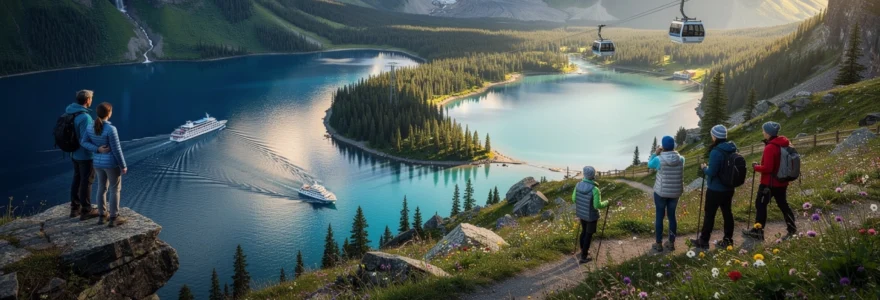
The traditional summer holiday paradigm is undergoing a dramatic transformation as travellers increasingly seek refuge from scorching temperatures and overcrowded destinations. Coolcations have emerged as the antidote to sweltering beach holidays, offering respite through naturally air-conditioned environments where temperatures rarely exceed 25°C even during peak summer months. This shift represents more than a fleeting trend; it reflects a fundamental change in how people approach leisure travel, prioritising comfort, authenticity, and sustainable tourism practices over conventional sun-seeking behaviour.
The appeal of cool-climate destinations extends beyond mere temperature considerations. These locations often provide unparalleled access to pristine natural environments, rich cultural heritage, and outdoor activities that become unbearable in hotter climates. From the ethereal beauty of Norwegian fjords to the majestic peaks of the Canadian Rockies, coolcation destinations offer transformative experiences that combine physical comfort with emotional rejuvenation.
Nordic fjord destinations: norway’s geirangerfjord and nærøyfjord temperature analysis
Norway’s fjord regions represent perhaps the most compelling coolcation destinations in Europe, where dramatic landscapes meet consistently comfortable temperatures throughout the summer months. The country’s unique geographical position creates a maritime climate that moderates temperatures even during the warmest periods, making it an ideal escape from continental Europe’s heat waves.
The Norwegian fjords benefit from a complex interplay of oceanic influences and topographical features that create localised cooling effects. Temperature inversions frequently occur in these deep valleys, where cool air becomes trapped between towering cliff faces, creating natural refrigeration systems that maintain pleasant conditions even when surrounding areas experience warmer weather.
Geirangerfjord microclimate patterns and July-August thermal conditions
Geirangerfjord experiences remarkably stable temperature patterns during peak summer months, with daily highs typically ranging between 18-22°C. The fjord’s orientation and depth create a unique microclimate where temperature fluctuations remain minimal throughout the day. Morning temperatures often start around 12-15°C, rising gradually to comfortable afternoon peaks before cooling naturally in the evening.
The presence of numerous waterfalls cascading from heights exceeding 600 metres contributes to localised cooling through evapotranspiration and mist formation. These natural features create pockets of cooler air that circulate throughout the fjord system, maintaining comfortable conditions for outdoor activities such as hiking, kayaking, and photography.
Nærøyfjord maritime weather systems and precipitation dynamics
As UNESCO’s narrowest fjord, Nærøyfjord demonstrates how geographical constraints can create beneficial cooling effects. The fjord’s width, measuring just 250 metres at its narrowest point, creates a wind tunnel effect that channels cool maritime air from the North Sea deep into the Norwegian interior. This natural ventilation system ensures consistent air circulation and prevents heat accumulation.
Precipitation patterns in Nærøyfjord contribute significantly to temperature moderation, with frequent light showers and mist providing natural cooling throughout summer months. The high humidity levels, typically ranging between 70-85%, create a cooling sensation similar to natural air conditioning, making outdoor exploration comfortable even during extended periods of activity.
Lofoten islands arctic circle positioning and midnight sun phenomenon
The Lofoten Islands’ position above the Arctic Circle creates unique thermal conditions that make them exceptionally appealing for coolcation enthusiasts. Despite their northern latitude, the islands maintain surprisingly moderate temperatures due to the warming influence of the Gulf Stream, with summer highs rarely exceeding 20°C.
The midnight sun phenomenon, occurring from late May through mid-July, allows for extended outdoor activities during the coolest parts of the 24-hour cycle. Temperatures during the « midnight » hours often drop to comfortable 10-15°C ranges, creating ideal conditions for hiking, fishing, and wildlife observation when traditional destinations become uncomfortably warm.
Bergen gateway climate data and coastal temperature moderation
Bergen serves as the primary gateway to Norway’s fjord region, demonstrating the moderating influence of coastal positioning on summer temperatures. The city’s location between seven mountains and its proximity to the North Sea create a consistently cool
marine influence, with average July and August highs hovering around 19-21°C and nights comfortably settling between 12-14°C. Cloud cover and frequent light rainfall act like a natural sunshade, preventing heat spikes and keeping pavement and building surfaces cool. For travellers, this means you can explore the historic Bryggen Wharf, ride the Fløibanen funicular, or join fjord cruises without battling oppressive heat or intense UV exposure. Pack a light waterproof jacket rather than beachwear, and you will be well prepared for Bergen’s fresh, maritime summer climate.
Alpine retreats: swiss jungfrau region and austrian tyrol elevation benefits
High-altitude mountain regions offer some of the most reliable cool-weather escapes in summer, thanks to the simple physics of lapse rate: air temperatures typically drop by about 6.5°C for every 1000 metres of elevation gained. The Swiss Jungfrau region and the Austrian Tyrol both capitalise on this effect, providing crisp, clean air and stable daytime temperatures ideal for hiking, cycling, and scenic rail journeys. Compared with lowland European cities that can exceed 35°C during heatwaves, these alpine destinations often stay in the 18-24°C range at valley level, with even cooler conditions higher up.
Beyond pure temperature relief, alpine climates also offer lower humidity and strong diurnal temperature ranges, giving you pleasantly warm days and cool, refreshing nights. This natural pattern makes sleep more restorative and outdoor activities more enjoyable, especially if you are sensitive to heat. You can think of these mountains as Europe’s “natural air conditioners”, using elevation instead of electricity to maintain comfortable conditions. For travellers planning a cool-climate summer holiday, combining different altitude zones within one itinerary is a smart way to customise your personal comfort level.
Interlaken valley floor vs jungfraujoch altitude temperature differentials
Located at around 570 metres above sea level, Interlaken serves as a gateway to the Jungfrau region and offers a useful reference point for understanding altitude temperature differentials. In July and August, average daytime highs in Interlaken range from 23-26°C, with evenings cooling to 14-16°C, which already qualifies as a comfortable coolcation compared with many European capitals. However, when you ascend to Jungfraujoch, dubbed the “Top of Europe” at 3454 metres, the climate changes dramatically.
At Jungfraujoch, mid-summer temperatures typically hover between -2°C and 5°C, and snow cover remains year-round thanks to the surrounding glaciers. The roughly 2800-metre altitude gain between Interlaken and Jungfraujoch can translate into a temperature drop of 15-20°C on any given day. This stark gradient allows you to fine-tune your thermal environment: spend mornings at higher elevations for crisp alpine air and panoramic views, then return to the valley for mild afternoons by the lakes. Wearing layered clothing is crucial here; think of it as adjusting the “thermostat” of your holiday simply by changing altitude.
Zermatt matterhorn base camp cooling effects and glacial air circulation
Zermatt, situated at 1600 metres and car-free, is another flagship cool-climate destination where altitude and glacial systems collaborate to create a refreshing summer environment. July and August daytime highs in the village generally sit around 20-23°C, with low humidity and intense but not overbearing sunshine. As you ascend towards the Matterhorn base camp areas and viewpoints like Gornergrat or Klein Matterhorn (almost 3900 metres), temperatures can drop into the single digits, and wind chill becomes a significant cooling factor.
The extensive glacial coverage around Zermatt, including the Gorner Glacier, functions like a giant cold-storage unit that continually feeds chilled air downslope into the valley. In the evening, katabatic winds—cool, dense air flowing down glacier surfaces—create a noticeable temperature dip that feels like someone has opened a vast natural refrigerator door. For travellers, this means that even after a warm afternoon hike, evenings are perfect for al fresco dining without the discomfort of sticky heat. If you are looking to plan a coolcation in the Swiss Alps, timing high-elevation excursions for midday and village-level strolls for morning or late afternoon is a practical way to maximise comfort.
Innsbruck nordkette cable car access to sub-alpine climate zones
Innsbruck, the capital of Austria’s Tyrol region, offers a rare combination of urban convenience and instant access to sub-alpine climate zones. The city itself, at about 575 metres elevation, usually experiences summer highs of 24-27°C, cooler than many central European cities but still warm enough to feel summery. The real cooling magic happens when you step onto the Nordkette cable car system, which transports you from the city centre to an altitude of over 2250 metres in less than 30 minutes.
At Seegrube and Hafelekar stations, temperatures in July and August typically register 8-12°C lower than in the city below, often staying in the 12-18°C range even on hot days. This vertical “escape route” gives you remarkable flexibility: you can explore museums and cafés in town when you want a traditional city break, then elevate yourself into fresh mountain air for hiking and panoramic viewpoints when the valley heats up. It’s akin to having your own climate-control dial, where a short cable car ride replaces hours of driving in search of cooler conditions. Packing a light fleece or windproof jacket is enough to enjoy both zones comfortably in a single day.
Hallstatt salzkammergut lake district evaporative cooling mechanisms
The Salzkammergut region, and Hallstatt in particular, illustrates how lakes function as natural cooling reservoirs in summer. Nestled between steep mountains and Hallstätter See, the village typically sees July and August temperatures in the 22-25°C range, kept in check by the lake’s moderating influence. During the day, the large water surface absorbs solar energy, preventing extreme temperature spikes in the surrounding air.
As evening approaches, evaporative cooling becomes more noticeable: water slowly releases stored heat while evaporation from the lake surface cools the adjacent shoreline and narrow village streets. This process works much like a giant outdoor swamp cooler, lowering perceived temperatures and enhancing comfort levels during peak visitor hours. If you are planning a cool-climate escape in Austria, scheduling lake cruises or paddleboard excursions in the early afternoon and shoreline walks after sunset allows you to benefit from these natural cooling phases. Compared with crowded Mediterranean resorts, Hallstatt offers a serene, thermally balanced alternative where you can still enjoy water-based activities without oppressive heat.
Canadian rocky mountain corridors: banff and jasper national park climate zones
The Canadian Rockies are a textbook example of how latitude, elevation, and continental climate patterns combine to create diverse cool-climate zones. While lowland Canadian cities can experience summer heatwaves above 30°C, the mountain corridors around Banff, Jasper, and the Sea-to-Sky region typically maintain far milder conditions. In many locations, daytime highs in July and August sit comfortably between 18-24°C, with nights often dipping below 10°C—ideal for sound sleep in a mountain lodge or tent.
For travellers seeking cool-climate summer travel, the Canadian Rockies offer something akin to an open-air climate laboratory. You can move between valley towns, glacial lakes, and high passes, experiencing distinct temperature bands and weather systems within a single day. Understanding a few key patterns—such as chinook winds, glacial meltwater effects, and orographic precipitation—helps you plan your itinerary to stay consistently comfortable while maximising time outdoors.
Calgary chinook wind patterns and temperature inversion effects
Although Calgary itself is not a coolcation destination in the same sense as Banff or Jasper, its unique chinook wind patterns influence the broader region and are worth understanding. Chinooks are warm, dry downslope winds that can raise winter temperatures dramatically within hours; however, in summer they play a subtler role. When warm, dry air flows over the Rockies and down into the foothills, it can create localised temperature inversions where higher elevations remain cooler than the plains.
For travellers, this means that even if Calgary registers a hot summer day above 28°C, nearby mountain towns like Canmore and Banff often stay several degrees cooler thanks to elevation and different air mass characteristics. The Rocky Mountain front effectively acts as a thermal barrier, limiting the reach of heat spikes into park areas. When planning a cool-climate escape, using Calgary primarily as a transit hub and transferring quickly to higher elevations is an effective strategy to ensure consistently mild conditions.
Lake louise glacial meltwater impact on localised weather systems
Lake Louise, perched at around 1600 metres, showcases how glacial meltwater shapes localised weather systems and creates exceptionally cool microclimates. Even in peak summer, surface water temperatures often remain below 10°C due to continuous input from surrounding glaciers. This frigid water acts as a cold sink, cooling the air immediately above the lake and contributing to frequent morning mists and fog banks that slowly burn off as the sun rises.
Average July and August air temperatures at Lake Louise usually range from 17-21°C during the day and 5-8°C at night, significantly cooler than many popular summer destinations. The cold lake and surrounding icefields also stabilise the local atmosphere, reducing the likelihood of prolonged heat waves. If you enjoy hiking without overheating, starting early along lakeside trails allows you to benefit from the lake’s evaporative cooling, much like walking beside a giant block of ice in a natural amphitheatre. Layered clothing remains essential, as temperatures can swing quickly when clouds pass or winds shift.
Jasper athabasca glacier proximity and cryogenic air mass formation
North of Lake Louise, the Columbia Icefield and Athabasca Glacier represent one of the most accessible glacial environments in North America, and they have a profound cooling influence on the surrounding region. The immense volume of ice—reaching up to several hundred metres thick in places—creates persistent cryogenic air masses that flow downslope into adjacent valleys. Standing near the glacier’s toe, even on a sunny August afternoon, you will often feel temperatures in the 5-10°C range, accompanied by brisk winds.
This cold-air drainage extends along the Icefields Parkway, moderating temperatures at viewpoints, trailheads, and campgrounds. For travellers planning a cool-climate road trip, incorporating stops around the Athabasca Glacier ensures reliable relief from any regional warmth. Think of the glacier as a giant, slowly melting ice cube placed at the head of the valley, constantly feeding chilled air into the corridor below. It is wise to carry a hat and gloves for glacier-adjacent excursions, even if you are wearing shorts and a T-shirt in Jasper townsite earlier the same day.
Whistler Sea-to-Sky highway orographic precipitation and cooling
Further west, British Columbia’s Sea-to-Sky corridor between Vancouver and Whistler offers a coastal-mountain hybrid climate that remains comparatively cool in summer. Whistler Village, at about 670 metres elevation, typically sees July and August highs in the 22-25°C range, with low humidity and cool nights. The surrounding Coast Mountains play a crucial role here, forcing moist Pacific air upward, where it cools and condenses into clouds and precipitation—a process known as orographic lift.
This orographic precipitation helps regulate temperatures by increasing cloud cover and shading, especially during afternoon build-up periods. Higher-elevation areas accessed by the Whistler and Blackcomb gondolas can be 5-8°C cooler than the village, providing an easy escape into sub-alpine meadows when you want an extra dose of fresh air. For a cool-climate summer itinerary, you might spend mornings biking or strolling through the pedestrian village and afternoons riding the Peak 2 Peak gondola to enjoy breezy ridge-top temperatures. Compared with inland heat-prone destinations, the Sea-to-Sky region offers a balanced, naturally cooled environment well suited to active travellers.
Patagonian wilderness: torres del paine and ushuaia sub-antarctic conditions
Although the southern hemisphere’s seasons are reversed, Patagonia’s climate patterns make it highly relevant for travellers seeking cool-climate escapes during the northern summer months. When Europe and North America are experiencing peak heat in July and August, regions like Torres del Paine in Chile and Ushuaia in Argentina are in the midst of their austral winter and early spring. Even during their “warm” season from November to March, these sub-Antarctic zones typically maintain daytime highs between 10-18°C, with strong winds and rapid weather changes reinforcing the cool feel.
Torres del Paine National Park, shaped by powerful westerly winds known as the “Roaring Forties,” experiences high levels of wind chill that make perceived temperatures several degrees lower than the thermometer reading. Cloud cover and frequent showers further limit heat build-up, turning long hikes into a physically demanding yet thermally comfortable experience for most travellers. Ushuaia, often called the “End of the World,” sits on the Beagle Channel at about 54°S latitude and sees average summer highs around 14°C with brisk maritime breezes. If you are considering a coolcation that doubles as an adventure trip, timing Patagonian travel for late spring or early autumn can deliver consistently cool conditions along with fewer crowds.
Northern scotland highlands: isle of skye and cairngorms weather patterns
Northern Scotland offers one of Europe’s most accessible cool-climate escapes, combining dramatic landscapes with a reliably mild maritime climate. Thanks to the moderating influence of the North Atlantic and the North Atlantic Drift current, even summer heatwaves that affect southern England rarely push Highland temperatures above 22-24°C. Average July and August highs on the Isle of Skye and in the Cairngorms typically sit between 16-19°C, with frequent cloud cover, breezes, and showers acting as natural cooling controls.
On the Isle of Skye, the combination of rugged coastline, sea cliffs, and surrounding waters creates a highly variable but consistently cool environment. Rapid shifts between sun, mist, and light rain are common, much like changing the “filter” on a camera lens several times an hour. This variability keeps surfaces from overheating and ensures that you can tackle hikes such as the Quiraing or the Old Man of Storr without facing prolonged direct heat. In the Cairngorms, higher elevations and extensive moorland promote strong nighttime cooling, making mornings crisp and invigorating even after relatively warm afternoons.
For travellers planning cool-climate summer travel within the UK, the Highlands offer practical advantages: short flight times from major European hubs, English-language infrastructure, and a wide range of accommodation from bothies to boutique hotels. Packing waterproof layers and windproof outerwear is far more important here than packing sunscreen alone. If you are accustomed to Mediterranean holidays, the idea of welcoming overcast skies and drizzle might sound counterintuitive—but in the context of coolcations, these very features are what keep Scotland’s wild landscapes serene, uncrowded, and thermally comfortable.
New zealand south island: canterbury plains to southern alps temperature gradients
New Zealand’s South Island provides a compelling south-of-the-equator counterpart to European and North American coolcation routes. Spanning from the relatively low-lying Canterbury Plains to the jagged peaks of the Southern Alps, the island showcases pronounced temperature gradients over short distances. In the austral summer months of December to February, Christchurch on the coast typically records highs of 22-26°C, while alpine towns like Aoraki/Mount Cook Village often remain in the 16-20°C range, with cooler nights.
This land-sea-altitude interplay creates excellent opportunities for designing a tailored cool-climate itinerary. You might begin on the coast, where sea breezes and the moderating influence of the Pacific Ocean keep conditions pleasantly mild, then move inland along the glacier-fed rivers towards Lake Tekapo and the Southern Alps. As you gain elevation, temperatures drop and humidity decreases, yielding crystal-clear skies that are perfect for stargazing in the Aoraki Mackenzie International Dark Sky Reserve. The steep climate gradient between the plains and the mountains functions like moving from late spring to early autumn within a few hours’ drive.
On the island’s west coast, the combination of moist Tasman Sea air and the abrupt rise of the Southern Alps generates some of the world’s most intense orographic rainfall. While this means higher precipitation totals around Franz Josef and Fox Glaciers, it also limits heat accumulation and sustains lush temperate rainforests that stay cool even on bright days. If you are seeking an active coolcation—incorporating hiking, glacier walks, and lake activities—planning your route to traverse both sides of the Alps allows you to experience a full spectrum of cool, dynamic weather. With careful layering, flexible scheduling around local forecasts, and an appreciation for dramatic skies, New Zealand’s South Island can feel like a sprawling natural climate-control system designed for summer comfort.