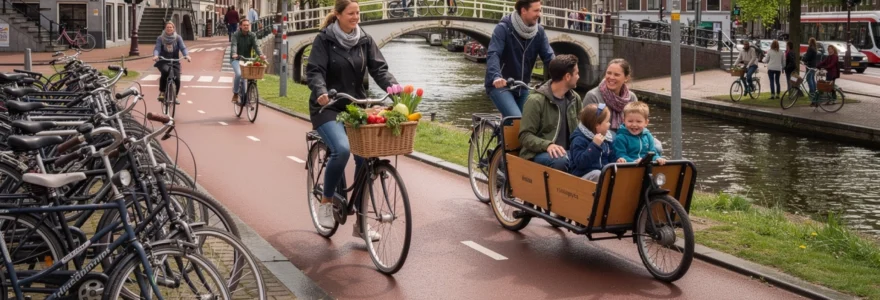
Amsterdam’s cycling culture represents far more than a simple transportation choice—it embodies a fundamental approach to urban living that prioritises sustainability, community connection, and practical mobility. With over 880,000 bicycles traversing the city’s intricate network of canals, cobblestone streets, and dedicated cycling infrastructure, the Dutch capital demonstrates how bicycle integration can transform urban dynamics. This cycling phenomenon has evolved from practical necessity into a defining characteristic of Amsterdam’s identity, influencing everything from urban planning decisions to daily social interactions.
The city’s commitment to cycling excellence extends beyond mere infrastructure provision, encompassing sophisticated traffic management systems, cultural protocols, and maintenance standards that ensure optimal functionality year-round. Understanding these elements enables visitors and residents alike to participate authentically in Amsterdam’s cycling ecosystem whilst contributing to its sustainable urban mobility vision.
Essential cycling infrastructure navigation in amsterdam’s historic canal districts
Amsterdam’s cycling infrastructure represents a masterpiece of urban planning, seamlessly integrating modern mobility solutions with centuries-old architectural heritage. The city’s 400 kilometres of dedicated cycling paths weave through historic canal districts, creating a comprehensive network that prioritises cyclist safety whilst preserving the aesthetic integrity of UNESCO World Heritage sites.
Fietspad priority systems along prinsengracht and herengracht routes
The fietspad system along Amsterdam’s primary canals operates on sophisticated priority protocols that ensure smooth traffic flow whilst accommodating the diverse cycling population. Prinsengracht’s cycling infrastructure demonstrates particular innovation, featuring separated bike lanes that maintain adequate spacing from both pedestrian areas and vehicle traffic. These lanes incorporate subtle elevation changes and distinctive red asphalt surfacing that clearly delineates cycling spaces from other transportation zones.
Herengracht presents unique challenges due to its narrower profile and increased tourist density. The cycling infrastructure here employs adaptive lane widths that expand and contract based on available space, whilst maintaining consistent directional flow. Advanced cyclists appreciate the integrated parking alcoves positioned strategically along these routes, preventing blockages during peak commuting hours.
Traffic light protocols for cyclists at leidseplein and dam square intersections
Major intersections like Leidseplein and Dam Square feature sophisticated cyclist-specific traffic management systems that coordinate with tram schedules and pedestrian crossing phases. These intersections utilise advanced green phases for cyclists, providing 10-15 second head starts before other traffic receives clearance. This system significantly reduces conflict points and allows cyclists to clear intersection areas before higher-speed traffic commences movement.
The traffic light protocols incorporate pressure-sensitive detection systems embedded in cycling lanes, ensuring that cyclist presence triggers appropriate signal responses. During peak hours, these systems automatically adjust timing sequences to accommodate increased cycling volumes, demonstrating Amsterdam’s commitment to data-driven infrastructure optimisation.
Bike parking etiquette at centraal station and museumplein facilities
Amsterdam Central Station houses the world’s largest underground bicycle parking facility, accommodating over 7,000 bicycles across multiple levels. The parking system operates on time-based protocols, with different zones designated for short-term (up to 24 hours), medium-term (up to two weeks), and long-term storage options. Users must understand the colour-coded system that indicates permitted parking durations to avoid removal fees.
Museumplein’s parking facilities serve the cultural district’s unique demands, featuring expanded capacity during exhibition periods and tourist seasons. The area employs roving attendants who provide guidance on proper parking techniques and ensure compliance with spacing requirements. Proper etiquette includes positioning bicycles to maximise space utilisation whilst maintaining accessibility for other users.
Canal bridge cycling techniques on magere brug and blauwbrug
Amsterdam’s historic canal bridges require specific cycling techniques due to their steep approach angles and narrow passage widths. Magere Brug, the city’s famous wooden drawbridge, presents particular challenges during opening sequences when cyclists must wait in designated staging areas. Experienced cyclists develop timing awareness for bridge operations, often adjusting routes during peak opening periods to maintain schedule adherence.
Blauwbrug’s stone construction provides better traction but requires careful speed
care on descent due to increased crosswinds and mixed traffic. Maintaining a low gear on approach and using gentle, consistent braking prevents skidding on damp surfaces, which are common in Amsterdam’s maritime climate. When sharing these bridges with pedestrians and other cyclists, it is standard practice to keep to the right, announce overtakes with a bell, and avoid sudden stops on the crest where visibility is limited.
On both Magere Brug and Blauwbrug, you should anticipate short bottlenecks during rush hours as commuters converge from multiple canal-side streets. Treat these pinch points much like zipper merges in motorway traffic: alternate entry with the adjacent cyclist and respect any informal queues that form on either side. By adopting this calm, predictable riding style, you contribute to the smooth, almost choreographed flow that characterises cycling in Amsterdam’s historic canal districts.
Dutch cycling culture integration through traditional fiets practices
Beyond infrastructure, truly discovering Amsterdam by bike means aligning with long-established Dutch cycling habits. These traditional fiets practices balance practicality, comfort, and understated style, allowing locals to ride in almost any situation without special equipment. Understanding how Amsterdammers choose their bicycles, dress for the weather, and share public spaces will help you blend in rather than stand out as a confused visitor on two wheels.
From the archetypal omafiets to modern cargo bikes, each bicycle type plays a specific role in the city’s mobility ecosystem. Similarly, unwritten social protocols govern everything from group rides in Vondelpark to how families transport children across town. When you adopt these small but meaningful habits, cycling shifts from being a simple activity to becoming an authentic part of your Amsterdam experience.
Omafiets selection criteria for authentic amsterdam urban mobility
The classic omafiets (grandma bike) remains the most iconic choice for urban mobility in Amsterdam’s compact streets. Characterised by an upright riding position, step-through frame, and often a single gear, it is designed for comfort and stability rather than speed. For city visitors and new residents, this style of bike offers excellent visibility in dense traffic and allows you to ride in everyday clothes without needing athletic gear.
When choosing an omafiets from a rental or purchase shop, prioritise three key criteria: frame size, braking system, and accessory setup. A correctly sized frame allows you to place at least the balls of your feet on the ground while seated, which is essential for frequent stop-and-go at intersections. Many traditional models feature coaster (back-pedal) brakes, but if you are more accustomed to hand brakes, request a hybrid model with at least a front rim brake for added control in wet conditions.
Accessories are not just aesthetic; they are crucial for practical Amsterdam urban mobility. A sturdy front carrier rack, integrated wheel lock, and working front and rear lights are non-negotiable if you plan to cycle after dark. Consider adding a simple chain guard and mudguards to protect your clothing from rain-soaked streets. With these elements in place, an omafiets becomes the perfect tool for navigating grocery runs, canal-side commutes, and late-night rides across the city centre.
Weather-adaptive cycling gear following local noord-holland standards
Amsterdam’s weather can shift from bright sunshine to wind-driven rain within a single ride, so locals dress using flexible, weather-adaptive cycling gear rather than heavy specialised outfits. Instead of wearing full cycling kits, most Amsterdammers rely on layered everyday clothing paired with a waterproof shell they can quickly put on or remove. A compact, breathable rain jacket and lightweight over-trousers can transform a potentially uncomfortable ride into a manageable one, even during sudden North Sea showers.
Footwear makes a noticeable difference in daily cycling comfort. Closed shoes with good grip—think simple sneakers or leather boots—perform far better on wet pedal surfaces than open sandals. In colder months, thin, moisture-wicking base layers under normal clothes help regulate body temperature without adding excessive bulk. You will also see many locals using simple knitted gloves, caps that fit under helmets (for those who choose to wear one), and scarves that can be tightened against strong Noord-Holland winds.
Lighting and visibility are also part of local weather standards, especially in winter when daylight hours are limited. Dutch law requires functioning front (white) and rear (red) lights after dark, and enforcement has increased in recent years with on-the-spot fines for non-compliance. Rather than relying on clip-on lights that are easy to misplace, look for bikes with integrated dynamo or battery-powered systems. Think of them as the cycling equivalent of headlights on a car: not optional, but an essential safety feature in Amsterdam’s variable climate.
Social cycling protocols in vondelpark and amsterdamse bos recreation areas
Recreational areas like Vondelpark and Amsterdamse Bos operate almost like outdoor living rooms for the city, with their own set of social cycling protocols. In Vondelpark, where families, runners, skateboarders, and tourists all share space, the unwritten rule is to ride at a relaxed pace on main loops and reserve higher speeds for early mornings or less crowded paths. Rapid overtaking, sharp weaving, or loud music speakers are generally frowned upon, particularly near playgrounds and café terraces.
Amsterdamse Bos, being larger and more forested, accommodates both leisure riders and more sportive cyclists. Here, you will notice a subtle lane discipline: faster riders tend to keep to the left of shared paths when overtaking but then move back to the right, mirroring highway etiquette. If you cycle in a group, aim for single file or a tight double line on narrower sections to avoid blocking the entire width of the track. A friendly bell ring or brief verbal warning (“links!” when passing on the left) is considered polite and helps avoid surprises.
Because these parks are also popular picnic and dog-walking areas, remaining alert to unpredictable movements is essential. Children may dart across the path, and dogs can suddenly change direction, so maintaining moderate speeds and two-finger coverage on your brakes is wise. By adapting your behaviour in these shared green spaces, you contribute to a relaxed atmosphere where everyone—from joggers to parents with strollers—can safely enjoy Amsterdam’s most beloved recreational areas.
Multi-passenger transport methods using bakfiets and cargo bike systems
One of the most distinctive sights in Amsterdam is the bakfiets or cargo bike, used daily to transport children, groceries, pets, and even small pieces of furniture. These extended-frame bicycles place a large box or platform at the front or rear, redistributing weight for stability at moderate speeds. For families, a well-designed cargo bike can effectively replace a car for most city trips, especially with the growing popularity of electric-assist models that make heavier loads easy to manage.
If you are new to cargo bike systems, start by practising in a calm, open area before entering busy streets. Steering can feel different, particularly with front-loading bakfietsen, where the front wheel is further from the handlebars and responds with a slight delay. Load heavier items low and centred in the box, secure them with straps if necessary, and check that children are buckled into built-in seats before setting off. Remember that braking distances increase with additional weight, so anticipate stops earlier than you would on a standard city bike.
When integrating a cargo bike into Amsterdam’s traffic flow, be mindful of your increased footprint, especially in narrow canal streets and at tight corners. Give yourself extra room when turning right or left, and avoid squeezing into small gaps between parked cars and other cyclists. Many local parents treat their cargo bike like a slow-moving microbus, adopting a calm, defensive riding style and choosing slightly longer routes that offer wider lanes and fewer sharp turns. The reward is a remarkably efficient way to move people and goods across the city while staying fully within the Dutch cycling culture.
Strategic route planning through amsterdam’s distinctive neighbourhoods
Cycling in Amsterdam becomes even more rewarding when you approach it as strategic route planning rather than simply following the nearest canal. Each neighbourhood offers different street widths, surface types, and traffic volumes, so choosing the right path can transform a standard ride into a memorable exploration. Thanks to the city’s dense network of fietspaden, you can usually design routes that minimise conflicts with heavy traffic while maximising contact with local architecture, markets, and green spaces.
Modern digital tools such as navigation apps and dedicated cycling route planners allow you to preview elevation profiles, ferry connections, and bike-friendly shortcuts. However, some of the most satisfying routes are discovered by following signage for major nodes—like Leidseplein, Museumplein, or Centraal Station—and then detouring into quieter side streets. By combining planned waypoints with spontaneous exploration, you can cover more ground while still experiencing the intimate, village-like character of Amsterdam’s districts.
Jordaan district navigation via narrow streets and hidden courtyards
The Jordaan district, once a working-class area and now one of Amsterdam’s most coveted neighbourhoods, demands a specific navigation strategy. Its charm lies in a lattice of narrow streets, hidden courtyards (hofjes), and small canals that do not always align with the city’s broader grid. When cycling here, think of your route less as a straight line from A to B and more as a slow, exploratory weave between points of interest like Noordermarkt, Westerstraat, and Prinsengracht.
Because many Jordaan streets are only one lane wide with parked cars on both sides, it is essential to ride at a controlled pace and make eye contact with oncoming cyclists or delivery vans. Yielding early at constriction points—especially near bridges—prevents awkward stand-offs. You will also encounter several traffic-calmed zones where cars are allowed but must travel at walking speed, effectively turning the lane into a shared space where pedestrians, cyclists, and residents co-exist.
To discover the area’s hidden courtyards, you may occasionally need to dismount and lock your bike at the edge of a residential zone, then continue on foot. Many hofjes are signposted discreetly and request quiet, as they remain active living spaces rather than tourist attractions. This combination of short cycling segments and brief walking interludes creates a rhythm that suits Jordaan’s intimate scale and ensures you can appreciate its unique atmosphere without disrupting daily life.
De pijp cultural quarter exploration along albert cuyp market routes
De Pijp, centred around the famous Albert Cuyp Market, offers a denser, more energetic cycling experience. Its grid of 19th-century streets is lined with cafés, specialty shops, and market stalls, making it ideal for a mixed day of riding and sampling local food. When approaching from the city centre, many cyclists follow Ruysdaelkade or Ferdinand Bolstraat, both of which offer dedicated bike lanes and clear signage toward the market area.
Around Albert Cuypstraat itself, you will find increased pedestrian density and frequent delivery vehicles, especially during morning market setup and late-afternoon takedown. In these peak windows, cycling directly through the market street can be slow and requires constant low-speed manoeuvring. Many experienced locals instead use parallel streets like Eerste van der Helststraat or Gerard Doustraat, locking their bikes on side racks and walking the final stretch to browse stalls and terraces.
Because De Pijp is also home to Sarphatipark and numerous local eateries, it works well as a hub in a broader route plan. You might, for example, cycle from Museumplein into De Pijp for lunch, loop through Albert Cuyp Market, then continue toward Amstel or Oost. By stringing together these short, bike-friendly segments, you can explore several distinct micro-neighbourhoods in a single, coherent ride.
Noord amsterdam ferry integration at buiksloterweg terminal
Crossing the IJ River to Amsterdam-Noord introduces a different scale of cycling, where industrial heritage and new architecture meet open waterfront views. The key logistical element here is integrating the free GVB ferry at Buiksloterweg into your route planning. Ferries run frequently—often every few minutes during the day—and are designed to accommodate large numbers of cyclists, with level boarding that allows you to roll on and off without dismounting.
To streamline the process, join the informal queuing system on the quayside, keeping to the right and following the flow of local riders. Once on board, park your bike in the indicated areas and stand beside it rather than blocking aisles or entrances. The crossing takes only a few minutes, but it effectively opens up vast new cycling options in Noord, from the cultural hub at NDSM Wharf to quieter residential zones and waterfront paths.
Because ferry schedules can vary slightly in late evening or on weekends, it is wise to check the latest timetable if you plan to return late at night. Think of the ferry as your movable bridge: it replaces a fixed crossing with a flexible, scenic connector that still operates within Amsterdam’s broader cycling-first philosophy. Planning your routes with this in mind lets you experience two very different sides of the city without ever leaving your saddle.
Oud-zuid museum quarter cycling connections between rijksmuseum and van gogh museum
The Oud-Zuid district and Museum Quarter form one of the most cycle-optimised cultural corridors in Europe. The underpass beneath the Rijksmuseum functions as both an architectural highlight and a crucial cycling artery, linking the city centre to Museumplein and further south. Dedicated cycle lanes run through the passage, separated from pedestrian zones, but the acoustics and occasional tourist foot traffic call for reduced speed and heightened awareness.
From the Rijksmuseum, reaching the Van Gogh Museum and Stedelijk Museum requires only a short, clearly signposted ride across Museumplein. The open square often hosts events, ice rinks, or temporary structures, which can slightly alter the usual traffic patterns. When this happens, temporary signage and painted markings direct cyclists along alternative paths that still prioritise safe, direct connections between museums and adjacent streets like Van Baerlestraat and Paulus Potterstraat.
For longer rides, Oud-Zuid also provides efficient links to Vondelpark, Olympisch Stadion, and residential avenues with wide, tree-lined bike lanes. Many locals use this area as a staging point: visiting a museum in the morning, then cycling south toward Amsterdamse Bos or west into Oud-West for lunch. With thoughtful route planning, you can move between world-class cultural venues and relaxed neighbourhood streets in a matter of minutes, all while remaining on continuous cycling infrastructure.
Technical bicycle maintenance standards for amsterdam urban conditions
Amsterdam’s flat terrain may seem gentle on bikes, but constant use, rain exposure, and frequent lock-ups place unique demands on maintenance. Adhering to basic urban bicycle maintenance standards not only extends the life of your bike but also reduces the likelihood of breakdowns in busy intersections or on narrow bridges. Think of regular maintenance as equivalent to servicing a car before a long trip: a modest investment of time that prevents larger problems later.
Chains and drivetrains are particularly affected by the city’s wet, often salty air. Cleaning and lightly oiling the chain every few weeks—more often in winter—helps prevent rust and preserves smooth shifting on multi-gear bikes. Tyres should be checked for embedded glass or debris picked up from cobblestones and tram-adjacent lanes, with a preference for puncture-resistant models designed for urban conditions. Maintaining proper tyre pressure (usually indicated on the sidewall) also improves efficiency and reduces the risk of pinch flats.
Because night riding is so common in Amsterdam, lighting systems demand special attention. Test front and rear lights before evening rides and carry spare batteries or a backup clip-on light in case of failure. Brake pads wear faster in wet conditions, so listen for squeaks and feel for reduced stopping power; many local workshops offer quick, affordable replacement services without appointments. A simple monthly check using a mental checklist—lights, brakes, tyres, lock—ensures your bike remains roadworthy and compliant with local regulations.
Local cycling safety protocols and traffic interaction dynamics
Amsterdam’s cycling safety is not based solely on infrastructure; it relies equally on shared behaviour patterns and traffic interaction dynamics that locals follow almost instinctively. As a cyclist, you are both a vulnerable road user and a dominant presence in many streets, so predictable behaviour becomes a collective safety tool. Riding in straight lines, signalling well in advance, and avoiding sudden stops on busy fietspaden contribute to a kind of “swarm intelligence” that keeps traffic flowing smoothly.
Key intersections require particular attention to sightlines and priority rules. Although cyclists enjoy many dedicated lanes and signals, you must still yield to pedestrians at zebra crossings and be cautious around trams, which cannot swerve to avoid obstacles. Treat tram tracks like invisible curbs: cross them at as close to a right angle as possible to avoid your front wheel getting caught. You will notice that experienced riders glance back briefly before deviating from their line—an easy habit to adopt that significantly reduces collision risk in dense traffic.
Distraction is another important safety consideration. While it is common to see locals cycling one-handed with groceries or talking to companions, using phones without a hands-free setup is both unsafe and subject to fines. Headphones that block environmental sound make it harder to hear bells, sirens, or tram warnings, especially in busy hubs like Leidseplein or Dam Square. By treating your bike as a full vehicle—not an extension of the pavement—you align with Dutch expectations and help maintain Amsterdam’s reputation as one of the safest cycling cities in the world.
Authentic dutch food and café discovery through strategic cycling routes
One of the most enjoyable advantages of getting around Amsterdam by bike is the ability to link authentic Dutch food and café stops into your daily routes. Instead of planning separate journeys for sightseeing and dining, you can use strategic cycling loops to connect markets, bakeries, and traditional brown cafés across multiple neighbourhoods. This approach not only saves time but also mirrors the way many locals structure their day: short rides punctuated by coffee, snacks, or shared meals.
Consider a route that begins near Centraal Station, follows the Brouwersgracht toward Jordaan for a mid-morning coffee and appeltaart, then continues toward De Pijp for a lunchtime stroopwafel or fresh herring at Albert Cuyp Market. From there, you might cycle to Oud-West to sample Dutch fries at a renowned stand or explore Foodhallen’s indoor stalls, before finishing with a canal-side drink in De Negen Straatjes. Each leg of this journey uses established fietspaden, allowing you to move efficiently between culinary highlights while still absorbing the city’s varied architecture.
Because bikes can be parked close to almost any venue, you also gain the freedom to make spontaneous discoveries. Spot a crowded bakery with locals queueing outside or a cosy café tucked along a quiet canal? Lock your bike to a designated rack, step inside, and add a new favourite to your mental map of the city. Over time, these layered experiences—cycling routes intertwined with flavours and neighbourhood atmospheres—create a deeply personal connection to Amsterdam that goes far beyond standard tourist itineraries.