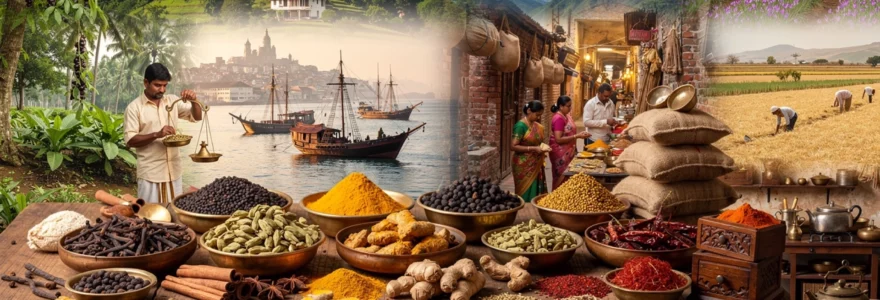
India’s relationship with spices stretches back millennia, transforming this subcontinent into the world’s most celebrated spice treasury. The aromatic compounds that colour and flavour Indian cuisine have shaped global trade networks, sparked colonial ambitions, and revolutionised culinary traditions across continents. From the pepper-laden ships that sailed between Kerala’s shores and Roman ports to the saffron fields nestled in Kashmir’s valleys, these precious botanical treasures have commanded prices rivalling gold and triggered economic revolutions. Today, understanding India’s spice heritage means exploring not just flavours and fragrances, but the intricate tapestry of geography, agriculture, medicine, and culture that has evolved over thousands of years. The spice routes weren’t merely commercial pathways—they were conduits of knowledge, culture, and civilisation that continue to influence how you experience Indian cuisine today.
Historical trade networks: malabar coast and the pepper exchange with ancient rome
The Malabar Coast, stretching along southwestern India’s shoreline, served as the epicentre of ancient spice commerce, establishing trade relationships that would fundamentally alter world history. Archaeological evidence reveals that by 3000 BCE, maritime trade routes already connected Indian ports with Mesopotamian civilisations, with spices featuring prominently amongst exchanged commodities. However, it was the Roman Empire’s insatiable appetite for black pepper that truly established India’s dominance in the global spice economy, with Pliny the Elder famously lamenting the annual drain of 50 million sesterces to India for these precious commodities.
Muziris port: gateway for black pepper and cardamom exportation
Muziris, located near present-day Kodungallur in Kerala, functioned as antiquity’s most significant spice trading hub, where monsoon winds propelled Roman vessels directly to India’s shores. Recent excavations have uncovered extensive warehouse complexes, Roman coins, and amphorae fragments, confirming ancient texts describing Muziris as a cosmopolitan port bustling with Greek, Roman, Arab, and Jewish merchants. The port specialised primarily in black pepper exportation, though cardamom, ginger, and cinnamon also filled cargo holds. This thriving emporium operated sophisticated quality grading systems, with pepper classified by size and pungency, commanding prices that made it accessible only to Rome’s wealthiest citizens. The economic impact was staggering—historians estimate that pepper trade alone constituted approximately 70% of all commerce between Rome and India during the first century CE.
Arab merchant monopolies on cinnamon and clove distribution routes
Following Rome’s decline, Arab merchants established formidable control over spice distribution networks, creating elaborate mythos around spice origins to protect their profitable monopolies. These traders fabricated fantastical stories about cinnamon growing in valleys guarded by enormous birds and cloves harvested from dangerous, remote islands, successfully obscuring actual sources for centuries. The Arab maritime networks connected India’s western ports with the Middle East, North Africa, and eventually Europe through overland caravanserais. This intermediary position generated extraordinary profits, with spices increasing in value by 300-400% at each trading post. The monopoly remained virtually unbreakable until the late 15th century, when European powers began seeking direct maritime routes to circumvent Arab middlemen and access spice-producing regions themselves.
Portuguese colonisation of goa and vasco da gama’s maritime disruption
Vasco da Gama’s arrival in Calicut in 1498 fundamentally disrupted established spice trade dynamics, initiating an era of European colonial competition for control over spice-producing territories. The Portuguese quickly recognised that military domination of key ports would yield greater profits than mere trading partnerships. By 1510, Portugal had conquered Goa, establishing it as their administrative headquarters and launching aggressive campaigns to monopolise pepper production and distribution. Portuguese strategies included destroying competing vessels, imposing cartaz licensing systems on indigenous merchants, and establishing fortified trading posts throughout the Malabar Coast. This colonial intrusion generated enormous wealth for Portugal—by 1520, spice imports constituted approximately 70% of Portuguese crown revenues. However, their brutal enforcement methods and rigid monopolistic practices ultimately proved unsustainable
as rival European powers, particularly the Dutch and later the British, adapted more flexible commercial models and aligned themselves more strategically with local rulers. Nonetheless, this period marked a turning point: for the first time, European navies dictated terms on the Indian Ocean, reconfiguring centuries-old spice routes and embedding Indian spices at the heart of emerging global cuisine.
Dutch east india company’s control over malabar pepper cultivation
The Dutch East India Company (VOC) supplanted Portuguese influence along the Malabar Coast in the 17th century, applying a more systematic, corporate approach to spice exploitation. Rather than relying solely on military force, the VOC negotiated exclusive treaties with coastal chiefs, fixing pepper prices and compelling cultivators to sell only to Dutch factors. They also implemented strict quotas and pepper cultivation controls, uprooting “surplus” vines to keep prices artificially high on European markets. For local communities, this meant reduced autonomy and volatile incomes, even as Dutch archival records boast of profit margins that regularly exceeded 200% on pepper consignments shipped from Cochin and Calicut.
In practice, the VOC transformed black pepper from a largely regional agricultural product into a tightly managed global commodity. The company established centralised warehouses, standardised bale sizes, and implemented rudimentary quality inspections, rejecting berries that did not meet size and dryness criteria. This early form of commodity standardisation anticipated modern spice quality standards that still shape international trade today. Yet, resistance simmered: periodic farmer uprisings, smuggling to competing European buyers, and alliances between local rulers and rival powers slowly eroded Dutch control. By the late 18th century, as VOC finances crumbled, the stage was set for British dominance.
British colonial impact on turmeric and ginger trade mechanisms
When the British East India Company consolidated its rule, it inherited and expanded spice trade infrastructure but shifted focus beyond pepper to a wider portfolio including turmeric, ginger, cumin, and chillies. Unlike the Portuguese and Dutch, who concentrated heavily on coastal strongholds, the British integrated spice cultivation into a broader colonial agrarian economy, introducing railways and telegraph lines that linked inland producing regions to major ports like Bombay and Madras. Turmeric and ginger, once primarily local or regional ingredients, entered large-scale export channels bound for Britain, the Middle East, and Southeast Asia. Detailed colonial gazetteers from the 19th century meticulously recorded acreage, yields, and prices, signalling how deeply spices were woven into imperial economic planning.
However, this integration came at a cost. Traditional cropping patterns shifted as peasants were encouraged—or coerced—into growing cash crops, which sometimes displaced food staples and increased vulnerability to market fluctuations. The British also standardised weights, measures, and grading practices, institutionalising quality assessments that favoured bulk exporters over smallholders. At the same time, increased demand in Britain’s industrial cities popularised “curry powder” blends, creating a new global market for processed Indian spices rather than just raw commodities. You can still taste this colonial legacy today in British-Indian dishes, where turmeric and ginger form the base of many sauces that travelled from Indian fields to Victorian kitchens along these reconfigured spice routes.
Regional spice cultivation zones: terroir and agricultural biodiversity
Just as fine wine reflects the soil and climate of its vineyard, Indian spices embody the terroir of their cultivation zones. Across the subcontinent, dramatic variations in altitude, rainfall, temperature, and soil composition give rise to distinct flavour profiles and aromatic intensities. From the mist-shrouded Western Ghats to the sun-baked plains of Rajasthan, each region functions as a living laboratory of agricultural biodiversity. Understanding where spices come from—and how they are grown—allows you to appreciate why Malabar pepper tastes different from Vietnamese pepper, or why Kashmiri saffron commands a higher price than many other varieties.
India’s spice-growing landscapes are also cultural landscapes, shaped by centuries of indigenous knowledge and community-based farming systems. Terraced hillsides, shade-grown plantations, and mixed-cropping fields all represent adaptations to local ecology that maintain soil fertility and resilience. In many areas, spice cultivation supports smallholder livelihoods, women’s cooperatives, and organic certification schemes that respond to growing global demand for sustainable products. When you sprinkle cardamom into a dessert or coriander over a curry, you are engaging with this intricate web of ecology, economy, and tradition.
Kerala’s western ghats: black pepper and cardamom plantation ecosystems
The Western Ghats of Kerala, a UNESCO World Heritage biodiversity hotspot, provide ideal conditions for cultivating premium black pepper and cardamom. High humidity, well-distributed rainfall, and loamy, well-drained soils create a lush evergreen canopy under which pepper vines can climb and cardamom clumps can thrive. Traditionally, pepper is grown in “homestead gardens” where vines are trained up live support trees such as silver oak or jackfruit, forming multilayered agroforestry systems that resemble natural forests. This shade-grown approach conserves moisture, fosters biodiversity, and reduces erosion, acting like a green sponge that regulates the microclimate.
Cardamom estates, particularly in regions like Idukki and Wayanad, require more controlled conditions and are often managed as carefully spaced plantations. Farmers manage shade levels, mulch the soil with leaf litter, and employ organic manures to enhance the volatile oil content that gives cardamom its intense aroma. Increasingly, Kerala growers are adopting integrated pest management and organic certification to meet export market demands for residue-free spices. Have you noticed how freshly ground cardamom from these highlands can perfume an entire kitchen? That sensory impact stems directly from these mountain ecosystems and the cultivation techniques honed over generations.
Kashmir’s saffron fields in pampore: crocus sativus cultivation techniques
In the valley of Pampore near Srinagar, Kashmiri saffron blooms in autumn like a purple carpet spread across the fields, each delicate flower hiding three crimson stigmas that make up the world’s most expensive spice. Cultivating Crocus sativus is labour-intensive and highly specialised. Farmers plant corms in well-drained, slightly alkaline soils at altitudes between 1600 and 1800 metres, where cold winters and dry summers encourage optimal pigment and aroma development. The flowers must be harvested at dawn, before the sun wilts their petals, and the stigmas are carefully plucked by hand—a process that can require up to 150,000 flowers to produce a single kilogram of dried saffron.
The post-harvest process is equally critical. Stigmas are gently separated, then dried over low heat or in controlled environments to preserve crocin (for colour), picrocrocin (for taste), and safranal (for aroma). Like a fine perfume, the distinctive fragrance of Pampore saffron depends on precise drying times and temperatures. Climate change and irregular rainfall patterns now pose significant challenges, prompting research into improved irrigation, better storage, and GI-protected branding to support farmers. When you choose Kashmiri saffron for a biryani or kheer, you are not only getting deeper colour and flavour—you are also helping sustain one of India’s most fragile spice ecologies.
Rajasthan’s arid climate: fenugreek and coriander seed production
At first glance, Rajasthan’s arid landscapes might seem inhospitable to spice cultivation, yet they excel in fenugreek and coriander seed production. These hardy crops are well-suited to semi-arid and arid conditions, with relatively low water requirements and short growing cycles. Sown during the rabi (winter) season, coriander and fenugreek benefit from cool nights and bright, dry days that encourage seed formation and concentration of essential oils. Districts such as Kota, Baran, and Jhalawar have emerged as important hubs, supplying both domestic markets and international buyers seeking consistent, clean seeds for grinding.
Farmers here often integrate spices into diversified cropping systems alongside wheat, mustard, and pulses, spreading risk and making efficient use of scarce water resources. Drip irrigation, improved seed varieties, and better post-harvest cleaning technologies have increased yields and enhanced quality, reducing contamination by stones and plant debris. The resulting coriander seeds carry a citrusy, nutty aroma, while fenugreek seeds impart a maple-like bitterness that deepens flavours in pickles and curries. For home cooks exploring the authentic flavours of Indian regional cuisine, sourcing whole seeds from these dryland regions and toasting them lightly before grinding can reveal complex notes you rarely find in pre-mixed powders.
Tamil nadu’s chettinad region: star anise and fennel seed harvesting
Chettinad in Tamil Nadu is famed globally for its fiery, aromatic cuisine, and the region’s trading communities historically played a key role in circulating spices like star anise and fennel across the Indian Ocean. While star anise is primarily cultivated in neighbouring countries such as China and Vietnam, Chettinad merchants integrated it into local masalas, and nearby South Indian highlands support limited cultivation and processing. Fennel, on the other hand, is widely grown in India, including in Tamil Nadu, where farmers value its adaptability and demand from both culinary and herbal medicine markets. Together, these spices lend Chettinad dishes their distinctive sweet, liquorice-like undertones that balance the heat of chillies and black pepper.
Harvesting fennel seeds involves cutting the umbels when they turn greenish-brown, then drying them under the sun until fully cured, a process that concentrates volatile oils and stabilises the seeds for storage. Star anise fruits are picked just before ripening, then sun-dried until they harden into the familiar star shape, each arm holding a glossy brown seed. Local culinary traditions use these aromatics in layered spice blends where each ingredient is roasted separately to unlock its unique profile. If you have ever wondered why Chettinad gravies taste so multi-dimensional, it is because they draw simultaneously on local farming, regional trade networks, and a sophisticated understanding of how to harmonise these “sweet” spices with pungent ones.
Ayurvedic pharmacology: medicinal applications of indigenous spices
Long before modern nutrition science began cataloguing antioxidants and anti-inflammatory compounds, Ayurveda had already mapped the medicinal properties of Indian spices. In Ayurvedic pharmacology, spices are not mere flavour enhancers; they are potent therapeutic agents used to balance the three doshas—Vata, Pitta, and Kapha—and to support digestion, circulation, immunity, and mental clarity. Each spice is understood through its rasa (taste), virya (heating or cooling energy), and vipaka (post-digestive effect), creating a framework that links daily cooking to preventive medicine. It is no coincidence that the same ingredients seasoning your dal also appear in classical Ayurvedic formulations and homemade remedies.
Modern clinical studies increasingly validate these traditional insights, identifying bioactive compounds such as curcumin in turmeric or gingerol in ginger that exert measurable physiological effects. Think of Ayurveda and contemporary biomedicine as two lenses focused on the same object—while one speaks of doshas and agni (digestive fire), the other refers to metabolic pathways and inflammatory markers. For you as a cook or food enthusiast, this convergence offers practical guidance: integrating targeted spices into your meals can support specific health goals without sacrificing taste. The spice routes thus become wellness routes, connecting kitchen practices with holistic well-being.
Turmeric’s curcumin compound: Anti-Inflammatory properties in traditional medicine
Turmeric, or haridra in Sanskrit, occupies a central place in Ayurvedic pharmacology as a powerful blood purifier and anti-inflammatory agent. Its active compound, curcumin, has been widely studied for its ability to modulate inflammatory pathways, with research suggesting benefits for conditions ranging from joint pain to metabolic syndrome. In Ayurveda, turmeric is prescribed in formulations for wound healing, skin disorders, digestive imbalances, and liver support, often combined with ghee or honey to enhance absorption. Golden-yellow turmeric milk, now marketed globally as “turmeric latte,” originates as a simple home remedy for coughs, colds, and minor aches.
However, curcumin on its own has low bioavailability, which Ayurveda intuitively addresses by pairing turmeric with fats and other spices like black pepper. Piperine, found in pepper, can significantly enhance curcumin absorption, a synergy that modern pharmacology has confirmed. For everyday use, you can mimic these traditional combinations by tempering turmeric in oil at the start of cooking and finishing dishes with a crack of black pepper. Much like tuning a musical instrument, these pairings adjust how the body receives and utilises turmeric, turning a common kitchen spice into a functional component of your wellness routine.
Asafoetida (hing) digestive benefits in vata dosha balancing
Asafoetida, known as hing, is one of Ayurveda’s most valued spices for supporting digestion and pacifying aggravated Vata dosha, which is associated with air and space elements. Extracted from the resin of the Ferula plant and usually blended with wheat or rice flour for culinary use, hing has a pungent aroma that mellows into a leek-like flavour when sautéed. Ayurvedic texts recommend it in small quantities to relieve gas, bloating, and abdominal cramps, especially in legume-based dishes that can be difficult to digest. In many Indian kitchens, a pinch of asafoetida added to hot ghee before cooking lentils or beans functions like a digestive insurance policy.
From a modern perspective, asafoetida’s carminative and antispasmodic properties likely arise from its complex sulphur compounds, which influence gut motility and microbial activity. For individuals who find chickpeas, kidney beans, or black gram heavy on the stomach, experimenting with hing can make these protein-rich foods more accessible. Have you ever skipped beans because of post-meal discomfort? Integrating hing into your tempering (tadka) might be the simple, traditional solution that bridges culinary pleasure and digestive comfort.
Ginger’s gingerol: thermogenic effects in kapha reduction protocols
Ginger, or adrak (fresh) and shunthi (dry), is described in Ayurveda as a “universal medicine” due to its broad spectrum of actions, particularly its ability to kindle agni, the digestive fire. Its primary bioactive compound, gingerol, has thermogenic properties that increase circulation and gently raise body temperature, making ginger especially useful in Kapha-reducing protocols where sluggishness, heaviness, and congestion dominate. Traditional formulations include ginger tea for colds, fresh ginger slices with lemon and salt before meals to stimulate appetite, and dry ginger powders in decoctions for respiratory conditions.
Scientific studies support ginger’s roles in reducing nausea, improving digestion, and modulating inflammation, aligning closely with Ayurvedic descriptions. For everyday cooking, adding fresh ginger to stir-fries, curries, and soups not only brightens flavour but can also help the body process heavier fats and proteins more efficiently. In winter, a cup of ginger-infused herbal tea acts like an internal fireplace, warming you from within and clearing nasal passages. When viewed through the lens of the healing spice routes of India, ginger stands out as a quintessential bridge between taste and therapy, comfort and clinical effect.
Holy basil (tulsi) adaptogenic mechanisms in stress management
Holy basil, or tulsi, holds sacred status in Indian households and temples, but its significance extends into sophisticated Ayurvedic pharmacopeia as an adaptogen that helps the body cope with stress. Tulsi leaves are rich in phenolic compounds and essential oils that exhibit antioxidant, anti-inflammatory, and neuroprotective effects. Ayurvedic practitioners classify tulsi as a rasayana—a rejuvenative herb—used to support respiratory health, enhance mental clarity, and stabilise emotional states. Daily rituals of sipping tulsi tea or simply tending a tulsi plant in the courtyard exemplify how spiritual practice and herbal medicine intertwine.
Modern research into tulsi’s adaptogenic mechanisms suggests that it may modulate cortisol levels, improve resilience to environmental stressors, and support balanced immune responses. For you, incorporating tulsi could be as simple as using dried leaves in herbal infusions or exploring tulsi-based supplements under professional guidance. Imagine your spice cabinet as a compact wellness pharmacy: alongside turmeric and ginger, tulsi completes a trio of botanical allies that can be integrated into small, consistent habits. In this way, the ancient Indian spice routes of healing continue to offer tools for navigating the pressures of contemporary life.
Culinary taxonomy: spice blend composition across indian subregions
If individual spices are like musical notes, Indian spice blends are the full symphonies—carefully orchestrated combinations that define regional cuisines and culinary identities. Across the subcontinent, cooks have developed sophisticated spice blend taxonomies suited to local ingredients, climate, and cultural preferences. The same cumin seed might play a supporting role in one masala and a starring role in another, depending on how it is roasted, ground, and combined. Understanding these blends helps you decode why a Punjabi curry tastes distinct from a Bengali fish preparation, even when they share several base spices.
Rather than fixed recipes, these blends function as flexible frameworks. Households often maintain their own proprietary ratios, passed down through generations and adjusted according to season, health, or personal taste. As you explore Indian cuisine, thinking in terms of regional masalas rather than generic “curry powder” will dramatically expand your flavour vocabulary. It is akin to learning dialects within a language—the more you listen, the more nuances you detect.
Garam masala variations: north indian versus bengali panch phoron formulations
In North India, garam masala is the archetypal warming blend, usually comprising cloves, cinnamon, cardamom, black pepper, and sometimes bay leaf, nutmeg, and mace. The term “garam” refers not to chilli heat but to the warming nature of these spices in Ayurvedic terms. Typically added towards the end of cooking, North Indian garam masala acts like a finishing fragrance, lifting rich gravies and lentils with its sweet, woody aroma. Ratios vary widely: some families prefer a pepper-forward profile, while others emphasise cardamom for a lighter, floral result. For home cooks exploring authentic North Indian garam masala recipes, lightly toasting whole spices before grinding is essential to unlock deeper notes.
In Bengal, however, the signature blend is panch phoron, a “five-spice” mix usually consisting of cumin, fennel, fenugreek, mustard, and nigella seeds. Unlike garam masala, panch phoron is used whole, tempered in hot oil at the beginning of cooking to infuse the fat with its layered flavours. The result is a distinctive crackling aroma that defines many Bengali vegetable dishes, dals, and fish preparations. While both blends structure regional flavour, their techniques and sensory outcomes are completely different—like comparing a slow, simmered stew to a bright, quickly stir-fried dish. For you, experimenting side by side with garam masala and panch phoron can be an eye-opening way to experience India’s internal diversity.
Sambar powder: tamil brahmin temple cuisine and Lentil-Based preparations
Sambar powder sits at the heart of South Indian cooking, especially within Tamil Brahmin temple cuisine, where it seasons the iconic lentil-based stew served with rice and idli. This blend typically includes coriander seeds, dried red chillies, toor dal (pigeon pea), fenugreek seeds, black pepper, cumin, and curry leaves, all roasted and ground to a fine powder. Each ingredient plays a precise role: coriander adds body, fenugreek contributes bitterness, chillies bring heat, and lentils provide thickness and a nutty backdrop. In temple kitchens, where consistency and volume are crucial, large brass vessels of sambar bubble away, perfumed by freshly prepared powder that can vary subtly with the festival or season.
For home use, preparing your own sambar powder in small batches lets you control heat and aroma levels while avoiding additives often found in commercial packets. You might, for instance, slightly increase black pepper in cooler months for a warming effect or add more curry leaves for a fresher, herbaceous note. Have you ever noticed how sambar tastes remarkably different from region to region, even when called by the same name? Much of that variation lies hidden in the masala tin, in ratios and roasting techniques that local cooks have perfected over time.
Kashmiri garam masala: fennel and dry ginger dominance in wazwan dishes
In Kashmir, the flavour architecture of traditional wazwan feasts relies heavily on a unique garam masala dominated by fennel and dry ginger (sonth), with comparatively less emphasis on cloves and cardamom. This shift reflects both regional agricultural strengths and climatic needs: fennel and ginger offer warmth and digestive support suited to cold mountain winters. The resulting masala imparts a delicate sweetness and gentle heat, creating gravies that feel rich yet surprisingly light on the palate. Classic dishes such as rogan josh and yakhni use this blend to complement rather than overpower the natural taste of meat and yoghurt.
Unlike many North Indian masalas that are browned in oil, Kashmiri blends often encounter lower cooking temperatures, preserving their aromatic subtlety and bright colour. Paprika-like Kashmiri chilli powder, prized for its vivid red hue and mild heat, works in tandem with the fennel-ginger masala to produce visually stunning dishes. If you wish to recreate authentic Kashmiri spice profiles at home, consider adjusting your usual garam masala by reducing clove and cinnamon while increasing fennel and ginger. This small calibration can transport a familiar curry into entirely new geographic and sensory territory.
Vindaloo paste: goan catholic fusion of portuguese Garlic-Wine marinade
Goan vindaloo epitomises the fusion of Portuguese and Indian culinary traditions along the Konkan coast. The term originates from the Portuguese dish “carne de vinha d’alhos,” meaning meat marinated in wine and garlic. In Goa, where wine was scarce but palm vinegar and abundant spices were available, this concept evolved into a complex vindaloo paste typically made from dried red chillies, garlic, ginger, cumin, mustard seeds, cloves, cinnamon, and vinegar. The paste is used as both marinade and cooking base, infusing pork or other meats with a tangy, fiery intensity that reflects centuries of cross-cultural interaction.
Over time, vindaloo became a global icon of “spicy Indian curry,” yet the most traditional Goan versions balance heat with acidity and subtle sweetness, rather than sheer chilli power. For a more authentic approach in your own kitchen, focus on the sour-sweet backbone created by vinegar, tamarind, and slow-cooked onions, using Kashmiri chillies for colour rather than extreme heat. Like tracing family resemblance in a blended lineage, you can still see the outlines of the original Portuguese garlic-wine marinade in today’s vindaloo, refracted through Indian spices and local tastes. This is the spice route story in miniature: ingredients travelling one way, techniques travelling another, meeting in the pot.
Contemporary spice processing: post-harvest technology and quality standards
As global demand for Indian spices has surged, post-harvest technology and quality assurance have become as crucial as cultivation itself. Modern spice processing in India aims to preserve volatile oils, prevent microbial contamination, and meet stringent international regulations on pesticide residues and mycotoxins. In export hubs, spices pass through cleaning, grading, drying, grinding, sterilisation, and packaging stages, each of which can enhance or diminish flavour and safety. For premium segments, processors invest in advanced equipment and certification schemes, while smallholder farmers gradually integrate improved drying and storage methods at the village level.
From a consumer perspective, these changes influence everything from the freshness of your chilli powder to the consistency of your cumin seeds. Have you ever wondered why some store-bought spices lack aroma compared to freshly ground ones from a local market? Much depends on processing temperatures, exposure to light and oxygen, and time spent in transit or on shelves. The more you understand these factors, the better choices you can make when selecting spices for your pantry, balancing convenience with quality.
Steam sterilisation methods for Export-Grade chilli powder production
Chilli powder, one of India’s highest-volume spice exports, must meet strict microbiological standards in markets like the EU and North America. Traditional sun-drying and grinding, while effective for small-scale domestic use, can leave microbial loads too high for international regulations. To address this, processors use steam sterilisation for chilli powder, exposing ground spices to pressurised, saturated steam for carefully controlled durations. This process significantly reduces bacterial and fungal contamination without relying on chemical fumigants, which many consumers and regulators now avoid.
The challenge lies in preserving colour and flavour while achieving microbial safety. Excessive heat or moisture can dull the bright red hue of chilli and degrade capsaicin, the compound responsible for pungency. Modern systems therefore combine short exposure times, rapid drying, and inert-gas packaging to retain volatile compounds. As a buyer, choosing brands that specify steam sterilisation and quality certifications on their labels can be a practical way to ensure both safety and sensory quality. For home grinding, sourcing whole dried chillies from reputable suppliers and roasting them lightly before milling remains an excellent option for maximum freshness.
AGMARK certification: governmental quality parameters for cumin seeds
Within India, governmental schemes such as AGMARK certification for spices help standardise quality and protect consumers from adulteration. For cumin seeds, AGMARK lays down detailed parameters regarding purity, moisture content, extraneous matter, damaged or insect-infested seeds, and volatile oil levels. Samples from processing batches are tested in accredited laboratories, and only those meeting prescribed grades can carry the AGMARK seal. This system, dating back to the early 20th century, functions like an official stamp of trust in a market where visual inspection alone cannot guarantee authenticity.
For farmers and traders, adherence to AGMARK standards can open access to higher-value markets and institutional buyers such as food manufacturers and export houses. For you as a home cook or small business owner, looking out for AGMARK on packets of cumin and other spices can reduce the risk of contaminants such as husk fragments, stones, or cheaper seed adulterants. It also supports a broader culture of transparency and traceability in the Indian spice value chain, where every link—from field to plate—benefits from clear benchmarks.
Cryogenic grinding techniques: volatile oil retention in premium cardamom
One of the most significant technological advances in spice processing is cryogenic grinding, particularly valuable for high-value, oil-rich spices like cardamom. Traditional grinding generates heat through friction, which can cause volatile oils to evaporate, reducing aroma and flavour intensity. In cryogenic systems, spices are cooled with liquid nitrogen or other cryogens to extremely low temperatures before and during grinding. At these temperatures, the spices become brittle, grind more efficiently, and retain a much higher proportion of their essential oils.
For premium cardamom destined for gourmet or pharmaceutical markets, cryogenic grinding can make the difference between a mildly scented powder and an intensely fragrant one that needs only a pinch to transform a dish. The analogy often used by processors is that of preserving perfume: you would not heat a fine fragrance before bottling it, and the same logic applies to aromatic spices. While this technology is still limited to larger processing units due to cost, its growing adoption underscores the industry’s shift towards quality-focused rather than purely volume-driven approaches. For everyday cooking, buying whole cardamom pods and grinding small amounts fresh at home remains an accessible way to capture similar benefits on a household scale.
Geographical indication tagging: tellicherry pepper and alleppey turmeric protection
Geographical Indication (GI) tagging functions as a legal tool to protect the reputation and uniqueness of region-specific products, much like Champagne in France or Parmigiano-Reggiano in Italy. In India, iconic spices such as Tellicherry pepper and Alleppey turmeric have received GI status, recognising their distinct terroir and production practices. Tellicherry pepper, grown along the Malabar Coast, is prized for its large berry size and high piperine content, which translate into robust, lingering heat. Alleppey turmeric from Kerala is known for its deep orange colour and high curcumin levels, making it especially valued for both culinary and medicinal applications.
GI tagging helps prevent misuse of these names by producers in other regions or countries, thereby protecting farmers’ livelihoods and ensuring consumers receive authentic products. When you deliberately choose GI-tagged spices, you are in effect voting for transparency, heritage, and quality over anonymous, commoditised alternatives. Have you ever compared regular black pepper with Tellicherry GI pepper side by side? The difference in aroma and flavour can be as striking as the difference between table wine and a single-estate vintage, demonstrating how place and practice leave an indelible imprint on taste.
Gastronomic tourism circuits: spice-focused culinary destinations
As global travellers increasingly seek immersive, food-centred experiences, India’s historic spice regions have evolved into vibrant gastronomic tourism circuits. Visitors can now walk through plantations, participate in harvests, attend cooking workshops, and explore centuries-old markets where traders still haggle over sacks of cardamom or chillies. These journeys offer more than sightseeing: they provide a sensorial education in aroma, texture, and taste, linking the stories of farmers, merchants, and cooks across time. For many, standing in a spice warehouse along the Malabar Coast feels like stepping into a living museum of global trade history.
From an economic perspective, spice tourism creates alternative revenue streams for rural communities and encourages the preservation of traditional cultivation and processing techniques. For you as a visitor, it opens the door to meaningful interactions—sharing a meal in a plantation homestay, learning to roast masalas on a wood-fired stove, or simply inhaling the scent of drying peppercorns on a sunny courtyard. In an age where food often travels further than people, these journeys reverse the equation: you travel to the source, bridging the gap between plate and place.
Fort kochi’s spice markets: abraham’s spice company and historical warehouses
Fort Kochi, with its blend of Portuguese, Dutch, British, Arab, and Jewish influences, remains one of the most atmospheric gateways into India’s spice story. The spice warehouses around Mattancherry and Jew Town, some still active and others repurposed into shops and galleries, once held mountains of pepper, ginger, and cashew destined for Europe and West Asia. Establishments like Abraham’s Spice Company (one of several long-standing trading families in the area) showcase an astonishing variety of whole and ground spices, often stored in traditional jute sacks and wooden chests. Walking through these lanes, you can almost hear echoes of historic bargaining sessions conducted in a medley of languages.
For gastronomic travellers, a visit to Fort Kochi’s spice quarter offers both shopping and learning opportunities. Guides frequently explain how to judge spice freshness by appearance and aroma, how to differentiate grades of cinnamon or cardamom, and how storage practices affect longevity. Participating in these informal tutorials can dramatically upgrade how you choose and use spices back home. It is one thing to read about the Malabar Coast pepper trade; it is quite another to stand in a warehouse where that trade continues, albeit at a smaller, tourist-oriented scale.
Thekkady’s periyar tiger reserve: plantation homestay experiences
Inland from the coast, the hills around Thekkady and the Periyar Tiger Reserve in Kerala offer an immersive blend of wildlife tourism and spice plantation experiences. Many family-owned estates open their doors as homestays, inviting guests to tour pepper vines, cardamom thickets, clove trees, and nutmeg orchards woven into forest-like agroecosystems. Guided walks often begin at dawn, when mist hangs low and the earthy smell of wet soil mingles with the sharp scent of crushed leaves underfoot. Seeing spices in their natural environment—pepper as a climbing vine rather than black beads in a jar—reshapes how you think about everyday ingredients.
These plantation stays typically include hands-on cooking sessions where hosts demonstrate how to prepare regional dishes using freshly harvested spices. You might learn, for example, how to make a simple pepper-laden rasam for colds, or how to brew cardamom-infused chai that tastes very different from mass-produced tea bags. Thekkady’s model illustrates how spice tourism in India can align conservation, livelihood, and cultural transmission: by valuing intact ecosystems and traditional knowledge, visitors help sustain both. The memory of waking to a chorus of birds and the subtle perfume of drying cardamom often lingers far longer than a souvenir packet of spices.
Old delhi’s khari baoli: asia’s largest wholesale spice trading hub
On the other side of the subcontinent, Old Delhi’s Khari Baoli functions as Asia’s largest wholesale spice market and a sensory onslaught unlike any other. Narrow alleys lined with centuries-old havelis house shops stacked floor-to-ceiling with sacks of chillies, turmeric, cinnamon, nuts, and dried fruits. Porters weave through the crowds carrying massive loads on their backs, while shopkeepers shout out prices and orders amidst clouds of swirling spice dust. For visitors, simply navigating the staircases and balconies of these buildings feels like peeling back layers of urban and culinary history, revealing how deeply embedded spices are in North India’s commercial life.
Guided walks through Khari Baoli often include tastings of different chilli varieties, explanations of how wholesalers grade and blend masalas, and glimpses into small grinding and packing operations tucked away behind storefronts. If you are keen to understand the logistics of Indian spice distribution, this market provides a live case study—from bulk buying by restaurant owners and exporters to small purchases by household shoppers. While the intensity of smells and activity can be overwhelming, spending time here offers invaluable insight into how the ancient spice routes have evolved into modern supply chains, still pulsing through the heart of India’s capital.