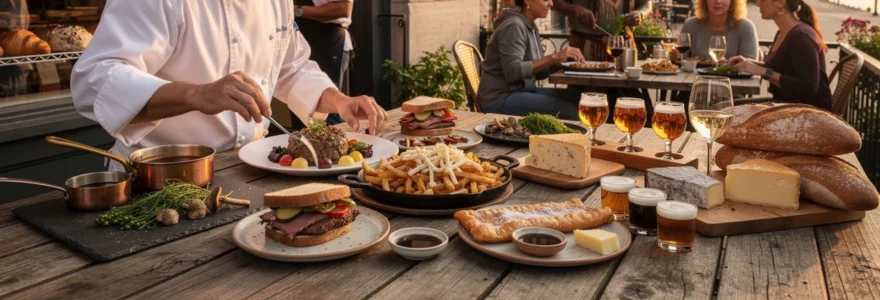
Montreal stands as a culinary crossroads where European sophistication meets North American innovation, creating a distinctive gastronomic landscape that reflects over four centuries of cultural evolution. This vibrant metropolis on the St. Lawrence River has cultivated a food culture that seamlessly weaves together French colonial techniques, British North American traditions, and indigenous ingredients into something entirely unique. From the legendary smoked meat sandwiches of Schwartz’s Deli to the artisanal cheese producers dotting the Eastern Townships, Montreal’s culinary identity represents far more than fusion cuisine—it embodies the complex history of New France and its transformation into modern Quebec.
The city’s gastronomic character extends beyond its famous bagels and poutine, encompassing a sophisticated understanding of terroir that rivals any European food capital. Montreal chefs have mastered the art of balancing habitant cooking traditions with contemporary molecular gastronomy, whilst local producers continue to perfect time-honoured techniques for maple syrup production and cheese aging. This unique positioning allows Montreal to offer visitors an authentic taste of North American cuisine that maintains deep European roots, making it a destination where culinary explorers can experience flavours found nowhere else in the world.
Culinary heritage: french colonial gastronomy meets british north american traditions
The foundation of Montreal’s distinctive cuisine lies in the remarkable preservation of French colonial cooking methods that arrived with the earliest settlers in the 17th century. These techniques, developed to accommodate the harsh Canadian climate and available ingredients, created a unique branch of French gastronomy that evolved independently from metropolitan French cuisine. The influence of New France extends beyond simple recipe adaptation, encompassing fundamental approaches to food preservation, seasonal cooking, and the integration of indigenous ingredients that French colonists encountered for the first time.
New france culinary techniques in contemporary montreal kitchens
Modern Montreal restaurants continue to employ traditional French colonial preservation methods, particularly in their approach to charcuterie and meat curing. The tourtière preparation techniques developed by early French settlers remain virtually unchanged in establishments like Au Pied de Cochon, where traditional spice blends and pastry methods create the authentic flavour profiles that defined habitant cuisine. These establishments demonstrate how historical cooking methods can be elevated through contemporary presentation and sourcing practices.
Contemporary chefs have rediscovered the value of French colonial fermentation techniques, particularly in bread making and dairy production. Montreal’s artisanal bakers employ sourdough starters and long fermentation processes that mirror the methods used by French colonial bakers who needed to maximise flavour and nutrition from limited ingredients. This approach has contributed to Montreal’s reputation for producing some of North America’s finest bread, with establishments maintaining fermentation cultures that date back generations.
British colonial influence on traditional québécois fare
The British conquest of New France in 1760 introduced Anglo-Saxon culinary traditions that gradually integrated with existing French methods, creating hybrid dishes that remain Montreal staples today. British preferences for hearty breakfast fare influenced the development of crétons, a traditional pork spread that combines French charcuterie techniques with British-style preservation methods. This cultural blending is particularly evident in Montreal’s pub culture, where traditional British ales are served alongside French-inspired bistro fare.
The integration of British baking traditions with French pastry techniques produced unique Montreal specialties such as the sugar pie, which combines British treacle tart concepts with French tarte methodology. Montreal’s bagel industry also reflects this cultural synthesis, as Eastern European Jewish immigrants adapted their traditional recipes to incorporate both French and British colonial baking preferences, resulting in the distinctive wood-fired, slightly sweet Montreal-style bagel that differs significantly from its New York counterpart.
Indigenous first nations ingredients integration in modern montreal cuisine
The sophisticated use of indigenous North American ingredients represents perhaps the most distinctive aspect of Montreal’s culinary heritage, reflecting centuries of knowledge exchange between French colonists and First Nations peoples. Traditional ingredients such as wild rice, maple syrup, and game meats were incorporated into French cooking techniques, creating entirely new flavour profiles that defined early Québécois cuisine. Modern Montreal chefs have renewed this relationship, sourcing traditional ingredients like fiddleheads, wild mushrooms, and indigenous grains directly from First Nations suppliers.
This renewed appreciation for First Nations foodways has also encouraged a more ethical, sustainable approach to sourcing. Many of Montreal’s leading restaurants now highlight ingredients such as Labrador tea, cedar, juniper, bison, and arctic char, acknowledging the communities that have cultivated and harvested them for generations. In tasting menus across the city, you might find venison tartare seasoned with smoked spruce tips or corn soup reimagined with heirloom varieties of maïs, connecting today’s diners to pre-colonial culinary traditions while supporting indigenous producers in a tangible way.
Habitant cooking methods preserved in old montreal establishments
While Montreal’s dining scene is known for innovation, a number of Old Montreal establishments still preserve the rustic habitant cooking methods that defined rural Quebec for centuries. Slow braising, confit, and long simmering over low heat remain central techniques in dishes like braised pork shoulder, baked beans (fèves au lard), and hearty meat stews. These methods, originally designed to make the most of tough cuts and root vegetables throughout long winters, now provide comfort-food anchors on menus that might otherwise lean toward contemporary fine dining.
In historic dining rooms with stone walls and wooden beams, you can still experience recipes that have changed little since the 18th and 19th centuries. Clay pot baking, cast-iron skillet roasting, and wood-fired oven cooking impart flavours that stainless steel and induction burners simply cannot replicate. Restaurants that specialise in traditional Québécois fare often proudly note their use of ancestral techniques, such as curing salt pork in-house or smoking hams over maple wood chips, maintaining an unbroken chain between early habitants and today’s urban gourmets.
Many of these establishments also adhere to the seasonal rhythms that shaped habitant life. Winter menus still emphasize root vegetables, salt-cured meats, and preserved fruits, while spring brings sugar-season delicacies like maple-baked beans and oreilles de crisse (crispy pork rinds). By dining in Old Montreal, you are not simply tasting old recipes; you are participating in a living culinary archive where methods such as cold-smoking, pickling, and cellar aging remain central to the kitchen’s identity.
Distinctive montreal ingredients: sourcing and seasonal procurement patterns
Montreal’s unique gastronomic character is rooted not only in technique, but also in the distinctive ingredients that define its terroir. Chefs here have developed sophisticated seasonal procurement patterns, working closely with small-scale producers, foragers, and fisherfolk to secure exceptional products at their peak. Understanding how these ingredients move from maple groves, dairy farms, and riverbanks to urban kitchens offers insight into why Montreal’s food culture feels so deeply connected to its landscape.
The city’s chefs treat the Quebec terroir with the same reverence that European counterparts reserve for Burgundy or Tuscany. Menus change frequently to reflect the arrival of spring fiddleheads, summer berries, fall game, and winter storage crops, ensuring that local ingredients remain the stars of the plate. For visitors curious about regional flavours, following the seasons in Montreal is like reading a calendar written in wild mushrooms, artisanal cheeses, and St. Lawrence seafood.
Quebec terroir products: maple syrup grading and artisanal cheese production
Maple syrup is perhaps Quebec’s most emblematic ingredient, and Montreal restaurants showcase it far beyond the breakfast table. Quebec is responsible for roughly 70% of the world’s maple syrup production, and strict grading standards ensure that quality and flavour are consistent across the province. Under Canada’s modern system, maple syrup is categorized by colour and taste—Golden, Delicate Taste; Amber, Rich Taste; Dark, Robust Taste; and Very Dark, Strong Taste—allowing chefs to select specific grades for different culinary applications.
In pastry kitchens across Montreal, lighter grades often sweeten mousses, custards, and glazes where subtlety is essential, while darker syrups are favoured for marinades, braises, and sauces that benefit from a more pronounced caramelized depth. Some high-end establishments maintain curated maple programs, pairing particular producers and forest terroirs with seasonal dishes in the same way a sommelier might recommend a wine. For those eager to explore maple beyond pancakes, visiting a cabane à sucre (sugar shack) just outside the city during spring offers an immersive taste of this iconic ingredient at its source.
Artisanal cheese production in Quebec has also exploded over the last three decades, and Montreal serves as the primary showcase for these award-winning products. From soft, bloomy-rind goat cheeses to washed-rind cow’s milk varieties reminiscent of classic French munster, local fromageries and market stalls highlight the diversity of regional styles. Many cheeses, such as Oka—originally created by Trappist monks—have become ambassadors of Quebec’s dairy heritage, reflecting both French monastic traditions and North American innovation.
In neighbourhoods like Mile End and around Jean-Talon Market, you will find specialty shops where affineurs (cheese agers) carefully mature wheels in temperature- and humidity-controlled caves. Chefs often build entire courses around Quebec cheese flights, pairing them with local ciders, ice wines, or craft beers. If you are curious about the province’s terroir, sampling a range of Quebec cheeses in Montreal is one of the most direct ways to experience its agricultural diversity on a single board.
St. lawrence river seafood: smoked fish and seasonal shellfish varieties
Montreal’s location on the St. Lawrence River has historically provided a steady supply of freshwater and saltwater species, shaping the city’s approach to seafood. Smoked fish traditions, in particular, reflect both European and indigenous influences, with salmon, sturgeon, and trout frequently appearing on menus in cured or lightly smoked form. These preparations, once essential for preservation, are now prized for their nuanced flavours and textures, often served with rye bread, pickled vegetables, and cultured butter.
Seasonal shellfish from the Gulf of St. Lawrence and Atlantic coast, including oysters, mussels, and scallops, travel quickly to Montreal’s raw bars and brasseries. Many restaurants highlight the specific origins of their oysters—such as Prince Edward Island or New Brunswick—emphasizing the briny differences between bays and inlets like a sommelier would describe vineyard plots. During peak seasons, you will find special menus featuring snow crab, lobster, and northern shrimp, showcasing how Quebec’s seafood economy ties Montreal to distant coastal communities.
Fishmongers at markets like Jean-Talon and Atwater also reflect evolving consumer interest in sustainability. Montreal chefs increasingly source from fisheries certified by organizations such as the Marine Stewardship Council and work with suppliers who prioritize traceability. For diners, this means that enjoying a plate of smoked char or a platter of oysters in Montreal often comes with detailed information about catch methods, regions, and seasonal availability—transforming a simple meal into a lesson in the ecology of the St. Lawrence.
Eastern townships agricultural produce in montreal markets
The Eastern Townships, located just southeast of Montreal, function as the city’s unofficial pantry, supplying an abundance of fruits, vegetables, wines, and specialty products. This predominantly rural region benefits from a temperate microclimate and rolling farmland, making it ideal for orchards, vineyards, and organic vegetable production. Montreal’s chefs and market vendors rely heavily on Townships producers for apples, pears, berries, and heirloom vegetables that anchor their seasonal menus.
At Jean-Talon Market, one of North America’s largest open-air markets, it is common to see stalls proudly displaying signs with the names of Eastern Townships farms. From late spring through fall, you will find tender asparagus, sweet corn, and field tomatoes alongside farmhouse ciders and small-batch jams. Many urban consumers now participate in community-supported agriculture (CSA) programs, receiving weekly baskets from Townships farms that mirror what top restaurants are using in their kitchens.
The region’s emerging wine industry has also made its presence felt on Montreal wine lists. Cool-climate varietals such as Riesling, Chardonnay, and hybrid grapes thrive here, producing crisp, aromatic wines and sparkling cuvées that pair beautifully with Quebec cheeses and seafood. As sommeliers increasingly champion local bottles, you are likely to encounter Eastern Townships wines in pairings that highlight how closely Montreal’s dining scene is linked to the surrounding countryside.
Foraged canadian botanicals: fiddleheads and wild mushroom varieties
Foraged ingredients play an outsized role in defining Montreal’s contemporary cuisine, adding a distinctly Canadian note to otherwise familiar dishes. Fiddleheads—young, tightly coiled fern shoots harvested in spring—have become a seasonal obsession, appearing briefly on menus in sautés, salads, and pickled garnishes. Their arrival is treated almost like the appearance of white asparagus in Europe: a fleeting, eagerly awaited sign that winter has finally released its grip.
Wild mushroom varieties such as chanterelles, morels, lobster mushrooms, and matsutake are harvested from Quebec’s vast forests and brought into the city by specialised foragers. High-end restaurants feature them in risottos, sauces, and roasted vegetable dishes, often pairing them with game meats to emphasize the forest terroir. Their earthy, sometimes fruity flavours lend a complexity that cultivated mushrooms cannot match, turning simple preparations into dishes that seem to distill the essence of Quebec’s landscape.
Other botanicals—spruce tips, sweet gale, wild garlic, and Labrador tea—regularly find their way into Montreal kitchens as well. Chefs use them to infuse syrups, oils, and broths, or to create herbal teas and cocktail components that are unmistakably northern in character. For diners, tasting these ingredients can feel like walking through a boreal forest translated onto the plate or into the glass, a reminder that Montreal’s food culture is inseparable from the wild ecosystems that surround it.
Iconic montreal establishments: schwartz’s deli and traditional brasserie culture
No exploration of Montreal’s unique blend of French and North American flavours would be complete without a visit to Schwartz’s Deli, the legendary institution on Boulevard Saint-Laurent. Since 1928, Schwartz’s has been perfecting its smoked meat, a Montreal specialty that balances Jewish deli traditions with local tastes and techniques. The brisket is dry-rubbed with a proprietary spice blend, cured for days, then smoked and steamed to achieve its signature tenderness—an approach that marries Old World preservation methods with New World ingredients.
Ordering a smoked meat sandwich “medium fat” on rye with yellow mustard at Schwartz’s is almost a culinary rite of passage. As you bite into the layers of spice-perfumed meat, you taste a Montreal story that intertwines Eastern European immigration, North American beef culture, and Quebec’s love of robust, comforting fare. The no-frills atmosphere—shared tables, quick service, and a perpetual line out the door—reinforces the idea that great food in Montreal is as much about community and continuity as it is about refinement.
Beyond delis, Montreal’s traditional brasserie culture reflects its deep French roots filtered through North American sensibilities. Classic establishments combine elements of Parisian bistros and Belgian beer halls, offering menus that might feature steak frites, moules marinières, onion soup, and charcuterie alongside an impressive selection of draft beers. These brasseries often serve as neighbourhood living rooms, open from lunch through late evening, where students, professionals, and families share the same convivial space.
Many brasseries have also embraced Quebec’s craft beer renaissance, replacing imported lagers with local saisons, IPAs, and farmhouse ales. This blending of brasserie-style cooking with a distinctly North American beer list illustrates Montreal’s talent for hybridization. Whether you are sampling a classic steak au poivre with a Quebec stout or enjoying poutine alongside a farmhouse cider, you experience firsthand how the city’s dining institutions act as bridges between European tradition and contemporary Canadian creativity.
French pastry techniques adapted for north american palates
Montreal’s pastry scene offers another vivid illustration of how French techniques have been reinterpreted to suit North American tastes. Bakeries and patisseries across the city rely on rigorous classical training—precise lamination, controlled fermentation, and meticulous sugar work—while freely experimenting with flavours and formats unfamiliar in Paris. The result is a landscape where canonical French pastries coexist with inventive creations featuring maple, peanut butter, cornmeal, or even smoked salt.
For visitors walking through neighbourhoods such as Plateau-Mont-Royal or Mile End, it is common to encounter bakeries where croissants share display cases with brownies, cheesecakes, and oversized cookies. This blending of French finesse and North American indulgence creates a pastry culture that feels both cosmopolitan and approachable. You can order a textbook-perfect pain au chocolat one day and return the next for a maple-pecan cronut—a hybrid emblematic of Montreal’s experimental spirit.
Viennoiserie production methods in montreal boulangeries
At the heart of Montreal’s bakeries lies an unwavering commitment to viennoiserie, the family of leavened pastries that includes croissants, brioches, and pains aux raisins. Many boulangeries rely on slow, cold fermentation to develop complex flavours, often letting dough rest for 24 to 48 hours before shaping. This technique, rooted in traditional French baking, results in pastries with thin, shattering crusts, well-developed crumb structures, and a depth of flavour that industrial production cannot mimic.
Lamination—the repeated folding of butter into dough to create hundreds of delicate layers—is treated almost as an art form. Some of the city’s top bakers even adjust formulas seasonally, altering hydration levels and butter content to respond to Montreal’s significant temperature and humidity swings. While the techniques remain classically French, fillings and toppings often reflect local ingredients: croissants stuffed with smoked ham and Quebec cheese, danishes adorned with Saskatoon berries, or brioches glazed with maple syrup and topped with pecans.
Montreal boulangeries also tend to blur the line between bakery and café, encouraging customers to linger with espresso drinks, light lunches, and weekend brunch menus. This relaxed, community-oriented atmosphere contrasts with the often more formal patisserie model in France. For visitors, it offers an accessible way to observe viennoiserie production up close—many shops feature open kitchens or glass windows where you can watch bakers shaping dough and sliding sheets of croissants into deck ovens at dawn.
Quebec sugar pie: traditional tarte au sucre preparation techniques
Quebec sugar pie, or tarte au sucre, is one of the most cherished examples of French pastry techniques adapted to local resources. Originally developed as an economical dessert using readily available ingredients—flour, butter, cream, and brown sugar or maple syrup—it has become a symbol of Québécois comfort food. The foundation is a shortcrust or pâte brisée shell, prepared with chilled butter and minimal handling to ensure tenderness, then blind-baked to prevent sogginess.
The filling typically combines brown sugar or maple syrup with cream or evaporated milk, thickened slightly with flour or cornstarch and enriched with butter. Slowly baked until just set, it forms a silky, custard-like interior beneath a glossy, caramelized surface. While the technique follows classic French custard principles, the use of maple syrup and the dessert’s unabashed sweetness reflect North American preferences. Some bakers modernize the recipe with a pinch of sea salt or a splash of local whisky, adding complexity while respecting tradition.
In Montreal, tarte au sucre appears in both humble and refined contexts—from diners serving generous wedges with coffee to upscale restaurants offering miniature versions accompanied by maple ice cream. For those eager to explore the city’s baking culture at home, sugar pie is also one of the most accessible recipes to recreate, relying on pantry staples rather than specialist equipment. Learning to bake it can be a delicious way to bring a piece of Montreal’s culinary heritage into your own kitchen.
Beaver tails and tire d’érable: street food innovation
While rooted in European traditions, Montreal’s pastry culture has also inspired distinctly Canadian street foods such as “beaver tails” (queues de castor) and tire d’érable (maple taffy). Beaver tails are pieces of yeasted dough stretched into elongated, beaver-tail-like shapes, then fried until crisp at the edges and soft in the centre. Typically finished with toppings such as cinnamon sugar, chocolate, or maple butter, they evoke the indulgent spirit of American funnel cakes while maintaining a uniquely Canadian identity.
Tire d’érable, on the other hand, showcases maple syrup in its purest festive form. During sugar season, hot maple syrup is poured over packed snow, where it quickly cools and thickens. Diners then roll the sticky strands onto wooden sticks, creating chewy maple lollipops that capture the essence of early spring in Quebec. This deceptively simple preparation relies on precise temperature control and syrup quality, blending traditional candy-making techniques with an outdoor, participatory ritual.
Montreal’s festivals, winter carnivals, and public markets frequently feature both beaver tails and maple taffy, demonstrating how the city’s culinary creativity extends beyond restaurant walls. Street food vendors often riff on classic versions, introducing toppings like hazelnut spread, crushed cookies, or even savoury combinations. For visitors, sampling these treats while strolling along the Old Port or a bustling festival site offers an immediate, visceral connection to Montreal’s playful approach to dessert.
Beverage culture: quebecois wine production and craft beer movement
Montreal’s beverage culture has evolved dramatically in recent decades, mirroring the broader shift toward local, artisanal production. Quebec’s cool-climate wine industry, once considered a curiosity, now produces bottles that routinely earn national and international recognition. At the same time, the province’s craft beer movement has transformed Montreal into a destination for beer enthusiasts seeking boundary-pushing styles and flavours.
In wine bars and restaurants across the city, you will find carefully curated lists that highlight Quebec vintners alongside classic European regions. Many establishments prioritize natural and low-intervention wines, reflecting both global trends and the province’s small-scale agricultural realities. For those interested in tasting Quebec in a glass, sommeliers often recommend pairings that showcase how local wines interact with regional ingredients—think sparkling cider with aged cheddar or a crisp white wine with St. Lawrence oysters.
Montreal’s craft beer scene centres around a dense network of microbreweries and brewpubs, many of which experiment with ingredients rarely seen in traditional beer styles. Brewers incorporate spruce tips, wild yeasts, local grains, and even maple syrup to create expressions that feel unmistakably Quebecois. Some breweries have become institutions in their own right, with dedicated taprooms where you can sample tasting flights, seasonal releases, and collaborative brews developed with local chefs or coffee roasters.
The city’s relaxed licensing culture also contributes to a vibrant bar scene, where late closing times and a strong emphasis on quality over quantity prevail. From dimly lit cocktail bars offering drinks infused with boreal botanicals to bustling beer halls pouring farmhouse ales, Montreal invites you to explore its flavours one sip at a time. As with its food, the city’s beverage culture thrives at the intersection of European technique and North American experimentation, making every glass an opportunity to taste this unique blend.
Contemporary fusion: molecular gastronomy meets traditional quebecois techniques
In recent years, Montreal has emerged as a laboratory for chefs who merge cutting-edge techniques with the hearty, time-honoured flavours of Quebec. Molecular gastronomy—once associated primarily with avant-garde European restaurants—has found fertile ground here, particularly in venues that respect but refuse to be bound by tradition. Instead of using foams, gels, and spherifications for shock value, Montreal chefs often deploy them to reinterpret familiar dishes like tourtière, pea soup, or maple pudding in surprising yet respectful ways.
Imagine a deconstructed poutine where crisp potato shards share the plate with cheese-curd espuma and gravy reduction pearls, or a cipâte (layered meat pie) rendered as bite-sized spheres that burst with slow-cooked game flavours. Such creations rely on sous-vide cooking, controlled dehydration, and precision temperature management to preserve the soul of traditional recipes while altering their textures and presentations. For diners, this kind of fusion can feel like reading a beloved novel in a new translation: the story remains, but the experience shifts.
Importantly, Montreal’s approach to contemporary fusion remains grounded in regional sourcing and seasonality. High-tech equipment like rotary evaporators and pacojets may hum in the background, but the ingredients—wild mushrooms, lake fish, heritage pork, and maple in all its forms—are unmistakably Quebecois. This helps ensure that innovation does not come at the expense of identity. On tasting menus, it is common to see explicit nods to habitant cooking, such as fermented cabbage, smoked lard, or hearth-baked breads, reinterpreted with modern flair.
As Montreal continues to attract chefs and food enthusiasts from around the world, its culinary landscape becomes ever more dynamic. Yet the city’s most successful kitchens tend to be those that understand the value of continuity: using new techniques not to erase the past, but to illuminate it from fresh angles. Whether you find yourself savouring a classic smoked meat sandwich or a nitrogen-frozen maple parfait, you are participating in an ongoing conversation between old and new—a dialogue that makes Montreal’s blend of French and North American flavours unlike anywhere else on the continent.