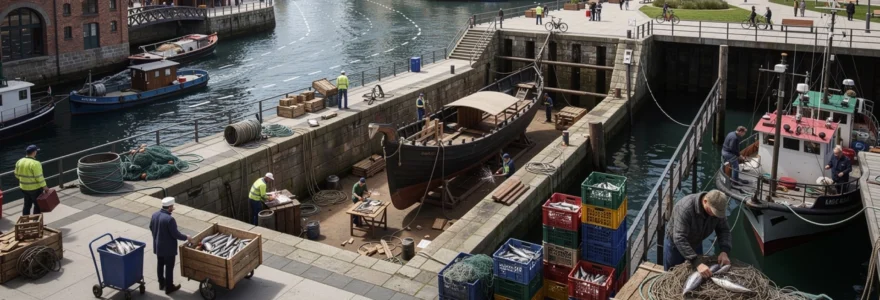
Harbor cities around the world stand as living testaments to humanity’s enduring relationship with the sea. These maritime centers have shaped global trade routes, naval history, and cultural exchange for centuries, creating distinctive urban identities rooted in nautical heritage. From the ancient trading ports of the Mediterranean to the industrial powerhouses of Northern Europe, harbor cities continue to evolve while preserving their essential maritime character.
The unique blend of historical significance and modern innovation found in these coastal urban centers creates compelling destinations that attract millions of visitors annually. Maritime heritage permeates every aspect of life, from architecture and industry to cuisine and cultural traditions. Understanding how these cities have maintained their seafaring identity while adapting to contemporary challenges offers valuable insights into successful urban development strategies.
Maritime heritage infrastructure and port architecture in european harbour cities
The architectural legacy of European harbor cities reflects centuries of maritime prosperity and engineering innovation. These urban landscapes showcase the evolution from medieval trading posts to modern commercial hubs, with each era leaving its distinctive mark on the built environment. The preservation and adaptive reuse of historic maritime infrastructure has become a cornerstone of cultural identity in many of these destinations.
Historic dockyard preservation in portsmouth and chatham naval yards
Portsmouth’s Historic Dockyard stands as one of the world’s finest examples of preserved naval heritage, spanning over 800 years of continuous maritime history. The site houses HMS Victory, Lord Nelson’s flagship from the Battle of Trafalgar, alongside other historic vessels that tell the story of British naval supremacy. The preservation efforts extend beyond individual ships to encompass entire dockyard complexes, including rope walks, sail lofts, and forge workshops that demonstrate traditional shipbuilding techniques.
Chatham Historic Dockyard complements Portsmouth’s offerings with its focus on the industrial aspects of naval shipbuilding. The site’s Victorian-era dry docks and machine shops provide visitors with an understanding of the technological advances that revolutionized maritime construction. These preservation projects demonstrate how authentic maritime heritage can be maintained while serving modern educational and tourism purposes.
Venetian arsenal maritime manufacturing legacy and adaptive reuse
The Venetian Arsenal represents one of history’s most sophisticated maritime manufacturing complexes, pioneering assembly-line production methods centuries before the Industrial Revolution. This vast shipyard complex employed over 16,000 workers at its peak, producing the galleys that established Venice’s dominance over Mediterranean trade routes. The Arsenal’s innovative approach to mass production influenced shipbuilding techniques across Europe and beyond.
Today, the Arsenal serves as a venue for the Venice Biennale, transforming former shipbuilding halls into contemporary exhibition spaces. This adaptive reuse strategy preserves the architectural integrity of the historic structures while providing them with new purpose and relevance. The juxtaposition of cutting-edge art installations within these ancient maritime workshops creates a dialogue between Venice’s naval past and its cultural present.
Hamburg speicherstadt warehouse district UNESCO world heritage status
Hamburg’s Speicherstadt, the world’s largest warehouse district, earned UNESCO World Heritage status in recognition of its exceptional maritime commercial architecture. Built between 1883 and 1927, these red-brick warehouses on timber foundations demonstrate the ingenuity required to create storage facilities in a tidal harbor environment. The district’s Gothic Revival architecture reflects Hamburg’s prosperity as a major trading center within the Hanseatic League.
The transformation of Speicherstadt from active commercial use to a mixed-use cultural and residential district illustrates successful heritage preservation strategies. Many warehouses now house museums, restaurants, and luxury apartments, maintaining their historical character while serving contemporary needs. The careful balance between preservation and development has become a model for other harbor cities seeking to revitalize their historic waterfront areas.
Antwerp port authority modernisation of medieval harbour structures
Antwerp’s approach to harbor development demonstrates how medieval foundations can support modern port operations. The city’s strategic location on the Scheldt River has maintained its importance as a commercial gateway for over 1,000 years, requiring continuous adaptation of its maritime infrastructure. The Port Authority has implemented innovative solutions that respect historical constraints while accommodating contemporary shipping requirements.
The integration of medieval town planning with modern port facilities creates unique urban landscapes where ancient guild halls overlook container terminals. This coexistence of historical and industrial
landscapes helps visitors and residents alike understand how deeply Antwerp’s prosperity is tied to its river and harbour. Recent landmark projects, such as the Port House by Zaha Hadid Architects, physically bridge historic fire stations and new office structures, symbolising the city’s commitment to connecting maritime heritage with cutting-edge logistics and port management.
Traditional maritime industries and seafaring cultural practices
Beyond monumental dockyards and warehouses, harbor cities derive much of their maritime identity from traditional industries and everyday seafaring practices. Fishing fleets, coastal trade, shipbuilding yards, and small-scale crafts have long sustained waterfront communities and shaped their social fabric. Even as globalisation and technological change transform these sectors, many harbor cities are actively preserving working waterfronts and intangible maritime culture.
North sea fishing fleet operations in aberdeen and grimsby
Aberdeen and Grimsby illustrate how North Sea fishing has defined urban character for generations. Aberdeen’s harbour remains one of the UK’s busiest, with modern trawlers operating alongside supply vessels for the offshore energy sector. Fish markets at the quayside, auction halls, and processing plants form an integrated chain that still underpins local employment, even if today’s fleets are more regulated and technologically advanced than their 19th-century predecessors.
Grimsby, once dubbed the “world’s premier fishing port”, saw dramatic decline after the 1970s due to changing quotas and distant-water restrictions. Yet the town has adapted by specialising in seafood processing and cold storage, handling a significant share of the UK’s imported fish. Heritage initiatives, such as the Grimsby Fishing Heritage Centre and preserved trawlers, keep alive stories of dangerous voyages to Icelandic waters. For visitors interested in authentic maritime culture, walking the docks at dawn or touring historic smokehouses provides insight into how these communities continue to balance tradition with modern supply chains.
Mediterranean shipbuilding craftsmanship in genoa and barcelona yards
Genoa and Barcelona have centuries-old reputations as centres of Mediterranean shipbuilding craftsmanship. Genoa’s shipyards supplied merchant fleets and war galleys that projected Ligurian power across the sea, and the city’s narrow carruggi (alleyways) still echo with place names linked to maritime trades. Today, Fincantieri’s facilities near Genoa construct and refit cruise ships and naval vessels, translating artisanal know-how into highly specialised industrial processes.
Barcelona’s historic Drassanes Reials (Royal Shipyards) once produced galleys for the Crown of Aragon. These Gothic halls now house the Maritime Museum, showcasing models, navigational instruments, and full-size vessels that trace the evolution from wooden hulls to steel leviathans. Meanwhile, contemporary yards along the Catalan coast focus on superyacht construction and maintenance, combining advanced composites with meticulous hand finishing. For anyone curious about how traditional boatbuilding skills survive in the age of CAD design and robotic welding, guided tours and museum exhibits in both cities offer a compelling answer.
Baltic maritime trade routes through lübeck hanseatic league networks
Lübeck, often referred to as the “Queen of the Hanseatic League”, epitomises how maritime trade networks can shape an entire region. From the 13th to the 16th century, this Baltic harbour city coordinated merchant fleets that linked ports from Bruges to Novgorod, transporting grain, timber, furs, and salt. Its brick Gothic warehouses, stepped gables, and imposing Holstentor gate served as both defensive structures and symbols of commercial might.
Traces of these Baltic trade routes remain visible in the urban fabric and cultural ties between former Hanse cities such as Rostock, Gdańsk, and Tallinn. Modern ferry lines and short-sea shipping services still follow many of the same corridors, now carrying containers and trailers instead of casks and bales. Lübeck’s museums and archives preserve merchants’ ledgers, trade seals, and maps that help us understand how medieval supply chains operated long before the term “logistics hub” was coined. In many ways, today’s digital shipping platforms mirror the old Hanseatic principle of cooperation between independent port cities pursuing shared maritime interests.
Atlantic whaling industry heritage in nantucket and new bedford
Across the Atlantic, Nantucket and New Bedford in Massachusetts demonstrate how a single maritime industry can define a harbor city’s identity for centuries. In the 18th and early 19th centuries, these ports were global centres of the whaling industry, sending ships around Cape Horn and into the Pacific in search of sperm whales. Wealth generated from whale oil and baleen financed grand captain’s houses, cobbled streets, and civic buildings that still characterise both towns today.
With the eventual decline of whaling due to overexploitation and the rise of petroleum, Nantucket and New Bedford had to reinvent themselves. Rather than erase their controversial past, they have chosen to interpret it critically through institutions such as the New Bedford Whaling Museum and Nantucket Whaling Museum. Exhibits explore navigation, shipboard life, and the environmental impact of hunting marine mammals, prompting visitors to reflect on changing relationships between harbor cities and the ocean. This nuanced approach shows how maritime heritage can address complex histories while contributing to sustainable cultural tourism.
Contemporary maritime economic clusters and innovation hubs
Modern harbor cities are not simply open-air museums; many function as dynamic maritime innovation hubs driving regional and global economies. From advanced shipbuilding and marine engineering to offshore renewable energy and blue biotechnology, contemporary maritime clusters concentrate specialised skills, research institutions, and logistics infrastructure. For cities with a strong maritime identity, nurturing these clusters helps ensure that the waterfront remains a working space rather than a purely scenic backdrop.
Examples abound across Europe and beyond. Rotterdam and Antwerp host some of the world’s largest petrochemical complexes and container terminals, supported by digital port community systems that streamline customs, tracking, and scheduling. In Northern Europe, cities such as Bergen and Stavanger have leveraged offshore oil and gas expertise to become leaders in subsea technology and, increasingly, floating wind power. Further south, maritime clusters in Marseille and Piraeus are investing in shore power, alternative fuels, and eco-friendly ship repair facilities to align port activity with climate goals.
One useful way to think about these economic clusters is to compare them to ecosystems: ports, shipyards, research labs, start-ups, and training centres all play interdependent roles. Remove one element, and the system becomes less resilient. Many harbor cities now support “blue economy” incubators and maritime accelerators to encourage innovation in areas like autonomous vessels, marine robotics, and data-driven ocean monitoring. For professionals and policymakers, engaging with these initiatives is crucial if they want their harbor city to remain competitive in a low-carbon, technology-intensive maritime sector.
Waterfront urban planning and maritime quarter development strategies
As industrial port activities consolidate into fewer, larger terminals, many cities are left with underused docks and warehouses close to their historic centres. How should these valuable waterfront spaces be reimagined? The most successful maritime quarter developments combine public access, mixed-use functions, and respect for nautical heritage, rather than pursuing isolated landmark projects. Three European case studies—Rotterdam, Copenhagen, and Liverpool—offer instructive examples.
Rotterdam kop van zuid post-industrial harbour regeneration
Kop van Zuid, on the south bank of the Nieuwe Maas in Rotterdam, was once a landscape of derelict warehouses and abandoned quays. Through a long-term regeneration strategy, the city has transformed this post-industrial harbour area into a vibrant urban district that remains firmly connected to its maritime roots. Iconic structures such as the Erasmus Bridge and the converted Holland America Line terminal act as visual anchors, linking old and new.
Rather than erasing the site’s working past, planners retained historic pier layouts, quays, and cranes as part of the public realm. Residential towers, offices, cultural institutions, and hotels have been layered onto this existing structure, creating a dense, walkable neighbourhood with views of the active port further downstream. For visitors, a stroll along Wilhelminapier offers a tangible sense of Rotterdam’s evolution from emigrant gateway to global logistics hub. For other harbor cities facing similar brownfield challenges, Kop van Zuid illustrates how adaptive reuse, high-quality public transport, and phased development can produce a balanced maritime quarter.
Copenhagen ørestad maritime district sustainable development
Copenhagen’s Ørestad district, while not a traditional docklands conversion, demonstrates how a new urban area can integrate water, transport, and sustainability in a way that reinforces a city’s maritime identity. Located between the historic centre and the airport, Ørestad is structured around canals, wetlands, and green corridors that manage stormwater and create a sense of proximity to the sea. The elevated Metro line connects the district to the rest of Copenhagen in minutes, reducing car dependence.
Architecturally, Ørestad’s housing blocks, offices, and cultural venues often orient towards water features, with promenades and public spaces inviting residents to engage with the waterfront. Energy-efficient buildings, district heating, and cycling infrastructure support Copenhagen’s ambition to become carbon neutral. For planners, the key lesson is that maritime character does not always require restored shipyards or piers; it can also emerge from how new districts choreograph views, movement, and ecological systems linked to the coastal environment. Ask yourself: if you were designing a maritime neighbourhood today, how would you balance flood resilience, quality of life, and historic references?
Liverpool albert dock cultural quarter maritime tourism integration
Liverpool’s Albert Dock is a textbook example of how historic maritime infrastructure can be repurposed into a cultural and tourism powerhouse. Built in the mid-19th century as a fireproof dock complex for valuable cargoes like cotton and tobacco, it fell into disuse after World War II. Starting in the 1980s, a comprehensive regeneration programme converted the brick warehouses and dock basins into a mixed-use quarter hosting museums, galleries, restaurants, and apartments.
Today, the Albert Dock complex is home to Tate Liverpool, the Merseyside Maritime Museum, and the International Slavery Museum, all of which interpret different facets of the city’s seafaring history. The preserved dock basins, moored heritage vessels, and colonnaded walkways ensure that visitors remain constantly aware they are in a former working port. Crucially, the area is linked via pedestrian routes and signage to the still-operational Port of Liverpool and the wider waterfront, preventing it from becoming an isolated tourist enclave. Cities looking to integrate maritime tourism with everyday urban life can learn much from Liverpool’s layered, narrative-rich approach.
Maritime museums and cultural heritage preservation institutions
Maritime museums and related institutions play a central role in safeguarding the stories, artefacts, and skills that define harbor cities with a strong maritime identity. They function not only as repositories of ships’ logs, navigational charts, and model vessels, but also as active laboratories where communities reflect on their relationship with the sea. Increasingly, these institutions are embracing interactive exhibits, community outreach, and digital archives to engage broader audiences.
Large institutions such as the National Maritime Museum in Greenwich, the Deutsches Hafenmuseum in Hamburg, and the Musée National de la Marine in France curate collections that span exploration, trade, war, and everyday coastal life. Their exhibitions help visitors connect seemingly abstract concepts—like global shipping lanes or naval strategy—to tangible objects and personal stories. Smaller, city-specific museums, from Bergen’s Hanseatic Museum to the Lymington maritime collections, focus on local shipbuilding, fishing, or ferry services, ensuring that regional narratives are not lost.
For harbor cities, investing in maritime heritage institutions brings several practical benefits. Well-curated museums attract cultural tourism, extend visitor stays, and support local businesses. They also provide educational programmes for schools and vocational training in traditional crafts such as sailmaking, rigging, or wooden boat restoration. Think of them as memory anchors: without such institutions, the rapid transformation of waterfronts could sever residents’ connection to their seafaring roots within a single generation.
Coastal defence systems and naval heritage sites in harbour cities
Finally, many harbor cities with strong maritime identities are ringed by fortifications, batteries, and naval bases that speak to centuries of coastal defence. These structures remind us that the sea has always been both a conduit for trade and a potential avenue for attack. From Henry VIII’s chain of artillery forts along the English Channel to the elaborate harbour defences of Lisbon, Valparaíso, or Halifax, coastal defence systems have left a distinctive imprint on urban shorelines.
Today, numerous former fortresses and naval installations have been opened to the public or integrated into park systems. Hurst Castle near Lymington, Fort McHenry in Baltimore, and Suomenlinna Sea Fortress off Helsinki’s coast are just a few examples where ramparts and gun emplacements can be explored on foot. These sites often provide some of the best panoramic views of harbour approaches, making them ideal vantage points to understand how geography, currents, and channels influenced defence planning. They also host reenactments, exhibitions, and memorials that honour naval personnel and coastal communities affected by conflict.
As military technology evolves and many traditional naval facilities downsize or relocate, harbor cities face important decisions about these strategic waterfront lands. Some choose to maintain active naval bases alongside public promenades, as in Portsmouth or Toulon, preserving a living link between past and present fleets. Others convert former dockyards and forts into mixed-use districts while retaining key structures as heritage anchors. In both cases, thoughtful planning can turn once-restricted defence zones into accessible public assets, ensuring that the martial side of maritime history remains visible within the broader narrative of harbor city life.