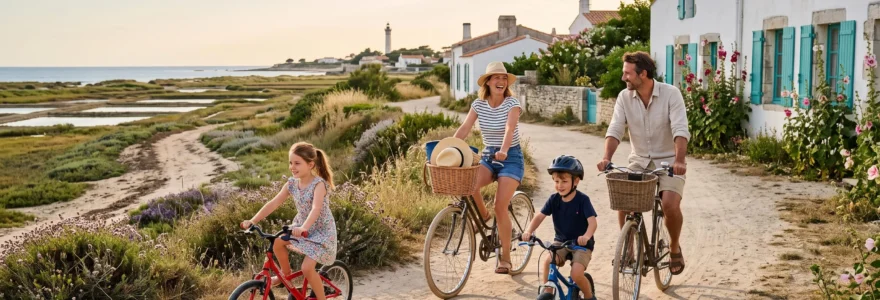
A luxury family holiday on Île de Ré works best when every choice—season, accommodation, and activities—matches your children’s age and your comfort standards. The island is compact and easy to navigate, but “high-end” doesn’t automatically mean “family-proof”: room layout, meals, and daily logistics matter as much as design and service.
This guide answers the core question—how to plan a luxury family holiday on Île de Ré—with concrete criteria, trade-offs by season, and decision shortcuts based on whether you’re travelling with a baby, a toddler, school-age children, or teens.
Planning Île de Ré with kids: the fastest way to decide
- Pick your season first: summer brings the widest choice of services but more crowds; shoulder seasons can feel calmer for young children (always double-check openings).
- Choose accommodation for your child’s rhythm: space for naps, easy breakfasts, and safe outdoor areas often matter more than “star level”.
- Plan your transport around low-stress days: bikes are iconic, but families still benefit from a back-up plan for wind, rain, or tired legs.
- Build days around one anchor activity: beach + village cycle + early dinner beats an overpacked itinerary.
Why Choose Île de Ré for a Luxury Family Holiday?
Direct answer: Île de Ré is a strong choice for a luxury family holiday if you value a safe, village-based beach atmosphere, short travel distances on the island, and family-oriented services—while accepting that peak summer can feel busy and requires earlier planning.
What makes the island particularly family-friendly is not just the scenery; it’s the way services and facilities are organised across the destination. The local tourist office explains that the destination holds the label Famille Plus de l’Île de Ré, which highlights a network of providers committed to welcoming families, alongside practical facilities across the island’s villages (for example, lifeguarded beaches are explicitly mentioned on the official page).
For a high-end trip, this matters because your “luxury” is often time and simplicity: fewer long drives, easier transitions between beach, market, and accommodation, and more predictable kid-friendly options when you need them.
Is Île de Ré a good destination for a luxury family holiday?
Yes—if your definition of luxury includes space, calm, and smooth days with children, not only premium décor. Île de Ré’s villages, beaches, and cycling culture naturally encourage slow travel, which tends to suit families who want comfort without over-scheduling.
The key is to choose the right base. A beautiful property can still be a poor fit if it’s far from the places you’ll use daily (a beach with easy access, a village centre for groceries, or a bike rental). On the other hand, a well-located place with family-ready features (separate sleeping area, outdoor space, flexible meals) can feel genuinely “worth it”.
Scenario (hypothetical): In a typical beach resort stay, you might spend most of your time inside one complex because leaving with kids feels like a project. On Île de Ré, families often build comfort around short loops: a morning beach, a market stop for lunch supplies, and an afternoon cycle to a village—then back for naps or downtime. The island’s compact feel is what makes this rhythm realistic.
Value-for-money reality check: a premium budget is easier to justify when it buys you fewer logistical headaches (sleep, meals, proximity), not just “nice things”. Use that lens when comparing options.
When to Visit and How to Plan Your Stay
Direct answer: For most families, the best time is when your children will enjoy the outdoors and you can avoid the most intense crowding—often outside peak school-holiday weeks. Whatever you choose, confirm seasonal openings and book early for summer.
Start with one decision: do you want the island at its most lively (more services, more people) or at its most breathable (fewer crowds, but potentially fewer options)? Your answer should depend on your children’s age and how you experience “luxury”: buzz and choice, or space and quiet.
One useful signal about seasonality is the recent tourism reporting: a local article citing Destination Île de Ré mentions that bilan de la saison touristique 2025 includes “a nice progression in the pre-season (spring)” while also tracking changes in visitor indicators between April and August 2025 versus 2024. This doesn’t tell you everything about your specific week, but it supports the idea that shoulder-season travel can be meaningful on the island.
When is the best time to visit Île de Ré with children?
For babies and toddlers (0–3): aim for calmer weeks when you can keep naps and early dinners simple. The biggest win is often not weather perfection, but reduced waiting and easier parking/bike paths. You’ll also be less dependent on a packed activity calendar—beach time and short outings are enough.
For school-age kids (4–11): choose based on your activity priorities. If you want the widest choice of organised options and a “holiday atmosphere,” summer is usually the most straightforward—at the cost of higher demand. If you want long beach days without feeling compressed, consider shoulder-season timing when possible, and verify what’s open for your dates with the official tourist information.
For teens (12+): livelier periods can be a plus: more energy in villages, easier social vibe, and a wider range of outings. Comfort still hinges on accommodation layout (privacy, separate sleeping space) and transport flexibility.
Seasonal openings to verify before you commit: family attractions, kids’ clubs, and some services can be seasonal. Check official Île de Ré tourist information close to your travel dates, especially outside summer.
How do you plan logistics to keep the trip high-end (and kid-friendly)?
Plan “luxury” as a chain of small low-friction decisions: arrival, groceries, bikes, beach access, and a back-up plan for tired kids. On the island, daily comfort often comes from proximity rather than prestige—being near what you’ll actually do each morning.
- Lock your travel window
Choose dates based on your children’s rhythm and your crowd tolerance, then confirm what you want open during that period.
- Choose your base village by daily routine
Prioritise beach access, walkability for groceries, and easy bike routes over “the most famous spot”.
- Book accommodation that protects sleep
Look for separate sleeping zones, quiet rooms, and outdoor space so adults can relax after bedtime.
- Decide your “movement plan”
Bikes can be central, but keep a plan for wind/rain and for younger children who may not cycle every day.
If you’re comparing options beyond the island, this short guide on family-friendly stays can help you sanity-check what really reduces effort once you arrive (space, food logistics, and sleep setup).
Choosing the Right Family Accommodation
Direct answer: The best luxury accommodation for families on Île de Ré is the one that matches your children’s age: hotels for service and convenience, villas for space and control, and premium campsites/resorts for kid facilities—provided the location supports your daily routine.
Because we do not have verified, source-backed price ranges in the provided sources, the most reliable approach is to compare accommodations by family function rather than by published “from” rates: space, meal flexibility, child safety, and how many daily transfers you eliminate.
Luxury hotel, villa, or premium campsite: what fits your family best?
Luxury hotels tend to suit parents who want service to absorb friction: breakfast without planning, housekeeping, and support at the front desk. They work well with babies and toddlers if you can secure a room layout that protects naps (separate sleeping area or quiet orientation).
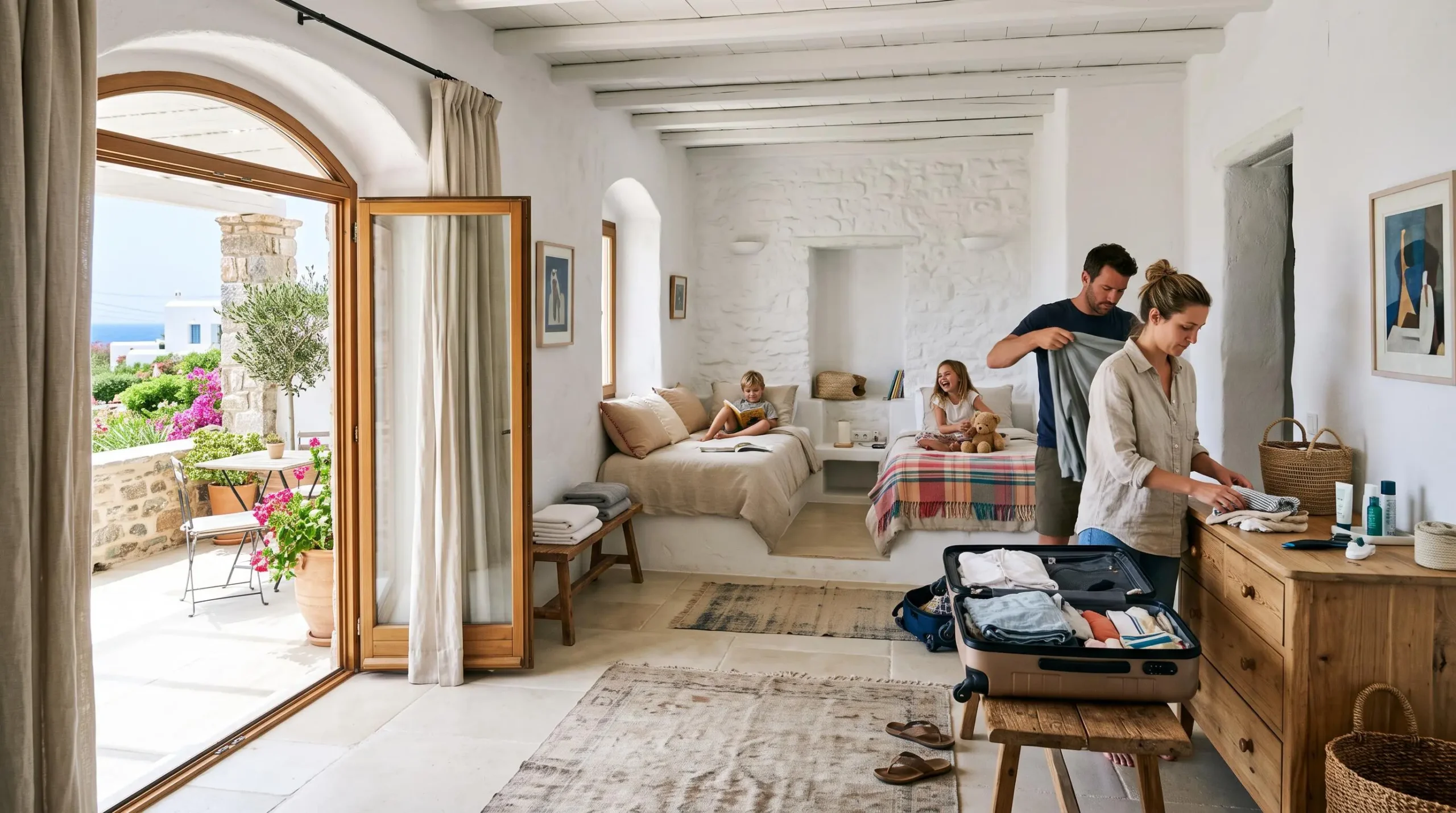
High-end villas are often the simplest way to make a premium trip genuinely comfortable with children: room to spread out, private outdoor space, and the ability to run meals around your schedule. They shine for families who want privacy and predictable evenings, but they shift responsibility to you (groceries, cooking, tidying).
Premium campsites/resorts can be excellent value for families who want ready-made kid infrastructure (play areas, pools, group energy). The luxury is not silence—it’s that children are busy and happy while you get breathing room. The trade-off can be a more active atmosphere and less privacy than a villa.
What location criteria matter most with kids?
With young children: choose a base that minimises daily “transfers”. Being close to a safe beach access and basic shopping often beats being in the prettiest photo spot if it adds car time at the wrong moments (late afternoon, pre-dinner).
With school-age kids: prioritise access to cycling routes and a village centre where you can build a simple routine (morning bakery, afternoon ride, easy dinner). This is where Île de Ré feels at its best: independence without long distances.
With teens: consider giving them autonomy: walkable village centres and safe cycling loops can make a premium stay feel freer for everyone, as long as you’re comfortable with your family rules and supervision needs.
- If naps and early bedtimes are the priority:
Prefer a villa or a hotel with a proven family room layout that separates sleeping and living space.
- If you want “kids busy, parents breathing”:
Consider a premium campsite/resort-style option, then choose the calmest possible pitch/unit location.
- If you want minimal planning and maximum service:
A hotel can work best—provided you confirm practical child needs (cot availability, meal flexibility, room quiet).
Cas pratique
Hypothetical example: a family with two children (ages 2 and 6) hesitates between a villa and a premium campsite. If the 2-year-old still naps daily, the villa often wins on schedule control and quiet evenings. If the 6-year-old needs constant stimulation and the parents want fewer planned activities, the premium campsite can feel “more luxurious” in practice—because it reduces the parents’ workload. In both cases, they should choose a location that makes the daily beach-and-groceries loop short and predictable.
Best Family Activities on the Island
Direct answer: The best family activities on Île de Ré combine low-effort outdoor time (beaches, cycling, markets, villages) with one “anchor” experience per day—chosen by your children’s age and the weather.
To keep the trip genuinely high-end, choose activities that don’t rely on long drives or strict schedules. Your goal is a reliable rhythm: something active in the morning, a flexible lunch plan, and a calmer afternoon that still feels “special”.
What should you do with kids, by age group?
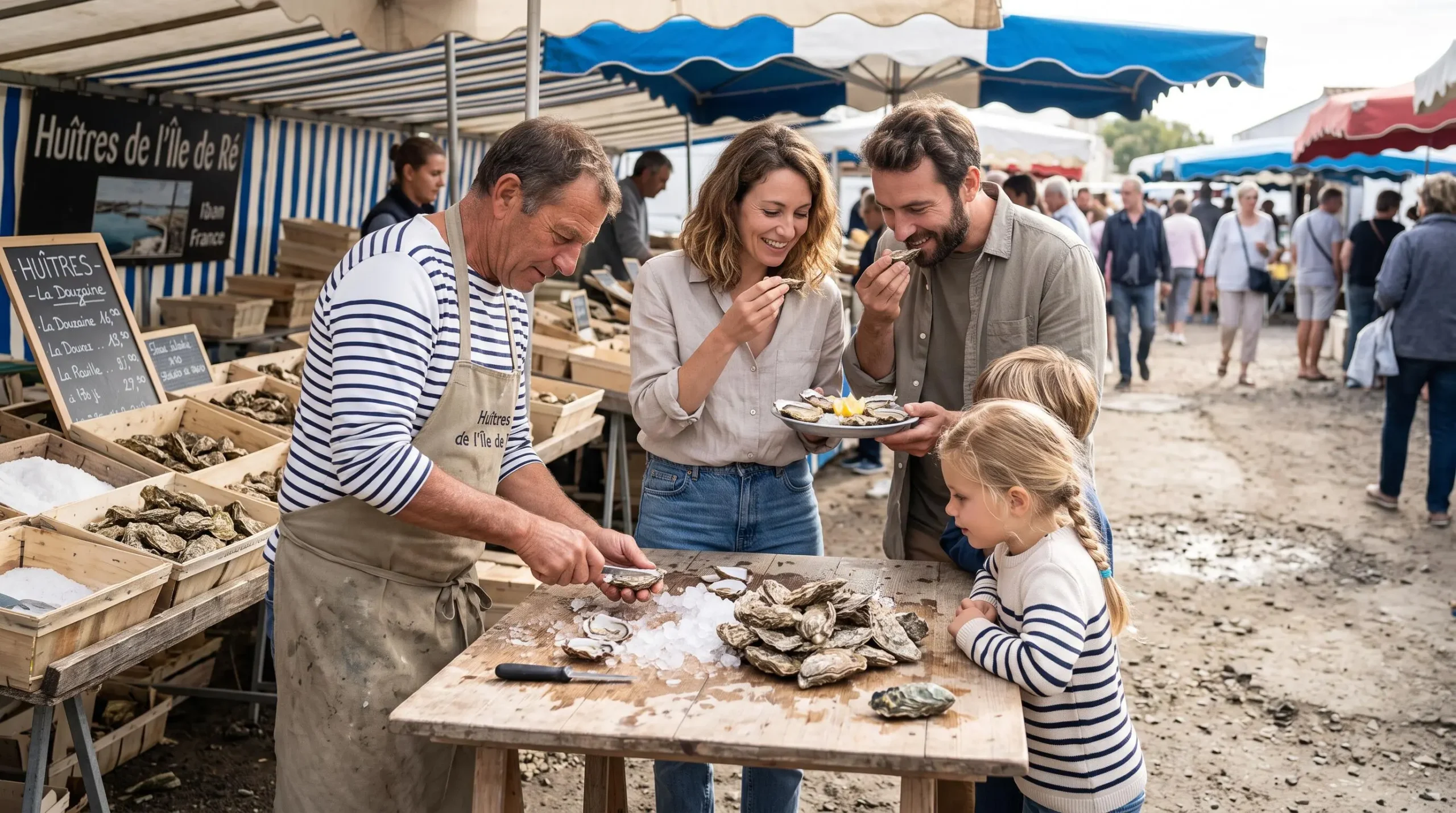
Babies and toddlers (0–3): keep it simple and sensory—short beach sessions, pram-friendly village strolls, and low-tide exploring where you can stop instantly when it’s time to eat or sleep. Choose one outing per half-day, not more.
Kids (4–11): make cycling the “story” of the trip, then add playful variety: beach morning, village loop, market stop, and a treat break. Kids this age often love having a daily mission (“find the best picnic spot”, “spot crabs at low tide”).
Teens (12+): add independence and challenge: longer rides, water sports if conditions suit, and evenings in village centres. What makes it luxury is giving them freedom without losing control—clear meeting points and realistic distances.
A sample easy luxury day (and a rainy-day alternative)
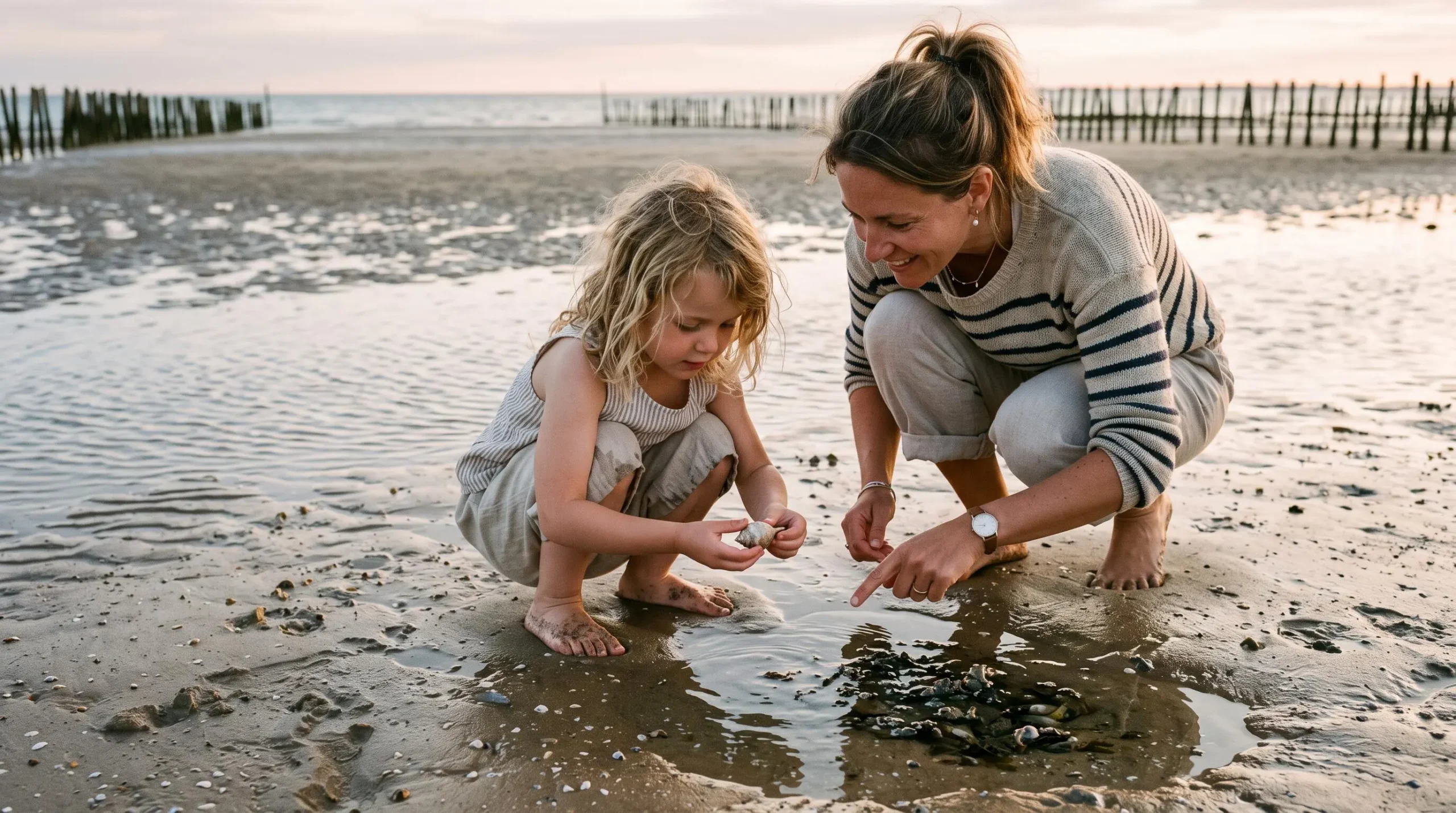
Sample day (hypothetical): beach in the morning while energy is high, then a market stop for picnic supplies, followed by a gentle cycle into a village for an ice-cream break and a short stroll. Head back early enough to protect nap time or pre-dinner downtime. This structure keeps the day feeling full without pushing children past their limit.
Rainy or windy day: swap the long beach session for a slower plan—village wandering between sheltered spots, a long lunch with flexible timing, and short outdoor breaks when the weather clears. The goal is to avoid “all day in the car” energy, which rarely feels luxurious with kids.
Practical tip for parents: Build each day around one non-negotiable moment (nap, swim lesson, family lunch). Everything else stays optional—this is often the difference between a premium trip and an exhausting one.
How to Plan a Stress-Free Luxury Stay?
Direct answer: Plan 4–7 days for a first family trip to Île de Ré (depending on your travel time and children’s ages), and define your “luxury budget” by what reduces friction: space, location, and services that protect sleep and meals.
How many days do you need on Île de Ré?
4 days can work if you want a premium “taste” without over-planning: one base village, short cycles, and lots of beach time. It’s a good format with toddlers because you can keep the routine tight.
7 days is often more comfortable for families who want a true reset. The extra days reduce the pressure to “do it all” and make it easier to adapt to wind, tides, or tired kids without feeling you’re wasting your trip.
Is Île de Ré worth the price for a family holiday with young children?
It can be—if you spend on the things children actually feel: space to play, easy meals, and shorter daily transitions. Paying more for a beautiful room that forces you into restaurant schedules with a toddler, or a location that requires constant driving, is where families often feel disappointed.
Because we don’t have verified accommodation price ranges in the provided sources, treat any “deal” or “from-price” you see elsewhere as a starting point only. For a high-end family trip, compare like-for-like using a simple checklist: sleeping layout, outdoor space, food flexibility, proximity to beach and village, and a realistic mobility plan.
- Confirm sleep setup
Check bed configuration, blackout options, and whether you need a separate space for naps.
- Lock the first 24 hours
Plan arrival, groceries, and the first beach/cycle loop so you start calm.
- Prepare your “bad weather” plan
Pick two low-effort alternatives that still feel special, without forcing long transfers.
- Keep one free day
Leave at least one day with no fixed plan—use it for rest or a favourite repeat activity.
If you want a simple method to keep planning light while protecting the “no-stress” feel, read this guide to stress-free planning.
Ultimately, a luxury family holiday on Île de Ré is less about doing more, and more about making each day easier for your children: the right season for their rhythm, the right accommodation for their sleep, and activities that fit their age—so you can enjoy the island instead of managing it.