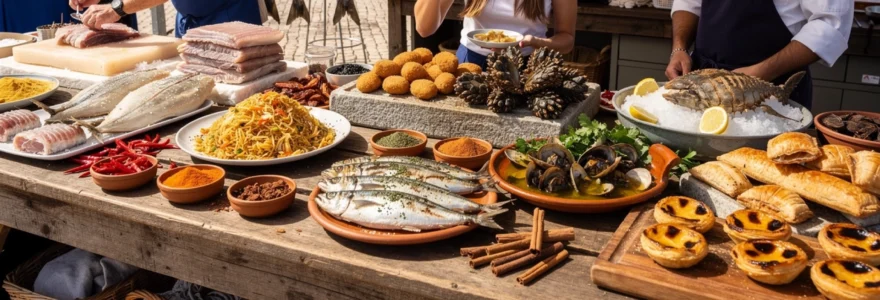
Lisbon’s culinary identity has been shaped by centuries of maritime exploration, fishing traditions, and intercontinental trade routes that transformed this coastal city into a melting pot of flavours. The Atlantic Ocean, which crashes against Portugal’s western shores, has provided sustenance and prosperity for millennia, whilst Portuguese navigators ventured across uncharted waters, returning with exotic spices, cooking techniques, and ingredients that would forever alter the nation’s gastronomic landscape. From the dockside taverns of Alfama to the bustling stalls of historic markets, every dish tells a story of adventure, preservation, and cultural exchange. Today, Lisbon’s food scene honours these maritime roots whilst embracing contemporary culinary innovation, creating a dining experience that bridges past and present in remarkable ways.
Atlantic codfish and the bacalhau culinary legacy in portuguese gastronomy
The Portuguese relationship with codfish, known locally as bacalhau, represents one of the most enduring love affairs in culinary history. Despite the fact that cod doesn’t inhabit Portuguese waters, this fish has become the unofficial national dish, with folklore suggesting there are more than 365 ways to prepare it—one for each day of the year. This paradox emerged from Portugal’s Age of Discovery, when fishermen ventured to the Grand Banks off Newfoundland, bringing back vast quantities of cod that could be preserved through salting for the long journey home. The tradition continues today, with an estimated 20% of all cod caught worldwide ending up on Portuguese tables, demonstrating an unwavering commitment to this Atlantic delicacy.
Traditional salting and curing techniques at mercado da ribeira
At Mercado da Ribeira, now home to the celebrated Time Out Market, you can still witness the time-honoured process of bacalhau preparation that has sustained Portuguese communities for generations. The salting technique, which requires coating fresh cod in coarse sea salt and allowing it to cure for weeks, removes moisture whilst intensifying flavour and creating that distinctive firm texture Portuguese cooks prize. Master salters inspect each fish meticulously, understanding that proper curing depends on factors including fish size, fat content, and ambient humidity levels. Before cooking, the dried cod must be rehydrated through a careful soaking process that can take up to three days, with regular water changes to achieve the perfect balance between saltiness and tenderness.
Bacalhau à brás: golden era recipe from bairro alto tascas
The dish known as Bacalhau à Brás epitomises Portuguese comfort food, combining shredded salted cod with matchstick-cut fried potatoes, scrambled eggs, black olives, and a generous garnish of fresh parsley. Legend attributes its creation to a 19th-century tavern owner in Bairro Alto named Brás, though multiple establishments claim this heritage. What makes this preparation particularly brilliant is how it transforms preserved fish into something remarkably light and fluffy, with the eggs binding the crispy potatoes and flaked cod into a harmonious whole. The technique requires precise timing—the cod must be thoroughly desalted, the potatoes fried until golden but not crisp, and the eggs added at just the right moment to create a creamy consistency without becoming dry. Modern interpretations at upscale restaurants may add truffle oil or incorporate different potato varieties, yet traditional tascas remain faithful to the original recipe that has satisfied hungry Lisboetas for over a century.
Pastéis de bacalhau origins in lisbon’s dockside taverns
These golden-brown codfish fritters, often called bolinhos de bacalhau, emerged from the resourcefulness of dockside cooks who needed to create filling, portable food for fishermen and labourers. The recipe combines desalted cod with mashed potatoes, eggs, parsley, and onions, formed into oval shapes and deep-fried until crispy on the outside whilst remaining fluffy within. What distinguishes exceptional pastéis from mediocre versions is the ratio of fish to potato—too much potato creates a stodgy texture, whilst insufficient binding causes them to fall apart during frying. Street vendors and neighbourhood cafés
continue to serve them alongside a small glass of vinho verde or beer, just as they were enjoyed by generations of sailors and dockworkers finishing a long shift along the Tagus. In recent years, gourmet versions filled with Serra cheese or served with truffled mayonnaise have appeared, but the essence remains the same: a humble bacalhau snack that captures Lisbon’s codfish legacy in a single, satisfying bite.
Contemporary bacalhau preparations at time out market lisboa
Time Out Market Lisboa, housed within the historic Mercado da Ribeira, offers a modern showcase of how Lisbon’s chefs reinterpret bacalhau for contemporary palates. Here, you might find bacalhau confitado cooked slowly in olive oil, paired with chickpea purée and caramelised onions, or cod served in delicate carpaccio-style slices with citrus and microgreens. These dishes reflect how Lisbon’s food traditions influenced by the sea have transitioned from purely practical preservation to refined culinary art. Even in these innovative plates, the fundamental respect for the salted codfish legacy remains, with chefs carefully balancing salt, texture, and aromatics to honour the fish’s history.
For travellers eager to deepen their understanding of Portuguese gastronomy, sampling both classic and contemporary codfish recipes in the same space is particularly illuminating. You can start with a traditional bacalhau com natas baked with cream and potatoes, then move on to a minimalist grilled loin of cod served over seasonal vegetables. This contrast shows how Lisbon’s cod culture has evolved in tandem with global dining trends, from hearty, family-style casseroles to elegant tasting portions. It also demonstrates how the city’s maritime heritage continues to inspire experimentation without losing its roots in Atlantic fishing and centuries-old curing methods.
Spice route navigation: piri-piri, cinnamon, and vasco da gama’s culinary impact
While the Atlantic supplied Lisbon with abundant fish, it was the spice routes opened by navigators like Vasco da Gama that transformed how those ingredients were seasoned and preserved. By the early 16th century, Portuguese ships were transporting pepper, cinnamon, cloves, and chilli peppers from Africa, India, and Asia, weaving them into the daily fabric of Portuguese cooking. The result is a culinary landscape where Lisbon’s food traditions influenced by exploration are as important as those derived from the local sea. Today, when you bite into a fiery piri-piri chicken or taste the warm aroma of cinnamon in a custard tart, you are experiencing a legacy of maritime trade as potent as any ship’s logbook.
Capsicum frutescens integration from mozambique trading posts
The small but powerful chilli known as Capsicum frutescens entered the Portuguese pantry through colonial trading posts along the East African coast, especially in Mozambique. Over time, these chillies were mashed with garlic, oil, and sometimes vinegar to create the now-iconic piri-piri sauce that seasons everything from grilled chicken to prawns. In Lisbon, you’ll encounter this sauce in neighbourhood churrasqueiras, where skewers of seafood and meat are basted repeatedly over charcoal, building up layers of smoky heat. This integration of African chillies into Atlantic seafood echoes how trade winds once carried both ships and flavours back to the Lisbon harbour.
From a practical standpoint, piri-piri also served an early preservative role: the combination of acidity, chilli, and salt helped keep grilled fish safer to eat in warmer climates. Today, we appreciate piri-piri more for its flavour than its function, but the principle is the same: adding a bright, spicy kick that cuts through the natural richness of sardines, cod, or shellfish. If you want to trace this history for yourself, pay attention to how different Lisbon eateries prepare their piri-piri—some favour a raw, almost grassy chilli punch, while others offer a slowly fermented sauce with deeper, more complex notes.
Ceylon cinnamon in pastéis de nata at antiga confeitaria de belém
Cinnamon sticks from former Ceylon, now Sri Lanka, were among the most prized spices carried in Portuguese caravels, and they quickly found a place in Lisbon’s convent kitchens. At Antiga Confeitaria de Belém, the legendary home of pastéis de Belém, you can still see how cinnamon is used not just as a flavouring, but as a ritual—sprinkled generously over warm custard tarts straight from the oven. The spice’s sweet, woody aroma softens the rich egg yolk custard and crisp, blistered pastry, creating a balance that has captivated locals and visitors for nearly two centuries.
Historically, the use of cinnamon in these tarts symbolised both wealth and global reach, as only nations with control over spice routes could afford such luxury in everyday sweets. Today, cinnamon-dusted pastéis de nata have become a democratic pleasure, available at every bakery counter in Lisbon, yet their roots remain in that era of maritime ambition. When you pick up a paper cone of tarts and a small packet of cinnamon to sprinkle over them, you’re participating in a culinary tradition that stretches back to the days when Vasco da Gama’s voyages reshaped the map—and the menu—of Europe.
Goan spice blends in lisbon’s martim moniz neighbourhood
Lisbon’s Martim Moniz neighbourhood illustrates perhaps more than any other area how exploration and migration have left their mark on the city’s food scene. This eclectic district, close to the historic Mouraria, is home to many Goan, Indian, and South Asian businesses whose spice blends echo centuries-old links between Portugal and its former territories in India. Here, you can taste dishes like caril de peixe (fish curry) made with coconut, tamarind, and complex masalas that marry coastal Portuguese fish with Goan spice knowledge. The result is a flavour profile that feels both foreign and familiar to Lisbon: bright, aromatic, and deeply connected to the sea.
Curious food lovers can explore small grocers stocked with whole spices—cardamom pods, mustard seeds, fenugreek—and talk to shop owners about how these ingredients find their way into home-cooked meals. Many Lisbon families with Goan heritage have developed hybrid recipes where Atlantic seafood meets Indian-style tempering of spices in hot oil, creating dishes that are neither fully “Portuguese” nor purely “Goan.” This living fusion cuisine reminds us that trade routes were not one-way streets; people, ideas, and recipes travelled back with the ships, embedding themselves in Lisbon’s culinary DNA.
Piri-piri chicken evolution at restaurante ramiro
While Cervejaria Ramiro is best known for its seafood, it also reflects how piri-piri chicken—frango assado com piri-piri—has evolved in Lisbon’s dining culture. Originally a straightforward grilled chicken dish adapted from African influences, it has become a benchmark of flavour and technique across the city. At many traditional cervejarias and tascas, chicken is marinated in garlic, lemon, olive oil, and piri-piri before being grilled over high heat, then brushed again with chilli oil just before serving. This double contact with heat and spice creates a crispy, charred skin and juicy interior that pairs naturally with ice-cold beer and simple seafood starters.
What does this have to do with Lisbon’s maritime heritage? In many ways, piri-piri chicken represents the same story as salt cod or cinnamon-dusted sweets: an ingredient that arrived by ship, adapted to local tastes, and was eventually woven into the everyday diet. In restaurants that specialise primarily in shellfish, offering piri-piri chicken alongside clams, prawns, and crab underlines how land and sea, Africa and Europe, have converged on Lisbon’s tables. For visitors, ordering a spread that includes both spicy chicken and grilled Atlantic shellfish is an easy way to taste the full breadth of Portugal’s exploratory past.
Shellfish harvesting traditions from tejo estuary to cascais bay
If cod tells the story of long-distance voyages, Lisbon’s shellfish tells a tale much closer to home. The Tejo estuary, stretching from the Atlantic into the city’s heart, and the coastal waters around Cascais and Costa da Caparica have long provided clams, razor clams, crabs, and the coveted percebes (gooseneck barnacles). For generations, local communities timed their work by the tides, venturing out at low water to gather shellfish by hand, often in the dim light of dawn. These harvesting traditions have shaped not only the city’s seafood recipes, but also its rhythms of labour, celebration, and seasonal eating.
Amêijoas à bulhão pato: garlic and coriander preservation methods
Amêijoas à Bulhão Pato, a beloved Lisbon clam dish named after 19th-century poet Raimundo António de Bulhão Pato, is a prime example of how simple ingredients can preserve and elevate delicate shellfish. Fresh clams are briefly steamed in a fragrant broth of olive oil, garlic, white wine, and abundant coriander, with a squeeze of lemon added just before serving. This combination of acidity, herbs, and fat helps stabilise the clams’ briny juices, effectively creating a quick, aromatic “marinade” that keeps their flavour intact for the duration of the meal. It also showcases how Lisbon’s cooks have long used accessible, shelf-stable ingredients—garlic, olive oil, and wine—to extend the pleasure of freshly harvested shellfish.
From a culinary perspective, you can think of this dish as the shellfish equivalent of bacalhau à Brás: a technique rather than just a recipe. The key is timing and heat control; overcooked clams become rubbery, while undercooked ones may not open fully. When you dip crusty bread into the garlicky sauce, you’re not only enjoying a delicious appetiser but also participating in an age-old strategy of making the most of every drop of seafood flavour. Many Lisbon restaurants still list amêijoas à Bulhão Pato as a must-try starter, linking today’s diners with the city’s estuarine past.
Percebes collection along costa da caparica rocky shores
Percebes, or gooseneck barnacles, are among the most dramatic expressions of Lisbon’s coastal identity. Harvested from wave-battered rocks along stretches such as Costa da Caparica and further down the Atlantic coast, they require both skill and courage to collect. Local percebeiros time their work between crashing waves, using simple tools and years of experience to pry the barnacles from the stone without being swept away. This dangerous labour explains why percebes are often one of the pricier items on a seafood menu, and why they are treated with such reverence in Lisbon’s marisqueiras.
Culinarily, the preparation of percebes is deceptively simple: they are usually boiled briefly in heavily salted water—often using seawater itself—and served warm on a platter. The goal is not to mask their flavour but to showcase their pure, iodine-rich essence, often described as tasting like a concentrated mouthful of ocean. Eating them is an interactive ritual: you twist off the leathery outer skin to reveal the tender, juicy flesh inside. For many visitors, this can be a revelation, a direct, almost primal connection to the Atlantic that has sustained Lisbon for centuries.
Santola crab preparations at cervejaria ramiro
The large, spiny santola crab is another star of Lisbon’s shellfish repertoire, and Cervejaria Ramiro has popularised a particularly indulgent way of serving it. After boiling, the crab’s shell is filled with a rich mixture of its own brown meat, mayonnaise or butter, mustard, and sometimes a splash of beer or brandy. This creamy paste is then eaten with spoons or spread on bread, while the white claw meat is enjoyed separately. It’s a clever combination of frugality and luxury, ensuring that every part of the crab is used while creating a dish that feels almost like a pâté of the sea.
As with many elements of Lisbon’s food traditions influenced by the sea, there is a social dimension to eating santola. Sharing a platter of crab with friends or family becomes an unhurried ritual of cracking shells, dipping bread, and sipping beer. For travellers, this kind of meal offers not just flavour but insight into how Lisbonites celebrate their maritime bounty—casually, communally, and without pretension, even when the ingredients themselves are precious.
Portuguese caravel trade routes and tempura-style frying techniques
One of the most surprising legacies of Portuguese exploration is found not in a specific ingredient, but in a cooking technique that travelled all the way to Japan and came back again in altered form. In the 16th century, Portuguese missionaries and traders introduced deep-frying methods, known as peixinhos da horta (literally “little fish from the garden”), to Japan. These battered and fried green beans are widely believed to have inspired Japanese tempura. Over time, tempura developed into its own refined culinary art, yet the original connection remains a fascinating example of how Lisbon’s maritime routes influenced global frying techniques.
Today in Lisbon, you can still find peixinhos da horta on petisco menus, often served alongside fried cuttlefish, croquetes, and other small plates that showcase the city’s love of crisp, golden textures. The batter tends to be lighter than traditional breading but slightly denser than Japanese tempura, sitting somewhere in between both worlds. For seafood, this approach works particularly well with squid, small fish, and even shrimp, creating a protective coat that keeps the flesh tender and moist. If you’re interested in culinary history, ordering a plate of peixinhos da horta is like tasting an edible footnote in the story of how European and Asian cuisines influenced one another.
Sardine grilling rituals during santos populares festivals
Every June, Lisbon’s hillsides light up not just with decorations, but with the smoky aroma of grilled sardines as neighbourhoods celebrate the Santos Populares festivals. These festivities, particularly the Festa de Santo António, transform the city into an open-air grill, with temporary stalls and family-run barbecues lining the streets. Fresh sardines, landed from nearby coastal waters, become symbols of both devotion and abundance. To walk through Alfama or Graça on a festival night is to experience Lisbon’s food traditions influenced by the sea in their most vibrant, communal form.
Alfama district charcoal grilling methods on festas de santo antónio
In Alfama, the epicentre of Santo António celebrations, the technique for grilling sardines is deceptively simple but demands experience. Whole fish, cleaned but not filleted, are laid directly on top of hot charcoal grills without any elaborate marinades. The high heat sears the skin, crisping it and locking in the fatty juices, while the interior cooks quickly to flaky tenderness. Vendors flip the sardines only once, relying on intuition rather than timers—a skill learned through years of festival seasons.
These sardines are typically served on thick slices of rustic bread or alongside boiled potatoes and a simple salad of tomato and onion. The bread absorbs the fish’s juices, becoming almost as prized as the sardine itself. For visitors, joining locals at a makeshift plastic table, balancing a paper plate of grilled fish, is one of the most direct ways to connect with Lisbon’s living maritime culture. It’s informal, a bit messy, and utterly memorable.
Sardinha assada seasoning with maldon sea salt and oregano
Traditionally, grilled sardines required little more than coarse Portuguese sea salt for seasoning, letting the fish’s natural flavour take centre stage. In recent years, however, some Lisbon chefs have begun experimenting with subtle variations, using finishing salts such as Maldon and adding dried oregano or lemon zest. This evolution reflects the city’s broader shift toward blending tradition with a more contemporary, international pantry. Still, the essential principle remains: sardines should taste like the sea first, and only secondarily of the grill and herbs.
If you’re grilling sardines at home, a good rule of thumb is to season them generously with salt just before they hit the grill, then finish with a drizzle of good olive oil and a sprinkle of oregano after cooking. Think of the herbs as a supporting cast, not the main actor. By following this approach, you respect the same balance that Lisbon’s grill masters have honed over generations, adapting it gently to modern tastes without overshadowing the fish’s Atlantic character.
Docapesca auction systems at docas de pedrouços
Behind every plate of sardinhas assadas lies a complex supply chain that begins at fish auctions such as those managed by Docapesca. At Docas de Pedrouços and other landing points around Lisbon, early-morning auctions determine the price and distribution of the day’s catch, including sardines in season. Buyers representing restaurants, markets, and wholesalers bid in rapid succession, balancing freshness, size, and anticipated demand from both locals and tourists. This system helps ensure that Lisbon’s eateries receive high-quality fish while supporting small-scale fishers along the coast.
For those curious about the mechanics of Lisbon’s seafood economy, understanding the Docapesca system is as important as tasting the final dish. It is a reminder that Lisbon’s food traditions influenced by the sea depend not only on recipes and festivals, but also on sustainable management and fair pricing. In recent years, concerns about sardine stocks have led to tighter regulations and shorter fishing seasons, challenging the city to reconcile beloved customs with ecological responsibility. When you savour a perfectly grilled sardine, you’re also tasting the results of these ongoing negotiations between culture, commerce, and conservation.
Conventual sweets: monastic sugar preservation from brazilian cane imports
While seafood anchors Lisbon’s savoury identity, its sweet side owes much to sugar cane shipped from Brazil during the height of the Atlantic trade. In convents and monasteries across Portugal, nuns developed elaborate egg-based sweets, using sugar both as a flavouring and a preservative. Egg yolks combined with sugar, nuts, and sometimes flour could be baked or cooked into dense, long-lasting confections—ideal for feast days and as gifts for benefactors. These doces conventuais (conventual sweets) form a parallel narrative to salt cod and shellfish: another example of how imported ingredients were transformed through local ingenuity.
Egg yolk confections at convento de são vicente de fora
The Convento de São Vicente de Fora, overlooking the Alfama district, is closely associated with the tradition of rich egg yolk desserts that once sustained religious communities and visiting dignitaries. Excess egg yolks, left over after whites were used for clarifying wines and starching fabrics, were combined with Brazilian sugar to create sweets such as ovos moles, papos de anjo, and various custards. These confections were not merely indulgent; sugar acted as a natural preservative, allowing the monastery to store and serve desserts over several days without modern refrigeration. The result was a repertoire of sweets that were both practical and luxurious.
Today, while production has moved mostly to commercial bakeries, the influence of monastic recipes is still evident on Lisbon’s dessert menus. Many cafés offer variations of egg yolk-based sweets alongside espresso, giving everyday customers access to flavours that were once reserved for cloistered life. If you’re exploring the area around São Vicente de Fora, seeking out a bakery that highlights conventual recipes can offer a delicious perspective on how preservation techniques shaped the city’s sweet tooth.
Queijadas de sintra: medieval recipe documentation
A short trip from Lisbon, the town of Sintra is renowned for queijadas, small cheese tarts whose recipes date back to at least the Middle Ages. Historical documents mention their production in the 13th century, noting how fresh cheese, sugar, egg yolks, and flour were combined and baked in small moulds. Originally, these tarts served as a way to use up surplus dairy and egg products, with sugar again playing a crucial role in extending shelf life. Over time, their distinctive sweet-and-tangy flavour earned them a place at royal tables and in travellers’ provisions alike.
For modern visitors, tasting queijadas in Sintra offers more than a simple snack; it provides a window into how medieval households and convents managed resources in an era before refrigeration. The careful balance of sugar and dairy is almost like an early form of food technology, akin to how salting cod or drying fruit preserved valuable calories. When you bite into a still-warm queijada dusted lightly with cinnamon, you are tasting a recipe that has been refined but not fundamentally changed for hundreds of years.
Travesseiros de sintra almond and egg cream filling techniques
Another Sintra speciality with strong ties to Lisbon’s wider confectionery tradition is the travesseiro, a puff pastry “pillow” filled with almond and egg cream. Developed more recently than queijadas but drawing on the same conventual techniques, travesseiros rely on slow-cooked egg yolk and sugar mixtures known as doce de ovos. This dense, glossy filling is enriched with ground almonds—often sourced from Portugal’s southern regions—and then wrapped in layers of buttery dough. Once baked, the pastries are dusted with sugar, which helps keep the exterior crisp while the interior remains moist and fragrant.
From a technical standpoint, the making of travesseiros illustrates how monastic sugar preservation evolved into a sophisticated pastry art. The egg-and-sugar cream must be cooked gently to avoid curdling, then cooled and piped into the dough at just the right consistency. Too thin, and it will leak during baking; too thick, and the interior will be dry rather than luscious. For anyone interested in how Lisbon’s food traditions influenced by the sea and exploration extend into the realm of sweets, a day trip to Sintra, with stops for queijadas and travesseiros, completes the picture—showing how imported sugar and local craftsmanship combined to create desserts as iconic as any grilled sardine or salted cod.