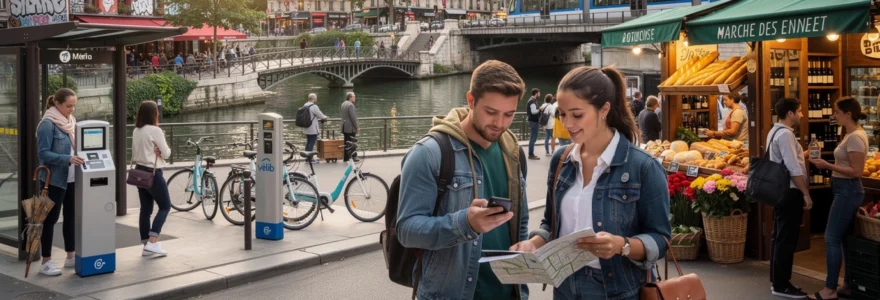
Paris draws millions of visitors annually, yet many experience only surface-level attractions whilst missing authentic local experiences. The City of Light offers far more than crowded tourist corridors and overpriced café terraces along the Champs-Élysées. Strategic planning and local knowledge transform a typical Parisian holiday into an immersive cultural journey. Understanding neighbourhood dynamics, mastering public transport systems, and discovering genuine culinary gems require insider perspectives that guidebooks rarely provide. This approach reveals Paris as residents experience it—dynamic, accessible, and refreshingly practical.
Strategic accommodation selection beyond central arrondissements
Traditional accommodation advice steers visitors toward the 1st through 7th arrondissements, creating artificial barriers between tourists and authentic Parisian life. Alternative neighbourhoods offer superior value whilst providing genuine cultural immersion opportunities. These areas maintain excellent transport links to major attractions whilst offering substantially lower accommodation costs and authentic dining experiences.
Belleville and ménilmontant: authentic neighbourhood dynamics
Belleville represents contemporary Parisian multiculturalism, featuring vibrant street art scenes and diverse culinary offerings at fraction of central district prices. The 20th arrondissement provides excellent metro connectivity via Lines 2 and 11, reaching central Paris within 15-20 minutes. Local markets showcase genuine Parisian shopping habits, with residents purchasing daily essentials from family-operated businesses rather than tourist-oriented establishments.
Accommodation prices in Belleville average 40-60% lower than comparable central locations, with boutique hotels and serviced apartments offering modern amenities. The neighbourhood’s elevated position provides spectacular city views, particularly from Parc de Belleville, whilst avoiding tourist crowds that plague Montmartre. Evening entertainment options include authentic bistros, wine bars, and cultural venues frequented exclusively by locals.
Canal Saint-Martin district: local infrastructure advantages
The 10th arrondissement surrounding Canal Saint-Martin combines residential tranquillity with urban convenience. This area offers superior infrastructure including numerous launderettes, pharmacies, and grocery stores operating extended hours. The canal itself provides peaceful walking routes away from traffic congestion, connecting République to Bastille via scenic waterway paths.
Local dining establishments focus on contemporary French cuisine rather than tourist-oriented menu offerings. Accommodation options range from converted canal-side warehouses to modern eco-friendly hotels, typically featuring larger rooms than central district properties. The neighbourhood’s growing reputation among young Parisians ensures vibrant evening atmospheres without overwhelming tourist presence.
Batignolles quarter: transport connectivity analysis
Batignolles benefits from exceptional transport infrastructure, including direct RER connections to major airports and suburban destinations. The 17th arrondissement provides rapid access to business districts whilst maintaining village-like atmosphere with tree-lined streets and neighbourhood markets. Recent urban development projects have enhanced pedestrian areas and cycling infrastructure.
The quarter features numerous parks and green spaces, including the innovative Parc Clichy-Batignolles, designed with sustainable urban planning principles. Local commerce includes traditional French businesses alongside modern services, creating balanced neighbourhood dynamics. Accommodation prices remain competitive whilst offering proximity to both Montmartre attractions and business districts.
République to bastille corridor: cultural immersion opportunities
This corridor encompasses multiple arrondissements whilst maintaining consistent cultural identity focused on arts, crafts, and independent retail. The area features numerous galleries, artisan workshops, and vintage boutiques rarely visited by tour groups. Evening entertainment includes jazz clubs, independent cinemas, and experimental dining establishments.
Transport connectivity includes multiple metro lines and extensive bus networks, enabling efficient exploration of surrounding districts. The corridor’s industrial heritage provides unique accommodation options in converted workshops and artist studios, often featuring distinctive architectural elements and generous space allocations compared to traditional hotel formats.
Advanced public transport navigation techniques
Parisian public transport extends far beyond basic metro operations, incorporating integrated systems designed for efficient metropolitan navigation. Strategic approach to transport planning reduces travel time whilst maximising exploration opportunities. Understanding peak hour patterns, alternative routing options, and payment optimisation strategies transforms urban mobility from frustrating necessity into
an integral part of your Paris experience rather than a daily chore. With a few advanced techniques, you can often cross the city faster than by taxi, especially during rush hour.
Navigo weekly pass optimisation strategies
For stays of four days or more, the Navigo Semaine (weekly Navigo pass) usually offers the best value compared with single tickets or day passes. The key optimisation point is timing: the weekly pass runs from Monday to Sunday, not for seven rolling days from first use. If you arrive mid-week, calculate whether your planned metro, bus, RER, and tram journeys before Sunday justify the cost versus individual fares.
Most visitors benefit from the all-zone version, which includes transport to both Charles de Gaulle and Orly airports, as well as day trips to Versailles or Saint-Germain-en-Laye. When purchasing, ensure staff or machines load the correct product on your card; the wording can be confusing, and it is easy to accidentally buy a single ticket rather than a pass. Keep your Navigo card in a separate pocket from contactless bank cards to avoid “card clash” at the gates, which can lead to mischarged journeys and frustrating disputes.
If you are travelling as a couple or group, resist the temptation to share one card. Each person must have their own Navigo, and random inspections on platforms are frequent. Think of the Navigo as your personal key to the city: once charged, you can move freely without mentally “spending” a ticket each time you step onto the metro or bus.
Off-peak metropolitan line efficiency
Most visitors instinctively aim for the metro during typical sightseeing hours, inadvertently placing themselves in the most crowded conditions. By shifting your movements just 30 to 45 minutes earlier or later, you can transform your metro experience. Morning peak generally runs from about 8:00 to 9:30, with evening crowds between 17:00 and 19:00; planning museum entries or river walks during those windows and travelling just before or after dramatically reduces journey stress.
Certain lines consistently experience heavier loads because they serve key tourist zones and major business districts. Line 1 (La Défense–Château de Vincennes), Line 4 (north–south backbone), and Line 13 (serving dense residential suburbs) are typically the most saturated. Whenever possible, consider one-stop detours using parallel routes or buses; for example, combining Lines 2 and 6 can sometimes outpace a direct ride on Line 4 during peak congestion. Think of the network as a web rather than a set of straight lines—you sometimes reach your destination faster by skirting the edges than by forcing your way through the centre.
Off-peak travel also improves comfort at station interchanges such as Châtelet–Les Halles, Montparnasse–Bienvenüe, and Gare de Lyon. These complexes can feel overwhelming at busy times, especially when moving with luggage or children. Travelling mid-morning or mid-afternoon allows you to navigate signage calmly, change lines without jostling, and even pause to appreciate some of the station art that most commuters rush straight past.
RER integration with suburban destinations
The RER network functions like an express metro serving both central Paris and its surrounding suburbs, and integrating it into your plans opens up far more than standard city breaks usually include. For Versailles, Disneyland Paris, or the grand parks on the city’s edge, the RER often halves travel time compared with using only metro lines. The main adjustment is understanding that RER trains operate more like regional rail: you must check branch destinations and intermediate stops carefully.
On platforms, electronic boards show final destinations and the full stopping pattern for each train. Two RER C services, for example, may leave from the same platform minutes apart but only one serves Versailles Château–Rive Gauche. Take a moment to verify the station codes and do not rely solely on colour or letter. When in doubt, stand back and allow one train to depart while you confirm the next—missing a single departure usually adds only 5–10 minutes to your journey, whereas boarding the wrong branch can cost you an hour.
For airport transfers, the RER B remains the most reliable option in normal conditions. To minimise crowding, avoid the middle sections of trains and move along the platform to the carriages that tend to be emptier. Late evening services are generally safe, though you should follow normal big-city precautions and keep bags closed and in sight. If strikes or disruptions occur, SNCF and RATP apps provide near real-time updates; treating these tools as integral parts of your planning system ensures you can adapt quickly with alternative routes.
Vélib’ mechanical vs electric station distribution
The city’s bike-share system, Vélib’, provides an efficient way to navigate medium distances whilst experiencing Paris at street level. The network offers both mechanical (non-electric) and electric bikes, each marked with different colours on docking stations and in the official app. Electric bikes are ideal for hilly routes such as Montmartre or long cross-city rides, but they also incur slightly higher per-minute charges and are more likely to be unavailable at peak times.
Station distribution varies by neighbourhood: central and tourist-heavy areas often see electric bikes disappear first, leaving mainly mechanical options. Outer arrondissements and residential districts, however, frequently have better electric bike availability, especially early in the morning and late at night. If you plan to rely on Vélib’ as a regular transport mode, you can think of station availability like the tide—you ride an electric bike in when “stocks are high” and switch to mechanical or metro when “stocks run low.”
When choosing between mechanical and electric for a given journey, consider both terrain and traffic. For flat routes along the Seine or around Canal Saint-Martin, mechanical bikes are cost-effective and comfortable. For any itinerary involving multiple bridges, mild inclines, or time-sensitive crossings through busy junctions, an electric bike offers smoother acceleration and less physical strain, allowing you to keep your attention on navigation and safety rather than effort.
Culinary discovery through market economics
Parisian food culture extends far beyond Michelin-starred restaurants and Instagram-famous patisseries. By understanding the basic economics of neighbourhood markets and specialist shops, you can access high-quality meals at local prices instead of tourist mark-ups. A strategic approach to markets, boulangeries, and wine merchants helps you eat well every day without turning each meal into a major expense.
Marché des enfants rouges: vendor selection methodology
As Paris’s oldest covered market, Marché des Enfants Rouges in the Haut Marais attracts both locals and visitors. The key to an enjoyable experience is choosing vendors with the same criteria residents use, rather than relying on queue length alone. Observe how many people in line clearly speak French and seem familiar with the staff; a healthy mix of regulars and tourists usually indicates consistent quality.
Price boards and menu descriptions often reveal whether a stall is optimised for one-off visitors or repeat neighbourhood customers. Places with clear daily specials, seasonal dishes, and limited menus typically prioritise fresh produce over volume. If you are planning a picnic, consider combining purchases from several vendors: a tagine or couscous from the Moroccan stand, cheese from a specialist fromager, and fruit from a greengrocer can cost less together than a single restaurant meal while delivering far more variety.
To avoid shoulder-to-shoulder crowds, arrive early for lunch (around 11:45) or after the first rush (around 14:00). Weekends are predictably busy, so if your schedule allows, a weekday visit offers more space to explore and chat with vendors about their recommendations. Asking simple questions in French—Qu’est-ce que vous conseillez aujourd’hui ?—often leads to better suggestions than scanning menus in silence.
Marché Saint-Germain: seasonal procurement timing
Marché Saint-Germain in the 6th arrondissement caters to a slightly more upscale clientele, but it remains an excellent place to understand seasonal French produce. Timing your visit around market rhythms allows you to access the best selection without inflated prices. Early morning, when wholesalers have just finished deliveries, is prime time for peak-quality fruit, vegetables, and seafood; by late afternoon, choice narrows but end-of-day reductions sometimes appear.
France’s strong agricultural calendar means that even in Paris you can follow the seasons on your plate. In May and June, for example, you will see mountains of strawberries and white asparagus; autumn brings wild mushrooms, game, and squash. Building a flexible meal plan around what looks best on the day—rather than pursuing a fixed shopping list—aligns you with how local residents shop. It also encourages you to cook simple dishes in your accommodation or assemble high-quality cold meals instead of relying on restaurant menus for every dinner.
If you are staying near Saint-Germain-des-Prés, combining a morning market visit with a walk through Jardin du Luxembourg or along the Seine creates an effortless low-cost food experience. Think of the market as your starting point rather than the whole outing: you buy components there, then let the city itself provide the “dining room” in the form of gardens, benches, and riverbanks.
Local boulangerie quality assessment indicators
Choosing the right boulangerie can significantly improve your daily experience in Paris. While the smell of fresh bread is tempting everywhere, quality varies. A reliable indicator is the Boulanger de France or similar official signage, which recognises artisans who bake on site using traditional methods. Another clue is product range: bakeries focused on a concise selection of breads and viennoiseries often deliver higher quality than those overloaded with colourful, tourist-friendly pastries.
Observe turnover patterns: if baguettes disappear steadily throughout the morning and staff frequently replenish from the ovens, you are likely in a bakery with strong local loyalty. Conversely, piles of identical baguettes stacked since early morning suggest slower rotation and potentially drier bread by midday. If you return to the same area at different times, notice whether schoolchildren and office workers queue up—consistent local traffic is one of the simplest quality filters available.
For budget-conscious travellers, boulangeries also provide one of the most economical full meals in Paris. A baguette sandwich, pastry, and small drink typically cost far less than a café lunch while offering comparable satisfaction. Once you find a bakery that matches your preferences, incorporating it into your daily routine—morning baguette, afternoon chausson aux pommes—anchors you in the neighbourhood just as it does for local residents.
Wine cave terminology and selection protocols
Stepping into a Parisian wine shop (cave à vin) can feel intimidating, but a basic understanding of terminology makes the experience both educational and economical. Many shops display wines by region rather than grape variety, reflecting French labelling laws. If you are used to choosing “a Malbec” or “a Pinot Grigio,” shift your thinking towards regions: Bordeaux and Rhône for robust reds, Loire and Alsace for lighter whites, Languedoc for value-focused everyday bottles.
Clear budget signalling is crucial. When you enter, state your price range per bottle and intended use—picnic by the Seine, aperitif with cheese, or a special dinner. Something as simple as “Je cherche une bouteille autour de dix euros pour un pique-nique” gives the merchant enough information to offer targeted options without upselling. Many cavistes pride themselves on matching customers to the right wine rather than pushing the most expensive bottle, especially when you show genuine interest.
Do not overlook the growing selection of organic (bio), biodynamic, and natural wines, which have become increasingly prominent across Paris. If you are curious but cautious, ask for a “not too funky” natural wine to avoid overly experimental styles. And remember that in many neighbourhoods, wine shops offer chilled bottles to take away—extremely useful for spontaneous picnics when supermarket shelves only hold room-temperature options.
Cultural institution access optimisation
With more than a hundred museums and countless galleries, Paris can overwhelm even seasoned travellers. Rather than trying to see everything, focus on optimising access to the institutions that matter most to you. This means combining advance reservations, time-slot strategy, and pass systems in a way that protects your time and energy.
For major sites such as the Louvre, Musée d’Orsay, and Sainte-Chapelle, timed-entry tickets are now effectively mandatory. Booking the first or last available slots of the day usually results in the most pleasant conditions. Early entries allow you to visit headline works before crowds build; late slots often see a noticeable thinning in the final hour, which is ideal for slower contemplation of less famous galleries. If you enjoy photography or sketching, these quieter windows are particularly valuable.
Multi-attraction passes such as the Paris Museum Pass can deliver substantial savings if you plan to visit several included sites within a short period. However, they do not exempt you from time-slot reservations where required. Treat the pass primarily as a financial and queue-management tool: at some venues, dedicated lines for pass holders move faster than general admission queues, even when everyone has pre-booked. To maximise value, group geographically close institutions on the same day—for example, pairing Musée de l’Orangerie with the Orsay and a quick stop at the Orangerie’s neighbouring Tuileries gardens.
Smaller museums, such as Musée Carnavalet or the Crypte Archéologique under Notre-Dame, can be strategically used to bridge gaps between timed entries. These institutions often remain semi-quiet even at peak times and rarely require long waits. Think of them as “pressure valves” in your itinerary: when a major site feels overwhelming, retreat to a more specialised museum where you can absorb information at your own pace rather than battling crowds.
Weather-adaptive itinerary planning systems
Paris’s climate can shift quickly, especially in spring and autumn, and building a weather-adaptive sightseeing system protects you from wasted days. Instead of fixing specific attractions to specific times far in advance, organise your plans into weather categories: bright, overcast, rainy, and very hot. Then, as the forecast firms up 24–48 hours ahead, assign actual activities to those slots.
On sunny days with comfortable temperatures, prioritise outdoor experiences that define the city’s atmosphere: river walks along the Seine, neighbourhood explorations in the Marais or Montmartre, and extended sessions in parks such as Jardin du Luxembourg or Parc des Buttes-Chaumont. These are the moments when Paris feels most alive, and no museum collection, however impressive, can fully replace that sensation. Keep one or two indoor options in reserve in case conditions deteriorate mid-day; a short metro ride can pivot you from a riverside bench to a gallery in less than half an hour.
When rain is forecast, lean into it rather than fighting it. Cluster indoor-heavy days around major institutions like the Louvre, Musée d’Orsay, Centre Pompidou, or the Palais de Tokyo. Many metro stations connect directly to or very close by these venues, allowing you to minimise time spent in the open. A compact umbrella and light waterproof layer are usually sufficient; heavy rainwear is seldom necessary, and can even become uncomfortable inside crowded galleries.
Heatwaves, which have become more common in recent summers, require a different strategy. Older buildings and some metro lines can become uncomfortably warm in the afternoon, so aim for early starts, long lunch breaks in shaded parks, and late-evening activities when temperatures drop. Seek out institutions with modern climate control systems—newer museum wings, shopping galleries, or certain churches—and treat them as cooling zones. By thinking in terms of “microclimates” within the city, you can move fluidly between cool interiors and the atmospheric streetscape without exhausting yourself.
Digital payment integration and local banking solutions
Paris has embraced digital payments to an extent that surprises many first-time visitors. Contactless card and mobile payments are widely accepted, from museum ticket counters to corner bakeries. For most travellers, this means you can comfortably rely on a mix of debit cards, credit cards, and mobile wallets, keeping only a small amount of cash for occasional exceptions such as old vending machines or very small market stalls.
To minimise foreign transaction fees, check with your bank before departure and consider using a card designed for international travel, with low or zero currency mark-ups. Revolut, Wise, and similar fintech solutions offer multi-currency wallets that can be particularly handy for longer stays or multi-country itineraries. When paying by card, always choose to be charged in euros rather than your home currency; dynamic currency conversion at point of sale tends to use unfavourable exchange rates.
ATMs (distributeurs) are common, but withdrawing large sums “just in case” is unnecessary in an economy where digital payments dominate. Instead, withdraw modest amounts as required and keep them in different places—wallet, hotel safe, daypack—to reduce risk. In cafés and restaurants, splitting bills between multiple cards is generally accepted, though staff appreciate clear instructions: inform them upfront how many payments you intend to make.
Public transport and bike systems also benefit from digital integration. Many metro and RER gates accept contactless bank cards directly using the t+ fare structure, though regular users still gain better value from Navigo passes. Vélib’, ride-hailing apps, and food delivery services all tie seamlessly into card or mobile payments once you set up accounts. Treat your phone and primary payment card as essential travel tools—charged, backed up, and stored securely—and you will find that navigating Paris’s practical side becomes as fluid and enjoyable as exploring its famous boulevards.