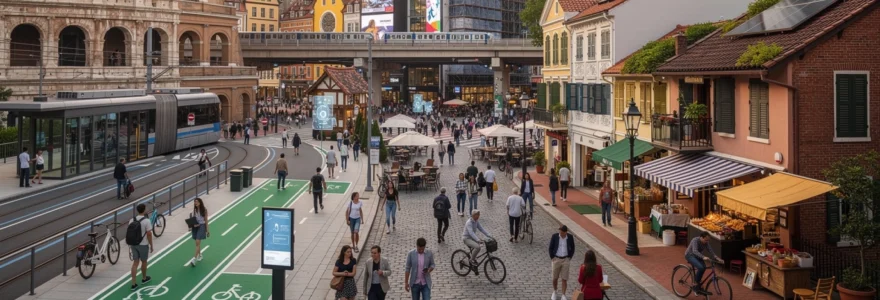
Cities across the globe have mastered the delicate art of preserving their historical essence while embracing contemporary development. These remarkable urban environments demonstrate that progress and preservation need not be mutually exclusive. From ancient Roman forums bustling with modern cafés to medieval town squares hosting cutting-edge technology startups, the world’s most successful cities have found innovative ways to honour their past whilst meeting the demands of the present.
The integration of historical architecture with modern infrastructure represents more than mere urban planning—it embodies a philosophy of cultural continuity that enriches daily life for residents and visitors alike. These living museums offer authentic experiences where centuries-old traditions coexist naturally with digital-age innovations, creating unique urban landscapes that celebrate both heritage and progress.
European capital cities: ancient foundations meet contemporary urban planning
Europe’s capital cities exemplify the successful marriage of historical preservation with modern urban development. These metropolitan centres have evolved over millennia, with each era leaving its architectural and cultural imprint whilst adapting to contemporary needs. The result is a collection of cities where ancient stones tell stories whilst supporting thriving modern economies.
The European approach to heritage conservation emphasises adaptive reuse rather than static preservation. This philosophy recognises that historical buildings and districts must serve contemporary purposes to remain relevant and economically viable. By integrating modern amenities within historical frameworks, these cities maintain their authentic character whilst providing the infrastructure necessary for 21st-century urban life.
Rome’s colosseum district: archaeological preservation within metropolitan infrastructure
Rome’s Colosseum district presents a masterclass in balancing archaeological preservation with urban functionality. The ancient amphitheatre, completed in 80 AD, sits surrounded by modern Rome’s bustling streets, metro stations, and commercial districts. Recent archaeological discoveries continue to reshape understanding of Roman urban planning, with new findings integrated into the existing cityscape through innovative display techniques.
The district’s success lies in its layered approach to development. Underground, the modern Metro Line C carefully navigates around archaeological sites, with stations designed as exhibition spaces showcasing discovered artefacts. Above ground, contemporary restaurants and shops operate within buildings that incorporate Roman foundations, creating a living dialogue between past and present.
Traffic management systems use advanced technology to protect the ancient structures whilst maintaining accessibility for the three million annual visitors. The implementation of smart tourism solutions, including timed entry systems and digital crowd monitoring, ensures that modern visitor management doesn’t compromise the site’s historical integrity.
Prague’s old town square: medieval architecture integrated with modern commercial zones
Prague’s Old Town Square demonstrates how medieval urban design can accommodate contemporary commercial activity. The square, dating back to the 12th century, hosts modern businesses within Gothic, Renaissance, and Baroque buildings that have been carefully adapted for current use. The famous Astronomical Clock continues to mark time as it has for over 600 years, whilst surrounding buildings house everything from traditional Czech restaurants to international fashion boutiques.
The integration extends beyond mere commercial adaptation. Modern lighting systems highlight architectural details that might otherwise be lost in shadow, whilst underground parking facilities serve the district without disturbing the medieval street pattern. Digital information systems provide visitors with historical context whilst maintaining the square’s visual integrity through carefully positioned, aesthetically appropriate displays.
Prague’s approach to heritage tourism creates economic value from historical assets without compromising their authenticity. Local craftspeople continue traditional trades alongside modern retailers, creating a living heritage environment that feels natural rather than staged.
Istanbul’s sultanahmet quarter: byzantine and ottoman heritage in active urban landscape
Istanbul’s Sultanahmet quarter showcases the remarkable coexistence of Byzantine and Ottoman architectural heritage within a vibrant contemporary neighbourhood. The Hagia Sophia, Blue Mosque, and Topkapi Palace serve as active cultural centres whilst the surrounding streets buzz with modern life. Traditional artisan workshops operate alongside contemporary galleries, creating a cultural ecosystem that spans fifteen centuries.
The quarter’s success stems from its recognition that historical significance need not preclude modern functionality. Ancient cisterns have been converted into atmospheric event spaces, whilst Ottoman-era buildings house modern hotels that maintain their historical character. The Grand Bazaar continues its 550-year tradition of commerce whilst adapting to contemporary retail practices and international tourism demands.
Urban planning initiatives have created pedestrian zones that enhance the historical
experience, limiting vehicle access near key monuments while improving air quality and walkability for residents. At the same time, upgraded tram lines and ferry connections link Sultanahmet to the wider metropolis, proving that a living historic quarter can remain both accessible and resilient in the face of growing visitor numbers.
Edinburgh’s royal mile: historic close system adapted for contemporary tourism economy
Edinburgh’s Royal Mile illustrates how a medieval street pattern can underpin a sophisticated modern tourism economy. The main thoroughfare stretches from Edinburgh Castle to Holyrood Palace, with a dense network of closes and wynds branching off like the ribs of a fan. Once home to overcrowded tenements and workshops, many of these narrow passageways now contain boutique hotels, cafés, galleries, and small museums that retain original architectural features.
The city’s planning framework prioritises conservation while supporting commercial viability. Strict regulations govern signage, shopfronts, and building materials, ensuring that new businesses do not disrupt the historic streetscape. At the same time, robust digital infrastructure supports contactless payments, mobile-guided walking tours, and augmented-reality experiences that reveal hidden layers of the Royal Mile’s history without adding visual clutter to the streets.
Seasonal crowd management has become essential as Edinburgh welcomes over four million visitors annually, particularly during the Fringe Festival and Hogmanay celebrations. Timed entry to key attractions, coordinated event scheduling, and real-time data on footfall help protect fragile historic fabric from overuse. The Royal Mile demonstrates that with careful governance, a medieval urban framework can sustain a 21st-century visitor economy while remaining a functional neighbourhood for local residents.
Asian megacities: traditional cultural frameworks supporting digital age development
Asian megacities offer some of the most compelling examples of places where history and modern life blend seamlessly. Rapid urbanisation, high population density, and ambitious technology agendas might suggest a break with the past, yet many cities in the region have instead woven traditional cultural frameworks into their digital-age development. The result is a distinctive urban character where centuries-old customs coexist with high-speed rail, 5G networks, and global finance.
These cities show that heritage conservation need not be a barrier to innovation. Instead, historical districts can act as anchors of identity in fast-changing environments, providing residents with a sense of continuity. Planners increasingly recognise that preserving traditional neighbourhoods, temples, and markets enhances liveability, attracts cultural tourism, and supports creative industries, all of which are crucial components of sustainable urban growth.
Tokyo’s shibuya district: edo period street patterns beneath hypermodern transit networks
Shibuya is globally recognised for its neon-lit scramble crossing and futuristic skyline, yet its urban form still bears traces of Edo-period street patterns. Many secondary lanes follow historic alignments that once served small temples, farms, and village clusters. Today, these narrow streets are lined with micro-restaurants, independent fashion labels, and co-working spaces, offering an intimate counterpoint to the district’s soaring towers and elevated expressways.
Beneath and above these historic alignments, a complex web of transit infrastructure moves millions of people daily. Shibuya Station handles over 2.4 million passengers on a typical weekday, integrating JR lines, private railways, and multiple metro routes in a vertically layered system. Recent redevelopment projects have been required to incorporate archaeological surveys and to protect surviving shrines and alleys, ensuring that hypermodern transit upgrades respect the district’s cultural DNA.
For visitors, Shibuya offers a practical lesson in navigating a city where history and technology overlap. You can use real-time navigation apps to locate a 300-year-old shrine tucked behind a digital billboard, or follow wayfinding in English, Japanese, and Korean that directs you from underground malls to traditional izakaya pubs. This fusion of old and new creates a uniquely Tokyo experience: dense, data-driven, and yet grounded in long-standing spatial patterns.
Singapore’s chinatown heritage conservation: shophouse architecture housing fintech startups
Singapore’s Chinatown demonstrates how strict heritage conservation can support a cutting-edge innovation economy. Rows of 19th- and early 20th-century shophouses, distinguished by their coloured façades and covered five-foot ways, have been carefully restored under the city’s conservation programme. While their exteriors must retain historically accurate materials and proportions, interiors often house fintech startups, design studios, and boutique co-working hubs equipped with high-speed fibre networks.
Planning controls in Chinatown balance commercial demand with cultural protection. Building owners benefit from incentives to maintain original façades, while adaptive reuse guidelines encourage flexible interior layouts for modern office functions. As a result, companies can enjoy the cachet of a historic address without sacrificing the technological infrastructure required for global digital operations. For entrepreneurs, working in a conserved shophouse offers a daily reminder that innovation in Singapore is built on layers of migration, trade, and craftsmanship.
From a tourism perspective, Chinatown’s blend of heritage streets and contemporary businesses enriches the visitor experience. You might attend a blockchain seminar in a building that once housed a clan association, then step outside to buy traditional pastries from a family-run bakery. This juxtaposition reinforces Singapore’s narrative as both a historical trading port and a future-oriented smart city, where conservation and competitiveness reinforce each other rather than compete.
Seoul’s bukchon hanok village: joseon dynasty residential quarters within smart city infrastructure
Bukchon Hanok Village, nestled between Gyeongbokgung and Changdeokgung palaces, preserves a dense cluster of hanok (traditional Korean houses) dating back to the Joseon dynasty. Unlike open-air museums, Bukchon remains a lived-in neighbourhood where residents navigate a daily life shaped by both tradition and technology. Many hanok have been sensitively renovated to include underfloor heating, discreet air-conditioning, and fibre-optic connections, allowing them to function as guesthouses, cultural centres, and private homes.
Seoul’s broader smart city infrastructure subtly underpins this heritage environment. Low-profile sensors monitor air quality and visitor numbers, helping authorities manage noise and congestion without intrusive policing. Digital platforms inform tourists about respectful behaviour, residential zones, and alternative routes, reducing friction between heritage tourism and local life. At the same time, online booking systems enable small hanok guesthouses and craft workshops to reach a global audience with minimal physical impact on the fragile urban fabric.
The coexistence of hanok courtyards and 24-hour digital connectivity offers valuable lessons for other cities facing heritage preservation challenges. Rather than freezing Bukchon in a single historical moment, Seoul has embraced a model where traditional building forms can adapt to contemporary needs. As you walk its narrow lanes, you may notice solar panels discreetly placed on tiled roofs or see residents using smartphone apps to control home energy use—quiet evidence that historical districts can participate fully in a smart, sustainable urban future.
Hong kong’s central district: colonial administrative buildings repurposed as financial headquarters
Hong Kong’s Central district is a dense collage of colonial heritage and global finance. Early 20th-century granite and brick buildings, once home to courts, police stations, and administrative offices, now coexist with—and in some cases have been absorbed into—glass-and-steel skyscrapers. Several landmark structures have undergone exemplary adaptive reuse: the former Central Police Station compound has become Tai Kwun, a centre for heritage and arts, while the Old Supreme Court now houses Hong Kong’s Court of Final Appeal.
This architectural layering sits atop one of the world’s most sophisticated financial ecosystems. Central’s Grade A office towers, many directly linked by air-conditioned walkways and MTR exits, host multinational banks, law firms, and trading floors operating around the clock. Yet within a few minutes’ walk, narrow lanes reveal stone staircases, gas lamps, and preserved façades that speak to the district’s 19th-century origins as a British colonial outpost. These contrasts highlight how colonial-era town planning has been reinterpreted to serve a 21st-century global city.
The district’s evolution underlines the economic value of treating historical buildings as strategic assets rather than obstacles. Financial institutions often prize heritage addresses for their prestige, and cultural venues like Tai Kwun attract both residents and international visitors, diversifying Central’s economy beyond banking. In a city where land values are among the highest in the world, Hong Kong demonstrates that conserving colonial heritage can align with, rather than hinder, high-intensity commercial development.
American historic preservation models: adaptive reuse in urban regeneration
Across the Americas, historic preservation has increasingly shifted from isolated landmark protection to neighbourhood-scale regeneration strategies. Cities recognise that adaptive reuse of heritage buildings can catalyse investment, reduce construction waste, and reinforce local identity. Rather than clearing entire districts for new development, planners and developers work with existing streetscapes, transforming warehouses into lofts, factories into innovation hubs, and colonial streets into walkable mixed-use zones.
This evolving approach often relies on tax incentives, heritage easements, and public–private partnerships that make conservation financially attractive. It also encourages community engagement, as residents participate in decisions about how historic buildings should be used and interpreted. For travellers, American cities that embrace adaptive reuse offer layered experiences where you might tour a Revolutionary-era site in the morning, attend a tech conference in a repurposed factory in the afternoon, and dine in a former railway depot at night.
Boston’s freedom trail: revolutionary war sites integrated with biotechnology corridor
Boston’s Freedom Trail is a 4 km walking route that links 16 significant Revolutionary War sites, from the Massachusetts State House to the Old North Church. The red-brick line that guides visitors through downtown and the North End winds past graveyards, meeting houses, and preserved colonial-era streets. Yet step a few blocks away and you enter the Massachusetts biotechnology corridor, home to cutting-edge research institutions and startups clustered around nearby Cambridge and the Seaport District.
This proximity of 18th-century heritage and 21st-century innovation is no accident. Boston’s economic development strategy deliberately leverages its historic status as the « cradle of liberty » to attract talent and investment, while ensuring tourism revenues support ongoing conservation. Many historic buildings along or near the trail now house law firms, consultancies, and digital agencies, their interiors fully modernised behind carefully protected façades.
For visitors, understanding this dual identity adds depth to a Freedom Trail walk. As you stand in Faneuil Hall pondering debates over independence, you are also within a short ride of laboratories pioneering gene therapies and AI applications. The city becomes a living diagram of how revolutionary thinking in one era can set the stage for scientific revolutions in another, all within a compact, walkable urban fabric.
Charleston’s historic district: antebellum architecture maintaining residential functionality
Charleston, South Carolina, is renowned for its well-preserved historic district, where cobblestone streets, pastel-coloured row houses, and grand antebellum mansions create one of the United States’ most recognisable cityscapes. Unlike some heritage areas that have shifted entirely to commercial use, a significant portion of Charleston’s historic core remains residential. Families live in houses dating back two or three centuries, navigating modern life within thick brick walls and beneath high ceilings designed for pre-air-conditioning climates.
This continued residential use poses both challenges and opportunities. On the one hand, homeowners must comply with strict preservation guidelines governing everything from paint colours to window replacements, which can increase maintenance costs. On the other, these regulations help sustain property values and protect the district’s character, supporting a robust tourism economy. Short-term rental policies, flood resilience measures, and tourism management plans all reflect ongoing efforts to balance resident needs with visitor demand.
Walking Charleston’s streets, you encounter front gardens framed by wrought-iron gates, church steeples punctuating the skyline, and corner stores operating in buildings older than the country itself. The city shows that historic architecture can remain part of the everyday housing stock rather than being museumified, provided there is clear governance and community buy-in. For travellers interested in places where history and modern life blend seamlessly, Charleston offers a vivid example of living within, rather than simply visiting, the past.
Santa fe’s adobe revival: pueblo building techniques in contemporary sustainable construction
Santa Fe, New Mexico, has built a distinctive urban identity around adobe and Pueblo-inspired architecture. In the early 20th century, city leaders adopted design codes that encouraged the use of traditional earthen construction techniques and stylistic elements even in new buildings. As a result, banks, museums, hotels, and private homes all share the warm, rounded forms and earth-toned palettes associated with Indigenous and Spanish colonial heritage.
In recent decades, this adobe revival has intersected with contemporary sustainability goals. Traditional adobe’s thermal mass and breathable walls align closely with modern energy-efficiency and passive-cooling principles. New constructions often combine time-tested Pueblo techniques with updated materials, seismic reinforcement, and renewable energy systems, creating buildings that are both contextually appropriate and environmentally responsible. Santa Fe thus demonstrates how historic construction methods can inform low-carbon architecture in arid climates.
For visitors, the city’s cohesive aesthetic enhances the sense of place. You might browse contemporary art in a gallery housed in a reinterpreted Pueblo form, attend a policy conference in an adobe-style civic building with advanced HVAC systems, or stay in a hotel that pairs vigas (exposed wooden beams) with smart-room controls. This architectural consistency, rooted in heritage but adapted for comfort and performance, underlines how looking backward can help cities build more resilient futures.
Cultural heritage tourism: economic strategies for living historic environments
Cultural heritage tourism has become a major economic driver for many cities, but its success depends on treating historic environments as living systems rather than static attractions. When managed well, tourism revenues can fund conservation, support local businesses, and finance public services. When mismanaged, overtourism can strain infrastructure, inflate housing costs, and erode the very authenticity that visitors seek. The challenge is to design strategies that maintain a delicate equilibrium between access and preservation.
Many destinations now adopt integrated management plans that coordinate marketing, transport, zoning, and conservation policies. Tools such as visitor caps, dynamic pricing, and timed entry help spread demand across seasons and sites. Digital platforms can redirect tourists from overcrowded hotspots to lesser-known districts, protecting fragile icons while boosting emerging neighbourhoods. As travellers, we can play a role by seeking out locally run experiences, respecting residential areas, and choosing slower, more immersive itineraries that distribute our impact more evenly.
Cities that succeed in heritage tourism tend to view visitors not just as consumers of history, but as temporary participants in an ongoing urban story.
Importantly, cultural heritage tourism strategies increasingly emphasise benefits for local communities. This may include training programmes that enable residents to become guides or craft entrepreneurs, grants for maintaining traditional building techniques, or revenue-sharing schemes that fund schools and cultural centres. By ensuring that people who live in historic districts see tangible advantages from tourism, cities can strengthen social support for preservation efforts and avoid the perception that heritage serves outsiders alone.
Architectural conservation technologies: digital documentation and restoration methodologies
The seamless blending of history and modern life is not only a matter of policy and economics; it also relies on advances in architectural conservation technologies. Digital documentation methods such as 3D laser scanning, photogrammetry, and Building Information Modelling (BIM) allow experts to capture precise records of historic structures before intervention. These detailed datasets act like « time capsules, » supporting everything from structural analysis and seismic retrofitting to virtual reality experiences that make heritage sites accessible to global audiences.
Restoration methodologies have also evolved significantly. Non-invasive diagnostic tools—thermal imaging, ground-penetrating radar, and micro-drilling resistance tests—enable conservators to understand material conditions without damaging fragile fabric. Reversible interventions are now widely favoured, ensuring that future generations can undo or adapt today’s restoration decisions as new knowledge and techniques emerge. In some cases, 3D-printed replacement elements or nano-lime consolidants are used to stabilise decayed stone and plaster while preserving as much original material as possible.
For cities, investing in these technologies has practical benefits. Accurate digital models support proactive maintenance, reducing the risk of sudden failures and costly emergency repairs. They also facilitate more transparent public engagement: residents can explore proposed interventions through interactive visualisations, making it easier to build consensus around contentious projects. As climate change increases the frequency of extreme weather events, such tools will become even more important in protecting vulnerable heritage districts from flooding, heat stress, and other environmental threats.
Ultimately, architectural conservation technologies are not an end in themselves but a means to keep historic environments active and safe for daily use. When combined with thoughtful planning and community participation, they help ensure that the world’s great cities can continue to evolve without severing their ties to the past. In this way, history does not sit behind glass—it flows through streets, homes, workplaces, and public spaces, shaping how we live even as we shape the cities of tomorrow.