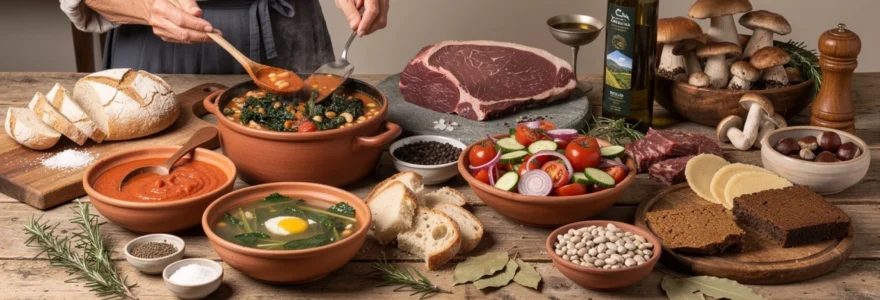
When Italy’s national cuisine received UNESCO recognition as intangible cultural heritage in 2024, the spotlight fell not on elaborate preparations or expensive ingredients, but on the profound simplicity that defines Italian gastronomy. Nowhere is this philosophy more evident than in Tuscany, where centuries-old cooking traditions celebrate the marriage of resourcefulness and refinement. The region’s culinary identity emerged from agricultural necessity, transforming humble ingredients into dishes that now command global admiration. This approach, known as cucina povera, represents more than mere peasant cooking—it embodies a sophisticated understanding of flavour, seasonality, and the inherent dignity of simple food prepared with respect and skill. As UNESCO’s recognition affirms, these traditions constitute cultural achievements worthy of preservation alongside architectural monuments and artistic masterpieces.
Tuscan cooking doesn’t rely on complex techniques or exotic components. Instead, it draws strength from the land itself: ancient grain varieties, heritage livestock breeds, wild-foraged ingredients, and cultivation methods unchanged for generations. The region’s Protected Designation of Origin certifications protect these agricultural traditions, ensuring that specific products maintain their historical authenticity. When you taste genuine Tuscan cuisine, you’re experiencing a direct connection to medieval farming practices, Renaissance culinary innovations, and the enduring wisdom of rural communities who perfected the art of creating extraordinary flavours from ordinary materials.
Cucina povera: the peasant food philosophy behind tuscan gastronomy
The term cucina povera translates literally as « poor kitchen, » yet this designation belies the sophisticated culinary intelligence embedded in these recipes. Developed during periods of agricultural hardship, this cooking philosophy emerged from practical necessity: sharecroppers and rural families needed to feed themselves using ingredients readily available on their land, wasting absolutely nothing. Stale bread became the foundation for numerous preparations, vegetable scraps transformed into nourishing soups, and even water itself served as a primary cooking medium. What began as survival strategy evolved into a refined gastronomic tradition that celebrates ingredient quality over quantity.
This approach to cooking demonstrates remarkable creativity within constraint. Rather than viewing limited ingredients as a disadvantage, Tuscan cooks developed techniques that maximized flavour potential. Slow cooking methods extracted maximum taste from bones and tough cuts of meat. Layering simple ingredients in specific sequences created complex flavour profiles. Seasonal awareness ensured that vegetables and herbs were harvested at peak ripeness. The result? Dishes that achieve extraordinary depth despite their modest ingredient lists. Modern chefs worldwide now embrace these principles, recognizing that cucina povera represents not poverty but wisdom—an understanding that great cooking stems from respecting ingredients rather than overwhelming them.
Contemporary interest in sustainable cooking, zero-waste kitchens, and farm-to-table dining has renewed appreciation for these traditional methods. What Tuscan grandmothers practiced by necessity now aligns perfectly with modern environmental consciousness. The philosophy discourages food waste, celebrates local ingredients, and prioritizes seasonal eating—principles that resonate strongly with today’s environmentally aware consumers. As global cuisine trends increasingly favour authenticity over innovation, cucina povera stands as a testament to the enduring relevance of peasant cooking wisdom.
Ribollita and the art of Bread-Based soups in rural tradition
Ribollita, whose name means « reboiled, » exemplifies the ingenious thriftiness of Tuscan cooking. This hearty soup originated as a method for transforming leftover vegetable soup—typically prepared on Friday and consumed throughout the weekend—into an entirely new dish. On the second day, cooks would add stale bread to the remaining soup, creating a thick, porridge-like consistency that provided substantial nourishment. The bread absorbed the concentrated flavours while adding body and texture, converting simple vegetable broth into a filling meal capable of sustaining agricultural labourers through long working days.
Traditional ribollita recipes call for black cabbage (cavolo nero), cannellini beans, and whatever seasonal vegetables the garden provides: carrots, celery, onions, tomatoes, and Swiss chard commonly appear. The soup builds flavour through a soffritto base—finely diced vegetables slowly cooked in olive oil until golden—which forms the aromatic foundation. Beans contribute protein and creamy texture, while the cabbage adds mineral
and slightly bitter notes that define classic Tuscan flavour. Once cooled, the soup is « reboiled » the following day, a step that deepens the flavours and slightly caramelises the surface as it thickens. Many Tuscan home cooks insist that true ribollita must be so dense that a spoon can stand upright in the bowl, testament to its origins as sustenance food rather than a light first course.
For modern cooks eager to recreate authentic ribollita at home, two elements are non-negotiable: good-quality extra virgin olive oil and unsalted Tuscan-style bread. The olive oil should be used both in the initial soffritto and generously drizzled over the finished dish, adding fruitiness and peppery spice. The bread, preferably a day or two old, must be sturdy enough to withstand prolonged simmering without disintegrating into mush. By preparing a large pot and reheating portions over several days, you not only respect the traditional method but also experience firsthand how the flavours evolve and improve with each reboiling.
Panzanella: stale bread transformed into summer salad perfection
While ribollita warms winter evenings, panzanella showcases how cucina povera adapts to the heat of Tuscan summers. This bread-based salad emerged as a clever way to repurpose stale pane toscano when ovens remained cold for days at a time. Rather than wasting hardened loaves, rural families soaked bread in water, squeezed it dry, and combined it with whatever the vegetable garden offered—most notably sun-ripened tomatoes, cucumbers, red onions, and fragrant basil. The result is a dish that captures the essence of the Tuscan countryside in high summer.
Authentic panzanella relies on a few key principles that mirror broader Tuscan culinary traditions. First, the bread should be revived, not drowned: it is briefly soaked, then patiently squeezed until just moist, giving it a pleasantly spongy texture that absorbs dressing without falling apart. Second, the vegetables must be impeccably ripe, as there is nowhere for mediocre produce to hide in this minimalist preparation. Finally, the seasoning remains restrained—extra virgin olive oil, red wine vinegar, salt, and pepper—allowing the natural sweetness of tomatoes and the grassy notes of olive oil to shine. Much like a well-composed painting, every element has its place, yet nothing feels excessive.
Many modern interpretations add olives, capers, or even tuna, but traditionalists favour a shorter ingredient list in keeping with the salad’s peasant origins. If you are preparing panzanella at home, consider it an exercise in patience and restraint: allow the salad to rest for at least 30 minutes before serving so the flavours can meld and the bread can fully absorb the dressing. Served slightly cool rather than chilled, it pairs beautifully with grilled meats or stands alone as a light yet satisfying meal. In a world of overcomplicated salads, panzanella reminds us that the most memorable dishes often arise from the simplest combinations.
Acquacotta: Water-Cooked vegetable stews of the maremma region
Acquacotta, literally « cooked water, » is perhaps the purest expression of the Tuscan ability to extract comfort from almost nothing. Originating in the rugged Maremma region, this humble soup sustained shepherds, charcoal burners, and field workers who often had access only to water, wild greens, onions, and a little stale bread. The name may sound austere, yet the dish itself is deeply satisfying, illustrating how careful layering of ingredients can transform plain water into a flavourful broth. In its earliest forms, acquacotta contained no meat at all, relying instead on the mineral richness of foraged vegetables.
Traditional recipes begin with onions slowly sautéed in olive oil until sweet and golden, a process that forms the backbone of many classic Tuscan soups. Seasonal vegetables—such as chard, wild chicory, tomatoes, and celery—are then added and gently simmered in water until tender. Just before serving, slices of dried bread are placed in bowls and the hot soup is poured over, sometimes crowned with a softly poached egg and a final drizzle of olive oil. The bread absorbs the broth, thickening the soup and turning a modest quantity of vegetables into a complete, nourishing meal.
Why does acquacotta remain relevant in contemporary Tuscan cuisine, even as diners have access to far more luxurious ingredients? Part of its enduring appeal lies in its adaptability: you can enrich the broth with a few beans, a rind of aged cheese, or leftover vegetables without altering its essential character. For home cooks seeking sustainable, budget-friendly recipes, acquacotta offers a model of how to cook creatively within limits. Much like a minimalist painting that reveals more detail the longer you look, this « cooked water » soup invites you to appreciate nuance and subtlety rather than abundance.
Pappa al pomodoro: tomato and bread porridge as subsistence cuisine
Pappa al pomodoro, a thick tomato and bread porridge, demonstrates how Tuscans turned two inexpensive staples—bread and tomatoes—into something remarkably luxurious in texture and taste. Traditionally prepared when the summer tomato harvest peaked, this dish allowed families to preserve the essence of ripe tomatoes in a form that could be stretched across several meals. Stale bread is simmered with tomatoes, garlic, basil, and olive oil until it breaks down completely, yielding a spoonable consistency that sits somewhere between soup and polenta. Despite its humble origins, pappa al pomodoro is now a fixture on menus in trattorie and fine-dining restaurants alike.
The success of this classic relies on a few non-negotiable factors. Fresh, flavourful tomatoes—whether San Marzano, costoluto fiorentino, or another local variety—are essential; out-of-season or canned tomatoes will inevitably produce a flatter, less vibrant result. The bread must be dense and unsalted, capable of soaking up liquid without collapsing into paste, and the cooking should be slow and gentle to avoid scorching. A generous final addition of extra virgin olive oil gives the dish its characteristic sheen and silky mouthfeel, while torn basil leaves lend a perfume that instantly evokes a Tuscan summer kitchen.
For anyone exploring Tuscan culinary heritage at home, pappa al pomodoro offers a practical lesson in resourcefulness and flavour concentration. Leftovers can be reheated, thinned with a splash of broth, or even repurposed as a filling for baked vegetables. Served warm in winter or at room temperature in warmer months, it proves that subsistence cuisine can easily become comfort food. As diners grow more interested in zero-waste cooking and plant-forward diets, this age-old bread and tomato preparation feels surprisingly modern—proof that the wisdom of cucina povera remains timeless.
Protected designation of origin ingredients defining tuscan authenticity
If cucina povera provides the philosophy behind Tuscan cooking, Protected Designation of Origin (PDO and, in Italian, DOP) ingredients supply its raw materials. These EU certifications safeguard products whose qualities are inextricably linked to specific territories and traditional production methods. In Tuscany, such protections ensure that everything from olive oil to cured meats continues to reflect centuries of local knowledge rather than short-term industrial shortcuts. When you see DOP on a label, you are not just buying an ingredient; you are accessing a preserved culinary heritage.
For travellers and home cooks alike, understanding these designations is key to experiencing authentic Tuscan cuisine. Choosing a Chianti Classico DOP olive oil or a cheese from a recognised zone means supporting producers who maintain painstaking standards, often at higher cost and lower yield than mass-market alternatives. Recent data from Italian agricultural consortia shows that DOP and IGP (Protected Geographical Indication) products now represent over 20% of the value of Italy’s food exports, underlining their economic and cultural importance. In Tuscan kitchens, these ingredients are rarely used to show off; instead, they appear in simple preparations that allow their character to shine.
Chianina cattle: the ancient breed behind bistecca alla fiorentina
Chianina cattle, one of the world’s oldest and largest bovine breeds, lie at the heart of Tuscany’s most iconic meat dish: bistecca alla fiorentina. Originating in the Val di Chiana valley, this majestic white breed has been raised in central Italy for over two millennia, originally valued as a strong draught animal before its meat gained renown. Today, the « Vitellone Bianco dell’Appennino Centrale IGP » designation protects meat from Chianina and related breeds, ensuring traditional rearing practices and traceability from pasture to plate. For Tuscan cooks, using authentic Chianina is non-negotiable when preparing a true Florentine steak.
What makes Chianina so prized? Its meat is lean yet marbled with fine intramuscular fat, giving it a unique combination of tenderness and pronounced flavour. The animals are typically pasture-raised, feeding on local grasses and cereals, which further influences the taste profile. When cut into a thick T-bone or porterhouse steak, the Chianina loin delivers a dramatic presentation that reflects its impressive size. In Florence’s historic trattorie, you will often find these steaks displayed in refrigerated cabinets, their deep colour and firm texture signalling careful maturation.
From a culinary perspective, Chianina meat is best treated with the minimalist respect characteristic of Tuscan cooking. The classic bistecca alla fiorentina is grilled over wood or charcoal, seasoned only with coarse salt—pepper and olive oil are added after cooking, if at all. Served rare, with a warm, red centre, it invites diners to taste the intrinsic qualities of the breed rather than any elaborate marinade. For those seeking to recreate this at home, choosing properly aged, bone-in Chianina (or the closest equivalent available locally) and avoiding overcooking are the two most important steps. Like a well-aged wine, the meat’s subtleties emerge only when handled with restraint.
Cinta senese pork: heritage breed salumi and lard production
While Chianina dominates the conversation about Tuscan beef, Cinta Senese pigs quietly underpin many of the region’s finest cured meats. Recognisable by the distinctive white « belt » (cinta) across their dark bodies, these semi-wild pigs have roamed the oak forests around Siena since at least the Middle Ages, as evidenced by their depiction in fourteenth-century frescoes. The Cinta Senese DOP status guarantees that pigs are raised in designated areas, spend much of their lives outdoors, and feed on roots, tubers, and acorns—a diet that heavily influences the meat’s quality. The result is pork with deep colour, complex flavour, and a generous proportion of silky, unsaturated fat.
Cinta Senese lends itself particularly well to salumi production: air-dried hams, sausages, and cured lard that occupy a central role in Tuscan antipasti. Because the fat is softer and more aromatic than that of industrial breeds, producers can create lardo and pancetta with remarkable depth and sweetness. Traditional butchers follow time-honoured salting and seasoning techniques, often using only salt, black pepper, garlic, and occasionally wild herbs. The long curing periods—sometimes extending beyond a year for larger cuts—allow flavours to develop gradually, much like the slow aging of fine cheese.
For visitors exploring rural Tuscany, tasting Cinta Senese products at a small salumificio can be a revelation, especially when compared with standard commercial pork. Thinly sliced ham or finocchiona (a fennel-scented salami) served with simple bread and a glass of local red wine demonstrates how heritage breeds elevate even the most straightforward snacks. If you are choosing pork for home cooking, looking for the Cinta Senese DOP label—or, outside Italy, selecting meat from similarly raised heritage breeds—will bring you closer to the authentic Tuscan experience. Once again, the guiding principle holds: respect the ingredient, and let it speak for itself.
Extra virgin olive oil from chianti classico and lucca DOP territories
Olive oil is to Tuscan cuisine what a good narrator is to a story: ever-present, guiding, but rarely overwhelming. Among the many oils produced across the region, those from Chianti Classico DOP and Lucca DOP stand out for their historical prestige and stringent quality controls. In these territories, producers cultivate traditional olive varieties such as Frantoio, Leccino, and Moraiolo, harvesting by hand and pressing within hours to preserve freshness. Laboratory analyses and tasting panels then verify that the oils meet specific chemical and sensory standards before granting the coveted DOP seal.
Chianti Classico oils typically display a robust personality, with pronounced bitterness and peppery spice that can leave a pleasant tickle in the throat—a sign of high polyphenol content. By contrast, Lucca DOP oils are often slightly softer and fruitier, making them particularly versatile in the kitchen. Both types share a common Tuscan trait: they are used not just as cooking fats, but as finishing ingredients that define a dish. A drizzle of raw olive oil over grilled vegetables, bean soups, or even vanilla gelato acts almost like a perfume, shifting the entire sensory experience.
For anyone serious about exploring the culinary heritage of Tuscany, learning to taste olive oil critically is invaluable. Much as you would swirl and sniff a glass of wine, you can warm a small amount of oil in your hands, inhale its aroma, and note flavours ranging from green almond to artichoke and cut grass. Choosing a DOP olive oil and protecting it from light and heat at home ensures you can replicate, at least in part, the flavours found on Tuscan tables. And when a recipe calls for just three or four ingredients, as so many Tuscan dishes do, high-quality extra virgin olive oil from these protected territories can make the difference between the ordinary and the unforgettable.
Zolfino bean cultivation in the pratomagno mountains
Beans occupy a central place in Tuscan cooking, earning locals the affectionate nickname mangiafagioli—bean eaters. Among the many varieties grown in the region, the Zolfino bean from the Pratomagno mountains is particularly revered. Cultivated on stony, poor soils at relatively high altitude, this small, pale-yellow bean (its name recalls sulphur, zolfo in Italian) has a delicate skin and an exceptionally creamy interior. Recognised with a Presidium by the Slow Food movement, Zolfino production remains limited, with yields intentionally kept low to maintain quality and biodiversity.
The challenging growing conditions contribute directly to the bean’s unique character. Plants develop deep root systems to access scarce water, and the stress of the environment concentrates flavour in the seeds. When cooked slowly and gently—often in a traditional earthenware pot known as a coccio—Zolfino beans hold their shape yet become almost buttery in texture, needing little more than olive oil, salt, and perhaps a sprig of sage. This simplicity aligns perfectly with the Tuscan ethos: when the ingredient is exceptional, the recipe can remain spare.
For home cooks accustomed to standard white beans, Zolfino offers an illuminating benchmark. While it can be difficult to source outside Italy, seeking out heirloom or regional varieties where you live can yield a similar leap in quality. Just as choosing a single-origin coffee or chocolate reveals new flavour dimensions, selecting carefully grown beans transforms everyday soups and salads. In traditional Tuscan households, a bowl of Zolfino beans dressed with oil and served alongside grilled meats or toasted bread is not considered a side dish, but a celebration in its own right.
Wild foraged ingredients in traditional tuscan cooking methods
Tuscan cuisine extends beyond cultivated fields and livestock pastures into forests, hillsides, and riverbanks. For centuries, rural families supplemented their diets by foraging wild ingredients—mushrooms, herbs, greens, and game—that brought seasonal variety and complexity to otherwise simple meals. This practice, once a matter of necessity, now aligns with contemporary interests in hyper-local sourcing and biodiversity. In recent years, professional foragers and chefs have collaborated to revive knowledge that risked fading as younger generations left the countryside.
Foraging, however, is not merely a romantic return to nature; it requires expertise, restraint, and respect for ecosystems. Responsible gatherers take only what they need, avoid protected species, and understand how to distinguish edible plants from toxic lookalikes. In Tuscany, regulations often require permits for mushroom collection and limit quantities to preserve forest health. When you sit down to a dish of wild porcini, chestnut flour crêpes, or wild boar ragù, you are tasting the outcome of both culinary skill and ecological awareness. The connection between landscape and plate becomes especially tangible.
Porcini mushroom harvesting in casentino and mugello forests
The Casentino and Mugello forests, with their dense stands of beech and chestnut trees, are renowned across Italy for their porcini mushrooms. Each autumn, as rains moisten the forest floor, foragers venture out at dawn with baskets and small knives, hoping to find the firm, fragrant caps that can command premium prices in local markets. Porcini, or boletus edulis, are to Tuscan mushrooms what truffles are to Piedmont: a prized wild luxury that nonetheless appears in surprisingly unpretentious dishes. The thrill of discovery is part of the appeal—experienced foragers guard their favourite spots as closely as vintners protect vineyard secrets.
Once harvested, porcini are handled with great care. Their spongy undersides are trimmed, dirt is brushed away rather than washed (to prevent waterlogging), and only the best specimens are reserved for slicing and grilling or sautéing. Imperfect or smaller mushrooms often find their way into sauces, risotti, or drying racks, where they concentrate in flavour and can be stored for months. In many Tuscan homes, a jar of dried porcini is as indispensable as a bottle of olive oil, ready to enrich soups and braises with a deep, woodsy aroma whenever fresh mushrooms are out of season.
For those interested in mushroom hunting, Tuscany offers organised excursions with licensed guides who teach safe identification and sustainable harvesting practices. Joining such an outing is not just a gastronomic adventure, but an education in forest ecology and local culture. And when you later enjoy a plate of tagliatelle ai porcini or grilled porcini drizzled with olive oil and sprinkled with parsley, you gain a deeper appreciation for the journey from forest floor to dining table. In this way, wild mushrooms embody the broader Tuscan theme: profound flavours arising from simple, carefully respected ingredients.
Wild boar processing techniques for cinghiale ragù and salame
Wild boar, or cinghiale, roam many parts of Tuscany, particularly wooded areas of the Maremma, Chianti, and the Apennine foothills. Historically considered both a valuable source of protein and a crop-damaging pest, these animals have long featured in Tuscan hunting traditions and countryside cooking. Their meat, darker and more intensely flavoured than domestic pork, lends itself especially well to slow-cooked ragù and robust cured meats. Managed hunting seasons now balance ecological concerns with culinary demand, and hunting associations often collaborate with butchers to ensure humane processing and full utilisation of each animal.
Transforming wild boar into a silky ragù requires time and technique. Because the meat is lean and can be strongly flavoured—especially in older animals—cooks typically marinate it in red wine with juniper berries, bay leaves, and peppercorns to soften and perfume it. The meat is then browned slowly and simmered for hours with tomatoes, vegetables, and sometimes a small quantity of domestic pork fat to add richness. The resulting sauce clings perfectly to thick strands of pappardelle or polenta, delivering an earthy, gamey complexity that reflects the forested landscapes from which the boar came.
Boar meat also features prominently in Tuscan salumi, where careful seasoning and curing tame its intensity. Traditional recipes for wild boar salami combine boar and pork in calibrated ratios, adding black pepper, garlic, red wine, and occasionally chilli or fennel seeds. Long, cool maturation periods allow flavours to meld and textures to firm. When you slice into a well-made salame di cinghiale, you taste an intricate balance of wildness and control—much like a carefully maintained forest path that still feels untamed around the edges. For adventurous cooks and diners, wild boar products offer a way to engage directly with Tuscany’s wilder side.
Chestnuts and chestnut flour: necci and castagnaccio preparations
In the mountainous areas of Tuscany, particularly the Garfagnana and Amiata regions, chestnut trees were once so vital to local survival that they earned the nickname « bread trees. » For centuries, dried chestnuts and chestnut flour stood in for grains when wheat harvests failed or land was too steep for cultivation. This legacy lives on in a range of traditional recipes that transform a single ingredient into breads, cakes, and pancakes, each with its own texture and story. The best chestnut flour, often protected by DOP or similar designations, is stone-ground and naturally sweet, needing little or no added sugar.
Two emblematic preparations illustrate the versatility of chestnut flour in Tuscan cooking. Necci are thin chestnut pancakes, traditionally cooked between heated stone or cast-iron plates over an open fire and served folded around fresh ricotta or ricotta di pecora. Their delicate, nutty flavour pairs beautifully with the mild tang of the cheese, creating a dessert—or rustic breakfast—that feels indulgent despite its simplicity. Castagnaccio, by contrast, is a dense, flat cake made from chestnut flour, water, olive oil, pine nuts, and raisins, sometimes perfumed with rosemary. Historically regarded as a poor man’s sweet, it has gained new appreciation among modern diners seeking naturally gluten-free, minimally processed desserts.
Chestnut-based recipes also highlight an important aspect of Tuscan culinary heritage: the intimate relationship between staple ingredients and landscape. Coastal plains leaned on wheat and olives, while mountain communities depended on chestnuts and sheep’s milk. Today, as interest grows in ancient grains and alternative flours, chestnut flour is enjoying a quiet renaissance, appearing in everything from pasta doughs to pastry crusts. By experimenting with necci or castagnaccio at home, you not only diversify your baking repertoire but also connect with a centuries-old tradition of making the most from what the land willingly provides.
Tuscan Bread-Making: the unsalted pane toscano tradition
No discussion of Tuscan gastronomy rooted in simplicity would be complete without addressing pane toscano, the region’s distinctive unsalted bread. At first bite, visitors often find it bland compared to the salted loaves common elsewhere in Italy. Yet this apparent neutrality is deliberate, the result of historical and culinary forces. One oft-cited story traces the custom to medieval salt taxes imposed by neighbouring cities, which made salt prohibitively expensive for Tuscan bakers. Whether or not this origin tale is fully accurate, the fact remains that unsalted bread has become an essential partner to the region’s boldly seasoned dishes and salty cured meats.
Technically, pane toscano is a lean, naturally leavened bread made from wheat flour, water, and a starter culture, without added fats or sweeteners. Its crust is thick and rustic, enclosing a moist, open crumb that keeps well for several days—an important quality in households where ovens were historically fired only once or twice a week. As the bread ages, its role evolves: fresh slices accompany meals, slightly stale bread becomes the base for soups and salads like ribollita and panzanella, and fully hardened pieces are grated into breadcrumbs or used to thicken sauces. In this way, no crumb is wasted.
From a flavour perspective, the absence of salt allows other elements on the table to take centre stage. When paired with salty prosciutto, pecorino cheese, or robust olive oil, pane toscano acts almost like a canvas, absorbing and moderating their intensity. This relationship mirrors that between background and subject in a painting: the more neutral the backdrop, the more vividly the main elements stand out. For bakers interested in replicating Tuscan bread at home, experimenting with low- or no-salt doughs can be instructive, especially when served alongside strongly flavoured accompaniments.
In 2016, pane toscano itself received PDO status, formally recognising its historical importance and specific production methods. Traditional bakeries use long fermentation times and natural starters, which enhance digestibility and complexity despite the absence of salt. As interest in heritage bread-making grows worldwide, this humble loaf offers valuable lessons about how staple foods can shape an entire culinary identity. Far from being a deficiency, the lack of salt becomes a defining feature that influences everything from soup recipes to charcuterie boards across Tuscany.
Minimal seasoning techniques: salt, pepper, and herb applications
One of the most striking aspects of Tuscan cooking, especially for those accustomed to heavily spiced cuisines, is its restrained approach to seasoning. Rather than deploying a long list of herbs and spices, Tuscan chefs typically rely on a short roster—salt, black pepper, garlic, sage, rosemary, bay leaves, and sometimes chilli—to enhance, not mask, the natural taste of ingredients. This philosophy reflects a belief that high-quality meat, vegetables, and legumes carry sufficient intrinsic flavour, needing only gentle guidance. It’s akin to adjusting the lighting in a room: the goal is to reveal what is already there, not to change it entirely.
In practice, this means seasoning is often layered thoughtfully throughout the cooking process. Salt is added early to draw juices from vegetables in a soffritto, then adjusted at the end to fine-tune balance. Black pepper is usually freshly ground just before use, contributing aroma as much as heat. Aromatic herbs are employed with purpose: rosemary might be tucked into roasting meats, sage gently fried in butter or oil to perfume a simple pasta, and bay leaves simmered in bean stews to lend subtle, resinous depth. The overall effect is harmonious rather than flashy.
For home cooks aiming to capture authentic Tuscan flavours, embracing this minimalist seasoning approach can be both challenging and liberating. It asks you to trust your ingredients and sharpen your tasting skills, much like a musician learning to appreciate the nuances of a single instrument rather than a full orchestra. Start by cooking familiar dishes—such as roast chicken, potatoes, or white beans—with fewer herbs and spices than usual, focusing instead on good olive oil, proper browning, and careful salt and pepper usage. You may be surprised by how much character emerges from such seemingly simple combinations.
Modern nutritional research increasingly supports this approach, suggesting that heavy reliance on sugar, excessive salt, and artificial flavour enhancers can dull our sensitivity to more delicate tastes over time. Tuscan cuisine, by contrast, invites you to recalibrate your palate. When a grilled steak is seasoned only with coarse salt and perhaps a sprig of rosemary, or when a vegetable side dish features little more than garlic and oil, you are encouraged to notice variations in texture, sweetness, and acidity more acutely. In this sense, minimal seasoning is not a limitation but a tool for deepening culinary awareness.
Wood-fired cooking and charcoal grilling in tuscan culinary practice
Fire, in its most elemental form, remains at the core of many Tuscan cooking techniques. Long before the advent of modern stovetops and ovens, rural families relied on open hearths, wood-fired ovens, and charcoal grills to prepare daily meals. These methods persist not merely out of nostalgia, but because they impart flavours and textures that are difficult to replicate with gas or electric heat. The gentle smokiness of a wood fire, the intense sear of glowing coals, and the radiant heat of a brick oven all contribute to the distinctive character of dishes such as bistecca alla fiorentina, roasted game, and crusty country bread.
In trattorie and agriturismi across Tuscany, you will still find brace—charcoal or wood embers—being carefully tended by cooks who understand that managing fire is as much an art as seasoning. Meats are often cooked over an open grill set at a specific distance from the coals, allowing the exterior to char while the interior remains juicy. Vegetables like peppers, onions, and zucchini are blistered until their skins blacken, then peeled to reveal sweet, smoky flesh inside. Even simple slices of pane toscano, toasted over embers and rubbed with garlic before being dressed with olive oil, become bruschetta that encapsulate the region’s love of clean, direct flavours.
Wood-fired ovens play a similarly important role in both bread-making and long, slow braises. Their thick masonry walls absorb and radiate heat evenly, making them ideal for baking loaves with crisp crusts and open crumbs, or for cooking dishes like cacciucco (fish stew) and spezzatino (meat stew) that benefit from steady, enveloping warmth. Many Tuscan homes and country villas retain these traditional ovens not just as architectural features, but as working tools for family gatherings and celebrations. When guests participate in firing the oven, shaping dough, or turning skewers over the grill, they experience firsthand how communal and tactile Tuscan cooking can be.
For those looking to integrate elements of Tuscan fire-based cooking into their own kitchens, even small steps can make a difference. Using a charcoal grill instead of a gas one, adding a handful of hardwood chips for aroma, or investing in a simple countertop pizza stone to mimic the heat distribution of a brick oven can all enhance flavour. More importantly, adopting the Tuscan mindset—cooking fewer things over real flame, but doing them exceptionally well—encourages a slower, more attentive approach to food. As you watch coals glow, listen to the sizzle of meat, and smell olive oil hitting hot bread, you connect not just with a recipe, but with a centuries-old culinary heritage rooted in simplicity and fire.