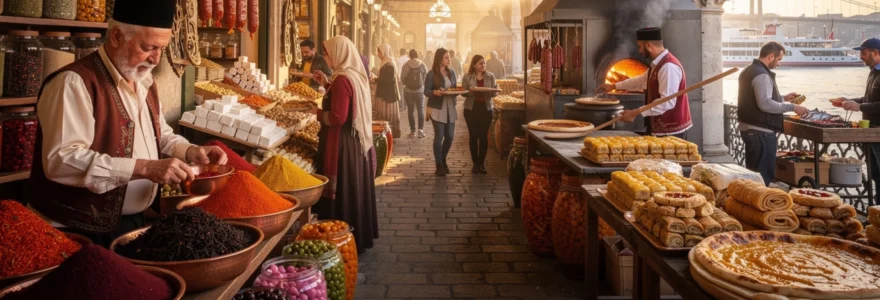
Istanbul’s ancient bazaars represent more than mere marketplaces; they embody centuries of culinary evolution where East meets West in an extraordinary tapestry of flavours, techniques, and traditions. The Grand Bazaar and Spice Bazaar stand as living museums of gastronomic heritage, where Byzantine, Ottoman, Armenian, and Sephardic influences converge to create one of the world’s most sophisticated culinary ecosystems. These covered markets have preserved traditional cooking methods, spice blending techniques, and artisanal food preparation practices that date back over a millennium. The aromatic corridors of these bazaars tell stories of empire, trade, and cultural exchange through their remarkable collection of foods, spices, and time-honoured preparation methods that continue to define Turkish cuisine today.
Historical evolution of istanbul’s grand bazaar and spice bazaar culinary heritage
The culinary heritage of Istanbul’s bazaars reflects the city’s unique position as a crossroads between Europe and Asia, where diverse food traditions have blended over centuries to create distinctive flavours and cooking techniques. The transformation of Constantinople into Istanbul brought together multiple culinary influences that continue to shape the food culture within these historic marketplaces.
Byzantine empire garum and preserved fish trade routes
During the Byzantine period, the predecessor markets to today’s Grand Bazaar served as crucial distribution points for garum, the fermented fish sauce that formed the backbone of Byzantine cuisine. Archaeological evidence suggests that specialised merchants established elaborate preservation systems for various fish products, creating the foundation for Istanbul’s enduring love affair with seafood. The ancient trade routes that brought salt-cured fish from the Black Sea established commercial relationships that persist in modern bazaar operations.
Byzantine merchants developed sophisticated techniques for preserving fish using salt, vinegar, and aromatic herbs sourced from the surrounding regions. These preservation methods influenced later Ottoman cooking styles and contributed to the development of dishes like hamsi (anchovy) preparations that remain popular in contemporary Istanbul bazaars. The legacy of Byzantine fish preservation can still be observed in the Spice Bazaar’s numerous vendors specialising in dried and cured seafood products.
Ottoman palace kitchen techniques in kapalıçarşı merchant stalls
The Ottoman Empire’s sophisticated palace kitchen system, known as the Matbah-ı Amire, significantly influenced the culinary practices within the Grand Bazaar’s merchant stalls. Palace cooks who had mastered intricate techniques often established businesses within the bazaar, bringing imperial cooking methods to the broader population. This transfer of knowledge elevated the quality and complexity of foods available in the market, creating a unique culinary environment where palace-level techniques became accessible to merchants and visitors.
Ottoman cooking techniques introduced the systematic use of spice combinations, layered flavour profiles, and precise timing methods that characterise Turkish cuisine. The palace influence is particularly evident in the preparation of pilav (rice dishes), meat preparations, and the elaborate sweet-making traditions that flourished within the bazaar’s confectionery sections. Many vendors today still employ cooking methods that can be traced directly to Ottoman palace kitchens, maintaining authenticity while adapting to modern commercial demands.
Sephardic jewish culinary influence following 1492 expulsion
The arrival of Sephardic Jews following their expulsion from Spain in 1492 brought distinctive culinary traditions that enriched Istanbul’s bazaar food culture significantly. Sephardic communities introduced new preservation techniques, spice combinations, and cooking methods that blended seamlessly with existing Ottoman practices. Their expertise in preparing foods that adhered to kashrut dietary laws led to innovations in meat preparation, dairy alternatives, and vegetable-based dishes that influenced the broader culinary landscape.
Sephardic influence is particularly notable in the bazaar’s pastry traditions, where techniques for preparing börek variations and sweet treats like travados and mustacudos became integrated into the standard offerings. The community’s emphasis on preserving foods for extended periods led to improved methods for storing nuts, dried fruits, and spices, contributing to the Spice Bazaar’s reputation for maintaining product quality over
time. Vendors dealing in almonds, pistachios, figs, and apricots relied on Sephardic storage strategies, such as layering with bay leaves and controlling humidity in stone storerooms. These methods not only minimised spoilage but also enhanced flavour, ensuring that ingredients for signature bazaar dishes such as nut-filled pastries and spiced rice remained aromatic and fresh. Today, when you sample a delicately spiced pastry or a slow-cooked chickpea stew near the Grand Bazaar, you are tasting echoes of these Sephardic innovations woven into Istanbul’s broader culinary tapestry.
Armenian pastry traditions in mahmutpaşa yokuşu quarter
The Mahmutpaşa Yokuşu quarter, sloping down from the Grand Bazaar towards Eminönü, became a key enclave for Armenian bakers and pastry makers from the 17th century onward. Armenian artisans were renowned for their mastery of dough, sugar, and butter, skills that found a natural home in Istanbul’s commercial heart. Their small workshops supplied both ordinary bazaar shoppers and elite households with meticulously crafted sweets, breads, and festive pastries.
Techniques such as hand-stretching ultra-thin dough sheets, slow-proofing enriched breads, and layering clarified butter between delicate pastry leaves directly influenced what we now recognise as classic Turkish desserts. Many historians credit Armenian bakers with refining early forms of baklava, çörek (spiced brioche-style breads), and nut-filled rolls sold along Mahmutpaşa Yokuşu. Even today, certain family-run bakeries in and around the Grand Bazaar trace their lineage back to Armenian masters, preserving recipes that rely on patient fermentation, precise oven temperatures, and carefully sourced nuts from Anatolia.
Beyond sweets, Armenian culinary traditions also enriched savoury bazaar offerings. Stuffed breads filled with minced meat, onions, and spices, as well as sesame-topped rings akin to modern simits, reflect Armenian know-how in balancing textures and seasonings. For visitors navigating Mahmutpaşa’s bustling incline, following the scent of freshly baked goods often leads to shops where these age-old techniques are still practiced, providing a living link between Istanbul’s diverse communities and its enduring bazaar cuisine.
Traditional food preparation methods at eminönü spice bazaar
The Eminönü Spice Bazaar, or Mısır Çarşısı, functions as a working laboratory of traditional food preparation methods in Istanbul. While tourists come for the colours and aromas, local chefs and home cooks rely on its vendors for ingredients produced using time-tested techniques. From slow-baked breads to expertly smoked meats and meticulously fermented vegetables, the Spice Bazaar preserves practical know-how that has sustained Istanbul’s urban population for centuries. Understanding these methods offers insight into how the city’s bustling bazaars help keep Turkish culinary traditions vibrant in the modern age.
Tandir oven techniques for lahmacun and pide production
The tandır oven, a deep, cylindrical clay or brick structure, remains central to traditional bread and flatbread production associated with the Spice Bazaar. Bakers use intense radiant heat, often reaching 400–500°C, to cook thin rounds of dough pressed against the oven’s inner walls. For dishes like lahmacun and pide, this method creates a crisp exterior and tender interior that conventional metal ovens struggle to replicate. You can think of a tandır as a vertical, stone-lined grill that envelops the dough in heat from all sides, much like a culinary kiln.
In stalls near Eminönü, dough is prepared with high-hydration wheat flour and allowed to rest, developing gluten and subtle fermentation notes. Toppings of minced lamb or beef, tomato, onions, and finely chopped herbs are spread thinly before the rounds slide into the tandır on wooden paddles. Because cooking times can be as short as a minute, bakers must judge heat levels by experience alone, reading the colour of the oven walls and the speed at which the dough blisters. For visitors seeking an authentic taste of Istanbul’s bazaar food culture, watching a tandır baker at work is as rewarding as eating the resulting hot, smoky lahmacun straight from the oven.
Traditional tandır techniques also support efficient, high-volume production without sacrificing quality, which is crucial in crowded bazaars where foot traffic can reach tens of thousands of people per day in peak seasons. Many artisans still fuel their ovens with wood or charcoal, preferring the subtle smoky aroma over gas-fired systems. However, contemporary health and safety regulations have led some vendors to adopt hybrid solutions, combining traditional shapes and baking methods with improved ventilation and temperature control. This balance between heritage and modern standards helps ensure that tandır-baked pide and flatbreads remain a staple of Istanbul’s street food landscape.
Cold-smoking methods for pastrami and sucuklu pastries
Meat preparation in and around the Spice Bazaar draws heavily on age-old smoking and curing techniques, particularly visible in the production of pastırma and sucuk. Cold-smoking, which exposes meat to smoke at lower temperatures over extended periods, allows artisans to develop profound flavour without fully cooking the product. This process is akin to slowly imprinting layers of aroma into the meat, the way incense gradually permeates fabric in a closed room. Bazaar butchers carefully manage wood types—often beech or oak—and airflow to achieve the desired balance of smokiness and moisture.
Pastırma, air-dried beef coated with a paste of fenugreek, paprika, garlic, and other spices called çemen, is sometimes gently smoked before or after drying to add depth. Slices of this cured meat appear not only on their own but also inside pastries and breads sold across Eminönü. Similarly, sucuk, a fermented and spiced sausage, may be given a light smoke to stabilise its surface and enrich its flavour profile. When used in sucuklu börek or breakfast pastries, the cold-smoked sausage releases its aromas during baking, infusing the dough with a savoury, almost buttery smokiness.
Because food safety is crucial in a humid, coastal city like Istanbul, cold-smoking methods in bazaar-adjacent workshops often combine traditional practices with modern controls. Meat is thoroughly salted and sometimes treated in temperature-regulated rooms before entering smokehouses, reducing the risk of bacterial growth. Vendors will often tell you that the key to great bazaar pastırma is patience: multi-week curing, controlled drying, and slow smoking. For travellers curious about how Istanbul’s bazaars maintain such consistent quality in their meat products, asking about the smoking wood, curing times, and spice blends can reveal the depth of expertise hidden behind each display case.
Fermentation processes for turşu and pickled vegetable preservation
Fermented vegetables, collectively known as turşu, occupy a prominent place in Istanbul’s bazaar food culture. At the Spice Bazaar and its surrounding streets, glass jars filled with carrots, cucumbers, cabbage, peppers, and even green plums line shopfronts like edible stained glass. The underlying technique is simple yet powerful: vegetables are submerged in a brine of water and salt, sometimes with vinegar, then left to ferment naturally. Beneficial lactic acid bacteria convert sugars into acids, creating both tangy flavour and a natural preservation barrier.
The fermentation process for bazaar-style turşu can last from a few days to several weeks, depending on the vegetable type, ambient temperature, and desired sourness. Vendors often rely on sensory cues—bubble formation, colour change, and aroma—to judge when a batch is ready, much like winemakers tasting from barrels. Many producers add garlic, bay leaves, mustard seeds, or chickpeas to the brine to influence microbial activity and flavour complexity. Have you ever wondered why a simple plate of pickles can feel so satisfying alongside grilled fish or spicy meat? The acidity cuts through richness, refreshes the palate, and even aids digestion.
From a practical perspective, turşu solves the centuries-old challenge of preserving seasonal produce for Istanbul’s long, damp winters. While modern refrigeration has changed storage needs, demand for traditionally fermented pickles remains strong. Recent nutrition research highlighting the benefits of probiotic foods has only increased their appeal among health-conscious urban consumers. For anyone exploring the culinary traditions of Istanbul’s bustling bazaars, sampling a glass of turşu suyu—the tangy pickle brine served as a drink—is a vivid way to experience how fermentation continues to shape daily life and street food culture.
Stone grinding systems for lokum and turkish delight manufacturing
Lokum, or Turkish delight, is one of the Spice Bazaar’s emblematic products, and its traditional production relies heavily on stone grinding and slow cooking techniques. Historically, artisans used heavy stone mortars and mills to grind nuts such as pistachios, hazelnuts, and walnuts into fine pastes before folding them into sugar-and-starch gels. This mechanical process, though labour-intensive, creates a smooth, almost creamy texture that electric blades can struggle to achieve without overheating. The combination of gentle grinding and patient stirring results in confections with a clean, pronounced flavour and delicate chew.
In classic workshops, copper cauldrons sit over low fires while mixtures of sugar, water, and starch are stirred continuously for hours. This slow gelatinisation is crucial: too much heat or agitation can cause separation, while too little yields a grainy texture. When nuts, rosewater, or citrus peels are added, they integrate seamlessly thanks to prior stone grinding or careful chopping. Watching this process, you might compare it to crafting fine ceramics—each step must be controlled to produce a uniform, translucent final product. Over time, some makers have adopted stainless-steel pans and gas-fired stoves, but many still preserve the essential rhythm and timing developed over generations.
For visitors, one practical tip is to ask vendors when their lokum was made and how it was prepared. Freshly produced Turkish delight has a subtle bounce and a natural sheen, with aromas that hint at real fruit, nuts, or floral waters rather than artificial flavourings. Artisans who still use stone grinding systems often highlight this fact as a mark of quality. In a market environment where presentation is as important as taste, understanding the manufacturing methods behind those colourful cubes can help you choose confections that reflect the true culinary heritage of Istanbul’s Spice Bazaar.
Artisanal spice blending and regional sourcing networks
Spice merchants in Istanbul’s bazaars function as both traders and curators, connecting the city to a vast web of regional sourcing networks that span Anatolia, the Levant, and beyond. The art of spice blending is central to the culinary traditions of Istanbul’s bustling bazaars, shaping everything from grilled meats to delicate desserts. Rather than simply selling raw ingredients, experienced vendors create custom blends tailored to specific dishes, dietary needs, or even family traditions. This level of personalisation transforms each purchase into a form of culinary consultancy, where you benefit from generations of accumulated knowledge.
These networks are not merely historical footnotes; they remain economically significant. According to recent Turkish export statistics, spice and herb products have seen steady growth as global demand for Mediterranean and Middle Eastern flavours increases. Within the Grand Bazaar and Spice Bazaar, merchants often maintain relationships with small-scale farmers who cultivate specific varieties of sumac, peppers, and thyme using traditional methods. By asking where a particular spice originates and how it is processed, you can trace an invisible map of fields, drying yards, and village markets that converge in Istanbul’s covered bazaars.
Anatolian sumac cultivation and processing techniques
Sumac, with its vibrant crimson hue and citrusy tang, plays a pivotal role in many Turkish dishes, from grilled meats to salads and marinades. The best-quality sumac in Istanbul’s bazaars typically comes from southeastern Anatolia, where shrubs thrive in rocky, sun-soaked hillsides. Harvest usually takes place in late summer when the berry clusters reach peak colour. Farmers handpick the clusters, a labour-intensive process that helps protect the delicate skins and maximise essential oil content—one reason why bazaar-bought sumac often tastes brighter than supermarket versions.
Processing involves drying the berries in thin layers, either in the shade to preserve colour or under controlled sun exposure to intensify flavour. Once fully dry, the berries are traditionally ground with their husks and sometimes mixed with a small amount of salt to stabilise the product. In some rural settings, stone mills are still used to achieve a coarse, slightly moist texture prized by spice merchants. Have you noticed how a sprinkle of sumac on grilled fish or onions instantly lifts the dish? That effect comes from the careful balance of acidity and aroma preserved during cultivation and grinding.
In Istanbul’s Spice Bazaar, knowledgeable vendors will often let you pinch and smell different batches of sumac, explaining which are best for salads, kebabs, or marinades. Some even prepare specialised “fish sumac” blends with added herbs or citrus zest. If you plan to take sumac home, choosing a vendor who can describe the harvest region and processing method is a simple way to ensure you are bringing back an authentic taste of Anatolia’s spice-growing traditions.
Gaziantep red pepper drying and grinding methods
Gaziantep, in southeastern Turkey, is famed for its culinary prowess, and its red pepper products are a cornerstone of Istanbul’s bazaar spice trade. These peppers, often known as Antep biberi, are cultivated in hot, dry conditions that concentrate their natural sweetness and gentle heat. After harvest, peppers are split, seeded, and laid out to dry on rooftops or special racks, creating scarlet mosaics that are a familiar sight in the region. Sun-drying not only removes moisture but also deepens flavour, similar to how slow roasting intensifies the taste of coffee beans.
Once dry, peppers undergo one of two main processing paths: they are either coarsely crushed for use as flakes (pul biber) or finely ground into powder. Traditional stone mills remain popular because they operate at lower temperatures than high-speed steel grinders, helping preserve volatile aromatic compounds. In some cases, a small amount of oil is added during grinding to create a richer, slightly moist pepper flake that clings well to meats and vegetables. When you taste a kebab seasoned with Gaziantep red pepper in Istanbul’s bazaars, you are experiencing the cumulative effect of these careful drying and grinding techniques.
Spice merchants in the Grand Bazaar often differentiate between sweet, medium, and hot variations of Antep pepper, advising customers on which type suits specific dishes such as menemen, stews, or grilled meats. For visitors looking to recreate authentic Turkish recipes at home, investing in a high-quality, bazaar-sourced red pepper can make more difference than any other single spice. Asking about the drying method—sun-dried versus oven-dried—provides another clue to quality, as traditional sun-drying tends to offer a more complex, layered flavour profile.
Isot biber fermentation from şanlıurfa province
Isot biber, often called Urfa pepper, stands out as one of the most distinctive spices to emerge from Turkey’s regional networks. Grown around Şanlıurfa province, these dark, smoky chilli flakes undergo a unique semi-fermentation process that sets them apart from standard red pepper products. After harvesting, the peppers are sun-dried during the day and then wrapped or covered at night, allowing residual moisture and ambient warmth to initiate gentle fermentation. This cycle repeats over several days, gradually darkening the peppers to a deep maroon or almost black colour.
The result is a spice with a complex flavour profile: smoky, mildly sweet, and only moderately hot. Many food writers compare isot to a cross between raisins and chillies, an analogy that captures both its fruity undertones and gentle heat. During grinding, a small amount of oil and salt is often added, giving isot flakes their characteristic soft, slightly oily texture. In Istanbul’s bustling bazaars, isot is a favourite addition to grilled meats, egg dishes, and even chocolate desserts in modern fusion restaurants.
For anyone building a home spice collection inspired by Istanbul’s markets, isot pepper is an essential addition. When purchasing, look for flakes that are glossy, pliable, and aromatic rather than dry and brittle—signs that the fermentation and storage conditions were properly managed. Asking vendors how they recommend using isot can also provide practical cooking tips, from sprinkling it over hummus to mixing it into marinades or salad dressings for a deep, smoky kick.
Za’atar blend variations across levantine trade connections
Za’atar is not a single herb but a family of spice blends that reflect centuries of Levantine trade connections linked to Istanbul’s bazaars. At its core, za’atar typically combines dried thyme or wild oregano, sesame seeds, and sumac, but proportions and added ingredients can vary dramatically. Some blends incorporate marjoram, cumin, or even ground chickpeas, depending on regional tastes and historical influences. In many ways, za’atar functions like a culinary fingerprint, revealing where it was mixed and what food traditions shaped it.
Historically, caravans and coastal trade routes carried herbs and seeds from Syria, Lebanon, Palestine, and Jordan into Ottoman markets, including those in Istanbul. Spice merchants in the Grand Bazaar would then create custom blends for different communities, a practice that still survives today. In the Spice Bazaar, you may find za’atar labelled by country or city of inspiration, such as “Lebanese-style” or “Gaziantep-style,” each with distinct aroma profiles. This diversity mirrors the cultural mosaic of Istanbul itself, where flavours from across the Eastern Mediterranean converge.
For practical use, bazaar vendors often recommend za’atar as a table condiment for dipping bread in olive oil, sprinkling over labneh, or seasoning roast chicken and vegetables. If you are unsure which blend to buy, ask to taste a small pinch of several varieties; the best za’atar should taste vibrant, with toasty sesame notes and a balanced acidity from sumac. Bringing home a packet of za’atar from Istanbul is like carrying a condensed history of the Levantine spice trade, ready to be revived every time you open the jar.
Street food vendor techniques in galata bridge markets
The area around Galata Bridge, linking Eminönü to Karaköy, forms one of Istanbul’s most dynamic open-air food corridors. Here, the culinary traditions of Istanbul’s bustling bazaars spill out into the streets in the form of grilled fish sandwiches, roasted chestnuts, and sesame-crusted breads. Vendors operating in this zone combine techniques honed in covered markets with the demands of fast-paced street service. The result is a distinctive style of cooking that prioritises speed, spectacle, and freshness without abandoning traditional methods.
One iconic example is the balık ekmek, or fish sandwich, prepared on boats moored beside the bridge or in small kiosks along the waterfront. Freshly caught or day-fresh mackerel and other local fish are cleaned on-site, seasoned simply with salt and sometimes a touch of red pepper, then grilled over open charcoal. The use of charcoal rather than gas is more than nostalgia; it imparts a subtle smokiness that complements the fish’s natural oils, much like the effect of wood-fired ovens on bread. Sandwiches are assembled with crusty bread, lettuce, and onions, providing an accessible, high-protein meal for commuters and tourists alike.
Street vendors in this area also excel at managing high customer volumes while maintaining consistent quality. Pre-prepared marinades, efficient grilling layouts, and finely tuned cooking times ensure that fish, corn on the cob, and chestnuts emerge perfectly cooked even during rush hours. Have you ever noticed how street food can taste better when you see it prepared from start to finish? Part of that appeal lies in transparent techniques—skewered fish turning over glowing coals, chestnuts scored and roasted until they split, and simits stacked on trays, ready to be sold from mobile carts.
Health regulations and urban planning policies have shaped how Galata Bridge vendors operate in recent years, encouraging cleaner equipment, controlled waste disposal, and safer food handling practices. Many stalls now use stainless steel surfaces and covered display cases, combining hygiene with traditional flavours. For anyone exploring how Istanbul’s bazaar culture adapts to contemporary urban life, the Galata Bridge markets offer a vivid illustration of continuity and change: time-honoured grilling and roasting methods applied in a modern, highly visible public setting.
Preservation and packaging methods for baklava and börek
Baklava and börek are among the most popular items that visitors hope to carry home from Istanbul’s bazaars, which places particular emphasis on preservation and packaging methods. These layered pastries are sensitive to moisture, heat, and physical damage; a slight misstep in storage can turn crisp layers soggy or cause fillings to leak. Bazaar confectioners and bakers have therefore developed careful strategies to maintain freshness from oven to suitcase. In a sense, they treat each box as a miniature climate-controlled chamber designed to protect texture and flavour.
For baklava, timing is crucial: pastries are typically allowed to cool completely after baking before being drenched in sugar or honey syrup. Once the syrup is fully absorbed and the surface dries slightly, pieces are arranged in snug rows inside cardboard or metal tins. Thin sheets of food-safe paper or plastic separators prevent sticking, while snug-fitting lids reduce exposure to air. Many vendors recommend consuming baklava within 3–7 days for optimal crispness, especially in humid climates. If you are buying baklava to travel, asking for vacuum-sealed packaging or airtight tins can make a significant difference.
Börek presents a slightly different challenge because many varieties contain cheese, minced meat, or spinach, which spoil more quickly. In the bazaars, savoury börek is often sold for same-day consumption, with vendors reheating pieces on hot plates or in small ovens. For customers who wish to take börek home or ship it elsewhere, some bakeries offer par-baked or frozen versions sealed in heavy-gauge plastic. This approach allows you to finish baking at home, recreating the fresh-from-the-oven experience. It’s similar to receiving a chef’s mise en place: the hard work is done, and you simply complete the final step in your own kitchen.
From a sustainability perspective, many long-established shops are experimenting with recyclable boxes and reduced plastic liners while still ensuring adequate protection. Clear labelling with production dates, storage instructions, and reheating tips helps customers keep pastries at their best for as long as possible. For anyone navigating the Grand Bazaar’s pastry alleys, taking a moment to ask vendors how they recommend storing and serving their baklava or börek not only improves your culinary experience but also opens a window into the sophisticated logistics behind Istanbul’s dessert trade.
Contemporary fusion adaptations in beyoğlu food courts
The Beyoğlu district, stretching from Taksim Square down towards Karaköy, has become a focal point for contemporary fusion cuisine that draws heavily on the culinary traditions of Istanbul’s bustling bazaars. Modern food courts, boutique eateries, and artisanal cafés reinterpret classic market dishes using global ingredients and techniques. Here, chefs trained in international kitchens collaborate with suppliers from the Grand Bazaar and Spice Bazaar, creating menus where mantı meets ramen, or lokum flavours find their way into ice cream and pâtisserie. The result is a dynamic gastronomic landscape that both honours and reimagines Istanbul’s heritage.
One visible trend is the use of traditional spices—sumac, isot pepper, and za’atar—in unexpected contexts. You might encounter lahmacun-inspired flatbreads topped with artisanal cheeses, or burgers seasoned with Gaziantep red pepper and served on sesame-studded simit buns. Desserts showcase similar creativity: classic baklava flavours reinvented as layered parfaits, or Turkish delight folded into chocolate truffles. In many ways, these dishes act as culinary bridges, introducing local flavours to international palates while offering Istanbul residents fresh ways to enjoy familiar ingredients.
Beyoğlu’s food courts also reflect changing consumer habits, including a growing interest in plant-based eating and health-conscious options. Chefs adapt bazaar staples like mercimek çorbası (lentil soup) or stuffed vegetables into vegan and gluten-free formats without sacrificing depth of flavour. Have you ever thought of turşu as a gourmet ingredient? In some contemporary restaurants, fermented pickles appear in tasting menus, paired with natural wines or craft beers to highlight their acidity and complexity. This interplay between traditional preservation methods and modern food trends underscores how adaptable Istanbul’s culinary heritage can be.
At the same time, many Beyoğlu establishments maintain close ties with bazaar vendors for sourcing nuts, dried fruits, and spices, ensuring continuity between old and new. By frequenting these venues, you not only taste inventive dishes but also support the broader ecosystem that keeps Istanbul’s historic markets thriving. As you move from the vaulted ceilings of the Grand Bazaar to the sleek interiors of a Beyoğlu food court, you are following a living timeline of the city’s food culture—one that continues to evolve while remaining firmly rooted in the markets that made Istanbul a culinary crossroads in the first place.