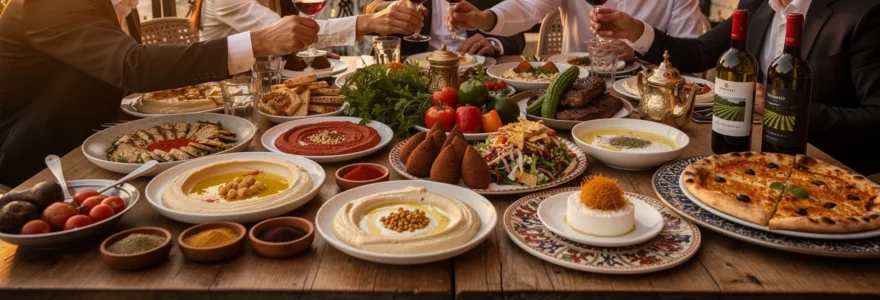
Beirut stands as the undisputed culinary capital of the Middle East, where ancient traditions merge seamlessly with contemporary innovation to create one of the world’s most sophisticated dining scenes. The Lebanese capital has transformed from a war-torn city into a gastronomic powerhouse, earning recognition from international food critics and establishing itself as a must-visit destination for culinary enthusiasts. This remarkable transformation reflects not only the resilience of Lebanese culture but also the city’s unique position as a cultural crossroads where Mediterranean, Arab, and Ottoman influences converge on every plate.
The city’s dining landscape tells a story of cultural preservation and culinary evolution, where traditional family recipes coexist with cutting-edge molecular gastronomy. From the bustling souks of downtown to the trendy establishments in Gemmayzeh, Beirut offers an unparalleled journey through Middle Eastern flavours that have been refined over millennia. The result is a dining culture that honours its heritage while embracing innovation, creating experiences that captivate both locals and international visitors seeking authentic Middle Eastern cuisine.
Traditional lebanese meze culture and authentic preparation techniques in beirut’s culinary landscape
The foundation of Lebanese dining culture rests firmly upon the meze tradition, a sophisticated approach to communal eating that transforms every meal into a social celebration. This ancient custom, which predates the Roman Empire, reflects the Lebanese philosophy that food is meant to be shared, savoured, and enjoyed in the company of others. The meze experience typically begins with an array of small dishes served simultaneously, allowing diners to sample various flavours whilst engaging in meaningful conversation.
The art of meze preparation requires not only culinary skill but also an understanding of balance, both in flavour and in the social dynamics of shared dining.
Modern Beirut has elevated this traditional concept whilst maintaining its authentic spirit. Contemporary restaurants now present meze selections that can include up to thirty different dishes, each prepared with meticulous attention to detail and seasonal ingredients. The timing of service becomes crucial, as certain dishes must arrive at specific temperatures whilst others require immediate consumption to maintain their textural integrity.
Hummus bi tahini variations across gemmayzeh and mar mikhael districts
The preparation of hummus bi tahini in Beirut’s trendy Gemmayzeh and Mar Mikhael districts showcases how traditional recipes evolve whilst maintaining their essence. Local establishments in these neighbourhoods have developed distinctive approaches to this beloved dip, with some focusing on ultra-smooth textures achieved through extended blending techniques, whilst others emphasise rustic preparations that highlight the natural grain of the chickpeas.
The quality of tahini plays a pivotal role in determining the final product’s character. Premium establishments source their tahini from traditional mills in the Bekaa Valley, where sesame seeds are stone-ground using methods passed down through generations. The resulting paste provides a depth of flavour that mass-produced alternatives simply cannot match, creating hummus with complex nutty undertones that complement the earthiness of well-cooked chickpeas.
Fattoush preparation methods at tawlet and mayrig restaurants
The preparation of fattoush, Lebanon’s iconic bread salad, demonstrates how seasonal availability influences traditional cooking methods. At renowned establishments like Tawlet and Mayrig, chefs adapt their fattoush recipes based on the freshest available ingredients, creating variations that reflect the changing seasons whilst maintaining the dish’s fundamental character.
The key to exceptional fattoush lies in the timing of assembly and the quality of the bread component. Traditional recipes call for day-old bread to be toasted until golden, then broken into irregular pieces that provide textural contrast to the crisp vegetables. The dressing, typically featuring sumac for its distinctive tartness, must be applied just before serving to prevent the bread from becoming soggy whilst ensuring that all flavours meld harmoniously.
Kibbeh craftsmanship at onno bistro and traditional family establishments
The art of kibbeh preparation represents one of Lebanese cuisine’s most technically demanding crafts, requiring years of practice to master the delicate balance between bulg
ur wheat, minced meat, and aromatics. At Onno Bistro, for instance, the kibbeh nayyeh (raw kibbeh) is hand-pounded in a traditional stone mortar, a technique that aerates the mixture and achieves a silky, almost pâté-like texture. In contrast, many family-run establishments in neighborhoods such as Bourj Hammoud and Ras El Nabeh still rely on shared household labour, where generations gather around a large tray to shape torpedo-style kibbeh, each piece checked for uniform thickness so it fries evenly without cracking.
Seasoning is equally meticulous. The spice blend typically features allspice, cinnamon, and sometimes a hint of marjoram or mint, adjusted according to family preference and regional origin. Pine nuts toasted in clarified butter add a luxurious crunch to stuffed kibbeh, while the ratio of meat to bulgur is calibrated to balance richness and structure. This craftsmanship turns what could be a simple meat-and-grain dish into an emblem of Lebanese culinary identity, one that tells you as much about a family’s history as any written recipe.
Muhammara and baba ghanoush regional adaptations in downtown beirut
In downtown Beirut, muhammara and baba ghanoush illustrate how regional influences have been absorbed and reinterpreted within Lebanese food culture. Originally associated with Aleppo, muhammara has taken on a distinctly Beirut identity, with chefs adjusting the proportions of roasted red pepper, walnuts, and pomegranate molasses to suit local palates. Some venues along Allenby Street favour a deeper smokiness by charring peppers over charcoal, while others emphasise sweetness and acidity, creating a brighter, almost chutney-like spread that pairs beautifully with grilled seafood.
Baba ghanoush, often confused outside the region with mutabbal, also reveals subtle regional variations. In many downtown restaurants, eggplants are roasted over open flame until their skins blister and blacken, imparting an unmistakable smokiness that becomes the backbone of the dish. While some chefs incorporate generous amounts of tahini for creaminess, others reduce it and highlight olive oil, lemon, and fresh herbs, resulting in a lighter, more vegetal profile. These adaptations show how Beirut’s dining culture treats classic Middle Eastern dips as living recipes, constantly adjusted, but never stripped of their roots.
Labneh production techniques from bekaa valley suppliers to city tables
The journey of labneh from Bekaa Valley dairies to Beirut’s restaurant tables embodies the city’s connection to its agricultural hinterland. Traditional producers start with full-fat cow or goat milk, fermented slowly with live cultures before being strained through cotton or cheesecloth for several hours, sometimes overnight. The gradual draining concentrates flavour and creates a dense, spreadable texture that industrial labneh struggles to replicate. Many Beirut chefs specify particular Bekaa farms known for their pasture-raised herds, ensuring consistency in both fat content and flavour.
Once in the city, labneh becomes a versatile canvas. In classic meze service, it may arrive simply drizzled with extra-virgin olive oil and dusted with dried mint or zaatar. Higher-end restaurants experiment with smoked labneh, labneh rolled into olive oil–preserved balls, or versions infused with chilli, sumac, or herbs, all while preserving the essential tang that defines the cheese. For diners seeking an authentic taste of Lebanese food culture, asking where the labneh is sourced can be as revealing as inquiring about a wine’s appellation—it tells you how seriously a restaurant treats its connection to land and tradition.
Contemporary lebanese fusion gastronomy and modern culinary innovation
While traditional meze remains the backbone of Beirut’s dining culture, a new wave of chefs is pushing Lebanese cuisine into contemporary territory. These innovators draw on global techniques—French plating, Nordic minimalism, even Japanese precision—yet keep local ingredients and stories at the centre of the plate. The result is a style often referred to as “neo-Lebanese,” where you might find freekeh risotto alongside charcoal-grilled octopus marinated in arak, or deconstructed fattoush that still respects the original flavour profile.
This fusion movement gained momentum as Beirut re-emerged on the global travel map and Lebanese chefs began returning from stints in European and Gulf kitchens. They brought back not only techniques but also a renewed conviction that local produce—wild greens, heritage wheat, artisanal cheeses—could hold their own on any stage. For visitors, these restaurants offer a way to experience Middle Eastern flavours through a modern lens, without losing the warmth and generosity that defines Lebanese hospitality.
Chef maroun chedid’s neo-lebanese techniques at liza restaurant
At Liza Beirut, chef and restaurateur Maroun Chedid has become a reference point for neo-Lebanese gastronomy. His approach is rooted in classical training yet anchored firmly in seasonal Lebanese produce, resulting in dishes that feel both familiar and unexpectedly refined. Instead of altering flavours beyond recognition, he focuses on texture, temperature, and visual composition, presenting traditional preparations in lighter, more contemporary formats that suit today’s health-conscious diners.
For example, a typical mezze platter might be reimagined as a sequence of small courses: a wafer-thin markouk crisp topped with micro-herbs and labneh mousse, followed by oven-roasted baby eggplants filled with smoked tomato and pine nuts. Freekeh may be paired with roasted root vegetables and a citrus reduction, echoing the smokiness and acidity of classic Levantine dishes in a new structure. By treating plating as storytelling—each dish a “chapter” in the narrative of Lebanese terroir—Chedid offers an elevated yet accessible introduction to Beirut’s evolving food culture.
Molecular gastronomy applications in traditional manakish at em sherif
Em Sherif, best known for its opulent take on traditional Lebanese dining, has also experimented with modernist techniques, particularly in reinterpretations of manakish. Rather than replacing the beloved street version, these creations function more like culinary “sketches,” showing how far a simple flatbread can be pushed without losing its soul. Some tasting menus have featured bite-sized manakish discs topped with zaatar “dust,” olive oil pearls, and aerated labneh, borrowing tools from molecular gastronomy to play with texture and intensity.
This approach might sound experimental, but the goal remains clarity of flavour. Spherified pomegranate molasses, for example, bursts in the mouth in a single, concentrated hit, echoing the sweet-sour profile used in traditional marinades. Thin, dehydrated dough crisps reference the original bread while offering a lighter crunch, ideal for pairing with sparkling wines or arak. As diners, we may find ourselves asking: how much can you transform a classic before it feels unfamiliar? At its best, this style of presentation deepens appreciation for the original manakish by revealing new dimensions of its ingredients.
Farm-to-table integration at souk el tayeb market vendors
Any discussion of modern Lebanese cuisine in Beirut would be incomplete without mentioning Souk el Tayeb, the pioneering farmers’ market that has championed farm-to-table principles since 2004. Here, small-scale producers from across Lebanon sell seasonal fruits, vegetables, cheeses, and preserves directly to consumers and chefs. The market functions as both a retail space and an educational platform, reminding urban diners of the rural labour behind their meals and encouraging biodiversity by rewarding heritage varieties and traditional farming methods.
For restaurants that source from Souk el Tayeb, menu planning becomes a weekly dialogue with the seasons rather than a fixed formula. Chefs might build an entire brunch around Bekaa Valley tomatoes at their peak, or design nightly specials to showcase wild greens from the Chouf mountains. This dynamic sourcing not only enhances flavour but also strengthens local food systems, providing reliable income to farmers amid Lebanon’s ongoing economic challenges. For visitors, a morning at the market followed by lunch at a participating restaurant offers a tangible way to experience Beirut’s commitment to sustainable, regional gastronomy.
Modern presentation of knafeh and muhallabia at patisserie dunand
Beirut’s pastry scene has also embraced reinvention, with establishments like Patisserie Dunand offering contemporary interpretations of classic Middle Eastern desserts. Knafeh, traditionally served in generous, syrup-soaked slabs, may appear as an individual tart with crisp kataifi pastry, a measured drizzle of orange blossom syrup, and a carefully balanced ratio of cheese to dough. By lightening the sweetness and refining the portion size, pastry chefs make the dessert more approachable for those unaccustomed to its intensity, while preserving the nostalgic flavours that locals cherish.
Muhallabia, a delicate milk pudding, provides another canvas for creativity. At Dunand, you might encounter it layered in glass verrines with seasonal fruit compote, pistachio praline, or a thin disc of brûléed sugar that cracks like a crème brûlée top. Garnishes such as candied citrus peel or rose-petal jam pay homage to Levantine pantry traditions, yet the overall aesthetic is distinctly modern. These evolutions illustrate a wider trend in Beirut: rather than abandoning heritage sweets, patissiers are editing and refining them, much like a skilled editor polishes a beloved manuscript for a new generation of readers.
Regional middle eastern influences through beirut’s international restaurant scene
Beirut’s geography and history have long positioned it as a meeting point for neighbouring Middle Eastern cuisines. Today, this legacy is visible in the city’s international restaurant scene, where Persian, Syrian, Palestinian, and Turkish influences intermingle with Lebanese culinary traditions. For diners, this creates a unique opportunity: within a few city blocks, you can taste variations of shared dishes such as kibbeh, stuffed vegetables, and rice pilafs, each reflecting a different regional philosophy.
This diversity is not merely cosmetic; it reflects centuries of trade, migration, and cultural exchange. Armenian bakeries co-exist with Syrian pastry shops and Palestinian family restaurants, each introducing subtle differences in spice blends, cooking fats, and preparation techniques. As we move from one table to another, we begin to understand the Levant not as a set of rigid culinary borders, but as an overlapping tapestry of shared flavours and local adaptations.
Persian culinary elements at naranj restaurant and cafe
At venues such as Naranj Restaurant and Café, Persian influences surface through the use of ingredients like saffron, dried limes, and fragrant rice preparations. Rice may be presented in the Persian style—parboiled, steamed, and finished with a crisp golden tahdig crust—alongside Lebanese-style stews rich with tomato, aubergine, and lamb. This blending creates dishes that feel familiar to local diners yet carry an unmistakable echo of Iran’s culinary heritage.
Flavour layering is key. You might encounter slow-cooked lamb shanks perfumed with cardamom and cinnamon, served over barberry-studded rice that offers bursts of tartness in each bite. Pomegranate molasses, already common in Lebanese kitchens, finds new expression when paired with walnuts and ground meat in a Persian-inspired fesenjan-style sauce. For those interested in the broader Middle Eastern food landscape, Naranj and similar establishments provide a practical, delicious introduction to how Levantine and Persian traditions can coexist on a single table.
Syrian aleppo-style preparations in bourj hammoud quarter
Bourj Hammoud, often associated with Beirut’s Armenian population, is also home to notable Syrian-run eateries specialising in Aleppo-style cuisine. Here, kebabs are seasoned more assertively, with higher chilli content and frequent use of pistachios and pomegranate in both savoury and sweet dishes. Aleppian kibbeh might be stuffed with nuts and dried fruits, producing a richer, more complex filling than its Lebanese counterpart, while muhammara leans spicier and more intensely flavoured.
These restaurants often operate as informal cultural centres, where displaced communities maintain culinary ties to their hometowns. Menus may feature specialities such as kebbeh labaniyeh (kibbeh cooked in yoghurt sauce) or mahshi (stuffed vegetables) prepared with Aleppian spice profiles, subtly distinct from those commonly used in Beirut. For curious diners, comparing similar dishes across Lebanese and Aleppian kitchens can feel like tasting different dialects of the same language—recognisably related, yet full of unique turns of phrase.
Palestinian traditional dishes at al-balad and local establishments
Palestinian culinary traditions also have a strong presence in Beirut, particularly in longstanding establishments and community-run eateries. Restaurants like Al-Balad and smaller, family-owned venues may feature dishes such as msakhan—sumac-spiced roast chicken served over caramelised onions and taboon bread—or maqluba, a layered rice, aubergine, and meat dish flipped dramatically at the table. These preparations highlight the importance of olive oil, onions, and sumac in Palestinian cooking, overlapping yet distinct from Lebanese usage.
Legume-based stews, lentil soups, and rustic salads further showcase a cuisine built on resilience and resourcefulness. Many Palestinian-run restaurants in Beirut place strong emphasis on preserving food heritage, sometimes displaying family photographs or village landscapes on their walls. For guests, sharing a platter of msakhan or a communal pot of maqluba is not only a gastronomic experience but also a quiet act of cultural recognition, connecting Beirut’s dining culture to stories of displacement and continuity.
Turkish ottoman heritage in ashrafieh district dining
In Ashrafieh and nearby districts, Turkish and Ottoman influences appear most clearly in grilling techniques, spice profiles, and dessert traditions. Skewered meats may be marinated in yoghurt and tomato paste, then cooked over charcoal in a style reminiscent of southeastern Turkey. Side dishes often include pickled vegetables, bulgur pilaf, and salads dressed with pomegranate molasses, mirroring patterns found across old Ottoman territories from Gaziantep to the Balkans.
Desserts such as baklava, künefe, and milk-based puddings showcase a shared sweet repertoire, though local chefs may dial back the syrup or incorporate Lebanese ingredients like orange blossom water and local pistachios. When we compare these Ottoman-inspired dishes with their Lebanese “cousins,” the culinary continuity is striking. It becomes clear that Beirut’s dining culture is not an isolated phenomenon but part of a broader historical arc shaped by centuries of imperial rule, trade, and intermarriage across the Eastern Mediterranean.
Spice trade heritage and flavour profile development in lebanese cuisine
The distinctive flavour profile of Lebanese cuisine—layered, aromatic, and balanced—owes much to the region’s historical role in the spice trade. For centuries, Lebanon’s ports served as transit points for spices travelling from Asia and the Indian Ocean to Europe, introducing local cooks to ingredients such as cinnamon, cloves, cumin, and cardamom. Rather than overwhelming dishes, these spices are used with a measured hand, much like a painter using fine brushstrokes instead of broad strokes.
Core blends such as baharat (a warm, all-purpose mixture), zaatar, and seven-spice form the backbone of everyday cooking. You are likely to taste these in grilled meats, slow-cooked stews, and even in breakfast dishes such as foul mdammas. Interestingly, spices often associated with Western desserts—cinnamon, nutmeg, and cloves—are commonly used in savoury Lebanese dishes, underscoring a different approach to balancing sweet and savoury notes. This subtlety is part of what makes Middle Eastern flavours in Beirut both comforting and endlessly intriguing.
Today, spice merchants in souks like Beirut’s Tariq El-Jdideh still grind and blend to order, allowing chefs to customise mixes based on dish, season, and personal preference. Freshly ground spices retain volatile oils that can dramatically alter a dish’s aroma, much as freshly ground coffee transforms a simple brew. For home cooks and visitors alike, buying small quantities of high-quality spices and storing them properly is one of the most effective ways to replicate authentic Lebanese flavours beyond Beirut’s borders.
Artisanal food production and local sourcing networks in greater beirut
Behind Beirut’s polished restaurant plates lies an intricate network of artisanal producers and small-scale suppliers. From olive oil cooperatives in the south to goat cheese makers in the mountains and beekeepers in the Bekaa, these producers provide the raw materials that define Lebanese gastronomy. Many operate on a family basis, using techniques that have changed little over generations: hand-picking olives, sun-drying tomatoes, or fermenting dairy in clay vessels. Their products often reach the city through informal distribution channels—weekly market stalls, personal contacts, and restaurant partnerships.
In recent years, economic pressures and rising import costs have renewed interest in local sourcing. Chefs now highlight the origin of their ingredients on menus, citing specific villages or valleys for their olive oil, honey, or wild thyme. This transparency not only builds trust but also turns dining into an educational experience, where you learn that the sharpness of a certain goat cheese reflects the altitude of the pasture, or that a particular olive oil carries peppery notes because of the cultivar and harvest time. For Beirut residents, supporting these producers has become both an ethical choice and a way to safeguard the flavours that make Lebanese cuisine unique.
Artisanal production also extends to preserved foods, a cornerstone of Middle Eastern food culture. Pantries across Greater Beirut are stocked with mouneh—jars of pickled vegetables, dried herbs, jams, and syrups prepared in rural homes during harvest seasons. Restaurants increasingly incorporate these preserves into their menus, serving pickled turnips alongside grilled meats or using homemade apricot leather and grape molasses in desserts and sauces. In a sense, every spoonful of mouneh on a Beirut table is a small act of seasonality, carrying the memory of summer tomatoes or spring herbs into the depths of winter.
Wine pairing culture and lebanese viticulture integration with regional gastronomy
Lebanon’s winemaking tradition, which dates back thousands of years, has undergone a remarkable renaissance in the last few decades. The Bekaa Valley remains the country’s primary viticultural heartland, its high altitude and favourable climate producing grapes with balanced acidity and ripe fruit character. Wineries such as Château Ksara, Château Musar, and newer boutique estates have helped place Lebanese wine on the international map, consistently earning strong reviews and export demand.
In Beirut, this has fuelled a growing wine pairing culture that integrates local vintages into the dining experience. Sommeliers and restaurateurs are increasingly confident in recommending Lebanese bottles alongside traditional dishes, rather than defaulting to imported European wines. A crisp, aromatic white from the highlands may be paired with grilled fish, fattoush, or herbed labneh, while structured reds built on Cinsault, Syrah, or indigenous varieties complement lamb, kibbeh, and slow-cooked stews. Rosé, with its versatility and Mediterranean character, often finds its place at the centre of the table during long, leisurely lunches.
For diners exploring the flavours of the Middle East through Beirut’s dining culture, experimenting with wine pairings offers an additional dimension of discovery. Asking for a Lebanese wine flight or a pairing suggestion tailored to a meze spread can reveal how acidity cuts through rich tahini, or how gentle tannins frame the smokiness of grilled aubergine. As Beirut continues to balance heritage and innovation, the integration of local viticulture with regional gastronomy stands as a powerful reminder: in this city, every glass and every plate are part of the same ongoing story of resilience, creativity, and shared taste.