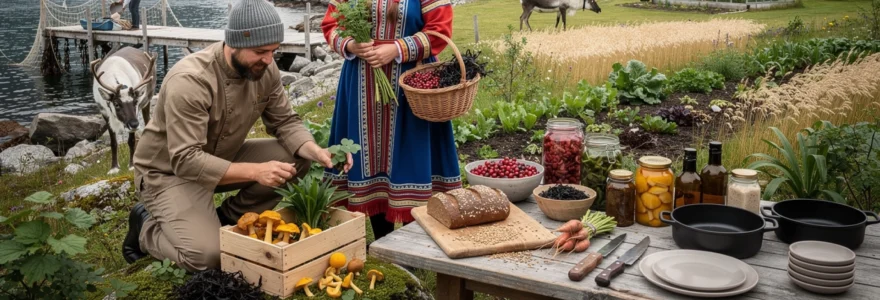
The Nordic food movement represents one of the most significant culinary revolutions of the 21st century, fundamentally reshaping how we think about food, sustainability, and our relationship with the natural world. From the windswept shores of Iceland to the dense forests of Finland, this North Atlantic gastronomic philosophy has transformed regional cuisine into a global phenomenon that celebrates seasonality, locality, and environmental stewardship. At its core, the movement champions a return to ancestral cooking methods whilst embracing innovation, creating a unique bridge between tradition and modernity. The success of this approach has not only elevated Nordic cuisine to the pinnacles of global gastronomy but has also inspired a broader conversation about climate-conscious cooking and the imperative to reconnect with the landscapes that nourish us.
Origins and philosophical foundations of new nordic cuisine
The Nordic food movement didn’t emerge spontaneously but rather evolved from a collective recognition that Scandinavian culinary traditions deserved celebration and reinterpretation. For decades, Nordic countries had looked southward to France and Italy for gastronomic inspiration, often overlooking the extraordinary biodiversity and unique ingredients found within their own territories. This paradigm shifted dramatically in the early 2000s when a group of visionary chefs began questioning why Nordic cuisine hadn’t achieved the same prestige as its Mediterranean counterparts. The answer lay not in the quality of ingredients but in the perception and presentation of regional food culture.
The 2004 copenhagen manifesto: ten principles of nordic gastronomy
In November 2004, twelve chefs gathered in Copenhagen to draft what would become the foundational document of New Nordic Cuisine: a ten-point manifesto that articulated a clear vision for Scandinavian gastronomy. This declaration emphasised purity, seasonality, ethics, and sustainability as non-negotiable principles. The manifesto called for expressing the purity of Nordic flavours, reflecting seasonal changes in meals, basing cooking on ingredients with specific Nordic characteristics, and combining traditional knowledge with modern culinary techniques. Perhaps most importantly, it advocated for promoting Nordic products and producers whilst prioritising animal welfare and sound production processes in farming and fishing.
The manifesto’s impact cannot be overstated—it provided a shared language and framework that united chefs across Denmark, Sweden, Norway, Finland, and Iceland. Within just a few years, what began as an idealistic declaration had transformed into a practical methodology adopted by restaurants, food producers, and agricultural initiatives throughout the region. The document effectively created a cultural movement that extended far beyond professional kitchens, influencing government food policies, educational curricula, and public attitudes toward local food systems.
René redzepi and noma’s revolutionary foraging philosophy
No discussion of Nordic cuisine would be complete without acknowledging René Redzepi’s transformative influence through his Copenhagen restaurant Noma. Redzepi’s approach fundamentally challenged conventional fine dining by placing foraged ingredients—previously considered peasant food or mere garnishes—at the centre of haute cuisine. His kitchen became a laboratory for exploring the potential of ingredients like wood ants, beach mustard, and wild roses. This wasn’t foraging as a rustic affectation but rather a systematic exploration of terroir that revealed the extraordinary diversity of Nordic ecosystems.
Redzepi’s philosophy extended beyond simply using wild ingredients; it involved building relationships with foragers who possessed deep knowledge of local landscapes. These collaborations created a new professional category—the expert forager—whose expertise became as valued as that of traditional suppliers. The restaurant’s success demonstrated that you could build a world-class dining experience entirely on regional ingredients, even in countries with harsh climates and shorter growing seasons. This validation inspired countless chefs globally to look more closely at their own local environments and reconsider ingredients previously dismissed as unworthy of culinary attention.
Claus meyer’s role in establishing nordic terroir identity
Whilst Redzepi became the public face of New Nordic Cuisine, his Noma co-founder Claus Meyer worked tirelessly behind the scenes to establish the intellectual and commercial infrastructure supporting the movement. Meyer’s contribution extended to education, having established the Nordic Food Lab to conduct scientific research into traditional preservation methods and fermentation techniques. He recognised that creating lasting change required not just excellent restaurants but entire supply chains dedicated to quality and sustainability
By championing small-scale producers, heirloom varieties, and fair trade models within the region, Meyer helped articulate a distinct Nordic terroir identity grounded in place rather than imported prestige. His projects—from bakeries focused on heritage grains to food halls showcasing regional producers—demonstrated how the Nordic food movement could permeate everyday eating, not just fine dining. In doing so, he anchored New Nordic Cuisine in social responsibility and public health, promoting better school meals, food literacy programmes, and community cooking initiatives. This systemic perspective ensured that the connection to nature was not just aesthetic or symbolic but embedded in how ingredients are grown, traded, cooked, and shared by ordinary people.
Indigenous sámi food traditions and arctic biodiversity preservation
Crucial to understanding the Nordic food movement’s connection to nature is the recognition of Indigenous Sámi food traditions across northern Norway, Sweden, Finland, and Russia’s Kola Peninsula. Long before New Nordic Cuisine became a global trend, Sámi communities practised a deeply sustainable food culture based on reindeer herding, fishing, berry picking, and wild plant gathering. Their siida (community-based) systems and seasonal migrations reflect an intimate knowledge of Arctic landscapes, where every part of the animal and plant is valued. This worldview has become an important ethical reference point for contemporary Nordic chefs seeking to cook in harmony with fragile ecosystems.
Many of the ingredients now celebrated on modern Nordic tasting menus—such as cloudberries, angelica, and various wild fish—have been staples in Sámi diets for centuries. Sámi preservation methods, including drying, smoking, and fermenting reindeer meat or fish, embody a zero-waste approach that aligns closely with climate-conscious cooking. As Arctic biodiversity faces mounting threats from climate change, mining, and industrial development, Sámi food knowledge acts as a living archive of adaptive strategies. Increasingly, chefs and food activists are collaborating with Sámi communities not only to source ingredients respectfully but also to advocate for land rights and ecosystem protection, recognising that cultural survival and biodiversity preservation are inseparable.
Seasonal foraging techniques and wild ingredient sourcing
Foraging sits at the heart of the Nordic food movement’s connection to nature, turning forests, coastlines, and tundra into open-air pantries. Rather than treating wild ingredients as occasional novelties, many Nordic kitchens integrate them into everyday cooking, building menus around what the landscape offers in each micro-season. This approach requires a sophisticated understanding of plant lifecycles, coastal tides, and wildlife patterns, as well as strict adherence to sustainable harvesting practices. As you explore Nordic recipes or consider your own local environment, it’s helpful to think of foraging not as a hobby but as a disciplined, place-based craft.
Professional foragers often map out specific picking sites, monitor populations over several years, and adjust their habits as conditions change. Many operate under the Nordic principle of allemansrätten or “everyman’s right,” which allows people to roam and harvest from uncultivated land, provided they do so responsibly. This legal and cultural framework reinforces the idea that nature is a shared resource, but not an inexhaustible one. Whether you’re collecting coastal herbs or forest mushrooms, the guiding rule is simple: take no more than the ecosystem can quickly replenish, and leave habitats slightly better than you found them.
Coastal foraging: sea buckthorn, dulse, and bladderwrack harvesting
Coastal foraging is one of the most distinctive expressions of New Nordic Cuisine, bringing the flavours of the sea directly onto the plate. Sea buckthorn, a bright orange berry that thrives in windswept dunes, is prized for its intense acidity and high vitamin C content—often used in sauces, sorbets, and ferments. Dulse, a red seaweed, offers a savoury, almost smoky character that can stand in for bacon in plant-based cooking, while bladderwrack contributes briny, mineral notes and natural umami. Together, these ingredients showcase how the Nordic shoreline functions as both pantry and pharmacy.
Harvesting sea buckthorn and seaweeds requires careful timing and technique to remain sustainable. For berries, pickers often leave a significant portion on the branches for birds and natural reseeding, sometimes freezing entire twigs to process later in the kitchen. For seaweed like dulse and bladderwrack, responsible foragers cut only the upper parts of the fronds, leaving holdfasts undisturbed so the plant can regrow. You can think of it as pruning a perennial herb rather than uprooting it—an analogy that clarifies why regrowth is essential to long-term coastal health. Rising interest in coastal foraging has prompted some Nordic regions to issue guidelines and workshops, ensuring that this connection to nature enhances, rather than depletes, marine biodiversity.
Forest floor ingredients: ramson, wood sorrel, and chanterelle collection
The Nordic forest floor is a patchwork of edible greens, herbs, and fungi that change character from early spring to late autumn. Ramson (wild garlic) erupts in carpets of garlicky leaves in spring, used in everything from pestos to fermented pastes. Wood sorrel, with its bright, lemony tang, adds acidity to salads and sauces, offering a natural alternative to citrus in a region where lemons are not native. Chanterelles, often called “the gold of the forest,” appear later in the year and are celebrated for their fruity aroma and meaty texture, making them a staple in both rustic stews and refined tasting menus.
Sustainable foraging of forest ingredients hinges on species identification and restraint. Many Nordic chefs train with mycologists and botanists to avoid misidentification, a crucial step for mushrooms where toxic lookalikes exist. A common guideline is to harvest no more than one-third of a visible patch of plants or mushrooms, leaving the rest to propagate and feed wildlife. For home cooks eager to tap into this forest pantry, starting with easily recognisable species and local foraging groups can reduce risk. By learning to read the forest like a seasonal map of flavours, we deepen our appreciation of how closely Nordic food is woven into its natural surroundings.
Arctic-alpine flora: angelica, crowberries, and cloudberry cultivation
In the far north, where growing seasons are short and conditions harsh, Arctic-alpine plants have evolved remarkable resilience—and intense flavours. Angelica, with its aromatic stems and seeds, has long been used by Sámi and Norse populations as both food and medicine, now reimagined in syrups, pickles, and distillates. Crowberries, small dark berries carpeting tundra landscapes, offer subtle tartness and are often used in juices or preserved as jams. Cloudberries, perhaps the most iconic of Nordic berries, are golden, delicate, and notoriously difficult to cultivate on a large scale, which makes them particularly prized in desserts and preserves.
Unlike more temperate crops, many Arctic plants benefit from cool temperatures and long hours of summer light, leading to concentrated flavours and high antioxidant levels. Modern Nordic growers are experimenting with small-scale cultivation of angelica and cloudberries, often in collaboration with research institutions to understand soil requirements and climate impacts. This is where climate-adaptive farming and the Nordic food movement intersect: if you can successfully cultivate cloudberries in a warming world, what else becomes possible? For chefs, building direct relationships with these growers not only secures a reliable supply of rare ingredients but also supports on-the-ground biodiversity conservation projects in vulnerable Arctic regions.
Sustainable wild game procurement: reindeer, elk, and ptarmigan management
Wild game plays a pivotal role in the Nordic diet and its connection to nature, especially in sparsely populated northern areas. Reindeer, central to Sámi culture, provide meat, fat, and offal, while elk (moose) and smaller birds like ptarmigan contribute lean proteins adapted to cold climates. In the context of climate-conscious cooking, wild game is often more sustainable than intensively farmed livestock, producing lower emissions and living in semi-wild or fully wild conditions. However, this sustainability depends on rigorous population management and respect for Indigenous herding rights.
Nordic wildlife agencies coordinate closely with local communities and hunters to set annual quotas, ensuring that reindeer, elk, and ptarmigan populations remain healthy. For chefs and consumers, sourcing certified game from traceable supply chains is key to maintaining this balance. This includes asking questions about hunting methods, transport, and processing—much as we would scrutinise line-caught fish or organic vegetables. When handled thoughtfully, wild game dishes become more than rustic fare; they function as edible stories about migration routes, forest health, and Arctic adaptation, reminding us that every plate is tied to complex ecological systems.
Fermentation and preservation methods from scandinavian heritage
Preservation is arguably the oldest link between Nordic food and nature, born from the need to survive long, dark winters with limited fresh produce. Salting, drying, smoking, and fermenting allowed communities to bank calories and nutrients during short summers and autumn harvests. Today, these traditional techniques are at the cutting edge of culinary innovation, with chefs and researchers revisiting heritage methods through a scientific lens. By controlling microbes instead of fighting them, Nordic kitchens transform simple ingredients into complex flavour bombs, all while reducing food waste and extending the life of seasonal harvests.
What makes Scandinavian fermentation and preservation distinctive is the way it channels local conditions—cold cellars, coastal winds, and specific bacterial cultures—into unique flavour profiles. Think of it as terroir expressed not just through soil and climate but through time and microbes. When we talk about the Nordic food movement as climate-conscious, these techniques are central: they enable year-round reliance on local produce, cutting the need for imported fruits and vegetables. They also encourage whole-animal and whole-crop usage, turning surplus fish, vegetables, or grains into long-lasting, high-value products.
Lacto-fermentation traditions: surströmming and rakfisk production
Lacto-fermentation, driven by lactic acid bacteria, is one of the most important preservation methods in the Nordic region, particularly for fish. Surströmming from Sweden and rakfisk from Norway are two famous (or infamous) examples—fermented herring and trout that can develop extremely pungent aromas. While they may challenge unaccustomed palates, these foods represent ingenious strategies for storing protein through long winters without refrigeration. Their production involves controlled salting, barrel fermentation, and often months of maturation, during which beneficial bacteria acidify the environment and prevent spoilage.
From a modern culinary and nutritional perspective, lacto-fermented foods offer several advantages. They enhance digestibility, introduce probiotic bacteria, and create layers of savoury, tangy flavours that can be used in small amounts to season dishes. Contemporary Nordic chefs often borrow the underlying principles of surströmming and rakfisk—low-salt, extended fermentation in cool conditions—and apply them to vegetables, grains, and even fruit. For home cooks interested in sustainable Nordic food, experimenting with simple sauerkraut-style ferments or brined root vegetables can be a gentle entry point. Just as important as flavour is mindset: fermentation teaches us to see time and microbes as collaborators rather than enemies in the kitchen.
Nordic koji applications in garum and miso adaptations
One of the most striking developments in the New Nordic movement has been the fusion of ancestral Scandinavian preservation with Japanese fermentation techniques, especially the use of koji. Nordic food labs and restaurants use koji (mould-inoculated grains) to break down local ingredients into miso-like pastes and garum-style sauces. Instead of soybeans, they might use peas, fava beans, or leftover bread; instead of traditional fish garum, they ferment fish trimmings or even vegetable scraps. The result is a suite of intensely savoury seasonings that align with zero-waste principles while amplifying the flavour of local produce.
This adaptation of koji to Nordic ingredients illustrates how the movement balances respect for tradition with openness to global techniques. You could compare it to teaching an old language new words: the grammar of fermentation remains, but the vocabulary shifts to match local context. In practical terms, Nordic koji projects help kitchens valorise by-products that would otherwise be discarded, significantly reducing food waste. For environmentally conscious diners and chefs, these miso and garum adaptations offer a way to build deep umami without relying on imported soy or industrial stock cubes, further tightening the loop between local agriculture and everyday cooking.
Cold-smoking techniques for fish and root vegetable preservation
Cold-smoking is another cornerstone of Scandinavian preservation, harnessing smoke and low temperatures to impart flavour and extend shelf life. Traditionally, salmon, trout, herring, and mackerel were smoked in small wooden smokehouses, often using local woods like birch, alder, or juniper. The process typically takes place at temperatures below 30°C (86°F), allowing fish to absorb smoke over many hours or days without actually cooking. This gentle approach results in delicate textures and characteristic aromas that have become iconic in Nordic breakfasts and smørrebrød (open-faced sandwiches).
In recent years, chefs have expanded cold-smoking techniques to include root vegetables such as carrots, celeriac, and beets, sometimes creating plant-based “lox” or charcuterie-style preparations. This not only diversifies the repertoire of preserved foods but also provides climate-friendly alternatives to resource-intensive fish farming. To keep the practice sustainable, many Nordic producers now use efficient smoking chambers and carefully dry their wood to minimise particulate emissions. For anyone seeking to deepen their connection to Nordic food traditions, experimenting with small-scale cold-smoking—using a home smoker or improvised setup—can be a powerful way to appreciate how fire, air, and time shape flavour.
Regenerative agriculture practices in nordic food systems
While foraging and preservation often capture the spotlight, the foundations of the Nordic food movement rest increasingly on regenerative agriculture. This approach goes beyond “do no harm” sustainability to actively restore soils, increase biodiversity, and sequester carbon. In practice, that might mean rotating livestock through pasture to mimic wild grazing patterns, integrating trees and crops in agroforestry systems, or minimising tillage to protect soil structure. As climate change accelerates in the Nordic region—temperatures there are rising faster than the global average—these regenerative methods are becoming essential tools for resilient food systems.
For chefs committed to climate-conscious cooking, sourcing from regenerative farms is akin to choosing ingredients with a built-in environmental dividend. You’re not just buying carrots or grains; you’re supporting landscapes that capture carbon, filter water, and shelter pollinators. Many Nordic restaurants now highlight these farm partnerships on their menus, helping diners connect the dots between the taste on the plate and the health of surrounding ecosystems. If you’re wondering how to extend the Nordic model to your own region, looking for farms that prioritise soil health, polycultures, and animal welfare is a practical starting point.
Biodynamic farming at thorsted gods and røsnæs organic estates
Among the most influential examples of regenerative practice in the Nordic food movement are biodynamic farms like Thorsted Gods and Røsnæs Organic Estates in Denmark. Biodynamic agriculture, inspired by Rudolf Steiner’s early 20th-century ideas, treats the farm as a self-contained organism, integrating crops, livestock, compost, and even lunar cycles into its management. At Thorsted Gods, for instance, mixed cropping, green manures, and diverse livestock herds are used to build soil fertility without synthetic fertilisers. Røsnæs Organic Estates similarly focuses on closed nutrient loops, using on-farm compost and cover crops to maintain soil life.
These farms have become important partners for leading Nordic restaurants, supplying vegetables, grains, dairy, and meat grown under strict organic and biodynamic standards. Chefs often visit several times a year, walking fields with farmers to understand seasonal challenges and opportunities. This direct collaboration fosters a feedback loop: when cooks experience the difference that living soil makes to flavour and texture, they are more likely to champion such practices publicly. For diners and home cooks, choosing products from biodynamic or regenerative farms—when available—becomes a way to vote for food systems that heal rather than deplete the land.
Heritage grain revival: ancient emmer, spelt, and rye cultivation
The revival of heritage grains is another powerful expression of the Nordic food movement’s connection to nature and history. Ancient varieties like emmer, spelt, and landrace rye were once mainstays of Scandinavian farming but fell out of favour with the rise of high-yield modern wheat. Today, agronomists, millers, and bakers are bringing them back, attracted by their resilience, nutritional profiles, and distinctive flavours. These grains often perform better in low-input systems, tolerating poor soils and variable weather, which makes them well-suited to regenerative agriculture in northern climates.
From a culinary perspective, heritage grains add depth and character to breads, pastries, and porridges, aligning perfectly with New Nordic Cuisine’s emphasis on terroir. Sourdough loaves made with high-extraction rye or spelt flour, for example, carry subtle notes of caramel, nuts, and earth that industrial white flour simply cannot replicate. For climate-conscious bakers and consumers, supporting heritage grain projects also diversifies the genetic base of our food supply, reducing dependence on a few vulnerable commercial varieties. You can think of it as building a savings account of biodiversity: the more grain varieties we cultivate and eat, the more options we have to adapt to future climate shocks.
Seaweed aquaculture and marine permaculture in norwegian fjords
As pressure mounts on terrestrial agriculture, the Nordic food movement is turning increasingly to the sea—not just for wild foraging but for regenerative seaweed aquaculture. In Norwegian fjords, kelp and other macroalgae are grown on suspended lines, absorbing carbon and nutrients from the water while requiring no fertiliser, fresh water, or arable land. This form of marine permaculture can help mitigate eutrophication, provide habitat for fish and invertebrates, and supply nutrient-dense food and feed. Brown seaweeds like sugar kelp are especially promising, used in everything from snacks and condiments to plant-based “bacon” and broths.
Early studies suggest that expanding seaweed farming could play a meaningful role in carbon sequestration and coastal ecosystem restoration, though long-term impacts still need careful monitoring. Nordic chefs have been quick to embrace these farmed seaweeds, integrating them into tasting menus as both standalone dishes and seasoning agents. For consumers curious about sustainable Nordic food, seeking out responsibly farmed seaweed products is a simple way to support this emerging blue-green sector. As with all aquaculture, however, rigorous standards and transparent certification are crucial to ensure that commercial growth enhances, rather than harms, marine environments.
Climate-adaptive culinary innovation and arctic gastronomy
With the Arctic warming at more than twice the global rate, Nordic chefs and producers find themselves on the frontline of climate change. This reality has turned the region into a living laboratory for climate-adaptive culinary innovation. Instead of clinging nostalgically to a static idea of “traditional” Nordic food, many practitioners are asking: how can we honour local ecosystems as they change? This involves experimenting with new crops that thrive in warmer conditions, rethinking fishing quotas as species migrate, and designing menus that reflect both loss and adaptation.
Arctic gastronomy, in particular, grapples with paradox. On one hand, melting sea ice and shifting seasons threaten reindeer grazing grounds, fish stocks, and berry habitats central to Sámi and northern foodways. On the other hand, longer growing seasons could allow for expanded cultivation of vegetables, herbs, and even some fruits previously marginal in the far north. Chefs respond by highlighting hyper-seasonal ingredients—such as the brief explosion of herbs under the midnight sun—while actively participating in policy conversations about land use and emissions. For diners, engaging with these menus becomes an invitation to confront climate change not as an abstract concept but as a tangible influence on flavour, availability, and cultural continuity.
Cultural impact through michelin-starred nordic restaurants
The global rise of Nordic fine dining has given the movement a powerful cultural megaphone. Michelin-starred restaurants across Copenhagen, Stockholm, Oslo, and beyond have turned ideas once confined to remote farms and foraging communities into international talking points. By weaving sustainability, foraging, and Indigenous knowledge into high-profile tasting menus, these establishments have reshaped what luxury means in the culinary world. Instead of foie gras and imported truffles, prestige now often centres on wild herbs, root vegetables, and fish pulled from nearby waters that very morning.
This shift has profound ripple effects. Food tourism to Nordic countries has surged over the past decade, with travellers seeking immersive experiences that connect them to local landscapes and producers. Cooking schools, food festivals, and television programmes amplify these messages, encouraging a broader audience to consider where their ingredients come from and how they’re produced. At the same time, there is an ongoing debate about accessibility: can a movement so associated with expensive tasting menus truly transform everyday eating habits? Many leading restaurants are responding by publishing cookbooks, supporting community projects, and mentoring younger chefs who bring New Nordic principles into more casual, affordable settings.
Noma’s four-season menu model and zero-waste kitchen protocol
Noma, often cited as the flagship of the Nordic food movement, has continually refined its connection to nature through a four-season menu model. Instead of a static offering, the year is divided into distinct periods—typically vegetable, game and forest, and seafood seasons, with micro-adjustments between them—each reflecting what the landscape can provide at that time. This structure forces the kitchen to think like farmers and foragers, planning months ahead for fermentations, preserves, and experiments that will peak at just the right moment. For guests, dining at different times of year becomes a way to experience the full arc of Nordic nature on the plate.
Equally influential is Noma’s commitment to a near zero-waste kitchen protocol. Trimmings that might be discarded elsewhere are rerouted to the fermentation lab, turned into garums, misos, oils, or powders. Bones become stocks, stems are juiced or pickled, and even spent coffee grounds may find new life in kombuchas or soil amendments. This circular approach not only lowers the restaurant’s environmental footprint but also models a mindset that home cooks and other businesses can adopt. When you start to view every “waste” stream as a potential resource, the kitchen becomes an ecosystem in miniature, mirroring the closed loops of healthy natural environments.
Fäviken magasinet’s extreme locality and off-grid cooking methods
Although Fäviken Magasinet in rural Sweden closed in 2019, its legacy continues to shape the Nordic food movement’s connection to nature. Located on a remote estate, the restaurant operated with an almost radical commitment to locality: nearly all ingredients came from the surrounding land, forests, and lakes, or from nearby producers. Chef Magnus Nilsson and his team relied heavily on traditional preservation techniques—cellaring, curing, fermenting, and smoking—to carry ingredients through long, snowbound winters. As a result, menus in January looked dramatically different from those in August, not by choice but by necessity.
Fäviken’s off-grid ethos extended beyond ingredients to cooking methods. Open-fire grills, wood-fired ovens, and simple cast-iron tools took precedence over high-tech gadgets, underlining a visceral connection to heat, smoke, and time. For many visiting chefs and diners, this experience functioned as a kind of culinary boot camp in seasonality and restraint. It posed a provocative question that still resonates: what would your cuisine look like if you limited yourself to what you could grow, gather, hunt, or preserve within a day’s travel? Even though most restaurants cannot be as extreme, Fäviken’s example continues to inspire more grounded, place-based approaches to menu design around the world.
Geranium’s vegetable-forward approach and urban foraging integration
Geranium in Copenhagen, one of the world’s highest-ranked restaurants, offers a different but equally compelling interpretation of Nordic nature. Situated in an urban setting, it leans into a vegetable-forward philosophy, often placing plants at the centre of the plate and using meat more sparingly as a seasoning or accent. This approach aligns with climate science suggesting that shifting towards plant-rich diets is one of the most effective ways to reduce food system emissions. Geranium’s dishes highlight the diversity of Nordic vegetables, herbs, and grains, proving that luxury and sustainability can coexist in plant-focused fine dining.
Urban foraging is another thread in Geranium’s narrative, demonstrating that the connection to nature doesn’t end at the city limits. Chefs and foragers collect edible plants from parks, waterfronts, and overlooked green spaces, always within strict safety and sustainability guidelines. This practice challenges the assumption that meaningful engagement with nature requires remote wilderness, showing instead that even city dwellers can participate in seasonal, site-specific eating. For those inspired by the Nordic food movement, urban foraging—combined with community gardens and balcony herb boxes—offers a practical way to weave local ecosystems back into everyday life, one meal at a time.