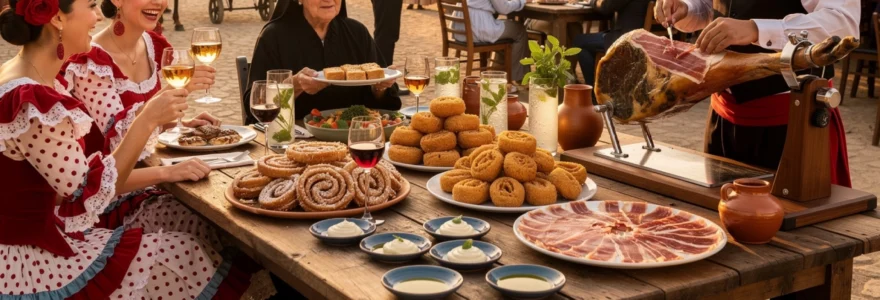
Andalusian festivals represent far more than mere social gatherings; they constitute living expressions of centuries-old culinary traditions that have shaped the cultural identity of southern Spain. The intricate relationship between food and celebration in this region reflects a fascinating tapestry woven from Moorish, Roman, and Christian influences, creating a gastronomic heritage that continues to evolve whilst maintaining its authentic roots. From the sacred confectioneries of Semana Santa to the communal feasts of local romerías, Andalusian festival cuisine serves as both sustenance and symbol, connecting communities through shared flavours and time-honoured preparation methods.
The significance of food in Andalusian celebrations extends beyond mere nourishment, functioning as a cultural bridge that spans generations and social classes. Each festival season brings its own distinctive culinary calendar, where specific dishes and beverages become integral to the celebration experience, transforming ordinary ingredients into sacred expressions of community identity and religious devotion.
Gastronomic traditions in feria de abril and semana santa celebrations
The contrasting festivals of Semana Santa (Holy Week) and Feria de Abril showcase the remarkable diversity of Andalusian festival cuisine, each reflecting different aspects of the region’s cultural and religious heritage. These celebrations demonstrate how food traditions can simultaneously honour solemnity and embrace joyful celebration, creating distinct culinary landscapes that define the spring festival season across Andalusia.
Torrijas and pestiños: sacred week confectionery heritage
During Semana Santa, Andalusian bakeries and home kitchens transform into temples of traditional confectionery, where torrijas and pestiños reign supreme as the emblematic sweets of Holy Week. Torrijas, made from day-old bread soaked in milk or wine, sweetened with sugar and cinnamon, then fried to golden perfection, represent one of Spain’s most ancient desserts, with references dating back to the 15th century. The preparation of torrijas has become a ritualistic family activity, with recipes passed down through generations, each family adding their unique touch through variations in spicing or soaking liquids.
Pestiños, the honey-glazed pastries that have graced Andalusian tables since the 16th century, showcase the region’s Moorish culinary heritage through their distinctive preparation method and ingredients. These delicate pastries, crafted from a dough of flour, olive oil, sesame seeds, and aromatic spices, are shaped into intricate forms before being fried and bathed in local honey. The technique of creating pestiños requires considerable skill, as the dough must achieve the perfect consistency to create the characteristic flaky texture that distinguishes authentic pestiños from inferior imitations.
Casetas food culture during seville’s april fair
The private casetas of Seville’s Feria de Abril represent exclusive culinary sanctuaries where traditional Andalusian cuisine reaches its most refined expression. These temporary pavilions become elaborate dining rooms where families and associations showcase their culinary heritage through carefully curated menus featuring regional specialities. The caseta culture emphasises the importance of convivencia – the art of living together harmoniously – through shared meals that can extend for hours, accompanied by traditional music and dance.
Within these festive enclosures, the preparation and presentation of food follows time-honoured protocols that demonstrate respect for both guests and tradition. Traditional dishes such as jamón ibérico, gazpacho, and various tapas selections are presented alongside modern interpretations that maintain the essence of Andalusian flavours whilst incorporating contemporary culinary techniques. The caseta dining experience represents a pinnacle of Andalusian hospitality, where food serves as the foundation for social bonding and cultural preservation.
Rebujito cocktail and fino sherry ritual consumption
The rebujito, Seville’s signature festival cocktail, exemplifies how traditional beverages become integral to celebration rituals. This refreshing mixture of fino sherry, lemon-lime soda, fresh mint, and ice has become synonymous with Feria de Abril, representing the perfect balance between sophistication and accessibility that characterises Andalusian festival culture. The preparation of rebujito has evolved into a ceremonial art,
with large jugs prepared in advance and continuously refreshed throughout the day and night. The choice of fino sherry is deliberate: its dry, saline character and relatively low sugar content make it both thirst-quenching and food-friendly, ideal for long hours of dancing and socialising. Sharing a jar of rebujito at a caseta table has become a ritual of welcome; offering a glass to newcomers is as important as offering a seat. In this way, the drink is less about alcohol and more about hospitality, rhythm, and the collective tempo of the fair.
The consumption of fino on its own also follows unwritten rules during Andalusian festivals. Served very cold in small tulip-shaped glasses, it accompanies plates of olives, jamón ibérico, and fried fish in both Feria de Abril and everyday bar culture. Knowing when to raise a glass, how to toast, and how to pace oneself over long nights of celebration forms part of the social etiquette that locals effortlessly master and visitors quickly learn to appreciate. Through these subtle rituals, sherry becomes a cultural signifier as much as a beverage.
Buñuelos de bacalao and traditional lenten gastronomy
Lenten gastronomy in Andalusia illustrates how religious prescriptions have shaped everyday eating habits and festival food traditions. Buñuelos de bacalao – light fritters made from salted cod, flour, eggs, and herbs – are among the most emblematic dishes of this meatless season, appearing on menus from the start of Lent until Easter Sunday. Historically, preserving cod in salt allowed coastal and inland communities alike to comply with Church regulations on abstaining from meat, while still ensuring an adequate intake of protein and calories for physically demanding work.
The preparation of buñuelos reflects the ingenuity of Andalusian home cooks, who transform humble ingredients into a dish that feels festive rather than restrictive. Pieces of desalted cod are folded into an airy batter perfumed with garlic and parsley, then fried in abundant olive oil until puffed and golden. Served piping hot, often alongside potaje de vigilia (a chickpea and spinach stew with cod), they turn Lenten meals into an eagerly anticipated tradition instead of a period of culinary deprivation. In many towns, you will still see neighbourhood bars advertising special “Vigilia menus” that celebrate these recipes rather than hiding them.
Olive oil and jamón ibérico in andalusian festival menus
Across Andalusia, two products dominate festival tables and help define the region’s gastronomic identity: extra virgin olive oil and jamón ibérico. Whether you attend a local village fair, a major pilgrimage, or an intimate flamenco gathering, you will almost certainly encounter these icons of Andalusian food culture. They are not only ingredients but symbols of rural landscapes, ancestral farming systems, and painstaking artisanal processes that underpin many of the region’s celebrations.
From a culinary tourism perspective, understanding how olive oil and cured ham are produced can deepen your appreciation of every bite and sip during Andalusian festivals. Many travellers now combine attendance at local fiestas with visits to olive mills or secaderos (ham-curing houses), creating a bridge between field, cellar, and festival table. This growing interest has encouraged producers to open their doors and to integrate tastings, carving demonstrations, and pairing workshops into the broader calendar of Andalusian celebrations.
Denominación de origen protected olive oil classifications
Andalusian extra virgin olive oil enjoys multiple Denominación de Origen Protegida (DOP) designations, which safeguard the link between product quality, local varieties, and specific territories. Names such as Baena, Priego de Córdoba, Sierra Mágina, and Sierra de Segura appear increasingly on festival menus, event posters, and tasting stands, signalling that the oil has met stringent standards of origin and production. For visitors, these labels function much like a map, guiding you through the diverse flavour profiles that coexist within Andalusian cuisine.
During major festivities, local councils and producer cooperatives often organise public tastings to showcase their DOP oils. Here you might learn to distinguish the grassy intensity of a Picual oil from Jaén, the delicate fruitiness of Hojiblanca from Málaga, or the balanced bitterness of an Arbequina blend used in modern tapas. Understanding these classifications turns a simple drizzle of oil over salmorejo or grilled vegetables into a more mindful experience. It also reinforces how deeply olive cultivation – and the culture of olive oil tasting – is woven into the fabric of Andalusian celebration.
Bellota-fed ibérico ham carving ceremonies
In many Andalusian festivals, the ceremonial carving of jamón ibérico de bellota becomes a performance in its own right. A skilled cortador de jamón is often hired specifically for weddings, ferias, and high-profile religious celebrations, where a gleaming leg of acorn-fed ham is placed on a special stand and sliced throughout the event. The carver’s precise, rhythmic movements – long, thin slices cut almost transparently – echo the artistry of flamenco, turning food service into a visual spectacle.
These carving ceremonies underscore the prestige associated with top-quality jamón ibérico, particularly those protected by designations of origin such as Jabugo (Huelva) or Los Pedroches (Córdoba). Guests may gather around the carving table to discuss the ham’s aroma, marbling, and maturation period, much as they would debate the nuances of a fine wine. For travellers, seeking out festivals that include live carving can be an excellent way to taste exceptional ham in its ideal context: freshly sliced, served at room temperature, and accompanied by a dry sherry or local red wine.
Montilla-moriles wine pairing protocols
Beyond the famous sherries of Jerez, Andalusian festival menus increasingly highlight wines from the Montilla-Moriles DOP in Córdoba. These fortified and unfortified wines, crafted mainly from the Pedro Ximénez grape, often accompany both savoury and sweet dishes during local celebrations. Dry finos from Montilla pair beautifully with jamón ibérico, fried fish, and tapas, while richer styles – such as amontillado or naturally sweet PX wines – might accompany desserts like tocino de cielo or torrijas.
Although there are no rigid “rules,” many Andalusian hosts follow informal pairing protocols that enhance the festival dining experience. Light, dry wines typically open the meal, giving way to more structured reds or oxidative styles as the dishes become heartier. To conclude, a small glass of sweet Montilla-Moriles wine might be served with local confectionery, functioning almost like a liquid dessert. As you move from one celebration to another, observing how locals sequence these wines can help you build your own pairing intuition for Andalusian cuisine.
Priego de córdoba extra virgin olive oil tastings
Priego de Córdoba, nestled in the Subbética mountains, has become a reference point for high-end extra virgin olive oil and a pilgrimage site for culinary enthusiasts. During regional fairs and gastronomic festivals, producers from this DOP often host guided tastings, teaching visitors to evaluate oil as one might evaluate wine. Participants learn to warm the blue tasting glass in their hands, inhale deeply to capture aromas of tomato leaf, apple, or freshly cut grass, and then taste for bitterness and peppery spice.
These tasting sessions frequently link back to traditional dishes served at nearby stands or restaurants. You might taste the same oil drizzled over porra antequerana, blended into a simple pipirrana salad, or used to fry light-as-air buñuelos. By experiencing the oil in both analytical and everyday contexts, you gain a clearer sense of its versatility within Andalusian festival cuisine. For travellers planning a food-focused holiday in Andalusia, building an itinerary around such tastings can be an engaging way to connect landscape, product, and celebration.
Regional festival food variations across andalusian provinces
Although Andalusia is often spoken of as a single culinary region, each of its eight provinces brings distinct specialities to the festival table. This regional diversity means that attending Semana Santa in Malaga, a feria in Jerez, or a village romería in Huelva can feel like travelling through different gastronomic worlds, even though you remain within the same autonomous community. For curious eaters, this variety is one of the greatest attractions of Andalusian festivals.
In coastal provinces such as Cádiz, Huelva, and Málaga, festival menus highlight the abundance of the Atlantic and Mediterranean. During summer ferias and maritime processions like the Virgen del Carmen, you will find stalls overflowing with fritura malagueña, grilled sardines on skewers (espetos), and seafood stews enriched with local olive oil and wine. Inland, in provinces such as Jaén, Córdoba, and Granada, celebrations lean more heavily on olive oils, cured meats, game, and hearty stews, reflecting agricultural and pastoral traditions.
Even within the same festival type, variations abound. In Córdoba, Holy Week might be accompanied by salmorejo, gachas de leche, and turrolate, while in Granada you are more likely to encounter piononos and roscos fritos. Jaén’s village ferias showcase locally grown broad beans with ham, rustic migas made with olive oil and breadcrumbs, and simple grilled meats. As you move between provinces, asking locals about their “must-try” festival dishes is one of the best ways to discover these micro-traditions and to understand how geography, history, and faith shape the Andalusian table.
Flamenco peñas and their distinctive culinary offerings
Flamenco peñas – intimate social clubs dedicated to preserving and promoting flamenco – occupy a unique place in Andalusian cultural life, and food is central to their atmosphere. Unlike large public festivals, peñas tend to be smaller, member-driven spaces where music, conversation, and simple, well-prepared dishes coexist. Visiting a peña during a local celebration allows you to experience a more grassroots, everyday expression of Andalusian hospitality and gastronomy.
The menus at flamenco peñas usually prioritise straightforward, seasonal tapas that can be shared easily while people listen to music or take turns dancing. Think of dishes such as garbanzos con espinacas, montaditos (small sandwiches) with pringá, plates of local cheese and jamón, or papas aliñás dressed generously with olive oil and sherry vinegar. The food here is not about fine dining; rather, it serves as fuel for long nights of singing and as a tangible expression of the club’s regional roots. A peña in Cádiz will not serve exactly the same tapas as a peña in Granada, and those subtle differences tell a story.
From a social point of view, peña cuisine fosters inclusion and shared experience. Dishes are often placed in the centre of the table, encouraging conversation between regulars and newcomers. You might be invited to taste a member’s home-made ajo blanco or to join a spontaneous toast with a round of local wine. In this sense, the food at flamenco peñas becomes a bridge between generations and backgrounds, much like the music itself. For visitors seeking an authentic Andalusian food experience beyond the major tourist circuits, spending an evening in a peña can be as revealing as any large-scale festival.
Romería pilgrimage food preparation and distribution systems
Romerías – religious pilgrimages that combine devotion, rural tradition, and community celebration – offer one of the most fascinating contexts in which to observe Andalusian festival food. Unlike urban ferias or structured restaurant meals, romería gastronomy unfolds in fields, forests, and makeshift camps, where improvised kitchens and communal tables appear almost overnight. The logistics of feeding hundreds or even thousands of pilgrims over several days require careful planning, shared responsibilities, and a deep knowledge of portable cooking techniques.
Food during a romería must meet multiple needs at once: it has to be nourishing enough to sustain long walks and outdoor activities, practical to store and transport, and adaptable to the unpredictable conditions of open-air cooking. As a result, menus lean towards robust stews, grilled meats, cured products, and simple sweets that travel well. Perhaps most importantly, the act of cooking and sharing these meals reinforces the collective identity of each hermandad (brotherhood) or group, turning the pilgrimage into a moving village where hospitality and mutual support are constantly enacted around the fire.
El rocío pilgrimage traditional cooking methods
The romería of El Rocío, in Huelva, is the most famous example of this mobile gastronomy. As caravans of ox-drawn carts, horses, and four-wheel drives traverse marshlands and pine forests towards the small village of El Rocío, temporary camps sprout up each evening. Here, traditional cooking methods dominate: large iron pots for stews, heavy griddles for searing meats, and grills improvised from metal frames and wire mesh. Dishes such as caldereta de cordero (lamb stew), migas, and grilled pork loins become staples of the journey.
These meals are often cooked over wood or charcoal fires, which impart distinctive smoky flavours and allow for slow, gentle simmering. In many cases, recipes are simple but time-tested, designed to feed large groups with consistent results. You might see a stew that starts at dawn and is finally served at midday once the pilgrims have covered several kilometres. The rhythm of the day – walking, resting, praying, singing – is synchronised with the rhythm of the pot, creating a sense of ritual beyond the religious ceremonies themselves.
Hermandad brotherhood communal kitchen operations
Within each hermandad participating in a romería, the organisation of food preparation resembles a well-run community kitchen. Volunteers are assigned specific roles: some handle shopping and storage, others focus on cooking, cleaning, or distributing plates at mealtimes. This division of labour ensures that meals are served efficiently, even under challenging conditions, and that everyone, from children to elders, receives adequate nourishment.
Communal kitchen operations also reflect the hierarchy and traditions of each brotherhood. Long-standing members may be in charge of signature dishes, guarding recipes and techniques passed down through families. Younger participants learn by watching and assisting, gradually acquiring the skills needed to take over in future years. In this way, romería kitchens function as living schools of Andalusian festival cuisine, where knowledge is transmitted not through cookbooks but through repeated practice and shared responsibility.
Portable cooking equipment and field gastronomy
Modern romerías combine age-old recipes with increasingly sophisticated portable equipment. Alongside classic tripods and cast-iron pots, you will now find gas burners, collapsible grills, insulated coolers, and even compact ovens designed for outdoor use. This evolution has expanded the range of possible dishes, enabling some groups to prepare more elaborate menus while still respecting the constraints of field conditions.
However, the essence of romería food remains rooted in practicality and conviviality. Robust ingredients like chickpeas, rice, potatoes, and cured meats dominate shopping lists because they store and travel well. Fresh vegetables and fish are used when proximity to markets allows, but many groups prefer preparations that can withstand heat and transport, such as marinated meats or pre-cooked stews. If you think of a romería camp as an open-air, mobile village, the field kitchens are its beating heart, generating warmth, aromas, and a constant flow of conversation around shared tables.
Religious food blessing ceremonies and protocols
Food during Andalusian pilgrimages is not only practical; it is also deeply symbolic. At key moments of a romería, priests or spiritual leaders may bless the meals before they are served, especially on significant days or at important checkpoints. These blessings connect the act of eating with the spiritual purpose of the journey, reminding participants that nourishment comes from both earthly and divine sources.
Protocols surrounding these rituals vary from brotherhood to brotherhood, but they typically involve a brief prayer, the sign of the cross, and a moment of communal silence before everyone begins to eat. In some cases, special foods – such as a particular cake, bread, or wine – are reserved for these blessed occasions, reinforcing their significance. For visitors invited to share such a meal, observing and respecting these customs is essential; it is not merely a question of etiquette, but a way of honouring the intertwined roles of faith and food in Andalusian festival life.
Contemporary fusion trends in traditional andalusian festival cuisine
While tradition remains the backbone of Andalusian festivals, recent decades have seen a wave of innovation that is reshaping how classic dishes are presented and experienced. Young chefs, many trained in cutting-edge Spanish restaurants, are returning to their hometowns and reinterpreting festival favourites with modern techniques and international influences. The result is a dynamic culinary landscape where you might find salmorejo served as a light espuma, torrijas transformed into ice cream, or pestiños paired with Asian-inspired citrus sauces.
This contemporary approach does not necessarily replace older recipes; instead, it often coexists alongside them, offering visitors multiple ways to taste Andalusian festival food. In some ferias, for instance, traditional casetas now share space with “gastro-casetas” that highlight local DOP products in inventive tapas. A plate of fritura malagueña might appear next to a ceviche-style marinated fish using the same species, demonstrating how global techniques can complement, rather than dilute, regional identity. The key lies in maintaining respect for core flavours and ingredients, even when the format or presentation changes.
At the same time, broader trends such as sustainability, health awareness, and vegetarian or vegan preferences are beginning to influence festival menus. Some events now feature dedicated stands offering plant-based versions of classic dishes, using local vegetables, pulses, and olive oil as protagonists. Chefs experiment with meat-free migas, gazpachos enriched with seasonal produce, or stews based on lentils and chickpeas instead of pork. For travellers with specific dietary needs, this evolution makes it easier to participate fully in Andalusian celebrations without feeling excluded from the communal table.
Ultimately, the growing fusion trends in Andalusian festival cuisine underscore one of the region’s enduring strengths: its ability to absorb new influences while preserving a strong sense of place. Just as Roman, Moorish, Jewish, and Christian traditions once merged to shape the Andalusian pantry, today’s chefs and home cooks are weaving contemporary ideas into that same tapestry. For anyone exploring Andalusia through its festivals, this means you are not only tasting history, but also witnessing – and perhaps even participating in – the next chapter of its culinary story.