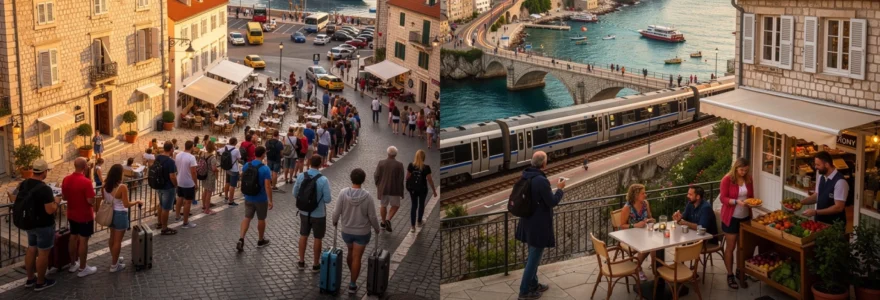
The traditional travel mindset has conditioned millions to believe that summer holidays and peak season trips represent the pinnacle of travel experiences. However, this conventional wisdom overlooks one of travel’s best-kept secrets: off-season journeys often deliver more rewarding, authentic, and economically sensible adventures than their peak-season counterparts. When you shift your travel perspective beyond the crowded summer months, you unlock a world of possibilities that transforms not just your itinerary, but your entire relationship with exploration and discovery.
The ripple effects of choosing off-season travel extend far beyond simple cost savings, though financial benefits certainly represent a compelling starting point. From unprecedented access to world-renowned attractions to deeper cultural immersion opportunities, travelling during shoulder seasons and low-demand periods fundamentally alters the travel experience in ways that seasoned adventurers have quietly embraced for decades.
Peak season pricing dynamics and accommodation demand patterns
The hospitality industry operates on sophisticated revenue management principles that create dramatic price fluctuations throughout the calendar year. Understanding these market forces reveals why off-season travel delivers such extraordinary value propositions for informed travellers.
Hotel rate fluctuations between high season and shoulder periods
Hotel pricing strategies demonstrate remarkable volatility between peak and off-peak periods, with rate differences often exceeding 300% for identical accommodations. Luxury resorts in destinations like the Maldives can command £800-1200 per night during Christmas and New Year periods, whilst the same properties offer rates as low as £250-400 during monsoon shoulder seasons. European city hotels follow similar patterns, with summer rates in Barcelona or Rome frequently doubling compared to January and February pricing.
These dramatic price shifts reflect sophisticated demand forecasting models that hospitality operators use to maximise revenue per available room. Properties in seasonal destinations often generate 60-70% of their annual revenue during just three to four peak months, necessitating premium pricing strategies that can price out budget-conscious travellers during high-demand periods.
Dynamic pricing algorithms in major booking platforms
Modern booking platforms employ artificial intelligence and machine learning algorithms that continuously adjust accommodation prices based on real-time demand indicators, competitor analysis, and historical booking patterns. These systems can trigger price increases of 15-25% within hours when demand surge indicators activate, particularly during festival periods or unexpected events that drive sudden accommodation shortages.
The algorithms also consider factors like user search behaviour, device types, and geographic locations when presenting prices. Travellers searching during off-peak periods often benefit from lower algorithmic pricing baselines, as the systems recognise reduced competition for bookings and adjust accordingly to attract price-sensitive customers.
Accommodation availability metrics during festival seasons
Major cultural festivals and events create accommodation scarcity that transforms local hospitality markets overnight. Edinburgh during the Festival Fringe, Munich during Oktoberfest, or Rio during Carnival demonstrate how special events can achieve occupancy rates exceeding 95%, compared to typical seasonal averages of 65-75%. This scarcity enables properties to implement minimum stay requirements, eliminate discounts, and charge premium rates that would be impossible during quieter periods.
The contrast between festival season availability and off-season abundance creates opportunities for travellers willing to explore destinations during alternative timeframes, often discovering hidden gems without the overwhelming crowds.
Revenue management strategies in tourism hotspots
Popular destinations like Santorini, Dubrovnik, or the Amalfi Coast have developed sophisticated revenue management strategies that maximise profitability during compressed high seasons. Properties often close entirely during low seasons rather than operate at reduced rates, concentrating their annual revenue generation into four to five months of peak demand.
This strategy creates a unique dynamic where off-season travellers can access luxury accommodations at dramatically reduced rates, as properties that remain open during shoulder seasons often prefer generating some revenue rather than maintaining zero occupancy. Boutique hotels and family-run establishments that stay open year-round frequently offer personalised experiences and upgraded amenities to attract the limited off-season visitor market.
Crowd density analysis and tourist saturation points
Tourist sat
uration points might sound like an abstract academic concept, but in practice they describe a very tangible tipping point: the moment when the number of visitors begins to degrade the very experience they came to enjoy. Travelling off-season allows you to stay comfortably below that threshold. By understanding how destinations measure and manage crowd density, you can time your trips to enjoy iconic locations in a way that feels spacious rather than suffocating.
Carrying capacity studies at UNESCO world heritage sites
UNESCO sites such as Machu Picchu, Angkor Wat, and the historic centre of Florence increasingly rely on carrying capacity studies to determine how many visitors can be accommodated without irreversible damage. These analyses consider not only physical space, but also erosion patterns, waste management limits, and the resilience of local communities. During peak months, daily visitor numbers often approach or exceed recommended limits, resulting in rushed visits, restricted access, and a noticeably degraded atmosphere.
When you choose to visit during shoulder or off-peak seasons, you benefit from a far more relaxed implementation of these limits. Guided tours have more time for questions, viewpoints are less congested, and conservation rules feel collaborative rather than restrictive. In effect, you are experiencing the site closer to how it was originally intended to be appreciated, rather than as part of a high-throughput tourism conveyor belt.
Queue management systems at louvre museum and vatican museums
Few places embody crowd management challenges better than the Louvre Museum in Paris and the Vatican Museums in Rome. At the height of summer, both institutions deploy advanced queue management systems that segment visitors into timed-entry windows, overflow queues, and controlled access zones. Even with these systems, waiting times for blockbuster exhibits such as the Mona Lisa or the Sistine Chapel can easily stretch beyond 60–90 minutes.
Visiting off-season effectively turns these same systems into your ally instead of your obstacle. Timed-entry tickets are easier to secure at favourable hours, lines move faster, and security checks feel far less stressful. You spend more of your day engaging with art and history and less of it standing in serpentine lines. Imagine being able to linger in front of a favourite painting without feeling a tide of visitors pushing you along—this is one of the most tangible benefits of low-season museum travel.
Peak hour traffic patterns in santorini and dubrovnik
Coastal hotspots such as Santorini and Dubrovnik offer textbook examples of daily crowd saturation cycles driven by cruise ship arrivals. In July and August, narrow streets in Oia or Dubrovnik’s Old Town can experience three to four distinct “waves” of foot traffic per day, each corresponding to different cruise schedules. At peak, pedestrian density reaches levels where movement slows to a shuffle and local businesses pivot entirely to high-speed, high-volume service.
By travelling off-season—or even simply outside cruise-heavy months—you effectively remove yourself from these traffic surges. Local buses and taxis are easier to hail, restaurant service becomes genuinely hospitable rather than purely transactional, and you regain the ability to wander side streets without feeling funnelled by the crowd. For photographers or travellers seeking quiet corners for reflection, this shift in crowd density can change the entire emotional tone of a destination.
Overtourism impact assessment in venice and barcelona
Venice and Barcelona have become global case studies in overtourism, where excessive visitor numbers strain infrastructure, inflate housing costs, and trigger resident backlash. Municipal authorities now monitor tourism flows with the same rigour as traffic or pollution levels, introducing measures such as day-tripper charges, cruise ship restrictions, and limitations on short-term rentals. During high season, these interventions can create tension between visitors and locals, as both groups compete for finite urban space.
Off-season travel helps rebalance this equation. Crowded thoroughfares such as Venice’s Rialto Bridge or Barcelona’s La Rambla feel noticeably calmer, and you are more likely to encounter locals running daily errands rather than a homogeneous stream of visitors. From a responsible travel perspective, choosing low-season dates means your presence exerts less pressure on housing markets, public transport, and historic infrastructure. You effectively shift from being part of a numerical problem to contributing to a more sustainable annual distribution of visitors.
Seasonal climate patterns and regional weather windows
Climate is one of the most powerful yet underestimated levers in strategic trip planning. While peak seasons usually align with the warmest or driest months, they are not always the most comfortable or rewarding times to visit. By understanding seasonal climate patterns and so-called “weather windows,” you can identify off-season travel periods that offer milder temperatures, dramatic landscapes, and lower probabilities of disruptive extremes.
Think of it as reading the weather like an investor reads a market chart: instead of simply aiming for the obvious high points, you look for undervalued intervals where conditions are good enough—or even ideal—for your specific interests. For example, early spring in the Mediterranean often combines comfortable 18–22°C temperatures with blossoming landscapes and half-empty beaches, while late autumn in Japan can rival cherry blossom season with stunning foliage and thinner crowds.
There are, of course, trade-offs. The same shoulder months that offer comfortable hiking temperatures in the Alps may bring occasional rain or early snowfall, and monsoon-adjacent periods in Southeast Asia can deliver short, intense downpours alongside lush scenery and quieter temples. The key is to align your risk tolerance with your travel goals: if you prioritise value, space, and authenticity over guaranteed blue skies, off-season climate windows can be remarkably rewarding.
Transportation infrastructure and off-peak service schedules
Transportation networks respond to seasonal tourism patterns just as dynamically as hotels and attractions. Airlines, rail operators, ferry companies, and city transport authorities constantly adjust capacity to match anticipated demand, using historical data and booking trends to decide how many planes, trains, and buses to run. For off-season travellers, these adjustments create both opportunities and constraints that are worth understanding in advance.
On the positive side, lower demand often translates into cheaper fares, emptier carriages, and a more relaxed boarding experience. Yet there can also be fewer daily departures, longer layovers, and occasional route suspensions on less profitable leisure corridors. Think of it like visiting a popular restaurant outside lunch rush: you get quicker service and more space, but perhaps a slightly reduced menu. With a bit of planning, you can usually preserve flexibility without sacrificing the advantages of low-season travel.
European rail network frequency variations during low season
Across Europe, flagship rail lines such as Paris–Lyon, Madrid–Barcelona, or Berlin–Munich maintain high frequencies year-round, but secondary and regional routes often see timetable compressions in low season. Weekend leisure services to coastal towns, alpine resorts, or wine regions may be reduced from hourly departures to every two or three hours once summer or ski season ends. This does not make off-season rail travel impractical, but it does reward more deliberate itinerary design.
If you enjoy slow travel and scenic train journeys, this can actually enhance your experience. Fewer passengers mean greater chances of securing window seats, calmer carriages, and more attentive on-board service. You also gain more predictability: with fewer trains to choose from, you are more likely to commit to a well-structured day trip rather than improvising at the last minute. For multi-country rail passes, travelling off-season can stretch your budget further while still giving you access to Europe’s high-speed backbone.
Budget airline route suspension patterns in winter months
Low-cost carriers are particularly aggressive in optimising seasonal demand, routinely suspending or reducing routes that cater primarily to summer tourism. Direct flights from northern European cities to smaller Mediterranean airports may simply not operate between November and March, or may be limited to one or two weekly rotations. If you are used to the abundance of options displayed in July, the winter route map can feel like stepping back in time.
However, travellers who are flexible with departure days and willing to connect through major hubs still find excellent value in off-season air travel. Fares outside school holidays and public breaks often drop dramatically, even on full-service airlines that maintain year-round schedules. By booking early and avoiding tight connections on seasonal routes, you can leverage these patterns rather than being constrained by them. Asking yourself “Could I fly on a Tuesday instead of a Saturday?” is often enough to unlock substantial savings.
Ferry service reductions in greek islands and croatian coast
Island destinations present a distinct set of challenges and opportunities in off-season travel. In Greece and along the Croatian coast, ferry operators calibrate services based on both resident needs and tourist flows. Peak summer sees dense inter-island networks, multiple daily crossings, and a broad choice of vessel types. Once high season ends, schedules contract: some minor routes pause entirely, while others shift to a once-daily pattern geared primarily towards locals.
This does not mean you should avoid islands in the low season, but it does mean your itinerary must respect maritime rhythms. Planning longer stays on fewer islands rather than rapid hopping becomes both more practical and more immersive. You share ferries mostly with residents commuting, transporting goods, or visiting family, which changes the social dynamic on board. For travellers seeking authentic coastal life rather than beach-club energy, this slower, more grounded pattern can be a feature rather than a bug.
Public transport schedule modifications in tourist destinations
Within cities and resort areas, public transport agencies also adapt to seasonal demand. Tourist shuttle buses, express services to theme parks, or scenic tram routes may only operate at full capacity during peak months. In off-season, some lines merge, frequencies shrink, or evening services end earlier, particularly in smaller towns and resort belts. If you arrive expecting peak-season convenience, this can initially feel like a downgrade.
The reality, though, is that quieter streets and lower demand often make walking, cycling, or occasional taxi use more pleasant and affordable. Journey times can actually improve because vehicles are not fighting through gridlocked traffic or overloaded stops. A practical approach is to download up-to-date transport apps and check “winter timetable” notices on official websites before you arrive. With this small step, you can design off-season city breaks that still feel effortlessly connected.
Cultural immersion opportunities through local festival calendars
One of the most overlooked advantages of off-season travel is its alignment with authentic local calendars rather than tourist-oriented programming. While peak season often coincides with international festivals, mega-concerts, and curated events aimed primarily at visitors, quieter months tend to showcase community-driven celebrations, religious observances, and regional traditions. These are the moments when you see how a place actually lives, not just how it performs for an audience.
Consider how different your experience might be attending a smaller, winter food festival in a Tuscan village compared to jostling through high-summer crowds in Florence. In the first scenario, you are more likely to share tables with locals, sample seasonal dishes that never make it onto tourist menus, and hear unfiltered stories about regional history. Off-season festival travel becomes less about ticking off famous events and more about building genuine cultural understanding.
Local calendars also tend to cluster significant observances in shoulder periods: think of Japan’s autumn foliage festivals, Mexico’s Día de los Muertos in early November, or lunar new year celebrations across East and Southeast Asia. These occasions often occur outside classic Western holiday windows, providing rich cultural immersion without the price spikes associated with July–August travel. By syncing your trips with these rhythms, you not only see more, you understand more.
Economic impact on local communities during tourist off-seasons
Behind every iconic destination lies a local economy that must survive twelve months of expenses on what is sometimes only six months of heavy trade. When visitors concentrate their travel exclusively into short peak windows, businesses are forced into a precarious boom-and-bust cycle. Staff face seasonal layoffs, independent shops struggle to negotiate year-round rents, and communities become heavily dependent on a few hyper-profitable weeks to carry them through quieter times.
Off-season travel helps smooth this volatility. Each night you spend in a hotel during a quiet month, each meal you enjoy at a family-run restaurant in November rather than August, contributes to a more stable income stream for local workers and entrepreneurs. In economic terms, you are helping to flatten the curve of demand, making it easier for small businesses to plan inventory, maintain full-time staff, and reinvest in quality improvements rather than merely surviving until next season.
There is also a social dimension to this impact. When residents interact with a trickle of off-season travellers instead of a tidal wave of summer visitors, conversations tend to be longer, more relaxed, and more reciprocal. You are no longer just one face in an anonymous crowd; you become a guest whose curiosity and spending patterns are noticed and appreciated. If you have ever wondered how to make your trips more ethical and mutually beneficial, choosing off-season dates is one of the simplest, most effective levers at your disposal.