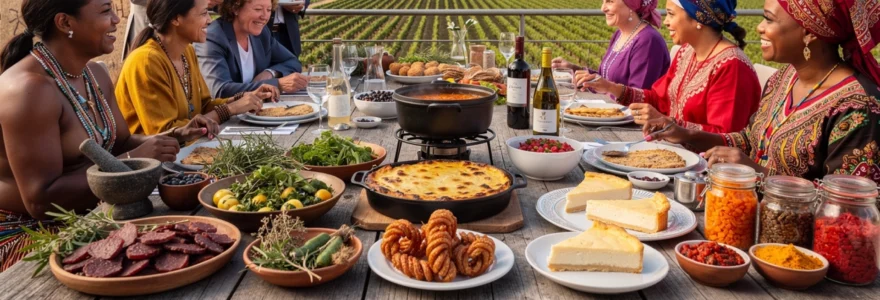
Cape Town’s culinary landscape stands as one of the world’s most fascinating examples of how historical migration, colonisation, and cultural exchange can create a distinctive gastronomic identity. The Mother City’s food culture represents far more than a simple fusion of international influences—it embodies centuries of adaptation, resistance, and creativity born from the convergence of indigenous African traditions, European colonial practices, and Asian trading connections. From the aromatic spice markets of Bo-Kaap to the sophisticated wine estates of Stellenbosch, Cape Town’s cuisine tells the complex story of South Africa’s past while continuing to evolve in contemporary kitchens and restaurants.
What makes Cape Town’s food scene particularly remarkable is how each cultural group has maintained distinct culinary traditions whilst simultaneously contributing to a broader, uniquely South African gastronomy. The indigenous Khoi and San peoples provided foundational knowledge of local ingredients and preservation techniques, Dutch colonists introduced European cooking methods and agricultural practices, Malay slaves brought sophisticated spicing traditions from Southeast Asia, and British administrators established formal dining protocols that still influence the city’s restaurant culture today.
Indigenous khoi and san culinary foundations in cape town’s food heritage
The earliest culinary traditions in the Cape Peninsula originated with the Khoi and San peoples, whose sophisticated understanding of local ecosystems provided the foundation for many ingredients and techniques still used in contemporary Cape Town cuisine. These indigenous communities developed intricate knowledge systems around seasonal foraging, sustainable hunting practices, and food preservation methods that enabled survival in the diverse landscapes surrounding Table Mountain.
Traditional foraging techniques and native plant utilisation
The Khoi and San peoples possessed extensive botanical knowledge, identifying over 300 edible plant species across the Western Cape’s diverse biomes. Traditional foraging practices focused on sustainable harvesting of indigenous plants like veldkos (bush food), including wild spinach varieties such as morogo, bitter leaves for medicinal teas, and numerous bulbs and tubers that provided carbohydrates during lean seasons. These communities developed sophisticated seasonal calendars that indicated optimal harvesting times for different plants, ensuring sustainable resource management.
Many plants originally foraged by indigenous communities have been integrated into modern Cape cuisine. Wild garlic, indigenous onions, and various succulent plants continue to appear in contemporary restaurant menus, particularly in establishments focusing on indigenous ingredients. The knowledge of which plants could be safely consumed, how to process potentially toxic species to make them edible, and optimal preparation methods represents thousands of years of accumulated wisdom that forms the bedrock of Cape Town’s understanding of local terroir.
Biltong and droëwors preservation methods from pastoral communities
The art of meat preservation through air-drying techniques originated with the Khoi pastoralists, who developed biltong and droëwors as essential protein sources during seasonal migrations and hunting expeditions. These preservation methods utilised the Cape’s dry winds and moderate temperatures to create protein-rich foods that could be stored for extended periods without refrigeration. The traditional biltong-making process involved cutting meat into strips, treating it with salt and indigenous herbs, then hanging it in well-ventilated areas to dry naturally.
Modern biltong production continues to follow these fundamental principles, though commercial operations have refined the process with controlled environments and standardised spice mixtures. The popularity of biltong extends far beyond South Africa’s borders, with Cape Town-based producers exporting these traditional preserved meats to international markets. The technique has also been adapted for various game meats indigenous to the region, including springbok, kudu, and ostrich, maintaining connections to the original hunting traditions of the Khoi and San peoples.
Waterblommetjie and veldkos integration in contemporary cape cuisine
Waterblommetjie (pond flowers) represents one of the most distinctive indigenous ingredients that has successfully transitioned from traditional foraging to contemporary fine dining. These aquatic plants, harvested from seasonal vleis and wetlands around Cape Town, provide a unique flavour profile reminiscent of artichokes with subtle peppery notes. Traditional preparation methods involved slow-cooking the waterblommetjie with mutton in clay pots, creating the beloved waterblommetjie bredie that remains a staple of Cape cuisine.
Today, leading chefs in Cape Town and the broader Western Cape are increasingly turning back to these ingredients, working with small-scale foragers and conservation groups to reintroduce veldkos to restaurant menus. You might find waterblommetjie paired with line-caught fish, or wild sorrel used to brighten rich game dishes. This renewed focus on indigenous produce not only supports biodiversity but also helps tell a more complete story of Cape Town’s food heritage on the plate.
Rock art evidence of early food preparation techniques at table mountain
Archaeological research around Table Mountain and the Cape Fold Belt has uncovered rock art and midden sites that offer clues to early food preparation. While much Khoi and San rock art focuses on spiritual and hunting themes, associated hearths, grinding stones, and shell middens reveal how food was processed and cooked. Charred bone fragments, ash layers, and cracked stones suggest the use of controlled fire for roasting meat and heating stones to slow-cook roots and tubers.
These sites, some dating back thousands of years, show that early inhabitants used techniques comparable to modern slow cooking and open-fire grilling. Researchers have found evidence of shellfish roasting, fat rendering, and even early forms of smoking meat in rock shelters that overlook what is now metropolitan Cape Town. When we stand at a contemporary braai fire or enjoy flame-grilled seafood at the V&A Waterfront, we are unconsciously echoing these ancient practices developed on the slopes of Table Mountain.
Dutch colonial gastronomic implementation and voc trading post influence
When the Dutch East India Company (VOC) established a refreshment station at the Cape in 1652, it triggered a profound transformation of local food systems. The VOC introduced new crops, livestock, and European cooking methods while simultaneously relying on the knowledge of enslaved cooks and local communities. Cape Town’s strategic location on the spice route between Europe and Asia meant that its kitchens quickly became laboratories where Dutch, German, Scandinavian, and Asian influences merged into what we now call Cape Dutch cuisine.
Kitchen gardens, vineyards, and wheat fields planted by the Dutch reshaped the agricultural landscape of the Western Cape. Enslaved labour from Indonesia, India, Madagascar, and East Africa worked these lands and cooked in colonial households, adapting European recipes with the spices and techniques they brought with them. This layered history is still visible today in the region’s signature dishes, desserts, and wine-focused hospitality.
Bobotie recipe evolution from indonesian rendang adaptations
Bobotie, often described as South Africa’s national dish, provides a textbook example of how recipes evolved at the Cape under Dutch rule. Culinary historians trace its origins to Indonesian and Malay dishes such as rendang and spiced meat casseroles, which were adapted by enslaved cooks working in Dutch households. Over time, aromatic Southeast Asian spice blends were combined with European techniques like baking and the use of an egg-and-milk custard topping.
The result is the bobotie we know today: minced beef or lamb seasoned with curry powder, turmeric, coriander, and cloves, enriched with dried fruit and chutney, then baked under a savoury custard. Modern Cape Town restaurants frequently reinterpret bobotie—turning it into samosa fillings, gourmet pies, or deconstructed plates—yet the core flavour profile still echoes that early Indonesian-Dutch fusion. For visitors wanting to “taste history on a plate,” bobotie with yellow rice and sambals remains an essential Cape Town food experience.
Koeksisters and melktert development through dutch confectionery traditions
Dutch colonial influence is perhaps most clearly tasted in the city’s beloved sweets, especially koeksisters and melktert (milk tart). Early Cape households drew heavily on Dutch and Huguenot baking traditions, which favoured rich dairy custards, fragrant spices like cinnamon and nutmeg, and deep-fried dough treats served on Sundays and feast days. Over the 18th and 19th centuries, these European recipes were adapted using local ingredients and the skills of enslaved and later freed bakers.
Classic koeksisters—plaited strips of dough fried until crisp and then soaked in cold syrup—likely evolved from Dutch oliebol and other festival pastries. Melktert, meanwhile, took the idea of a European custard tart and lightened it, using more milk than eggs to create the airy, cinnamon-dusted filling now synonymous with South African tea tables. Today, top Cape Town bakeries and cafés serve artisanal versions of these desserts, while home bakers still guard closely held family recipes passed down through generations.
Wine estate culinary practices in stellenbosch and franschhoek regions
The establishment of wine estates in Stellenbosch, Franschhoek, and the Constantia Valley further cemented Dutch and French gastronomic traditions in the Western Cape. Huguenot refugees, many skilled in viticulture, arrived at the Cape in the late 17th century and planted the vines that would eventually make Cape wines famous. These estates developed a dining culture centred on long, multi-course meals paired with locally produced wines, a tradition that continues in modern cellar-door restaurants.
Today, estates around Stellenbosch and Franschhoek offer sophisticated tasting menus that pair dishes such as slow-braised lamb neck, freshwater fish, and seasonal vegetables with varietals like Chenin Blanc, Pinotage, and Syrah. Many chefs on these estates consciously reference Cape Dutch recipes—think waterblommetjie bredie, snoek pâté, or roosterkoek—while using contemporary techniques such as sous-vide cooking and fermentation. For travellers exploring Cape Town’s food and wine culture, these estates provide a window into how historic European dining rituals have evolved into today’s terroir-driven, farm-to-table experiences.
Potjiekos cooking methodology from dutch cast iron techniques
The iconic South African potjiekos—a slow-cooked stew prepared in a three-legged cast iron pot over coals—also has roots in Dutch colonial practices. Early trekboers (semi-nomadic farmers) relied on heavy cast iron pots that could withstand open fires and long journeys across the interior. These pots allowed for gentle, layered cooking, where meat, vegetables, and aromatics were added gradually and left to simmer without stirring, preserving distinct textures and flavours.
In and around Cape Town, potjiekos remains a social cooking ritual, often forming the centrepiece of weekend gatherings and wine farm events. Common variations include oxtail, chicken and mushroom, or seafood potjies along the coast, each reflecting local availability of ingredients. If you join a potjiekos cook-off in the Western Cape, you’ll see how this Dutch-derived method has become a democratised, communal form of gastronomy—part comfort food, part open-air theatre.
Malaysian and indonesian spice trade integration through cape malay community
While Dutch colonists established the political and agricultural framework of early Cape Town, it was the enslaved and exiled communities from Indonesia, Malaysia, India, and East Africa who infused the city’s cuisine with its most distinctive flavours. Collectively known as the Cape Malay community, these groups brought sophisticated spice knowledge, intricate braising techniques, and a rich repertoire of sweets and savouries that still define much of Cape Town’s food identity today.
Centred historically in the Bo-Kaap and parts of District Six, Cape Malay cooks learned to work with both imported spices and local ingredients, creating dishes that are aromatic rather than searingly hot. Cinnamon, cardamom, cloves, cumin, and coriander became as central to Cape Town’s kitchens as thyme and bay leaves are in Europe. The result is a culinary tradition where every meal, from simple lentil dhal to celebratory breyani, tells a story of forced migration, resilience, and cultural continuity.
Sambal and atjar condiment preparation in bo-kaap district
No discussion of Cape Malay food is complete without mentioning the vibrant condiments that accompany almost every meal: sambal, atjar, and blatjang. In Bo-Kaap kitchens, families prepare these side dishes in large batches, often using recipes refined over generations. Sambals typically combine fresh ingredients—chopped tomatoes, onions, chillies, and herbs—with citrus or vinegar to add brightness and heat to rich stews and curries.
Atjar, on the other hand, focuses on pickled vegetables such as carrots, green beans, or cabbage, preserved in spiced vinegar with mustard seeds, turmeric, and sometimes curry leaves. These condiments not only enhance flavour but also act as natural preservatives, a practical adaptation long before refrigeration was common. When you sit down to a Cape Malay meal in Bo-Kaap, the colourful array of sambals and atjars on the table functions much like a painter’s palette, allowing you to adjust each bite to your preferred balance of acidity, sweetness, and spice.
Bredie stew variations using traditional malay spice combinations
The classic Cape bredie—a slow-cooked stew—beautifully illustrates how Malay spice traditions intertwined with local produce. Historically made with inexpensive, bony cuts of lamb or mutton, bredies rely on long, gentle cooking with a key vegetable component: tomato, pumpkin, green beans, or waterblommetjies. What sets these stews apart from European counterparts is the subtle but complex spicing, often including cinnamon sticks, cloves, black pepper, and a mild curry blend.
In contemporary Cape Town restaurants focused on heritage cuisine, you’ll find modern takes on tomato bredie or pumpkin bredie served alongside steamed rice, roti, or even creamy pap. Chefs may use free-range lamb, heirloom vegetables, and clarified butter, but the underlying flavour architecture remains recognisably Cape Malay. For home cooks, learning to balance sweet spices like cinnamon with savoury notes is the key to mastering an authentic bredie, whether you prepare it over a gas stove or in a cast iron pot on the braai.
Roti and sosatie grilling techniques from malay culinary traditions
Two other cornerstones of Cape Malay food culture—roti and sosaties—have had an outsized influence on Cape Town’s street food and braai traditions. Cape Malay rotis are typically flaky, layered flatbreads, created by repeatedly folding and rolling dough enriched with oil or ghee. Cooked on a hot plate or cast-iron pan, they become the ideal vehicle for scooping up curries or wrapping spiced meats, much like Indian parathas or Southeast Asian roti canai.
Sosaties, skewered and marinated meats grilled over open flames, likely evolved from a combination of Indonesian satay techniques and local braai culture. The hallmark marinade includes curry spices, garlic, onion, and often apricot jam or fruit chutney, creating the distinctive sweet-savoury profile that defines Cape Town-style kebabs. At weekend braais across the city, you’ll see sosatie skewers of lamb, chicken, or beef sharing grid space with boerewors and chops—a daily reminder of how Malay culinary traditions have become mainstream South African favourites.
Halaal food preparation standards in district six heritage cooking
Religious practice has also played a vital role in shaping Cape Malay and broader Cape Town cuisine, particularly through Islamic dietary laws. Historically, District Six and Bo-Kaap were home to large Muslim communities whose adherence to halaal standards influenced slaughter practices, ingredient sourcing, and cooking methods. This meant a focus on fresh, traceable meat, careful avoidance of pork and alcohol, and meticulous kitchen hygiene long before such concerns became global trends.
Today, Cape Town’s halaal restaurants, butcheries, and bakeries draw on this heritage while catering to a diverse clientele. Visitors can enjoy halaal-certified seafood, Cape Malay curries, braai meats, and desserts across the city, especially in neighbourhoods like Athlone, Wynberg, and the modern remnants of District Six. For food travellers with specific dietary requirements, understanding the prominence of halaal food in Cape Town can open up a wide range of authentic, culturally rich dining options.
British colonial administrative influence on cape town’s dining protocols
The arrival of British rule at the Cape in the early 19th century layered another set of culinary and social customs onto an already complex food culture. As Cape Town evolved into a key naval and administrative hub of the British Empire, formal dining, afternoon tea rituals, and hotel restaurant culture began to take shape. British officers, civil servants, and entrepreneurs brought with them ideas about table service, etiquette, and menu structure that continue to influence the city’s hospitality industry.
High tea in historic hotels, roast beef and Yorkshire pudding on Sunday menus, and the structure of three-course restaurant meals all echo this influence. At the same time, British tastes interacted with existing Cape Dutch and Malay traditions, producing hybrids such as curry buffets, fish-and-chips made with snoek or hake, and pub-style fare spiced with local chutneys and chakalaka. When you dine in Cape Town’s older establishments today, from the Company’s Garden Restaurant to long-standing hotels, you are engaging with a legacy of British-influenced dining protocols subtly adapted to local ingredients and tastes.
Contemporary fusion gastronomy at acclaimed cape town establishments
In recent decades, Cape Town has emerged as one of Africa’s leading destinations for contemporary fine dining and innovative casual eateries. Chefs across the city are deliberately drawing on indigenous, Dutch, Cape Malay, British, and pan-African influences to create a new wave of fusion gastronomy. Rather than masking local flavours under imported trends, many kitchens place South African ingredients—such as kingklip, springbok, rooibos, and biltong—at the centre of tasting menus.
At acclaimed restaurants in the city bowl, Woodstock, and along the Atlantic Seaboard, you might encounter dishes like rooibos-smoked trout with wild herbs, bobotie-spiced croquettes with apricot gel, or deconstructed koeksisters served with naartjie sorbet. Food markets such as Neighbourgoods and Oranjezicht City Farm Market provide a more informal version of this creativity, with stalls offering everything from gourmet boerewors rolls topped with kimchi to Cape Malay-inspired tacos. For travellers, this means you can experience Cape Town’s evolving food story in many formats—from white-tablecloth experiences to street food eaten standing up.
Terroir-driven wine pairing methodologies across western cape appellations
Any exploration of Cape Town’s diverse cuisine would be incomplete without considering how wine culture shapes the dining experience. The Western Cape’s varied appellations—from cool-climate Elgin to maritime Constantia and sun-drenched Paarl—produce wines with distinct flavour profiles that lend themselves to specific food pairings. Over the past two decades, local sommeliers and winemakers have refined terroir-driven pairing methodologies that highlight both the dish and the glass.
For example, a spicy Cape Malay curry might be paired with an off-dry Riesling or aromatic Gewürztraminer from a high-altitude vineyard, while rich game meats like springbok often find their match in structured Syrah or Pinotage from Stellenbosch. Fresh line-caught seafood from the Atlantic coast pairs beautifully with saline Sauvignon Blancs and textured Chenin Blancs, whose acidity cuts through the natural oiliness of fish like snoek or kingklip. Many wine estates now offer dedicated food-and-wine pairing flights, allowing you to explore how subtle changes in grape variety, soil type, and coastal influence can transform the way a familiar South African dish tastes.
As climate change, sustainability concerns, and evolving consumer preferences reshape both the wine and food industries, Cape Town’s chefs and winemakers are collaborating more closely than ever. Together, they are crafting menus and pairings that celebrate local terroir, honour complex histories, and push South African cuisine into an exciting, globally recognised future—one thoughtfully plated dish and perfectly poured glass at a time.