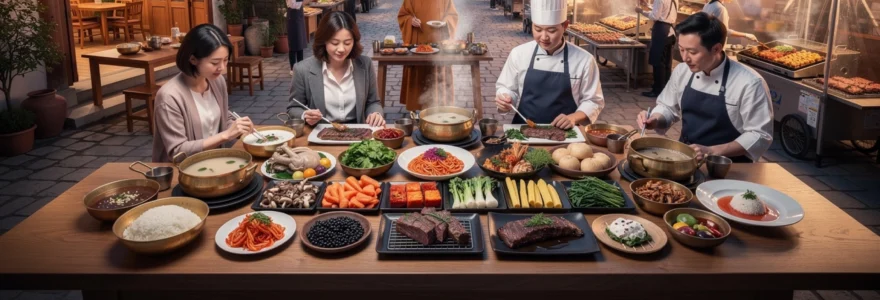
Seoul’s culinary landscape represents a fascinating intersection where ancient Korean philosophy meets contemporary gastronomic innovation. The city’s food culture operates on principles that have guided Korean cooking for centuries, emphasising the delicate balance between opposing forces while celebrating bold, umami-rich flavours that captivate both local palates and international visitors. This sophisticated approach to cuisine transforms every meal into an experience that nourishes both body and soul, creating a dining culture that prioritises harmony, community, and the therapeutic properties of food.
The capital’s restaurants, street vendors, and home kitchens continue to honour traditional cooking methodologies whilst embracing modern culinary techniques. From fermented vegetables that populate every Korean table to the theatrical presentation of tabletop barbecue, Seoul’s food scene demonstrates how cultural heritage can evolve without losing its essential character. This evolution has positioned Korean cuisine as one of the world’s fastest-growing culinary trends, with Seoul serving as the epicentre of this gastronomic revolution.
Traditional korean culinary philosophy: Yin-Yang principles in seoul’s gastronomy
The foundation of Korean cuisine rests upon the ancient philosophical concept of eum-yang, the Korean interpretation of yin-yang principles that seeks to create perfect equilibrium in every aspect of life, including food preparation and consumption. Seoul’s traditional restaurants continue to honour these principles by carefully balancing cooling and warming ingredients, creating meals that promote optimal health and digestive harmony. This approach considers not only the flavour profiles of individual ingredients but also their energetic properties and seasonal appropriateness.
Modern Seoul establishments have adapted these traditional concepts to contemporary dining preferences whilst maintaining their essential philosophy. Restaurants throughout the city demonstrate this balance through their menu construction, pairing spicy dishes with cooling accompaniments and ensuring that every meal contains elements representing different flavour categories. The principle extends beyond individual dishes to encompass entire dining experiences, where the progression of courses follows traditional Korean meal structure designed to optimise digestion and satisfaction.
Five elements theory implementation in korean temple food at jogyesa
Jogyesa Temple’s restaurant exemplifies the sophisticated application of ohaeng theory, incorporating the five elements—wood, fire, earth, metal, and water—into every aspect of meal preparation. This ancient system assigns specific colours, flavours, and ingredients to each element, creating dishes that provide comprehensive nutritional balance whilst supporting spiritual well-being. The temple’s chefs meticulously plan meals to include representatives from each category, ensuring that diners receive the full spectrum of nutrients and energetic benefits.
The temple food preparation process involves extensive meditation and intentional cooking practices that infuse each dish with positive energy. Ingredients undergo careful selection based on their elemental properties and seasonal availability, with preparation methods designed to preserve both nutritional content and spiritual essence. This approach has influenced numerous Seoul restaurants that incorporate temple food principles into their secular menus, creating a bridge between ancient wisdom and contemporary dining preferences.
Seasonal ingredient rotation systems in hanok village restaurants
Bukchon Hanok Village restaurants maintain traditional seasonal cooking practices that align menu offerings with natural cycles and local agricultural rhythms. These establishments source ingredients from specific regions during optimal harvest periods, ensuring maximum flavour intensity whilst supporting local farming communities. The seasonal rotation system extends beyond simple ingredient substitution to encompass entire cooking methodologies that complement each season’s energetic characteristics.
Spring menus emphasise detoxifying ingredients like wild mountain vegetables and young shoots, whilst summer offerings focus on cooling foods such as cold noodles and refreshing broths. Autumn brings hearty preparations featuring newly harvested grains and preserved vegetables, leading into winter’s warming stews and fermented foods that support the body’s need for sustained energy during colder months.
Medicinal food concepts through samgyetang and seolleongtang preparation
Seoul’s traditional soup culture embodies the Korean concept of yakshik dongwon—food as medicine—through meticulously prepared broths that serve therapeutic purposes beyond basic nutrition. Samgyetang, the famous ginseng chicken soup, incorporates specific medicinal herbs chosen for their synergistic properties and seasonal appropriateness. The preparation process involves slow-cooking techniques that extract maximum therapeutic compounds whilst creating deeply satisfying flavours.
<em
Seolleongtang, a milky ox-bone soup, represents another cornerstone of Seoul’s medicinal food tradition. Prepared by simmering beef bones for up to 18 hours, this slow extraction process releases collagen, minerals, and amino acids believed to support joint health and digestion. In many historic eateries around Jongno and Euljiro, broth is served unseasoned, allowing diners to customise with salt, spring onions, and chilli to match their constitution and taste. This interactive seasoning ritual underlines the idea that each person’s body needs slightly different support, even when sharing the same dish.
Colour balance methodology in traditional banchan presentation
Colour balance is central to traditional Korean table setting, and nowhere is this more evident than in the presentation of banchan, the array of small side dishes served with almost every meal in Seoul. Drawing from the five-element theory, cooks strive to include white, black, red, blue-green, and yellow ingredients on the table, creating both visual harmony and nutritional diversity. A typical spread might feature white radish, dark seaweed, red kimchi, green namul vegetables, and golden egg strips, each contributing its own vitamins, minerals, and textures.
In many long-standing restaurants near Gwanghwamun and Insadong, banchan plating follows a quiet but meticulous methodology. Lighter-tasting dishes are placed closer to the diner, while stronger, fermented flavours sit further away to encourage a gentle progression of intensity. Textures are alternated—crisp pickles beside soft braises, crunchy roots near silky tofu—to keep the palate engaged throughout the meal. This approach ensures that even a simple bowl of rice and soup becomes a balanced dining experience driven by contrast and complement rather than excess.
For visitors trying to understand Seoul’s food culture, paying attention to colour on the table can be surprisingly revealing. A meal dominated by one tone, such as beige fried foods or all-red stews, is considered incomplete from a traditional perspective. By contrast, a well-planned home-cooked dinner or hansik restaurant course will look almost like an artist’s palette, with each shade signalling a different health benefit and flavour note. In this way, Seoul’s culinary tradition turns everyday eating into a form of intuitive nutrition planning, woven seamlessly into aesthetics.
Fermentation sciences and kimchi culture in contemporary seoul
Fermentation sits at the heart of Seoul’s food identity, with kimchi, jang (fermented pastes and sauces), and vinegars forming the backbone of countless recipes. While these age-old practices once relied entirely on climate, intuition, and ancestral know-how, contemporary Seoul chefs and producers are increasingly blending tradition with microbiology and food science. This is not about replacing heritage but about understanding it more deeply, ensuring consistent quality and safety in a dense urban environment.
As interest in gut health and probiotic foods surges worldwide, Seoul’s fermentation culture has gained new global relevance. Researchers at local universities frequently collaborate with kimchi producers to analyse lactic acid bacteria strains, optimise storage conditions, and quantify nutritional benefits. At the same time, neighbourhood markets and family-run restaurants maintain their own cherished recipes, passing jars and techniques down through generations. The result is a dynamic ecosystem where cutting-edge labs and humble kitchens coexist, each contributing to the city’s evolving kimchi narrative.
Lactobacillus cultivation techniques in myeongdong kimchi markets
In the bustling streets of Myeongdong, vendors selling freshly made kimchi draw on both traditional methods and informal scientific insight to cultivate beneficial Lactobacillus bacteria. Salt concentration, fermentation time, and ambient temperature are carefully controlled, even if the tools look as simple as plastic tubs, cool water, and stacks of napa cabbage. Experienced kimchi makers will tell you that the best fermentation resembles a “slow, steady conversation” rather than a quick reaction—bubbles should rise gently, and aromas should deepen gradually, never turning harsh.
Some specialist stalls now display information about fermentation stages, explaining to curious tourists how different Lactobacillus species dominate over time. Early in the process, milder strains help develop subtle sourness, while later populations increase tang and complexity. Vendors might recommend young kimchi for grilling or making pancakes, and more mature batches for stews and jjigae, where their intense acidity brightens rich broths. This practical guidance shows how microbial life directly shapes cooking decisions in everyday Seoul kitchens.
For health-conscious visitors, these markets provide a living textbook on probiotics in Korean cuisine. You can taste kimchi at varying ages, compare cabbage with radish or cucumber varieties, and feel how salt levels change the texture from crisp to tender. It is rather like sampling different vintages of wine, except the “winemakers” are lactic acid bacteria, and the terroir includes climate, salt type, and even the maker’s hands. By engaging your senses, you begin to grasp why fermented Korean side dishes are considered both deeply flavourful and functionally beneficial.
Temperature control systems in underground kimchi storage facilities
Historically, Korean households relied on onggi earthenware jars buried in the ground to maintain a stable temperature for kimchi fermentation. In Seoul’s modern high-rise apartments, underground communal storage rooms and controlled kimchi refrigerators now replicate these conditions with impressive precision. Many buildings are equipped with shared or private kimchi fridges that hold temperatures around 0–4°C, slowing fermentation without halting it, and preserving optimal texture and flavour over several months.
These temperature control systems function as an invisible infrastructure supporting the city’s food culture. Residents often stagger their kimchi storage across different fridges or compartments, dedicating one space to freshly made batches and another to long-aged varieties destined for stews and braises. Some premium models even offer “fermentation mode” and “maturation mode”, adjusting humidity and air circulation to emulate the conditions of traditional storage jars. What once depended on seasonal ground temperature now benefits from programmable settings and digital sensors.
This technological adaptation allows urban families to continue large-scale kimjang—communal kimchi making—even in compact apartments. Instead of relying on cold courtyards, they schedule production around fridge capacity and plan dishes according to how their kimchi will evolve over time. For food enthusiasts, it offers an intriguing lesson: behind the simple serving of kimchi at a Seoul restaurant lies a complex chain of preservation strategies, energy-efficient design, and temperature management honed for city living.
Regional kimchi variations from gyeonggi province in seoul restaurants
Many Seoul restaurants showcase kimchi styles originating from nearby Gyeonggi Province, offering diners a chance to taste regional nuances within the capital. Compared to saltier coastal varieties, Gyeonggi kimchi often features a slightly milder brine and a balanced blend of sweetness and heat, reflecting the province’s role as an agricultural heartland. Ingredients such as Korean pear, chestnut, or jujube may appear in the seasoning paste, adding layers of natural sweetness and aroma to the fermented cabbage.
In traditional eateries around Namdaemun and Mapo, you might encounter water kimchi (mul kimchi) from Gyeonggi, with its clear, lightly tangy brine and crisp radish slices. This style is especially popular in summer, when cooling, hydrating dishes are in demand. Other venues highlight radish leaf kimchi, mustard leaf kimchi, or barley-studded versions that draw directly from countryside recipes. Each variation tells a story of soil, climate, and local preference transported from provincial farms to urban tables.
For visitors, sampling these regional kimchi types within Seoul is a convenient way to explore Korean food diversity without leaving the city limits. Many chefs deliberately curate tasting sets of several kimchi styles, inviting you to compare texture, fermentation level, and spice profile side by side. It is almost like tasting single-origin coffees, where small shifts in origin produce distinct sensory experiences. Through these variations, Seoul’s restaurant scene acts as a cultural archive, keeping regional traditions alive in a fast-paced metropolis.
Modern fermentation technology at seoul kimchi festival
The annual Seoul Kimchi Festival, often held in late autumn, offers a window into how fermentation science and cultural heritage intersect today. Large-scale kimjang events see thousands of participants preparing cabbage together, guided by master artisans and supported by cold-chain trucks, sanitised workstations, and pH monitoring tools. While the atmosphere feels festive and communal, behind the scenes organisers prioritise food safety, standardised salting processes, and careful packaging to ensure that the donated kimchi reaches vulnerable communities in perfect condition.
Exhibition zones at the festival frequently feature demonstrations of smart fermentation devices, from app-connected kimchi fridges to compact home fermenters that track temperature and acidity. University labs and food-tech start-ups present research on lactic acid bacteria strains linked to immune health or reduced sodium formulations for modern diets. Children’s zones teach the basics of fermentation through interactive displays, turning what once seemed like mysterious magic into an accessible, science-backed practice.
For anyone curious about how a traditional fermented cabbage dish became a symbol of national identity and global health trends, the festival is eye-opening. You can watch grandmothers season kimchi by feel and smell, then step next door to see scientists visualising the same process under a microscope. This dialogue between intuition and analysis epitomises Seoul’s broader food culture: deeply rooted in ancestral wisdom yet open to innovation that enhances quality, understanding, and reach.
Street food innovation hubs: myeongdong and hongdae culinary ecosystems
Myeongdong and Hongdae function as living laboratories for Seoul’s street food evolution, where classic snacks meet Instagram-era creativity. In Myeongdong’s narrow lanes, vendors refine beloved favourites such as tteokbokki, hotteok, and skewered meats while experimenting with new fillings, sauces, and fusion influences. You might spot cheese-filled rice cakes, charcoal-black ice cream cones, or corn dogs coated in diced potato, all designed to surprise the palate and the camera in equal measure.
Hongdae, with its youthful, artsy demographic, pushes innovation even further. Food stalls and small eateries test novel flavour combinations—think kimchi-loaded fries, rice bowls topped with vegan “bulgogi”, or croffles (croissant waffles) served with miso caramel. Because foot traffic is high and feedback is immediate, vendors can see within days whether a new idea resonates. Successful concepts often migrate from street stalls to permanent cafés, then spread across the city, turning Hongdae into a powerful trend incubator for Korean street food culture.
What makes these neighbourhoods particularly fascinating is how they preserve the communal, casual spirit of Seoul snacks while adopting global influences. As you walk, you may notice how fragrances overlap: smoky grills, fermented chilli, buttered corn, and freshly ground coffee sharing the same block. It is a sensory map of Seoul’s openness, where traditional recipes, international tastes, and social media aesthetics converge. For travellers and locals alike, exploring these districts offers a quick survey of where Korean street food has been—and where it is heading next.
Premium dining evolution: michelin-starred korean restaurants in gangnam
Gangnam’s sleek avenues host some of Seoul’s most ambitious fine-dining venues, many of which have earned Michelin recognition for reinterpreting Korean cuisine. These restaurants treat familiar ingredients—soy sauce, sesame oil, perilla leaves, seasonal seafood—with the precision typically associated with French haute cuisine. Tasting menus are choreographed like performances, with courses that might reimagine humble dishes such as banchan or bibimbap through meticulous plating, temperature contrasts, and unexpected textures.
Rather than simply borrowing Western techniques, top Gangnam chefs often frame their work as “contemporary hansik”. They explore historical royal court recipes, temple food methods, and regional specialties, then filter them through modern culinary science. Sous-vide cooking may be used to perfect the tenderness of short ribs, while classic jangs are aged in climate-controlled rooms to develop deeper umami. Wine pairings sit alongside premium soju and makgeolli, demonstrating that fermented rice drinks can match complex flavours as deftly as any Bordeaux or Burgundy.
For diners, these Michelin-starred restaurants provide an immersive education in Seoul’s food culture at its most refined. Tasting menus often include explanations of ingredient provenance, fermentation timelines, and philosophical inspirations behind each dish. You might learn how a single spoonful of broth echoes temple food restraint, street food boldness, and royal cuisine opulence all at once. This synthesis of luxury and heritage has helped position Seoul as a must-visit destination for global gastronomes looking to understand Korean cuisine beyond the familiar barbecue grill.
Night market culture and late-night dining infrastructure in dongdaemun
Dongdaemun, renowned for its around-the-clock fashion malls, also boasts one of Seoul’s most vibrant late-night food scenes. As shoppers stream between wholesale markets and design plazas, a parallel ecosystem of eateries, vendors, and tented bars keeps the district fuelled well past midnight. From hearty bone soups to quick snacks like soondae (blood sausage) and grilled skewers, the area caters to shift workers, students, and night owls seeking comfort and energy at unconventional hours.
This nocturnal dining culture reflects practical needs as much as culinary passion. With many textile and retail businesses operating through the night, local authorities and entrepreneurs have developed infrastructure that supports safe, reliable access to hot food. Well-lit alleys, regular sanitation services, and late-running public transport make it easy for people to gather, eat, and disperse even in the early hours. In many ways, Dongdaemun demonstrates how food can anchor a 24-hour urban economy while preserving social rhythms and community ties.
24-hour food cart licensing systems and health regulations
To sustain such a bustling night market, Seoul’s municipal government maintains a structured licensing and inspection system for 24-hour food carts. Vendors in Dongdaemun must comply with regulations covering hygiene training, waste disposal, water access, and food storage temperatures. Regular inspections ensure that meat and seafood are kept within safe temperature ranges, and that cooking equipment meets fire and gas safety standards. These measures may not be immediately visible to the casual diner, but they underpin the trust that allows thousands to eat street food every night with confidence.
Some carts operate within designated “food zones” that concentrate stalls along specific streets, simplifying infrastructure support such as shared refrigeration units, cleaning stations, and pest control. This zoning also helps prevent conflicts with pedestrian flow and nearby residents, balancing economic opportunity with quality of life. For travellers, it means that when you choose a bustling stall in Dongdaemun at 2 a.m., you are benefiting from a carefully managed public system that encourages entrepreneurship while prioritising public health.
Pojangmacha traditional tent restaurant operations
Pojangmacha, the iconic orange tent bars scattered across Dongdaemun and older districts of Seoul, offer a more intimate form of late-night dining. Inside these compact spaces, steam from bubbling stews mingles with laughter and the clink of soju glasses, creating a cosy refuge from the city’s neon glow. Operators typically prepare a streamlined menu of hearty favourites—spicy stir-fried dishes, skewers, seafood, and soups—that pair well with alcohol and warm the body after a long day.
Running a pojangmacha requires nimble logistics. Ingredients must be prepped in licensed kitchens, transported safely, and cooked to order in a tight space, often with limited storage. Many owners have long-standing relationships with local fishmongers and butchers, fetching fresh deliveries timed to their late opening hours. Seating arrangements encourage communal interaction, with strangers often sharing stools and swapping recommendations. For visitors, stepping into a pojangmacha can feel like entering a pop-up living room where Seoul’s informal social life unfolds.
Soju and makgeolli pairing protocols in jongno district
While Dongdaemun hums with commerce, neighbouring Jongno District has long been a centre for traditional drinking culture, where soju and makgeolli take pride of place. Many rustic taverns and modern izakaya-style bars here follow unspoken pairing “protocols” that match particular dishes with specific drinks. Clean, neutral soju is often served alongside fatty grilled pork or spicy stews, its sharpness cutting through richness much like vodka or grappa. Cloudy, slightly fizzy makgeolli, by contrast, pairs beautifully with savoury pancakes like pajeon or kimchi jeon, echoing the earthy flavours of fermented batter and scallions.
Servers in Jongno are usually happy to guide newcomers through these combinations, suggesting, for example, a chestnut-infused makgeolli with nutty, sesame-forward dishes, or aged soju with grilled eel or beef. Some venues even offer tasting flights of regional makgeolli, each with subtle differences in sweetness, acidity, and viscosity. Understanding these pairings can transform a casual night out into a deeper appreciation of how Korean alcohols are woven into the fabric of Seoul dining rituals. It is less about strict rules and more about discovering synergies that make both food and drink taste more complete.
Modern korean fusion techniques in itaewon international district
Itaewon, historically home to international residents and embassies, has evolved into Seoul’s most eclectic dining neighbourhood, where modern Korean fusion thrives. Here, chefs treat the city like a spice cabinet, blending gochujang and perilla with Mediterranean, Middle Eastern, Latin American, and European influences. Menus might feature kimchi-topped pizzas, bulgogi tacos, or doenjang-caramel glazes on roasted vegetables, all reflecting the district’s cosmopolitan character.
This fusion movement is more than a trend; it represents how Seoul negotiates its role as a global city while staying grounded in local flavours. Many Itaewon chefs are second-generation Koreans returning from overseas culinary training, bringing back techniques and perspectives that they then translate through Korean ingredients. As a result, the area has become a laboratory for novel textures and formats—shared plates, open kitchens, chef’s counters—where diners can watch experiments unfold in real time. For those curious about the future of Korean food, Itaewon offers a front-row seat.
Korean-french culinary integration at top chef seoul establishments
Among the most refined expressions of fusion in Itaewon and nearby districts is the integration of Korean ingredients with French techniques. In several chef-driven restaurants, you will find tasting menus built on classic French structures—amuse-bouche, entrée, plat, dessert—where each course showcases elements of Korean terroir. Fermented sauces stand in for demi-glace, perilla oil whispers through veloutés, and jang-aged butter accompanies freshly baked baguettes. It is as if Burgundy and Jeolla Province were having a quiet, thoughtful conversation on your plate.
These chefs often rely on French methods such as confit, terrine, and precise sauce reduction to frame the boldness of Korean flavours. A humble cabbage leaf might be transformed into an intricate roulade filled with seasonal namul, then served with a jus perfumed by anchovy-based aekjeot. Desserts could highlight Korean grains, rice wines, and native fruits, reimagining patbingsu textures in plated, fine-dining formats. For diners, this Korean-French integration provides a nuanced introduction to local ingredients, presented in a structure that feels familiar yet intriguingly different.
Molecular gastronomy applications in korean BBQ at apgujeong restaurants
In Apgujeong, an upscale enclave adjacent to Gangnam, some avant-garde restaurants are applying molecular gastronomy techniques to the beloved ritual of Korean barbecue. Rather than replacing the communal act of grilling, they enhance it with surprising textures and flavour concentrates. You might encounter smoked beef brushed with concentrated kimchi essence, bulgogi served with foams of sesame or perilla, or edible “charcoal” made from dehydrated vegetables that delivers crunch without ash.
Chefs use tools such as liquid nitrogen, vacuum distillation, and stabilising agents to dissect and rebuild familiar tastes. Imagine the classic lettuce wrap (ssam) deconstructed into bite-sized spheres of jang, powdered kimchi, and compressed greens, each releasing its essence on the tongue. Or consider a table where traditional dipping sauces are replaced by gels and pearls that burst with garlic, soy, or chilli. These approaches may sound theatrical, but their goal is still rooted in Seoul’s food culture: to highlight the balance of sweet, salty, spicy, and smoky in new, memorable ways.
Plant-based korean cuisine development in hongdae vegan scene
As global interest in plant-based eating grows, Hongdae has emerged as a hub for vegan and vegetarian interpretations of Korean cuisine. Innovative cafés and restaurants here are proving that Seoul’s bold flavours do not depend exclusively on meat and seafood. Chefs craft “bulgogi” from marinated mushrooms or textured vegetable protein, create kimchi jjigae with seaweed-infused broth instead of anchovy stock, and serve dairy-free versions of favourites like cheese-topped tteokbokki using fermented cashew or soy-based alternatives.
These plant-forward kitchens pay special attention to maintaining the characteristic depth of Korean dishes by leaning on fermentation, smokiness, and umami-rich ingredients. Doenjang, gochujang, and ganjang remain central, but they are paired with nuts, seeds, and legumes to build satisfying mouthfeel. Many venues also highlight seasonal produce from local farms, connecting modern dietary choices to traditional notions of balance and harmony with nature. For visitors with dietary restrictions—or anyone simply curious—Hongdae’s vegan scene demonstrates how flexible and inclusive Seoul’s food culture can be.
Korean-mexican fusion methodologies in gangnam food trucks
Gangnam’s polished streets may be known for luxury boutiques, but they also host a growing fleet of food trucks experimenting with Korean-Mexican fusion. These mobile kitchens combine two cuisines famed for bold, layered flavours, resulting in dishes like kimchi quesadillas, gochujang-marinated carne asada, and rice bowls topped with salsa verde and perilla leaves. The concept is simple yet powerful: use the hand-held, casual format of tacos and burritos to introduce Korean marinades, pickles, and sauces to a wide audience.
From a methodological standpoint, these trucks often adapt Korean barbecue preparations—marinating, quick grilling, and resting meats—before slicing them into taco-friendly strips. Banchan components such as pickled radish, cabbage slaw, or spicy cucumbers replace or supplement classic Mexican garnishes. Gochujang may join forces with lime and cilantro in hybrid salsas, while toasted sesame seeds sprinkle over corn tortillas for a nutty finish. Because food trucks can test new ideas quickly, they serve as agile R&D units within Seoul’s culinary ecosystem, turning street corners into sites of cross-cultural creativity.
Standing at one of these truck windows in Gangnam, taco in hand, you are experiencing the Korean Wave in edible form. The same cultural confidence that fuels K-pop and Korean dramas drives these chefs to borrow, blend, and reimagine. In each bite, you can taste Seoul’s enduring principles of balance and boldness—filtered through chilli, kimchi, and corn—proving that this city’s food culture is as adaptable and forward-looking as it is deeply rooted in tradition.