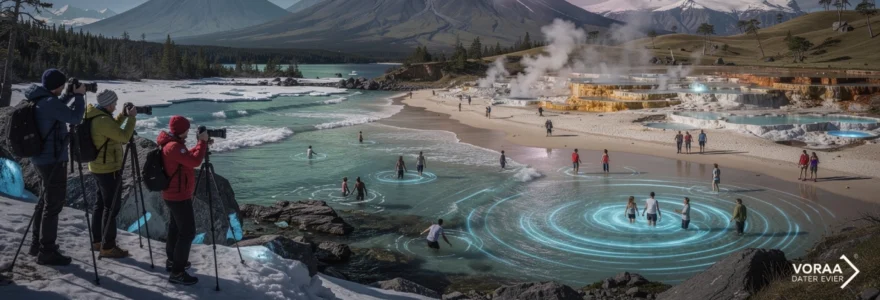
Earth’s most extraordinary natural phenomena occur in destinations that seem almost otherworldly in their magnificence. From the dancing curtains of aurora lights illuminating polar skies to the ethereal glow of bioluminescent waters, these remarkable locations showcase nature’s most spectacular displays. These phenomena represent the convergence of unique geological, atmospheric, and biological conditions that create visual spectacles so stunning they appear almost supernatural.
The pursuit of witnessing these rare natural wonders has transformed certain destinations into pilgrimage sites for photographers, scientists, and nature enthusiasts alike. Each phenomenon requires specific environmental conditions, making timing and location critical factors for successful observation. Understanding the scientific mechanisms behind these displays enhances the appreciation of their beauty whilst providing practical knowledge for planning optimal viewing experiences.
Aurora borealis and aurora australis viewing destinations
The aurora phenomenon represents one of nature’s most captivating displays, occurring when charged solar particles interact with Earth’s magnetosphere. This celestial ballet of light requires specific geomagnetic conditions and clear, dark skies for optimal viewing. The intensity and frequency of aurora displays correlate directly with solar activity cycles, creating periods of enhanced visibility approximately every 11 years during solar maximum phases.
Aurora viewing success depends on understanding the relationship between geomagnetic activity levels and local weather conditions, with KP index readings above 3 significantly increasing visibility chances at lower latitudes.
Tromsø, norway: arctic circle aurora photography hotspots
Positioned at 69.65°N, Tromsø offers exceptional aurora viewing opportunities from September through March, when polar nights provide extended darkness periods. The city’s location within the auroral oval ensures consistent geomagnetic activity, whilst its modern infrastructure supports comfortable observation experiences. Professional photography workshops operate throughout the aurora season, providing expert guidance on capturing the luminous displays against dramatic Arctic landscapes.
Local viewing sites include the Tromsø Cable Car summit, offering panoramic views above the city lights, and remote locations such as Kvaløya Island, where minimal light pollution enhances aurora visibility. Temperature considerations remain crucial, with winter conditions frequently dropping below -20°C, requiring appropriate thermal clothing and equipment protection for extended outdoor photography sessions.
Reykjavik, iceland: geomagnetic storm observation sites
Iceland’s position along the Mid-Atlantic Ridge creates unique geological and atmospheric conditions that enhance aurora displays. Reykjavik serves as an excellent base for aurora hunting, with numerous tour operators offering guided excursions to optimal viewing locations. The city’s geothermal features provide warm shelters during observation sessions, whilst the surrounding volcanic landscapes create dramatic foregrounds for aurora photography.
Popular observation sites include Thingvellir National Park, where tectonic plate boundaries create striking geological formations beneath dancing aurora lights. The Blue Lagoon geothermal spa occasionally offers night-time aurora viewing experiences, combining natural phenomena with therapeutic relaxation. Weather variability in Iceland requires flexible planning, as cloud cover can obscure aurora displays despite favourable geomagnetic conditions.
Fairbanks, alaska: solar wind interaction phenomena
Fairbanks experiences some of the world’s most intense aurora displays due to its position directly beneath the auroral oval. The city records aurora activity on approximately 243 nights per year, making it statistically the most reliable aurora viewing destination globally. Local research facilities, including the University of Alaska Geophysical Institute, provide real-time aurora forecasting and educational resources for visitors.
The Chena Hot Springs Resort, located 90 minutes from Fairbanks, offers unique aurora viewing experiences combined with natural hot spring relaxation. Professional aurora guides utilise snowmobiles and heated cabins to access remote locations with optimal visibility conditions. Winter temperatures frequently reach -40°C, creating ice fog phenomena that can enhance or obstruct aurora photography depending on atmospheric conditions.
Yellowknife, canada: magnetosphere particle precipitation zones
Yellowknife’s location at 62.45°N places it ideally within the aurora viewing zone, offering excellent visibility from late August through early April. The city promotes itself as the « Aurora Capital of North America, » supporting this claim with statistical data showing aurora visibility on 240+ nights annually
throughout peak season. Purpose-built aurora villages and heated teepees outside the city minimise light pollution, allowing visitors to observe magnetosphere particle precipitation with maximum clarity. Many operators provide complementary scientific briefings, explaining how energetic particles spiral along magnetic field lines before colliding with atmospheric gases to produce distinct green and purple emissions.
Optimal viewing conditions in Yellowknife typically occur between 10 p.m. and 2 a.m., when geomagnetic activity and local atmospheric stability often align. Winter road access to frozen lakes offers expansive horizons, ideal for both wide-angle photography and time-lapse imaging of auroral arcs. Layered clothing, hand warmers, and lens dew heaters are strongly recommended, as wind chill can rapidly degrade both personal comfort and camera performance during extended observation sessions.
Ushuaia, argentina: southern hemisphere aurora australis locations
Located at 54.8°S, Ushuaia markets itself as the « End of the World » and serves as one of the most southerly accessible cities for witnessing the aurora australis. While southern lights are less frequently observed than their northern counterparts due to limited landmass near the South Pole, geomagnetic storms occasionally extend the auroral oval far enough north for visibility from Tierra del Fuego. Local tour operators monitor space weather forecasts, alerting visitors when solar wind conditions heighten the probability of auroral activity.
Observation strategies often involve travelling away from city illumination toward coastal headlands and elevated viewpoints, where unobstructed views of the southern horizon improve detection chances. Unlike in the Arctic, weather patterns in this maritime region can shift rapidly, with cloud cover and strong winds posing significant challenges for night-time observation. For travellers combining Antarctic cruises with aurora hunting, planning visits around equinox periods and heightened solar activity increases the likelihood of encountering these elusive southern sky displays.
Bioluminescent waters and marine phosphorescence phenomena
Bioluminescent bays and glowing shorelines represent another category of destinations known for their unique natural phenomena, transforming ordinary coastlines into luminous seascapes. In these specialised ecosystems, microscopic organisms convert chemical energy into cold light, producing blue or green glows when disturbed by waves, fish, or human movement. The intensity of marine phosphorescence depends on factors such as water temperature, nutrient availability, and the density of specific phytoplankton species.
For travellers, timing and environmental sensitivity play crucial roles in planning successful bioluminescence experiences. Many prime locations enforce strict conservation guidelines to protect fragile dinoflagellate populations from pollution and artificial light. Visiting during moonless nights, avoiding sunscreen or chemical contaminants, and choosing eco-certified operators all contribute to preserving these rare natural wonders while maximising visibility of the glowing water.
Mosquito bay, vieques: pyrodinium bahamense dinoflagellate concentrations
Mosquito Bay, located on the south side of Vieques in Puerto Rico, is widely recognised as one of the brightest bioluminescent bays on Earth. Exceptional concentrations of Pyrodinium bahamense dinoflagellates—often exceeding 700,000 organisms per litre—create intensely luminous responses to even minimal water movement. When you trail your hand through the bay or watch a fish dart beneath the surface, the resulting neon-blue streaks resemble liquid starlight poured into the sea.
Kayak tours operate under strict regulations that prohibit motorised vessels, chemical insect repellents, and swimming, all designed to minimise ecological disturbance. Optimal conditions typically occur during dry seasons and around the new moon, when low freshwater influx and minimal ambient light amplify bioluminescent visibility. Local guides frequently explain the chemical reaction behind the glow, comparing the dinoflagellates’ luciferin-luciferase process to a natural, rechargeable lightbulb powered by cellular metabolism.
Holbox island, mexico: noctiluca scintillans bloom patterns
Holbox Island, off Mexico’s Yucatán Peninsula, offers seasonal displays of bioluminescence primarily attributed to Noctiluca scintillans, a large, globe-shaped dinoflagellate species. Unlike permanent bioluminescent bays, Holbox experiences episodic blooms driven by temperature shifts, nutrient pulses, and calm sea conditions. During peak events, gentle waves crashing on the beach ignite electric-blue flashes, creating the impression that each grain of sand at the shoreline is briefly catching fire.
Visitors typically observe the phenomenon from the beach itself or via paddleboard and kayak excursions that avoid artificial lights and loud noise. Local operators encourage late-evening or post-midnight outings when human activity decreases and the contrast between dark skies and glowing water reaches its peak. Because bloom intensity can fluctuate from night to night, checking recent local reports and avoiding bright lunar phases significantly improves the odds of witnessing strong bioluminescent displays.
Maldives phytoplankton: lingulodinium polyedrum bioluminescent displays
Several islands across the Maldives archipelago periodically host spectacular bioluminescent events caused by Lingulodinium polyedrum and related phytoplankton species. On certain nights, beaches appear to sparkle with countless blue points of light, as if the Milky Way had been scattered across the shoreline. These displays often coincide with warm sea-surface temperatures, calm conditions, and localised phytoplankton blooms drifting close to resort islands.
Resort staff frequently notify guests when bioluminescence intensifies, encouraging quiet walks along the waterline to see each step ignite a halo of shimmering light. Because the Maldives spans a vast area of the Indian Ocean, bioluminescent events vary between atolls and seasons, making flexibility and longer stays advantageous. Eco-conscious travellers are advised to limit flashlight use, avoid entering the water when blooms are particularly dense, and opt for properties that adhere to sustainable marine tourism practices to reduce habitat stress.
Jervis bay, australia: alexandrium minutum red tide luminescence
Jervis Bay on Australia’s New South Wales coast occasionally experiences bioluminescent events associated with Alexandrium minutum and other dinoflagellate species, sometimes linked to so-called « red tide » blooms observed in daylight. At night, these same organisms emit vivid blue light when disturbed, transforming swells and breaking waves into glowing ribbons that trace the contours of the shoreline. Photographers often compare the spectacle to long-exposure shots of city traffic, with luminous trails painting the water’s surface.
While not every red tide produces visible bioluminescence, social media and local observation networks quickly spread information when strong events occur. Visitors can enhance viewing conditions by venturing to darker beaches within the bay, allowing their eyes to adjust for at least 20 minutes before expecting pronounced glows. As some red tides may affect shellfish safety, authorities periodically issue advisories, reminding travellers that bioluminescent beauty and marine toxins can sometimes originate from the same underlying bloom.
Volcanic lightning and pyroclastic electrical discharges
Volcanic lightning, sometimes referred to as a « dirty thunderstorm, » arises when explosive eruptions generate intense electrical activity within ash plumes. Rather than relying on typical storm clouds, these discharges result from collisions between ash particles, ice crystals, and rock fragments, which build up significant triboelectric charge. The resulting lightning bolts cut through eruption columns like veins of white-hot energy, highlighting the raw power of geological processes shaping our planet.
Destinations known for frequent or well-documented volcanic lightning events attract a unique mix of volcanologists, storm chasers, and landscape photographers. Observing such phenomena safely requires careful planning, strict adherence to hazard zones, and constant monitoring of official updates from geological surveys. For many observers, witnessing an eruption accompanied by volcanic lightning offers a once-in-a-lifetime opportunity to see atmospheric electricity and magma-driven activity intersect in a single, awe-inspiring scene.
Sakurajima, japan: triboelectric charging in volcanic ash clouds
Sakurajima, located in Kagoshima Prefecture, ranks among the world’s most active volcanoes and has produced numerous documented volcanic lightning events. Frequent strombolian and vulcanian eruptions eject dense ash columns where triboelectric charging occurs as particles collide, separate, and transfer electrons. This process is similar to rubbing a balloon on fabric, but amplified to a colossal scale within ash plumes stretching several kilometres into the atmosphere.
Designated observation points around Kagoshima Bay allow relatively safe, medium-distance viewing of Sakurajima’s activity, particularly during evening eruptions when lightning stands out against the dark sky. Local authorities maintain exclusion zones around the volcano, and visitors should always consult real-time hazard maps before planning any closer approach. Because smaller eruptions can occur with little warning, telephoto lenses, remote cameras, and sturdy tripods offer practical ways to capture pyroclastic electrical discharges from secure vantage points.
Mount etna, sicily: electrostatic discharge during strombolian eruptions
Mount Etna, Europe’s most active volcano, frequently exhibits strombolian eruptions that eject incandescent lava fragments and ash into the night sky. During more energetic phases, observers have recorded electrostatic discharges within the eruption columns, where charged particles create short-lived lightning channels. These events highlight how volcanic conduits can act like giant natural generators, converting the mechanical energy of erupting magma into electrical phenomena.
Accessible viewing platforms on Etna’s flanks, combined with cable cars and guided 4×4 tours, make it one of the most visitor-friendly sites for witnessing active volcanism. When activity intensifies, local volcanological institutes issue updates detailing eruption style, ash plume height, and potential lightning occurrence. Travellers are advised to carry protective eyewear, dust masks, and warm clothing, as wind direction can rapidly shift ash clouds toward populated viewpoints, temporarily reducing visibility and air quality.
Eyjafjallajökull, iceland: lightning formation in explosive volcanic plumes
Eyjafjallajökull gained global attention during its 2010 eruption, when spectacular images of volcanic lightning were captured above its ash-laden plumes. In explosive phases, rapid magma fragmentation and intense convection generated dense clouds where ice particles, ash, and gas interacted to create strong charge separation. The resulting lightning bolts illuminated the plume from within, revealing turbulent structures and towering column heights otherwise obscured in darkness.
Today, guided tours in southern Iceland often include educational stops with views toward Eyjafjallajökull and nearby volcanoes, discussing how similar future eruptions could again generate atmospheric electrical phenomena. While access to the summit crater is restricted and highly dependent on current activity levels, lower-elevation trails and observation points provide safe perspectives on the glaciated volcano. For those interested in rare natural phenomena, Iceland offers a unique combination of glacial landscapes, geothermal features, and potential volcanic lightning within a relatively compact geographic area.
Calbuco volcano, chile: electrical activity in pyroclastic density currents
Calbuco Volcano in southern Chile produced one of the most visually striking volcanic lightning displays of recent decades during its 2015 eruption. As towering columns of ash and gas rose above the volcano, intense electrical activity developed both within the main plume and along the margins of pyroclastic density currents. These fast-moving, ground-hugging flows of hot ash and gas generated additional frictional charging, producing branching lightning that traced the contours of turbulent clouds.
Surrounding lakes and highlands offer distant observation points that, under non-eruptive conditions, showcase the volcano’s symmetrical profile against Andean skies. Because pyroclastic density currents represent one of the most lethal volcanic hazards, any future eruptive events would require strict adherence to evacuation orders and exclusion zones. Travellers interested in the science of volcanic lightning can explore regional museums and interpretation centres, where high-resolution photographs and instrument data from the 2015 eruption are often showcased.
Gravitational anomalies and magnetic field distortions
Beyond visually dramatic phenomena, some destinations are famous for subtle gravitational anomalies and magnetic field distortions that appear to bend the rules of physics. At so-called « mystery spots » or gravity hills, vehicles seem to roll uphill and water appears to flow against gravity, challenging our senses and expectations. In most cases, these illusions result from carefully oriented landscapes and skewed visual reference points, rather than genuine deviations from Earth’s gravitational field.
However, regions with unusual magnetic signatures, such as areas rich in iron ore or basaltic lava flows, can influence compass readings and navigation instruments. For travellers, these anomalies present intriguing opportunities to experience natural optical illusions and engage with geophysical explanations. Visiting such sites with an open mind and a critical eye reveals how our perception of slope, orientation, and balance can be as malleable as any visual trick in a science museum.
Rare meteorological phenomena and atmospheric optics
Rare meteorological phenomena and atmospheric optical effects transform the sky into a dynamic canvas of light, colour, and geometry. Halos, sundogs, light pillars, and iridescent clouds all result from the interaction of sunlight with ice crystals or water droplets, producing patterns that seem almost engineered. Under specific conditions, you might witness a full 22-degree halo encircling the sun, or parhelia—bright spots flanking the solar disk—created by horizontally aligned plate-shaped ice crystals.
These phenomena often occur in cold, high-latitude regions or at high altitudes where ice crystals are abundant within cirrus clouds or near-surface air masses. Modern smartphone cameras and time-lapse tools make it easier than ever to document such fleeting events, providing both aesthetic enjoyment and valuable data for atmospheric scientists. By learning to recognise precursor conditions—such as thin, veil-like cirrus clouds around the sun or strong temperature inversions—you increase your chances of spotting these sky-bound spectacles during your travels.
Geological thermal manifestations and hydrothermal systems
Geological thermal manifestations and hydrothermal systems reveal Earth’s internal heat as hot springs, geysers, fumaroles, and mud pools. Destinations such as Iceland, Yellowstone, and New Zealand’s Rotorua region sit atop active geothermal fields, where circulating groundwater meets hot rock or magma at depth. The result is a diverse array of surface features ranging from vividly coloured mineral terraces to steam-venting fumaroles that hiss like natural pressure valves.
For visitors, these environments provide multisensory experiences: sulphur-rich aromas, rumbling ground, and vividly pigmented pools shaped by thermophilic microbes. Boardwalks and designated viewing platforms are essential safety measures, as thin crusts can conceal near-boiling water and unstable ground. When exploring geothermal areas, adhering to marked paths, respecting closure signs, and avoiding the temptation to touch or enter thermal waters ensures both personal safety and the long-term preservation of these fragile, otherworldly landscapes.