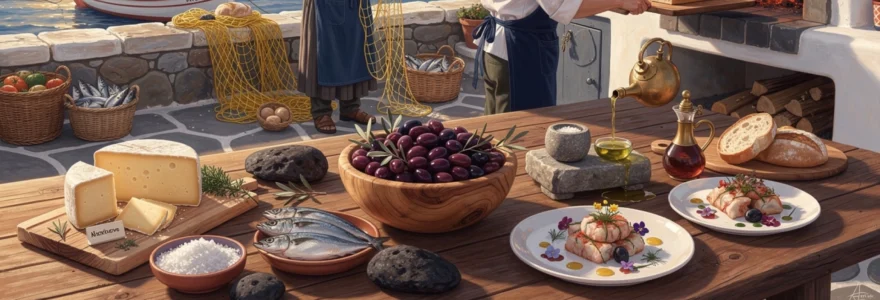
The sun-drenched archipelagos of Greece harbour culinary treasures that have shaped Mediterranean gastronomy for millennia. From the volcanic soils of Santorini producing intensely flavoured tomatoes to the herb-covered hillsides of Crete yielding liquid gold olive oil, Greek island cuisine represents far more than simple sustenance. These scattered jewels of the Aegean and Ionian seas have developed distinctive culinary identities shaped by geography, climate, and centuries of cultural exchange. The interplay between ancient preservation techniques, seasonal abundance, and maritime influences creates a gastronomic tapestry that continues to captivate food enthusiasts worldwide whilst offering profound health benefits rooted in traditional Mediterranean dietary patterns.
Each island’s unique terroir tells a story through its flavours, from the mastic-scented breezes of Chios to the wild fennel meadows of Syros. The isolation of island life has preserved not only ancient recipes but also sustainable practices that modern cuisine increasingly seeks to emulate. What makes Greek island cooking particularly compelling is its seamless integration of foraged ingredients, locally produced staples, and time-honoured techniques that transform simple components into extraordinary culinary experiences.
Traditional greek island culinary techniques and ancient preservation methods
Greek island cooking techniques have evolved through necessity, creativity, and the wisdom of countless generations who understood how to maximise flavour whilst ensuring food security throughout the year. The isolation of island communities fostered remarkable ingenuity in food preservation, cooking methods, and ingredient utilisation that continues to influence contemporary Mediterranean cuisine.
Salt-curing practices in santorini’s volcanic terroir
Santorini’s unique volcanic environment has given rise to exceptional salt-curing practices that capitalise on the island’s mineral-rich environment. The traditional method of producing gouna (salt-cured mackerel) exemplifies how islanders harness natural elements to create preserved delicacies. Local fishermen select fresh mackerel during peak season, coating them in coarse sea salt mixed with volcanic pumice dust that adds distinctive mineral notes whilst drawing out moisture.
The curing process takes place in purpose-built stone chambers where the constant Aegean winds provide natural ventilation. This technique, refined over centuries, produces fish with concentrated umami flavours and remarkable keeping qualities. The volcanic ash in the salt mixture contributes trace minerals that enhance both preservation and taste, creating a product that remains stable for months without refrigeration.
Wood-fired oven baking traditions of crete’s mountain villages
Cretan mountain villages maintain communal wood-fired ovens that serve as the heart of traditional baking practices. These massive stone structures, heated with aromatic woods like olive, carob, and wild herbs, reach temperatures exceeding 400°C before slowly cooling throughout the day. The fournaratha (baker’s daughter) tradition ensures optimal heat utilisation, with different foods cooked in sequence as temperatures decline.
Early morning sees bread baking at peak heat, followed by meat dishes requiring moderate temperatures, then delicate pastries and preserved fruits as the oven cools. This systematic approach maximises fuel efficiency whilst imparting subtle smoky flavours that distinguish Cretan baked goods. The thermal mass of these ovens maintains consistent temperatures for hours, allowing for slow-cooked dishes that develop complex flavour profiles impossible to achieve with modern equipment.
Aegean sea fishing methods and sustainable harvesting practices
Traditional Greek island fishing methods reflect deep understanding of marine ecosystems and seasonal patterns. The gri-gri net system, still used around many islands, allows selective fishing that preserves juvenile populations whilst capturing mature fish. These nets, constructed from locally grown cotton and weighted with carved stones, work with tidal movements rather than against them.
Seasonal restrictions, passed down through generations, ensure sustainable harvesting. Barbounia (red mullet) fishing follows lunar cycles, whilst octopus hunting respects breeding periods. Island communities developed sophisticated knowledge of fish behaviour, weather patterns, and optimal harvesting times that modern marine biology validates. The practice of varkarola (communal boat sharing) ensures fishing remains economically viable for small communities whilst maintaining traditional
vessel sizes and prevents overfishing in near-shore waters. In many parts of the Aegean, rotational fishing grounds ensure that certain coves or reefs are left undisturbed for entire seasons, allowing fish stocks to recover naturally. These sustainable harvesting practices, born from necessity rather than formal regulation, now provide a model for environmentally conscious seafood consumption and demonstrate how Greek island cuisine can remain both authentic and future-focused.
Olive oil production techniques from corfu’s ancient groves
On the lush island of Corfu, where rain is more abundant than on the Cycladic isles, olive groves cloak hillsides in silvery green. Many of these trees are centuries old, their twisted trunks bearing witness to changing empires and evolving food cultures. Traditional olive oil production here follows a carefully orchestrated sequence: hand-harvesting with minimal bruising of the fruit, rapid transportation to the local press, and immediate cold extraction to preserve delicate aromas and polyphenols.
Historic stone mills powered by water or animals have largely given way to modern centrifuge systems, yet many family producers still honour ancient principles. Olives are never allowed to ferment in sacks, harvests are timed to avoid heavy rains, and mixed-variety pressing captures a nuanced flavour spectrum that single-cultivar oils sometimes lack. The result is a vibrant, peppery oil that underpins much of Ionian island cooking and reflects the deep connection between Greek island cuisine and landscape-specific agricultural practices.
Signature ingredients and terroir-driven flavours of the greek archipelago
The Greek archipelago showcases one of the Mediterranean’s most diverse ingredient palettes, with each island expressing its own flavour identity. Terroir-driven ingredients form the backbone of local dishes, influencing everything from cheese maturation to spirit production and resin harvesting. By understanding these signature elements, you begin to see Greek island cuisine not as a monolith but as a mosaic of micro-regions, each shaped by soil composition, prevailing winds, and traditional farming methods.
These island-specific products are more than culinary curiosities; many carry protected status and strict production rules that safeguard quality and authenticity. When you taste a slice of Naxos graviera or a glass of Lesvos ouzo, you are not simply consuming a product—you are experiencing centuries of accumulated knowledge about how best to work with a particular landscape. This terroir consciousness is one reason why Greek island cooking remains remarkably consistent in character, even as modern chefs experiment with technique and presentation.
Naxos graviera cheese ageing process and flavour profiles
Naxos, the largest of the Cyclades, is renowned for its lush pastures and robust dairy tradition. Graviera Naxou, one of Greece’s most celebrated cheeses, is produced primarily from cow’s milk, often with small additions of sheep or goat milk to deepen complexity. Wheels are formed, brined, and then transferred to cool ageing cellars where they mature for a minimum of three months—though premium graviera may age for a year or more.
During this maturation period, naturally occurring cultures break down proteins and fats, generating sweet, nutty notes reminiscent of caramelised butter and roasted hazelnuts. The island’s microclimate—humid sea breezes paired with cool mountain air—encourages a slow, even ageing process that prevents cracking and fosters an elastic yet firm texture. As graviera matures, its flavour intensifies and its crystallisation increases, making it ideal for grating over pasta, pairing with honey, or simply enjoying alongside Naxian potatoes and a glass of local white wine.
Lesvos ouzo distillation and anise cultivation methods
Lesvos has long been associated with ouzo, the iconic anise-flavoured spirit that often accompanies meze spreads across the Aegean. Traditional distilleries on the island use copper pot stills, where a base alcohol infused with botanicals—primarily anise, but also fennel, mastiha, and local herbs—is slowly distilled at low temperatures. This gentle process allows aromatic compounds to migrate into the distillate without harshness, yielding a smooth spirit that turns milky white when diluted with water.
The quality of ouzo is inextricably linked to the anise used, and Lesvos farmers cultivate this aromatic seed in well-drained, sun-drenched plots. Seeds are harvested when fully ripe, dried in shaded, ventilated spaces, and carefully stored to preserve volatile oils. The result is a clean, sweet anise profile that defines high-end ouzo from the island. When you sip ouzo in a seaside taverna, you are tasting a distilled expression of Lesvos’s soil, sun, and centuries-old craft.
Chios mastic resin harvesting and culinary applications
On the island of Chios, the southern villages known as Mastichochoria guard a rare natural treasure: mastic resin from the Pistacia lentiscus var. chia tree. Harvesting this resin is a meticulous seasonal ritual. In early summer, growers gently score the bark, allowing tear-shaped droplets of sap to ooze out and slowly solidify on prepared ground covered with fine white soil. After several weeks, these translucent “tears” are collected by hand, cleaned, and graded by size and purity.
Mastic’s piney, slightly citrus aroma lends itself to both sweet and savoury applications in Greek island cuisine. It flavours traditional ice creams, custards, and breads such as tsoureki, and appears in marinades for lamb or fish where its resinous notes echo the wild herbs that blanket the island hillsides. Modern chefs employ mastic as a subtle accent in emulsions, syrups, and even cocktails, demonstrating how an ancient ingredient can adapt easily to contemporary culinary creativity while still anchored in place-specific tradition.
Kalamata olive varietals and protected designation of origin standards
Although Kalamata itself lies on the Peloponnese mainland, its famous olives are central to the broader Mediterranean pantry and feature widely in Greek island cooking. True Kalamata olives, protected by EU PDO (Protected Designation of Origin) status, must come from defined regions and adhere to strict production criteria. The olives are harvested when fully ripe, deep purple to black, and processed through natural fermentation rather than artificial colouring or accelerated curing.
The result is a firm, almond-shaped olive with a rich, winey flavour and balanced bitterness. PDO standards govern everything from tree density and irrigation practices to allowable preservatives in packaging, safeguarding both quality and regional identity. When island tavernas serve a simple salad of tomatoes, capers, and Kalamata olives dressed in local olive oil, you are tasting the intersection of multiple Greek regions and regulatory frameworks designed to honour authentic Mediterranean food traditions.
Regional specialities across the cyclades, dodecanese, and ionian islands
Greek island cuisine is as varied as the seascapes that surround it. While core ingredients—olive oil, grains, legumes, seasonal vegetables, and seafood—remain consistent, each island group has evolved its own emblematic dishes and flavour signatures. The windswept Cyclades, sun-baked Dodecanese, and verdant Ionian islands showcase how climate and history shape daily food culture. Exploring these regional specialities is like sailing from port to port, with each stop offering a distinct chapter in the story of Mediterranean eating.
In the Cyclades, minimal rainfall and volcanic or rocky soils favour hardy crops such as chickpeas, capers, and small tomatoes, resulting in rustic dishes with concentrated flavours. The Dodecanese, influenced by centuries of trade with the Levant and Anatolia, feature spiced stews, pilafs, and sweets perfumed with cinnamon and clove. The Ionian islands, with their greener landscapes and Venetian heritage, lean toward herb-laden stews, delicate pastas, and a notable use of citrus and wine in cooking. By recognising these patterns, you can better appreciate how Greek island cuisine reflects both shared roots and regional individuality.
Mediterranean diet principles and nutritional biochemistry in greek island cooking
Beyond sensory pleasure, Greek island cuisine provides a textbook example of the Mediterranean diet in action. Numerous epidemiological studies, including large cohorts from Greece and Southern Italy, associate this way of eating with reduced risk of cardiovascular disease, type 2 diabetes, and certain cancers. What makes the traditional patterns on islands like Crete and Ikaria so powerful from a nutritional biochemistry perspective? The answer lies in the synergy of ingredients, cooking methods, and lifestyle habits.
Greek island meals are typically rich in monounsaturated fats from olive oil, omega-3 fatty acids from small oily fish, and a wide range of antioxidants from herbs, vegetables, and wild greens. This combination helps reduce systemic inflammation, supports healthy blood lipids, and provides a steady supply of micronutrients. For example, slow-cooked bean stews with tomatoes and olive oil not only deliver fibre and plant protein but also enhance the bioavailability of fat-soluble carotenoids and polyphenols, turning a simple pot meal into a nutritionally complex dish.
Perhaps most striking is the balance between energy density and satiety in Greek island cooking. Plant-based legume dishes, barley rusks, and vegetable stews provide sustained energy with relatively modest caloric load, thanks to their high fibre and water content. Olive oil, nuts, and seeds contribute satisfying richness without the metabolic downsides associated with trans fats or heavily processed oils. When you add in the cultural norm of slow, communal eating—often accompanied by moderate wine consumption—you begin to see why Greek island communities historically enjoyed robust health well into old age.
Seasonal foraging traditions and wild herb identification techniques
Foraging remains a living tradition across many Greek islands, where locals still head into the hills in spring and autumn in search of wild greens and aromatic herbs. These seasonal excursions are as much social ritual as food gathering, reinforcing knowledge networks that have been passed down for generations. Learning to identify edible species such as vlita (amaranth greens), stamnagathi (a spiky chicory), and wild fennel is both a practical skill and an entry point into understanding how closely Greek island cuisine is tied to its landscape.
Herb identification relies on a combination of visual cues, habitat awareness, and sensorial testing. For example, wild oregano is distinguished not only by its small, oval leaves, but also by its intense aroma when gently rubbed between the fingers. Foragers pay attention to soil type, sun exposure, and proximity to grazing animals, all of which influence both flavour and safety. Much like reading a map, reading the land allows islanders to know where thyme will be most fragrant or where purslane thrives after late-summer rains.
For home cooks interested in integrating a touch of this tradition, the principles of seasonal wild herb use can be adapted even without direct access to Aegean hillsides. You might start by incorporating fresh herbs more liberally into salads, stews, and grilled dishes, or by exploring lesser-known greens at local markets. The key idea is diversity: by rotating herbs and greens throughout the year, you mirror the nutrient variety of a foraged diet, supporting gut health and flavour complexity in much the same way as Greek island cooks have done for centuries.
Modern greek island restaurants and contemporary culinary innovation
While tradition remains a strong anchor, modern Greek island restaurants are at the forefront of culinary innovation in the Mediterranean. Young chefs, many trained in international kitchens, are returning to their home islands with new techniques and perspectives. Rather than abandoning heritage, they reframe it—pairing classic ingredients with contemporary plating, fermentation, and low-waste approaches. The result is a dynamic dining scene where a dish might simultaneously evoke a grandmother’s kitchen and a cutting-edge tasting menu.
Innovation often begins with rethinking familiar staples. On Santorini, chefs might transform humble fava (split pea purée) into a silky espuma topped with caper leaves and smoked octopus, while on Crete, slow-cooked goat might be served with a barley risotto enriched by wild herb stock instead of butter. Many island restaurants champion hyper-local supply chains, building direct relationships with small fishermen, cheese makers, and farmers to showcase ingredients at their seasonal peak. For diners, this means menus that change not just with the seasons but sometimes from day to day.
At the same time, sustainability and health remain central themes in contemporary Greek island cuisine. Kitchen teams experiment with nose-to-tail and root-to-leaf cooking to minimise waste, using fish bones for broths, citrus peels for infusions, and stale bread for creative desserts. Plant-forward menus draw heavily on legumes and vegetables, aligning naturally with Mediterranean diet principles while still feeling indulgent. As you plan your own cooking or travel, looking to these island innovators can be an inspiring way to bring the taste of the Mediterranean lifestyle into everyday life—rooted in tradition, yet open to thoughtful evolution.