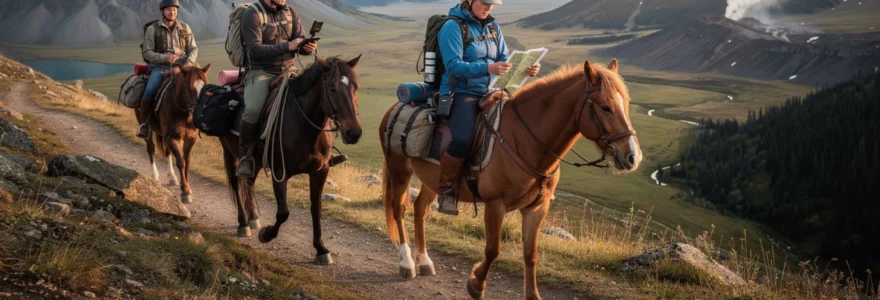
The allure of exploring pristine wilderness from horseback transcends ordinary tourism, offering an intimate connection with landscapes that remain largely inaccessible by conventional means. Wilderness trail riding represents one of the most authentic ways to traverse rugged terrain, from alpine meadows to desert canyons, where the rhythmic cadence of hoofbeats replaces the mechanical drone of modern transport. This ancient form of travel allows you to penetrate deep into backcountry regions where roads cease to exist, experiencing nature through the sensory lens of your equine partner. Whether navigating mountain passes at 3,000 metres elevation or following centuries-old drovers’ routes through untamed valleys, horseback riding in remote areas demands specialized knowledge, equipment, and preparation that distinguishes it from recreational riding in controlled environments.
Essential equestrian equipment and tack for wilderness trail riding
Selecting appropriate equipment for wilderness trail riding constitutes a critical foundation for both safety and comfort during extended backcountry expeditions. Unlike arena or paddock riding, wilderness conditions expose you and your horse to environmental extremes, unpredictable terrain, and extended periods away from veterinary or mechanical support. The equipment you choose must balance durability with weight efficiency, as every kilogram of gear affects your horse’s endurance and performance over multi-day journeys.
Western vs english saddle selection for extended backcountry expeditions
The debate between Western and English saddles for wilderness riding extends beyond mere preference, encompassing biomechanical considerations that directly impact both horse welfare and rider endurance. Western saddles, originally developed for working cattle across vast rangelands, distribute weight across a broader surface area through their distinctive tree design and thick padding. This weight distribution proves particularly advantageous during 8-10 hour riding days common on wilderness expeditions, reducing pressure points that can cause saddle sores on your horse’s back. The prominent horn provides a practical anchor point for securing equipment or steadying yourself during steep descents, whilst the high cantle offers lower back support during extended periods in the saddle.
English saddles, conversely, offer superior close-contact communication with your horse, enabling you to detect subtle shifts in movement across uneven terrain. Their lighter weight—typically 5-8 kilograms compared to 15-20 kilograms for Western saddles—reduces the total load your horse carries, a consideration that becomes significant when adding panniers and camping equipment. Trail-specific English saddles incorporate reinforced panels and extended sweat flaps that provide adequate weight distribution whilst maintaining the responsive feel crucial for navigating technical terrain. Many experienced wilderness riders favour endurance saddles, a hybrid design that combines the weight distribution of Western tack with the lightweight construction and rider mobility of English styles.
Hoof protection: barefoot trimming vs specialist trail shoes
Hoof protection strategies for wilderness riding have evolved considerably, with passionate advocates supporting both barefoot trimming methodologies and specialized shoeing approaches. Barefoot trimming, when properly executed by qualified practitioners, encourages natural hoof function through controlled wear patterns that promote circulation and strengthen internal structures. Horses conditioned to barefoot travel develop remarkably resilient hooves capable of traversing rocky terrain that would compromise poorly maintained shod feet. However, transitioning to barefoot requires 6-12 months of progressive conditioning, making it unsuitable for horses beginning wilderness work without adequate preparation time.
Specialist trail shoes, particularly steel or aluminium options with borium traction studs, provide immediate protection across diverse terrain types. Modern trail shoes feature clips and modifications that enhance stability on wet rock, wooden bridges, and steep inclines where natural hoof traction proves insufficient. Composite shoes manufactured from synthetic polymers offer a compromise, weighing significantly less than traditional steel whilst providing adequate protection for moderately challenging terrain. For extended wilderness expeditions, many riders opt for hoof boots as emergency backup, allowing you to address thrown shoes in remote locations where farrier services remain days away.
GPS tracking devices and satellite communication systems for remote routes
Navigation technology has revolutionized wilderness trail riding safety, transforming previously hazardous expeditions into manageable adventures with appropriate planning and equipment. Dedicated GPS units designed for equestrian use feature mounting systems compatible with saddle rigging, waterpr
of cases where riders lost signal due to dense canopy or steep canyon walls. For this reason, GPS should be paired with satellite communication devices such as personal locator beacons (PLBs) or satellite messengers, which can transmit your location and emergency signals even when conventional mobile networks are out of reach.
Satellite messengers provide two-way text communication, allowing you to send pre-set check-in messages, share your live route with support teams, and call for help with precise coordinates. When mounted securely on your person rather than the saddle, these devices remain accessible if you become separated from your horse. To maximise reliability during long-distance rides, ensure firmware is updated, carry a compact power bank or solar charger, and store devices in waterproof, shock-resistant cases. Technology, however, is only as effective as the user; you should still be proficient with traditional navigation methods in case of battery failure or device malfunction.
Panniers, saddlebags and load distribution techniques for multi-day treks
Effective load distribution on your horse during multi-day wilderness treks is as critical as saddle selection, directly influencing comfort, balance and long-term soundness. Overloading one side with heavy panniers or poorly secured saddlebags can create torque on the saddle tree, leading to pressure points, muscle soreness and even falls on steep gradients. The general principle mirrors packing a hiking backpack: position heavier items low and close to the centre of gravity, with lighter, bulky gear further from the horse’s body. This symmetrical arrangement helps your horse move freely across technical terrain without constant micro-compensation for imbalance.
Panniers designed for horseback expeditions typically attach to a pack saddle or robust saddle frame and are best reserved for pack animals carrying the bulk of camp equipment. For riding horses, streamlined saddlebags, pommel bags and cantle rolls are preferable, keeping essential items within reach without exceeding recommended weight limits. As a rule of thumb, the total gear load (including rider) should not surpass 20–25% of the horse’s bodyweight, with the lower end advisable for high-altitude or very long-distance riding. During rest stops, inspect for rubbing, re-tighten straps that may have loosened, and adjust loads in response to changing conditions—such as water tanks becoming lighter and food supplies diminishing. Small, frequent adjustments often prevent the kind of cumulative stress that leads to saddle sores and fatigue over consecutive days.
Premier wilderness horseback riding destinations across continents
Once you have a suitable horse and equipment, the world opens up with an extraordinary array of wilderness horseback riding destinations. From glacial valleys in the Southern Hemisphere to volcanic plateaus in the far north, each region offers a distinct blend of terrain, climate and culture. Choosing where to ride is not simply a matter of scenery; you should weigh logistical considerations such as access to guides, local regulations, and the fitness required for specific routes. Many riders plan itineraries that gradually escalate in difficulty, starting with supported lodge-based routes before progressing to self-sufficient backcountry expeditions. Below, we explore some of the most compelling wilderness horse riding regions across the globe.
Patagonian andes: torres del paine and estancia-based riding circuits
The Patagonian Andes, spanning southern Chile and Argentina, present some of the world’s most dramatic wilderness riding, characterised by knife-edged peaks, turquoise lakes and vast glacial fields. In Chile’s Torres del Paine National Park, horseback routes frequently follow historic gaucho tracks, skirting moraines and beech forests while offering views of the iconic granite towers. Many expeditions operate on an estancia-based model, where riders return each night to traditional ranches that provide hearty meals, warm beds and shelter from the region’s famously unpredictable winds. This structure allows you to travel light during the day while still covering significant distances through challenging terrain.
On the Argentine side, multi-day circuits traverse lenga forests, open pampas and river valleys where condors circle overhead and guanacos graze in sparse herds. The local criollo horses, renowned for their sure-footedness and hardiness, are ideally suited to steep slopes and boggy ground that would overwhelm less adapted breeds. Weather windows in Patagonia are narrow, with the southern summer (December to March) offering the most stable conditions, though riders should still prepare for rapid temperature swings and high winds. For those seeking a combination of raw wilderness riding and cultural immersion, sharing mate with gauchos after a long day in the saddle remains one of the defining experiences of horseback riding in remote Patagonia.
Mongolian steppe: traditional nomadic routes through khangai mountains
The Mongolian steppe offers a unique horseback riding experience that blends vast open grasslands with centuries-old nomadic traditions. Nowhere else does the phrase “horses as a way of life” ring more true; Mongolia reportedly has more horses than people, and many rural families still rely on them for daily transport. Wilderness riders in the Khangai Mountains traverse rolling hills, river valleys and wildflower meadows, often following routes that herders have used for generations to move their livestock between seasonal pastures. Instead of marked bridleways, you navigate by landmarks—distant ridgelines, lone gers, and winding rivers—making basic map and compass skills essential even when accompanied by local guides.
Horses in Mongolia tend to be smaller and more compact than typical Western breeds, but they compensate with remarkable stamina and agility over rough ground. Multi-day treks often involve staying with nomadic families in traditional felt gers or camping beside alpine lakes where herds graze freely. The pace of riding is usually moderate, with frequent breaks to tend to horses and adjust tack influenced by changing terrain. Summer (June to August) brings lush grazing and milder temperatures, whereas early autumn provides clearer skies and fewer insects but cooler nights. For riders interested in deep cultural immersion alongside wilderness exploration, joining local horse festivals or witnessing the Naadam games can add another dimension to a backcountry itinerary.
Canadian rockies: banff and jasper backcountry trail networks
The Canadian Rockies, particularly around Banff and Jasper National Parks, offer an extensive network of equestrian-accessible trails that weave through coniferous forests, alpine passes and glacier-fed river valleys. Managed corridors such as the Great Divide Trail and secondary backcountry routes provide multi-day circuits where designated horse camps feature hitch rails, bear-proof food storage and access to water. Riding at altitude here demands well-conditioned horses and riders, as gradients can be steep and weather highly variable, even in midsummer. Snow can linger on high passes well into July, making seasonal timing a critical factor in route planning.
Outfitters in the region frequently use hardy quarter horses and draft crosses capable of carrying substantial loads across rocky and uneven surfaces. Many treks are pack-supported, with one or more pack horses hauling tents, cooking gear and food, allowing riders to focus on navigation and horsemanship rather than heavy loads. Wildlife considerations form a major component of expedition planning; grizzly and black bears, elk and moose are common, necessitating strict adherence to food storage and campsite hygiene protocols. The reward, however, is unparalleled: sunrise over a high alpine lake, the sound of your horse’s hooves on a quiet forest trail, and night skies bright enough to reveal the Milky Way in exquisite detail.
Icelandic highlands: landmannalaugar volcanic terrain expeditions
The Icelandic Highlands provide a surreal backdrop for wilderness horseback riding, with black lava fields, steaming geothermal vents and vividly coloured rhyolite mountains. Landmannalaugar, one of the most celebrated regions, sits at the convergence of multiple trekking and riding routes that cross lava deserts, glacial rivers and moss-covered plateaus. Icelandic horses, famed for their unique tölt gait, excel in this environment, offering a smooth, energy-efficient ride over long distances and uneven ground. Many tours use a “herd on the move” system where riders rotate between horses while a free-running group travels alongside, ensuring each mount remains fresh over multi-day expeditions.
Riding in the Highlands requires respect for rapidly shifting weather patterns; clear blue skies can give way to fog or horizontal rain within minutes. Consequently, layered clothing, waterproof saddle bags and reliable navigation tools are non-negotiable. Trails often cross shallow glacial rivers, demanding calm, water-confident horses and riders comfortable with getting wet boots in exchange for accessing remote geothermal oases. At day’s end, soaking in natural hot springs while your horses graze on sparse but hardy grasses captures the essence of Icelandic wilderness riding: elemental, minimalist and deeply connected to the land.
Australian high country: snowy mountains brumby territory routes
The Australian High Country, particularly the Snowy Mountains region of New South Wales and Victoria, offers expansive alpine meadows, snow gum forests and rugged ridgelines steeped in bushranger folklore. Horseback expeditions here often evoke images from “The Man from Snowy River,” as riders negotiate steep descents, narrow spurs and river crossings through brumby (feral horse) territory. Designated horse camps and fire trails allow for multi-day loops, though riders must stay informed about seasonal closures linked to fire risk, snow and conservation measures. Elevations are lower than the highest global ranges but still significant enough to warrant conditioning horses for sustained climbing and descending.
Local stock horses and Waler crosses are typically used, combining endurance, strong bone and a calm temperament suited to sudden wildlife encounters with kangaroos, wallabies and wild brumbies. Summer and early autumn provide the most reliable access, but even then, afternoon thunderstorms and rapid temperature drops are common. As in other sensitive alpine regions, staying on established trails, avoiding boggy sphagnum areas and observing biosecurity protocols help protect fragile ecosystems. For riders seeking a blend of big-country scenery, Australian bush culture and challenging terrain, the High Country remains a premier, yet still relatively under-visited, wilderness riding destination.
Horse breed selection and conditioning for rugged terrain navigation
Successfully navigating rugged wilderness terrain on horseback depends as much on the suitability and preparation of your horse as on your own skills and equipment. While almost any sound horse can handle short, moderate rides, extended backcountry expeditions expose weaknesses in conformation, conditioning and temperament. Selecting a breed or type aligned with your typical terrain—mountainous, desert, forest or steppe—provides a meaningful performance advantage. Just as you would not choose a road bike for technical mountain trails, matching your horse’s genetic strengths to your chosen environment sets both of you up for safer, more enjoyable adventures.
Mountain-bred horses: icelandic ponies, haflingers and rocky mountain horses
Mountain-bred horses have evolved, through natural selection or deliberate breeding, to thrive in steep, uneven and often inhospitable environments. Icelandic horses, for example, combine compact size with dense bone and powerful hindquarters, allowing them to ascend and descend volcanic slopes with confidence. Their additional gaits, particularly the tölt, offer a comfortable alternative to trot on long days when rider fatigue becomes a factor. Haflingers, originating from the Tyrolean Alps, bring a similar blend of strength and agility, with sturdy hooves and a calm, willing temperament suitable for carrying substantial loads.
Rocky Mountain Horses and other gaited mountain breeds from North America offer additional options for riders prioritising comfort over distance. Their characteristic lateral gaits can significantly reduce rider fatigue, especially on multi-day wilderness rides where hours in the saddle accumulate quickly. While large warmbloods or thoroughbreds may excel in speed or arena disciplines, they can struggle with balance and energy management on narrow, rocky switchbacks. When planning backcountry trips, consider not only your horse’s athleticism but also its body type, hoof quality and historical breeding purpose. A slightly smaller, well-built mountain horse often outperforms a taller, more refined horse once gradients and footing become truly demanding.
Endurance training protocols for high-altitude and extended distance rides
Preparing a horse for high-altitude or extended-distance wilderness rides requires a structured conditioning programme that gradually builds cardiovascular fitness, muscular strength and mental resilience. A common approach involves following a progressive schedule over 8–16 weeks, starting with shorter, low-intensity rides and incrementally increasing duration, terrain difficulty and load. Incorporating hill work is particularly valuable, as it conditions both the hindquarters for climbing and the forehand for controlled descents. Think of it as marathon training for your horse: pushing too hard, too soon invites injury, whereas patient, incremental loading builds a foundation that can withstand back-to-back long days.
At higher elevations, reduced oxygen availability can affect both horse and rider performance. Whenever possible, acclimatisation should occur over several days, beginning with lighter rides and plenty of rest to allow respiratory and circulatory systems to adjust. Monitor key indicators such as heart rate recovery times, hydration status and willingness to eat and drink; a horse that recovers quickly after climbs and maintains appetite is likely coping well with the workload. Including rest days or half-days in your itinerary, particularly during the first week of a demanding trip, will also help prevent cumulative fatigue. For rides exceeding 30–40 kilometres per day over consecutive days, collaboration with an experienced equine vet to design a pre-trip fitness assessment can provide peace of mind and highlight any underlying issues.
Temperament assessment and trail readiness evaluation methods
Physical conditioning alone does not guarantee success on wilderness trails; your horse’s temperament and mental preparedness are equally important. A suitable trail horse should be alert yet manageable, willing to lead or follow, and capable of coping with unexpected stimuli such as wildlife, flapping gear or sudden changes in footing. Before committing to remote expeditions, many riders employ a stepwise evaluation process: first testing horses on familiar local trails, then introducing busier environments, overnight camps and small river crossings. Each scenario acts like a controlled stress test, revealing how a horse responds when taken slightly outside its comfort zone.
Key behavioural indicators of trail readiness include consistent forwardness without excessive spookiness, the ability to stand tied calmly, and a capacity to settle quickly after a fright. Horses that become dangerously reactive, refuse to leave other horses, or demonstrate persistent barn-sour behaviour may pose unacceptable risks in remote environments where turning back is not always an option. Groundwork and desensitisation exercises—such as leading over tarps, through narrow gaps, and into water—can help build confidence and trust between horse and rider. Ultimately, you want a partner that questions but does not panic, looks to you for guidance, and recounds from stressful moments rather than escalating them.
Hoof health and farrier considerations for rocky and uneven surfaces
Hoof health takes on heightened importance when riding across rocky and uneven wilderness surfaces, where a single stone bruise or abscess can halt progress for days. Regular consultations with a farrier experienced in performance or endurance horses provide the best defence, as trim balance, mediolateral symmetry and appropriate breakover all influence how hooves interact with the ground. Horses destined for abrasive or stony trails may benefit from slightly more robust hoof walls and soles, which can be encouraged over time through balanced trimming, controlled exposure to varied terrain and adequate nutrition, particularly trace minerals like zinc and copper.
Deciding between barefoot, traditional shoes or composite solutions should be based on your horse’s individual hoof quality, the terrain you expect to encounter and the distances you plan to cover. Regardless of your primary approach, carrying at least one pair of correctly sized hoof boots and basic farrier tools (such as a rasp, clinch cutter and pullers) offers a valuable safety net in case of lost shoes or sudden sensitivity. During multi-day rides, inspect hooves at every rest stop—checking for lodged stones, cracks or heat—and address minor issues early, before they escalate into lameness. In demanding environments, proactive hoof care is akin to checking a mountaineer’s ropes and crampons; negligence here can turn a well-planned expedition into an emergency.
Navigation and route planning for uncharted wilderness trails
Navigating uncharted or lightly marked wilderness trails on horseback requires a blend of traditional cartographic skills, modern technology and on-the-ground judgment. Unlike well-signposted bridleways, remote routes may lack clear waymarkers, leaving you to interpret the landscape much as early explorers did. Effective route planning begins at home with topographic maps, satellite imagery and local reports, but it truly comes alive when you are in the saddle, reading terrain, weather and your horse’s energy levels in real time. Think of your plan as a flexible framework rather than a rigid schedule; adaptability can make the difference between a memorable adventure and a logistical ordeal.
Topographic map reading and terrain analysis for equestrian routes
Topographic maps underpin safe wilderness navigation by revealing contours, watercourses, vegetation patterns and potential obstacles before you encounter them in person. For riders, contour spacing is particularly important: tightly packed lines signal steep gradients that may be unsafe or exhausting for horses when sustained over long distances. Gentle, evenly spaced contours often indicate more viable routes around or between peaks, even if they appear longer on paper. When combined with satellite imagery, you can infer surface conditions—such as scree fields, dense forest or open meadows—that influence hoof traction and speed.
Practical terrain analysis for equestrian travel also involves identifying choke points, such as narrow gorges or cliff bands, where turning back might be difficult if conditions deteriorate. When planning, mark potential exit routes and alternative campsites so you have options if weather or injuries force a change of plan. While GPS tracks shared online can be helpful, remember that they may not account for seasonal changes like landslides, flooding or trail closures. Before heading into unfamiliar regions, consult local guides, rangers or experienced riders who can offer up-to-date insight into trail conditions and equestrian-specific hazards.
Water source identification and grazing ground assessment along trails
Identifying reliable water sources and suitable grazing along your route is central to planning sustainable multi-day rides, especially in arid or semi-arid regions. Topographic maps often mark rivers, springs and lakes, but their current flow depends on recent precipitation and seasonal snowmelt. Satellite imagery can help distinguish permanent water bodies from seasonal pools, while local knowledge remains invaluable for confirming which sources persist through dry periods. As a general rule, aim to camp within a short walk of water but not directly on its banks, both to reduce erosion and to minimise competition with wildlife at critical drinking spots.
Grazing assessment is equally important when you rely on natural forage rather than packed feed. Look for expansive meadows or open woodland with a mix of grasses and forbs, and avoid overgrazed or heavily trampled areas where nutritional value may be low. In some protected regions, grazing may be restricted or prohibited, requiring you to carry all necessary fodder or use designated horse camps with provided hay. Planning daily distances around access to both water and grazing reduces stress on your horses and allows for more flexible pacing. When in doubt, prioritise their needs over extra kilometres; a well-fed, well-hydrated horse is safer and more reliable in challenging conditions.
Weather pattern evaluation and seasonal accessibility windows
Weather and seasonal access patterns profoundly shape the feasibility and safety of wilderness horseback expeditions. High mountain passes may be snowbound for much of the year, deserts can become dangerously hot or flash-flooded, and forested regions may face closure during peak fire seasons. Analysing historical climate data, local forecasts and long-term patterns enables you to select “windows” when trails are generally passable yet not overcrowded. For example, shoulder seasons often combine more stable weather with fewer insects and reduced human traffic, but they may also bring colder nights and a higher likelihood of sudden storms.
On the ground, continuous weather observation is vital. Cloud build-up, wind shifts and changes in temperature can all signal approaching fronts, giving you time to adjust plans before conditions deteriorate. Having pre-identified “weather safe” campsites—sheltered from prevailing winds, above floodplains and away from avalanche paths—allows you to respond quickly if forecasts worsen. While it is tempting to push on to meet an itinerary, being willing to shorten a day’s ride, take an enforced rest day or re-route around high-risk zones demonstrates good backcountry judgment. In wilderness riding, patience with weather often equates to long-term safety.
Environmental stewardship and leave no trace principles on horseback
Riding through pristine landscapes carries an implicit responsibility to minimise your environmental impact so that future riders, hikers and wildlife can enjoy the same unspoiled conditions. Leave No Trace principles, when adapted to equestrian travel, provide a practical framework for low-impact camping, trail use and waste management. Horses, by their size and grazing patterns, can exert greater pressure on fragile ecosystems than human visitors alone, making conscious decision-making even more important. By planning ahead, adopting thoughtful camp practices and managing manure and feed responsibly, you help ensure wilderness horseback riding remains compatible with conservation goals.
Manure management and dispersal techniques in protected wilderness areas
Manure management is a central issue for horseback riders in protected wilderness areas, where nutrient loading and unsightly accumulations can degrade trails and campsites. On day rides, the most effective strategy is often simple: dismount periodically to kick manure off the main track, dispersing it into adjacent vegetation where it decomposes more quickly and is less visually intrusive. In designated camps, many land managers request that you scatter droppings away from tent sites, water sources and high-traffic areas rather than leaving them in concentrated piles. This helps reduce fly populations, odour and the risk of nutrient runoff into streams.
Some heavily regulated backcountry zones may require riders to pack out manure from high-use camps, particularly where soil depth is shallow or ecosystems are exceptionally sensitive. While labour-intensive, using lightweight manure forks and biodegradable bags can make this feasible for small groups over short stays. Paying attention to local regulations and signage is critical, as expectations vary widely between regions and land agencies. At a minimum, strive to leave each camp or rest area looking as if no horses were ever there—an achievable goal when manure is handled proactively rather than as an afterthought.
Native feed vs packed feed: preventing invasive species introduction
Feeding horses in wilderness settings presents a delicate balance between using native forage and preventing the introduction or spread of invasive plant species. Many land managers now insist that any supplemental feed brought into protected areas be certified weed-free, reducing the risk of non-native seeds germinating along trails and in campsites. Compressed hay cubes or pelleted feeds further minimise seed contamination while also packing more efficiently into panniers or saddlebags. Although these options can be more expensive, their ecological benefits and regulatory compliance make them the responsible choice for backcountry travel.
Where grazing is permitted and ecologically sustainable, allowing horses to graze for limited periods can reduce the amount of packed feed required. However, rotating grazing spots, avoiding trampling in wetlands and resting heavily used meadows are important to prevent overuse. In some fragile or overgrazed regions, the only ethical and legal option is to rely entirely on packed feed and keep horses high-lined or penned on durable surfaces. Before each trip, research local rules regarding feed, grazing and weed control; doing so not only protects the landscapes you value but also helps maintain access for the broader riding community.
Campsite selection and high-line protocols to minimise ecological impact
Choosing low-impact campsites for horses involves more than finding a flat spot with a pleasing view. Ideal sites lie on durable surfaces such as gravel, bare soil or resilient grasses, at least 60–70 metres from water sources to reduce bank erosion and contamination risk. In heavily visited areas, established horse camps with existing fire rings, hitch rails and manure areas are preferable, as concentrating use in designated zones protects the surrounding environment. In more remote settings, look for naturally open clearings rather than clearing vegetation yourself, and avoid fragile alpine tundra, wetlands or cryptobiotic soils where hoofprints can cause long-lasting damage.
High-lining—tying horses to a rope suspended between two sturdy trees—offers a widely accepted method for overnight containment that minimises soil compaction and bark damage when done correctly. Using tree-saver straps and positioning the line high enough to prevent tangling helps protect both trees and horses. Rotating the area where horses stand, spreading manure and occasionally grazing them on lead in less sensitive areas further disperses impact. Portable electric pens can also be effective in open terrain but must be used responsibly to avoid overgrazing confined patches. Whichever system you choose, the overarching goal remains the same: depart with the site appearing as close as possible to its pre-visit condition.
Safety protocols and emergency preparedness for remote horseback expeditions
Even with meticulous planning and well-conditioned horses, wilderness horseback expeditions inherently involve elevated risk. Distance from medical care, variable terrain and potential wildlife encounters demand a proactive approach to safety and emergency preparedness. Rather than viewing safety measures as pessimistic, think of them as the equivalent of a seatbelt: rarely needed, but invaluable when circumstances deteriorate unexpectedly. By assembling comprehensive equine and human first aid kits, developing clear communication plans and rehearsing emergency scenarios with your group, you greatly increase your capacity to respond effectively when problems arise.
Equine first aid kits: essential veterinary supplies for trail injuries
An equine first aid kit tailored for wilderness use should enable you to stabilise common injuries until professional veterinary assistance becomes available. Core components include sterile gauze pads, cohesive bandages, adhesive tape, non-stick wound dressings and antiseptic solutions suitable for flushing cuts and abrasions. A digital thermometer, stethoscope and hoof pick with brush allow you to monitor vital signs and investigate lameness or suspected hoof issues in the field. Many riders also carry a small selection of vet-approved medications, such as anti-inflammatories and electrolyte supplements, but these should only be used under veterinary guidance and in compliance with local regulations.
Packaging and accessibility matter as much as contents. Store your kit in a waterproof, dustproof bag clearly marked and positioned where you can reach it quickly, even if separated from your horse. Consider dividing supplies into modules—wound care, hoof care, systemic monitoring—so that you are not rummaging through a jumble of items during a stressful situation. Regularly check expiry dates and replenish used items after each trip. Just as important as the physical kit is your knowledge of how to use it; completing an equine first aid course before embarking on remote rides provides invaluable confidence and competence when your horse needs immediate attention.
Wildlife encounter management: bear, mountain lion and snake avoidance
Riding in remote habitats increases the likelihood of crossing paths with wildlife, from large predators to venomous snakes. While actual attacks are rare, thoughtful behaviour significantly reduces the risk of escalation. In bear country, travelling in small groups, making moderate noise (such as conversation or bear bells) and avoiding dense brush or carcass sites helps prevent surprising animals at close range. Keeping food and scented items stored securely, well away from where horses are tied, not only protects you but also discourages wildlife from associating camps with easy meals.
Mountain lions, where present, tend to avoid human activity, but sudden movements or separated riders can attract curiosity. Keeping children and smaller riders within the main group, avoiding dawn and dusk travel in known lion habitats where possible, and maintaining situational awareness all help mitigate risks. Snakes pose a different type of hazard, particularly in warmer climates; teaching horses to stand while you carefully assess the situation is preferable to quick, panicked movements that may provoke a strike. Wearing appropriate boots, watching where you place feet when dismounting and avoiding tall grass near rock piles or wood debris further limit exposure. By understanding the behaviour and habitat preferences of local wildlife, you can make informed decisions that keep both humans and animals safe.
Rider injury prevention and evacuation planning in backcountry settings
Rider injuries, even minor ones, can become serious when you are days from the nearest trailhead, making prevention and evacuation planning essential. Properly fitted helmets, supportive footwear and, where appropriate, protective vests form the first line of defence against falls or kicks. Matching riders to suitable horses based on ability, conducting pre-ride tack checks and enforcing sensible pacing—particularly at the start of a trip when enthusiasm can run high—further decrease accident likelihood. Simple measures such as dismounting and leading horses over especially treacherous sections can prevent sprains and fractures that might otherwise trigger complex rescues.
An effective evacuation plan starts with clear communication tools and information sharing. Before departing, leave a detailed route plan and schedule with a trusted contact, including potential alternative campsites and check-in times via satellite messenger or radio. Within the riding group, designate roles in case of emergency: who manages horses, who administers first aid, who contacts rescue services. Carrying a human first aid kit, emergency shelter, extra warm layers and high-calorie snacks allows injured riders to stay warm and stable while waiting for help or while the group slowly self-evacuates. In remote terrain, conservative decision-making—turning back when conditions feel marginal, building extra time into your schedule, and listening to early signs of fatigue—may be the single most effective safety protocol of all.