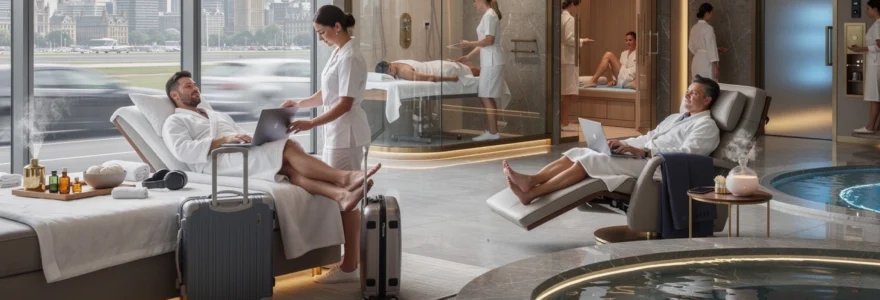
The contemporary business traveller navigates a relentless schedule of back-to-back meetings, transcontinental flights, and compressed timelines that leave little room for self-care. Yet the physiological and psychological toll of constant travel demands attention. Research from the Global Business Travel Association indicates that 75% of frequent business travellers experience significant stress-related symptoms, from disrupted sleep patterns to chronic muscular tension. The solution lies not in extended holidays that seem perpetually out of reach, but in strategically integrated spa experiences that transform brief windows of downtime into powerful recovery sessions. Modern spa facilities have evolved to meet the specific needs of time-pressed professionals, offering targeted treatments that address travel-induced ailments whilst fitting seamlessly into packed itineraries. When you prioritise wellness during your business trips, you’re not indulging in luxury—you’re making a strategic investment in your cognitive performance, physical resilience, and professional longevity.
Integrating therapeutic spa treatments into corporate travel itineraries
The key to successful wellness integration during business travel lies in understanding how specific treatments can address the unique physiological challenges you face. Rather than viewing spa time as a separate leisure activity, savvy executives now recognise therapeutic treatments as essential components of travel preparation and recovery protocols. This shift in perspective transforms occasional pampering into systematic wellness management that enhances your overall travel experience and professional output.
Pre-flight lymphatic drainage massage for Long-Haul business travellers
Before embarking on lengthy international flights, your lymphatic system requires preparation that conventional pre-flight routines overlook. Lymphatic drainage massage employs gentle, rhythmic movements that stimulate lymph flow throughout your body, reducing the fluid retention that causes uncomfortable swelling during extended periods of cabin pressure. When you schedule a 60-minute lymphatic drainage session within 24 hours of departure, you create optimal conditions for circulation during flight. The treatment focuses particularly on lower extremities, where venous return becomes compromised during prolonged sitting. Clinical studies demonstrate that passengers receiving pre-flight lymphatic massage experience 40% less ankle swelling and report significantly improved comfort levels throughout their journey. The technique also supports immune function—a critical consideration when you’re exposed to recirculated cabin air and the stress of international travel.
Express reflexology sessions between conference schedules
The 30-minute reflexology session has emerged as the ideal treatment for professionals navigating multi-day conference schedules. This targeted therapy works on the principle that specific points on your feet correspond to organs and systems throughout your body. When you step away from exhibition halls or breakout sessions for a focused reflexology treatment, you’re accessing a remarkably efficient recovery method. The practitioner applies pressure to reflex points that stimulate circulation, reduce stress hormones, and promote mental clarity—precisely what you need before your next presentation or negotiation. Unlike full-body massage, reflexology requires no disrobing and leaves you feeling energised rather than drowsy, making it perfectly suited to mid-day scheduling. Many conference hotels now offer dedicated reflexology spaces where you can receive treatment without leaving the venue, maximising your time efficiency whilst addressing the cumulative fatigue that builds during intensive business events.
Aromatherapy and jet lag recovery protocols
Jet lag represents one of the most disruptive challenges facing international business travellers, yet aromatherapy offers scientifically-backed solutions that complement your body’s natural adjustment mechanisms. Essential oils interact with your olfactory system and limbic brain regions that regulate circadian rhythms, stress responses, and hormonal balance. When you receive aromatherapy treatments timed to your destination’s local schedule, you accelerate adaptation significantly. Morning treatments in your arrival city incorporate invigorating oils like rosemary, peppermint, and citrus blends that promote alertness and help reset your internal clock to daytime activity. Evening sessions utilise lavender, chamomile, and sandalwood to facilitate the deep sleep your body requires for recovery. Progressive spa facilities now offer jet lag recovery packages that combine aromatherapy massage with light therapy exposure, creating comprehensive protocols that reduce adjustment time by up to 50% compared to unaided recovery.
Deep tissue therapy for Travel-Induced muscular tension
The physical demands of business travel create specific patterns of muscular tension that require
specific intervention rather than general relaxation. Deep tissue therapy targets chronic tension patterns in the neck, shoulders, lower back and hips that develop from prolonged sitting, laptop use and carrying luggage. By working slowly into deeper muscle layers and myofascial structures, therapists can release trigger points responsible for headaches, limited range of motion and that familiar “post-flight stiffness”. Scheduling a 45–60 minute deep tissue massage within the first 24 hours of arrival helps reset your musculoskeletal system, improving posture before high-stakes presentations and long meeting days. You may experience mild soreness immediately afterwards, but this is typically followed by markedly improved mobility, reduced pain and enhanced focus—far more effective than relying on over-the-counter painkillers and stretching alone.
Urban wellness sanctuaries: premium day spa destinations for time-pressed executives
Major business hubs now host spa destinations that function as urban wellness sanctuaries—spaces where you can disconnect from the intensity of city life without leaving the city centre. Instead of treating these facilities as occasional luxuries, frequent travellers are incorporating them into their standard corporate travel itineraries. The most effective urban spas combine advanced treatment programmes, hydrotherapy circuits and quiet zones where you can transition mentally between high-pressure meetings. When you know which destinations align with your schedule, you can transform otherwise unproductive gaps in your diary into strategic recovery sessions that support both short-term performance and long-term wellbeing.
ESPA life at corinthia london: city-centre hydrotherapy circuits
ESPA Life at Corinthia London exemplifies how a city-centre spa can support high-performing professionals. Located minutes from key government and financial districts, it offers multi-zone hydrotherapy circuits designed to counteract the physiological impact of travel and urban stress. Alternating between vitality pools, ice fountains, saunas and steam rooms stimulates your circulatory and lymphatic systems much like interval training for your recovery processes. A 60–90 minute hydrotherapy circuit before or after a key meeting helps flush metabolic waste, regulate body temperature and calm the nervous system, leaving you both physically lighter and mentally clearer. Because the facility is open long hours, you can schedule sessions early morning, between appointments, or in the evening without compromising your work commitments.
Mandarin oriental hyde park: signature time rituals for business stopover
The Mandarin Oriental Hyde Park has developed its Signature Time Rituals specifically for guests who need results-driven spa days during short business stopovers. Rather than selecting individual treatments from a menu, you reserve a block of time—often 90, 120 or 180 minutes—and allow your therapist to customise a sequence based on your travel history, stress levels and immediate performance needs. This approach removes decision fatigue and ensures that your time is used as efficiently as possible, whether you require targeted deep tissue work, restorative stretching, detoxifying body treatments or fatigue-fighting facials. For executives dealing with jet lag, therapists often combine energy-balancing massage techniques with aromatherapy and scalp work, creating a focused protocol that resets both body and mind in a single extended session.
The gainsborough bath spa: natural thermal water experiences within historic architecture
When your business travel takes you beyond London, The Gainsborough Bath Spa in Bath offers a unique opportunity to access natural thermal water without sacrificing your professional agenda. Housed within elegant historic architecture, the spa’s thermal pools draw from the same mineral-rich hot springs that have attracted visitors since Roman times. Immersion in these waters for 60–90 minutes can ease joint pain, support circulation and promote deep muscular relaxation—particularly valuable after days of standing at exhibitions or commuting between client sites. Many business travellers choose to arrive in Bath the evening before key regional meetings, using the thermal spa as a pre-event reset that combines cultural immersion with scientifically grounded hydrotherapy benefits.
Bulgari spa london: italian luxury treatments for transatlantic travellers
The Bulgari Spa in Knightsbridge caters directly to transatlantic travellers seeking a spa day that merges precision therapy with understated luxury. Its treatment philosophy focuses on restoring structural balance, making it ideal if you frequently experience neck, shoulder or lower back issues from red-eye flights. Programmes often combine targeted sports massage with stretching, hot stone applications and advanced facials that counteract dehydration from cabin air. For maximum benefit, many executives book a two-hour session soon after landing from North America, using the tranquil environment to decompress before facing London’s business demands. The spa’s quiet relaxation lounges offer a controlled environment where you can hydrate, re-energise and mentally prepare for upcoming negotiations without the usual hotel lobby distractions.
Cowshed shoreditch house: contemporary wellness for creative professionals
For those working in media, technology and creative industries, Cowshed at Shoreditch House provides a more relaxed, contemporary interpretation of the executive spa day. Its informal yet highly professional environment appeals to professionals who prefer a less traditional setting while still expecting clinical standards of care. Short, effective treatments—such as 30-minute back massages, express facials and grooming services—can be easily slotted between pitch meetings, studio sessions or co-working hours. The social spaces surrounding the spa allow you to integrate recovery into your working day without drawing a hard line between “on” and “off” time. This flexible model is particularly useful if your productivity spikes when you can shift fluidly between focused work, networking and short, targeted wellness sessions.
Chronotherapy and treatment timing optimisation during multi-city business tours
Even the most advanced spa treatment loses effectiveness if it clashes with your body’s natural rhythms. Chronotherapy—the science of aligning interventions with your circadian clock—helps you schedule spa days and individual treatments for maximum impact during multi-city business tours. Think of your day as a performance curve: energy, hormonal levels and cognitive capacity rise and fall in predictable patterns. By mapping treatments onto this curve, you can support recovery when your body is primed for it and avoid interventions that might dull your alertness before crucial commitments. This approach becomes particularly powerful when you’re crossing multiple time zones within the same week.
Circadian rhythm-aligned massage scheduling across time zones
Massage timing plays a critical role in whether you emerge from your spa session ready to perform or ready for bed. If you schedule a full-body massage during your biological afternoon—roughly 2–5 pm according to your home time zone—you’re more likely to experience enhanced cognitive clarity and reduced muscle fatigue without feeling overly sedated. Conversely, evening massages aligned with your destination’s local time trigger parasympathetic dominance, deep relaxation and improved sleep quality, which can be invaluable when resetting after long-haul travel. When planning multi-city business tours, consider your internal clock first and the local spa timetable second; many premium spas will accommodate early or late appointments for corporate guests who request circadian-aware scheduling.
Morning versus evening hydrotherapy: physiological performance impacts
Hydrotherapy—whether in thermal circuits, plunge pools or contrast showers—can be adapted to support very different performance objectives depending on time of day. Morning hydrotherapy that alternates warm and cool temperatures acts like a natural stimulant, improving circulation, raising core temperature and increasing alertness in a way comparable to, but more sustainable than, strong coffee. In the evening, extended sessions in warm pools, saunas and steam rooms lower cortisol levels and encourage melatonin production, paving the way for restorative sleep. If you have a high-stakes presentation, negotiation or board meeting, use energising hydrotherapy first thing; if your priority is overnight recovery after back-to-back engagements, shift towards longer, warmer sessions two to three hours before planned sleep.
Strategic treatment placement between airport transfers and client meetings
One of the most practical applications of chronotherapy for spa days involves mapping treatments onto your actual travel logistics. Rather than booking randomly, consider three anchor points: immediately post-flight, midway through your working day, and early evening. Post-flight sessions focus on circulation, hydration and gentle movement—think light massage, hydrotherapy or reflexology—helping you transition from travel mode to professional readiness without overwhelming your system. Midday treatments work best as short, targeted interventions that boost cognitive performance, such as scalp massage, express facials or focused neck-and-shoulder work. Evening spa appointments then function as a “reset button”, combining deeper tissue work and heat therapies to discharge accumulated tension before you restart the cycle the next day.
Airport proximity spa facilities: maximising layover recovery time
Airport-adjacent spa facilities have become essential tools for executives who frequently navigate tight connections or prolonged layovers. Rather than spending hours in crowded terminals, you can redirect this time towards structured recovery that addresses jet lag, dehydration and cognitive fatigue. Many international airports and nearby hotels now offer day spa access with flexible booking windows, allowing you to secure 60–90 minute treatments between flights without risking missed connections. When you view layovers as built-in wellness opportunities rather than inconveniences, your entire perception of business travel begins to shift.
Strategically, you should match the intensity of your spa day treatment to the length and purpose of your layover. For short stops of 1.5–3 hours, prioritise quick-access modalities such as chair massage, reflexology, aromatherapy inhalation bars and hydration-focused facials that require minimal preparation and no post-treatment downtime. For longer layovers, typically 4–6 hours, consider booking full spa access at an airport hotel where you can shower, swim, access thermal suites and enjoy a structured massage or body treatment. This not only improves circulation and mental clarity but also supports immune function at a time when you are most exposed to pathogens in busy transit hubs.
Practical planning makes these interventions even more powerful. Keep a compact “travel spa kit” in your hand luggage with swimwear, a hairbrush and basic toiletries so you can transition quickly between gate and spa facilities. Confirm treatment availability in advance—many airport spas now allow online booking linked to flight times—and communicate your boarding time to your therapist so they can tailor the session duration appropriately. By building these habits, you transform what used to be dead time into a predictable component of your broader corporate wellness strategy.
Biohacking wellness protocols: advanced recovery modalities for frequent flyers
For executives who fly frequently and operate under chronic performance pressure, traditional spa days can be complemented with biohacking-inspired protocols. These advanced modalities, increasingly integrated into high-end urban and airport spas, aim to accelerate recovery, enhance cognitive performance and stabilise energy levels across time zones. While they may sound experimental, many are grounded in emerging research on mitochondrial function, nervous system regulation and inflammation control—precisely the areas most affected by intensive business travel.
Common biohacking treatments now appearing on premium spa menus include infrared sauna sessions, cryotherapy, red light therapy, compression boots and floatation tanks. Infrared saunas penetrate deeper into tissues than traditional saunas, promoting circulation and detoxification at lower temperatures that many travellers find more tolerable. Cryotherapy and cold immersion can reduce inflammation and boost alertness in just a few minutes, making them useful before key meetings when you need sharp focus without relying solely on caffeine. Red light therapy targets cellular energy production, which may help combat the sluggishness associated with disrupted sleep and long-haul flights.
How can you integrate these methods intelligently into your spa days? Think of them as amplifiers rather than replacements. For example, a 20-minute infrared sauna session followed by a targeted deep tissue massage can enhance muscle recovery more efficiently than massage alone. Similarly, a short cryotherapy session after a long day of meetings can act as a rapid reset, helping you maintain mental clarity into evening networking events. Floatation tanks—sensory deprivation environments filled with magnesium-rich water—offer profound nervous system relief, particularly valuable if you juggle constant digital connectivity and complex decision-making.
Of course, advanced modalities demand thoughtful application. Not every protocol suits every traveller or every phase of your itinerary. If you have cardiovascular conditions, circulatory issues or specific medical histories, consult healthcare professionals and disclose details to spa staff before booking treatments like cryotherapy or intensive heat sessions. Begin with shorter durations and monitor how your body responds across different time zones. With careful experimentation, you can build a personalised “biohacking stack” that turns each spa day into a targeted performance upgrade rather than a generic relaxation exercise.
Subscription-based spa memberships: multi-location access for regular business travellers
For professionals who log dozens of trips each year, ad hoc spa bookings can feel fragmented and inefficient. Subscription-based spa memberships address this by offering multi-location access under a single, predictable framework—much like an international gym membership for your recovery routine. These programmes typically provide tiered options, from basic facility access to inclusive monthly treatments, preferential booking windows and member-only wellness workshops. When aligned with your travel patterns, they transform spa days from occasional treats into an integrated pillar of your corporate wellness plan.
Multi-location spa brands and hotel groups increasingly recognise the needs of frequent flyers, offering memberships that can be used across properties in major business cities. This means you can enjoy consistent standards of treatment, familiar protocols and streamlined booking whether you’re in London, Edinburgh or another European hub. The psychological benefit is considerable: knowing that a reliable recovery environment awaits you in each city reduces travel-related anxiety and allows you to plan rejuvenating spa sessions weeks in advance. Many memberships also include digital benefits, such as guided breathwork, sleep meditations and stretching routines you can access from your hotel room or even on the plane.
When evaluating subscription options, consider three key factors: geographical coverage, flexibility and alignment with your preferred treatment style. Do the participating spas map onto your usual corporate travel circuit? Can you roll unused treatments into future months or share them with colleagues? Does the menu emphasise the modalities—such as deep tissue massage, hydrotherapy, or biohacking treatments—that most effectively counter your specific travel stressors? By asking these questions upfront, you ensure that your membership delivers tangible value rather than becoming another underused corporate perk.
Ultimately, the most successful business travellers treat spa days as strategic assets rather than sporadic indulgences. Whether you’re leveraging airport-adjacent facilities during layovers, scheduling circadian-aligned massages on multi-city tours, experimenting with biohacking protocols, or investing in multi-location memberships, each decision contributes to a broader objective: sustaining high performance without sacrificing long-term health. In a corporate culture that often glorifies exhaustion, reclaiming structured recovery time is not just a personal preference—it is a professional advantage.