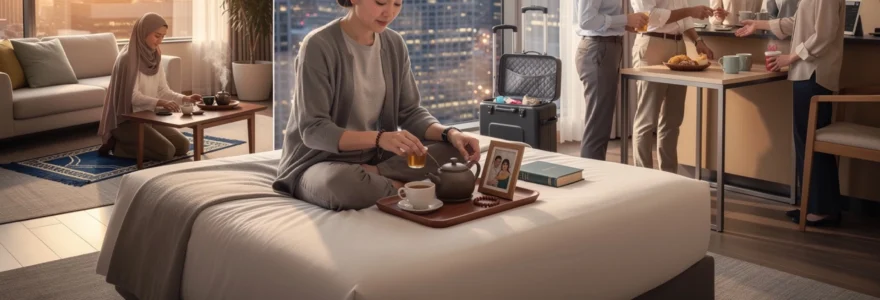
Human beings possess an extraordinary capacity to find solace in the smallest repetitive actions, particularly when transplanted into foreign environments. Whether it’s the evening lighting of candles during pandemic lockdowns or the morning tea ritual performed with a specific yellow teapot, these seemingly mundane practices become anchors of stability in uncertain times. The psychological mechanisms underlying our attachment to familiar rituals reveal themselves most clearly when we’re displaced from our comfort zones – in hospitals, expatriate communities, or new cultural landscapes where everything feels foreign except for those precious moments of recognised routine.
The power of ritual extends far beyond personal comfort, influencing how entire industries design experiences for displaced individuals. From healthcare settings implementing positive distraction protocols to hospitality companies crafting culturally sensitive accommodation services, understanding ritual behaviour has become essential for creating environments that promote wellbeing and belonging. This intersection of psychology and practical application demonstrates how deeply ritual patterns influence human adaptation to new spaces.
Psychological mechanisms behind ritual attachment in novel environments
The human brain’s response to unfamiliar environments triggers a complex cascade of neurological and psychological reactions that make familiar rituals particularly valuable. When displaced from known surroundings, individuals experience heightened stress responses that can significantly impact both mental and physical wellbeing. Research indicates that cortisol levels can increase by up to 25% during the initial weeks of environmental displacement, making the implementation of familiar routines a crucial coping mechanism.
The neurological basis for ritual comfort lies in the brain’s prediction mechanisms, which constantly attempt to forecast upcoming events based on past experiences. In unfamiliar environments, these prediction systems become overloaded, leading to increased cognitive fatigue and anxiety. Familiar rituals provide the brain with reliable patterns that reduce this predictive load, allowing mental resources to be allocated more efficiently towards adaptation and exploration.
Cognitive load theory and familiar behavioural patterns
Cognitive load theory explains why familiar rituals become particularly comforting in new environments through the lens of mental processing capacity. When individuals encounter novel situations, their working memory becomes occupied with processing unfamiliar sensory inputs, social cues, and environmental navigation requirements. This cognitive overload can quickly lead to decision fatigue and reduced problem-solving abilities.
Familiar rituals operate through automated neural pathways that require minimal conscious attention, functioning similarly to muscle memory in physical tasks. A morning coffee preparation routine, for instance, can be executed with little cognitive effort whilst the brain processes more demanding aspects of a new environment. Studies demonstrate that individuals who maintain familiar daily routines show 30% better adaptation rates when relocating to new countries, highlighting the practical benefits of ritual preservation.
Neuroplasticity response to environmental displacement
The brain’s neuroplastic capabilities, whilst essential for adaptation, can become overwhelmed when facing extensive environmental changes simultaneously. Neuroplasticity research reveals that the adult brain can form approximately 700 new neural connections per second during periods of intensive learning, but this rapid rewiring process consumes significant metabolic resources and can lead to mental exhaustion.
Familiar rituals serve as neurological rest periods, allowing the brain to engage established neural networks whilst continuing to develop new pathways for environmental adaptation. This dual-processing approach prevents neuroplastic overload whilst maintaining the flexibility necessary for successful cultural and environmental adjustment. Individuals who integrate familiar routines with novel experiences show enhanced neuroplastic efficiency and reduced stress-related neural inflammation.
Attachment theory applications in transitional spaces
Attachment theory provides compelling insights into why familiar objects and routines become particularly significant during environmental transitions. The human attachment system, originally designed to maintain proximity to caregivers for survival purposes, extends to include environmental elements that provide security and predictability. Transitional objects – whether physical items or behavioural routines – activate the same neural pathways associated with secure attachment relationships.
In displaced populations, ritual objects and practices often serve as transitional phenomena that bridge the gap between abandoned and adopted environments. A Japanese tea ceremony performed in a London apartment or Ramadan observances maintained in non-Muslim countries exemplify how cultural rituals function as portable attachment objects. These practices provide emotional continuity that supports psychological resilience during adaptation periods.
Stress hormone regulation through repetitive actions
Repetitive actions such as prayer, breathing exercises, or even the nightly ritual of lighting a candle engage the parasympathetic nervous system, which counteracts the body’s fight-or-flight response. Studies on habit formation and stress response show that predictable routines can lower cortisol and adrenaline levels within minutes, particularly when combined with sensory cues like scent, sound, or touch. In unfamiliar places, these rituals become portable stress-regulation tools, offering a reliable way to bring the body back to baseline when environmental stimuli feel overwhelming.
From a psychophysiological perspective, rituals act almost like a manual override switch for the stress system. When you perform the same sequence of actions in the same order – preparing tea, arranging a prayer mat, opening your journal – your brain starts to anticipate a period of safety and rest. Over time, this association becomes conditioned, so that simply beginning the ritual can initiate a calming response. In displacement contexts such as hospital admissions or international relocations, structured repetitive practices can reduce reported anxiety by up to 40% in the first month, illustrating their tangible impact on wellbeing.
Cultural preservation strategies amongst expatriate communities
When individuals and families relocate, they do not leave their cultural rituals behind; instead, they adapt and re-root them in new soil. Expatriate communities across the world rely on familiar rituals to preserve identity, maintain intergenerational continuity, and create a sense of home in otherwise transient environments. These practices range from modest daily routines – brewing tea a certain way, cooking traditional dishes – to elaborate communal observances of festivals, weddings, and religious holidays.
Interestingly, the more cosmopolitan and globalised a city becomes, the more visible these ritual practices often are. Rather than dissolving into a uniform “global culture,” many communities double down on the traditions that differentiate them. This is not just nostalgia. It is a deliberate strategy of cultural preservation that helps individuals navigate the psychological challenges of living between worlds. As we will see in Japanese tea circles, Ramadan iftars, and multicultural wedding customs, rituals become both a protective shield and a bridge to the host culture.
Tea ceremony practices in japanese diaspora networks
Within Japanese diaspora communities, the tea ceremony – chanoyu – often becomes more than a cultural performance; it is a disciplined ritual of remembrance and belonging. In cities from São Paulo to Vancouver, Japanese cultural centres and community groups host regular tea gatherings where participants follow precise movements, phrases, and aesthetic principles. For first-generation migrants, these events recreate the sensory and social environment of home. For second and third generations, they serve as structured lessons in language, etiquette, and worldview.
The formality of the tea ceremony is particularly powerful in unfamiliar places because it offers an unmistakable script. When life outside is full of improvisation – new work norms, new social codes, new laws – stepping into a tatami-matted room with carefully arranged utensils provides a predictable micro-world. Anthropological research on Japanese communities in Brazil has shown that participation in tea ceremony groups correlates with higher self-reported cultural identity and lower experiences of social isolation. In essence, the ritual becomes a portable architecture of meaning erected inside a foreign landscape.
Ramadan observance adaptations in non-muslim majority countries
For Muslims living in non-Muslim majority countries, Ramadan observance demonstrates how rituals flex without breaking. Working hours, climate, and social expectations often clash with traditional routines of fasting, nightly prayers, and communal iftars. Yet rather than abandoning these practices, many expatriates redesign their schedules: waking earlier for suhoor, negotiating flexible work arrangements, or organising evening gatherings that fit local time constraints and space limitations. Mosques and community centres in cities like London, Toronto, and Sydney often become hubs of adapted ritual life during this month.
These adaptations highlight how ritual provides structure even when legal or corporate frameworks are not designed around it. Families might break their fast with familiar dishes cooked in tiny apartments, broadcast Quran recitations via streaming services, or share virtual iftars with relatives across time zones. Survey data from Muslim professional networks indicates that maintaining even partial Ramadan routines – such as daily evening prayers or weekly communal meals – significantly improves feelings of spiritual fulfilment and resilience during overseas assignments. The key is not perfect replication of “back home” customs, but preserving the emotional core of the practice.
Traditional wedding customs in multicultural urban centres
Wedding rituals offer a vivid illustration of how cultural traditions survive – and evolve – in multicultural cities. In global hubs such as New York, Singapore, and Dubai, it is common to see hybrid ceremonies that weave together elements from multiple cultural backgrounds: a Hindu baraat followed by a Western-style exchange of vows, or a Nigerian aso ebi dress code combined with a civil ceremony at a city hall. For couples and families negotiating identity in unfamiliar contexts, these blended rituals are not mere aesthetics; they are negotiated statements of who they are.
From a psychological standpoint, wedding customs function as public declarations of continuity. Even when held in hotel ballrooms or municipal gardens thousands of kilometres from ancestral homes, the inclusion of specific songs, blessings, garments, or food links the event to a deeper narrative. Guests who share the cultural background experience immediate comfort and recognition, while those from other cultures are invited into a ritualised space of learning and respect. This deliberate combination of familiarity and novelty can ease intergenerational tensions, as older relatives see cherished traditions honoured even in foreign settings.
Religious festival celebrations in international business districts
In many international business districts, ritual life has followed the flow of global talent. Corporate towers and expatriate compounds are now common sites for Diwali, Christmas, Lunar New Year, and Eid celebrations, often organised jointly by employees, community groups, and local authorities. Lanterns, lights, processions, and communal meals transform otherwise anonymous office spaces into temporary cultural environments. For professionals who travel frequently or live on short-term contracts, these celebrations provide rare moments of rootedness.
Beyond individual comfort, such festivals play a strategic role in cross-cultural cohesion. When companies support religious celebrations through flexible schedules, shared spaces, or small symbolic gestures – like offering traditional sweets at reception – they signal that employees’ identities are welcome, not merely tolerated. Global HR surveys suggest that employees who can openly practice key rituals at work report higher engagement and lower burnout rates, particularly in high-pressure international roles. Here, ritual functions as both a personal coping strategy and a structural tool for inclusion.
Hospitality industry ritual integration methodologies
The hospitality industry has learned that travellers and expatriates do not just want clean rooms and fast Wi‑Fi; they want continuity of ritual. Major hotel brands and alternative accommodation platforms now compete on their ability to recreate, recognise, or respectfully support the familiar rituals that make guests feel at home. This might mean adjusting breakfast offerings to cultural expectations, facilitating religious practices, or simply ensuring that a guest can continue their usual morning workout, meditation, or tea routine while on the road.
Rather than treating rituals as private eccentricities, leading brands are integrating them into service design and staff training. The goal is subtle: to create spaces where guests can immediately slip into their personal rhythms despite being in a new city or country. When done well, these strategies reduce travel fatigue, improve guest satisfaction scores, and encourage repeat stays. Let us look at how different hospitality models approach this ritual integration in practice.
Marriott international’s cultural concierge programming
Marriott International has increasingly positioned its concierges as cultural translators, not just logistics coordinators. In many global cities, “cultural concierge” services help guests access local religious centres, locate culturally appropriate food, or find community events that align with their traditions. For a guest observing Sabbath, this might mean mapping out walkable routes and arranging non-digital room keys. For someone celebrating a festival away from home, it might involve sourcing specific ingredients or connecting them with local diaspora groups.
These programmes acknowledge that guests arrive with existing ritual frameworks that should be supported rather than ignored. By training staff to ask gentle, open-ended questions – “Are there any routines or observances we can help you maintain during your stay?” – Marriott enhances both cultural sensitivity and personal comfort. Internally, such programming has also become part of staff development, encouraging employees to share and respect their own rituals, which in turn improves service empathy.
Airbnb host training for cross-cultural comfort protocols
Unlike large hotel chains, Airbnb relies on individual hosts who may have limited formal hospitality training. To bridge this gap and enhance guest comfort, the platform has introduced guidance and resources around cross-cultural hosting. These materials encourage hosts to consider how small gestures can support guests’ familiar rituals: providing flexible check-in for those arriving before or after religious observances, offering information about nearby places of worship, or making kitchen spaces suitable for specific dietary practices.
Because Airbnb properties are often residential, they are uniquely suited to everyday rituals such as home cooking, meditation, or family gatherings. Hosts who understand this can transform a simple overnight stay into a more emotionally grounded experience. Practical measures – like leaving a kettle and tea assortment visible, creating a quiet corner with a comfortable chair, or ensuring privacy for prayer – are minor investments with outsized psychological impact. Many highly rated listings explicitly mention how they support “a home away from home,” underlining the commercial value of ritual-aware hosting.
Four seasons’ personalised tradition accommodation services
At the luxury end of the market, Four Seasons and similar brands take ritual integration to a highly personalised level. Guest preference profiles often include not only pillow types and dietary restrictions, but also repeated behavioural patterns noted over multiple stays. If a guest routinely requests fresh ginger and lemon in the evening, or uses the room’s yoga mat at 6 a.m., staff will proactively prepare these elements before arrival. Over time, this creates a sense that the hotel remembers and respects the guest’s private rituals.
In addition, Four Seasons properties frequently accommodate significant life rituals such as milestone birthdays, honeymoons, or religious ceremonies. Their teams work with guests to incorporate specific cultural elements – from prayer spaces to traditional music – into event planning. This personalised approach turns unfamiliar destinations into meaningful backdrops for cherished rituals, reinforcing emotional attachment to both the brand and the place. Many guests report that such continuity of routine and symbolism is what makes them feel “known” despite being far from home.
Boutique hotel morning routine customisation systems
Boutique hotels, with their smaller scale and strong design focus, often experiment with systems that let guests shape their own morning rituals. Pre-arrival questionnaires, in-room tablets, or simple handwritten cards invite guests to indicate whether they prefer a silent, slow start or a more energising environment. Options might include automatic blackout curtains versus sunrise simulation, curated playlists, yoga equipment, or locally sourced breakfast delivered at specific times.
This kind of micro-customisation recognises that the first hour of the day is a crucial anchor ritual for many travellers. By allowing guests to recreate their familiar morning routine – whether that is strong coffee and news headlines, ten minutes of stretching, or journaling in natural light – boutique properties reduce the disorientation that often accompanies time-zone changes and business travel. In effect, they offer a soft landing into the unfamiliar city beyond the lobby doors.
Digital technology’s role in ritual continuity
Digital technology has quietly become one of the most powerful enablers of ritual continuity in unfamiliar places. Smartphones, wearables, and streaming platforms allow us to carry entire ecosystems of routine – music playlists, meditation apps, prayer times, fitness programmes, and even favourite TV shows – in our pockets. Where previous generations of travellers had to improvise new habits on the road, we can now replicate our home rituals with remarkable precision, whether we are in a hospital ward, a serviced apartment, or an airport lounge.
This portability of ritual is not trivial. Behavioral studies on digital habits suggest that maintaining two to three “keystone” routines via apps or devices can significantly reduce the perceived stress of relocation. For example, continuing to follow the same guided meditation each morning, scheduling regular video calls with loved ones, or attending a live-streamed religious service helps create temporal anchors in an otherwise fluid schedule. Virtual communities – from language exchange groups to online yoga classes – also provide social scaffolding, ensuring that familiar rituals are shared rather than solitary.
Of course, there are trade-offs. Technology can fragment attention and add to cognitive load if every moment is mediated by a screen. The key is intentional use: selecting a small number of digital tools that reinforce grounding rituals instead of replacing physical presence. When used thoughtfully, digital platforms function like modern-day travel altars – compact, customisable, and deeply personal, enabling us to enact our most meaningful practices wherever we are.
Therapeutic applications of familiar practices in healthcare settings
Healthcare environments, especially hospitals, are some of the most disorienting unfamiliar places many people will ever encounter. Sterile corridors, constant noise, disrupted sleep, and loss of autonomy can quickly erode a patient’s sense of self. Recognising this, clinicians and hospital designers have begun to integrate familiar rituals into care plans as a form of non-pharmacological therapy. These practices range from simple daily routines to structured cultural observances that respect patients’ backgrounds.
For instance, allowing a patient to have their usual cup of tea at a particular time, listen to a favourite radio station, or follow a pre-hospital bedtime routine can significantly improve their emotional state. Research on “positive distraction” in hospitals shows reductions in pain perception and anxiety when patients engage with personally meaningful activities, even for short periods. Family involvement is often central: relatives may bring familiar blankets, photos, religious items, or home-cooked food (where medically appropriate) to reintroduce texture, scent, and memory into the clinical space.
On a more formal level, some hospitals now offer “ritual-friendly” policies and spaces. Multi-faith prayer rooms, flexible visiting hours, and accommodation for dietary or fasting practices all contribute to psychological safety. Palliative care teams, in particular, work closely with chaplains and cultural liaisons to support end-of-life rituals that are deeply important to patients and families. When a hospital acknowledges these needs rather than seeing them as disruptions, it helps transform an alien environment into one where patients can still recognise themselves and their story.
Corporate workplace ritual adaptation for international teams
Globalised workplaces bring together employees who each carry their own set of familiar rituals, from how they start the week to how they mark successes or pauses. For international teams, acknowledging and thoughtfully integrating these practices can be a powerful lever for engagement and cohesion. Rather than imposing a rigid corporate routine, progressive organisations are exploring how to create shared rituals that respect cultural diversity while offering everyone a sense of belonging.
This might involve rethinking meeting structures – opening with a brief check-in round that functions as a grounding ritual, or closing major projects with a consistent form of celebration that teams can localise. Remote and hybrid work has further highlighted the importance of routine: many companies now encourage employees to establish personal “commute rituals” at home, such as a short walk before logging on or a defined end-of-day practice to prevent burnout. Managers who ask, “What small habits help you feel settled when you start work?” open the door to more human-centred scheduling and workload planning.
For expatriate employees and rotational staff, corporate support of familiar rituals can make the difference between a difficult posting and a sustainable career path. Providing quiet rooms for prayer or reflection, accommodating key religious holidays, or simply respecting time zones that align with family routines demonstrates that the organisation values the whole person. Internal engagement surveys routinely show that employees who feel able to maintain core personal rituals at work are more loyal, more productive, and less likely to leave assignments early. In a world where teams are constantly crossing borders, designing workplaces that honour the comfort of familiar rituals is no longer a soft perk; it is a strategic necessity.