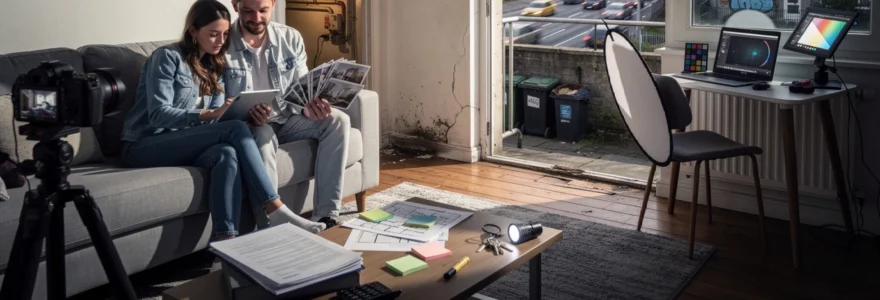
Property photographs have become the primary tool for marketing homes, apartments, and rental accommodations across the UK. These carefully curated images often serve as the first and sometimes only impression potential buyers or tenants receive before scheduling a viewing. However, the gap between photographic representation and reality can be substantial, with strategic staging, digital manipulation, and selective framing concealing crucial information about a property’s true condition and surroundings.
The rise of online property platforms has intensified the pressure on landlords, estate agents, and accommodation providers to present properties in the most favourable light possible. This has led to increasingly sophisticated photography techniques designed to mask defects, exaggerate space, and create an idealised version of reality. Understanding these methods and their limitations becomes essential for anyone seeking to make informed decisions about their future living arrangements.
Professional property photographers employ numerous techniques that can fundamentally alter how a space appears in photographs compared to real life. The implications extend far beyond mere disappointment upon viewing, potentially affecting long-term satisfaction, financial commitments, and quality of life decisions that could impact residents for years to come.
Property photography staging techniques that conceal structural defects
Modern property photography has evolved into a sophisticated art form that often prioritises visual appeal over accurate representation. Estate agents and property managers routinely employ professional photographers who understand how to transform even the most challenging spaces into seemingly desirable accommodations through careful staging and technical manipulation.
Wide-angle lens distortion masking room size limitations
Wide-angle lenses represent perhaps the most commonly used tool for creating misleading impressions of property interiors. These lenses can make cramped studio apartments appear spacious and transform narrow corridors into seemingly generous hallways. The distortion effect stretches the edges of photographs, creating an illusion of depth and space that simply doesn’t exist when you physically enter the room.
Professional photographers typically use lenses with focal lengths between 14mm and 24mm for interior shots, compared to the 50mm focal length that approximates natural human vision. This dramatic difference means that rooms photographed with ultra-wide lenses can appear up to 40% larger than their actual dimensions. The technique is particularly effective in bathrooms, kitchens, and bedrooms where space constraints significantly impact livability.
The curved perspective created by wide-angle lenses also serves to hide structural irregularities such as uneven walls, sloping floors, or awkward room proportions. What appears as a perfectly rectangular room in photographs might actually feature significant structural compromises that become immediately apparent during an in-person viewing.
Strategic lighting solutions hiding dampness and mould issues
Professional lighting equipment can dramatically transform the appearance of problematic areas within a property, effectively masking serious maintenance issues that could affect both health and comfort. High-powered studio lights, reflectors, and diffusers work together to eliminate shadows, reduce contrast, and create an evenly lit environment that obscures telltale signs of dampness or structural problems.
Mould growth, water stains, and discoloration that would be immediately visible under normal lighting conditions can virtually disappear under professional lighting setups. The intense, evenly distributed illumination eliminates the subtle shadows and colour variations that typically indicate moisture problems, creating a clean, bright appearance that bears little resemblance to the property’s appearance under standard household lighting.
Strategic timing also plays a crucial role, with photographers often scheduling shoots during optimal natural light conditions to supplement artificial lighting. This combination can make even north-facing rooms appear bright and welcoming, potentially misleading prospective tenants about the property’s natural light levels during typical daily use.
Furniture placement strategies concealing floor and wall damage
Temporary staging represents another powerful tool for concealing structural defects and maintenance issues. Professional staging companies specialise in strategic furniture placement that draws attention away from problematic areas while creating an appealing lifestyle aesthetic that encourages emotional connection with the property.
Carefully positioned rugs can hide damaged floorboards, stained carpeting, or uneven surfaces that would immediately concern potential residents. Similarly, strategically placed artwork, mirrors, or furniture can conceal wall damage, cracks, or patches that indicate underlying structural issues or poor maintenance standards.
The temporary nature of professional staging means that
the attractive furniture and décor you see in the photographs may bear no resemblance to what is left when you move in. Once the staging is removed, previously hidden defects such as cracked skirting boards, damaged sockets, or bulging plaster can suddenly become obvious. For this reason, it is essential to look past the aesthetic appeal of property photography and ask yourself what might be deliberately concealed just out of shot or beneath that perfectly placed rug.
Digital enhancement methods removing visible maintenance problems
Beyond physical staging, digital enhancement has become a powerful – and sometimes problematic – tool in property marketing. Using editing software, photographers or agents can remove water stains, hairline cracks, peeling paint, or even entire items such as radiators, bins, and overhead cables. At first glance, the result appears to be a spotless, freshly renovated flat or house, when in reality the accommodation may require significant maintenance.
Common editing techniques include adjusting saturation and contrast to make walls appear freshly painted, cloning and healing tools to erase mould spots, and perspective correction to straighten sloping ceilings or sagging door frames. While minor retouching to correct lens distortion is reasonable, heavy digital manipulation crosses a line into misrepresentation. The risk for you as a tenant or buyer is that photography no longer reflects the true condition of the accommodation you are about to commit to for months or years.
How can you protect yourself from such digital trickery when assessing property photos online? Look for repeating patterns in textures such as tiles or brickwork, which can indicate cloning tools have been used. Pay attention to areas that seem unnaturally smooth or blurred, as these might be sections where defects have been painted out. When something looks too perfect – a decades-old building with immaculate, unblemished walls and ceilings, for example – it is sensible to assume the images have been heavily edited and to verify everything during a physical viewing.
Neighbourhood context and location reality beyond marketing images
Even when interior photographs are reasonably honest, they reveal very little about the wider environment in which the accommodation is located. Property listings tend to highlight only the most flattering aspects of the neighbourhood: a nearby park, a picturesque street corner, or a carefully chosen café frontage. What photos do not tell you about your future accommodation is often more important than what they do show, especially when it comes to noise, air quality, transport connections, and overall liveability.
Marketing photography is naturally selective; agents will rarely show you the busy dual carriageway just beyond the garden fence, or the industrial estate a few minutes’ walk away. Yet these external factors can have a profound impact on day-to-day life and long-term satisfaction with a rental or purchase. To make an informed decision about any property, you need to step beyond the carefully cropped images and investigate the real context of the location for yourself.
Traffic noise levels and peak hour congestion patterns
Rarely will a glossy property photograph capture the reality of rush-hour traffic, late-night deliveries, or weekend congestion. A quiet-looking street in mid-afternoon photos might transform into a noisy rat run for commuters every weekday morning. Similarly, a balcony that appears tranquil in the listing may actually overlook a busy junction, bus stop, or taxi rank that generates constant traffic noise and fumes.
To understand traffic noise levels around your future accommodation, you can use digital tools and simple on-the-ground checks. Online mapping platforms often show real-time and historic congestion patterns, helping you identify main routes and bottlenecks. Visiting the property at different times of day – including early mornings and late evenings – gives you a far more accurate picture than any still image. Ask yourself: can you hold a normal conversation with the windows open, or would constant background noise become an everyday irritation?
Peak hour congestion brings secondary issues, too, such as increased pollution, difficulty parking, or delays when leaving for work or school. Photographs of an empty driveway or quiet cul-de-sac rarely reveal how many cars actually compete for space at 6pm on a weekday. If your quality of life relies on a peaceful home environment or reliable commuting times, it is vital to look beyond the photos and actively research traffic patterns before signing any tenancy agreement or contract.
Proximity to industrial zones and commercial developments
Marketing images often focus tightly on attractive angles, leaving out less desirable surroundings such as warehouses, logistics hubs, or late-opening bars and restaurants. Yet proximity to industrial zones and commercial developments can dramatically affect noise levels, air quality, and security around your accommodation. A seemingly idyllic apartment might back onto a service yard that becomes active at 4am, or sit above a restaurant that hosts loud events several nights a week.
When evaluating a property’s location, it is worth checking local planning maps and satellite imagery to understand what lies beyond the immediate street view. Industrial units, major roads, rail lines, and nightlife districts are usually easy to spot from a broader bird’s-eye perspective, even if they never appear in the accommodation photos. You might also search recent planning applications to see whether new developments – such as large blocks of flats, supermarkets, or distribution centres – are planned nearby.
Think of photos as a postcard from the nicest corner of the neighbourhood rather than an objective survey of the entire area. To avoid unpleasant surprises, walk a 5–10 minute radius around the property, particularly in the evening or early morning when commercial or industrial activity may be at its peak. You will quickly learn whether the charming courtyard or quiet-looking street in the listing is genuinely peaceful or simply photographed at its best moment.
Public transport accessibility during off-peak hours
Accommodation descriptions often boast of being “minutes from the station” or “well connected by public transport”, but rarely explain what that experience is like outside of standard commuting times. Photos of a nearby train station or tram stop can create the impression of seamless connectivity, yet off-peak service frequency, reliability, and night-time options may be far more limited than you expect. For renters who rely heavily on public transport, this discrepancy can be a major source of frustration.
To assess true public transport accessibility, do more than glance at a photo of a bus stop or tube entrance. Check live timetables and journey planners for evenings, weekends, and early mornings, when reduced services or longer waits are common. Ask yourself whether you would feel comfortable waiting at the nearest stop late at night, and whether there are step-free routes if you have mobility needs or heavy luggage. A property can be “close to transport” in theory but inconvenient in practice if services are infrequent or indirect.
It also helps to simulate your typical journeys – to work, university, or family – using online route planners at the times you are most likely to travel. This approach often reveals hidden issues, such as multiple changes, long walks between stops, or poorly lit streets not obvious from images. Once again, photos show the infrastructure, but they do not capture how that infrastructure functions when you actually need it.
Crime statistics and anti-social behaviour incidents
Safety is one of the most critical yet least visible aspects of choosing future accommodation. Unsurprisingly, property photographs and marketing brochures almost never hint at local crime rates or anti-social behaviour. A freshly painted front door and flower-filled window box can mask a street that experiences frequent burglaries, vandalism, or noisy late-night activity. For many renters and buyers, discovering these realities only after moving in can be deeply unsettling.
Fortunately, you are not limited to guesswork. In much of the UK, you can access official crime statistics online, broken down by postcode or neighbourhood. These tools show reported incidents such as theft, violence, and anti-social behaviour, offering a more data-driven view than any photograph. While no area is entirely risk-free, a markedly higher rate of incidents compared with neighbouring districts should prompt careful consideration and further questions.
Beyond raw statistics, informal research can be invaluable. Visiting the area at night, speaking to local residents or shop owners, and reading community forums or social media groups can reveal recurring issues that never make it into property photos. Think of it as reading the “reviews” of a neighbourhood in the same way you might research a hotel: you are looking for patterns of concern, not isolated anecdotes, before committing to a long-term stay.
Building infrastructure and maintenance standards assessment
While interior photos might highlight stylish décor or recent cosmetic upgrades, they often say very little about the underlying building infrastructure. Elements such as the age of the roof, the condition of communal areas, the reliability of lifts, or the state of plumbing and electrics are rarely visible in listings. Yet these factors can have a major impact on comfort, safety, and the likelihood of unexpected repair works disrupting your tenancy.
To assess building infrastructure and overall maintenance standards, start by examining any communal spaces you can access during a viewing. Are stairwells clean and well lit, or do they show signs of neglect such as peeling paint, damp patches, or broken light fittings? A well-managed building usually has clear fire safety signage, tidy bin stores, and well-maintained external areas. In contrast, overflowing rubbish, damaged doors, or unsecured entry systems suggest that the landlord or managing agent may be slow to address essential maintenance.
It is also important to ask direct questions about recent and upcoming works. When were the electrics last inspected? Has the boiler been serviced annually, and is there a valid gas safety certificate where applicable? Are there any known issues with the roof, windows, or external cladding that might require major repairs? You are entitled to request evidence of compliance with basic safety and maintenance obligations, and a reputable landlord or agent should be willing to provide it.
Finally, trust your senses during a viewing. Persistent smells of damp, inconsistent water pressure, radiators that do not heat evenly, or frequent evidence of patch repairs can indicate deeper infrastructure problems that photos will never reveal. Much like judging a car by more than its shiny paintwork, evaluating accommodation means looking beneath the surface finishes to understand whether the building is structurally sound and properly cared for.
Rental market dynamics and hidden costs analysis
Online photos capture the look and feel of a property, but they tell you almost nothing about the financial realities of living there. In many cases, the advertised rent is only part of the total monthly cost. Service charges, ground rent, utilities, council tax, and insurance premiums can all significantly increase the amount you pay, and these hidden costs are rarely obvious from photographs or brief listing descriptions.
Understanding rental market dynamics in your chosen area can help you spot when a seemingly attractive property may actually be poor value once all expenses are considered. Two flats with similar photos and identical monthly rent may differ substantially in energy efficiency, service charges, and local tax bands. Without digging deeper, it is easy to choose a future accommodation based on appearance alone and later discover that the “bargain” home is considerably more expensive to run than you expected.
Service charges and ground rent escalation clauses
In leasehold buildings and managed developments, service charges and ground rent can be a major additional outgoing. Photos of a pristine lobby, manicured gardens, or concierge desk may look appealing, but they also hint at higher running costs passed on to residents. These costs will not show up in the images, yet they directly affect the affordability of your accommodation over time.
Before committing to a tenancy in a block with shared facilities, ask for a clear breakdown of any service charges you might be responsible for, particularly in build-to-rent schemes or serviced apartments. In some arrangements, these charges are bundled into the rent; in others, they are billed separately and can increase annually. If you are buying rather than renting, scrutinise the lease for ground rent escalation clauses, which may cause charges to rise sharply every few years and affect both mortgage affordability and future resale value.
Think of shared amenities as similar to subscription services: the more features on offer – gyms, communal workspaces, landscaped gardens – the higher the likely ongoing cost. Just as you would check the small print before signing up for a long-term contract, you should ensure you understand exactly what you are paying for and how those charges might change during your time in the property.
Utility bill estimates and energy performance certificates
One of the most significant hidden costs in any accommodation is energy use. Attractive photos of large windows, high ceilings, or open-plan spaces rarely mention how expensive these features can be to heat and cool. An older property with single-glazed windows and poor insulation might look charming online, but without checking its energy performance you could face substantial monthly utility bills.
In the UK, landlords are required to provide an Energy Performance Certificate (EPC) for most rented properties. This document grades the property from A (most efficient) to G (least efficient) and includes estimated annual energy costs. When researching future accommodation, always request the EPC and consider how its rating aligns with your budget. A cheaper rent in a very inefficient property can quickly be offset by higher gas and electricity bills.
It can also be useful to ask previous tenants or neighbours about typical utility costs, especially in buildings with communal heating or hot water systems. When combined with the EPC and your own lifestyle (such as working from home versus being out most of the day), these insights provide a more realistic picture of what living in the property will actually cost each month – far beyond anything property photos can communicate.
Council tax bands and local authority service quality
Council tax is another regular expense that photos never mention but can make a notable difference to your monthly outgoings. Two similar-looking homes in neighbouring streets can fall into different council tax bands, leading to significant cost variations over a year. Before finalising a rental or purchase, check the official council tax band for the property and calculate what this means for your budget.
Council tax does more than fund local services; it can also serve as a rough indicator of the area’s infrastructure and amenities. While not an absolute rule, local authorities with higher bands on average may offer better-maintained public spaces, more frequent waste collection, or higher investment in libraries and leisure facilities. Conversely, lower bands might reflect more modest services or different funding priorities. Because these nuances never feature in marketing photography, doing your own research is essential.
Most local councils provide online tools where you can enter an address to view its tax band and current annual charge. Combining this information with your estimated service charges and utility bills helps you build a realistic total cost of occupation, rather than basing decisions solely on the advertised rent and glossy imagery.
Insurance premiums for high-risk postcodes
Where you live affects not only your day-to-day experience but also the cost of insuring your belongings. Insurance companies consider factors such as crime rates, flood risk, and historical claims data when pricing policies. A property that appears idyllic in photos – perhaps near a river or in a lively urban area – may sit within a postcode that insurers view as higher risk, resulting in more expensive contents or buildings insurance.
Before committing to a long-term tenancy or purchase, it is wise to obtain a few indicative insurance quotes based on the property’s postcode. This can reveal elevated premiums linked to burglary rates, flood zones, or previous subsidence issues that you might not uncover through photos alone. In some flood-prone areas, for example, insurers may impose higher excesses or limit cover for certain types of damage, which could leave you exposed if something goes wrong.
Understanding these hidden costs upfront helps you compare properties more fairly. Two homes with similar rents but very different insurance implications may not be equally affordable once you factor in the full picture. This is another area where relying on visuals alone – however appealing – can leave you underprepared for the real cost of your future accommodation.
Legal documentation and tenancy agreement scrutiny
Photographs may sell the lifestyle, but it is the paperwork that defines your rights, responsibilities, and protections once you move in. Even the most attractive apartment can become a source of stress if the tenancy agreement contains unfavourable clauses, unclear obligations, or hidden fees. Because legal documents are rarely highlighted in listings, it is up to you to request, read, and where necessary, challenge the terms before you sign.
Start by ensuring you receive a full copy of the tenancy agreement well in advance, not on the day of signing. Look out for clauses related to rent increases, notice periods, maintenance responsibilities, and deposit deductions. Are rent reviews linked to a clear index, such as inflation, or left entirely to the landlord’s discretion? Are you expected to pay for professional cleaning at the end of the tenancy, even if you return the property in good condition? These details have real financial implications but will never appear in property photos.
It is also crucial to check that the agreement complies with current legislation. In England, for example, deposits must be protected in a government-approved scheme, and tenants are entitled to certain information about gas safety, electrical checks, and the “How to Rent” guide. If clauses appear unusually restrictive or one-sided – such as blanket bans on reasonable guests, or excessive penalty charges – seeking independent advice from a tenants’ union, charity, or solicitor can help you understand your position.
Think of the tenancy agreement as the operating manual for your future accommodation. While the photos may have drawn you in, the contract dictates how the property will actually function as your home, from repairs and access rights to renewals and terminations. Taking the time to scrutinise it thoroughly is one of the most effective ways to ensure that the attractive images align with a fair and workable reality.
Professional property inspection methodologies for informed decision-making
Ultimately, the most reliable way to bridge the gap between property photography and reality is through systematic inspection. Rather than relying on a quick walk-through and first impressions, adopting a more structured approach – similar to that used by professional surveyors or inventory clerks – can help you uncover issues that staged images and carefully planned viewings are designed to obscure.
Before your visit, prepare a checklist covering key areas: structural elements (walls, ceilings, floors), services (heating, electrics, plumbing), security (locks, entry systems, alarms), and environmental factors (damp, ventilation, noise). During the viewing, take your own photos and short videos, focusing not on the attractive features already shown in the listing but on corners, edges, and less glamorous spaces such as cupboards, loft hatches, and under-sink areas. This evidence can be invaluable if you later need to negotiate repairs or resolve disputes about the property’s initial condition.
For higher-value commitments – such as buying a home or signing a long fixed-term lease – commissioning a professional survey or inspection is often worth the investment. Chartered surveyors can assess structural integrity, identify potential damp or subsidence, and highlight costly future repairs that no amount of clever photography can hide. In furnished rentals, an independent inventory at check-in can protect both you and the landlord by documenting existing wear and tear before you move in.
Combining these inspection methodologies with the research techniques discussed earlier – from checking crime statistics to analysing transport links and hidden costs – enables you to see past the curated images and judge a property on its true merits. Rather than viewing photos as the final word on your future accommodation, treat them as a starting point for deeper investigation. In doing so, you significantly increase the chances that the home you imagine from the listing is the one you actually experience once you collect the keys.