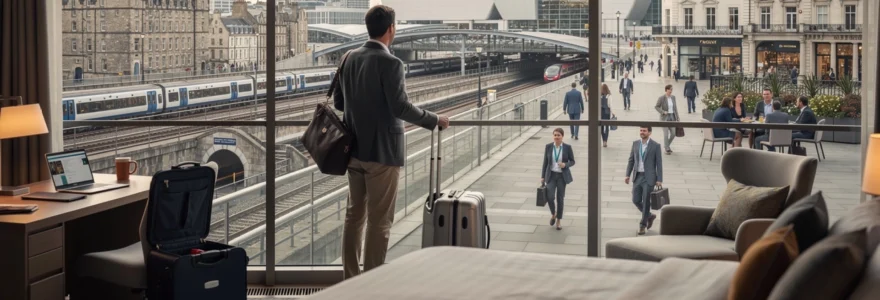
The hospitality landscape has shifted dramatically, with savvy travellers increasingly prioritising strategic location over luxurious amenities. This fundamental change reflects a deeper understanding of how geographical positioning can transform an entire travel experience, whether for business efficiency, cultural immersion, or practical convenience. Whilst premium facilities certainly enhance comfort, the wrong location can render even the most opulent accommodation frustrating and counterproductive.
Consider the business executive who books a five-star hotel in a remote suburb, only to spend hours daily navigating traffic to reach meetings in the financial district. Alternatively, imagine the culture enthusiast staying in luxury accommodation miles from historic quarters, missing spontaneous discoveries that define memorable travel experiences. These scenarios illustrate why location-first thinking has become increasingly prevalent amongst experienced travellers who understand that proximity often trumps amenities.
The economics of location-centric accommodation choices extend beyond mere convenience. Time saved through strategic positioning translates directly into enhanced productivity, reduced stress levels, and increased opportunities for meaningful engagement with destinations. This shift represents a mature approach to travel planning that prioritises experiential value over superficial comfort measures.
Strategic location selection over accommodation quality in business travel
Business travel demands an entirely different accommodation philosophy compared to leisure trips. The primary consideration shifts from comfort to operational efficiency, where proximity to key business locations can determine the success of an entire trip. Professional travellers increasingly recognise that a modest hotel in a prime business location delivers superior value compared to luxury accommodation requiring extensive daily commutes.
Time is the ultimate currency in business travel, and strategic location selection can provide returns that far exceed the value of premium amenities.
Modern business districts operate within tightly defined geographical clusters, where being within walking distance of key commercial zones can transform professional networking opportunities. The ability to attend early morning meetings, conduct impromptu discussions, and participate in after-work networking events becomes significantly more feasible when accommodation is strategically positioned within these commercial ecosystems.
Proximity to financial districts: city of london vs canary wharf case studies
The City of London and Canary Wharf represent distinct financial ecosystems, each requiring different accommodation strategies. The ancient City of London, with its narrow medieval streets and historic institutions, favours accommodation within a 10-minute walking radius due to limited transport options and traffic congestion. Hotels near Bank or Liverpool Street stations provide optimal access to both traditional banking institutions and emerging fintech companies clustered around Old Street.
Canary Wharf presents a more modern challenge, with its towering glass structures and concentrated corporate presence. The district’s excellent transport connectivity via the Jubilee Line and DLR makes accommodation within a wider geographical radius viable. Hotels in nearby areas such as Limehouse or even central locations with direct transport links often provide better value whilst maintaining quick access to this financial powerhouse.
The choice between these districts significantly impacts daily operational efficiency. City-based accommodation suits professionals engaging with traditional financial institutions, legal firms, and insurance companies. Canary Wharf proximity benefits those working with international banks, media organisations, and technology companies that have established significant presences in this modern financial district.
Transport hub accessibility: king’s cross and paddington station catchment areas
Major transport hubs represent strategic accommodation zones for business travellers requiring frequent inter-city or international travel. King’s Cross has transformed from a gritty industrial area into a thriving business district, particularly beneficial for travellers requiring regular access to Edinburgh, Leeds, or continental Europe via the Eurostar. The regenerated area around the station offers excellent accommodation options with direct access to these services.
Paddington Station serves as the gateway to western England and Wales, making surrounding accommodation ideal for business involving cities like Bath, Bristol, or Cardiff. The Crossrail development has further enhanced this area’s connectivity, providing rapid access to Heathrow Airport and central London business districts. Hotels within a 5-minute walk of these stations eliminate the stress of morning commutes and provide flexibility for schedule changes.
The transport accessibility factor becomes particularly crucial during peak travel periods when delays and congestion can derail carefully planned business schedules. Accommodation near these major hubs provides insurance against transport disruptions whilst offering multiple backup options for reaching destinations.
Conference venue adjacency: ExCeL london and olympia exhibition centre
For large-scale events, being based adjacent to the venue can be the single most important factor in choosing where to stay. ExCeL London, located in the Royal Docks, often hosts international trade fairs, medical congresses, and tech expos that require attendees to navigate tight timetables across multiple days. Staying within walking distance eliminates reliance on the DLR during peak times, reduces the risk of delays, and provides a convenient base for midday breaks, informal networking, or catching up on emails between sessions.
Olympia Exhibition Centre, situated in Kensington, presents a different strategic equation. While the surrounding area offers a broader range of mid-range and boutique accommodation, transport options can become crowded during major events. Here, a location-first strategy might mean selecting a hotel one or two stops away on the Overground or District Line, balancing slightly longer journeys with quieter streets and better dining options for client entertainment. In both cases, the objective is the same: minimise your commute time so you can maximise your event engagement.
Seasoned conference attendees often treat their hotel choice as an extension of the event venue itself. When your accommodation is effectively “next door,” you gain flexibility to schedule side meetings, store marketing materials or samples securely, and recharge physically and mentally during intensive multi-day programmes. For organisations sending teams, block-booking rooms close to ExCeL or Olympia can also improve internal coordination, as everyone operates within the same geographic footprint and time constraints.
Client meeting facilitation: mayfair and covent garden commercial zones
When your primary goal is to meet clients face-to-face, proximity to key commercial zones like Mayfair and Covent Garden often outweighs room size or hotel branding. Mayfair’s concentration of hedge funds, private equity firms, luxury brands, and discreet professional services means that staying within a short walk of Berkeley Square or Grosvenor Street can significantly reduce travel friction. For high-value meetings where punctuality and composure are non-negotiable, shaving 20 minutes off each journey can make a measurable difference to your performance.
Covent Garden, by contrast, blends creative industries, media agencies, and tech start-ups with a dense cluster of restaurants, bars, and cultural venues. Choosing accommodation nearby allows you to move seamlessly from formal boardroom meetings to informal follow-up conversations over dinner or drinks. This “walkable networking ecosystem” is particularly powerful when building new relationships, as you can respond spontaneously to invitations without worrying about late-night transport across the city.
In both areas, a location-first approach helps you design a day that flows logically rather than being chopped up by long tube rides or unpredictable taxi journeys. You might accept slightly smaller rooms or older properties in exchange for the ability to walk between meetings in under 10 minutes. Over the course of a week of back-to-back client engagements, these micro-efficiencies can feel like adding an extra working day to your schedule, without increasing your hours.
Urban tourism location prioritisation over luxury amenities
Leisure travellers exploring major cities often face a subtle but important trade-off: stay in a central, characterful neighbourhood with modest accommodation, or choose a more comfortable hotel in a less convenient district. When your main aim is to experience the destination rather than the hotel itself, prioritising location can dramatically enhance the richness of your trip. Being able to step outside your door and immediately engage with local life often proves far more valuable than an oversized room or an on-site spa.
Urban tourism thrives on spontaneity. The most memorable travel moments frequently come from unplanned encounters—a street performance you stumble upon, a café you discover down a side alley, or a late-night gallery opening recommended by a local. By choosing accommodation in the heart of historic quarters, cultural districts, or nightlife hubs, you multiply these chances without needing to plan every step in advance. The city becomes your extended living room, and your hotel simply a well-placed basecamp.
Historic quarter proximity: edinburgh old town vs new town accommodation choices
Edinburgh offers a textbook example of how accommodation location shapes an urban tourism experience. Staying in the Old Town, close to the Royal Mile or Grassmarket, immerses you in medieval street patterns, centuries-old closes, and immediate access to Edinburgh Castle and St Giles’ Cathedral. Rooms in this area may be smaller, noisier, or located in converted historic buildings with quirks, yet the trade-off is waking up within a few minutes’ walk of the city’s most iconic sights.
New Town, with its Georgian townhouses, broad avenues, and grid layout, presents a different kind of appeal. Accommodation here often offers slightly more space and modern conveniences while still being within walking distance of Princes Street, George Street, and key transport links. For travellers who value both atmosphere and relative calm, New Town can be a strategic compromise: close enough to Old Town to reach on foot, but removed from the densest tourist crowds.
So which should you choose when location matters more than comfort? If your priority is deep historical immersion—hearing the buskers from your window, joining walking tours at a moment’s notice, or capturing sunrise photos over the castle—Old Town wins. If you prefer a slightly quieter base with easier access to shopping, dining, and transport, New Town may suit you better. In both cases, you are trading the possibility of ultra-luxury rooms in outlying districts for the priceless benefit of being at the heart of the city.
Cultural landmark accessibility: tate modern and british museum walking distance analysis
In London, the distance between your hotel and major cultural landmarks like Tate Modern or the British Museum can determine how deeply you actually engage with them. Travellers who stay within a 10–15 minute walk are far more likely to make multiple short visits, drop in for specific exhibitions, or take advantage of quieter early-morning or late-evening hours. When you can walk along the South Bank to Tate Modern or stroll from Bloomsbury to the British Museum, culture becomes an easy part of your daily rhythm rather than a special expedition.
By contrast, if your accommodation requires a 30–40 minute cross-city journey each way, you are more likely to compress multiple attractions into single, exhausting days. This often leads to “museum fatigue,” where you rush through collections simply to tick them off your list. Staying close to your target landmarks allows you to treat them as locals might—popping in for an hour, focusing on a particular gallery, and returning another day instead of forcing everything into one marathon session.
When planning a culture-focused trip, ask yourself: which institutions are non-negotiable, and how often would you ideally like to visit them? If Tate Modern is central to your interests, consider accommodation near Southwark, Blackfriars, or London Bridge. If the British Museum is your anchor, Bloomsbury and Fitzrovia become strategic bases. In these cases, you might accept a smaller room or simpler facilities in order to maximise your exposure to the city’s intellectual and artistic heart.
Nightlife district integration: shoreditch and camden market vicinity benefits
For many visitors, London’s nightlife is as important as its museums or historic sites. Areas like Shoreditch and Camden offer dense clusters of bars, live music venues, clubs, and late-night eateries that come alive after dark. Choosing accommodation within walking distance of these districts can transform your experience: you can move freely between venues, return to your room safely without relying on late-night transport, and make spontaneous decisions based on local recommendations.
Staying near Shoreditch, for example, places you at the intersection of creative industries, street art, and an ever-evolving food scene. You may contend with street noise or more compact rooms, but you gain the freedom to explore without constantly checking train times or taxi availability. Similarly, a base near Camden Market allows you to enjoy evening gigs, canal-side bars, and alternative culture without the stress of long night-time journeys back to a distant hotel.
Of course, integrating into a nightlife district requires realistic expectations. You are unlikely to find complete silence at 2 a.m., and older buildings may offer less sound insulation. However, if your priority is to experience the city’s after-dark energy rather than retreat to a spa-like sanctuary, then location-first decisions in Shoreditch or Camden will serve you better than a more comfortable hotel on the outskirts. In effect, you are choosing to sleep slightly less perfectly in order to live more vividly.
Shopping corridor advantage: oxford street and regent street catchment areas
For travellers focused on shopping, proximity to major retail corridors like Oxford Street and Regent Street can dramatically streamline their itinerary. Staying within a short walk of these areas means you can make multiple brief visits, drop off purchases at your hotel during the day, and avoid carrying heavy bags on public transport. This is particularly valuable during sales seasons or festive periods, when crowds and queues can quickly sap your energy.
Hotels in the Oxford Circus, Bond Street, or Marble Arch catchment areas may command higher nightly rates or offer slightly smaller rooms, but the convenience of being able to step out directly into the shopping district often justifies the premium. You also benefit from extended store opening hours and quick access to nearby dining options for breaks between retail sessions. For many visitors, this setup effectively turns the city into a walkable shopping mall with a private basecamp just minutes away.
Regent Street, with its mix of flagship stores and elegant architecture, offers a slightly more curated experience than the sheer density of Oxford Street. Choosing accommodation near this corridor can provide a balance between retail access and aesthetic pleasure, as you move through grand streetscapes rather than purely functional commercial zones. If your idea of a successful city break involves discovering new brands, visiting concept stores, and making the most of tax-free shopping, then prioritising location over in-room luxury becomes a smart, experience-driven choice.
Coastal destination location-first accommodation strategies
In coastal destinations, the concept of “location over comfort” often comes into sharpest focus. Being close to the beach, harbour, or coastal trail can fundamentally alter your relationship with the sea, allowing you to structure your days around tides, sunrise swims, or evening walks along the promenade. While larger rooms or upscale interiors are appealing, they rarely compensate for needing a car or long walk every time you want to engage with the water.
Many experienced coastal travellers prioritise direct access over interior amenities. A modest beachfront apartment that lets you step onto the sand in under a minute can be more valuable than a luxurious resort set a 20-minute walk inland. This is especially true for travellers with water-based hobbies: early-morning surfers, paddleboarders, or sailors benefit enormously from minimising the distance between accommodation and launch points. When your equipment and timing are critical, every extra metre and minute can feel like a tax on your enjoyment.
There is also a psychological aspect to consider. Waking up to a sea view, hearing the waves at night, or being able to respond instantly to changing weather conditions creates a sense of immersion that inland properties cannot replicate. It is similar to having box seats at a theatre instead of watching a recording at home: the proximity changes not just what you see, but how you feel. By accepting simpler décor or fewer on-site facilities, you buy direct, continuous contact with the coastal environment you came to experience.
Mountain and countryside location-dependent lodging decisions
In mountain and rural destinations, location-first thinking often centres on proximity to trailheads, ski lifts, or scenic viewpoints. A charming but distant farmhouse may photograph beautifully, yet if it requires a 30–40 minute drive each morning to reach your chosen hiking routes or ski area, you will quickly feel the drag of daily transit. By contrast, a smaller or more basic lodge within walking distance of the slopes or trails allows you to maximise your time outdoors and adapt your plans quickly to shifting weather or energy levels.
For hikers and cyclists, being based near key junctions or loop routes can mean the difference between a leisurely start and a rushed, logistics-heavy morning. Think of your accommodation as a “base camp” in the mountaineering sense: the closer it is to your primary objectives, the more flexible and enjoyable your days become. If afternoon storms roll in or you decide to shorten a route, you can retreat to your lodge without facing a long, tiring transfer back to your bed for the night.
Rural stays also raise the question of access to essential services. A picturesque cottage deep in the countryside may appear idyllic, but how far is the nearest village, restaurant, or shop? If you prefer to dine out or pick up supplies without long drives on dark, narrow roads, you may decide to compromise slightly on isolation in favour of a small town or hamlet location. In these contexts, prioritising location does not mean choosing the most remote spot on the map, but rather the position that best aligns with how you actually plan to use your time.
International travel hub selection over comfort considerations
For international travellers, the choice of accommodation near airports, embassies, or global business districts often involves a conscious decision to sacrifice some comfort for absolute convenience. Early morning flights, visa appointments, or cross-border negotiations introduce hard time constraints that leave little room for error. In such scenarios, staying closer to the travel hub or diplomatic zone can be the most rational strategy, even if the hotel itself is less luxurious than other options further afield.
This is particularly true on tight itineraries, where a missed flight or delayed meeting can cascade into significant financial costs and logistical headaches. By minimising travel time between your accommodation and key hubs, you effectively build a buffer against delays, traffic jams, or public transport disruptions. Think of it as a form of travel insurance: you accept a slightly more functional environment in exchange for greater control over critical moments in your journey.
Airport proximity analysis: heathrow terminal distance vs central london hotels
Heathrow offers a clear illustration of the airport proximity trade-off. A hotel directly connected to the terminals, or within a short shuttle ride, allows you to maximise rest before or after long-haul flights, reduce pre-flight stress, and handle early departures or late arrivals with minimal hassle. Business travellers on tight turnarounds—arriving in the evening and departing again the following morning—often find that an airport hotel, while less glamorous, delivers the most rational value.
On the other hand, if your schedule includes a full day or more of meetings in central London before departure, staying in the city may still make sense despite the longer journey to the airport. The key is to assess how many times you will travel between the airport and town, and at what times of day. A single off-peak transfer may be manageable; multiple peak-hour trips can quickly erode both time and patience. Using the Heathrow Express or Elizabeth Line can mitigate this, but your accommodation choice should still reflect your primary activity hub.
When deciding between airport proximity and central London hotels, ask yourself where your critical moments occur. If missing a flight would be catastrophic or if you anticipate significant jet lag, an airport-based stay can offer peace of mind and extra sleep. If, however, your most important commitments are in the city and you have a reliable transfer plan, choosing a central location may provide a richer experience for the same overall effort.
Embassy quarter accessibility: belgravia and kensington diplomatic zone advantages
For travellers dealing with visas, consular services, or diplomatic meetings, proximity to embassy quarters like Belgravia and Kensington can be invaluable. Many embassies cluster in these districts, meaning that a carefully chosen hotel can place you within walking distance of multiple missions. This reduces the risk of arriving late for time-sensitive appointments, especially when security procedures and queues can be unpredictable.
Staying nearby also offers practical benefits between appointments. Instead of spending idle time in waiting rooms or cafés far from your base, you can return to your hotel to work, rest, or prepare documents. If additional paperwork or unexpected follow-up visits are required, having your accommodation close at hand can drastically reduce stress. In this context, location becomes a tool for maintaining control over an inherently bureaucratic process.
Belgravia and Kensington also provide access to a wide range of professional services—legal advisors, translation agencies, courier companies—that often support visa and diplomatic processes. By positioning yourself in the heart of this ecosystem, you gain the ability to respond quickly to new requirements without long cross-city journeys. Even if your room is smaller or your hotel less opulent than alternatives elsewhere, the geographic advantage can be decisive.
International business district integration: canary wharf financial services cluster
Canary Wharf, as an international financial services cluster, exemplifies how integration into a business district can outweigh conventional comfort metrics. For global executives, consultants, and traders working with institutions based in the area, staying within a short walk of their offices, clients, or trading floors enables highly compressed, efficient schedules. Morning briefings, lunch meetings, and after-hours events can all be attended without factoring in complex transport logistics.
While some travellers may initially prefer more characterful neighbourhoods, many quickly recognise the practical benefits of being embedded in the district where their work actually happens. Canary Wharf’s dense vertical layout means you can move from your hotel lobby to a client meeting several floors up in a neighbouring tower within minutes. This kind of micro-efficiency is difficult to replicate when commuting from other parts of London, even with strong transport links.
Moreover, the area increasingly offers its own amenities—restaurants, gyms, shopping centres, and riverside walks—that make short stays comfortable even if they lack the charm of older neighbourhoods. When your primary goal is to execute a series of high-stakes meetings or negotiations with minimal friction, choosing an accommodation that integrates seamlessly into the Canary Wharf ecosystem can be far more strategic than seeking out a boutique hotel across town. In essence, you convert your hotel into an extension of your workspace, with the entire district functioning as your office campus.